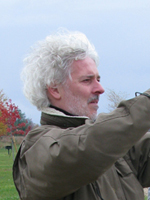
Adam HaberView profile
Assistant Professor
Adam Haber is an Assistant Professor of Computational Biology and Environmental Health at the Harvard T.H. Chan School of Public Health. His research focuses on understanding the interplay between environmental exposures, cellular mechanisms, and public health outcomes, with a particular emphasis on respiratory diseases, infectious disease sequelae, and the impact of climate change. He integrates computational approaches with experimental biology to study epithelial cell biology, immune responses, and disease pathogenesis. Key research areas include: lung epithelial development and repair, mechanisms underlying asthma and chronic respiratory conditions, long-term effects of SARS-CoV-2 on sensory systems, and environmental justice related to housing conditions and asthma disparities. His work bridges basic science and translational research, with recent studies exploring lipid metabolic reprogramming in chronic chemosensory dysfunction, myeloid cell dysregulation in post-COVID conditions, and the role of Hic-5 in bronchial epithelial mechanotransduction. His studies frequently employ single-cell profiling, spatial transcriptomics, and proteomic analyses to dissect cellular heterogeneity and signaling pathways. Notable findings include identifying Hic-5 as a master regulator of mechanical responses in asthma, linking poor housing conditions to childhood asthma rates in urban areas, and characterizing molecular circuits governing lung epithelial cell fate plasticity. His research also addresses climate change impacts on allergic disease prevalence and fungal pathogen interactions with airway epithelia. Despite his prolific publication record, no specific awards or grants are explicitly mentioned in the provided texts. His research team collaborates across disciplines, leveraging computational biology tools to address pressing public health challenges.