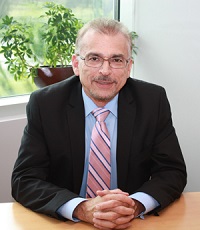
Jason Brownlee is a Professor in the College of Liberal Arts at the University of Texas at Austin. His research focuses on comparative politics, democracy, and authoritarianism, with a regional emphasis on the Middle East and Southeast Asia. Ph.D., Princeton University Contact: brownlee@austin.utexas.edu Research Interests : Brownlee investigates the persistence of authoritarian regimes, the political economy of repression, and the impact of foreign intervention on domestic politics. His work often analyzes Egypt, Iran, Malaysia, and the Philippines. Key Publications : Authoritarianism in an Age of Democratization (Cambridge, 2007) Democracy Prevention: The Politics of the U.S.-Egyptian Alliance (Cambridge, 2012) The Arab Spring: Pathways of Repression and Reform (Oxford, 2012, co-authored with Tarek Masoud and Andrew Reynolds) Teaching : Brownlee offers courses such as "War/Freedom in South Asia/Middle East" and "Issues & Policies in American Government," delivered both in-person and online.
University of Illinois Urbana-ChampaignUnited States
Asef Bayat is Professor of Sociology and the Catherine and Bruce Bastian Professor of Global and Transnational Studies at the Department of Sociology, University of Illinois, Urbana-Champaign. He has held previous academic positions at the American University in Cairo, Leiden University (where he held the Chair of Society and Culture of the Modern Middle East), and visiting appointments at UC Berkeley, Columbia University, Oxford, and Brown University. His research interests include: Political Sociology Collective Behavior and Social Movements Sociology of Religion Urban Life and Politics Islam and Modernity Contemporary Middle East Bayat's research focuses on the role of ordinary people and subaltern classes in social and political transformations, particularly in the context of the Arab Spring and Middle Eastern urban movements. His work bridges comparative and historical sociology with global and transnational perspectives, emphasizing everyday forms of resistance and the reconfiguration of political Islam. He has extensively explored the sociological dimensions of revolution, modernity, migration, and loss of home. His recent publications, including articles in International Journal of Urban and Regional Research and Journal of Democracy , reflect a sustained engagement with urban politics, revolutionary dynamics, and youth activism in the Global South. The recurring themes across his work include the agency of marginalized populations, the transformation of public space, and the evolving nature of political engagement in non-Western contexts. Bayat has received numerous honors and fellowships: Guggenheim Fellow Ford Foundation Fellow MacArthur Fellow Open Society Fellow Wissenschaftskolleg Fellow, Berlin He has been actively involved in academic leadership, having served as director of the International Institute for the Study of Islam in the Modern World (ISIM) and elected to the Board of the UN Research Institute for Social Development. He has taught key courses such as Global Social Movements, Global Religion and Politics, and Middle Eastern Societies. Though specific students are not listed, his role as a full professor and author of major works indicates extensive mentorship and academic advising. He is affiliated with multiple interdisciplinary centers, including the Center for African Studies, Center for South Asian and Middle Eastern Studies, European Union Center, and Center for Global Studies.
William Reno is Professor and Chair of the Department of Political Science at Northwestern University's Weinberg College of Arts and Sciences. With a PhD from the University of Wisconsin (1992), he has established himself as a leading scholar in African politics, conflict studies, and international relations. His career spans over three decades of research on state collapse, insurgency, and security assistance in fragile states, with particular expertise in West Africa and the Horn of Africa. His educational background includes a B.A. from Haverford College (1984), M.A. from the University of Chicago (1985), and Ph.D. from the University of Wisconsin (1992). Reno has held significant administrative roles including Director of the Program of African Studies (2012-2018) and currently serves as Department Chair since 2019. He previously served as non-resident Fellow at the Modern War Institute of the US Military Academy and has extensive experience as the department's graduate director. Reno's research focuses on the comparative politics of Africa, politics of violent conflict, political effects of foreign military assistance, and asymmetrical warfare. His work examines how patronage-based regimes operate in weak states, the evolution of insurgency in Africa, and security assistance strategies in fragile contexts. He has conducted extensive field research in Sierra Leone, Liberia, Nigeria, and Congo, with particular attention to how state collapse reshapes political authority and armed group behavior. His scholarship reveals critical insights about why contemporary African insurgencies differ from earlier anti-colonial movements in their organizational capacity and political programs. Reno has supervised numerous doctoral students who have gone on to prominent positions in academia, government, and military institutions. His advisees include scholars examining topics ranging from minority communities in conflict zones to military effectiveness in African states. Many of his students have military backgrounds or policy experience, reflecting Reno's own engagement with practical security challenges. He has secured significant research funding including Fulbright-Hays Fellowships, Boren Fellowships, and support from organizations like the Social Science Research Council. Reno maintains active research collaborations with scholars globally, particularly through his work with the Program of African Studies. His current projects focus on the politics of security force assistance, political economy of jihadism, and armed groups in contexts of state collapse. His scholarly approach combines deep area expertise with theoretical innovation, often challenging conventional wisdom about conflict dynamics in fragile states.
University of California , Santa Barbara (UCSB)United States
Assistant Professor of Sociology at the University of California, Santa Barbara, Masoud Movahed conducts research at the intersection of social stratification, economic sociology, and political sociology using advanced computational and quantitative methodologies. Education: Ph.D., University of Wisconsin–Madison M.A., New York University Postdoctoral Fellowship, University of Pennsylvania His research program integrates spatial econometrics, machine learning (including unsupervised clustering and supervised algorithms), and comparative-historical methods like event structure analysis to investigate income/wealth inequality across national contexts and within the United States. Recent work examines neighborhood dynamics related to gun violence, intergenerational mobility through racial-spatial lenses, and the relationship between political power structures and economic inequality. Publications appear in leading journals including Social Science Research , Journal of Industrial Relations , and Spatial Demography , with additional commentary featured in Foreign Affairs , World Economic Forum , and Al Jazeera . His methodological approach consistently bridges computational rigor with sociological theory. Scientific Awards: Mathematical Sociology section award, American Sociological Association Political Economy of the World-System Section award, American Sociological Association Sociology of Development section award, American Sociological Association Sabina Avdagic Early Career Scholar Prize, Society for the Advancement of Socio-Economics Dr. Movahed teaches advanced statistics courses including Social Statistics and Capstone in Data Analysis, while directing collaborative projects involving survey experiments and computational text analysis. His research program examines institutional determinants of inequality through both U.S.-focused and cross-national comparative frameworks.
Perin Gürel is an Associate Professor of American Studies and concurrent Associate Professor of Gender Studies at the University of Notre Dame. Her research focuses on transnational feminist perspectives, U.S.-Middle East relations, and gender/race dynamics in popular culture. She holds a Ph.D. in American Studies from Yale University (2011). Her publications include The Limits of Westernization: A Cultural History of America in Turkey (Columbia UP, 2017) and Türkiye, Iran, and the Politics of Comparison (Cambridge UP, 2025). Her 2019 American Quarterly article won the Jack Rosenbalm Prize. She has held fellowships from the National Endowment for the Humanities, American Research Institute in Turkey, and others. Teaching courses include 'Transnational America,' 'Gender and Popular Culture,' and 'Islam and Feminism.' She advises the Kroc Institute for International Peace Studies and the Ansari Institute for Global Engagement with Religion. Alongside academic work, she collaborates with her daughter Marjane on eco-fantasy novels like Laleh and the Language of the Birds (Wildling Press, 2026).
Dr. Ahmad Sadri is the Gorter Professor of Islamic World Studies and Professor of Sociology at Lake Forest College. His primary affiliations include the Sociology and Anthropology department. He holds a PhD from the New School for Social Research (1981) and has held significant academic positions including the James P. Gorter Chair (2007–2010). His research focuses on the sociology of intellectuals, religion in Iran, and Middle Eastern politics. Notable awards include the Bird Award for Intellectual Contributions (1999) and the William L. Dunn Teaching Award (1994). Sadri has authored influential books like Max Weber’s Sociology of Intellectuals (1992) and Saddam City (2004). His work bridges sociological theory with contemporary issues in Islamism, democratization, and intercivilizational dialogue. He has been a frequent media commentator on NPR, BBC, and academic conferences worldwide. His 2008 Senate testimony on Middle East policy exemplifies his engagement with public intellectualism. Current research emphasizes civilizational imagination and reform movements in Iran.
Kathryn Babayan is a Professor at the University of Michigan , affiliated with the Middle East Studies department. Her research focuses on the cultural, social, and political histories of the Persianate world, particularly Iran, Iraq, Anatolia, and Central Asia. Her work integrates gender and sexuality studies , Safavid dynasty analysis , and material culture approaches to explore historical narratives. She is currently researching literacy practices in early modern Isfahan through her book The City as Anthology , examining how anthologies (majmu'a/muraqqa') reshaped urban experience and individual sovereignty. Collaborations include co-authoring Slaves of the Shah with Susan Babaie, Massumeh Farhad, and Ena Baghdiantz-McCabe, and co-editing Islamicate Sexualities with Afsaneh Najmabadi. Her publications bridge historiography , religion , and visual culture .
Maziar Behrooz is an Associate Professor in the History Department at San Francisco State University (SFSU), where he has held academic positions since 1995. He specializes in the history of the Near East, modern Iran, and the Islamic world, with particular focus on political movements, international relations, and revolutionary dynamics. Behrooz holds a Ph.D. in Near Eastern Studies from UCLA (1993), alongside advanced degrees from SFSU and Saint Mary's College. His academic career includes visiting positions at Stanford University, UC Berkeley, and other institutions. His research interests encompass Iranian foreign policy, the Iranian Left's historical trajectory, Russo-Iranian relations, and the socio-political dimensions of the Islamic Revolution. He has authored seminal works such as Rebels with a Cause: The Failure of the Left in Iran (1999) and Iran at War: Interaction with the Modern World (2023). His scholarship critically examines themes like state formation, ideological fragmentation, and geopolitical conflicts. Behrooz frequently presents at international conferences (MESA, AIS) and reviews major works in peer-reviewed journals like International Journal of Middle East Studies . He is affiliated with professional organizations including the Middle East Studies Association and holds proficiency in English, Persian, and French. His academic contributions bridge historical analysis with contemporary political discourse, particularly regarding Iran's domestic and international challenges.
Fakhreddin Azimi is a Professor at the University of Connecticut specializing in Modern Middle East and Iranian history. He holds a D.Phil. from Oxford University and has taught at various institutions globally. His research focuses on religion-state relations, socio-political dynamics, and historiography in Iran. Education: B.A. in Political Science, Tehran University M.Sc. in Politics (Middle East), SOAS, University of London D.Phil. in History, St. Antony's College, Oxford University Research Interests: Azimi examines how power structures shape Iranian socio-cultural and political landscapes. His work bridges historical analysis with contemporary issues, particularly focusing on: Religion and Secularity in Modern Iran Authoritarian Governance Mechanisms Cultural Narratives of National Identity Historiographical Methodologies Publications: His seminal work The Quest for Democracy in Iran won multiple awards, while his Persian publications explore Iranian nationalism and Mosaddeq's legacy. Over 60 articles and book chapters span academic journals like Iranian Studies and International Labor and Working-Class History . Awards: 2008 Mossadegh Prize (Best Book on Iran) Three-time recipient of the Mahtab Mirzaie Memorial Prize Featured in Negah-e Nou intellectual journal (2020) Teaching & Scholarship: Azimi teaches medieval/modern Middle East history and historiography. His graduate seminars explore theory-method intersections in historical research. He actively contributes to the Encyclopaedia Iranica and maintains international academic collaborations.
Ayşe Baltacıoğlu-Brammer is an Assistant Professor of History and Middle Eastern and Islamic Studies at New York University (NYU), and Steering Committee Chair of the Ottoman and Turkish Studies Initiative (OTS-NYU). Her work focuses on early modern Middle Eastern history, particularly the Ottoman and Safavid Empires, with an emphasis on sectarian dynamics, statecraft, and identity formation. She holds a Ph.D. and M.A. in History from Ohio State University, alongside B.A. degrees in History (Koç University) and Communication (Ankara University). Education: Ph.D. in History, Ohio State University M.A. in History, Ohio State University B.A. in History, Koç University B.A. in Communication, Ankara University Her research explores the Sunni-Shi‘i divide as a geopolitical and fiscal struggle, analyzing its impact on political legitimacy and socio-economic landscapes in early modern Anatolia and Iran. Current projects include a forthcoming book, Boundaries of Belonging , examining sectarianism’s enduring legacy. She has held prestigious fellowships, including the Andrew W. Mellon Foundation Fellowship (2020–2021) and NYU Center for the Humanities Fellowship (2020–2021). Publications span academic monographs, edited volumes, and forums, addressing themes like Safavid origins, sectarian politics, and empire-state dynamics. While no grants or advising roles are explicitly listed, her work bridges historical analysis and contemporary Middle Eastern geopolitics.
Rudi Matthee is the John and Dorothy Munroe Distinguished Professor of History at the University of Delaware's College of Arts & Sciences, specializing in Middle Eastern and Iranian history. His work focuses on early modern Iran, particularly the Safavid period, examining trade, cultural practices, and political dynamics. He has authored influential books such as *The Politics of Trade in Safavid Iran* (1999), *The Pursuit of Pleasure* (2005), and *Persia in Crisis* (2012). Additionally, he co-edited volumes like *The Safavid World* (2021) and contributed to studies on Safavid-Spanish relations, Russian-Iranian diplomacy, and monetary history. Matthee's accolades include the Albert Hourani Book Prize (2006), the Saidi Sirjani Award (2004-2005), and the British-Kuwaiti Friendship Book Prize (2012). He has held leadership roles in academic organizations, serving twice as president of the Association for the Study of Persianate Societies and currently leading the Persian Heritage Foundation. His research bridges economic, cultural, and political history, offering insights into Iran's global connections and internal transformations. His publications analyze themes ranging from alcohol consumption in Islamic societies to the economic underpinnings of empires, showcasing interdisciplinary approaches to understanding premodern and early modern Iran. His work underscores the importance of Iran's role in broader Eurasian and global historical narratives.
Norma Claire Moruzzi is an Associate Professor in Political Science and Gender and Women’s Studies at the University of Illinois at Chicago (UIC). She also serves as Director of the International Studies Program and Co-Chair of the Middle East and Muslim Societies Cluster at UIC. Her research focuses on the intersection of gender, religion, and nationalism, with particular emphasis on Iran and the Middle East. She employs political theory, feminist theory, archival research, and ethnographic methods in her work. Education: PhD in Political Science from Johns Hopkins University (1990). She conducted extensive fieldwork in Iran from 1998-2008, collaborating with women’s groups and contributing to local journals. Her forthcoming book Tied Up in Tehran: Women, Social Change, and the Politics of Daily Life in Postrevolutionary Iran (Cambridge University Press, 2025) examines transformations in Iranian women’s lives since 1979. Research Grants and Fellowships include: UIC Great Cities Faculty Scholar Fellowship (2009-2010), UIC Humanities Institute Fellowship (2005-2006), and a NEH community grant (2013-2014) for public programming on Muslim cultures. Her work has been recognized with the 2002 Gradiva Award for her book Speaking through the Mask: Hannah Arendt and the Politics of Social Identity . Professional Roles: Associate Editor of Iranian Studies , former chair and editorial committee member of Middle East Report . Active in interdisciplinary collaborations, affiliated with UIC’s History and Art History departments. Her scholarship bridges theory and practice, addressing topics like feminist cinema, revolutionary movements, and the politicization of daily life.
Kamran Rastegar is a Professor of Comparative Literature in the Department of International Literary and Cultural Studies at Tufts University, with a secondary appointment in the Department of Studies in Race, Colonialism, and Diaspora. He is also an affiliate of the Film and Media Studies Program. His research focuses on Persian and Arabic literary history (19th–20th centuries), cinema's role in cultural memory, and postcolonial studies. Key works include Surviving Images: Cinema, War, and Cultural Memory in the Middle East (2015) and literary Modernity Between Europe and the Middle East (2009). He served as Director of the Center for the Humanities at Tufts (2018–2022) and has held roles like interim chair of the Race, Colonialism, and Diaspora department. Education: PhD (2005), MPhil (2003), MA (2001) from Columbia University; BA (1992) from Hampshire College. Professional activities include organizing film festivals, editing journal issues, and reviewing grants. Teaching covers comparative literature, cinema studies, and cultural theory, with courses like War Memory in Literature and Film and Visualizing Colonialism . Research emphasizes cultural memory in conflict zones (e.g., Iran-Iraq War, Palestinian Nakba) and transnational literary exchanges. Current projects include a study of Palestinian filmmaker Elia Suleiman. His work bridges aesthetics, politics, and trauma, challenging colonial narratives in cultural discourse.
Abbas Milani serves as a Research Fellow and co-director of the Iran Democracy Project at the Hoover Institution, and as the Hamid and Christina Moghadam Director of Iranian Studies at Stanford University. His expertise centers on US/Iran relations and Iranian cultural, political, and security issues. Milani's research interests span Iranian history, politics, and US-Iran relations, with a particular focus on the evolution of Iranian political thought, regime dynamics, and the historical context of contemporary Iranian politics. His scholarship bridges academic analysis with policy relevance, examining how historical patterns shape current geopolitical realities in the Middle East. His recent publications demonstrate consistent focus on Iranian regime stability, nuclear policy, US-Iran relations, and regional power dynamics. Milani's analytical approach combines historical perspective with contemporary political analysis, revealing patterns in Iranian leadership behavior, regime survival strategies, and the interplay between domestic politics and foreign policy. Member of the American Association of Political Science Member of the American Academy of Political and Social Science Member of the Association of Iranian Studies Milani maintains an active role in mentoring emerging scholars and engaging with policy communities, translating complex historical and political analysis into accessible insights for broader audiences. His work often appears in major media outlets, demonstrating his commitment to bridging academic research and public understanding of critical geopolitical issues.
Mohsen Milani is a Full Professor of Politics at the University of South Florida (USF), affiliated with the College of Arts and Sciences and the School of Interdisciplinary Global Studies. He serves as the Founding Executive Director of the Center for Strategic & Diplomatic Studies (CSDS) at USF, established to analyze global security challenges and foster expert dialogues. His academic leadership spans over two decades, including chairing the Department of Government & International Affairs (1998-2012) and editing a Middle East book series for the University of Florida Press (2008-2012). Education: Ph.D. Political Science, University of Southern California (1980s) M.A. Political Science, University of Southern California B.A. Political Science, California State University, Hayward Research Interests: Milani specializes in Comparative Politics, Iranian Foreign Policy, and the dynamics of revolutions. His work examines modern Iran’s geopolitical strategies, regional alliances, and the interplay between domestic politics and international relations. His seminal book The Making of Iran’s Islamic Revolution remains a foundational text in Middle Eastern studies, widely adopted in academic curricula globally. Publications & Media Engagement: With over 60 publications, Milani has contributed to Foreign Affairs , Washington Quarterly , and peer-reviewed journals. His analyses on Iran’s role in Syria, Yemen, and the nuclear deal have shaped global discourse. He is frequently cited in major media outlets, including the New York Times , BBC, and Al Jazeera. Awards & Fellowships: Fellowships at Harvard University (1990), Oxford University (1995), and Ca’ Foscari University (1998) Recipient of the USF’s Center for Strategic & Diplomatic Studies’ 6-year research grant (2012–present) Teaching & Outreach: Milani teaches undergraduate and graduate courses on comparative revolutions, Middle East politics, and American foreign policy in the Persian Gulf. He founded the “Conversation Series on Global Security” at USF, inviting experts to discuss critical issues like nuclear proliferation and regional conflicts. Current Projects: He is completing a book on Iranian foreign policy and advising governments and think tanks on Middle East dynamics. His research emphasizes Iran’s evolving strategies amid U.S. sanctions and regional rivalries.