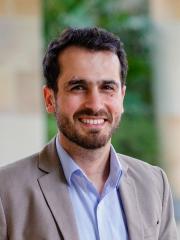
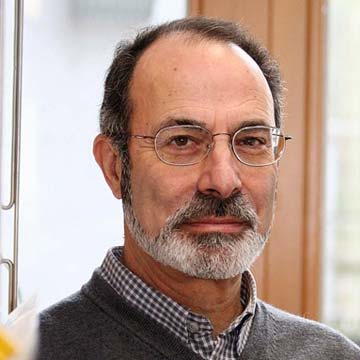
Andrew Connor is a Senior Lecturer in Archaeology and Ancient History at Monash University. He specializes in Ptolemaic and Roman Egypt, papyrology, and the social and religious history of ancient Egyptian communities. His research focuses on Egyptian temples during the Roman period, ancient economic practices, and the editing and publication of documentary papyri. Connor has particular expertise in the Fayum depression and Dakhleh Oasis regions. Connor's publications demonstrate a consistent focus on Egyptian religious institutions, economic systems, and textual evidence from archaeological sites. His recent work includes publications on temple administration, Greek papyri, and digital archaeology. He has received multiple teaching awards including the Faculty Citation for Outstanding Contribution to Student Learning (2017), Faculty Citation for Overseas Programs (2018), and Vice Chancellor's Citation for Outstanding Contribution to Student Learning (2018). Connor teaches courses on Greek and Roman history, archaeology, and ancient languages at both undergraduate and postgraduate levels. He serves as Honours Coordinator for the School of Philosophical, Historical, and International Studies.
Anastasia Semykina is a Professor of Economics and Deputy Dean (Research and Innovation) at RMIT University's School of Economics, Finance & Marketing. She holds a PhD from Michigan State University (2006) and previously served as Charles and Joan Haworth Professor of Economics at Florida State University. Her expertise spans theoretical and applied econometrics, with a focus on panel data models, missing data estimation, and their application in labor economics, education economics, transition economies, and economic psychology. She teaches advanced econometrics and microeconomics courses at both undergraduate and graduate levels. Research Interests: Theoretical and Applied Econometrics Labor Economics Economics of Education Transition Economies Economics and Psychology Health Economics Her recent publications address topics such as panel data methodologies, healthcare cost-effectiveness analysis, and educational policy evaluation. She is actively involved in supervising PhD and Master's research students in econometrics and applied economics.
Dr. Metin Uyanik is a Senior Lecturer at the School of Economics, The University of Queensland. He holds a PhD from Johns Hopkins University (2016) and previously worked as a Postdoctoral Research Fellow at the University of Rochester's Wallis Institute of Political Economy. His research focuses on Economic Theory, Game Theory, Political Economy, Computational Economics, and Mathematical Economics. His work has been published in top-tier journals such as Economic Theory , Games and Economic Behavior , and Journal of Mathematical Economics . Education: Bachelor of Economics, Bogazici University Masters (Research) of Economics, Koc University Doctor of Philosophy, The Johns Hopkins University Research Interests: Dr. Uyanik's research bridges theoretical and applied economics, emphasizing foundational mathematical approaches. His work explores general equilibrium theory, discontinuous games, topological methods in economics, and welfare economics. Key themes include the analysis of non-convex economies, fixed-point theorems, and the integration of axiomatic frameworks with behavioral assumptions. Teaching: He teaches Advanced Microeconomics, Economics for Commerce, and Introduction to Strategic Thinking at UQ. His pedagogical focus includes mathematical rigor and practical applications of economic theory. Collaborations & Future Work: Collaborations with scholars like M. Ali Khan and Richard P. McLean highlight his engagement with complex theoretical frameworks. Ongoing projects include studies on large production economies, myersonian common knowledge, and computational methods in equilibrium analysis.
Matteo Bonotti is an Associate Professor of Politics & International Relations at Monash University, previously teaching at Cardiff University, Queen’s University Belfast, and the University of Edinburgh. His research focuses on democratic theory, political liberalism, linguistic justice, free speech, civility, and food justice, addressing ethical pluralism and cultural diversity in modern societies. He has published in journals like the American Political Science Review and authored/co-authored books including Partisanship and Political Liberalism in Diverse Societies (Oxford UP, 2017) and Healthy Eating Policy and Political Philosophy: A Public Reason Approach (Oxford UP, 2022). Bonotti leads projects on disinformation in Southeast Asia, linguistic justice among Italian-Australians, and civic education. His work contributes to UN Sustainable Development Goals related to justice, peace, and sustainable consumption. Education: Previous academic roles at Cardiff, Queen’s Belfast, and Edinburgh universities. Research Themes: Ethical pluralism, democratic legitimacy, public reason, and policy narratives. Recent Projects: ASEAN Disinformation Index, Language & Political Participation in Australia, and Civic Virtue in Polarized Societies. His articles explore topics like civility in environmental politics, far-right network dynamics, and gastrospaces as ethical spaces. Collaborations span international scholars across political theory, sociology, and philosophy. Bonotti actively engages with public discourse through media commentaries on civility, pandemic narratives, and free speech debates.
Felicity McArdle is a Professor in the Department of Early Childhood Education within the Faculty of Education at Queensland University of Technology. With a distinguished career spanning over two decades, her work centers on reimagining early childhood pedagogy through critical lenses of social justice, art education, and play-based learning. Her research has significantly influenced Australian early childhood policy and practice. McArdle's research interests demonstrate a consistent commitment to transformative education. She critically examines how art and play function as vehicles for social justice, challenging neoliberal discourses in early childhood education. Her work on refugee children's artistic expression and anti-bias curriculum development reveals her dedication to equity-oriented pedagogy. Through collaborative drawing methodologies and visual research approaches, she has pioneered innovative ways of understanding children's perspectives. Her publication trends reveal a sophisticated evolution from foundational work on visual arts in education (2001-2010) toward increasingly critical examinations of power, policy, and social justice (2011-2021). The consistent citation impact of her work—particularly her 2002 paper 'Early Childhood Art Education: A Palimpsest' with over 13,000 citations—demonstrates her field-defining contributions to reconceptualizing art education as critical praxis. McArdle has held significant editorial roles including co-editing the influential 2013 volume 'Young Children, Pedagogy and the Arts' and serving on the editorial board of Australian Journal of Early Childhood. Her collaborations with leading scholars like Susan Grieshaber, Jennifer Sumsion, and Linda Knight have produced seminal work on intentional teaching and play-based learning. Her research methodology expertise centers on visual and arts-based approaches, particularly collaborative drawing techniques that engage children as active research participants. This methodological innovation reflects her commitment to ethical research practices that honor children's agency while generating meaningful insights about early childhood experiences.
Professor Jack Barbalet is a distinguished academic at the Australian Catholic University (ACU), affiliated with the Institute for Humanities and Social Sciences at the Melbourne campus. His research centers on sociological theory, political and economic sociology, the sociology of emotions, and the sociology of modern China, with a focus on social solidarity, interaction, and institutionalization. His educational background includes an undergraduate degree from Flinders University and a PhD from Adelaide University. He has held academic positions at the University of Papua New Guinea, Australian National University, University of Leicester, and Hong Kong Baptist University before joining ACU. His research emphasizes conceptual refinement and theoretical development, particularly in interpreting Max Weber and analyzing Chinese society through the lens of guanxi, trust, and rural social structures. His recent publications reflect a sustained engagement with foundational sociological texts and their contemporary relevance. The body of his recent work demonstrates strong thematic continuity in examining classical sociological theory, especially Weberian thought, while extending it into non-Western contexts, particularly China. Topics include political violence, cultural imperialism, emotional dynamics in social exchange, and institutional transformation. Member, Editorial Board, Sociology (from 2022) Member, Editorial Board, Sociological Theory (from 2021) Member, Editorial Board, Journal for the Theory of Social Behaviour (from 2020) Member, Advisory Board, Emotions and Society (from 2019) As a Full HDR Supervisor, Professor Barbalet mentors higher degree research students, though no specific students are listed in the provided text. While no grants are explicitly mentioned, his sustained publication record and editorial roles indicate active research funding and academic leadership. His work continues to influence theoretical and comparative sociology globally. Professor Barbalet is actively involved in academic service through editorial and advisory roles across major sociology journals, reflecting his leadership in sociological theory and the sociology of emotions. He contributes to shaping scholarly discourse in core areas of the discipline.
Lisa L. Wynn is Professor in the School of Social Sciences (Discipline of Anthropology) at Macquarie University in Sydney, Australia. She serves as Associate Editor of American Ethnologist (2022-2027) and previously held leadership positions including President of the Australian Anthropological Society (2020) and membership on the AAS Executive Committee (2018-2021). Wynn earned her PhD in 2003 from Princeton University's Anthropology Department, followed by postdoctoral positions at Princeton's Office of Population Research and Center for Health and Wellbeing. Her research program centers on gender, reproductive health technologies, sexuality, and religion, with continuous fieldwork in Egypt since 1998. More recently, she has expanded her work to examine ethics review bureaucracies, lay understandings of infectious disease, and young adult vaping behaviors in Australia. Her methodological approach combines deep ethnographic engagement with critical analysis of how power structures intersect with medical technologies and bodily experiences, particularly among marginalized communities. Analysis of her recent publications reveals an evolving trajectory that maintains her foundational interest in Middle Eastern contexts while increasingly addressing digital spaces (as seen in studies of online fatwas) and contemporary health crises (including pandemic responses and vaping culture), with consistent attention to bodily autonomy and reproductive justice. Her significant scholarly contributions have been recognized through multiple prestigious awards: Vice Chancellor's Teaching Excellence Award from Macquarie University (2009) Australian Award for Teaching Excellence (2012) OLT National Teaching Fellowship (2012-2014) Leeds Honor Prize from the Society for Urban, National, and Transnational/Global Anthropology (2008) Wynn actively mentors graduate researchers specializing in gender, sexuality, medicine and technology, with particular emphasis on sexual and reproductive health. Her research program has received substantial funding from the Social Science Research Council, Australian Research Council, Office of Learning and Teaching, and Hort Innovation. Notably, she co-led a major international project to develop multilingual sexual and reproductive health resources that have reached millions of users across 208 countries. She also created a free online ethics training program for humanities and social sciences researchers at Macquarie University. Through collaborations with Cambridge Reproductive Health Consultants and other partners, Wynn has successfully translated academic research into accessible public resources, including evidence-based information on medication abortion available in six languages (English, Spanish, French, Arabic, Turkish, and Farsi).
Dr. Gavin Mount is a researcher at UNSW Canberra , specializing in non-traditional security studies , ethnic conflict , and the sociopolitical implications of emerging technologies . His work bridges theoretical analysis with practical applications in conflict transformation and defense studies. Research Focus: Global politics of ethnic conflict, hybrid peace/war frameworks, and socio-political impacts of drone technology. Teaching: Courses like Ethnic Conflict in World Politics and Law, Force and Legitimacy , with a focus on military education and strategic studies. Publications: Recent work includes contributions to Thinking Swarms (2025) and Hybridity on the Ground in Peacebuilding and Development (2018). Grants: Leads the Curricula Integration of Student Wellbeing Resources project under HERDSA. Key Themes across his research include the intersection of technology and conflict, evolving defense paradigms, and pedagogical innovations in security studies.
Dr. Rajesh Sharma is an Associate Professor in the School of Global, Urban and Social Studies (GUSS) at RMIT University, Melbourne, Australia. He specializes in Dispute Resolution, Investment Arbitration, and International Trade Law. His research focuses on arbitration laws in Asia, WTO-related issues, and mediation innovations. He holds a PhD in Law from China's Chinese University of Political Science and Law, complemented by degrees from Monash University and the University of Delhi. Dr. Sharma has advised governments and transnational companies on trade policies and has conducted trainings in over 20 countries. He is a winner of the ADR Teacher Award 2022 in Australia. His professional roles include: Associate Editor of the Manchester Journal of International Economic Law Editorial Board member of China and WTO Review and Asia-Pacific Mediation Journal Member of ICC Australia National Committee and Singapore Convention preparation He has designed unique moot competitions, including the Asia-Pacific Vis Pre Moot, promoting disability inclusion in legal advocacy. His current projects include a book comparing China-India investment laws and commentary on the Singapore Convention. Dr. Sharma's service engagements include roles as Panel Arbitrator for the Shanghai Arbitration Commission and leadership in organizations like the Hong Kong Basic Law Education Association.
James Manning is a Lecturer in Digital Design at RMIT University's School of Design. His research focuses on game design, digital media, and cultural memory, exploring topics such as game preservation, livestreaming practices, and the intersection of play and technology. He is particularly interested in 'anarchaeological' approaches to defunct games and the documentation of everyday play practices. His teaching interests include game studies, interactive media, animation aesthetics, and design methodology. He actively supervises research in strategies for reflective shortform game design and has contributed to projects like the Astrosurf interactive dome experience. Key research themes include media archaeology, esports culture, and the sociocultural dimensions of digital games. His work bridges theoretical frameworks with empirical studies, examining how digital platforms shape media consumption and cultural production.
Tarunabh Khaitan is the Professor (Chair) of Public Law at LSE Law School and an Honorary Professorial Fellow at Melbourne Law School. He specializes in legal theory, constitutional studies, discrimination law, and comparative constitutional design. Educated at National Law School (Bangalore) and Oxford (as a Rhodes Scholar), he holds degrees including a DPhil from Exeter College. Previously, he held roles such as Vice Dean at Oxford Law Faculty and Australian Research Council Future Fellow at Melbourne Law School. His research focuses on discrimination law, constitutional design, and judicial accountability. His monograph A Theory of Discrimination Law (OUP 2015) won the 2019 Woodward Medal. He has advised on anti-discrimination legislation in India and contributed to UN anti-discrimination guides. Awards include the 2018 Letten Prize (€200k award) and Excellence in Engagement Award (2020). Key publications include works on constitutional resilience in South Asia, comparative electoral systems, and the role of political parties in constitutional theory. He advises global initiatives like the International Journal of Constitutional Law and the Equal Rights Trust. His Hindi podcast संविधान संवाद explores Indian constitutionalism.
Dr Juliet Bennett is a Research Fellow at the Sydney Centre for Healthy Societies (SCHS) and Charles Perkins Centre, University of Sydney. Her work bridges process philosophy with systemic interventions for social and ecological wellbeing. She holds a PhD in Peace and Conflict Studies, focusing on paradigm shifts from static to process thinking. Previously, she managed collaborative research at Sydney Policy Lab and directed the Sydney Peace Foundation. Education: PhD (Peace and Conflict Studies), MPhil/MA (Peace and Conflict Studies). Teaching includes units on peace studies, narratology, and structural violence at the University of Sydney and Lenoir Rhyne University. Research interests center on mitigating social/ecological injustice, structural violence, and climate change through critical sociology, contextual economics, and participatory methods. Current projects examine food systems and ultra-processed foods via critical social theory. Awards: 2020 Excellence in Teaching for 'Key Issues in Peace and Conflict Studies'. Memberships include Sydney Policy Lab, New Economic Networks Australia, and the International Peace Research Association. Publications span process philosophy applications, climate policy, and participatory research methods. Her work advocates for systemic transformations toward ecological civilization through interdisciplinary collaboration.
Professor Will Bateman is a distinguished academic at the Australian National University (ANU) College of Law, where he serves as a Professor and recently completed his term as Associate Dean (Research) from 2021 to 2024. He is also a Chief Investigator for the ANU Grand Challenge project "Humanising Machine Intelligence" and a Fellow at the Gradient Institute, a leading ethical AI research organization based in Sydney. Professor Bateman's educational background is impressive, having earned a PhD and LLM (Hons) from the University of Cambridge and a BA/LLB (Hons) from the Australian National University. Prior to his academic career, he worked in appellate litigation, commercial disputes, and banking as a solicitor at Herbert Smith Freehills, and served as an associate to Justice Stephen Gageler AC of the High Court of Australia and Justice Steven Rares of the Federal Court of Australia. Professor Bateman's research spans two major interdisciplinary domains that sit at the intersection of law with finance and technology. His work on financial regulation focuses on the legal aspects of central banking, sovereign debt markets, digital currencies, and sustainable investing. He has provided expert evidence to the UK Parliament's House of Lords Inquiry into Quantitative Easing, and has collaborated with major financial institutions including the Federal Reserve Bank of New York and the Bank of England. His research on artificial intelligence examines regulatory frameworks for AI in the public sector, with collaborations including the Minderoo Foundation and the Gradient Institute. His recent publications demonstrate a remarkable breadth across legal theory, financial regulation, and AI governance. The articles reveal a consistent theme of examining how traditional legal frameworks adapt to new financial technologies and monetary policy challenges. His work bridges theoretical legal scholarship with practical policy implications, as evidenced by his numerous government consultations and collaborations with central banks worldwide. 2020 Yorke Prize by the University of Cambridge for his work on public finance and constitutionalism Top 10 all-time most downloaded SSRN paper on central banking ("Central Bank Money: Liability, Asset, or Equity of the Nation?") Professor Bateman actively supervises research students, currently mentoring Benjamin Ettinger who is pursuing a PhD on "Legal Method, Cartels and Public Monopolies: A View From the High Court 1908 - 1948." He has secured significant research funding, including projects funded by the Economic and Social Research Council (UK), the German Research Foundation (Deutsche Forschungsgemeinschaft), and The Minderoo Foundation. His "Rebuilding Macroeconomics Initiative: Legal and Economic Conceptions of Money" received £245,000, while the "FA Mann" project was funded with €620,000 (approximately A$1,012,500). He leads the "Humanising Machine Intelligence" project, an ambitious interdisciplinary initiative involving computer scientists, mathematicians, philosophers, sociologists, psychologists, and lawyers aimed at developing democratically legitimate machine intelligence. He also co-led a major project with the University of Western Australia to formulate model legal frameworks for AI regulation in the public sector, funded by The Minderoo Foundation.
Professor Begona Dominguez is a faculty member in the School of Economics at The University of Queensland (UQ), within the Faculty of Business, Economics and Law. She holds a Doctor of Philosophy in Economics from Universitat Autònoma de Barcelona. Her research focuses on Macroeconomics, Public Finance, and Monetary Economics, with emphasis on fiscal policy design, central bank balance sheets, and optimal taxation frameworks. Her key projects include Supporting Entry and Growth of Australian Businesses via Tax and Transfers (2022–2024) and The role of a central bank's balance sheet in shaping the economy (2021–2024) . She is available for PhD supervision and actively contributes to applied macroeconomic analysis, particularly in urban economic advantages and policy evaluation. Publications span topics like fiscal sustainability, inflation dynamics under central bank policies, and the implications of constitutional constraints on taxation. Her work bridges theoretical models (e.g., Ramsey frameworks) with empirical applications in tax policy and public debt management. Professor Dominguez maintains affiliations with the Centre for Applied Macroeconomic Analysis (ANU) and has reviewed prominent texts such as John Taylor's Reform of the International Monetary System . She is based in Room 507, Colin Clark Building at UQ.
Francisco Barillas Bedoya is an Associate Professor at the School of Banking and Finance within the UNSW Business School, University of New South Wales. His research focuses on theoretical and empirical asset pricing, particularly portfolio choice, asset pricing tests, macrofinance, and term structure of interest rates. He has published extensively in top-tier journals like the Journal of Finance and Management Science. PhD from New York University MA from University of British Columbia BSc from Trent University His recent publications analyze Sharpe ratios for model comparison, speculative behavior in bond markets, and risk premia in fixed income markets. While no formal awards are listed, his work intersects financial economics, econometrics, and computational methods. Office: Level 3, Room 333C, Ref E12 Email: f.barillas@unsw.edu.au