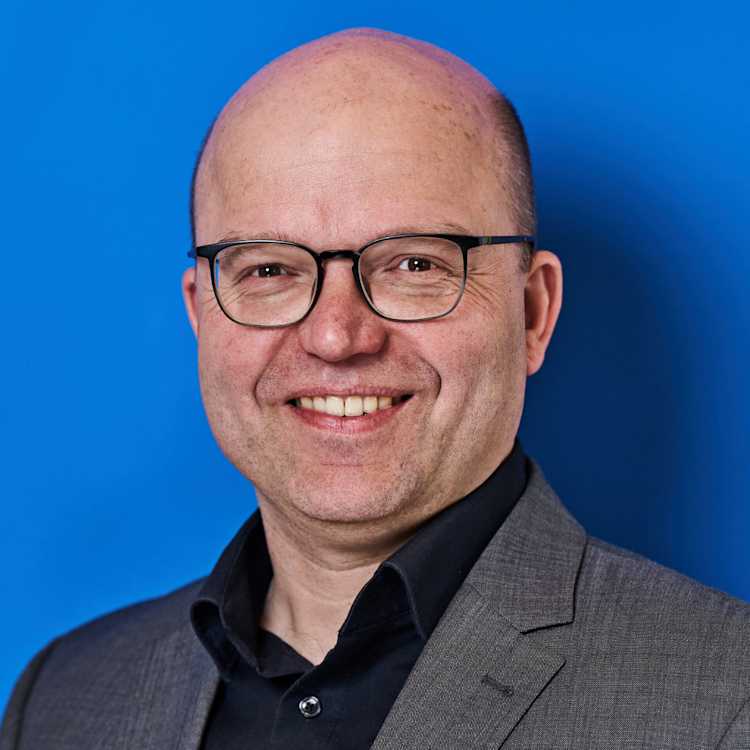
Albrecht Fuess is a Professor of Islamic Studies at Philipps University of Marburg since 2010, specializing in Middle Eastern History (13th–17th centuries), Mamluk socio-cultural dynamics, and contemporary European Islamic discourses. His research spans historical continuity in Ottoman-Mamluk-Safavid interactions, Islamic youth cultures, and Mediterranean geopolitics. Research Focus: Medieval Islamic history, Transottomanica mobility studies, Islam in Europe, and cultural integration of Muslim migrants. Awards: Le Studium Fellowship (2007–2009) at Université de Tours. His publications emphasize military-economy interplay, legitimacy through religious narratives, and resource management in empires, with a focus on Mamluk and Ottoman transformations. He has advised on doctoral projects covering topics like Islamic welfare, Arabic ʾAmālī literature, and Cypriot-Ottoman relations. Leadership: Co-coordinator of Transottomanica (DFG-SPP 1981), member of ANR and DAAD committees, and liaison professor for the German National Academic Foundation. Editorial Roles: Co-editor of 'Transottomanica' and 'Muslim Worlds' series, and advisory board member for journals in Cairo, Paris, and Leuven.
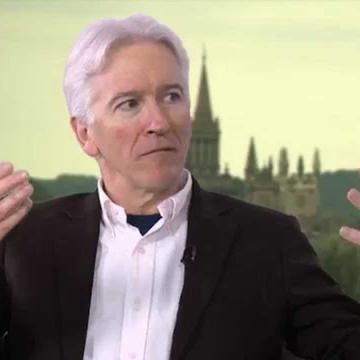
Eugene Rogan is Professor of Modern Middle Eastern History at the University of Oxford and a Fellow of St Antony's College, where he also serves as Director of the Middle East Centre. He is affiliated with the Faculty of Asian and Middle Eastern Studies, a leading center for area studies in the UK. His research focuses on the modern history of the Arab world, particularly during the 18th to 20th centuries. Key areas include the Arab provinces of the Ottoman Empire, the First World War in the Middle East, and the 1948 Palestine War. His current project re-examines the 1860 massacres in Damascus as a case of sectarian conflict and state reconstruction. Rogan’s publications have significantly shaped the historiography of the modern Middle East. His recent books, such as The Arabs: A History and The Fall of the Ottomans , reflect a consistent engagement with themes of empire, resistance, and national identity. The articles and books listed demonstrate a strong emphasis on military, political, and social transformations in the region, with recurring attention to colonialism, state formation, and collective memory. Fellow of the British Academy (2017) He teaches undergraduate and postgraduate courses, including The Middle East in the Age of Empire, 1830–1971 and The History of the Middle East, 1860–1970 . While no students or grants are explicitly listed, his leadership of the Middle East Centre indicates active mentorship and research direction. He is involved in public-facing scholarship, regularly participating in lectures and media engagements. Rogan leads the Middle East Centre at St Antony's College, a hub for interdisciplinary research, conferences, and publications on the region. The center fosters collaboration among scholars, policymakers, and public intellectuals, amplifying the impact of his academic work.
Professor Heiko Beyer holds a chair position at the Department of Sociology IV within the Faculty of Arts and Humanities and Social Sciences at Heinrich Heine University Düsseldorf. His academic work spans multiple domains of contemporary sociological inquiry with particular emphasis on prejudice studies, political sociology, and the sociology of religion. Beyer maintains an active research profile with numerous publications in leading sociological journals and serves as principal investigator for several major research projects funded by prestigious German research institutions. Professor Beyer's research interests form a cohesive body of work examining various dimensions of social prejudice and political attitudes. His scholarship demonstrates particular expertise in antisemitism studies, where he has developed innovative methodological approaches to measuring contemporary manifestations of anti-Jewish sentiment. His work also explores anti-Americanism as a comparative framework for understanding prejudice, examining the "elective affinities" between different forms of resentment. Additional research areas include the sociology of social movements, the intersection of religion and politics in Europe, and human rights implementation in diverse social contexts. Beyer's methodological approach combines quantitative survey research with qualitative analysis, often employing experimental designs to uncover the social context dependence of prejudicial attitudes. An analysis of Professor Beyer's recent publications reveals a clear trajectory toward increasingly sophisticated examinations of antisemitism in contemporary Germany. His work has evolved from theoretical examinations of antisemitism's historical development to nuanced empirical studies capturing its current manifestations across different social milieus. A distinctive feature of his recent scholarship is the examination of how global events, particularly conflicts in the Middle East, create "spaces of opportunity" for antisemitic expressions. He has also pioneered research on the relationship between political Islam and Jewish experiences in Germany, producing some of the first systematic studies on how radical Islamic ideologies impact Jewish life. His methodological contributions include developing new antisemitism scales and employing factorial survey experiments to measure latent attitudes. Professor Beyer currently leads three major research projects: "Antisemitism in the General Population of North Rhine-Westphalia" (funded by the State of North Rhine-Westphalia, 2022-2024), "Social Contexts of Equality Practices" (a Heisenberg project funded by the German Research Foundation, 2019-2024), and "The Impact of Radical Islam on Jewish Life in Germany" (funded by the Federal Ministry of Education and Research, 2020-2024). These projects collectively represent significant contributions to understanding prejudice, human rights implementation, and minority experiences in contemporary German society. His research often involves collaboration with interdisciplinary teams and has practical implications for educational programs combating antisemitism and promoting social equality.
GIGA German Institute of Global and Area StudiesGermany
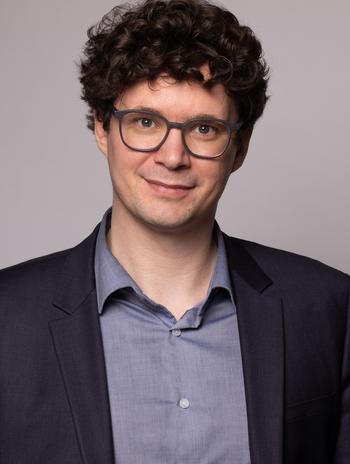
Thomas Richter is a leading academic and Professor at the German Institute for Global and Area Studies (GIGA) , where he serves as Lead Research Fellow and Head of the Research Programme "Accountability and Participation" . His work focuses on the institutional and material determinants of authoritarian rule , executive personalization , and global political economy , particularly in the Middle East and North Africa region. Education: PhD in Political Science (summa cum laude) at the University of Bremen (2008); studies at Eberhard-Karls University Tuebingen and University of Michigan, Ann Arbor. His research explores the interplay of rentier statehood and economic reforms , civil society under authoritarian regimes , and shrinking civic spaces . Recent projects include the Merian Center for Advanced Studies in the Maghreb (MECAM) and the Monitoring System and Transfer Platform Radicalisation (MOTRA) , funded by BMBF and DFG. Richter has published extensively on topics such as anti-Semitism , executive power dynamics , and public opinion on military service in Germany. He has received notable awards, including the Lijphart/Przeworski/Verba Data Set Award (2017) and the Gero Erdmann-Preis für vergleichende Area-Forschung (2022) . His collaborative work spans institutions like the WZB Berlin and Université de Tunis . Richter is also a co-editor of the Perspectives on the Maghreb series with Amsterdam University Press.
Leila Hudson is an Associate Professor and Director of Graduate Studies in the School of Middle Eastern and North African Studies at the University of Arizona. She holds a BA from Yale College, an MA in Anthropology from the University of Michigan, and a PhD in Interdepartmental Doctoral Program in Anthropology and History. Her research focuses on culture and political economy in the Arab Mashreq, with particular attention to gender, Ottoman history, urban modernity, and contemporary Middle Eastern dynamics. Education: BA (Yale College), MA (University of Michigan Anthropology), PhD (Interdepartmental Doctoral Program in Anthropology and History) Key publications include Transforming Damascus: Space and Modernity in an Islamic City (2008) and Middle Eastern Humanities: An Introduction to Middle Eastern Cultures (2010). She is currently co-editing Media Evolution in the Middle East and researching global-local capital flows in the Arab Middle East. Her work integrates interdisciplinary perspectives on displacement, such as her 2015 lecture Fleeing Damascus: One Family's Experiences of War and Displacement , which examines Syrian refugee trajectories through a family case study.
Prof. Dr. Rachid Ouaissa serves as University Professor and Head of the Department of Middle Eastern Politics at the Center for Near and Middle Eastern Studies (CNMS), Philipps University of Marburg since March 2009. He concurrently holds affiliations with the Center for Interdisciplinary Religious Studies and Center for Conflict Research at the same institution, and maintains active roles in Berlin-based research networks including EUME and the Wissenschaftskolleg zu Berlin. His academic formation includes a PhD from the University of Leipzig (2004) supervised by Prof. Hartmut Elsenhans, preceded by undergraduate studies at Martin-Luther-Universität Halle-Wittenberg (1994-1999) where he received the DAAD-Preis in 1997. His scholarly trajectory includes a Visiting Scholarship at Dalhousie University (2008) and prior research positions at the University of Leipzig. Ouaissa's research program centers on Middle Eastern and North African political dynamics with four interconnected pillars: cultural-identitarian political movements (comparing BJP in India and Algerian parties), moderate Islamist parties as potential EU partners, state-class behavior during resource scarcity (Iraq case study), and fundamentalist movement development (FIS in Algeria vs. Mahdia in Sudan). His conceptual innovation emphasizes blocked middle classes mobilizing religious identity to challenge state power, while his recent work develops 're-configuration' frameworks for understanding post-Arab Spring transformations. His publication trajectory from 1999-2021 reveals evolving scholarly priorities: early work focused on Algerian state formation and political Islam, shifting toward comparative cultural-identitarian movements (2007-2009), then moderate Islamist parties' foreign policy (2009-2012), with contemporary research addressing Hirak protests and theoretical re-configuration models. The corpus demonstrates consistent engagement with Algeria while expanding to regional comparative frameworks, particularly through co-edited volumes on Maghreb entanglements and MENA transformation processes. His scientific recognition includes: DAAD-Preis der Martin-Luther-Universität (1997) Friedrich-Ebert-Stiftung PhD Fellowship (2000-2002) Friedrich-Ebert-Stiftung Scholarship (1998-1999) Professor Ouaissa has secured major research funding including two German Research Foundation (DFG) projects: 'New Cultural-Identitarian Political Movements' (2007-2009) and 'Moderate Islamist Parties as EU Partners' (2009-2012). He actively mentors emerging scholars through the Friedrich-Ebert-Stiftung's doctoral programs and serves on its selection committees, while his policy engagement manifests through frequent media contributions analyzing Algerian protests and regional dynamics for outlets including Le Monde, El Watan, and Deutsche Welle. He leads the Department of Middle Eastern Politics at CNMS while contributing to the university's interdisciplinary research infrastructure through the Center for Interdisciplinary Religious Studies and Center for Conflict Research. His international scholarly integration is evidenced by co-editing the book series 'Politik und Gesellschaft des Nahen Ostens' and 'Studien zur Geschichte und Zeitgeschichte Westasiens und Nordafrikas', alongside editorial leadership of the journal META (Middle East Topics and Arguments).
Prof. Rasmus Gjedssø Bertelsen is Professor of Northern Studies and inaugural Barents Chair in Politics at UiT The Arctic University of Norway. A Danish scholar raised in Iceland, he directs work package 2 on Power with Science Diplomacy in the H2020 InsSciDE consortium, collaborating with Prof. Maria Rentetzi. His research spans transnational knowledge flows between USA-Europe-Middle East-East Asia-Arctic and focuses on elite socialization, epistemic communities, and science diplomacy’s role in adapting Arctic governance to global shifts. Education: PhD (Cambridge, with year at Sciences Po), postdoc (Harvard, UNU), studies in Copenhagen, Reykjavik, Geneva, Lausanne, Amsterdam Key Research Areas: Arctic International Relations, Science Diplomacy, Brain Circulation, Transnational Knowledge Networks, Power Transition, GCC Triple-Helix Relations His 15 most recent articles (2012–2024) examine Arctic governance, Sino-Arctic engagement, energy systems, and science diplomacy. Trends include historical learning for policy adaptation, China’s Arctic strategies, and the Arctic as a laboratory for global governance models. Bertelsen initiated UiT’s UNFCCC observer status and participated in COP15 (2009) and COP21 (2015). He coordinates the Norwegian-Russian PhD course Society and Advanced Technology in the Arctic and the Norway-EU Science Diplomacy Network. Additional roles include advising on EU Arctic policy, analyzing US-China-Russia Arctic dynamics, and exploring space science applications in Arctic development.
Prof. Dr. Tobias Berger is Junior Professor of Political Science with a focus on Transnational Politics of the Global South at the Otto Suhr Institute for Political Science, Freie Universität Berlin. He is also a Principal Investigator in the Excellence Cluster 'Contestations of the Liberal Script' (SCRIPTS). His work bridges international relations, political sociology, and legal anthropology, with a strong emphasis on the Global South. University: Free University of Berlin School: Otto Suhr Institute for Political Science Department: Department of Politics and Social Sciences Position: Junior Professor Education: PhD, Berlin Graduate School for Transnational Studies MPhil in Political Theory, University of Oxford BA in Politics & Development Studies, School of Oriental and African Studies (SOAS), University of London His research interests center on international political sociology , human rights beyond liberalism , legal pluralism , and transnational politics of South Asia . He employs ethnographic and interpretative methods to explore how global norms are translated in local contexts, particularly in Bangladesh and across the Global South. The recent articles reflect a strong trend toward critical approaches to human rights , translation theory , non-Western security practices , and post-liberal political orders . His work interrogates the liberal script in global governance, especially in education, security, and constitutionalism, often from a decolonial and relational perspective. Scientific Awards: No specific awards mentioned in the text. As a Principal Investigator in the SCRIPTS excellence cluster, he leads major research initiatives such as 'De-Centering Human Rights', 'Negotiating the Future of Education', and 'Security Doctrines in a Changing World'. He has collaborated with institutions like UNESCO and the OECD and has secured funding for interdisciplinary, transregional research. He has advised on development and humanitarian projects in Cambodia and worked with indigenous communities in Ecuador. He has edited influential volumes like World Politics in Translation (2018) and special issues on transnational non-state actors. He is affiliated with research networks across Europe and the Global South and contributes to debates on global governance, norm contestation, and epistemic justice.
GIGA German Institute of Global and Area StudiesGermany
Prof. Dr. Eckart Woertz is Director of the GIGA Institute for Middle East Studies and Professor of Contemporary History and Politics of the Middle East at the University of Hamburg. He holds leadership roles at the German Institute for Global and Area Studies (GIGA), a Leibniz Institute, and serves on editorial boards of journals like the Middle East Journal and Food Security . His research focuses on Iraq’s contemporary history, Middle East political economy, energy security, and Euro-Mediterranean relations. Woertz has held senior positions at institutions such as CIDOB in Barcelona and Princeton University, and advised on Gulf economic studies. His academic work addresses pressing regional issues like economic diversification in the Gulf, post-invasion Iraq analysis, and climate change impacts. Education: Political Science, Islamic Studies, and Economics from Friedrich-Alexander University Erlangen-Nuremberg (1990–1995) with DAAD and DFG scholarships. Doctorate in 1999. Professional experience includes banking (2000–2006) and roles at the Gulf Research Center in Dubai (2006–2010). Research interests span geopolitical shifts, food security, and energy transitions. Key projects include the WONAGO initiative on global South narratives and the SAGE program on sustainable resource management. Media contributions include analyses on the Gaza conflict and Iran’s nuclear program. Teaching includes courses at Princeton and Hamburg Universities on Middle Eastern history and politics.
GIGA German Institute of Global and Area StudiesGermany
Dr. Sara Bazoobandi is a Research Fellow at the GIGA Institute for Middle East Studies, part of the German Institute for Global and Area Studies (GIGA), a Leibniz Institute based in Hamburg, Germany. She has been associated with GIGA since February 2020. Her research focuses on International Political Economy and Energy Economics, with a regional emphasis on Iran and the Gulf Cooperation Council (GCC) countries. Her academic background includes a PhD in Middle East Political Economy from the Institute of Arab and Islamic Studies at the University of Exeter, an MSc in Economic Development in Emerging Markets from the University of Reading, and a BSc in Civil Engineering from Tehran, Iran. Prior to her current role, she served as a Senior Lecturer and Lecturer in International Political Economy at Regent's University London (2015–2018), and as a Research Fellow at the Middle East Institute, National University of Singapore (2012). Dr. Bazoobandi’s research centers on the political economy of the Middle East, particularly Iran’s economic resilience, diversification strategies, and digital transformation. She examines how Iran navigates international sanctions, develops its knowledge-based economy, and strengthens strategic alliances. Her work also explores the geopolitical implications of the Russo-Iranian nexus, focusing on military, economic, and ideological cooperation. More recently, she has been involved in the Digital Transformation Lab (DigiTraL), analyzing digitalization as a tool for international cooperation, particularly between Germany and the Global South. Her recent publications and policy studies highlight trends in AI governance, GCC digital transformation, and the weaponization of knowledge in authoritarian contexts. These works reflect a strong interdisciplinary approach, combining political science, economics, and security studies. She regularly contributes to media outlets such as Frankfurter Allgemeine Zeitung , WirtschaftsWoche , and Deutsche Welle , offering expert commentary on Middle Eastern geopolitics, Iranian foreign policy, and regional conflicts. Dr. Bazoobandi has taught at the Department of Political Science, University of Hamburg (2024), offering a seminar on ideology, state ethos, and power projection in Iran. She has also been a lecturer and speaker at international forums including the Gulf Research Meeting at Cambridge University, the Istituto per gli studi di politica internazionale (ISPI), and the GIGA Forum, where she has addressed topics such as gender equality in the MENA region and the 2022 Iranian protests. She is also the Managing Director of Middle East Risk Consulting, a role she has held since May 2018, demonstrating her engagement with applied policy and risk analysis in the region.
Mohammad Reza Farzanegan is a Professor in Economics of the Middle East at the Center for Near and Middle Eastern Studies (CNMS) & School of Business and Economics of Philipps-Universität Marburg in Germany. He serves as the coordinating professor for the international master study program of Economics of the Middle East in Marburg and holds research fellowships with ERF (Cairo) and CESifo (Munich). Education: PhD in Economics from Technische Universität Dresden (2006-09) with DAAD research grant Georg Forster Research Fellowship from Alexander von Humboldt Foundation (2010-12) MSc in Energy Economics & Marketing from University of Tehran (2000-03) BA in Theoretical Economics from Allameh Tabatabaei University, Tehran (1995-1999) Professor Farzanegan's research focuses on political economy of the Middle East, with specialization in Iran. His work spans energy economics, political economy of oil rents, climate change impacts, sanctions analysis, public finance, shadow economy, corruption economics, demographic transition, political institutions, economic development, and economics of happiness. His research methodology combines empirical institutional economics with development economics approaches. His recent publications (2025) demonstrate consistent scholarly output across multiple high-impact areas including sanctions effects on internal conflict, oil rent impacts on economic behavior, natural disaster economics, and Middle Eastern political economy. His work shows particular strength in applying advanced econometric techniques to analyze complex socio-economic phenomena in the Middle East context. Scientific Awards: ERF Research Fellow (Cairo) CESifo Research Network Fellow (Munich) Georg Forster Research Fellowship from Alexander von Humboldt Foundation Professor Farzanegan has led multiple significant international research projects including NAREM (Political Economy of Natural Resource Management, 2016-2018), NaDiMa (Socio-Economic, Cultural and Technical Aspects of Natural Disaster Management, 2020), and DEBEC (Drivers and Socio-Economic, Behavioural Effects of Climate Change in Iran, 2020-2022), all funded by DAAD/AA/BMBF. His research grants demonstrate strong institutional support for his work on Middle Eastern economic issues. He actively contributes to research networks including the NaDiMa Dialogue series which has hosted multiple workshops on disaster management, climate change, and economic policy in Iran and Germany.
Prof. Dr. Sophia Hoffmann is an Assistant Professor at the Faculty of Political Science , University of Erfurt, specializing in International Politics and Conflict Research . As academic advisor for BA-International Relations and spokesperson for the doctoral program "De-Globalization and Global Decoupling (DeGlobE)", she combines teaching with cutting-edge research. PhD from School of Oriental and African Studies (SOAS), University College London Previous positions: Leibniz Center for Modern Oriental Studies, University of Bremen, Geneva Graduate Institute Extensive field research in Syria, Jordan, and Lebanon Her research focuses on intelligence research , international refugee policy , and humanitarian aid in conflict contexts. She examines how intelligence agencies function transnationally and how humanitarian policies intersect with state security apparatuses, particularly in West Asia. Recent publications analyze intelligence-security gaps in national strategies, raw material dependencies, and historical intelligence practices. Her work reveals a trajectory from migration studies to critical intelligence analysis, emphasizing state-society relations and knowledge production in security contexts. Research funding includes: EU COFUND program Volkswagen Foundation German Federal Ministry of Education and Research (BMBF) Prof. Hoffmann engages in knowledge transfer activities and media outreach, bridging academic research with public discourse on intelligence and humanitarian policies.
Dr. Mina Ibrahim is a Researcher at the Center for Conflict Research (ZfK) at Philipps University of Marburg , Germany. She is also the founder and director of Shubra’s Archive for Research & Development (SARD) in Cairo, Egypt, and serves as a project manager for the MENA Prison Forum and Institute for Foreign Relations (IFA) in Lebanon and Germany. PhD in Cultural Studies & Social Sciences (2022, Summa Cum Laude), Justus Liebig University & GCSC Giessen Master of Arts (2015, Cum Laude), Central European University (CEU), Hungary Bachelor of Arts (2014, Highest Honours), American University in Cairo (AUC), Egypt Her research explores minority dynamics , prison studies , urban sociology , and archives of conflict in the Middle East. Recent publications focus on Coptic Christian identity, sectarianism, and post-revolutionary Egypt. She has received prestigious fellowships from the DFG , Arab Council for Social Sciences , and Carnegie Endowment . Dr. Ibrahim supervises graduate students and teaches courses on prison systems, ethnography, and Middle Eastern cultural studies. Her fieldwork bridges Germany , Egypt , and Lebanon , emphasizing interdisciplinary approaches to power, memory, and urban marginalization .
Dr. Katharina Graf is a Research Fellow at the Institute of Cultural Anthropology and European Ethnology, Faculty of Linguistics, Cultures and Arts, Goethe University Frankfurt. She leads the DFG-funded ethnographic research project Cyborg Cook – Domestic Cooking in the Digital Age , investigating how digital technologies transform domestic cooking practices, knowledge reproduction, and socio-political negotiations around gender, class, and race in German households. Previously, she was a Postdoctoral Research Fellow at the SOAS Food Studies Centre, University of London, where she conducted research on bread as a measure of urban stability in Morocco, funded by the AXA Research Fund. Her educational background includes a PhD in Social Anthropology from SOAS, University of London (2016), with fieldwork in Marrakech, and a Diplom in Geography from the universities of Tübingen, Bonn, and Cologne, focusing on water supply in rural Morocco. Katharina Graf’s research lies at the intersection of cultural anthropology, food studies, gender, urban life, and science and technology studies. She explores how everyday practices—especially cooking—reflect and shape broader social, political, and technological transformations. Her work emphasizes the entanglement of material culture, digitalization, and human agency, particularly in domestic spaces. She investigates how food serves as a lens for understanding political legitimacy, social change, and human-machine relations. Her recent publications and blog posts from the Cyborg Cook project reveal a strong trend toward understanding digital domesticity through ethnographic, sensory, and feminist lenses. Themes include the role of mothers as technological pioneers, the disruption of routines by smart devices, and the multisensory experience of digital cooking practices. Her earlier work on bread in Morocco highlights how food security and culinary practices are deeply tied to political stability and state-society relations. Postdoctoral Fellowship, AXA Research Fund Principal Investigator, DFG-funded 'Cyborg Cook' project Dr. Graf has supervised undergraduate and postgraduate students at SOAS and Goethe University. While no specific grants beyond DFG and AXA are named, her role as principal investigator indicates leadership in competitive research funding. She is actively involved in academic service, including as associate book reviews editor for the FoodAnthropology Blog (Society for the Anthropology of Food and Nutrition) and former co-convenor of the Anthropology of Food Network at EASA. She disseminates research through innovative public formats such as photo exhibitions, cookery classes, and comedy clubs, reflecting a commitment to engaged scholarship. She is affiliated with the Cyborg Cook research team at Goethe University, an interdisciplinary group using ethnographic methods to study digital kitchen technologies. The project emphasizes collaborative, sensory, and participatory research approaches, often involving co-creation with participants through shared meals and observational cooking sessions.
Prof. Alexandra Scacco is a Professor of Comparative Politics at the University of Hamburg and Vice Director of the Institutions and Political Inequality unit at the WZB Social Science Research Center in Berlin. She holds a Ph.D. in Political Science from Columbia University and previously served as an Assistant Professor at New York University. Her research examines individual decision-making under extreme risk, such as participation in communal violence, irregular migration, and intergroup trust in conflict zones. She employs observational and experimental methods in Sub-Saharan Africa and the Middle East, with a focus on improving field-based measurement and knowledge aggregation in social science. Scacco's methodological contributions include pioneering work on digit-based fraud detection and addressing aggregation challenges in development research. Her book Anatomy of a Riot (Cambridge University Press, forthcoming) analyzes the drivers of ethnic violence in Nigeria. She has conducted fieldwork in Kenya, Nigeria, South Sudan, Sudan, and Uganda, and leads ongoing projects in Israel and Lebanon. Her research outputs span political violence, migration, prejudice reduction, and pandemic impacts in low-resource settings. Current projects include intergroup contact interventions, digital inequality in Kenya, and modeling pandemic outcomes. She has collaborated with institutions like the World Bank and global research teams through platforms like PLOS Medicine and Nature.