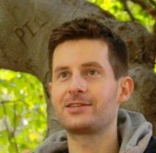
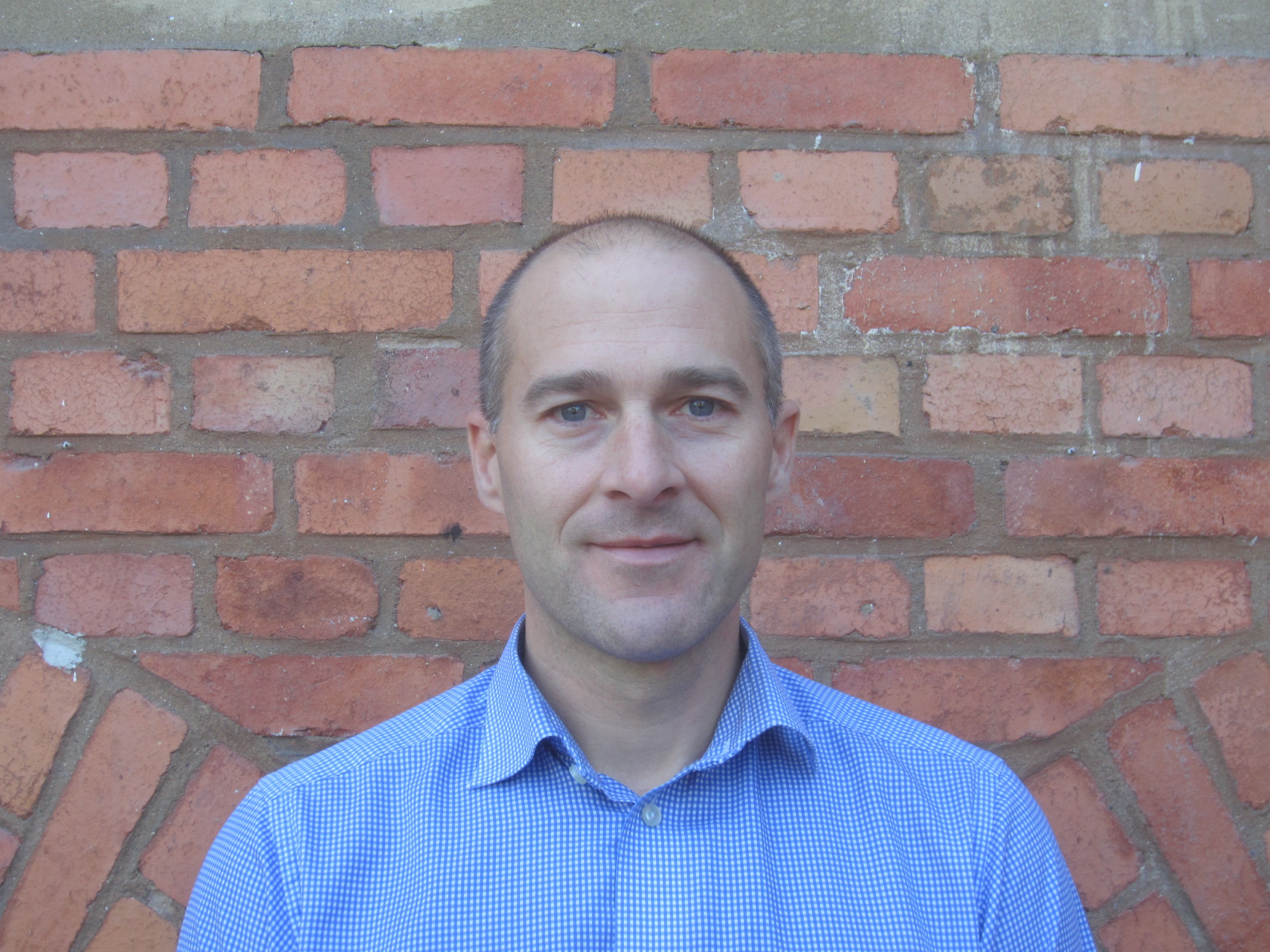
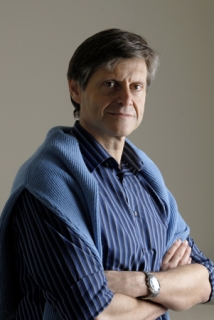
Marta Lazzaretti is a Research Fellow at the Department of Mathematics (DIMA) of the University of Genoa. Her work focuses on inverse problems in imaging, numerical analysis, and optimization algorithms in non-standard functional spaces. Affiliation: Department of Mathematics, University of Genoa Academic Rank: Research Fellow Research Interests: Specializing in regularization techniques and numerical optimization, her research spans: Off-the-grid methods for Poisson inverse problems Banach space formulations for geophysical data inversion Stochastic gradient descent in variable exponent Lebesgue spaces Dual descent regularization algorithms Publication Trends: Recent work emphasizes non-Hilbertian optimization frameworks (2023-2025), combining stochastic methods with deterministic regularization for imaging and subsoil inversion applications. Collaborations include Claudio Estatico, Luca Calatroni, and Giuseppe Rodriguez.
Tania Kosenkova is a researcher at the University of Potsdam , affiliated with the Department of Mathematics. Her work centers on advanced topics in probability theory and stochastic processes, particularly focusing on Lévy-type processes, statistical inference, and random dynamical systems under Lévy noise. Her research includes functional limit theorems , characterization of Lévy processes , and transportation distances between Lévy measures . She actively teaches courses such as Statistics for Teacher Education , Stochastic Models , and Limit Theorems for School Teaching , reflecting her dual focus on theoretical and pedagogical applications. Her publications reveal a consistent engagement with Lévy-driven SDEs , jump process analysis , and stochastic approximation schemes . While no formal awards are listed, her work has been featured in journals like Journal of Theoretical Probability and Stochastic Processes and their Applications , often in collaboration with researchers such as A. Kulik and J. Gairing.
Ilie Grigorescu is an Associate Professor at the University of Miami , affiliated with the College of Arts and Sciences and the Department of Mathematics . He also collaborates with the Computer Science division within the same college. Research Interests: Stochastic Processes Probability Theory Mathematical Biology Evolutionary Modeling Interacting Particle Systems Applied Mathematics Recent Publications focus on branching diffusions, evolutionary fixation times, stochastic game theory, and neuronal phase transitions. His work connects probabilistic models to biological and network systems, including studies on hydrodynamic limits and risk-averse optimal stopping. Contact: Email at i.grigorescu@miami.edu or call (305) 284-2146.
Venkat Anantharam is a Professor in the Department of Electrical Engineering and Computer Sciences at the University of California, Berkeley . His research spans Information Theory , Network Security , Coding Theory , and Stochastic Processes , with a focus on theoretical foundations and applications in communication systems, game theory, and data compression. He has supervised numerous PhD and Master’s students , including Soham Phade, Payam Delgosha, and Sudeep Kamath, and hosted postdoctoral fellows such as Lei Yu and Charles Bordenave. His recent publications address advanced topics like hypercontractivity in Boolean functions, universal compression of graphical data, and game-theoretic models for security. Articles from 2019-2021 highlight work on entropy power inequalities, error bounds for Markov chains, and distributed compression techniques. Venkat's research often bridges theoretical insights with practical applications, including LDPC decoders, network coding, and risk-sensitive control.
Professor Fraydoun Rezakhanlou is a faculty member at the Department of Mathematics , University of California, Berkeley , where he has been since 1991. His academic roles include serving as an Equity Advisor in the university's Senate Faculty and teaching advanced courses such as Math 270: Topics in Symplectic Geometry , Math 219: Dynamical Systems , and Math 279: Stochastic PDEs . He has also contributed to lecture notes on Symplectic Geometry, Dynamical Systems, and Stochastic PDEs. Research Interests: Rezakhanlou's work spans probability theory , partial differential equations , and their intersections with mathematical physics . His research includes coagulation-fragmentation models , kintetic theory , stochastic processes , and homogenization . He has explored applications to Navier-Stokes equations , Hamilton-Jacobi equations , and symplectic geometry . Article Trends: His publications focus on stochastic PDEs , Hamilton-Jacobi equations , and coagulation models . Recent articles analyze random tessellations , metastability in zero-range processes , and kintetic descriptions of scalar conservation laws. Older works address equilibrium fluctuations , Smoluchowski equations , and random walks in random environments . Advising: He has advised multiple PhD students, including Haotian Gu (2023), Kyeongsik Nam (2020), and Chanwoo Oh (2019), among others since the 1990s.
Erhun Kundakcıoğlu is a Professor in the Department of Industrial Engineering at Ozyegin University's Faculty of Engineering. He received his Ph.D. in Industrial and Systems Engineering from the University of Florida (2009) with a minor in Computer and Information Science and Engineering, following an M.S. in Industrial Engineering at Sabancı University (2004) and B.S. at Bilkent University (2002). He served as Assistant Professor at University of Houston (2009-2013) and Director/Distinguished Scientist at Optym (2019-2021). Ph.D.: Industrial and Systems Engineering, University of Florida (2009) M.S.: Industrial Engineering, Sabancı University (2004) B.S.: Industrial Engineering, Bilkent University (2002) His research focuses on combinatorial optimization and decision making under uncertainty , with applications in healthcare analytics , sustainable energy systems , supply chain management , and data science . He has developed optimization models for inventory control, lot sizing, and routing problems under uncertain demand/supply conditions, particularly in healthcare and humanitarian contexts. His work with the Datart Lab integrates mathematical programming into practical solutions for industry partners. Recent publications highlight his expertise in disaster relief inventory simulation, healthcare inventory management, and time series decomposition optimization. He supervises active graduate students including Deniz N. Yoltay (Ph.D.) and Buket İpek Akbal (M.S.). Early Career Award, TUBITAK Teaching Excellence Award, University of Houston Florida Chapter Scholarship, HIMSS Foundation As Associate Editor for the Journal of Global Optimization , Optimization Letters , and SN Operations Research Forum , he contributes to academic discourse in optimization and analytics. His consulting firm Datart R&D Management Consulting bridges academic research with industry applications in Turkey and abroad.
Rafael de Andrade Moral is a Professor of Statistics at Maynooth University's Faculty of Science & Engineering (since 2025), with prior roles as Associate Professor (2023-2025) and Assistant Professor (2018-2023). He holds a PhD in Statistics (University of São Paulo, 2014-2017) and dual bachelor's degrees in Biology and Education. His work bridges Statistical Ecology , Computational Biology , and Data Science , focusing on modeling ecological systems, agricultural pest dynamics, and biodiversity-ecosystem function relationships. Key research themes include Bayesian modeling , multivariate ecological forecasting , and machine learning applications . He founded the Theoretical and Statistical Ecology Research Group and serves on committees like the Young-ISA Chair . His recent articles span topics like insect abundance forecasting , weed-crop competition under climate change , and neuroinformatics-based learning analysis , reflecting interdisciplinary engagement. Scientific accolades include the Young Statistician Showcase Prize (2018), A-mu-sing Competition First Place (2021), and Maths Week Award (2022). He has advised three PhD students and contributed to over 50 peer-reviewed publications. Active in teaching innovation (e.g., Teaching Statistics through Music ), he also provides statistical consultancy to organizations like NIBIO and Jomakol .
Antti Knowles is a Full Professor at the University of Geneva , Section of Mathematics. His research lies at the intersection of probability theory, mathematical physics, and analysis, with a strong focus on random matrices, random graphs, and quantum dynamics. He leads the research group Analysis, Mathematical Physics and Probability and mentors postdocs and doctoral students. Research Interests: Prof. Knowles's work spans a wide range of topics including random matrices , random graphs , statistical mechanics , stochastic processes , high-dimensional statistics , quantum field theory , and quantum dynamics . His contributions are foundational in understanding spectral properties of complex systems and their physical implications. Publications: His recent publications demonstrate a consistent focus on spectral theory of random graphs and matrices, delocalization phenomena, and quantum statistical mechanics. These works often appear in top-tier journals such as Communications in Mathematical Physics , Annals of Probability , and Journal of the European Mathematical Society . Grants & Support: He has received significant funding from the European Research Council (ERC) and the Swiss State Secretariat for Education, Research and Innovation through projects RandMat (2017–2022) and ProbQuant (2022–2027). Editorial Work: Prof. Knowles serves on the editorial boards of Annales de l’Institut Fourier , Annals of Applied Probability , L'Enseignement Mathématique , and Journal of Statistical Physics .
Dr. Tomer Markovich is a Senior Academic Staff member at the School of Mechanical Engineering , part of the Fleischman Faculty of Engineering at Tel Aviv University . His research focuses on the physics of soft active matter, particularly the development of thermodynamic frameworks for non-equilibrium systems and the study of chiral active materials with unique properties such as odd viscosity. He also explores biological contexts like active gels and active polar liquid crystals. Education B.Sc. in Physics and Computer Science (Magna Cum Laude), Tel Aviv University, 2010 Ph.D. in Condensed Matter Physics, Tel Aviv University, 2016 Dr. Markovich's research spans the study of active field theories , mechanical criticality in disordered systems , and non-linear dynamics in biopolymer networks . His work also addresses chiral active fluids , entropy production , and nonreciprocal interactions , with applications in synthetic and biological active materials. Recent Publications Trends: His recent works focus on non-equilibrium thermodynamics, chiral active matter, and the mechanical properties of disordered and biopolymer networks. Topics include odd elasticity , minimal dissipation control , temporal correlations in chromosome dynamics , and nonaffine deformation mechanisms . Scientific Awards CTBP Postdoctoral Fellowship, Rice University (2018–2022) Blavatnik Postdoctoral Fellowships Program for Israeli Scientists (2016–2018) Dothan Scholarship for Academic Achievements (2016) Getti Scholarship for Excellence in Research (2014) Haya Rozet Scholarship for Academic Excellence (2013) Academic Appointments include postdoctoral research at the University of Cambridge (2016–2018) and Rice University (2018–2022). His current role involves theoretical research in soft active matter, with a focus on thermodynamic frameworks and chiral properties, contributing to both fundamental and applied aspects of mechanical engineering and condensed matter physics.
Anne Marie Kirkegaard is a PhD Fellow at Aalborg University, affiliated with the Department of Construction, Urban and Environmental Engineering within the Faculty of Engineering and Science. She works in the Section for Building Technology, Processes & Indoor Climate, specifically in the Research Group for Indoor Climate Quality and Building Systems. Her research bridges the fields of building science and public health, focusing on how indoor environmental conditions impact human health outcomes across Denmark's population registries from 2000-2021. Dr. Kirkegaard's research interests center on the relationship between housing conditions, indoor climate quality, and public health outcomes. Her work primarily employs cohort analysis of Danish population data to investigate how factors like housing type, indoor annoyances, and building systems affect mental health (particularly depression risk) and respiratory conditions (including Chronic Obstructive Pulmonary Disease). She has developed specialized expertise in analyzing large-scale register-based studies to identify mediating pathways between physical building characteristics and health outcomes, with particular attention to how perceived annoyances and social factors like loneliness influence depression risk. Her publication record demonstrates a clear research trajectory connecting building science with epidemiological methods. Starting with clinical studies on hospital outcomes, her work has evolved to focus on population-level housing and health relationships. Her most impactful recent work examines how housing type influences depression risk through perceived indoor annoyances and loneliness, revealing important indirect pathways between building design and mental health. This systems approach to understanding the building-health relationship represents a significant contribution to interdisciplinary environmental health research. Dr. Kirkegaard has been actively involved in three major research projects: her PhD project on housing conditions and indoor climate for public health (2021-2024) supervised by L. Gunnarsen; a broader research project on the same topic (2021-2025); and a project tracking development in housing conditions and indoor climate in Denmark from 2000-2021 (2020-2023). These projects involved extensive collaboration with researchers from public health, epidemiology, and building science disciplines. Based at Aalborg University's Copenhagen campus (AC Meyers Vænge 15, 2450 Copenhagen SW), Dr. Kirkegaard works within a research environment that combines engineering approaches with health science methodologies. Her position in the Research Group for Indoor Climate Quality and Building Systems places her at the critical intersection of technical building systems and human health outcomes, allowing her to contribute valuable insights that inform both building design practices and public health policy.
Filip Lindskog is a Professor of Insurance Mathematics at Stockholm University (SU) , where he heads the Mathematical Statistics division within the Department of Mathematics . With a background in financial mathematics and actuarial science, his research focuses on quantitative risk management, non-life insurance pricing, and applications of biostochastics and biostatistics. He has co-authored the textbook Risk and Portfolio Analysis: Principles and Methods (Springer, 2012) and supervises PhD students in actuarial mathematics. Education \n \n MSc in Engineering Physics, KTH Royal Institute of Technology (2000) \n PhD in Mathematical Statistics, ETH Zürich (2004) \n Research Interests Filip's work spans actuarial mathematics , financial risk modeling , and insurance analytics . He investigates stochastic processes in regime-switching environments, capital requirements for insurers, and mathematical frameworks for claims reserving. His recent publications emphasize machine learning applications in risk adjustment, asymptotic analysis of Poisson models, and regulatory compliance under IFRS 17.\n Scientific Contributions \n \n Editor, Scandinavian Actuarial Journal (2018–present) \n Director of SU's Master's Program in Actuarial Mathematics (2016–present) \n Head of SU's Mathematical Statistics Division (2018–present) \n \n Students and Collaborations Current and former PhD students include Nils Engler , Lina Palmborg , Jonas Alm , and Johan Nykvist . Former postdocs include Julie Thøgersen , Abhishek Pal Majumder , and Kristoffer Lindensjö . His research group explores discrete random structures, financial applications of biostatistics, and insurance modeling under capacity constraints.\n
Dr. Mahdi Shafiee Kamalabad is an Assistant Professor in the Department of Methodology and Statistics at Utrecht University's Faculty of Social and Behavioural Sciences. His research focuses on developing advanced statistical and machine learning methods for complex data analysis, particularly in social and behavioral sciences, life sciences, and bioinformatics. Applied Data Science Network Analysis Bayesian Statistics Longitudinal Data Analysis He specializes in Dynamic Bayesian Network Models, Relational Event Models, and Change Point Detection algorithms. His work spans interdisciplinary collaborations, combining educational psychology, applied linguistics, and data science to improve understanding of multilingual classroom interactions and epidemic prediction models. He has contributed to R software packages like remify, remstats, and remstimate for relational event history data analysis. Notable projects include "Better Together: A Social Network Analysis of Multilingual Interactions in the Classroom" (2022) and methodological developments for malaria dynamics analysis in Cameroon. His teaching includes Data Wrangling and Data Analysis courses. Funding sources include Utrecht University's Faculty of Social and Behavioural Sciences.
Edward Chlebus is an Adjunct Associate Professor of Computer Science at the Illinois Institute of Technology , where he serves as director of the Network Modeling and Teletraffic Analysis Lab (NEMTAL) . He holds an M.S. and Ph.D. in electrical engineering from Cracow University, Poland. Ph.D., Electrical Engineering, Cracow University (1990) M.S., Electrical Engineering, Cracow University (1985) His research focuses on network modeling, teletraffic engineering, and performance evaluation of computer and communications systems. He pioneered the statistical analysis of handoff traffic in wireless systems through his 1995 ICUPC paper. Recent publications highlight his work on Wi-Fi network performance, traffic modeling with heavy-tailed distributions, and email traffic characterization. His research spans wireless infrastructure, commercial network analysis, and statistical methods for internet traffic. Scientific Awards : 1985 Best MS Thesis Award (SEP, Poland) 1990 & 1991 Best Paper Awards (Polish Symposium on Communications) Advisor of 1992 SEP Best MS Thesis Award Dr. Chlebus has received research funding from France Telecom, Telecom Australia Research Laboratories, and Motorola. He contributes to academic discourse as an editor of The Open Information Systems Journal and frequent reviewer for IEEE publications.
Paul Dellar is a Governing Body Fellow and Tutor in Applied Mathematics at Corpus Christi College, University of Oxford, where he also serves as a University Lecturer in Applied Mathematics. He returned to Oxford in 2007 after previous academic positions including a lectureship at Imperial College London and a Junior Research Fellowship at Corpus Christi College (2001–2004). His educational background includes undergraduate and graduate studies at the University of Cambridge, supplemented by participation in the Woods Hole Summer Study Programme in Geophysical Fluid Dynamics. Dr. Dellar's research spans several interconnected domains: Lattice Boltzmann methods : Developing computational frameworks for fluid dynamics, electromagnetic systems, and quantum applications, with industrial uses in automotive and nuclear engineering. Geophysical fluid dynamics : Deriving improved shallow water equations to model ocean currents (e.g., Antarctic Bottom Water crossing the equator) and atmospheric phenomena on planets like Jupiter. Multiscale modeling : Bridging kinetic theory, magnetohydrodynamics, and active matter systems through novel algorithms. His publications predominantly explore computational innovations in fluid dynamics and plasma physics, with recurring themes of lattice Boltzmann optimizations, conservation properties in geophysical models, and turbulence mechanisms in exotic systems. Recent work shows increasing focus on quantum lattice algorithms and high-precision magnetohydrodynamics solvers. Notable scientific recognition includes: Glasstone Research Fellowship (University of Oxford) He has supervised doctoral candidates such as Andrew Stewart, with whom he co-authored research on Coriolis force modeling in oceanography. Industrial collaborations include study groups addressing challenges like blood flow simulation for surgical stents and wave energy conversion systems.
Stefano Lucidi is a Full Professor of Operations Research at Sapienza University of Rome, where he is affiliated with the Department of Computer, Automatic and Management Engineering within the Faculty of Information Engineering, Computer Science and Statistics. He has held this position since November 1, 2000, after serving as Associate Professor from November 1, 1992 to October 31, 2000. He was coordinator of the PhD program in Operations Research from 2010 to 2012 and was a shareholder of the university spin-off ACTOR SRL until July 2024. His research interests span Nonlinear Optimization, Derivative-Free Optimization, Mixed Integer Programming, and Global Optimization. His methodological work focuses on unconstrained optimization methods, constrained optimization methods, non-differentiable optimization methods, derivative-free methods, and global optimization techniques. His applied research includes mathematical modeling of biological phenomena in cell kinetics, identification of astrophysical parameters, optimal management of bookable seats in rail transport, and optimal design of electromagnetic devices and industrial electric motors. His recent publications demonstrate a strong focus on derivative-free optimization methods, complexity analysis of algorithms, multi-objective optimization, and applications in diverse fields including healthcare, transportation, and neuroscience. His work bridges theoretical advances in optimization with practical applications across multiple domains. His significant contributions to the field include developing algorithms for simulation-driven design optimization, addressing nonsmooth optimization problems, and creating methods for multi-fidelity computations. His research has been published in top journals including Optimization Methods & Software, Journal of Optimization Theory and Applications, and Optimization Letters. Full Professor of Operations Research since 2000 PhD program coordinator (2010-2012) Shareholder of ACTOR SRL spin-off (2011-2024) Active contributor to optimization theory and applications Professor Lucidi has been instrumental in advancing optimization methodologies while maintaining strong connections to practical applications across various industries. His work continues to influence both theoretical developments and real-world implementations of optimization techniques.