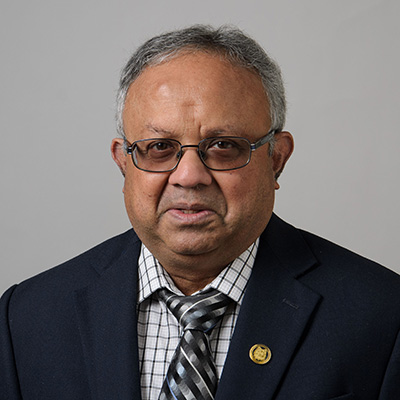
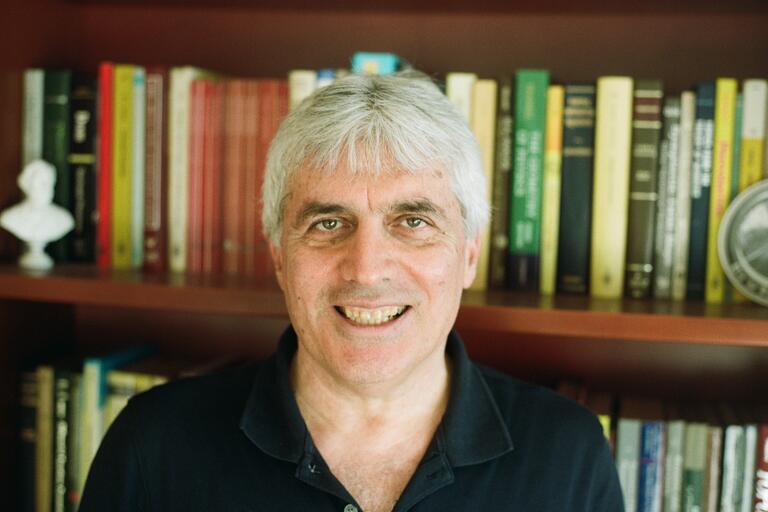
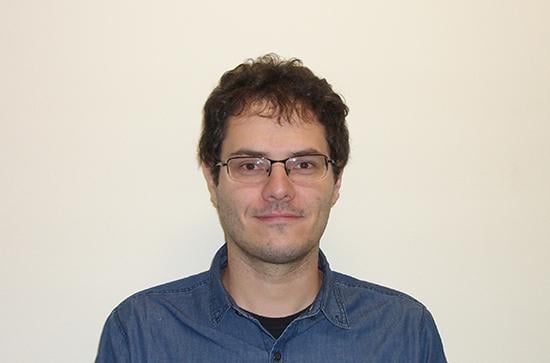
Dipak Dey is a Professor in the Department of Statistics at the University of Connecticut . His work bridges theoretical and applied statistics, with a focus on Bayesian methodologies and computational statistics. Affiliations : University of Connecticut, Department of Statistics Contact : dipak.dey@uconn.edu , Office: AUST 327, Phone: (860) 486-4755 His research interests span Bayesian analysis , Biostatistics , Computational statistics , Statistical genetics , and Spatio-temporal modeling . He has pioneered techniques in spatial curvature processes and scalable Bayesian algorithms for large datasets. Recent publications highlight his contributions to Bayesian spatial modeling (blockNNGP, curvature processes), survival analysis (skew-t distributions, cure rate models), and computational statistics (variable selection in Gaussian processes, fast inference algorithms). Applications include insurance data , epidemiology , and environmental statistics . Scientific Awards : Board of Trustees Distinguished Professor (University of Connecticut) He actively collaborates on interdisciplinary projects and mentors researchers in advanced statistical methodologies for complex data structures.
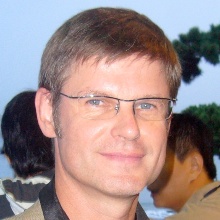
Christian Holm is a Professor at the Institute for Computational Physics of the University of Stuttgart. His research focuses on computational modeling of soft matter systems with electrostatic and magnetic interactions, including polyelectrolytes, colloids, and hydrogels. Member of collaborative research centers SFB 716, SFB 1313, SFB 1333, FOR 2811, and MultiXscale Develops machine learning potentials and advanced simulation methods for complex molecular systems Co-developer of the ESPResSo simulation package for soft matter research His recent work explores: Mechanisms of polyelectrolyte complexation and gel swelling Machine learning approaches for quantum-accurate interatomic potentials Dynamics of active colloids and biofilm formation in porous media Multi-agent reinforcement learning for smart active systems He maintains affiliations with CECAM's Soft Matter and Statistical Mechanics node and contributes to open science initiatives through software development.
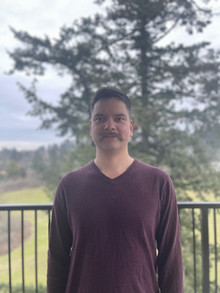
Joakim Arnlind is a Professor and Head of the Department of Mathematics at Linköping University, Faculty of Science and Engineering. He is affiliated with the division of Algebra, Geometry and Discrete Mathematics (ALGD), where he leads research in non-commutative and algebraic geometry. Research Interests: His work centers on algebraic aspects of geometry, particularly non-commutative Riemannian geometry, Poisson algebras, and the geometric interpretation of operator-valued functions. He investigates how classical geometric concepts can be generalized to noncommutative algebras, with applications in mathematical physics and quantum geometry. Publication Trends: His recent publications (2020–2024) focus on Levi-Civita connections in noncommutative settings, quantum spheres, Kronecker algebras, and fuzzy spaces. The research emphasizes derivation-based calculi, metric compatibility, and the construction of geometric structures on noncommutative manifolds, reflecting a deep engagement with both algebraic and differential frameworks. Scientific Awards: No awards explicitly mentioned in the provided text. Advising and Grants: Joakim Arnlind is the main supervisor for PhD students Axel Tiger Norkvist and Kwalombota Ilwale. He leads the Noncommutative Riemannian Geometry research group and is involved in organizing academic workshops, such as the Workshop in Algebra and Noncommutative Geometry. While specific grants are not listed, his sustained publication output and leadership roles indicate active research funding and mentorship. Labs and Teams: He leads the research group focused on Noncommutative Riemannian Geometry, exploring metric aspects such as connections and curvature using twisted derivation-based calculi. He is also part of the broader ALGD division, which includes researchers in algebra, geometry, combinatorics, and topology.
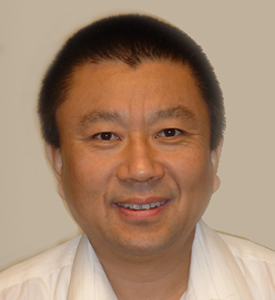
Giovanni Manno is a Full Professor in the Department of Mathematical Sciences (DISMA) at the Polytechnic University of Turin, where he also serves as Vice Coordinator of the College of Mathematical Engineering. His research lies at the intersection of differential geometry and the geometric theory of partial differential equations, with a strong focus on contact and symplectic structures, Monge-Ampère equations, and integrable systems. Position: Full Professor (L. 240) Institution: Polytechnic University of Turin Department: Department of Mathematical Sciences (DISMA) Email: giovanni.manno@polito.it His research interests include differential geometry, geometry of PDEs, contact geometry of PDEs, Monge-Ampère equations on contact manifolds, and metrics admitting geodesic symmetries. These areas are deeply interconnected, focusing on the geometric structures underlying differential equations and their symmetries. The recent publications (2023–2025) reflect a consistent trend in geometric analysis of PDEs, particularly exploring c-projective and projective symmetries in Kähler and Riemannian geometries, moment maps in symplectic Monge-Ampère theory, and invariant PDEs on hypersurfaces. These works demonstrate advanced techniques in Lie symmetry analysis, geometric structures, and integrability. His scientific awards include: INdAM Fellowship (Marie Skłodowska-Curie cofunded), 2012 MIUR "Future in Research", 2013 University of Padua Young Scholars Funding, 2013 INdAM Project on Projective Connections and Integrable Systems, 2018 He has been actively involved in academic service, serving on the editorial boards of Mathematical Seminar Reports and Banach Center Publications , and participating in the organizing and scientific committees of international conferences such as the Geometry of Lagrangian Grassmannians and Nonlinear PDEs. He has held a fixed-term Senior Researcher position at the National Institute of Higher Mathematics "Francesco Severi" (2014). Manno has taught in PhD programs at both the Polytechnic University of Turin and the University of Turin, and regularly teaches advanced and foundational courses such as Differential Manifolds and Tensors, Projective Differential Geometry, and Linear Algebra and Geometry across aerospace and computer science engineering programs. He is a member of the research group Functional Analysis and Differential Geometry (DISMA) and contributes to the Geometry of PDEs research area.
Eugénio A.M. Rocha is an Assistant Professor in the Department of Mathematics at the University of Aveiro, Portugal. He holds multiple roles including Co-Coordinator of GEOMETRIX and Board member of the Portuguese Mathematical Society (2014-2022) and the Centro Internacional de Matemática (CIM) General Assembly (2008-2022). His research focuses on Partial Differential Equations, Nonlinear Control Theory, and interdisciplinary topics like Epidemiology of HIV/Tuberculosis and Underwater AUVs Navigation. Research affiliations: Member of CIDMA (Center for Research & Development in Mathematics and Applications) Key projects: Mathdir open science platform and Multiplication Tables Online Games development His recent work includes studies on Schrödinger-Poisson systems and tuberculosis epidemiology modeling. He has contributed to deep learning frameworks like Blocks and Fuel (2016). Active in academic governance, he balances pure mathematics research with educational software initiatives and international collaboration.
Benjamin Anderson-Sackaney is an Assistant Professor in the Department of Mathematics and Statistics at the University of Victoria. He holds a PhD from the University of Waterloo (2022). His research focuses on quantum groups, operator algebras, and abstract harmonic analysis, particularly studying operator algebras associated with quantum groups and their noncommutative dynamics. His work explores connections between algebraic structures and representation theory, with applications to boundary actions, amenability, and harmonic analysis. Anderson-Sackaney’s research also intersects with topological boundaries of representations, coideals in quantum groups, and entropy in group dynamics. He actively participates in international conferences, such as the CMS Summer Meeting and BIRS workshops, and collaborates with researchers globally. As an Indigenous mathematician from the Fort Albany First Nation, he promotes representation and inclusivity in mathematics. His recent publications address topics like C*-simplicity, Poisson boundaries of random walks, and fusion modules. He has contributed to correcting technical nuances in foundational papers, ensuring precision in operator algebra theory.
Ansgar Jüngel is a Full Professor for Analysis of Nonlinear Partial Differential Equations at TU Wien, Austria. He leads the Institute of Analysis and Scientific Computing within the Faculty of Mathematics and Geoinformation. His research focuses on mathematical modeling, analysis, and numerical simulation of complex systems, particularly in semiconductor physics, quantum hydrodynamics, and biological transport phenomena. Jüngel holds a PhD from TU Berlin (1994) and habilitation (1997), with prior academic roles at University of Konstanz and University of Mainz. His work spans nonlinear PDEs, cross-diffusion systems, entropy methods, and applications in semiconductor modeling (e.g., quantum drift-diffusion, Maxwell-Stefan systems). Notable contributions include rigorous derivation of energy-transport models, analysis of quantum fluid models, and development of entropy-dissipative numerical schemes. Awards include the ERC Advanced Grant (2021) and Tsungming-Tu Award (2011). Teaching emphasizes advanced mathematical topics: cross-diffusion systems, partial differential equations, and computational finance. Active in PhD supervision and collaborative projects, he co-authored books on transport equations, entropy methods, and semiconductor modeling. His team includes postdocs and PhD students working on topics like multi-species populations, tumor growth modeling, and stochastic cross-diffusion systems.
Ruihua Liu is a Professor in the Department of Mathematics at the University of Dayton, College of Arts and Sciences. He has been a full-time faculty member since 2004, achieving tenure as Associate Professor in 2010 and promotion to Full Professor in 2016. Educational Background: Ph.D., Engineering Science (Control Theory and Application), Nankai University, China, 1994 Ph.D., Mathematics, University of Georgia, 2001 M.S., Computer Science, University of Georgia, 2001 M.E., Engineering Science, Nankai University, 1988 B.E., Engineering Science, Nankai University, 1985 Ruihua Liu's research lies at the intersection of financial mathematics and stochastic control. His work emphasizes computational finance , particularly in developing numerical methods such as recombining trees and lattice models for pricing options under complex dynamics. A central theme in his research is the use of regime-switching models to capture structural changes in financial markets. He investigates optimal investment and consumption strategies , often incorporating realistic features like proportional transaction costs. His analytical focus includes stochastic optimal control, optimal stopping, and singular control problems, with applications in portfolio optimization and stock liquidation strategies. The 15 most recent publications show a consistent trajectory in applying advanced stochastic analysis to financial decision-making under uncertainty. Key trends include the development of computational algorithms for regime-switching frameworks, solving optimal control problems with state-dependent switching rates, and modeling market behaviors using multi-scale and diffusion processes. These works span top journals in applied mathematics, control theory, and financial engineering, indicating a strong interdisciplinary impact. Scientific Awards and Honors: No specific awards mentioned in the provided text. Advising and Grants: While no formal list of students is provided, his extensive publication record with multiple collaborators suggests active involvement in mentoring graduate students and junior researchers. Though specific grants are not listed, his research output in high-impact journals implies successful acquisition of external funding to support his work in financial mathematics and stochastic modeling. Laboratories and Research Teams: Ruihua Liu is affiliated with the Department of Mathematics at the University of Dayton. While no named lab or center is mentioned, his collaborative work with researchers such as G. Yin, Q. Zhang, and P. Eloe suggests participation in a research group focused on stochastic systems and financial applications.
Peter Schupp is a full Professor of Physics in the School of Science at Constructor University in Bremen, Germany, a position he has held since 2002. He previously served as visiting fellow and lecturer at Princeton University (1997-1999) and as assistant professor at the University of Munich (1994-1997, 1999-2002). His office is located in Research III, Room 65 on the Constructor campus. Education: PhD (Physics), University of California at Berkeley, 1990–1993 MSc (Physics), California Institute of Technology, 1989–1990 Vordiplom (Physics), University of Heidelberg, 1986–1989 Habilitation, University of Munich, 2001 Research Interests span a broad range of topics in mathematical and theoretical physics, including: Classical and quantum gravity Quantum field theory and string theory Generalized, graded and non-commutative geometry Coherent states, entropy and quantum information Non-geometric fluxes and nonassociative structures Cosmological data analysis (CMB anisotropy & non-Gaussianity) His publications reveal a steady focus on non-commutative and nonassociative extensions of geometry and gravity, as well as their implications for quantum field theory and cosmology. Recent work couples sophisticated algebraic techniques (graded Poisson algebras, Hopf algebras) to concrete physical problems such as CMB entropy measures and axion-gravity interactions. Scientific Awards & Fellowships : Heisenberg Fellowship, Deutsche Forschungsgemeinschaft (DFG), 2002 Studienstiftung des deutschen Volkes, 1986–1992 Max-Kade-Foundation Fellow, 1997–1998 Theodore S. Brown & Edith N. Brown Fellowship / Ephraim Weiss Scholarship, 1991–1992 Dora Garibaldi Scholarship, 1990–1991 Earl C. Anthony Fellowship, Caltech, 1989–1990 University Fellow, Renker GmbH & Co. KG, 1989–1991 International Physics Olympiad Silver Medal (Portorož 1985, 7th overall) International Physics Olympiad Bronze Medal (London 1986) Contact & Collaboration : Prof. Schupp welcomes inquiries at pschupp@constructor.university or by phone at +49 421 200-3224. While the text does not list specific PhD advisees, his long tenure and extensive publication record indicate active supervision of graduate researchers in theoretical and mathematical physics.
Χατζηκωνσταντινίδης Ευστάθιος is a Professor at the University of Piraeus in the Department of Statistics and Actuarial Science. His academic career spans decades with significant contributions to actuarial mathematics and statistical theory. He teaches undergraduate courses in Actuarial Mathematics, Risk Theory, and Reliability Theory, and postgraduate courses in Generalized Linear Models and Risk Management. Education: PhD in Mathematics (1990) - Aristotle University of Thessaloniki (Grade: Excellent) BSc in Mathematics (1985) - Aristotle University of Thessaloniki (Grade: Excellent) Research Focus: His work centers on risk theory, bankruptcy modeling, compound Poisson processes, and optimal experimental designs. He has developed innovative approaches to: Perturbed risk models with diffusion processes Copula-based dependence modeling in insurance Gerber-Shiu function analysis for dividend strategies Recursive methods for compound distributions His research bridges theoretical mathematics with practical actuarial applications. Publication Trends: Analytical studies of stochastic processes dominate his recent work, focusing on: Ruin probabilities and deficit distributions Dependence modeling using copulas Optimal dividend strategies Computational methods for risk models Earlier publications emphasize experimental design optimization and reliability theory. Administrative Leadership: Chair of Department of Statistics and Actuarial Science (2007-2009) Director of Postgraduate Program in Actuarial Science & Risk Management Member of Senate of University of Piraeus Deputy Chair of Ministry of Finance's Actuarial Examination Committee Research Projects: Has participated in multiple funded projects including: 'Optimal Experimental Designs' (Greek Ministry of Education) 'Modern Model for Actuarial Studies Preparation' (University of Piraeus) EPEAEK programs on statistical applications
Sajidah Ahmed is a plasma physicist affiliated with the University of York and actively contributes to nuclear fusion research. Her work focuses on turbulent phenomena in magnetically confined fusion plasmas, particularly the dynamics of scrape-off layer (SOL) fluctuations and their impact on plasma-wall interactions. Doctoral research (2023) on Intermittent fluctuations in the boundary of magnetically confined fusion plasmas . Published studies in leading fusion journals on topics such as filament propagation, MHD instabilities, and pulse superposition modeling. Research Highlights: Her research addresses critical challenges for commercial fusion reactors, including: Characterizing blob-like turbulent structures in SOL regions. Reconstructing intermittent time series using deconvolution methods. Investigating density limits and plasma confinement in devices like Alcator C-Mod and MAST Upgrade.
Marco Gualtieri is a mathematician affiliated with the Department of Mathematics at the Barcelona Polytechnic School of Building , part of the Polytechnic University of Catalonia (UPC) , and the University of Toronto . He focuses on geometry and mathematical physics, particularly developing mathematical structures with applications to quantum field theory. Education : B. Sc. from McGill University, D. Phil. in Mathematics from the University of Oxford under supervisor Nigel Hitchin. Experience : Research fellowships at the Fields Institute and MIT, followed by academic appointments at the University of Toronto (since 2008) and UPC Barcelona Tech (since 2025) in the SYMCREA lab. His research spans generalized geometry, Poisson geometry, and Lie groupoids, with a strong emphasis on connecting abstract mathematical structures to theoretical physics. While no explicit scientific awards or publications are listed in the provided texts, his career highlights include interdisciplinary work at the intersection of mathematics and quantum field theory.
Alexander L Dvorsky is an Associate Professor at the Department of Mathematics, College of Arts and Sciences, University of Miami, with research spanning representation theory, Lie algebras, and deformation quantization. Research Interests: Representation theory of classical and infinite-dimensional Lie groups Deformation quantization and invariant distributions Algebraic geometry in homogeneous spaces Key Contributions: His work includes decomposition of tensor products of minimal representations of orthogonal groups, studies on Kontsevich quantization, and analysis of parabolic subalgebras.
Professor Fraydoun Rezakhanlou is a faculty member at the Department of Mathematics , University of California, Berkeley , where he has been since 1991. His academic roles include serving as an Equity Advisor in the university's Senate Faculty and teaching advanced courses such as Math 270: Topics in Symplectic Geometry , Math 219: Dynamical Systems , and Math 279: Stochastic PDEs . He has also contributed to lecture notes on Symplectic Geometry, Dynamical Systems, and Stochastic PDEs. Research Interests: Rezakhanlou's work spans probability theory , partial differential equations , and their intersections with mathematical physics . His research includes coagulation-fragmentation models , kintetic theory , stochastic processes , and homogenization . He has explored applications to Navier-Stokes equations , Hamilton-Jacobi equations , and symplectic geometry . Article Trends: His publications focus on stochastic PDEs , Hamilton-Jacobi equations , and coagulation models . Recent articles analyze random tessellations , metastability in zero-range processes , and kintetic descriptions of scalar conservation laws. Older works address equilibrium fluctuations , Smoluchowski equations , and random walks in random environments . Advising: He has advised multiple PhD students, including Haotian Gu (2023), Kyeongsik Nam (2020), and Chanwoo Oh (2019), among others since the 1990s.
Rafael de Andrade Moral is a Professor of Statistics at Maynooth University's Faculty of Science & Engineering (since 2025), with prior roles as Associate Professor (2023-2025) and Assistant Professor (2018-2023). He holds a PhD in Statistics (University of São Paulo, 2014-2017) and dual bachelor's degrees in Biology and Education. His work bridges Statistical Ecology , Computational Biology , and Data Science , focusing on modeling ecological systems, agricultural pest dynamics, and biodiversity-ecosystem function relationships. Key research themes include Bayesian modeling , multivariate ecological forecasting , and machine learning applications . He founded the Theoretical and Statistical Ecology Research Group and serves on committees like the Young-ISA Chair . His recent articles span topics like insect abundance forecasting , weed-crop competition under climate change , and neuroinformatics-based learning analysis , reflecting interdisciplinary engagement. Scientific accolades include the Young Statistician Showcase Prize (2018), A-mu-sing Competition First Place (2021), and Maths Week Award (2022). He has advised three PhD students and contributed to over 50 peer-reviewed publications. Active in teaching innovation (e.g., Teaching Statistics through Music ), he also provides statistical consultancy to organizations like NIBIO and Jomakol .