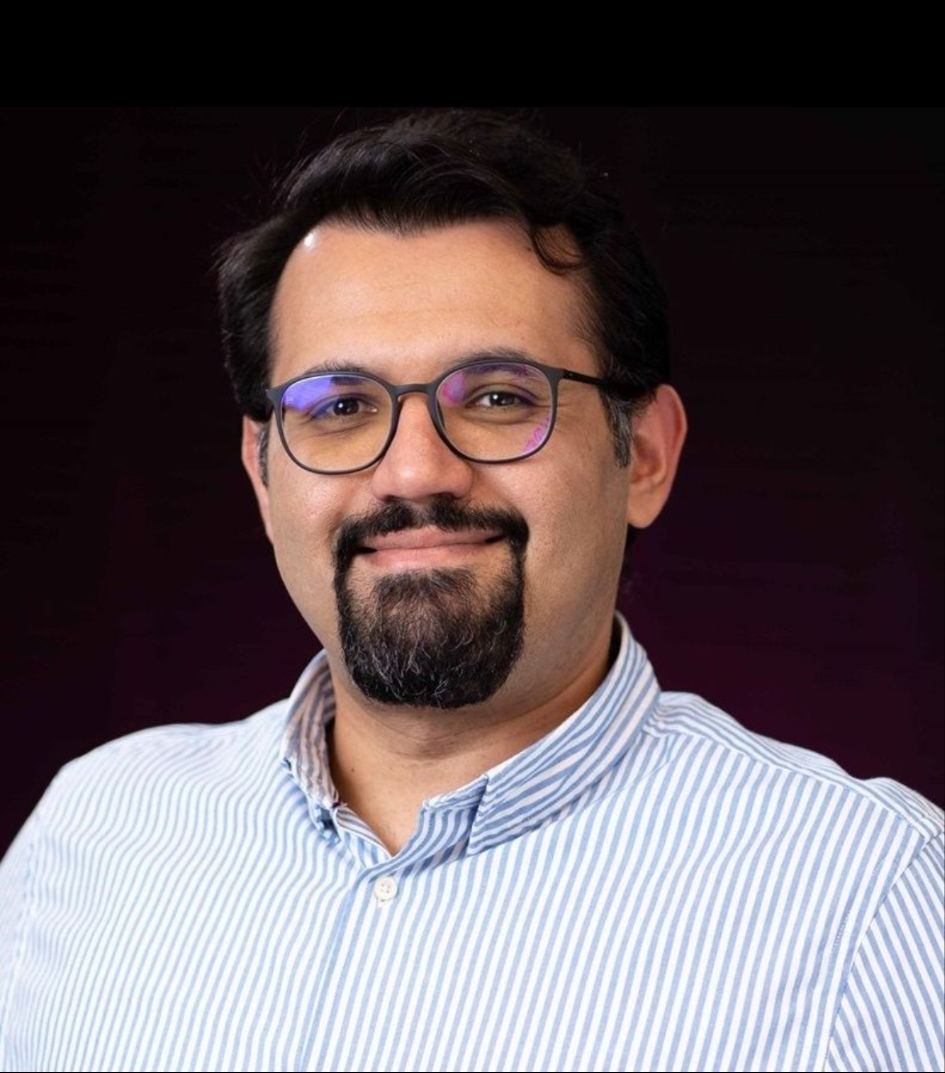
Halil Ali is a Lecturer in Data Science (Education Focused) at the School of Computing Technologies, RMIT University. His research spans privacy-preserving machine learning, blockchain technologies, and cybersecurity. Key research areas include federated learning , quantum-enhanced AI , secure biometrics , edge unlearning , and privacy in healthcare data . His recent publications focus on resilient AI systems , blockchain applications , and ethical data handling in emerging technologies. His work demonstrates expertise in integrating machine learning with blockchain security across domains like IoT, smart grids, and metaverse healthcare. He contributes to practical frameworks for zero-trust architectures , lightweight consensus protocols , and quantum-classical hybrid models .
Professor Nicholas Buckley is a leading academic in Clinical Pharmacology at the University of Sydney and holds a Visiting Professor position at the University of Peradeniya, Sri Lanka. He serves as Research Director for the South Asian Clinical Toxicology Research Collaboration (SACTRC) and is a Consultant Clinical Pharmacologist & Toxicologist at the NSW Poisons Information Centre and Royal Prince Alfred Hospital. His work focuses on improving clinical toxicology practices, poison control policies, and understanding mechanisms of drug toxicity. Co-founder of SACTRC for agrochemical poisoning and snakebite research Chair of Australian Therapeutic Guidelines - Toxicology writing group Editorial roles in Clinical Toxicology, Drug Safety, and Australian Prescriber Research Interests include toxicovigilance, epidemiology of poisoning, acute kidney injury in poisoning/snakebite, pesticide safety interventions, antidote development, and pharmacoepidemiology of psychotropic drugs. His work combines clinical trials, population surveillance, and translational research. Scientific Contributions span 440+ peer-reviewed articles and 22 book chapters, with continuous funding since 2002. He has supervised over 20 higher degree students and leads international collaborations in low-and-middle-income countries through NIHR RIGHT4. Key Affiliations : Member of Charles Perkins Centre, Australian Medicines Handbook Editorial Advisory Board, and NIHR RIGHT4 programme.
Dr. Ehsan Abbasnejad is an Associate Professor at Monash University's Department of Data Science and Artificial Intelligence, and holds adjunct positions at the Australian Institute for Machine Learning (AIML, University of Adelaide) and the Centre for Augmented Reasoning (CAR). He specializes in foundational AI, focusing on vision-language tasks, adversarial machine learning, and reinforcement learning. His work bridges theory with real-world applications in agriculture, energy, healthcare, and sports. Education: PhD in Computer Science from Australian National University (ANU). Research Interests: Machine Learning Theory and Adversarial Defenses Neural Network Robustness and Generalization Multimodal Learning (Vision-Language) Continual and Transfer Learning Applications in Energy, Healthcare, and Robotics Awards: Finalist for Australian AI Academic/Researcher of the Year (2024) Multidisciplinary competition wins (e.g., OzMineral Explorer Challenge) Advising & Grants: Australian Research Council (ARC) Discovery Project on Reinforcement Learning CSIRO's Next Generation Graduate Fund Accepting PhD students in foundational AI and applications Labs & Teams: Director of Foundational Machine Learning & Reasoning at Monash, leading global teams in AI competitions and industry collaborations (Microsoft Research, NEC Labs America).
Professor Ibrahim Khalil is a faculty member in the School of Computing Technologies at RMIT University, Melbourne, Australia. He holds a PhD in Computer Science from the University of Bern (2003) and has extensive industry experience in Silicon Valley focusing on secure network protocols. His research spans Security, Privacy, Federated Learning, Blockchain, Quantum Computing, and Distributed Systems. He leads high-impact projects funded by ARC grants (DP250100582, DP220100215, etc.) and international initiatives like the EU’s SELFY project. His work addresses challenges in secure AI data analytics, privacy-preserving systems, and critical infrastructure protection. Khalil supervises PhD/Masters students on topics ranging from federated learning security to quantum-enhanced machine learning. Education: PhD in Computer Science (University of Bern, 2003); prior roles at EPFL, Osaka University, and industry tech hubs. Research Interests: Privacy-Preserving Technologies Blockchain Applications in Healthcare and Supply Chains Quantum Computing for Machine Learning Secure Edge Computing and Federated Learning IoT Security and Critical Infrastructure Protection Grants & Collaborations: Over 10 major grants since 2017, including ARC Discovery/Linkage Projects and international partnerships (QNRF, EU). Notable projects include Privacy-Aware Digital Twins for Critical Infrastructure and Federated Learning frameworks for GenAI models. Advising & Labs: Active supervisor of 25+ research projects since 2013, focusing on anomaly detection, secure data analytics, and blockchain-based systems. Collaborates with industry partners on defense and healthcare tech.
Chun Ouyang is a Professor at Queensland University of Technology (QUT) in the School of Computer Science within the Faculty of Science. With an extensive publication record spanning over two decades from 2002 to 2025, Professor Ouyang has established themselves as a leading researcher in Business Process Management, Process Mining, and Explainable AI. Their work bridges theoretical foundations with practical applications across healthcare, finance, and industrial sectors. Professor Ouyang's research interests primarily focus on Business Process Management systems, Process Mining techniques, Explainable Artificial Intelligence, and Healthcare Process Analysis. Their work has evolved from foundational BPMN/BPEL translation research in the early 2000s to sophisticated process mining approaches in the 2010s, and most recently to cutting-edge Explainable AI applications in clinical and business contexts. They have developed novel methodologies for process querying, predictive process analytics, and XAI evaluation frameworks that have significantly advanced the field. Their research consistently emphasizes practical applicability while maintaining strong theoretical foundations, with publications in top-tier journals and conferences including IEEE Transactions, Springer journals, and major BPM conferences. Analysis of Professor Ouyang's recent publications (2023-2025) reveals a strategic research trajectory that integrates traditional process mining with modern AI techniques, particularly focusing on explainability and trustworthiness. Their work demonstrates a consistent pattern of addressing real-world challenges through rigorous methodological development, with increasing emphasis on healthcare applications, clinical decision support systems, and the ethical implications of AI deployment. The publications show strong interdisciplinary collaboration patterns, particularly with medical researchers and industry partners. Professor Ouyang has mentored numerous PhD students and early-career researchers who have gone on to establish themselves in the BPM and AI communities. Their research group at QUT has secured multiple competitive grants supporting innovative work in process analytics and AI. They maintain active collaborations with leading researchers globally, including Catarina Pinto Moreira, Arthur ter Hofstede, and Moe Wynn. Professor Ouyang leads the Process Analytics Research Group at QUT, which focuses on developing advanced techniques for business process analysis, prediction, and optimization. The group maintains strong industry connections with healthcare providers, financial institutions, and government agencies, ensuring their research has practical impact. Current projects include developing trustworthy AI systems for clinical decision support, cross-organizational process analysis frameworks, and next-generation process mining techniques for complex, distributed systems.
Dr. Ben Swift is a Senior Lecturer at the School of Cybernetics, ANU, specializing in AI, computational art, and cybernetics. He leads the Cybernetic Studio, an interdisciplinary collective exploring cybernetic systems through hardware/software/people collaborations. As a livecoding artist, he performs globally and co-founded the ANU Laptop Ensemble. His research spans generative AI, open-source tools like Extempore, and UX design. Education: PhD in Computer Science (ANU) Projects: Australia's Digital Economy (2022), The Augmented Web (2019) Research focuses on AI creativity, biofeedback interfaces, and computational music. His work bridges technical innovation with artistic expression, evident in projects like TSPNet and adversarial camera systems. Key contributions include Extempore’s development and studies in live coding disruption. Awards unspecified but recognized internationally for interdisciplinary impact.
Professor Tony Jan leads the Centre for Artificial Intelligence Research and Optimisation (AIRO) at Torrens University Australia's Design and Creative Technology school. He holds a PhD in Computing Science from the University of Technology Sydney (2004) and a Bachelor of Engineering from the University of Western Australia (1999). His research focuses on federated machine learning for IoT security, ensembled machine learning for real-time applications, cognitive machines for human-centric computing, and smart sensor networks for healthcare and security. He has secured ARC grants and industry partnerships with NVIDIA, IBM, and Microsoft. Awards include the 2024 SEI Global Academic Excellence Award and the 2023 Torrens University Excellence Award. Research collaborations span global partners, with contributions to UN Sustainable Development Goals in education and industry. His work bridges academia and industry, expanding AI program enrollments by 2,000+ students and enhancing student satisfaction by 15%. He advises PhD students on topics like IIoT cybersecurity and smart cities, and has produced over 97 publications since 1999. Education: PhD (UTS, 2004), BEng (UWA, 1999) Research Themes: AI for Industry 5.0, Cybersecurity, Smart Cities, Healthcare Technology Key Partnerships: NVIDIA, CIMIC, Palo Alto Networks Recent Projects: Federated learning for health IoT, drone vision intelligence, ransomware detection His work emphasizes ethical AI adoption in design and healthcare, with publications exploring AI ethics, generative AI applications, and sustainable technology integration.
Dr. Yanjun Zhang is an Honorary Research Fellow at the School of Electrical Engineering and Computer Science, The University of Queensland. His research focuses on privacy-preserving technologies, federated learning, cybersecurity in IoT systems, and machine learning security. He holds a PhD in Privacy-Preserving Sharing for Genome-Wide Analysis from The University of Queensland (2021). Education: PhD in Information Technology, School of Information Technology and Electrical Engineering, The University of Queensland (2021) Research Interests: Designing secure collaborative machine learning frameworks Defending against adversarial attacks in cyber-physical systems Privacy preservation in distributed genomic and medical data analysis Compliance and ethics in virtual personal assistant applications Key Contributions: Developed privacy-preserving federated learning frameworks (AgrAmplifier, PrivColl) Conducted foundational studies on evasion attacks in IoT systems Created datasets for analyzing malicious browser extensions and Alexa skills Labs/Teams: Active contributor to UQ Cyber initiatives, including the 2021-2022 Seed Funding project on federated deep learning for medical imaging.
Dr Declan Humphreys is a Lecturer in Cyber Security at the School of Science, Technology and Engineering at the University of the Sunshine Coast. He coordinates courses on ethics in cyber security, covering topics such as surveillance, disinformation, ethical design, and corporate responsibility. His research explores the intersection of artificial intelligence, ethics, and societal impact, with a focus on epistemic harms, AI replicas of deceased individuals, and algorithmic market risks. Research Focus: Ethics in AI development and deployment Cyber security risks of generative AI Philosophical implications of digital afterlife technologies Ethical challenges in reinforcement learning and sycophantic AI Critical analysis of pricing algorithms Scientific Awards: Associate Fellow of the Higher Education Academy (AFHEA) Professional Memberships: Australasian Association of Philosophy (AAP) Teaching Areas: Ethics in Cyber Security Artificial Intelligence Technological Ethics Program Coordination for Bachelor of Information and Communications Technology Research Projects: He supervises HDR and Honours students in projects related to ethics in AI, societal risks of disinformation, AI modeling for moral decisions, and cyber security protection for NGOs. Labs & Teams: Dr Humphreys contributes to the Healthy Ageing Research Cluster and participates in the MindSET-do project, which engages young students in technology and programming education.
Assoc Prof Henry Nguyen is an Associate Professor at Griffith University's School of Information and Communication Technology, with expertise in data integration, data quality, recommender systems, and big data visualization. He directs the Responsible Big Data Lab and has secured over $3.5M in funding since 2015 from ARC, DFAT, and industry partners. PhD & Master's from EPFL, Switzerland ARC DECRA Award (2020) His research focuses on privacy-preserving AI for social data , IoT , and satellite analytics , with over 200 publications in top venues like SIGMOD, KDD, and IEEE TKDE. Recent work spans federated learning , graph neural networks , and secure AI systems . Article trends highlight 2024-2025 publications on: Federated recommendation security On-device AI optimization Privacy-preserving explainable AI Graph condensation techniques LLM-powered risk analysis Cloud-edge collaboration Scientific contributions include ARC DECRA Award 2020 Multiple senior PC roles in A* conferences Citations in International AI Safety Report 2025 Henry Nguyen supervises 12 active PhD/MSc students and has directed 8 completed doctoral theses . His funded projects include collaborations with Ubitech , KARI , and CSIRO , focusing on Australia-Korea partnerships and responsible AI development.
Carolyn Strange is a Professor and former Head of the School of History at the Australian National University (ANU). She holds adjunct and visiting professorships at Murdoch University and the University of Toronto. Her research focuses on legal, social, and cultural history, particularly crime and justice, gender studies, and environmental history. She has taught at institutions in Canada, the U.S., and Australia, and her work bridges academia with public engagement through museum exhibitions and symposia. Strange has been awarded prestigious fellowships at Warwick, Macquarie, and Sydney Universities, and is a Fellow of both the Academy of Social Sciences and the Australian Academy of the Humanities. Her research has been supported by grants from the Australian Research Council and others, including a five-year strategic grant for a cross-campus network on the History and Legacies of Violence. She currently leads a working group on Coercive Control funded by the ANU Gender Institute. Her research interests span gendered homicide, capital punishment, and historical memory. Recent projects include analyzing inter-gender homicide in NSW and examining public attitudes toward coercive control. She has published extensively on crime, justice, and gender in Canadian, Australian, and British contexts. Strange’s teaching expertise includes graduate training, having founded ANU’s Cross-Cultural Research and History graduate programs. She has also served as an external assessor for Hong Kong’s Lingnan University History Department and curates exhibitions linking history with contemporary issues. Key achievements include the 2013 ‘Researcher of the Year’ award from the New York State Archives and a 2014 Huntington Library Fellowship. Her work often involves interdisciplinary collaboration with scholars in law, environmental science, and media studies.
Jen Smith is a Senior Research Fellow at the University of Western Australia (UWA), serving as national coordinator and public health co-lead for the Emerging Drugs Network of Australia (EDNA). Her work focuses on illicit and emerging drug toxicosurveillance, combining clinical toxicology with public health strategy. She holds a PhD in adolescent sexual behavior and pregnancy intentions (2010) and prior roles at Curtin University's School of Public Health. Research & Collaboration : EDNA, a 5-year national collaboration, monitors illicit drug harm in emergency departments (EDs) across five states. Jen's expertise spans qualitative research, policy evaluation (e.g., WA's 'Target 120' initiative), and drug-related health system preparedness. She has published extensively on drug intoxication patterns, clinical predictors of exposure, and emergency medicine protocols. Awards & Recognition : Received the 2024 Vice-Chancellor’s Award for Research Impact and Innovation for contributions to toxicosurveillance. Her work aligns with UN SDGs addressing health and well-being. Key Projects : Includes datasets on ED drug use trends, evaluation of public health initiatives, and collaborations with forensic labs, emergency physicians, and policy bodies.
Xiaoning Du is a Senior Lecturer (equivalent to Associate Professor) in the Department of Software Systems & Cybersecurity at Monash University's Faculty of Information Technology. She holds a PhD from Nanyang Technological University (2020) and a Bachelor's from Fudan University (2014). Her research focuses on software security and quality assurance for traditional and AI-based systems, with notable contributions to DevOps for AI, vulnerability detection, and runtime verification. Education: PhD in Computer Science, Nanyang Technological University (2015–2020) Bachelor of Software Engineering, Fudan University (2010–2014) Research Interests: Security of intelligent software systems, AI-driven software testing, DevOps for AI, and trustworthy AI services . Her work emphasizes practical applications like Devign (vulnerability detection), DeepStellar (deep learning system analysis), and BigCodeBench (code generation benchmarking). Recent Projects: Collaborations include CSIRO cybersecurity initiatives, Algorand Center of Excellence, and IBM-funded research. She leads projects addressing AI ethics, federated learning security, and code completion robustness. Awards: 2024 Google Research Scholar Award, 2024 FIT Dean’s Early Career Award, and multiple distinguished paper awards at top venues like ACM SIGSOFT and ICLR. Labs/Teams: Active in Monash’s cybersecurity and AI research groups, contributing to open-source tools like DeepStellar and BigCodeBench . She advises PhD students and mentors on scholarships.
Dr. Qiongkai Xu is a Lecturer in Natural Language Processing (NLP) at Macquarie University's School of Computing, with an honorary fellowship at the University of Melbourne. He holds a PhD in NLP from the Australian National University (ANU). His research focuses on auditing machine learning models, particularly addressing privacy/security issues in NLP/ML models and developing evaluation frameworks. Key areas include text watermarking, adversarial attacks, data leakage mitigation, and model authentication. Recent publications emphasize robustness against backdoor attacks, generative model watermarking, and healthcare applications of LLMs. His work bridges theoretical security advancements with practical NLP challenges. Awards: DAAD Scholarship (2022), Research Pitching Session Winner (MQ, 2022 & 2024) Grants: Leading the Climate Litigation Risk project on AI-driven greenwashing detection. Labs/Teams: Data Horizons Research Centre, Future Communications Research Centre, and Frontier AI Research Centre.
Associate Professor Damith Ranasinghe holds a position at the University of Adelaide's School of Computer Science within the Faculty of Sciences, Engineering and Technology. His research focuses on Pervasive Computing, Machine Learning, Autonomous Systems (Drones), and Cybersecurity with applications in population ageing, conservation, and software security. He leads the Adelaide Auto-ID Lab, dedicated to developing innovative solutions for real-world challenges through multi-disciplinary approaches. Ranasinghe's work emphasizes embedded systems security and adversarial machine learning defenses. His lab explores autonomous UAV-based wildlife tracking systems and wearable sensor technologies for healthcare applications like fall prevention in geriatric care. He actively supervises postgraduate students in Masters and PhD programs and has contributed to projects such as the Ambient Intelligent Geriatric Management (AmbIGeM) system. His technical contributions span firmware fuzzing methodologies (e.g., ICICLE emulator), Bayesian learning defenses against adversarial attacks, and hardware security solutions using PUF-based authentication. These innovations address critical needs in both theoretical and applied domains of computer science and engineering.