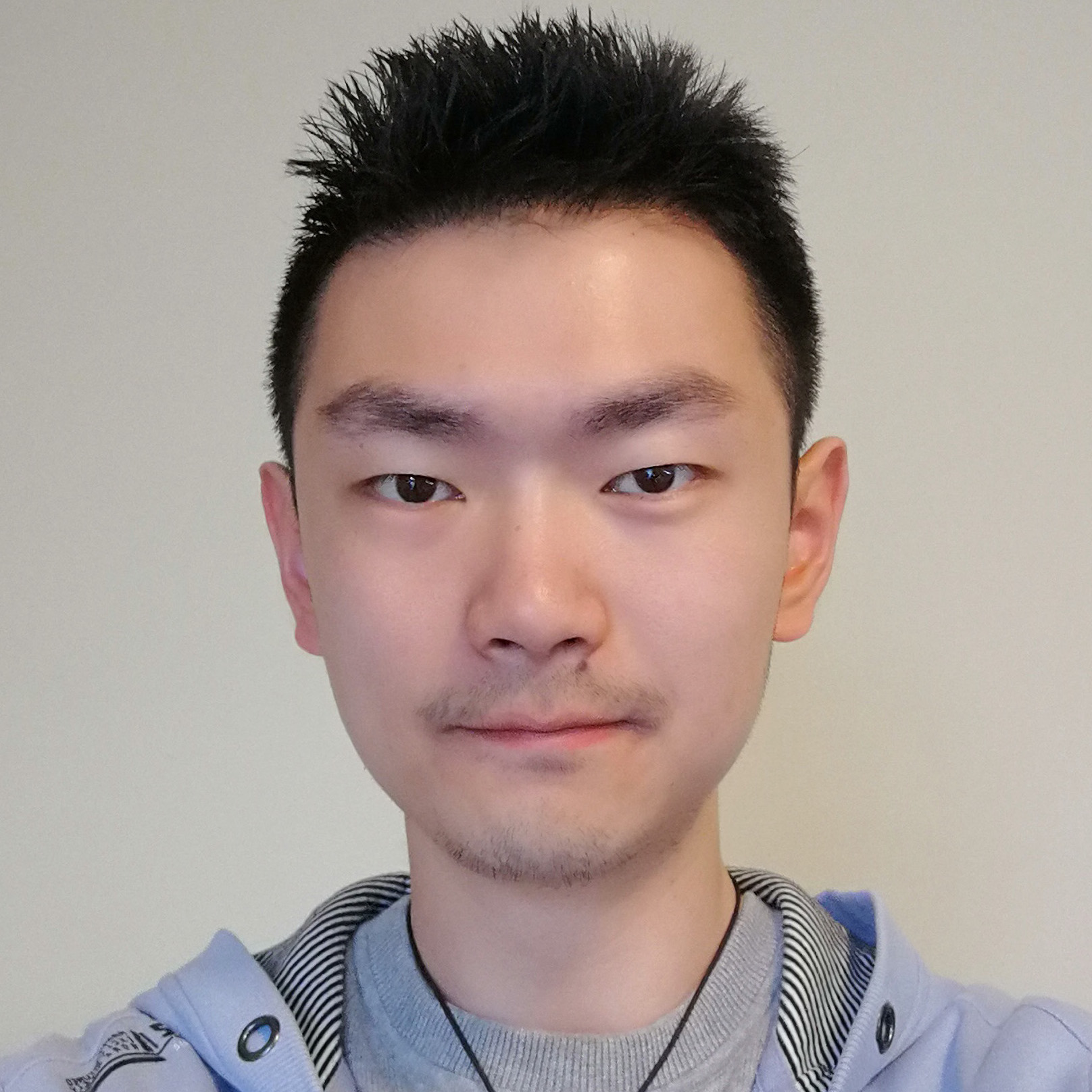
Keenan Crane is the Michael B. Donohue Associate Professor of Computer Science and Robotics at Carnegie Mellon University , with membership in the Center for Nonlinear Analysis and mentorship in the Geometry Collective . His research bridges differential geometry and computer science to develop fundamental algorithms for geometric data processing. Education : BS from University of Illinois at Urbana-Champaign, PhD from Caltech Fellowships : Google PhD Fellow, NSF Mathematical Sciences Postdoctoral Fellow Research focuses on Discrete Differential Geometry , addressing PDE solutions, mesh processing, and geometric modeling through methods like: Walk on Spheres for PDEs Intrinsic Triangulations for robust geometry Repulsive Energy formulations for collision avoidance Recent publications span 2025–2021 , emphasizing grid-free algorithms , anisotropic mesh generation , and differentiable systems . Scientific accolades include Packard Fellowship and NSF CAREER Award . Students include Nicole Feng , Olga Gutan , and Zoë Marschner . During his 2024 sabbatical at Roblox , he does not accept new researchers. Key software contributions include Penrose (math diagram generation) and I♥Mesh (domain-specific language for mesh algorithms).
Lacra Pavel is a Professor in the Edward S. Rogers Sr. Department of Electrical and Computer Engineering at the University of Toronto, Faculty of Applied Science and Engineering. She joined the department in August 2002 after industry experience at Nortel Networks and Solinet Systems, and remains active in the System Control Group and Photonics Group. Her educational background includes: Diploma of Engineering (with distinction) in Automatic Control, Technical University Gh. Asachi of Iasi, Romania (1989) PhD in Electrical and Computer Engineering, Queen's University at Kingston (1996) Research focuses on integrating game theory, control theory, and optimization within networked systems. She pioneered applications in noncooperative/evolutionary game theory for network control, nonlinear/robust control frameworks, and energy-efficient optical/transportation networks. Current work develops mathematical foundations for learning in games via control-theoretic approaches to enable autonomous multi-agent network optimization. Recent publications (2019-2013) reveal dominant trends: distributed Nash equilibrium seeking using passivity-based and operator-splitting methods, stability analysis for optical network power control with time-delays, and extensions to transportation systems like railway timetabling. Key subfields include graphical games, ADMM algorithms, and Lyapunov-based boundary control for distributed parameter systems. Scientific recognition includes: Fellow of the IEEE (2025) for contributions to game theory, control, and optimization for network systems Connaught New Staff Award, University of Toronto (2003) New Opportunities Infrastructure Award, CFI/OIT (2003) Award for Innovation, Solinet Systems (2001, 2002) Inventor Recognition Award, Nortel Networks (2000) She has advised over 20 graduate students including current PhD candidates and former students now at MIT, Princeton, Amazon, and Ciena. Major grants include the CFI/OIT New Opportunities Infrastructure Award (2003). Her research bridges theoretical game control with practical implementations in optical and transportation networks. As co-director of the System Control Group and member of the Photonics Group, she leads teams developing algorithms for autonomous network optimization. Current projects focus on stochastic approximation methods for multi-agent learning and energy-efficient network design.
Weina Li Chen serves as a Clinical Assistant Professor within the Education Division of Pepperdine University's Graduate School of Education and Psychology, teaching courses in the Master of Arts in Teaching English to Speakers of Other Languages (MA TESOL) and Master of Science in Leadership programs. With approximately ten years of teaching experience across diverse educational settings, she brings practitioner expertise to her academic role while maintaining active engagement in professional development and program design. Her academic credentials include: Ph.D. from Pepperdine University M.A. from Pepperdine University M.A. from University of York, England B.A. from Heilongjiang University, China Dr. Chen's research focuses on educational technologies and innovative learning design , with specialized expertise in online/hybrid learning environments, world language acquisition (particularly English as a Second Language), and teacher leadership development. She investigates how digital tools can enhance student engagement, social presence, and language proficiency through practical applications. Her work bridges academic research with classroom implementation, frequently resulting in practitioner workshops and conference presentations that translate theoretical concepts into actionable teaching strategies for language educators. Analysis of her 14 publications (2019-2023) reveals consistent emphasis on technology-mediated language learning. She explores platforms like Flip, Canva, and WeChat to create interactive communities and support speaking practice, with recurring themes including social-emotional learning integration and digital storytelling. Her research demonstrates a practitioner-scholar approach, targeting both pre-service and in-service teachers through workshops that address real-world classroom challenges in language education. As an educational leader, Dr. Chen founded and served as president of CABE Mandarin, an organization promoting Mandarin language education. She has designed multiple language programs for schools and universities, demonstrating commitment to expanding language learning opportunities. While specific grant funding details and student advisee names are not documented in available materials, her conference presentations and program development initiatives indicate active community engagement and professional contribution to the fields of TESOL and educational technology.
Dr. Bo Li serves as an Associate Professor at the University of Southern Mississippi, where he teaches core computer science courses including Artificial Intelligence, Computer Graphics, and Database Management Systems. His academic foundation spans institutions across three countries, reflecting a globally oriented research perspective in visual computing and machine learning. His educational background includes: PhD in Computer Science from Nanyang Technological University (2012) MS in Computer Science from Texas State University (2015) MS in Computer Science from Xi'an Jiaotong University (2005) BS in Computer Science from Xi'an Jiaotong University (2005) Dr. Li's research centers on 3D shape retrieval systems, where he pioneers methods for sketch-based and image-based 3D model search. His work bridges computer vision, graphics, and machine learning through innovative approaches to 3D scene analysis, semantic modeling, and cross-modal translation. Recent investigations extend into social media analysis and speech emotion recognition, demonstrating methodological versatility within artificial intelligence. Analysis of his 15 most recent publications reveals a sustained focus on 3D shape retrieval benchmarking through SHREC competitions, evolving from traditional descriptor methods to deep learning frameworks. Key trends include multimodal query processing, large-scale dataset handling, and applications in real-world image denoising. His research consistently addresses challenges in partial/non-rigid model matching and semantic scene understanding. Dr. Li has not been documented with scientific awards in the provided information. Regarding academic mentorship and funding, no details about student supervision, research grants, or sponsored projects are available in the source material. Similarly, information about laboratory facilities, research teams, or collaborative groups is not provided in the current documentation.
François Goulette is a Professor and Deputy Director of the Computer Science and Systems Engineering Unit (U2IS) at ENSTA Paris, part of Institut Polytechnique de Paris. His research focuses on 3D point cloud processing, LiDAR perception, and autonomous systems within the Robotics Center (CAOR). His primary research interests lie in 3D point cloud processing , LiDAR perception , and autonomous systems . His work spans fundamental algorithm development to practical applications in autonomous driving, cultural heritage digitization, and robotics. He has made significant contributions to domain generalization of LiDAR perception, semantic segmentation of 3D point clouds, and point cloud registration techniques. The analysis of his recent publications reveals a strong focus on domain generalization for LiDAR perception systems, with multiple papers addressing challenges in 3D semantic segmentation across different environments. His work combines multi-scale architectures , unsupervised learning , and dataset creation to advance the state-of-the-art in autonomous systems perception. The research spans both theoretical algorithm development and practical applications in urban environments. François Goulette leads research activities within the Robotics Center (CAOR) at ENSTA Paris. His team develops advanced techniques for 3D environment understanding, with applications in autonomous vehicles, cultural heritage preservation, and industrial robotics. The research combines computer vision, machine learning, and robotics to solve challenging problems in 3D perception and scene understanding.
Leila De Floriani is a Professor at the University of Maryland, with appointments in the Department of Geographical Sciences and the University of Maryland Institute for Advanced Computer Studies (UMIACS). She previously served as a professor at the University of Genova (Italy) since 1990, where she developed Italy's first undergraduate and graduate curricula in computer graphics and directed the Ph.D. program in Computer Science for eight years. Her professional activities include serving as the 2020 President of the IEEE Computer Society and currently as IEEE Division VIII Director for 2023-24. Professor De Floriani's research spans geometric modeling, data visualization, spatial data representation and processing, computer graphics, shape analysis, and topological data analysis. Her work focuses on developing mathematical models and algorithms for representing, analyzing, and visualizing complex spatial data, particularly through hierarchical models, mesh-based representations, and topology-based approaches. Her research group, the GeoVis group, investigates applications in terrain modeling, environmental data analysis, and forest structure mapping using LiDAR technology. Analysis of her recent publications reveals a strong focus on terrain representation and processing, with increasing emphasis on topological data analysis, machine learning integration, and efficient algorithms for large-scale spatial data. Her work bridges theoretical foundations in computational topology with practical applications in geospatial sciences, demonstrating consistent innovation in data structures and visualization techniques. Scientific Awards & Recognitions Fellow of IEEE (2016) for contributions to geometric modeling and scientific visualization Fellow of International Association for Pattern Recognition (IAPR) (1998) for contributions to geometric modeling and image analysis Fellow of Eurographics Association (2020) for outstanding contributions to computer graphics and visualization Pioneer of Solid Modeling Association (2017) for seminal work in solid and feature-based modeling Inducted Member of IEEE Visualization Academy (2020) IEEE Computer Society Golden Medal Award (2018) Inducted Member of IEEE Honor Society Eta Kappa Nu (2019) Multiple best paper awards at major conferences including Shape Modeling International (2015), IEEE/EG Symposium on Volume and Point-Based Graphics (2008), and ACM SIGSPATIAL (2008) Professor De Floriani has successfully advised numerous PhD students including Xin Xu, Yunting Song, and Noel Dyer, whose recent dissertations focused on topology-based individual tree mapping, efficient terrain analysis, and bathymetric data visualization respectively. Her research has been funded by prestigious agencies including the National Science Foundation, NASA, and the European Commission. As the leader of the UMD GeoVis group, she oversees a research program that develops open-source tools for spatial data analysis available on GitHub, with current projects focusing on forest point cloud processing and topology-based geospatial data visualization. The GeoVis group, affiliated with the Department of Geographical Sciences, UMIACS, and the Center for Geospatial Information Sciences, maintains a strong collaborative environment with ongoing projects in geometric modeling, spatial data structures, topology-based machine learning, and mesh-based terrain modeling. The group has received recent funding from NASA's HPOSS program for developing an open-source library for forest point cloud processing based on topological data analysis.
Xin Li is a Professor in the Department of Electrical and Computer Engineering at Duke University and serves as the Associate Vice Chancellor at Duke Kunshan University. He holds a Ph.D. from Carnegie Mellon University (2005) and has held leadership roles in research consortia like the FCRP Focus Research Center and the Center for Silicon System Implementation (CSSI). His research bridges integrated circuits , machine learning , and cyber-physical systems , with applications in autonomous driving, battery lifetime prediction, and smart buildings. Education : Ph.D., Carnegie Mellon University (2005); M.S., Fudan University (2001); B.S., Fudan University (1998) His work emphasizes robust design methodologies for analog/RF circuits, data-driven predictive modeling , and Bayesian inference for high-dimensional variation spaces. Recent publications focus on generative adversarial networks for circuit design, multi-view imputation for incomplete data, and knowledge-driven autonomous systems . He has received numerous accolades, including the NSF CAREER Award (2012) , IEEE Donald O. Pederson Best Paper Awards (2013, 2016) , and IEEE Fellow (2017) . He has served as Editor for journals like IEEE Transactions on Biomedical Engineering and as Chair for conferences including ISVLSI and CAD/Graphics.
Ioannis Stamos is a Professor of Computer Science at Hunter College, City University of New York (CUNY), within the School of Arts and Sciences. His research focuses on Computer Vision, Robotics, Computer Graphics, and 3D Visualization, with emphasis on 3D modeling using range and image data. He earned his Ph.D. in Computer Science from Columbia University (2001), followed by an M.S. and M.Phil. from Columbia's Computer Science Department, and a Diploma of Engineering from the University of Patras, Greece. Dr. Stamos has received prestigious awards including the NSF CAREER Award (2003) and Google Research Awards (2014, 2017). His work integrates 2D images and 3D range data for urban scene modeling, sensor fusion, and real-time object detection. Notable contributions include advancements in 6DoF pose estimation, LiDAR-based curb detection, and Kronecker product models for repeated patterns in urban imagery. He leads the Computer Vision & Robotics Lab and teaches graduate courses in 3D Computer Vision and Photorealistic Modeling. His research is supported by NSF grants, including MRI awards for mobile robotics and large-scale 3D modeling. He serves as Area Editor for the Journal of Computer Vision and Image Understanding and has co-chaired conferences like 3DV 2013. His lab collaborates on projects involving procedural modeling of urban environments and online classification of 3D point clouds.
Kangkang Yin is an Associate Professor in the School of Computing Science at Simon Fraser University (SFU). His research focuses on computer animation, computer graphics, humanoid robotics, machine learning, and multimedia analysis. He teaches courses such as Computer Animation and Scientific Computing, and holds a PhD from the University of British Columbia (2007), MSc from Zhejiang University (2000), and BSc from Zhejiang University (1997). His work bridges robotics and animation through projects like physics-based character controllers, motion diffusion models, and robotic manipulation. Key contributions include the SIMBICON biped locomotion framework and research into emotion-driven dance animation. Recent efforts emphasize reinforcement learning applications in motion synthesis and robust visual navigation for unmanned ground vehicles. Yin's publications span over two decades, addressing challenges in motion control, physics-based simulation, and machine learning applications. His lab contributes to both academic advancements and practical robotics solutions. Current research trends show strong emphasis on combining generative AI with traditional animation techniques, as seen in recent work on auto-regressive motion models (AAMDM) and physics-augmented reinforcement learning (PARC).
Minchen Li Assistant Professor at Carnegie Mellon University's School of Computer Science (Computer Science Department). Formerly an Assistant Adjunct Professor at UCLA's Mathematics Department. Holds a Ph.D. from the University of Pennsylvania's SIG Center for Computer Graphics, followed by a postdoctoral position there. Research focuses on physics-based simulation, integrating numerical analysis, high-performance computing, and machine learning. Notable contributions include the IPC method for frictional contact simulation and large-scale material point methods. Education Ph.D., Computer and Information Science, University of Pennsylvania (2020) M.Sc., Computer Science, University of British Columbia (2018) B.Eng., Computer Science and Technology, Zhejiang University (2015) Research Interests Advances in physical simulation for visual computing, robotics, and manufacturing. Specializes in robust and efficient methods for solid/fluid dynamics, contact modeling, and GPU acceleration. Combines numerical analysis with machine learning to address challenges in simulation accuracy and versatility. Awards 2021 ACM SIGGRAPH Outstanding Doctoral Dissertation Award 2024 SCA Early Career Researcher Award Advising & Labs Leads the Simulation Intelligence Group (SIG) at CMU Graphics Lab. Advises PhD students Guying Lin, Juntian Zheng, Michael Liu, and Zhaofeng Luo. Collaborates with industry and academic partners on projects like VR-based modeling systems and scalable simulation frameworks.
Jian Kang is a Professor and Associate Chair for Research at the University of Michigan School of Public Health , specializing in Biostatistics . His work focuses on developing advanced statistical methods for large-scale biomedical data , with applications to precision medicine , neuroimaging , and genomics . Education: PhD in Biostatistics, University of Michigan (2011) MS in Mathematics (Statistics), Tsinghua University (2007) BS in Statistics, Beijing Normal University (2005) Research Interests include Bayesian nonparametric methods , deep learning for medical imaging , ultra-high-dimensional variable selection , and graphical models for network inference . His 2025-2023 publications demonstrate expertise in Bayesian hierarchical modeling , spatial statistics , and machine learning for healthcare . Scientific Awards : Michigan SPH Excellence in Research Award (2025) ICSA President's Citation Award (2024) Statistics in Biopharmaceutical Research Best Paper (2023) Best Paper in Biometrics by IBS Member (2022) Fellow, American Statistical Association (2021) Grants include NSF-IIS (2021-2025) for BCI statistical learning , NIGMS (2020-2022) for metabolomics biomarker selection , NIDA (2020-2025) for imaging data analysis , and NIMH (2014-2025) for multidimensional neuroimaging methods . Labs and Teams develop Bayesian computational tools for neuroimaging and spatial transcriptomics , collaborating with institutions like Emory University and University of North Carolina.
Deliang Fan is an Associate Professor at the School of Electrical, Computer and Energy Engineering, Arizona State University, Tempe, AZ. His research focuses on AI hardware, in-memory computing, and neuromorphic systems. He received his MS and PhD from Purdue University under Prof. Kaushik Roy. Education: PhD, Purdue University (2015) Research Interests: AI Hardware, In-Memory Computing, Adversarial AI, Neuromorphic Computing His work spans cross-layer co-design for AI applications, including deep learning, bioinformatics, and graph processing. He has authored 170+ peer-reviewed papers and developed hardware solutions for spintronic and memristor-based systems. Recent publications emphasize efficient architectures for transformers, federated learning, and robust neural networks. Awards include the NSF Career Award and multiple best paper recognitions. He serves in editorial and organizational roles for leading conferences like DAC, ISQED, and GLSVLSI.
Dr. George Fitzmaurice is a Research Fellow at Autodesk, leading the Human Computer Interaction and Visualization Research group. With over 120 publications and 95 patents, his work spans 25 years of innovation in interactive systems, focusing on technology-assisted learning , 3D visualization , and novel input techniques . His notable contributions include the Maya 1.0 UI and SketchBook Pro design, as well as pioneering Graspable UIs and Spatially-Aware Displays . Education : MIT (B.Sc. Math/CS), Brown (M.Sc. CS), Toronto (Ph.D. CS) His research explores immersive visualization and generative AI applications in design workflows, with recent work focusing on VR/AR tools like TimeTunnel for motion editing and WhatIF for AI-assisted narrative design. Current projects examine the intersection of large language models , 3D design systems , and collaborative environments . Key article themes include: Generative AI integration (3DALL-E, WorldSmith) Immersive motion analysis (AvatAR, VideoPoseVR) Creative workflow optimization (MoodCubes, Immersive Sampling) Privacy-aware VR systems (Vice VRsa) Scientific Recognition: 2019 - Inducted into ACM CHI Academy 2024 - Awarded ACM Fellow for computing contributions He has developed foundational interaction techniques like ViewCube™ and SteeringWheels™ , and his work continues to shape modern 3D UI paradigms and spatial computing approaches through projects like DreamSketch and Tesseract.
Peter Kazanzides is a Research Professor in the Department of Computer Science at the Whiting School of Engineering, Johns Hopkins University, where he joined the faculty in 2002. His research focuses on robotics, medical robotics, augmented reality, and computer-assisted interventions with primary applications in computer-integrated surgery. His educational background includes multiple degrees from Brown University: ScB (1983) in Electrical Engineering AB (1983) in Computer Science ScM (1985) in Electrical Engineering ScM (1987) in Applied Mathematics PhD (1988) in Electrical Engineering Kazanzides is a member of the Robotics, Vision, and Graphics research group and directs the Sensing, Manipulation, and Real-Time Systems (SMARTS) laboratory. His work spans surgical robotics, mixed reality, and systems engineering, with emphasis on computer-assisted surgery in extreme environments including minimally invasive surgery, microsurgery, and space teleoperation. The SMARTS lab develops real-time sensing systems, augmented/mixed reality interfaces using head-mounted displays, high-performance motor control, and sensor fusion technologies, with strong focus on system integration and open-source platforms like the da Vinci Research Kit (dVRK). Analysis of his recent publications (2024-2025) reveals dominant trends in surgical robotics autonomy, augmented reality navigation, force estimation, and digital twin technologies. Key themes include AI-driven task automation, haptic feedback enhancement, real-time instrument segmentation, and simulation environments for surgical training, primarily leveraging the da Vinci Research Kit framework. As director of the SMARTS lab within the Laboratory for Computational Sensing and Robotics (LCSR), Kazanzides leads a collaborative ecosystem including the Computer Integrated Interventional Systems (CIIS) Lab, Advanced Medical Instrumentation and Robotics (AMIRO) Lab, Dynamical Systems and Controls Lab (DSCL), Computer Aided Medical Procedures (CAMP) Lab, Medical UltraSound Imaging & Intervention Collaboration (MUSiiC) Lab, and Photoacoustic & ULtrasonic Systems Engineering (PULSE) Lab. His lab maintains responsibility for the development and support of the open-source da Vinci Research Kit, a critical resource for surgical robotics research worldwide.
Fahim Hasan Khan is an Assistant Professor in the Computer Science and Software Engineering Department at California Polytechnic State University, San Luis Obispo (Cal Poly). His research focuses on computer vision, applied machine learning, and citizen science applications, with a special emphasis on environmental monitoring and education. He holds a PhD in Computer Science and Engineering from UC Santa Cruz, where he was advised by Professors Alex Pang and James Davis, and a Master's in Computer Science from the University of Calgary. Key research contributions include real-time rip current detection systems (RipFinder, RipScout), mobile citizen science platforms (SmartCS), and educational tools to engage high school students in STEM research. His work has received media attention for innovations in drowning prevention and environmental safety. Notable awards include the Best Poster Presentation Award at ICIAR 2019 and the Best of the Baskin School of Engineering Award at UC Santa Cruz in 2022. Dr. Khan collaborates extensively with industry and academic partners to develop practical solutions for challenges in marine safety, autonomous systems, and healthcare diagnostics. He actively mentors students and seeks to democratize access to machine learning tools through no-code platforms.