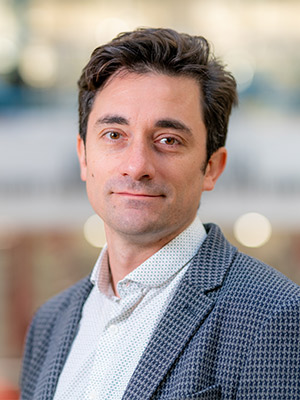
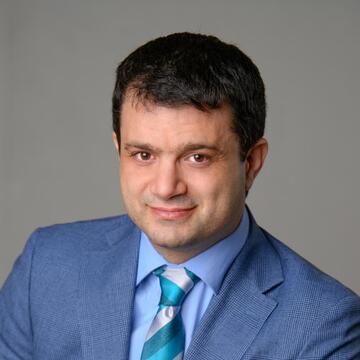
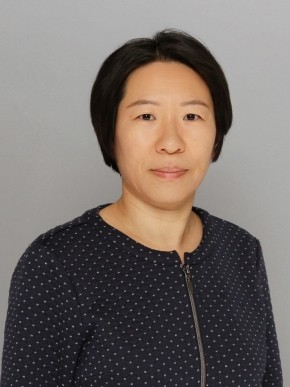
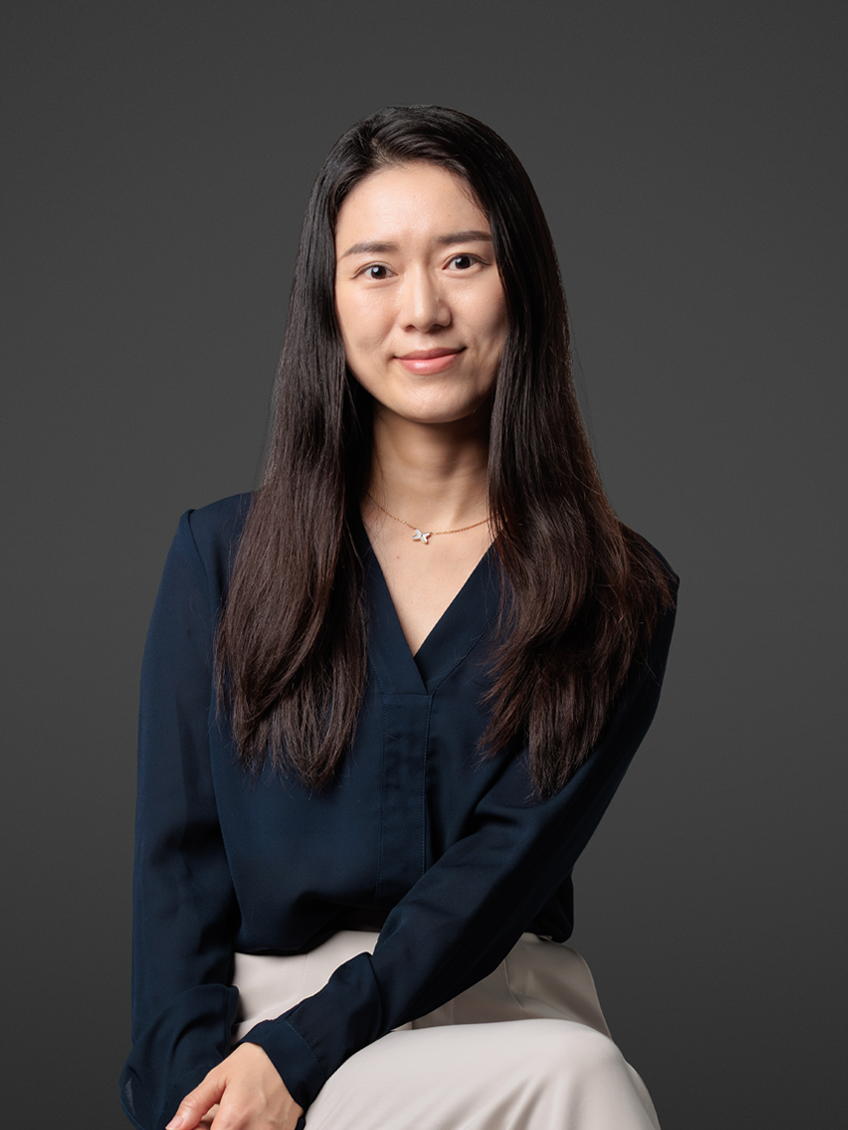
Xiuzhen Jenny Zhang is a Professor of Data Science at RMIT University , affiliated with the School of Computing Technologies. Her research bridges artificial intelligence, machine learning, and social media analysis, with a focus on text mining and trustworthy data science. Her recent publications highlight expertise in point-of-interest recommendation , misinformation detection , multi-task learning , and transformer-based NLP . Key trends include applications of large language models for social good, fairness in recommendation systems , and adversarial learning for robustness. Best Paper Award at TrustCom’12 Best Short Paper Award at ADCS’2009 She leads the Text And LanguagE (TALE) research group and has supervised over 20 PhD students. Research grants include Australian Research Council and Victoria state government funding.
Margaret Beck is a Professor and former Director of Undergraduate Studies in the Department of Mathematics and Statistics at Boston University. She holds a PhD from Boston University and has held postdoctoral positions at the University of Surrey, MSRI, and Brown University. Her research focuses on partial differential equations and dynamical systems, particularly analyzing the long-time behavior of solutions and stability of nonlinear waves. She has received prestigious awards including the 2019 SIAM J.D. Crawford Prize and the 2018 AMS Birman Fellowship. Education: Bachelor's degree from Colorado College PhD in Mathematics from Boston University Research Interests: Nonlinear waves and coherent structures Spectral and nonlinear stability analysis Pattern formation in dissipative systems Applications to fluid dynamics and mathematical physics Awards: 2019 SIAM J.D. Crawford Prize 2018 AMS Birman Fellowship 2012 Sloan Research Fellowship Advising: Supervised 11 graduate students and postdocs, including Montie Avery and Jonathan Jaquette. Actively mentors through the AWM Mentor Network. Current advising handled by Prof. Matt Szczesny during her 2025 sabbatical. Labs/Community: Co-organizes the GeMs group supporting gender minorities in mathematics at BU and co-founded the GeMsGetMath@BU summer math camp for high school students. Engages in initiatives promoting diversity in STEM, including presentations at EDGE and WISE@Warren programs.
Ceyhun Eksin is an Associate Professor and the Corrie and Jim Furber '64 Faculty Fellow at the Texas A&M University Industrial & Systems Engineering Department. He is also affiliated with the Electrical & Computer Engineering Department. His research focuses on networked multi-agent systems, integrating game theory, distributed optimization, and control theory to address challenges in autonomous systems, energy systems, and epidemiological modeling. Education: Ph.D. in Electrical and Systems Engineering from the University of Pennsylvania (2015), followed by a postdoctoral fellowship at Georgia Institute of Technology (hosted by Professors Jeff S. Shamma and Joshua S. Weitz). Research interests emphasize the design and analysis of complex systems, including distributed algorithms for autonomous teams, epidemic dynamics influenced by behavioral changes, and optimization in smart grids. His work bridges theoretical foundations with practical applications in cyber-physical systems and social networks. Notable awards include the NSF CAREER Award (2023) and TAMIDS Career Initiation Fellowship (2023). His research has been published in top journals like Proceedings of the National Academy of Sciences and IEEE Transactions . Lab activities center on the NetMaS (Networked Multiagent Systems) Lab, focusing on theoretical and algorithmic innovations for multi-agent systems. Collaborations span academia and industry, addressing real-world challenges in energy, healthcare, and robotics.
Xiaoqiang Wang is a Professor in the Department of Scientific Computing at Florida State University (FSU). His research focuses on numerical analysis, applied partial differential equations, mathematical biology, image processing, and scientific computing. He holds a Ph.D. from Pennsylvania State University (2005). His work emphasizes phase-field modeling for elastic bending energy, biological microstructures, and computational methods for complex systems. Notable contributions include advancements in centroidal Voronoi tessellation algorithms for image segmentation and high-performance computing techniques for scientific visualization. Recent publications highlight innovations in topology-preserving phase-field models, neural network-based energy minimization, and stochastic resource competition models. His research bridges theoretical mathematics with practical applications in biophysics, materials science, and biomedical engineering. Wang collaborates actively with interdisciplinary teams, contributing to FSU's computational science initiatives. His lab focuses on developing novel numerical methods and simulations for biological and physical systems, reflecting a commitment to both foundational and applied research.
Mustafa Hajij is an Assistant Professor in the Data Science program at the University of San Francisco. He holds a PhD in Mathematics from Louisiana State University, an MS in Computer Science, and completed postdoctoral training at University of South Florida and Ohio State University. Previously, he served as Assistant Professor at Santa Clara University and as an AI Research Scientist at KLA Corporation. His research develops foundational frameworks for topological deep learning, including cell complex neural networks and geometric learning architectures that operate beyond graph domains. He leads the NSF-funded project 'A Unifying Deep Learning Framework Using Cell Complex Neural Networks' (DMS-2134231, $547,626). Recent publications establish new paradigms for topological representation learning, including combinatorial complexes and simplicial networks, with applications in computational biology, 3D vision, and drug discovery. He organized the ICML Topological Deep Learning Challenges and develops open-source tools like TopoX for topological learning.
Ali Gooya is a Senior Lecturer (Associate Professor) in Machine Learning at the School of Computing Science, University of Glasgow, UK. His research focuses on probabilistic deep learning applied to medical imaging, particularly in cardiology and oncology, emphasizing semi/unsupervised methods due to sparse expert annotations. He holds a PhD in medical image analysis from the University of Tokyo (2007) and has held academic positions at the University of Leeds and Sheffield before joining Glasgow in 2022. Affiliations: Senior Lecturer in Machine Learning, University of Glasgow (2022–present) Lecturer in Computing, University of Leeds (2018–2022) Lecturer in Computing, University of Sheffield (2016–2018) Postdoctoral Researcher, University of Pennsylvania (2008–2011) Research Interests: Deep learning for medical imaging, probabilistic modeling, cardiac and cancer imaging, computational anatomy, and marker discovery. Key applications include motion analysis, segmentation, and predictive modeling in healthcare. Key Achievements: Won prestigious fellowships including Allen Touring Institute (2022), JSPS Short-Term (2020), Marie-Curie IIF (2014), and JSPS-PDRA (2008). Pioneered Bayesian deep learning frameworks for cardiac motion assessment and generative models in medical imaging. Grants & Supervision: EPSRC Impact Acceleration Award (PI) EPSRC New Investigator Grant (EP/S012796/1) Actively supervising PhD students in areas like Bayesian deep atlases for cardiac motion analysis. Labs & Teams: Leads research in medical AI within the School of Computing Science, collaborating on projects integrating imaging and patient metadata for clinical decision support.
Kangkang Yin is an Associate Professor in the School of Computing Science at Simon Fraser University (SFU). His research focuses on computer animation, computer graphics, humanoid robotics, machine learning, and multimedia analysis. He teaches courses such as Computer Animation and Scientific Computing, and holds a PhD from the University of British Columbia (2007), MSc from Zhejiang University (2000), and BSc from Zhejiang University (1997). His work bridges robotics and animation through projects like physics-based character controllers, motion diffusion models, and robotic manipulation. Key contributions include the SIMBICON biped locomotion framework and research into emotion-driven dance animation. Recent efforts emphasize reinforcement learning applications in motion synthesis and robust visual navigation for unmanned ground vehicles. Yin's publications span over two decades, addressing challenges in motion control, physics-based simulation, and machine learning applications. His lab contributes to both academic advancements and practical robotics solutions. Current research trends show strong emphasis on combining generative AI with traditional animation techniques, as seen in recent work on auto-regressive motion models (AAMDM) and physics-augmented reinforcement learning (PARC).
Adriana Ocejo Monge is an Associate Professor of Mathematics and Undergraduate Program Director at the University of North Carolina at Charlotte, affiliated with the Mathematics & Statistics Department. She holds a PhD in Statistics from the University of Warwick (2014) and degrees from Universidad de Sonora, Mexico. Her research focuses on mathematical finance, actuarial science, and stochastic optimal control, with emphasis on risk management, derivatives pricing, and regime-switching models. She directs the Actuarial Science Program and contributes to the Mathematics Honors Program and MS in Mathematical Finance. Her research explores topics such as stochastic volatility, portfolio allocation, variable annuities, and optimal stopping problems. Recent work includes applications of Feynman-Kac formulas in regime-switching diffusions and risk-adjusted fee models in portfolio optimization. Her publications span journals like Annals of Applied Probability and Stochastic Processes and their Applications. Dr. Ocejo has received the J.L. Doob Best Paper Award for her contributions. Her advising roles include overseeing actuarial programs and graduate concentrations in actuarial statistics. She is involved in the Math Alliance and has collaborated on projects addressing retirement planning and actuarial valuation challenges.
A. Stephen Morse is the Dudley Professor of Electrical & Computer Engineering at Yale University. He has been affiliated with Yale since 1970 and holds memberships in prestigious organizations such as the National Academy of Engineering and the Connecticut Academy of Science and Engineering. His research focuses on control systems, including hybrid systems, network science, multi-agent coordination, and sensor networks. He has received numerous awards, including the Bellman Control Heritage Award (2013) and the IEEE Technical Field Award (1999). Morse earned his BSEE from Cornell University, MS from the University of Arizona, and PhD from Purdue University. His work emphasizes logic-based switching, vision-based control, and distributed algorithms for autonomous systems. He has contributed to foundational papers on multi-agent consensus and formation control, as well as sensor network localization. Current projects include swarming dynamics and reactive control strategies for autonomous vehicles. His scientific contributions span over 200 publications, with recent work addressing distributed control algorithms, climate impact modeling, and game-theoretic network analysis. Morse advises graduate students like Ming Cao and Jia Fang, and his research group explores cutting-edge topics in systems theory and robotics.
Dr. Zhao Na is a tenure-track Assistant Professor at the Singapore University of Technology and Design (SUTD), affiliated with the Institute of Sustainable Technology and Design (ISTD). She holds a Ph.D. in Computer Science from the National University of Singapore (NUS), where her thesis on 3D point cloud semantics earned the IMDA Excellence Prize. Her research bridges computer vision and machine learning, focusing on scene understanding, data-efficient learning, and domain generalization. Education: Ph.D. in Computer Science (NUS, 2021); Prior roles include Research Fellow at NUS. Research interests emphasize 3D scene analysis, object detection, semantic segmentation, and robust learning under noisy or limited data. Her work addresses challenges in multi-modal learning, continual learning, and open-world scenarios. Recent projects include geometry-semantics synergy in neural fields and cross-modal augmentation for visual grounding. Publications span top-tier venues like CVPR, ECCV, and ICCV, with a focus on 3D vision and AI. Key contributions include the PCTeacher framework for semi-supervised segmentation and Static-Dynamic Co-Teaching for incremental learning. Scientific Awards: IMDA Excellence Prize (2021). Active grants include a DSO Research Grant (2023–2026) and A*STAR MTC Grant (2023–2026). She leads the SUTD-ZJU Thematic Grant on 3D scene understanding (2022–2024). Laboratory/Team: Research group at ISTD/SUTD focuses on advancing AI-driven 3D perception and scene understanding systems.
Dr. Yu Xiang is an Assistant Professor of Computer Science at the University of Texas at Dallas (UT Dallas), leading the Intelligent Robotics and Vision Lab (IRVL) . He holds a Ph.D. in Electrical and Computer Engineering from the University of Michigan (2016) and prior roles include Senior Research Scientist at NVIDIA (2018–2021) and postdoctoral research at the University of Washington. Research Focus : His work centers on robotics and computer vision , particularly enabling robots to perceive 3D environments, plan actions, and interact autonomously in human-centric spaces. Key areas include unseen object segmentation, 6D pose estimation, manipulation trajectory optimization, and lifelong learning through robot-environment interaction. Key Contributions : Developed datasets like MultigripperGrasp and HO-Cap , and pioneered methods such as DeepIM for 6D pose estimation. His lab’s robot Ramp focuses on tasks like object manipulation and human-robot collaboration. Grants : NSF SMILE grant ($750K), DARPA Perceptually-enabled Task Guidance (co-PI), Sony Research Award (PI). Awards : NVIDIA Academic Grant (2024), Sony Research Award (2022), ECCV Best Paper (2018). Lab Activities : Engages in STEM outreach, including mentoring high school students in the 2024 Summer Bridge Camp. Current projects emphasize self-supervised learning and embodied AI for robotic systems.
Hannu Hyyppä is a Research Director and Project Employee at Aalto University's Department of Built Environment, affiliated with the MeMo research group. He leads the Research Institute of Measuring and Modelling for the Built Environment, focusing on advanced laser scanning, 3D modeling, and geoinformatics. His work spans interdisciplinary collaborations across engineering, geography, and arts, with a strong emphasis on applications in cultural heritage preservation, urban planning, and environmental monitoring. Education: Doctoral degree (D.Sc.) in Engineering and Technology, Helsinki University of Technology (2000) Licentiate degree in Engineering and Technology, Helsinki University of Technology (1989) Master's degree in Engineering and Technology, Helsinki University of Technology (1986) Research Interests: Laser scanning technologies, point cloud utilization in forestry and urban mapping, virtual reality for cultural heritage, and sustainable infrastructure modeling. His expertise includes photogrammetry, geographic information systems (GIS), and decision support systems for environmental management. Recent Contributions: Over 550 publications and 30+ active projects, including the Centre of Excellence in Laser Scanning Research (2014-2019) and the Pointcloud project (2015-2021). His work advances applications in autonomous road inspection, 3D cultural reconstructions, and smart city technologies. Awards: Recipient of the 2019 Kansallinen avoimen tieteen palkinto for innovative open science contributions. Grants & Leadership: Principal Investigator for projects like DICA (Digital Cultural Heritage) and ToToRo (Automatic Road Inspection). Active in organizing workshops and international conferences on 3D technologies and laser scanning. Labs/Teams: Oversees the MeMo group and collaborates with national organizations like the Finnish Geospatial Research Institute. Develops tools for real-time 3D mapping and virtual environments.
Hamidreza Mahyar is an Assistant Professor at the Faculty of Engineering , McMaster University , and an Associate Member of the Computing and Software department. His academic journey includes postdoctoral work at Boston University and TU Wien , and a Ph.D. in Computer Science from Sharif University of Technology . Research Focus: Mahyar's work bridges machine learning and network science , emphasizing graph neural networks for applications in social networks , recommendation systems , drug discovery , and generative AI . His research spans industrial AI (Industry 4.0 projects at Infineon Technologies), biomedical engineering (organoid morphology analysis), and semiconductor manufacturing (wafermap modeling). Scientific Recognition: McMaster Teaching Merit Award (2022) Vector Scholarship in AI (2023) NSERC USRA Award (2022) Google Cloud Platform for Research Award (2018) Best Paper Selection, Complex Networks (2018) Academic Leadership: He mentors PhD students (Taraneh Ghandi) and MSc students (Reza Namazi, Mohammad Khodadad, Ali Shiraei), while leading AI initiatives at Mind Lab 56 and BrainMaven . Former mentees include industry leaders at Google, Accenture, and ETH Zurich.
Tobias Ofner-Graff is a researcher at the Institute of Forest Growth within the Department of Ecosystem Management, Climate and Biodiversity at the University of Natural Resources and Life Sciences, Vienna (BOKU). Based at Peter-Jordan-Straße 82, 1190 Wien, his work focuses on advanced forest monitoring technologies. His research interests include: LiDAR and remote sensing applications in forestry Automated forest inventory systems Forest regeneration quantification Airborne Laser Scanning (ALS) data analysis Sustainable forest harvesting planning Recent project contributions include: Leading lidar-based forest monitoring systems development Developing spatial forest growth models Implementing digital inventory workflows His publications demonstrate expertise in: Quantifying forest resources through 3D point clouds Advanced timber stack measurement techniques ALS data integration for forest modeling Mobile laser scanning applications Forest climate adaptation strategies
Alexander Damm is a Professor and head of the Remote Sensing of Water Systems (RSWS) group, holding a joint appointment between the Department of Geography at the University of Zurich (UZH) and the Swiss Federal Institute of Aquatic Science and Technology (Eawag). His research integrates advanced Earth observation technologies with environmental science to study water systems under changing climatic and anthropogenic pressures. University: University of Zurich Institutional Affiliation: Swiss Federal Institute of Aquatic Science and Technology (Eawag) Department: Department of Geography Alexander Damm obtained his MSc and PhD in remote sensing from Humboldt-University Berlin. Since 2008, he has been contributing to UZH’s leadership in imaging spectroscopy and Earth observation science. MSc, Remote Sensing, Humboldt-University Berlin PhD, Remote Sensing, Humboldt-University Berlin His research focuses on the fundamentals of remote sensing as applied to terrestrial and aquatic ecosystems, particularly in studying water dynamics and environmental change impacts. He specializes in sun-induced chlorophyll fluorescence (SIF), imaging spectroscopy, and the development of methods to monitor ecosystem productivity, drought responses, and biogeochemical cycles. His work bridges physics, ecology, and environmental engineering to improve understanding of plant-water relations and ecosystem resilience. The recent publications highlight a strong trend in using airborne and satellite-based spectroscopy to assess vegetation health, water stress, forest dynamics, and atmospheric constituents. Key themes include SIF retrieval, drought monitoring, canopy structure modeling, and air quality estimation. These works span applications from croplands and forests to tundra and inland waters, reflecting a broad interdisciplinary approach grounded in quantitative remote sensing. Alexander Damm is involved in several high-profile research initiatives, including: ESA’s FLuorescence EXplorer (FLEX) mission SNSF projects: FLUO4ECO, Spatial-sustainable-finance, DeltAs MeteoSwiss: UrbanNature EU Horizon: NextGenCarbon He leads the RSWS group, which develops and applies cutting-edge remote sensing methodologies for water system monitoring. The team collaborates across disciplines and institutions, focusing on integrating field measurements, airborne campaigns, and satellite data for environmental assessment. Damm’s leadership in projects like FLEX and HyPlant underscores his role in advancing spectroscopic remote sensing for global ecosystem monitoring.