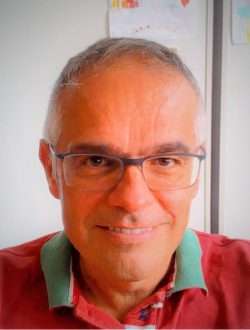
David M. Labyak is an Assistant Professor at Michigan Technological University's College of Engineering, affiliated with both the Manufacturing and Mechanical Engineering Technology and Mechanical and Aerospace Engineering departments. He teaches courses in computer-aided engineering, finite element methods, dynamic systems control, machine design, robotics dynamics, and Industry 4.0 concepts. PhD in Mechanical Engineering-Engineering Mechanics (2003) and MS in Mechanical Engineering (2000) from Michigan Tech Over 24 years of industrial experience in automotive, aerospace, mining, and consulting sectors His research interests span solid mechanics, finite element analysis, vibration analysis, machinability of metals, biomechanics, and helmet design optimization. Collaborative work includes dynamic testing, acoustic modeling, and workforce development initiatives. Recent publications highlight interdisciplinary work in vibration testing, metalcasting, and educational frameworks. Key areas include defect detection in additive manufacturing, dynamic fixture design, and experiential learning for mechatronics.
Dr. Lisa Merten is a Senior Researcher at the Leibniz Institute for Media Research | Hans Bredow Institute (HBI), where she leads computational social science projects like POLTRACK, examining the relationship between information repertoires and political polarization. She also coordinates the DFG-funded 'Public Connection' project, exploring how users engage with diverse publics through media practices. Her research focuses on digital media environments, algorithm-driven personalization, and the impact of social media on news consumption and public opinion. Education : - Studied Communication Science at Universität Leipzig, TU Dresden, Universiteit van Amsterdam, and Boston University - German Academic Scholarship Foundation recipient Research Interests : - Algorithmic publics and personalization - Political information seeking and polarization - Digital methods for media analysis - Journalism and online commentary dynamics Key Projects : - Co-led the POLTRACK project with GESIS and universities of Bremen/Konstanz - Investigated Instagram influencers' reach in 'Media Use and Social Cohesion' with Hannah Immler - Pioneered browser data donation methods in journalism studies Awards : - 2021 Digital Journalism 'Article of the Year' for work on social media news curation Teaching : - Held part-time junior professorship in Computational Social Science at University of Konstanz (2021) - Taught at University of Hamburg, Augsburg, and Kiel University of Applied Sciences Labs/Teams : - Core member of HBI's Computational Social Science team - Collaborates with GESIS, Bremen/Konstanz universities, and international partners
Katie Morrison is an Associate Chair and Professor in the Department of Mathematical Sciences at the University of Northern Colorado (UNC), part of the College of Natural and Health Sciences. Her research focuses on mathematical neuroscience, neural networks, and algebraic coding theory, with a particular emphasis on applying matrix codes and graph-based algorithms to understand neural dynamics. She has been funded by NSF DMS-1951599 and NIH R01 EB022862 grants. Education: Ph.D. in Mathematics (University of Nebraska-Lincoln, 2012), M.S. in Mathematics (2008), B.A. in Mathematics and Psychology (Swarthmore College, 2005), and studies at Budapest Semesters in Mathematics. Her work bridges abstract mathematics with applied neuroscience, including projects like the CTLN initiative. Research trends in her publications emphasize graph-theoretic approaches to neural network dynamics, pattern completion in threshold-linear networks, and algebraic analysis of neural codes. Collaborations with computational topologists and neuroscientists highlight interdisciplinary strengths. Grants and advising: Active in securing federal research funding and mentoring students in interdisciplinary projects. Her lab explores connections between network connectivity and emergent behaviors, with applications to both theoretical and applied neuroscience.
Prof. Mihai Nica is an Assistant Professor in the Department of Mathematics and Statistics at the University of Guelph, affiliated with the CARE-AI institute and Vector Institute. His research focuses on probability theory, stochastic processes, and their applications to machine learning, particularly deep neural networks (DNNs). He explores scaling limits of DNNs, numerical methods using neural networks, and phase transitions in high-dimensional learning problems. Education: B.Math in Pure & Applied Math with Physics Option, University of Waterloo PhD in Mathematics, Courant Institute of Mathematical Sciences, New York University Postdoctoral Fellow at University of Toronto (supervised by Jeremy Quastel) Research Interests: His work bridges mathematical theory and practical AI applications, emphasizing topics like the neural tangent kernel, KPZ universality class, and stochastic processes in machine learning. Notable contributions include studies on neural network dynamics, random matrices, and directed polymers. Publications: Over 15 peer-reviewed articles in journals like Communications in Pure and Applied Mathematics and Electronic Journal of Probability , with a focus on theoretical foundations of AI and stochastic systems. Recent work explores infinite-width limits of neural networks and their connections to differential equations. Labs/Teams: Affiliated with CARE-AI (bridging mathematics, engineering, and philosophy) and the Vector Institute, fostering interdisciplinary collaborations.
Professor Minh N. Do is the Thomas and Margaret Huang Endowed Professor in Signal Processing & Data Science at the University of Illinois at Urbana-Champaign (UIUC), with primary appointment in the Department of Electrical and Computer Engineering. He holds multiple affiliate appointments across campus including with the Coordinated Science Laboratory, Beckman Institute for Advanced Science and Technology, Department of Bioengineering, Department of Computer Science, Institute for Genomic Biology, College of Medicine, and School of Computing and Data Science. Additionally, he serves as Director of the joint VinUni-Illinois Smart Health Center and holds an Honorary Vice-Provost position at VinUniversity. Professor Do received his B.Eng. in Computer Engineering (First Class Honors) from the University of Canberra, Australia in 1997, followed by his Dr.Sci. in Communication Systems from the Swiss Federal Institute of Technology Lausanne (EPFL) in 2001. His educational journey was marked by exceptional achievement, earning the University Medal from the University of Canberra and a Silver Medal from the 32nd International Mathematical Olympiad. Professor Do's research focuses on developing new multidimensional signal processing tools with applications across several domains. His primary research interests include smart health, data science, computational imaging, and signal processing. His work spans biomedical imaging, machine learning, computer vision, and robotics, with particular emphasis on geometric image representations, integrating image formation and processing, and image processing from multiple sensors. His research bridges theoretical investigations with practical applications, creating impactful solutions in healthcare, diagnostics, and AI systems. His recent publications demonstrate a consistent trajectory toward multimodal AI systems, robust learning frameworks, and healthcare applications. Professor Do's work increasingly integrates signal processing with deep learning approaches to address challenges in medical imaging, cross-modal transfer, and real-world deployment of AI systems. His research shows strong emphasis on practical applications with societal impact, particularly in healthcare diagnostics and smart health technologies. Professor Do's scientific achievements have been recognized with numerous prestigious awards: Member of the National Academy of Artificial Intelligence (2025) Fellow of Asia-Pacific Artificial Intelligence Association (2023) Thomas and Margaret Huang Endowed Professor, UIUC (2020-present) Fellow of IEEE (2014) Young Author Best Paper Award, IEEE Signal Processing Society (2008) CAREER award from the National Science Foundation (2003) Best Doctoral Thesis Award from EPFL (2001) As an educator, Professor Do has taught numerous courses spanning digital signal processing, probability, data science, and image processing. His teaching excellence has been recognized with multiple "Teachers Ranked as Excellent" awards at UIUC. He also maintains active industry connections through tech-transfer efforts, having co-founded Personify and served as Chief Scientist of Misfit. His leadership extends to administrative roles, having served as Vice-Provost for VinUniversity during 2020-2021. Professor Do leads research initiatives at the intersection of signal processing and healthcare applications, with particular focus on the Smart Health Center collaboration between UIUC and VinUniversity. His lab develops innovative solutions for medical diagnostics, point-of-care testing, and neurological assessment using advanced signal processing and AI techniques.
Yonghao Xu is an Assistant Professor at the Department of Electrical Engineering , Linköping University , and affiliated with the Computer Vision Laboratory (CVL) and the Wallenberg Autonomous Systems Program (WASP) . His research bridges remote sensing , machine learning , and AI security . Research Trends Xu's recent publications focus on adversarial attacks and defenses in remote sensing, domain adaptation for semantic segmentation, and benchmark dataset creation (e.g., Sen2Fire). His work addresses challenges in urban sustainability , geospatial data analysis , and deep learning robustness . Labs & Programs He is associated with the Computer Vision Laboratory (CVL) , contributing to autonomous systems through the Wallenberg Autonomous Systems Program (WASP) , a major Swedish initiative in AI and robotics.
Patrick Sakdapolrak is a Professor of Population Geography and Demography at the University of Vienna's Department of Geography and Regional Research, within the Faculty of Earth Sciences, Geography and Astronomy. He serves as Head of the Working Group on Population Geography and Demography and Vice-Director of Doctoral Studies (SPL 45). His research focuses on the interplay of population dynamics, environmental change, and development, particularly migration and health in vulnerable contexts. He holds a Ph.D. from the University of Bonn, with earlier studies at Heidelberg University and the University of Wollongong. Research Interests: Conceptual: Vulnerability, resilience, livelihoods, translocality, Bourdieu's practice theory Thematic: Human-environment relations, migration, health Regional: South Asia (India), Southeast Asia (Thailand), East Africa (Kenya) Current Projects include the HABITABLE initiative exploring climate change and social tipping points. His work emphasizes translocal social resilience and migration as adaptation strategies. Recent publications address climate migration, habitability, and translocal networks' role in innovation and adaptation. He actively engages in policy-relevant research and global collaborations.
Ingrid Moerman is a part-time Professor at Ghent University and a staff member at the Internet Technology and Data Science Lab (IDLab), a core research group of imec embedded within Ghent University and the University of Antwerp. She coordinates mobile and wireless networking research and leads a team of over 30 researchers at Ghent University, with extensive involvement in European and national funding initiatives. She received her Electrical Engineering degree (1987) and Ph.D. (1992) from Ghent University. Her research spans collaborative networks, cognitive radio, software-defined radio, IoT, LPWAN, and high-density wireless access, emphasizing experimentally-supported development of next-generation wireless systems with practical implementations in spectrum management and real-time control. Recent publications (2024-2025) reveal a strong pivot toward AI-integrated wireless networking, featuring OFDMA scheduling innovations, Wi-Fi 6/7 interference mitigation, and time-sensitive networking for industrial applications. Key trends include 5G/6G convergence, vehicular communication enhancements, and digital twin frameworks for network observability, reflecting her focus on mission-critical industrial use cases. Her accolades include: 9 Best Paper Awards 2 FWO Prizes (Research Foundation - Flanders) IMEC Prize of Excellence 2001 MSc Thesis Award (as promoter) Best Demo/Exhibit Award at ICT 2013 DARPA Spectrum Collaboration Challenge Prize ($750,000) She has coordinated major EU projects (FP7/H2020: CREW, WiSHFUL, eWINE, ORCA) with industry partners, securing substantial funding for experimental wireless research. Her grant portfolio emphasizes collaborative innovation in spectrum sharing and neutral-host architectures for multi-operator environments. At IDLab, she directs advanced wireless testbeds supporting real-world validation of technologies like openwifi and White Rabbit, with active experimentation in time-sensitive networking and spectrum collaboration for industrial IoT deployments.
Ye Lu is a Senior Lecturer in the School of Economics at the University of Sydney. She holds a PhD in Economics from Indiana University Bloomington (2017). Her research focuses on econometric theory with applications to time series analysis, financial econometrics, and large-dimensional data. Key interests include continuous time modelling with high-frequency data, nonlinear factor models, and econometric methods for event-driven data. Education: PhD in Economics, Indiana University Bloomington (2017) Research emphasizes developing robust methodologies for data-rich environments, addressing challenges in traditional econometric approaches. Recent work includes bootstrap inference for Hawkes processes and zero-inflated GARX models for energy price spikes. Teaching responsibilities include courses like ECMT1020 (Introduction to Econometrics) and ECOS3904 (Applied Macroeconometrics). Her publications appear in top journals such as Journal of Econometrics and Energy Economics .
Prof. Dr. Wanja Wellbrock is a Professor at Heilbronn University's Faculty of Economics, focusing on Supply Chain Management, Sustainability, and Circular Economy. She leads the cooperative doctoral program with Tallinn University of Technology, focusing on 'Innovative Supply Chain Management in the Context of Industry 4.0 and Sustainable Management.' Her research spans funded projects like the 'Emission-free campus transport' (€200,000) and collaborations with organizations such as Hendricks, Rost & CIE and Lumics GmbH. Her academic roles include membership in the Senate Committee for Research, Transfer and Innovation, the Ethics Committee, and the Contact Point against Racism. She supervises doctoral students at the Schwäbisch Hall campus and actively contributes to international conferences and journals, including the 'Supply Management' symposium and 'GSI Journals Serie C.' Key research themes include sustainable procurement, risk management in supply chains, and digital technologies in logistics. Recent work explores circular economy innovations, cross-cultural communication, and the environmental impact of consumer choices. Research Collaborations: Philips University of Marburg (Innovative Supply Chain Management) Lumics GmbH (Process Orientation and Disruption Management) Grants: €200,000 from the Baden-Württemberg Ministry for 'Emission-free Campus Transport.' Her publications address sustainability in various sectors, including automotive, construction, and retail, with a focus on practical case studies and policy implications.
Mostafa Arastounia is an Assistant Professor of Geospatial Sciences at Kennesaw State University (KSU). He holds a PhD in Geomatics Engineering from the University of Calgary (Canada) and an MSc in Geo-Information Science from the University of Twente (Netherlands). He is licensed as a Professional Engineer in Geomatics in British Columbia and holds a Project Management Professional (PMP) certification. His research focuses on automated processing of LiDAR and Unmanned Aircraft (UA) data for infrastructure monitoring, including railroads, tunnels, and electrical substations. He develops algorithms for object recognition, 3D modeling, and workflow optimization in geospatial applications. He serves as a Topic Editor for Remote Sensing Journal and is a reviewer for journals like IEEE Transactions on Geoscience and Remote Sensing and Sensors . His teaching includes undergraduate courses in surveying, civil engineering, and geography at KSU. His work bridges geomatics, remote sensing, and civil engineering to enhance infrastructure resilience and maintenance through advanced data analytics. Key research areas include automated mapping of civil infrastructure, LiDAR-based asset recognition, UAS data workflows, and interdisciplinary applications of geospatial technologies. His peer-reviewed publications span journals like ISPRS Journal of Photogrammetry and Infrastructures , with a focus on advancing automation in geospatial data processing.
Hédi Hadiji is an Associate Professor at the Laboratoire des Signaux et Systèmes (L2S) at CentraleSupélec. His research focuses on the mathematics of online decision-making, particularly adaptivity in bandits and online learning. Prior to this role, he was a postdoctoral researcher at the University of Amsterdam under Tim van Erven. He holds a PhD in Mathematics from Université Paris-Saclay, supervised by Gilles Stoltz and Pascal Massart. Education: PhD in Mathematics, Université Paris-Saclay (2020) Masters in Probability and Statistics, Université Paris-Saclay (2017) Part III Mathematical Tripos, University of Cambridge (2016) École Polytechnique (2012–2016) Research Interests: Hédi’s work addresses theoretical foundations of online learning, including bandit algorithms, reinforcement learning, and optimization. He explores adaptive strategies in dynamic environments, with applications to stochastic and adversarial settings. Key themes include minimax optimal algorithms, regret analysis, and the interplay between exploration and exploitation. Recent Publications: His recent work includes minimax optimal algorithms for linear bandits, tracking solutions in time-varying systems, and diversity-preserving strategies in K-armed bandits. These contributions advance theoretical understanding of adaptive decision-making in complex systems. Teaching: He teaches courses on the theoretical principles of deep learning, reinforcement learning, and mathematical foundations at the graduate level. His lectures emphasize rigorous analysis of generalization, optimization, and the neural tangent kernel. Labs & Affiliations: His primary affiliation is with L2S, where he engages in collaborative research groups such as MODESTY, COMEDY, and SYCOMORE. His work intersects signal processing, control systems, and communication networks.
Tara Javidi holds the Jerzy (George) Lewak Endowed Chair and is a Professor in the Department of Electrical and Computer Engineering and Halicioglu Data Science at the University of California San Diego (UCSD). She leads multiple initiatives, including serving as Founding CTO of KavAI, Co-Director of the Center for Machine Intelligence, Computing and Security, and Co-Principal Investigator (CoPI) of the NSF AI Institute TILOS. Her research focuses on stochastic analysis, design, and control of information systems, emphasizing active learning, decentralized optimization, and wireless networks. Key areas include information acquisition/utilization, stochastic control, and AI-driven communication solutions. Her work bridges theoretical foundations and practical implementations, such as drone systems for information gathering (via detecdrone.ucsd.edu) and optical data center networking. Notable contributions include end-to-end scheduling for all-optical data centers and hybrid wireless-optical architectures. Javidi is an IEEE Fellow and has received significant grants, including leading UCSD’s Schmidt AI in Science Postdoctoral Fellowship program. She actively collaborates with industry and academia, with a focus on next-generation wireless networks and decentralized systems. Education: Ph.D. in Electrical Engineering (implied from title). Affiliations: IEEE Journal of Selected Areas in Information Theory (Editor-in-Chief), CALIT2, CNS, and TILOS. Grants: NSF AI Institute TILOS ($20M over 5 years), Schmidt AI Fellowship program. Her research group emphasizes both theoretical rigor (e.g., sequential hypothesis testing) and practical testing, with applications in service drones, cognitive networks, and federated learning. Recent articles highlight advancements in optical networking, secure communication, and distributed learning protocols. Awards: IEEE Fellow, Jerzy Lewak Chair. Labs/Teams: Center for Machine Intelligence, TILOS Institute, KavAI, and UCSD’s AI in Science initiatives.
Professor Peter Wadhams is a renowned academic at the University of Cambridge's Department of Applied Mathematics and Theoretical Physics (DAMTP), affiliated with the Faculty of Mathematics. He leads the Polar Ocean Physics research group, focusing on sea ice dynamics, Arctic and Antarctic environmental processes, and climate change impacts. His work integrates field experiments, satellite remote sensing, and numerical modeling to study ice-ocean interactions, wave attenuation mechanisms, and the role of sea ice in global climate systems. Key contributions include submarine-based ice thickness measurements, analysis of ice ridge distributions, and assessments of Arctic climate tipping points. Professor Wadhams has authored over 180 peer-reviewed papers, including high-impact studies on the economic costs of Arctic melting and the urgency of addressing sea ice loss. His research emphasizes interdisciplinary approaches to understanding polar environmental changes and their global implications.
Marco Farina is a Full Professor in Electromagnetics at the Department of Information Engineering, College of Engineering, Polytechnic University of Marche, Italy. His research spans electromagnetic modeling, scanning microwave microscopy, and nanotechnology, with applications in 2D materials, biosensors, and advanced measurement systems. He is a Senior Member of IEEE and actively contributes to Technical Committees on RF Nanotechnology. Laurea and Ph.D. in Electronic Engineering from University of Ancona Research interests focus on quantitative scanning microwave microscopy, electromagnetic analysis of active/passive components, and nanoscale characterization techniques. His work bridges theoretical modeling with practical implementation, including the development of the EM3DS software suite and novel inverted SMM systems. Recent publications highlight interdisciplinary applications in biomedical analysis and semiconductor physics. Scientific recognition includes the 3M-Nano Best Conference Paper Award and grants from US Army Research Laboratory and US Air Force Office of Scientific Research. He holds an ESA-funded patent for VNA calibration and has co-authored a book on planar structure analysis. Collaborative projects emphasize RF device optimization and biological imaging.