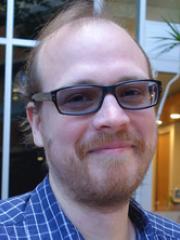
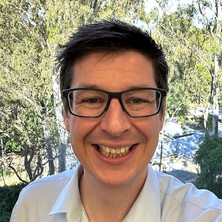
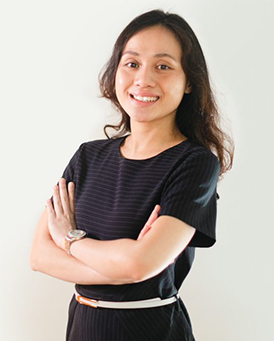
Prof Zhen (Jeff) Luo is a Professor at the School of Mechanical and Mechatronic Engineering at the University of Technology Sydney (UTS). Since 2012, he has led the Advanced Metamaterials & Metastructures (AMM) and Engineering Computation and Optimisation (ECO) research groups, focusing on multi-disciplinary engineering innovations. Expertise : Advanced materials design, topology optimization algorithms, additive manufacturing, and computational mechanics. Education : PhD in Mechanical Engineering from Huazhong University of Science and Technology (2005). His research bridges Mechanical, Structural, Aerospace, and Biomechanical Engineering , developing cutting-edge metamaterials and computational methods. Recent work includes two-scale lattice optimization , stochastic bandgap analysis , and machine learning-aided virtual modeling for structural reliability. Key contributions span 3D-printed heat sinks , frequency-selective surfaces , and hydrogen storage systems . As a World’s Top 2% Scientist (Stanford, 2019–present), he has secured over AUD $7 million in grants, including from the Australian Research Council (ARC) and National Intelligence Discovery Research Grants (NI220100074). Awards : IAAM Scientist Award, IAAM Fellow. Leadership : Editorial roles in Structural and Multidisciplinary Optimization , Frontiers in Bioengineering and Biotechnology , and organizing roles in 21 international conferences.
Dr. Sipei Zhao is a Senior Lecturer at the School of Mechanical and Mechatronic Engineering at the University of Technology Sydney (UTS), where he has been employed since January 2021. Prior to this, he worked as a Post-doctoral Research Fellow at the Centre for Audio, Acoustics and Vibration of UTS from July 2018 to December 2020. His educational background includes a PhD in Electrical Engineering from RMIT University (2018), a Master's degree in Acoustics from Nanjing University (2015), and a Bachelor's degree in Electronics Engineering from Nanjing University (2012). Dr. Zhao's research focuses on acoustics and noise control, dynamics and vibration control, and signal processing. His work spans theoretical development and practical applications in active noise control, architectural acoustics, and machine learning for acoustic analysis. He has made significant contributions to distributed acoustic systems, neural network applications in sound field reconstruction, and innovative approaches to sound zone control. His recent publications demonstrate a strong trajectory in distributed acoustic systems, neural network applications in acoustics, and innovative approaches to sound field control and reproduction. His work combines theoretical rigor with practical implementations, often resulting in significant reductions in computational complexity while maintaining or improving performance. Best Student Paper at the 22nd International Congress on Sound and Vibration (ICSV22) in 2015 Best Paper Prize at the 21st International Conference of the Association for Computer-Aided Architectural Design Research in Asia (CAADRA2016) in 2016 Best Paper Award at the 23rd International Congress on Acoustics (ICA2019) in 2019 Young Professionals Grant from the International Institute of Noise Control Engineering (I-INCE) Ford Publication Commendation Prize from RMIT University in 2017 ARC Early Career Industry Fellowship in 2024 Dr. Zhao has successfully secured multiple research grants and contracts from organizations including the Australian Research Council, NSW Environment Protection Authority, and industry partners like Noizend Pty Ltd. His research has practical applications in industrial settings, transportation, and building acoustics. He serves as a peer reviewer for prestigious journals including the Journal of Sound and Vibration and IEEE/ACM Transactions on Audio, Speech, and Language Processing.
Thomas Taimre is a Senior Lecturer in Statistics at the School of Mathematics and Physics, University of Queensland. He teaches undergraduate courses in statistics and financial mathematics and leads research in applied mathematics, stochastic modeling, and optical engineering. His work bridges theoretical frameworks with practical applications in terahertz laser technology and optimization algorithms. Research Focus: Dr. Taimre's interdisciplinary research spans: Mathematical Statistics: Rare-event simulation, stochastic processes, and Monte Carlo methods. Optical Engineering: Terahertz quantum cascade lasers, laser feedback interferometry, and biomedical imaging. Operations Research: Resource optimization, queueing theory, and decision support systems for environmental and industrial challenges. Publication Trends: His recent articles (2022-2025) emphasize terahertz imaging advancements, laser dynamics, and optimization techniques. Dominant themes include quantum cascade laser applications, laser feedback interferometry for medical diagnostics, and stochastic methods for complex system modeling. Funding & Supervision: He contributes to major grants like the ARC Training Centre for Information Resilience (2021-2026) and supervises graduate research. No awards are listed.
Dr. Helia Farhood is an Honorary Senior Research Fellow at the School of Computing, Macquarie University, specializing in Artificial Intelligence, Machine Learning, and Image Processing with applications in educational technology and object recognition. Her academic qualifications include a PhD in Computer Systems and Artificial Intelligence from the University of Technology Sydney (awarded November 2021) and a Master's degree in Computer-AI from Amirkabir University of Technology (Tehran Polytechnic, awarded September 2013). Dr. Farhood's research spans interdisciplinary AI applications, with significant contributions in student outcome prediction using generative adversarial networks, explainable AI through LIME heatmaps, and image-based storytelling systems. Her work integrates machine learning with educational data mining to enhance creativity assessment and learning analytics, while maintaining strong technical focus on 3D reconstruction and object recognition. Analysis of her 16 publications (2020-2025) reveals three dominant research trajectories: (1) AI-driven educational analytics for student performance prediction, (2) advanced image processing techniques for object recognition and 3D reconstruction, and (3) systematic reviews establishing methodological foundations in presentation attack detection and image-based storytelling. Her recent work increasingly emphasizes explainability and ethical considerations in AI deployment. Dr. Farhood has participated in externally funded research projects, including the 2022 project "Estimating the Number of Tyres in Stockpiles" (October-December 2022). No information is available regarding students she has advised. No information is available about specific research laboratories or teams led by Dr. Farhood.
Arti Agrawal is an Adjunct Associate Professor in the School of Electrical and Data Engineering at the University of Technology Sydney (UTS). She has been associated with UTS since 2018, initially joining with time split between her academic role and as Director of the Women in Engineering and IT programme. She is also the CEO of Vividhata Pty Ltd, a startup focused on diversity and inclusion. Dr. Agrawal earned her PhD in Physics from the Indian Institute of Technology Delhi in 2005, following an MSc (1999) and BSc Physics (Hons) (1997) from the same institution. Prior to UTS, she worked at City, University of London from 2005-2017, progressing from Research Fellow to Senior Lecturer in the Department of Electrical Engineering. Her primary research focuses on optics and photonics, specifically modeling photonic components such as solar cells, optical fibers, sensors, and lasers using numerical methods like the Finite Element Method (FEM). She is an expert in computational photonics, having authored a book on FEM and edited a book on trends in computational photonics. She serves as an Associate Editor for the IEEE Photonics Journal. Dr. Agrawal's recent publications demonstrate a strong focus on nanophotonics, particularly involving graphene and silicon carbide materials for mid-infrared applications, as well as research on diversity and inclusion in engineering education. Her work spans both fundamental photonics research and practical applications in sensor technology and optical devices. Chartered Engineer (Institution of Engineering and Technology, 2013-present) Chartered Physicist (Institute of Physics) Senior Member IEEE Senior Member Optical Society of America Board of Directors, Optical Society of America (2018) Dr. Agrawal has received research funding including a scholarship from the Defence Science and Technology Group of the Department of Defence for 'Graphene based Nanophotonics for Polarization and Photodetection Filter Design' (2019-2022). She is passionate about mentoring students and has supervised PhD and Master's students in photonics research. Her teaching interests include electromagnetics, optics, and numerical methods, and she has taught first-year undergraduate Physics, Signal Processing, and Biomedical Optics. She leads significant initiatives in diversity and inclusion in STEM, using virtual reality for training and developing evidence-based approaches for managing diverse teams. She has organized workshops including the first Pride in Photonics workshop at CLEO for LGBTQI+ scientists and allies.
Dr. Joan Tan is a Senior Lecturer in the Department of Econometrics & Business Statistics at Monash University. Her research spans econometrics, sustainable development, and chemical engineering applications, with a focus on data literacy, energy economics, and innovative material science solutions. Her work contributes to the UN Sustainable Development Goals through advancements in: Nanocellulose-based sustainable packaging Chemical process digitalization Food safety monitoring systems Technoeconomic assessments for green manufacturing Key research themes include: Statistical modeling of economic-environmental interactions Development of bio-based materials with tunable properties Integration of digital technologies in engineering education Resource recovery from industrial waste streams Her interdisciplinary approach combines econometric analysis with chemical engineering challenges, particularly in sustainability contexts. Recent publications demonstrate her expertise in cellulose nanotechnology, process optimization, and data-driven decision making across multiple sectors.
Dr Will Anderson is a Research Fellow at The University of Queensland , affiliated with the Australian Institute for Bioengineering and Nanotechnology . With over 15 years of R&D experience spanning academia and industry, his work focuses on molecular diagnostics , nanoparticle characterization , and translational device development that bridges fundamental research with real-world applications. His research interests include: Development of low-cost diagnostic technologies like the DIYNAFLUOR open-source DNA fluorometer Advancing nanopore sensing and optical characterization methods Optimizing nucleic acid extraction and quantification workflows Designing point-of-care platforms with fluorescence detection capabilities Exploring research translation , IP strategy , and regulatory frameworks Dr Anderson has contributed to benchtop scientific instrumentation through projects like his patented low-cost nucleic acid extraction methodology and industry-partnered qPCR platform prototype . His nanopore sensing research has >2100 citations and established a UQ facility adopted by dozens of researchers. He actively supports open science initiatives through GitHub repositories and educational programs. He supervises research projects and contributes to collaborative lab environments at UQ's interdisciplinary research institutes, while maintaining an active presence in scientific outreach through social media and STEM education programs.
Karen Kheruntsyan is Professor of Theoretical Physics at the University of Queensland's School of Mathematics and Physics. With a career spanning over 25 years at UQ, he progressed from postdoctoral researcher to full professor, holding key roles including ARC Future Fellow and Chief Investigator in the ARC Centre of Excellence for Quantum-Atom Optics. His research explores fundamental quantum phenomena in ultracold matter, with current focus on quantum thermodynamics, hydrodynamic modeling of quantum gases, and macroscopic quantum entanglement. Professor Kheruntsyan's research interests center on: Quantum thermodynamics of nanoscale heat engines Stochastic hydrodynamic approaches to non-equilibrium quantum dynamics Emergent phenomena in mesoscopic quantum transport Bell inequality tests with ultracold atomic systems His work bridges theoretical physics with experimental quantum science, particularly in atomic Bose-Einstein condensates and degenerate Fermi gases. His recent publications demonstrate strong focus on quantum thermodynamics (50% of 2020-2025 papers) and hydrodynamic modeling of 1D quantum gases (30%), with applications in quantum engine design, entanglement verification, and non-equilibrium dynamics. The research consistently combines mathematical rigor with experimental testability, featuring high-impact results in Physical Review Letters and Nature-family journals. Professor Kheruntsyan actively mentors graduate researchers, with current projects including quantum hydrodynamics and ultracold gas thermodynamics. He has secured continuous ARC funding since 2003, including Discovery Projects and Fellowships totaling over $3M. His laboratory activities involve theoretical and computational work, with strong ties to experimental quantum gas groups worldwide.
Dr. Benjamin Pope is an Honorary Associate Professor at the University of Queensland's School of Mathematics and Physics. His affiliations include the Research Centre in Creative Arts and Human Flourishing at UQ and a former NASA Sagan Fellowship at NYU. He holds a DPhil from the University of Oxford and an MSc/BSc from the University of Sydney. His research spans exoplanet detection , JWST instrumentation , radio astronomy , and computational astrophysics . Key areas include: Differentiable modeling for exoplanet transit analysis Low-frequency radio signatures of star-planet interactions Radiocarbon applications in solar activity tracing High-contrast imaging with space telescopes He has received significant recognition, including: ARC DECRA Fellowship NASA Sagan Fellowship Dr. Pope leads projects like the JWST Aperture Masking Interferometer and TOLIMAN space telescope development. He is not currently accepting students.
Dr. Lewis Williamson is a Research Fellow at the School of Mathematics and Physics, University of Queensland, and an affiliate of the ARC Centre of Excellence for Engineered Quantum Systems (EQUS). His academic qualifications include a Bachelor of Science (Honours), Postgraduate Diploma, and PhD from the University of Otago. His research centers on quantum science , with emphases on: Quantum thermodynamics and work extraction in coherent systems Dynamics of Bose-Einstein condensates and ferromagnetic superfluids Berezinskii-Kosterlitz-Thouless phase transitions Non-equilibrium dynamics in quantum many-body systems Recent publications (2014–2025) predominantly explore quantum phase transitions, spin vortices, and quantum heat engines, reflecting a consistent focus on statistical mechanics and quantum coherence in ultracold atomic platforms. Theoretical modeling of spinor condensates and thermodynamic processes forms the core trend across these works. He currently co-advises doctoral candidates on projects involving quantum thermal machines and many-body systems, underscoring his active supervisory role. His laboratory affiliations leverage resources from the EQUS research center for engineered quantum systems.
Dr. Sheena Punai Anak Philimon is a Lecturer in Computing at the Faculty of Engineering, Computing and Science, Swinburne University of Technology Sarawak, where she has been working since 2020. Her academic expertise lies at the intersection of biomedical engineering and computing, with a specific focus on developing optical imaging techniques for medical applications. She holds professional certifications as a Professional Technologist with the Malaysia Board of Technologists (MBOT) and as a Graduate Engineer with the Board of Engineers Malaysia (BEM). Dr. Philimon's educational background includes: PhD in Electrical Engineering (Biomedical Imaging) from Universiti Tun Hussein Onn Malaysia (UTHM), 2020 MEng in Electrical Engineering (Biomedical Imaging) from Universiti Tun Hussein Onn Malaysia (UTHM), 2016 BEng (Hons) in Electronic Engineering from Universiti Tun Hussein Onn Malaysia (UTHM), 2014 Dr. Philimon's research primarily focuses on biomedical optics and medical image and signal processing, with particular emphasis on non-invasive assessment techniques for diabetic wound healing. Her work combines laser speckle imaging and multispectral imaging systems to monitor tissue oxygenation and blood flow in wound healing processes. She has published numerous ISI and SCOPUS indexed articles in these areas, demonstrating consistent research productivity since 2015. More recently, she has expanded her research interests to include health informatics applications and environmental technology, as evidenced by her 2022 publication on IoT smart planters for carbon footprint reduction. Dr. Philimon is actively involved in supervising postgraduate research and welcomes potential Master's and PhD candidates interested in her research areas. She is also a certified Cisco CCNA instructor, demonstrating her commitment to both theoretical and practical aspects of computing education. Her research has practical clinical applications and has been approved by the National Medical Research Register (NMRR) of the Ministry of Health Malaysia. Dr. Philimon maintains professional affiliations with several key organizations: Institute of Electrical and Electronics Engineers (IEEE) - Member Malaysia Board of Technologists (MBOT) - Professional Technologist Board of Engineers Malaysia (BEM) - Graduate Engineer
Dr. Jooyoung Lee serves as a Research Fellow at the Data Science Institute within the Faculty of Engineering and Information Technology at the University of Technology Sydney (UTS). His interdisciplinary work bridges data science with sociological analysis to address contemporary challenges in online spaces, particularly focusing on radicalisation processes and misinformation dissemination. His research portfolio emphasizes: Quantitative analysis of online radicalisation pathways Intervention strategies for fringe communities (e.g., anti-vaxxers, QAnon) Psychosocial dynamics of conspiracy theory adoption Data-driven counter-messaging frameworks Non-violent exit strategies from extremist ecosystems Cross-platform misinformation tracking Lee's 2024 Journal of Sociology publication establishes a stage-based model for online indoctrination, highlighting critical intervention points before violent radicalisation occurs. His methodology combines longitudinal community analysis with computational social science techniques, revealing how individuals progress through investment stages in fringe movements and identifying empathetic engagement opportunities for prevention. Current research initiatives are supported by three major grants: Diverting the Manosphere Pipeline (Department of Communities and Justice): Developing youth radicalisation interventions From Insight to Impact (UTS MCR): Translating data science research into societal applications National Intelligence Postdoctoral Grant: Designing counter-messaging systems for disinformation operations As a core member of UTS's Data Science Institute, Lee collaborates with computational social scientists and policy experts to transform research findings into actionable public safety strategies, with his work receiving significant media attention including coverage by 10 news outlets and academic discussion across social platforms.
Marian-Andrei Rizoiu is an Associate Professor leading the Behavioral Data Science lab at the University of Technology Sydney's Data Science Institute, Faculty of Engineering and Information Technology. He holds concurrent appointments as an Honorary Lecturer at Australian National University and Honorary Research Scientist at Data61. Previously, he has held visiting professor positions at Imperial College London, Jean Monnet University, and Max Planck Institute for Software Systems. Associate Professor in Behavioral Data Science, UTS Data Science Institute (Jan 2024 - present) Senior Lecturer in Behavioral Data Science, UTS Data Science Institute (Jul 2021 - Jan 2024) Lecturer in Computer Science, UTS Faculty of Engineering and Information Technology (Feb 2019 - Jul 2021) Dr. Rizoiu's research focuses on interdisciplinary work crossing computer and social sciences, blending psycholinguistics, digital communication, and stochastic modeling to understand human attention dynamics online, the emergence of influence, and opinion polarization. His key contributions include developing theoretical models for online information diffusion that can account for complex social phenomena, and building skill-based real-time occupation transition recommender systems that link social media-predicted personality profiles with occupation skill requirements. His research outputs reveal strong trends in misinformation detection, social influence measurement, and online radicalization pathways. Recent publications demonstrate sophisticated modeling approaches including state space models for early misinformation prediction, multivariate Hawkes processes for analyzing partially interval-censored data, and ideology detection pipelines. His work spans computational social science, machine learning, and practical applications for countering harmful online content. Excellence Award and Academic of the Year at the 2023 Australian Defence Industry Awards ADMA'22 Best Application Paper Dr. Rizoiu has successfully secured over $2.9 million in research funding from selective funders including Meta Research, Defence Science and Technology Group, Department of Home Affairs, and Defence Innovation Network. He has supervised 3 PhD students to completion and more than 10 Honours students, most achieving High Distinction. His research has been applied in real-world contexts including serving as an expert for NSW government's Defamation Law Reform and providing evidence for Australian Federal Senate inquiry into media diversity. He leads the Behavioral Data Science lab which focuses on modeling human behavior in online environments, with particular emphasis on mis- and disinformation detection and labor market analysis. The lab has developed tools like TRACK, UTS OPEN's software for recommending personalized learning pathways, used by over 750 students and professionals.
Dr Lisa Pont is a Professor in the Discipline of Pharmacy within the Graduate School of Health at the University of Technology Sydney (UTS), where she also serves as Deputy Head of School for Teaching and Learning. She is a registered pharmacist with extensive expertise in clinical pharmacology and medication safety, contributing significantly to research in antimicrobial resistance, pharmacoepidemiology, and quality use of medicines. Dr Pont's educational background includes: PhD in Clinical Pharmacology on Quality Use of Medicines from the University of Groningen, The Netherlands MSc in Epidemiology from the London School of Hygiene & Tropical Medicine Bachelor of Pharmacy from the University of Tasmania Bachelor of Science from the University of Newcastle Australia Her research focuses on improving medication safety and optimizing drug therapy across various healthcare settings. Dr Pont has made significant contributions to understanding antimicrobial resistance patterns, particularly in community and long-term care settings. Her work examines how community pharmacists can enhance antibiotic stewardship and how data systems can track medication utilization to improve access to therapies. She has developed and validated assessment tools for medication safety processes in nursing homes and investigates the relationship between medication safety practices and actual medication use. Dr Pont's expertise extends to pharmacoepidemiology, with particular interest in drug utilization research methods and applications across the Western Pacific Region. Dr Pont's recent publications demonstrate a strong focus on medication safety in aged care, antimicrobial resistance surveillance, and the impact of drug shortages on prescribing practices. Her work spans both clinical and policy-relevant research, often employing mixed-methods approaches including systematic reviews, cross-sectional surveys, and longitudinal data analysis. A notable trend in her research is the application of real-world data to address pressing medication safety issues in community and institutional settings, with increasing attention to geospatial analysis of resistance patterns and nanoparticle drug delivery systems. Dr Pont is actively involved in mentoring research students and has indicated availability for Masters Research or PhD student supervision. Her collaborative research network spans multiple countries and institutions, reflecting the international relevance of her work in pharmaceutical care and medication safety. She is a member of the UTS Ageing Research Collaborative (UARC) and contributes to the UTS Research Centre, demonstrating her commitment to interdisciplinary research approaches.
Dr Lachlan Jolly serves as Head of the Neurobiology Research Group and First 1000 Days Fellow at the University of Adelaide, affiliated with the School of Biomedicine within the Faculty of Health and Medical Sciences. His research focuses on understanding the genetic, molecular, cellular, and developmental processes underlying brain development to provide targeted treatments for neurodevelopmental disorders (NDDs). Dr Jolly's research program centers on three major projects: (1) Nonsense Mediated mRNA Decay (NMD) pathways, where he discovered NMD factor mutations cause NDDs and is developing NMD-targeted therapies for nonsense mutation diseases; (2) Protein degradation mechanisms, where he investigates ubiquitin-dependent protein de-ubiquitination in brain development with over 20 years of expertise; and (3) Discovery of disease-causing splice variants using CRISPR dCas9 technology to study silent genes in patient-derived cells. His work addresses the challenge that neurodevelopmental disorders affect approximately 2% of the global population, with genetic mutations as the primary cause in developed countries. With around 1,000 genes and 10,000 variants implicated in NDDs, Dr Jolly's strategy targets 'points of convergence' between disorders of different genetic origins, particularly cellular degradation pathways including NMD and protein ubiquitylation. Dr Jolly's research has significant clinical implications, as nonsense mutations account for 13% of all genetic diseases, and haploinsufficiency affects approximately 3,000 genetic conditions. His NHMRC Ideas Grant (2021-24) and Sanfilippo Foundation funding (2021-2022) support the development of biomarkers, biosensors, and FDA-approved molecules to modify NMD pathways. His research outputs demonstrate a strong focus on translational science, with recent publications examining proteomic analysis of brain development, deubiquitinating enzymes in NDDs, and neural differentiation in genetic disorders. Dr Jolly has established global collaborations with clinicians and scientists and developed diagnostic tools for patients with neurodevelopmental conditions. As an active researcher with publications spanning from 2004 to 2025, Dr Jolly maintains dual office locations at the Adelaide Health and Medical Sciences building (Eighth Floor) and the Clarence Reiger Building at the Women's & Children's Hospital (Second Floor), reflecting his integration of basic science with clinical applications.