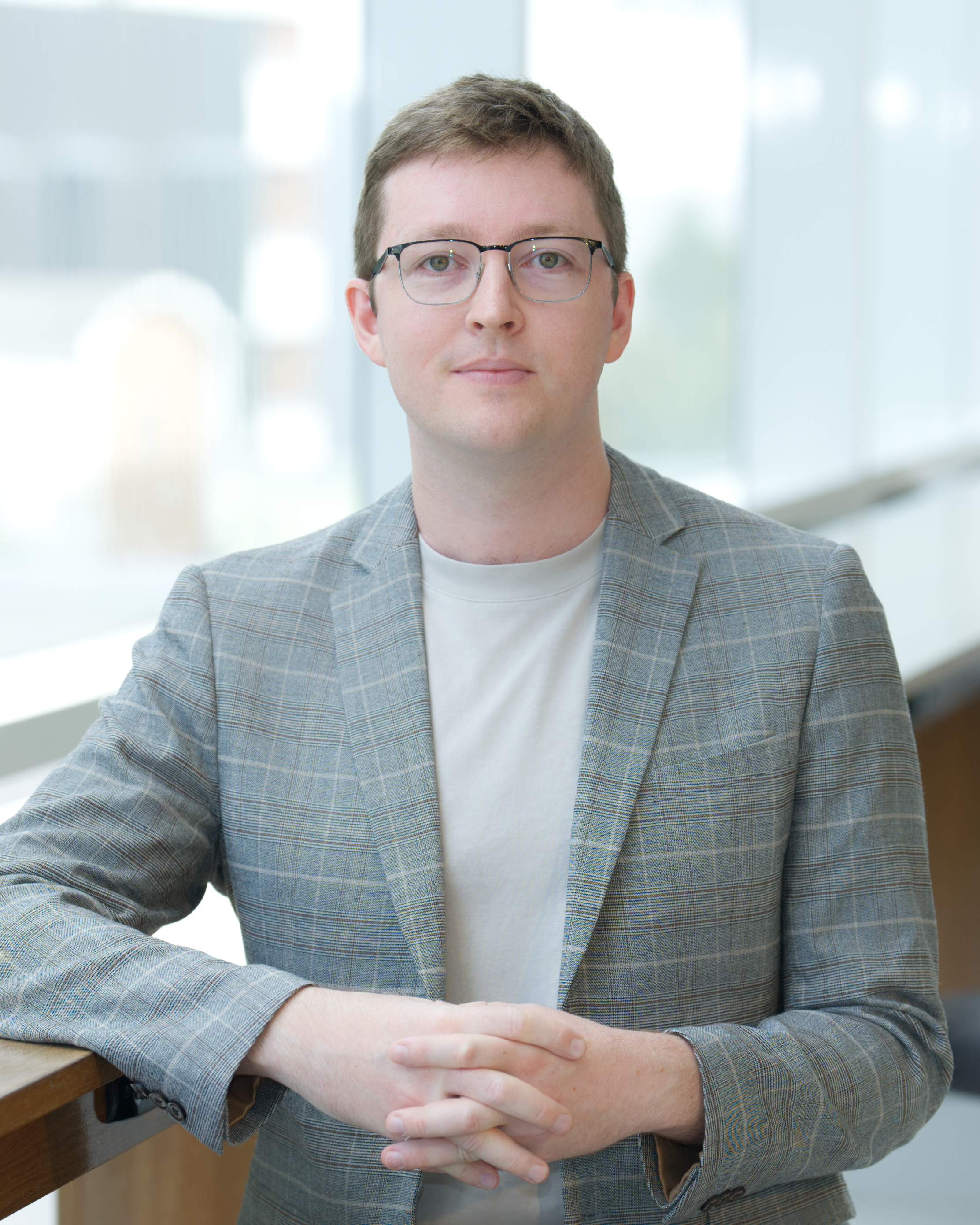
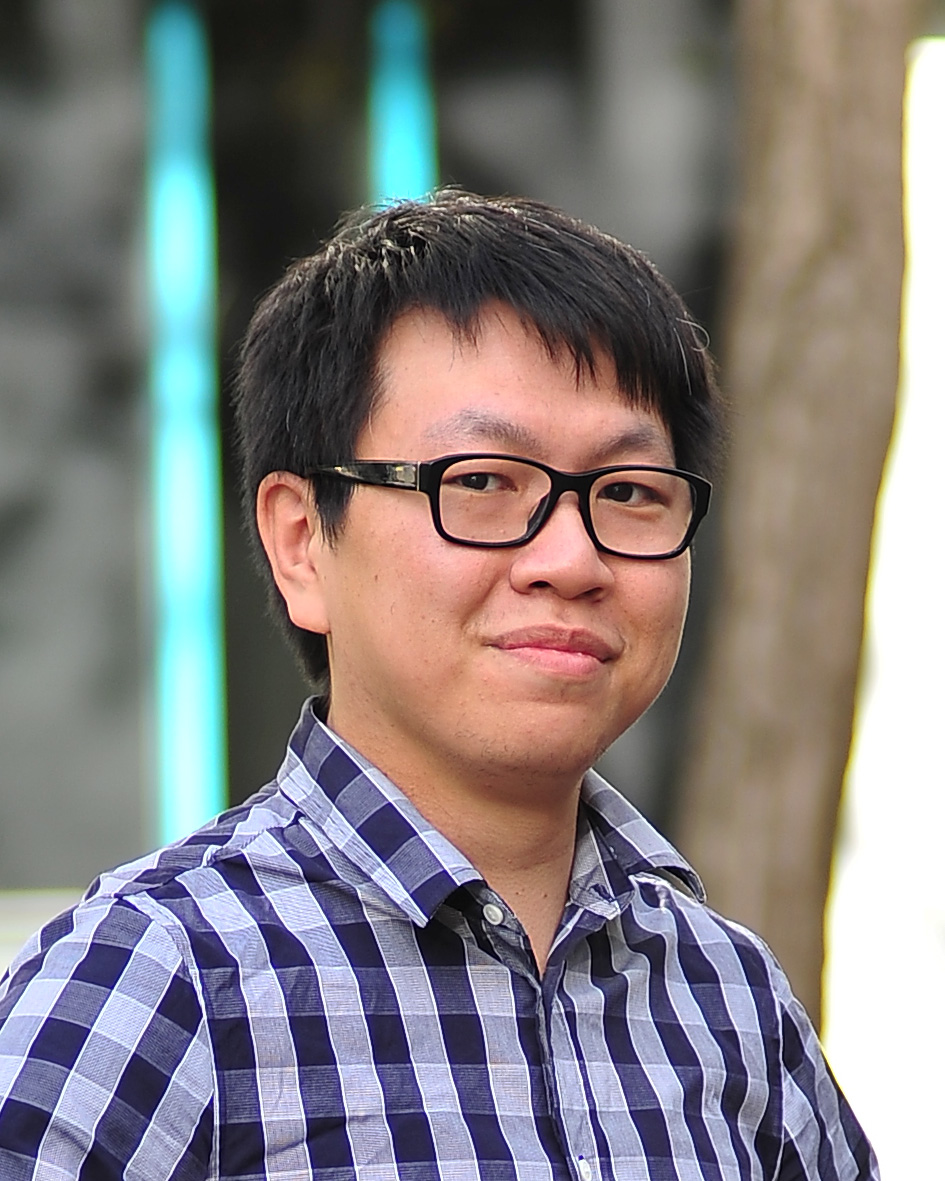
Dr. Peter Francis Mathew Elango is a Research Fellow at RMIT University’s College of Engineering, affiliated with the ARC Centre of Excellence for Transformative Meta-Optical Systems (TMOS), specializing in Optical Integrated Sensors. His research spans biomedical engineering, sensor technology, and materials science, with a focus on wearable diagnostics and miniaturized sensing systems. University: RMIT University School: College of Engineering Academic Rank: Research Fellow Email: peter.francis.mathew.elango@rmit.edu.au Elango's work addresses cutting-edge challenges in sensor design, including: Development of wearable and flexible devices for physiological monitoring Exploration of metal-oxide thin films and nanomaterials for advanced sensing Investigation of humidity-dependent phase transitions in thermal sensors Creation of ultrafast optical systems and cost-effective nanofabrication tools His publications demonstrate interdisciplinary expertise across biomedical engineering, materials science, and optical physics. Key applications include chronic disease monitoring, non-invasive diagnostics, and nanotechnology-driven sensor systems.
Stephen Rowlinson is a Professor of Construction Project Management and Director of the Centre for Comparative Construction Research at Bond University's Faculty of Society & Design. He holds a Doctor of Philosophy from Brunel University (1989). His research focuses on construction industry innovation, project delivery systems, and sustainable construction practices. Notable projects include exploring GenAI applications in Architecture, Engineering, and Construction (AECO) sectors. Research interests include construction safety management, economic impacts of sustainable projects, and integration of advanced technologies like point cloud data. He has contributed to over 100 publications and frequently presents on topics like 'An industry designed for unsafety: Property and construction.' His work bridges academic research with practical industry challenges, emphasizing data-driven solutions and safety culture development. Collaborations span global institutions, with recent focus on Hong Kong's construction contracting firms and infrastructure projects such as the Dickabrma Bridge. His research outputs emphasize interdisciplinary approaches to improve construction productivity and sustainability through integrated project delivery models.
Robin Drogemuller is a Professor at Queensland University of Technology (QUT), specializing in construction safety, Building Information Modeling (BIM), sustainable architecture, and energy efficiency. His research focuses on integrating technology into construction practices to enhance safety, sustainability, and decision-making. He has co-authored over 150 publications, including influential works on BIM adoption, risk management in construction, and renewable energy systems. His work bridges academia and industry, contributing to standards like the National Guidelines for Digital Modelling and collaborating with organizations such as the Cooperative Research Centre for Construction Innovation (CRC). Education & Professional Background: While specific educational details are not explicitly stated, his extensive publications and leadership roles suggest advanced degrees in construction engineering or architecture. He has been actively involved in QUT's initiatives, including BIM education and interdisciplinary projects. Research Interests: Professor Drogemuller’s research spans BIM implementation, construction safety frameworks, energy-efficient building design, and the application of digital tools in urban planning. He emphasizes Industry 4.0 technologies, such as IoT and machine learning, to address challenges in sustainable construction and infrastructure management. Grants & Projects: He has led projects funded by CRC initiatives, including the Building 4.0 CRC and Sustainable Built Environment National Research Centre (SBEnrc). His work includes developing decision support models for concrete construction and frameworks for lifecycle assessment of buildings. Awards & Recognition: While no specific awards are listed, his prolific output and role in shaping industry standards highlight his significant contributions to the field.
Andrew Scott is a Lecturer at the School of Design, Queensland University of Technology , with a focus on pedagogical innovation, transdisciplinary education, and student engagement in design contexts. His work spans curriculum development, sustainable design principles, and collaborative methodologies. Curriculum Design (2023): Integrating transdisciplinary skills in Australian design education. Educational Technology (2021): Exploring blended and video-based learning. Sustainable Architecture (2018): Bushfire-resilient design in Apex Point House. His research emphasizes design theory , human-object relationships (2011), and collaborative environments (2012). Publications include studies on visual thinking (2014) and intellectual property in design (2009). No scientific awards or student advisement details are documented in this dataset.
Sridharan Sridha is a Professor at the University of Queensland, specializing in advanced AI and computer vision research. His work spans neural networks, robotics, medical informatics, and surveillance systems. He collaborates extensively with institutions like the University of Queensland’s School of Information Technology and Electrical Engineering. Key research focuses include adversarial machine learning, multimodal fusion, and domain adaptation. His contributions to aerial-ground person re-identification (AG-ReID), LiDAR-based place recognition, and medical signal analysis have been widely recognized. Recent projects emphasize self-supervised learning, transformer-based architectures for hyperspectral imaging, and autism severity detection using physics-augmented models. His work bridges theory and practical applications in autonomous systems, healthcare, and robotics.
Dr. Petra Helmholz is an Associate Professor in the School of Earth and Planetary Sciences at Curtin University, specializing in Photogrammetry and Remote Sensing. She holds a German Dipl.-Ing. (M.Sc.) and Dr.-Ing. (Ph.D.) in Geomatics. Her research focuses on underwater, terrestrial, and airborne photogrammetry, with applications in health, agriculture, heritage mapping, and engineering. She has received multiple awards, including the Asia Pacific Excellent Award in Education (2018) and WA Spatial Awards. She serves as National Chair of the Remote Sensing & Photogrammetry Commission (SSSI) and is an Associated Editor of the journal PE&RS. Helmholz leads the Bachelor of Surveying program at Curtin and holds licenses in remote piloting and surveying. Her work bridges geospatial technologies with interdisciplinary fields like medicine and environmental science. Education: 2006–2012: Ph.D. in Photogrammetry, Leibniz University Hannover 2003–2005: Certified Licensed Surveyor, Germany 1997–2003: B.Sc./M.Sc. in Surveying, TU Berlin Research Interests: Underwater and airborne photogrammetry, 3D reconstruction for medical and heritage applications, thermal simulation of urban environments, and geospatial data analysis. Her projects include facial analysis for rare disease diagnosis, coral growth estimation, and pipeline monitoring. Publications highlight innovations in underwater imaging techniques, urban heat island studies, and medical 3D modeling. She actively contributes to international bodies like ISPRS and ASPRS, co-chairing working groups on geospatial data standards and applications.
Patrick Laub is a Senior Lecturer at the UNSW School of Risk and Actuarial Studies, where he teaches courses in artificial intelligence and machine learning with a focus on risk and insurance applications. His academic work bridges the gap between advanced computational methods and practical actuarial problems. Patrick holds a joint PhD in computational applied probability completed between the University of Queensland and Aarhus University. He also possesses degrees in software engineering and mathematics, providing him with a strong interdisciplinary foundation for his research. His research focuses on computationally challenging problems in actuarial data science, with particular emphasis on natural catastrophe modeling and artificial intelligence applications. Key areas of investigation include Hawkes processes for modeling contagion in insurance claims, Approximate Bayesian Computation for fitting complex insurance loss models, and Empirical Dynamic Modeling for analyzing complex temporal dependencies. His work addresses critical challenges in risk assessment, particularly for extreme events where traditional statistical methods may be inadequate. Analysis of Patrick's recent publications reveals a strong trend toward integrating advanced statistical methodologies with practical actuarial applications. His work spans from theoretical developments in point processes and Bayesian inference to practical implementations in computational environments. A notable theme is the application of machine learning techniques to traditional actuarial problems, particularly in the areas of catastrophe modeling and risk prediction. Patrick has developed and taught innovative courses since 2022, including 'Artificial Intelligence & Deep Learning and their Applications to Risk and Insurance' (ACTL3143 and ACTL5111) and 'Statistical Machine Learning for Risk and Actuarial Applications' (ACTL5110). These courses reflect his commitment to preparing students for the evolving landscape of data-driven risk management in the insurance industry. His research is supported by UNSW's strong infrastructure for computational research, though specific lab affiliations are not explicitly mentioned in the available information. Patrick maintains an active research program with numerous publications across statistics, actuarial science, and computational methods.
Simon Bodycoat serves as a part-time lecturer at the University of Western Australia (UWA) School of Design since 2024 and as a practice partner at the University of Notre Dame Australia since 2021. A registered Architect since 1992, he is founding Director of Rodrigues Bodycoat Architects (RBA) with 30+ years of practice across residential, commercial, institutional, and educational building typologies. Education: Bachelor of Architecture (First Class Honors), Curtin University, 1989 His research focuses on architectural design methodology integrating traditional hand-drawing with digital technologies (BIM, 3D printing, drone photography). He emphasizes the neurological connection between manual drawing and cognitive design processes, advocating for sketch-based conceptual development before digital implementation. This philosophy informs his work across diverse building typologies with particular expertise in residential and commercial architecture. Bodycoat actively contributes to architectural education through secondary student mentoring at Methodist Ladies' College (2008-2021) and Shenton College (2023), plus tertiary instruction at UWA and Notre Dame. He serves on the Architects Accreditation Council of Australia (AACA) Accreditation Review Panel since 2010, evaluating programs at multiple universities, and was Architects Board of Western Australia board member (2005-2015) including Deputy Chair (2010-2014). At Rodrigues Bodycoat Architects, he leads a studio combining traditional design techniques with advanced technologies: ArchiCAD BIM for 3D modeling, Bambu Lab 3D printers for physical models, DJI Mavic Pro drones for site analysis, and Insta360 cameras for Matterport point cloud documentation. The firm's workflow prioritizes manual sketching in initial design phases before transitioning to digital tools for technical delivery.
Xuesong Li is a Research Fellow at Australian National University (ANU) and CSIRO, focusing on machine learning and 3D scene reconstruction. His research integrates autonomous systems, dynamic/static scene modeling, and object detection through innovative approaches like Neural Radiance Fields (NeRF). Previously, he worked at Huawei (Shanghai) on autonomous driving technologies involving LiDAR point cloud analysis. He holds a Ph.D. in Robotics from UNSW Sydney (2020), with a thesis centered on object detection for intelligent robots. Education: Ph.D. in Robotics, UNSW Sydney (2020) Research Interests: Machine learning applications in 3D reconstruction (e.g., dynamic/static scenes, reflective objects), spatial transcriptomics analysis, crop biomass estimation via multi-modal datasets, and autonomous system development. His work bridges computer vision with real-world challenges in agriculture, robotics, and medical imaging. Publications Trends: Recent work emphasizes cross-domain knowledge transfer, long-tailed recognition, and real-world 3D reconstruction challenges. Notable contributions include the MMCBE dataset for crop biomass prediction and AGP-Net for spatial transcriptomics analysis. Awards: None explicitly mentioned. Advising & Collaborations: Actively recruiting visiting PhD and master’s students in machine learning and 3D reconstruction. Collaborates with institutions like CSIRO and Huawei, focusing on applications in autonomous systems and precision agriculture. Labs/Teams: Involved with ANU’s Division of Ecology and Evolution and CSIRO’s research groups, leveraging interdisciplinary approaches to tackle complex problems in robotics and environmental science.
Dr Bill Lott is a Researcher at Queensland University of Technology (QUT), affiliated with the School of Chemistry & Physics. He holds a PhD in Organic Chemistry from the University of Utah. His primary research focuses on nanotechnology, medical biotechnology, and virology, with a particular emphasis on antiviral drug design targeting hepatitis C and dengue viruses. He has pioneered studies on RNA structure-function relationships in viral replication mechanisms and developed innovative nanosensors for molecular diagnostics. Dr Lott is actively involved in projects such as functionalized RNA aptamer nanoparticles for SERS-based detection and bone marrow-derived stem cell research. He also explores the interplay between molecular strategies used by Flaviviridae viruses and host factors. His work bridges fundamental virology with clinical applications, including drug design and diagnostic tools. Education: PhD in Organic Chemistry (University of Utah) Professional Memberships: Australian Society for Biochemistry and Molecular Biology, American Association for the Advancement of Science His research interests span RNA virology, stem cell engineering, and biomedical sensor development. Recent publications highlight advancements in microtissue implantation, video-based grant proposals, and enzymatic discrimination of amino acid derivatives. He advocates for science education and accessible communication of scientific research.
Dr. Tianruo Guo is a Lecturer of Neuromodulation and Early Career Academic Fellow at the Graduate School of Biomedical Engineering, UNSW Sydney. He leads a computational modelling team focused on developing virtual nervous systems and advancing neuromodulation therapies. His research integrates computational techniques with experimental neuroscience to study neural responses to electrical/optogenetic stimulation, particularly in retinal degeneration and bionic device design. He has pioneered the 'Virtual Human Retina' platform for optimizing artificial vision solutions and has published over 80 peer-reviewed articles. Dr. Guo holds a PhD in Computational Neurophysiology from UNSW (2015), along with a Master of Philosophy (2011) and Bachelor of Engineering (2007). Research Interests : Computational Modelling, Neuromodulation, Bionic Vision, Retinal Prosthetics, Neurophysiology, and Optogenetic Stimulation. His work spans experimental neuroscience, virtual organ simulations, and translational biomedical engineering. Grants & Awards : Over AUD $1.8M in research/education funding, including grants from UNSW, The Royal Society, and industry partners. Awards include UNSW Excellence in HDR Supervision (2024), ABEC Best Poster (2018), and multiple travel grants. He co-chaired EMBC2023 and served as Topic Editor for Journal of Neural Engineering . Advising & Teaching : Supervises 30+ PhD/MPhil students and mentors across institutions. Teaches courses on Bioelectronics, Modelling Organs, and Computational Neurophysiology. Leads educational projects on biomedical engineering innovation. Labs & Collaborations : Active in transdisciplinary projects, including closed-loop vagus nerve stimulation for inflammatory diseases and collaborations with Tsinghua University, Shanghai Jiao Tong University, and industry partners like Lixi Biological Products.
Laura Rodríguez-Sanz is a Researcher at the Australian National University (ANU) since 2013, affiliated with the Research School of Earth Sciences (RSES). Her expertise lies in paleoclimatology and marine geochemistry, focusing on reconstructing past ocean conditions using foraminiferal proxies like Mg/Ca ratios and clumped isotopes. She holds a B.Sc. in Chemistry from the Central University of Venezuela (2000-2005), followed by a Master’s (2007-2008) and PhD (2008-2012) in Environmental Sciences from the Autonomous University of Barcelona, Spain. Her research interests include quantifying sea surface temperature changes in marginal seas (e.g., Mediterranean, Red Seas) and the open ocean, with a focus on deglacial and interglacial periods. Key projects include the Australian Laureate Fellowship-funded study on sea level change and climate sensitivity. She collaborates with the Palaeoenvironments research group and contributes to interdisciplinary studies on ocean circulation dynamics and climate variability. Her publications span prominent journals like Nature , Scientific Reports , and Paleoceanography , addressing topics such as clumped isotope precision, bipolar seesaw mechanisms, and Mediterranean circulation shifts. While no formal awards are listed, her work has advanced methodologies in paleoclimate proxy validation and oceanographic reconstructions. Laura’s current location within ANU is RSES J4, LC17, Mills Road. Her lab and fieldwork contributions include collaboration with international teams on high-precision geochemical analyses of sediment cores.
Xuan Luo is a Researcher at Flinders University's College of Science and Engineering, specializing in bionanotechnology and vortex fluidics. Her work focuses on developing thin-film point-of-care monitoring platforms and exploring nanomaterial fabrication for biomedical applications. Education : PhD in Medical Bionanotechnology (Flinders University, 2019) Her research interests span Nanotechnology , Biotechnology , Biochemistry , and Material Science , with recent publications analyzing vortex fluidics for chiral structure formation, antimicrobial hydrogels, and sustainable chemical processing. She has received multiple awards including the 2022 Vice-Chancellor's Award for Early Career Researchers and the 2019 ANN Overseas Travel Fellowship. Selected Scientific Awards : Vice-Chancellor's Award for Early Career Researchers (2022) Flinders Foundation Seed Fund (2024) Reaction Chemistry & Engineering Hot Articles (2019) 7 News Young Achiever Awards (2019) Contact: xuan.luo@flinders.edu.au | +61 8 8201 2883
Professor Victor Solo serves as Director of Research with the School of Electrical Engineering and Telecommunications at the University of New South Wales (UNSW). With an extensive academic career spanning over four decades since earning his PhD from the Australian National University in 1979, he has established himself as a leading expert in multiple interdisciplinary fields. University: University of New South Wales School: School of Electrical Engineering and Telecommunications Department: Electrical Engineering and Telecommunications Position: Professor and Director of Research Professor Solo received his BSc from the University of Queensland, followed by a BSc (first class honors) and BE (first class honors) from UNSW, culminating in a PhD from ANU in 1979. His educational background provided the foundation for his diverse research career spanning engineering, mathematics, and biomedical applications. His research interests encompass a wide range of theoretical and applied topics, with particular emphasis on Systems and Signal Processing, Control Theory, and Ill-Conditioned Inverse Problems. He has made significant contributions to Econometrics and Time Series Analysis, developing innovative approaches to System Identification. His work extends into biomedical domains through research in Medical Imaging and Computer Vision, as well as Neuroengineering through studies of Neural Coding and Point Processes. Professor Solo's interdisciplinary approach bridges theoretical mathematics with practical applications across engineering and medical fields. Analysis of Professor Solo's recent publications reveals a strong focus on advanced statistical modeling techniques, particularly in time series analysis and point process modeling. His work consistently addresses stability and identifiability challenges in complex models, with recent publications exploring Vector Autoregressive models, Hawkes processes, and stochastic differential equations on manifolds. The research demonstrates a progression from foundational theoretical work to increasingly sophisticated applications in network modeling and biomedical signal processing. Professor Solo has maintained an exceptionally productive research career with publications spanning from 1981 to the present, demonstrating remarkable longevity and adaptability in his research focus. His work shows consistent contributions across multiple high-impact journals including IEEE Transactions on Signal Processing, Automatica, and Neural Computation. While specific awards are not listed in the available information, his sustained publication record in top-tier journals indicates significant recognition within his fields of expertise. As Director of Research, Professor Solo likely oversees research strategy and development within the School of Electrical Engineering and Telecommunications. His extensive publication record suggests active supervision of graduate students and postdoctoral researchers, though specific names of advisees are not provided in the available information. His research has likely attracted substantial grant funding given the scope and duration of his work across multiple domains.
Dr. David Tsai is a Senior Lecturer at the University of New South Wales (UNSW), jointly appointed between Biomedical Engineering and Electrical Engineering. He leads the Biomedical Microsystems Lab , focusing on miniature microelectronic devices for brain-machine interfaces and subcutaneous biosensing. His research has been continuously funded by the NHMRC since 2013, including an ongoing Ideas grant for soft brain-machine interfaces. He has secured >$3.8M in total funding, with support from the Kavli Foundation and ARC Linkage Infrastructure Grants . His work has appeared in Nature Communications , Nature Nanotechnology , and IEEE Transactions on Biomedical Circuits and Systems . Scientific Recognition: IEEE EMBC Student Paper Award (twice) IEEE EMBC Best Papers Award NHMRC CJ Martin Fellowship (2013-2017) Kavli Foundation Postdoctoral Fellowship (2012-2013) Education: PhD in Biomedical Engineering (2012), UNSW MBiomedE (2007), UNSW BE (Software, First Class Honours) (2007), UNSW Research Themes: Development of ultra-dense microelectrode arrays for cellular-resolution electrophysiology, computational modeling of retinal responses to electrical stimulation, and standardization of neurotechnology data formats. His lab collaborates with industry partners like LeafLabs LLC , BlackRock Microsystems , and Contactile .