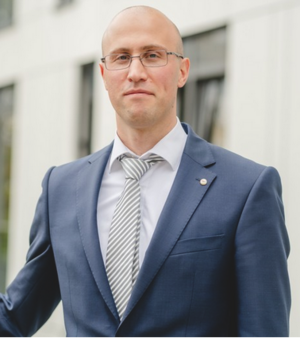
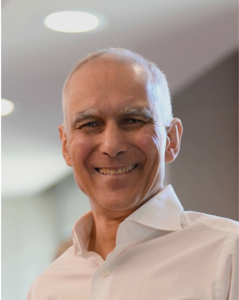
Jelena Vuckovic is the Jensen Huang Professor of Global Leadership and Professor of Electrical Engineering at Stanford University, with a courtesy appointment in Applied Physics. She leads the Nanoscale and Quantum Photonics Lab at the Ginzton Laboratory and has been a Stanford faculty member since 2003. She holds a PhD from Caltech (2002) and has served as the Fortinet Founders Chair of the Electrical Engineering Department and the inaugural director of QFARM (Stanford-SLAC Quantum Initiative). Her research focuses on nanophotonics, quantum science, nonlinear optics, and photonics inverse design. Current projects include quantum systems, integrated lasers, and cavity QED. She is a member of the National Academy of Sciences and a fellow of APS, Optica, and IEEE. Key awards include the Zeiss Research Award (2025), Vannevar Bush Faculty Fellowship (2022), and Humboldt Prize (2010). She co-founded SPINS Photonics and edits Physical Review Applied . Her lab develops chip-scale photonic systems for quantum and classical information processing.
Tomás Alarcón is an ICREA Research Professor at the Centre de Recerca Matemàtica (CRM) in Bellaterra, Barcelona, where he leads the Cancer Modelling Group. He has been affiliated with CRM since November 2010 and was appointed to an ICREA Research Professorship in October 2015. He also serves as deputy director of CRM since March 2016 and is an Affiliated Professor at the Department of Mathematics, Universitat Autònoma de Barcelona since September 2013. Dr. Alarcón earned his PhD in Theoretical Physics from the University of Barcelona in 2000. Following his PhD, he held postdoctoral positions at the University of Oxford (2001-2003), University College London (2003-2006), and Imperial College London (2006-2009). He briefly served as a senior researcher and group leader at BCAM in Bilbao, Spain (2009-2010) before joining CRM. His research focuses on mathematical modeling of complex biological systems, with particular emphasis on multiscale modeling of tumor growth, hybrid methods for multiscale models, stochastic modeling of somatic cell reprogramming, robustness and evolvability in relation to drug resistance, stochastic models in population dynamics, and membrane biophysics and microfluidics of biofluids. His work integrates phenomena across different biological scales, from angiogenesis to cell-cycle progression under oxygen starvation. Analysis of his recent publications reveals a strong focus on computational oncology, with particular attention to epigenetic regulation, tumor microenvironment mechanics, and cancer metabolism. His work combines mathematical rigor with biological relevance, often collaborating with experimentalists to validate theoretical predictions. Key themes in his recent work include chromatin dynamics, metabolic regulation in cancer, multiscale modeling approaches, and the application of dynamical systems theory to biological problems. ICREA Research Professorship (2015) Dr. Alarcón has mentored numerous PhD students and postdoctoral researchers, many of whom have gone on to successful academic careers. His group collaborates extensively with researchers at institutions including University of Oxford, University College London, Universitat Autònoma de Barcelona, and various international centers. He has received research funding for projects related to cancer modeling and mathematical biology, though specific grants are not detailed in the provided information. His laboratory, the Cancer Modelling Group at CRM, consists of research fellows, postdocs, PhD students, and collaborators working on various aspects of mathematical oncology and computational biology. The group is also part of the DysCoVir I2SysBio-CRM Associated Unit, indicating a broader collaborative network in systems biology.
Benjamin Morgan is a Reader and Royal Society Research Fellow at the University of Bath , affiliated with the Department of Chemistry and the Institute of Sustainability and Climate Change . His research focuses on modeling functional materials, particularly ionic transport in solids for lithium-ion battery applications. Research Interests: Lithium-ion solid electrodes and electrolytes, theory of complex ionic transport, crystal defects at surfaces and interfaces ("nanoionic" phenomena), phase stability in nanostructured materials, and contributions to UN Sustainable Development Goals (SDGs) like climate action and affordable energy. Scientific Awards: Royal Society Research Fellowship Grant Collaborations: Funded by Engineering and Physical Sciences Research Council (EPSRC), EU Horizon 2020, and the Faraday Institution. Key projects include CATMAT phase 2, DESTINY, and multi-scale modeling of solid electrolytes. Professional Activities: Peer reviewer for journals like Nature Materials and Journal of the American Chemical Society , invited speaker at the 2025 Modelling Club, and external examiner for the University of Liverpool.
Professor Hans Fangohr is the head of the Scientific Support Unit Computational Science at the Max Planck Institute for Structure and Dynamics of Matter, and holds a Professorship of Computational Modelling at the University of Southampton. He received his Diplomphysiker (undergraduate) in physics from the University of Hamburg and earned his PhD in the High Performance Computing Group within the Department of Computer Science at Southampton. Since 2010, he has been a full professor, specializing in computational science, data analysis, and software engineering for science. Computational Science Micromagnetics Spintronics Reproducible Scientific Workflows Hans Fangohr's research focuses on computational modeling, particularly in micromagnetics and spintronics. His recent publications explore Bloch points, vortex lattices in superconductors, and tools like Ubermag/Jupyter for reproducibility. Current projects include Skyrmionics (low-energy magnetic devices) and collaborations on reproducible workflows in data science. His funded projects include EPSRC grants (Gr/T09156/01, Ep/E040063/1, EP/D000173/1) and EU FP7/H2020 initiatives (DYNAMAG, OpenDreamKit). He has contributed to advancements in femtosecond crystallography and computational steering of micromagnetic simulations.
Michael A. Benggon, MD is an Assistant Professor in the Department of Anesthesiology at Loma Linda University School of Medicine. His clinical and research focus spans critical care medicine, perioperative ultrasound applications, and hemodynamic/transfusion management. Doctor of Medicine, Loma Linda University (2009) Dr. Benggon's research emphasizes: Optimizing point-of-care ultrasound protocols in post-anesthesia care Comparative analysis of neuromuscular blockade monitoring techniques Perioperative echocardiography for valvular surgery Transfusion practices in high-risk procedures Investigation of neuroprotective agents in surgical brain injury models Management of rare complications like malignant hyperthermia His publication record (8 works since 2012) reveals consistent contributions to cardiac anesthesia, critical care imaging, and translational neuroscience. Key collaborators include institutions like UCLA and industry partners such as General Electric Company. Current research projects underway as of 2024 include: Median vs Ulnar Nerve Electromyography Monitoring (LLU Anesthesiology, 2024) Prothrombin Complex Concentrate Comparative Studies (LLU Anesthesiology, 2022)
Baptiste Hildebrand is a Lecturer at the Department of Physics, Faculty of Science and Medicine, University of Fribourg. His research focuses on electronic structure analysis, charge density waves, and surface phenomena in low-dimensional materials. Research Interests : Baptiste investigates quantum materials like transition metal dichalcogenides (1T−TiSe2, IrTe2), exploring charge order, phase transitions, and defect-induced electronic effects using scanning tunneling microscopy (STM), photoemission, and theoretical modeling. Recent Publications highlight studies on strain-controlled topological phases, structural origins of charge order, and defect resilience in 2D systems. Key journals include Physical Review Letters and Physical Review B . Contact : Email: baptiste.hildebrand@unifr.ch | Phone: +41 26 300 9169 | Office: PER 08 bu. 0.52, Ch. du Musée 3, Fribourg.
Dr. Adib Samin is an Associate Professor of Nuclear Engineering at the Air Force Institute of Technology (AFIT), specializing in computational materials science and radiation effects on materials. His research focuses on understanding the behavior of alloys under extreme conditions through atomistic simulations and first-principles calculations. He holds a PhD in Mechanical Engineering (The Ohio State University, 2014), an MS in Chemical Physics (2012), and a BS in Chemistry (Wayne State University, 2008). His research interests include materials degradation mechanisms, corrosion science, and the development of advanced alloy systems for nuclear and aerospace applications. He employs density functional theory (DFT), molecular dynamics, and machine learning techniques to study dislocation dynamics, oxygen adsorption, and radiation-induced defects in materials like tungsten, niobium-titanium alloys, and high-entropy alloys. Dr. Samin’s work has been published in journals such as Journal of Applied Physics , Corrosion Science , and ACS Langmuir , with a focus on oxidation thermodynamics, interstitial diffusion, and surface reactivity. He advises graduate students (e.g., L.A. Heaton, T.D. Doležal) on topics like alloy design and corrosion mechanisms. His contributions span interdisciplinary collaborations, addressing challenges in nuclear reactor materials, radiation-resistant magnets, and corrosion mitigation in extreme environments.
Dr. Sung Kun Kim is a Professor in the Department of Chemistry at Northeastern State University , currently serving as Program Chair for the Natural Sciences Graduate Program since 2020. His academic career spans institutions including Baylor University and Texas Tech University, with postdoctoral research at Texas Tech University (2002-2007) and the University of Pennsylvania (2007). He holds a PhD in Biochemistry (2002, Texas Tech University), an MS in Chemistry (1996, Hanyang University), and a BS in Chemistry (1994, Hanyang University).
Jens Birch is a Professor and Head of Unit in the Department of Physics, Chemistry and Biology (IFM) at Linköping University, Faculty of Science and Engineering. He leads the Thin Film Physics division, encompassing the Nano-materials Science unit, which includes approximately 75 researchers and students. His work is central to advanced materials research in Sweden and Europe. Research Interests: His research focuses on the physics and materials science of artificial 0D, 1D, and 2D nanostructures and multilayers (0.2–50 nm), with applications in neutron and X-ray optics, detectors, and protective coatings. Materials studied range from amorphous metals and oxides to single-crystal Group-III Nitride semiconductors. His expertise lies in advanced Physical Vapor Deposition (PVD) synthesis and comprehensive materials characterization. Recent Publications: His recent work (2025) reveals a strong trend in functional nanomaterials, particularly in neutron optics, magnetic multilayers, and high-performance nitride thin films. These publications highlight his group's contributions to both fundamental materials science and applied instrumentation for large-scale research facilities. Scientific Awards and Grants: Recipient of a 9.4 million SEK grant from the Swedish Research Council for research into a new neutron scattering method using magnetic surfaces. Advising and Grants: As leader of a large research division, Jens Birch oversees a significant portfolio of research activities and funding. He plays a central role in Swedish participation at major European infrastructures like PETRA III, ILL, and ESS, particularly in developing neutron optics and scattering techniques. This includes leading collaborative projects with Uppsala University, Lund University, and ISIS Neutron and Muon Source (UK). Labs and Teams: He leads the Thin Film Physics (TUNNF) division at Linköping University, which includes the Unit of Nano Materials Science (TFNANO). This large, multidisciplinary team conducts focused research on atomistic processes during the synthesis of nanostructures and thin films, operating at the forefront of materials science for both fundamental and applied purposes.
Prof. Dr. Frithjof Anders is a faculty member in the Department of Physics at the Technical University of Dortmund, where he leads a research group in Condensed Matter Theory. His work focuses on theoretical investigations of correlated electron systems, particularly the interplay of spin and charge degrees of freedom in quantum materials under equilibrium and nonequilibrium conditions. University: Technical University of Dortmund School: Faculty of Physics Department: Department of Physics Email: frithjof.anders@tu-dortmund.de Office: Room P1-O2-309, Otto-Hahn-Str. 4, 44227 Dortmund His research spans several advanced topics in theoretical condensed matter physics, including the Kondo effect in heavy fermions and quantum dots, modeling of local moments in multi-impurity systems, and theoretical simulations of laser-driven spin dynamics in quantum dot ensembles. A significant focus lies on understanding decoherence mechanisms due to spin noise and on predicting inelastic signatures in scanning tunneling spectroscopy of molecules. His group also investigates current-voltage characteristics in quantum point contacts and localized states in graphene defects. These theoretical studies are computationally intensive and conducted in collaboration with the Collaborative Research Center TRR 160, utilizing high-performance computing resources at Forschungszentrum Jülich. The research contributes to the fundamental understanding of quantum coherence, electron correlations, and non-equilibrium phenomena in nanoscale systems. While specific publications and awards are not listed in the provided text, his active research profile and leadership in a major DFG-funded collaborative center indicate a strong ongoing research program. He supervises research activities within his group, though no individual students are named. There is no indication of part-time status, retirement, or emeritus position. The group is part of the broader Condensed Matter Theory (CMT) research focus at TU Dortmund, which includes multiple principal investigators working on complementary theoretical and experimental themes.
Kirkland Wilson, MD, PhD is an Assistant Professor in the Department of Genetics and Genome Sciences at Case Western Reserve University School of Medicine. He is based at the Center for Human Genetics and functions as a physician-scientist with a strong focus on translational research in metabolic disorders. His research interests lie at the intersection of clinical genetics and analytical biochemistry, particularly in developing accessible and affordable diagnostic tools for inborn errors of metabolism. His work emphasizes chromatographic techniques , especially high-performance liquid chromatography (HPLC) , to study small molecule metabolism. Key areas include aminoacidopathies , organic acidopathies , and fatty acid oxidation defects . A major goal of his lab is to create low-cost assays suitable for implementation in low-resource settings , improving global access to metabolic diagnostics. He also investigates at-home sampling methods , particularly innovations in dried blood spot card pretreatment to enhance sample stability and diagnostic accuracy outside traditional hospital environments. Additionally, he explores the potential of small molecule compounds as therapeutics in broader disease contexts. Dr. Wilson received his MD and PhD from Case Western Reserve University through the Medical Scientist Training Program, conducting his doctoral research in the lab of Dr. Henri Brunengraber on propionyl-CoA metabolism. He completed a dual residency in Pediatrics and Medical Genetics through the joint program of Children's National Hospital and the National Human Genome Research Institute (NHGRI) in Washington, DC. He continued at NHGRI for two specialized fellowships: a laboratory-focused Clinical Biochemical Genetics fellowship and a patient-focused Medical Biochemical Genetics fellowship, during which he developed novel HPLC-based amino acid analysis methods and advanced dried blood spot stabilization techniques. During his fellowship, Dr. Wilson pioneered a new methodology for amino acid analysis using HPLC and initiated work on pretreatment strategies for dried blood spots to improve sample integrity. These innovations support his broader mission of expanding diagnostic equity and enabling remote monitoring of metabolic conditions. While no formal advising roles or funded grants are explicitly detailed, his research trajectory indicates active involvement in training and translational science. He is affiliated with the Center for Human Genetics and contributes to both research and teaching missions at the School of Medicine.
Dmitriy Dubovitskiy is a Part-Time Lecturer and Honorary Research Fellow at De Montfort University, affiliated with the School of Engineering and Sustainable Development within the Faculty of Computing, Engineering and Media. His work bridges computer science and healthcare, focusing on innovative solutions for cancer diagnosis and biomedical imaging. PhD in Computer Science, De Montfort University (UK), in collaboration with Bauman Moscow State Technical University Specialization: Digital Image Processing, Object Recognition using Fractal Geometry and Fuzzy Logic Dr Dubovitskiy's research centers on the mathematical modeling of natural structures using advanced pattern analysis techniques. He applies fractal geometry , fuzzy logic , and machine learning to develop automated systems for skin and cervical cancer screening , cytopathology , and industrial quality control . His interdisciplinary approach spans biology, pharmacology, physics, and engineering. The trend in his publications shows a consistent focus on biomedical image analysis , particularly in oncology and diagnostics. His work emphasizes automated decision-making , real-time recognition , and portable or web-based screening platforms . Key themes include texture classification, convex hull algorithms, and optical machine vision, with increasing integration of AI and mobile technologies. His scientific awards reflect excellence in both research and innovation: Commercialising Award, DIT Hothouse (2011) Microsharp Limited Prize for Best Research (2003) INTAS Research Grant (06-1000013-9357) Multiple Best Presentation/Poster Awards (2001–2004) Overseas Students Research Award (2000–2003) Dr Dubovitskiy has advised on several externally funded and industrial research projects, including collaborations with Oxford University , Trinity College Dublin , and companies like Microsharp Limited and MoleTest (UK) Ltd . He secured the INTAS grant and contributed to technology commercialization efforts. He teaches Dynamics and Control and mentors through consultancy. He is an active member of the British Machine Vision Association (BMVA) , MIET , and the Cambridge Knowledge Transfer Network . He is associated with the Centre for Engineering Science and Advanced Systems (CESAS) at DMU, where he contributes to research in intelligent systems and advanced computing. His work often involves interdisciplinary teams focused on translating academic research into practical healthcare and industrial applications.
Prof. Dr. Sebastian Kruss is a Professor of Physical Chemistry at Ruhr University Bochum since 2020 and Head of a Research Group at Fraunhofer IMS. He earned his PhD from Heidelberg University and the Max-Planck-Institute for Intelligent Systems in 2011, followed by research at MIT and Göttingen. His research focuses on photonics, nanomaterials, biosensors, and biophysics, with applications in neuroscience, plant health, and medical diagnostics. His work includes developing novel optical methods (microscopy/spectroscopy) and nanomaterials for biosensing. Notable projects involve fluorescent nanosensors for neurotransmitter detection, near-infrared imaging tools, and studies on neutrophil extracellular trap formation. Kruss leads a dynamic research group, mentoring PhD students and postdocs in interdisciplinary projects. Education: PhD from Heidelberg University and Max-Planck-Institute (2011), postdoctoral work at MIT. Awards: Henriette Herz Scouting Programme Scout (2022). Research highlights include: Biosensors for dopamine, serotonin, and pyrophosphate detection. Near-infrared fluorescence imaging of cellular processes. Development of silicate nanosheets and carbon nanotube-based sensors. Investigations into cell decision-making via biophysical signaling. Publications emphasize nanosensor engineering, quantum defect manipulation, and interdisciplinary applications in biology and medicine. The Kruss Lab actively recruits international postdocs and students.
Dimitri Van Neck is a Full Professor (WE05) at Ghent University, Belgium, with his research base at Tech Lane Ghent Science Park (Technologiepark 46, 9052 Zwijnaarde). His academic career spans over three decades with continuous publication output from the 1980s through 2019 across leading physics and chemistry journals including Physical Review B, Journal of Chemical Physics, and Journal of Chemical Theory and Computation. Professor Van Neck's research program centers on theoretical frameworks for quantum many-body systems, with particular emphasis on density matrix theory, tensor network states, and integrable models. His work bridges fundamental theoretical physics with practical applications in quantum chemistry and materials science. Key methodological contributions include the development of three-legged tree tensor network states (T3NS), advanced density matrix embedding techniques, and novel approaches to Richardson-Gaudin integrable models. His research has evolved from nuclear physics in earlier career stages to contemporary focus areas in quantum information-inspired computational chemistry. Analysis of his recent publications (2015-2019) reveals three dominant research threads: (1) Advanced tensor network methodologies for quantum chemistry calculations, (2) Integrable models for topological superconductivity and quantum phase transitions, and (3) Materials science applications focusing on radiation effects in nuclear materials. His work demonstrates exceptional mathematical sophistication while maintaining practical relevance to experimental systems, particularly in understanding strongly correlated electron phenomena. Professor Van Neck maintains an extensive collaborative network across European research institutions, with frequent co-authorship patterns indicating stable research partnerships with S. De Baerdemacker, P. Claeys, P. Bultinck, P.W. Ayers, and S. Wouters. His group appears to develop computational tools like CheMPS2 (a spin-adapted implementation of density matrix renormalization group methods) and contributes to major conferences in quantum chemistry, theoretical physics, and computational materials science.
Moungi Bawendi is the Lester Wolfe Professor of Chemistry at MIT, affiliated with the Department of Chemistry. His research focuses on nanocrystals, semiconductor quantum dots, and their applications in optoelectronics, biology, and energy. He leads the Bawendi Lab, which explores nanocrystal synthesis, spectroscopic studies, and device design for solar cells, LEDs, and biomedical imaging. Bawendi advises the Minor in Energy Studies at MIT and collaborates with institutions globally. His work bridges fundamental science and applied technologies, emphasizing nanocrystal engineering for advanced applications. Research interests include nanocrystal synthesis, time-resolved spectroscopy, and device optimization. His lab advances colloidal quantum dots for photovoltaics, light-emitting diodes, and medical diagnostics. Key projects involve perovskite solar cells, terahertz photonics, and MRI contrast agents. Bawendi’s work often combines chemistry, physics, and engineering, with a focus on improving material stability, efficiency, and biomedical utility. Publications highlight innovations in quantum dot optoelectronics, perovskite materials science, and medical imaging. Collaborations span MIT’s Energy Initiative, medical schools, and industry partners. The Bawendi Lab’s contributions include foundational studies on nanocrystal dynamics and practical advancements in solar energy and diagnostics. Awards and recognitions reflect his impact in nanotechnology and materials science.