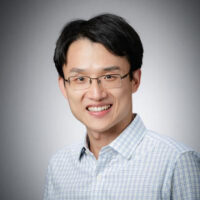
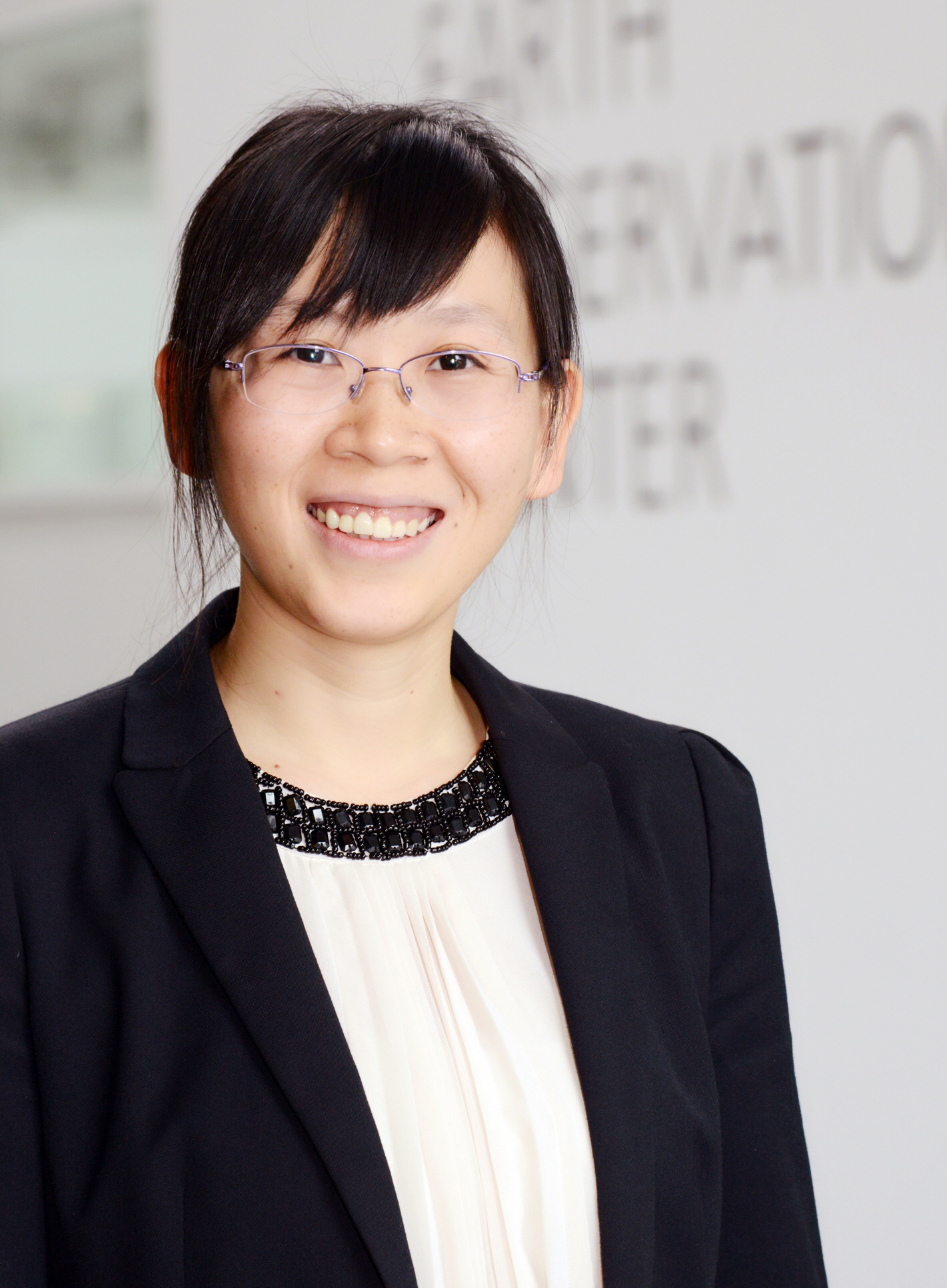
Aijun An is a Professor in the Department of Electrical Engineering & Computer Science at York University's Lassonde School of Engineering. She holds a Ph.D. from the University of Regina (1997) and has extensive academic experience, including postdoctoral work and roles at the University of Waterloo before joining York in 2001. Her research focuses on data mining, machine learning, and NLP, with contributions to pattern mining, parallel deep learning, sentiment analysis, and generative AI. Key projects include outbreak detection systems using social media, ethical AI in humanitarian crises, and adaptive data stream mining. Dr. An has led numerous grants from NSERC, SSHRC, and other agencies, including initiatives like the SMART-ART space exploration project and One Health Modelling for emerging infections. She actively supervises graduate students in both master’s and doctoral programs. Teaching responsibilities include courses on data mining, big data systems, and database management. Recent courses include EECS 4412/6412 (Data Mining), EECS 4415 (Big Data Systems), and EECS 2031 (Software Tools).
Dr. Li Xi is an Associate Professor of Chemical Engineering at McMaster University, specializing in multiscale molecular modeling of polymer materials, flow turbulence, and polymer fluid dynamics. His research integrates computational fluid dynamics (CFD) and molecular simulation to address challenges in energy, environment, and biomedical applications. He holds a Ph.D. from the University of Wisconsin-Madison and completed postdoctoral research at MIT, focusing on polymer materials and pharmaceutical manufacturing. Education: Ph.D., Chemical Engineering, University of Wisconsin–Madison (2009) Postdoctoral, Chemical Engineering, MIT (2009–2013) B.S., Chemical Engineering, Zhejiang University (2004) Research Interests: Multiscale modeling of polymer materials for targeted properties Turbulent flow dynamics and drag reduction mechanisms Rheology and polymer processing-structure-property relationships Advanced materials and smart manufacturing systems Labs & Resources: Led research group at McMaster (visit www.xiresearch.org ) Focus areas: polymer materials, process systems engineering, micro-nano systems Teaching: Instructor for CHEM ENG 3D04 (Thermodynamics), CHEM ENG 3L03 (Laboratory Skills), and supervising graduate students
Dr. Vladimir Milovanović is an Associate Professor at the Faculty of Engineering, University of Kragujevac, Serbia, holding a position as Chair of the Department of Electrical Engineering and Computer Sciences. His academic career is anchored in interdisciplinary research at the intersection of electrical engineering, computer science, and biomedical applications. His research focuses on hardware design, radar sensor systems, biomedical signal processing, and machine learning applications. Notable areas include CMOS circuit design, FPGA-based implementations, and parameterizable hardware generators for signal processing tasks. He also explores medical imaging analysis using deep learning techniques for conditions like disc hernia diagnosis. Recent work emphasizes radar technology (FMCW transceivers, signal processing architectures), embedded systems (FPGA development, IP core utilization), and high-performance streaming data algorithms. His publications span over two decades, demonstrating expertise in analog/digital circuit design, comparative classifier analysis in biomedical contexts, and hardware-software co-design methodologies. Dr. Milovanović collaborates with industry on energy-efficient MIMO arrays and semiconductor gas sensors. His contributions include open-source HDL models for digital signal processors and comparator circuits optimized for low-power and high-speed applications.
Valeriu Munteanu is a Professor at the Technical University of Iasi , affiliated with the Department of Electronics . His research spans Electrical Engineering , Signal Processing , and Electromechanical Systems . He teaches courses in Information Transmission Theory , Detection and Estimation , and Impulse Technique . Key Research Areas: Information Theory, Digital Circuits, Signal Processing, Pulse Technique, Error-Correcting Codes, Power Electronics, and Wind Energy Systems. Email: vmuntean@etc.tuiasi.ro His recent work focuses on Finite Element Analysis (FEM) of synchronous machines, wind energy systems, and motor control. Articles highlight innovations in hybrid excitation, fractional slot windings, and torque ripple reduction. Despite his extensive contributions, no scientific awards are explicitly mentioned in the provided texts. He supervises doctoral students in Electronics and Telecommunications and has authored 68 journal articles.
Zhen Tang is an active researcher with a prolific publication record spanning from 2007 to 2025, primarily in computer science and engineering disciplines. Their work appears consistently in high-impact venues including IEEE Access, IEEE Transactions, and major conferences in computer vision and systems engineering. Research interests span computer vision, control theory, biomedical image analysis, machine learning, and multi-agent systems. Tang's work demonstrates a strong interdisciplinary approach, connecting theoretical control systems with practical applications in medical imaging, distributed computing, and emerging technologies like DNA computing. Recent publications show a growing interest in large language models, blockchain applications, and ethical considerations in technology design. The publication trends reveal an evolution from foundational work in image processing and pattern recognition (2010-2015) to more complex systems involving multi-agent control and deep learning (2016-2020), and most recently expanding into large language models, blockchain healthcare applications, and technology ethics. The research shows strong connections between theoretical control systems and practical applications across multiple domains. Zhen Tang has established long-term collaborations with researchers including Yanli Wan, Zhenjiang Miao, Wei Wang, and others, suggesting stable research group affiliations. The consistent publication output across 18 years indicates an established academic career with significant contributions to multiple subfields within computer science and engineering.
Dr. Wei Yan is an Associate Professor in the Department of Computer & Information Science & Engineering at the University of Florida's Herbert Wertheim College of Engineering. With an extensive publication record spanning computer science education, augmented reality applications, and culturally responsive computing, Dr. Yan has established a significant research presence with numerous publications in top-tier conferences and journals from 2023-2025. Dr. Yan's research interests focus on culturally responsive computing education, particularly with Indigenous communities including the Navajo Nation. Their work bridges the gap between technical computing concepts and culturally relevant pedagogy, with a special emphasis on spatial reasoning and mathematics education through augmented reality technologies. The research program has produced innovative AR classroom applications that help students understand complex spatial transformations and matrix algebra through interactive 3D visualizations. Through collaborations with researchers like Ashish Amresh, Paige Prescott, Maya Israel, and Heather Burte, Dr. Yan has developed several educational technology interventions that address inclusion in computer science education. Their publications reveal a strong commitment to broadening participation in computing, particularly among underrepresented groups, with a focus on teacher professional development and curriculum design that respects cultural contexts. Dr. Yan's technical expertise spans both educational technology development and core computer science topics, as evidenced by publications ranging from spatial reasoning in AR classrooms to advanced topics in integer coding and neural image compression. This interdisciplinary approach allows for the development of sophisticated educational tools grounded in solid computer science principles. Current research directions include AI-enhanced educational applications, culturally responsive computing curriculum development, and the integration of conversational AI with augmented reality for improved learning experiences. The work has significant implications for how computing education can be made more accessible and relevant to diverse student populations.
Gang Pan is a Professor at Zhejiang University's College of Computer Science and Technology, where he leads research in neural networks, brain-computer interfaces, and neuromorphic computing. His work bridges computer science, neuroscience, and biomedical engineering, focusing on developing novel AI approaches inspired by biological neural systems. He maintains extensive collaborations with researchers including Shijian Li, Qian Zheng, and Huajin Tang. Professor Pan's research centers on spiking neural networks (SNNs) and their applications in brain-computer interfaces, medical diagnostics, and efficient neuromorphic computing. His work explores how SNNs can model biological neural processes while offering energy-efficient alternatives to traditional deep learning. Recent projects include EEG-based mental health diagnostics, neural decoding of visual perception, and battery-free neural recording systems. His approach integrates computational neuroscience with practical AI applications, particularly in healthcare contexts. Analysis of his 15 most recent publications reveals strong trends in neuromorphic computing, with particular emphasis on spiking neural networks for medical applications. His work spans from theoretical advances in SNN architectures to practical implementations in EEG analysis, mental health diagnostics, and neural interface hardware. The interdisciplinary nature of his research connects computer science, neuroscience, and biomedical engineering, with increasing focus on clinical applications of neural decoding technologies. Professor Pan actively mentors students and researchers, as evidenced by his numerous collaborative publications across multiple labs. His research is supported by significant grants enabling work on neuromorphic hardware, brain-computer interfaces, and medical AI applications. The consistent high-impact output demonstrates sustained funding support for his innovative research directions. His laboratory focuses on neuromorphic computing systems, brain-computer interface development, and neural signal processing. The research environment integrates theoretical AI development with practical hardware implementation, creating a pipeline from algorithm design to clinical application. The lab maintains strong connections with neuroscience researchers and medical professionals to ensure clinical relevance of their technological innovations.
Dr. Ravi Pethiyagoda is a Lecturer in Mathematics at the School of Information and Physical Sciences, University of Newcastle. His research focuses on fluid mechanics, computational mathematics, and free-surface flows, with particular emphasis on ship wave dynamics and tsunami propagation. He holds a PhD in Applied Mathematics from Queensland University of Technology (2016) and has conducted postdoctoral research on droplet impaction on plant leaves and nonlinear ship wave patterns. His work includes advancing numerical methods like Jacobian-free Newton-Krylov (JFNK) techniques to solve complex fluid dynamics problems. He has contributed to understanding the apparent wake angle, time-frequency analysis of ship wakes, and compressible ocean wave propagation. Current PhD supervision spans wave scattering, fluid dynamics with surface tension, and ocean wave problems. Key research areas include: numerical methods for nonlinear ship wave problems, analysis of wake patterns, spectrogram-based wave signal interpretation, and tsunami wave dynamics under variable bathymetry. His interdisciplinary studies bridge mathematics, physics, and engineering, with applications in oceanography and agricultural fluid dynamics.
Mehwish Nasim is a Lecturer in Computer Science at The University of Western Australia (UWA) and holds adjunct positions at the University of Adelaide and Flinders University. She is an Associate Investigator at the ARC Centre of Excellence for Mathematical and Statistical Frontiers and a member of the Equity and Diversity Committee. With 17+ years in technology, she has served as a Research Scientist at the University of Konstanz and a lecturer at the National University of Sciences and Technology (Pakistan). Her PhD from the University of Konstanz focused on inferring social relations in partially observable networks. Research Interests Her work spans social network analysis, machine learning, medical image processing, and health analytics. Current projects include predicting population-level events in Australia, detecting misinformation, modeling social media polarization, and improving decision-making via complex systems approaches. Grants & Funding Key grants include a Defence AI Research Network grant (~$100K), a Defence Innovation Partnership grant ($150K), and Flinders Impact Seed Funding ($10K) targeting vaccine misinformation in migrant communities. She also secured ACEMS grants for social media polarization studies and led proposals in wargame modeling and transnational research. Teaching She teaches courses such as Algorithms, Agents & AI (UWA), Data Engineering (Flinders), and Database Modelling. Past roles include lecturing at NUST and tutoring network dynamics at Konstanz. Media & Outreach Featured in 'Women in STEM' series (2022), Flinders News (2022), and CSIRO's Data61 spotlight (2021). She has been interviewed on disinformation campaigns and podcast discussions on 'fake vs fact' (ACEMS, 2020).
Dr. Ndaona Chokani is a Lecturer at the Department of Mechanical and Process Engineering at ETH Zürich. Their research focuses on aerothermodynamics, mechanical engineering, and process engineering, with a recent emphasis on interdisciplinary applications in computer vision and image processing. Affiliated with the Professur f. Aerothermodynamik, their work spans theoretical and applied domains. While explicit educational background details are not provided, their academic career includes contributions to fields such as fluid dynamics and process systems engineering. Research interests are inferred from departmental affiliation and recent publications, emphasizing computational methods in mechanical systems and image quality assessment. Recent publications highlight work in perceptual quality metrics for images and videos, immersive systems (VR/360 content), and machine learning applications in 3D pose estimation and generative models. Key areas include diffusion models for low-light imaging, spatial-temporal geometric networks, and benchmarking frameworks for image harmonization. No awards or grants are explicitly listed in the provided text. Their research often involves collaborations on datasets like Salient360! and tools for gaze data analysis in 3D environments. Future work appears to focus on improving perceptual metrics and expanding applications in healthcare and immersive technologies.
Markus Schütz is a Researcher at the Department of Computer Graphics, Faculty of Informatics, TU Wien. He holds a Dipl.-Ing. Dr.techn. and BSc. His work focuses on real-time rendering of massive point clouds, GPU acceleration, and interactive visualization. Key projects include 'Bringing Point Clouds to WebGPU' and 'Instant Visualization and Interaction for Large Point Clouds'. He has developed the Potree library for web-based point cloud visualization. Education: Bachelor of Science (BSc) Diplom-Ingenieur (Dipl.-Ing.) Doctor of Technical Sciences (Dr.techn.) from TU Wien Research Interests: His research emphasizes real-time rendering techniques for large-scale point clouds, GPU optimization, and efficient data processing. He explores areas such as level-of-detail generation, compute shader utilization, and web-based visualization tools like Potree. Recent work includes software rasterization of 2 billion points and simultaneous LOD generation for point clouds. Awards: Best Paper Award at EGPGV2024 High-Performance Graphics 2022 Best Paper Award Second Place in SIGGRAPH Poster Student Research Competition (2018) AGEO AWARD 2017 Projects & Grants: Bringing Point Clouds to WebGPU (2024–2025, netidee Foundation) Instant Visualization and Interaction for Large Point Clouds (2023–2026, WWTF) IVILPC (Interactive Visualization of Large Point Clouds) project Labs & Teams: Active in TU Wien's Computer Graphics Group, collaborating on GPU-accelerated rendering and real-time visualization systems.
Ruimin Wang is a Research Fellow in the Department of Immunobiology at Yale School of Medicine. His work focuses on advancing mass spectrometry-based metabolomics and developing computational tools for biomedical data analysis. He specializes in areas such as data compression, statistical methodologies for large-scale datasets, and bioinformatics software development. Key contributions include creating web-based platforms (e.g., MRMPro, MetaPro) for streamlining mass spectrometry workflows, optimizing experimental designs (e.g., InjectionDesign), and enhancing data storage efficiency through novel compression techniques (e.g., Aird, StackZDPD). His research also addresses critical challenges in metabolomics, such as accurate false discovery rate estimation and entropy-based analytical methods. Wang collaborates on interdisciplinary projects involving edge computing for biological data and deep learning models for feature detection in LC-HRMS data. His work bridges analytical chemistry, computer science, and clinical applications, aiming to improve diagnostic tools and biomedical research infrastructure.
Paul L Bendich is an Adjunct Professor of Mathematics at Duke University's Trinity College of Arts & Sciences. He holds a Ph.D. from Duke University (2008). His research focuses on adapting topological and geometric methods for data analysis, particularly in topological data analysis (TDA). He has pioneered TDA methodologies for applications in machine learning, sensor fusion, and environmental modeling. Current appointments include leading research initiatives in multi-modal data analysis and reinforcement learning optimization. Key areas of expertise include computational topology, persistent homology, and topological signal processing. He teaches courses on topological data analysis (COMPSCI 434, MATH 412) and has developed educational programs like Data+ at Duke. Grants include NSF-funded projects (BIGDATA: F: DKA: CSD) and Air Force Office of Scientific Research initiatives. Recent work emphasizes topological methods in AI safety (topological parallax), reinforcement learning efficiency, and geophysical feature tracking. Professional activities include conference presentations on TDA applications and editorial work for journals. His research bridges theoretical mathematics with practical data-driven challenges in science and engineering.
Xiaoxiang Zhu is a Full Professor for Data Science in Earth Observation at Technical University of Munich (TUM) and Director of the International AI Future Lab (AI4EO). She leads interdisciplinary research on signal processing and machine learning applied to Earth observation (EO) data, addressing global challenges like urbanization and climate change. Her work focuses on extracting geoinformation from big EO datasets using innovative AI techniques. Education & Positions: Professor (W3) since 2019, TUM Former Head of EO Data Science Department at German Aerospace Center (DLR) Adjunct Teaching Professor (2013–2015) Research Interests: Deep learning in SAR and multispectral imagery Global urban morphology mapping Uncertainty quantification in AI models EO data fusion and big data analytics Climate change monitoring via satellite data Articles Trends: Her publications emphasize AI-driven solutions for EO challenges, including SAR tomography, benchmark datasets (e.g., So2Sat LCZ42), and uncertainty estimation in neural networks. Over 220 journal papers and 173 conference papers highlight her contributions to geosciences and remote sensing. Awards: IEEE Fellow (2021) ERC Grants (Starting & Proof of Concept) Heinz Maier-Leibnitz-Preis (2015) Member of German and Bavarian Academies of Sciences Advising & Grants: Supervised PhD students (e.g., Mou) Secured €10M+ in research funding Co-led Helmholtz AI Research Field MASTr (2019–2022) Labs & Teams: Founder of AI4EO Lab Co-leader of Munich Data Science Research School (MUDS) Member of ELLIS Society and IEEE committees
Dr. Xin Lin is a Professor at the School of Computer Science and Technology, University of Science and Technology of China in Hefei. With an extensive publication record spanning computer vision, machine learning, and artificial intelligence, Dr. Lin leads a research group focused on solving challenging problems in image processing, robotics, and wireless communications. His work bridges theoretical advancements with practical applications across healthcare, autonomous systems, and industrial manufacturing. Dr. Lin's research interests encompass computer vision, machine learning, image processing, and artificial intelligence, with particular expertise in image restoration, 3D object detection, and human pose estimation. His laboratory develops innovative approaches to handle multiple image degradations simultaneously and create lightweight, efficient vision systems suitable for real-world deployment. The research demonstrates strong interdisciplinary connections, applying computer vision techniques to medical imaging, satellite communications, and industrial IoT applications. Analysis of Dr. Lin's recent publications reveals a strong focus on multi-task learning approaches that address multiple image degradation problems simultaneously. His work shows increasing sophistication in handling complex real-world scenarios, from low-light conditions to rain interference, while maintaining computational efficiency. The research trajectory demonstrates a clear path from fundamental image processing techniques to practical applications in autonomous driving, healthcare, and industrial systems. Dr. Lin has received recognition for his contributions to the field through numerous publications in top-tier venues including CVPR, IEEE Transactions, and ACL. His work on image restoration, particularly the Dual Degradation Representation framework, has gained significant attention in the computer vision community. Dr. Lin actively supervises graduate students and collaborates with researchers worldwide. His laboratory works on cutting-edge projects involving digital twins for manufacturing, satellite communications, and medical imaging applications. Current research directions include developing more robust and efficient models for real-world deployment scenarios, with particular attention to resource-constrained environments.