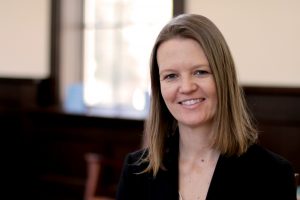
Courtney Rivard is an Assistant Professor in English & Comparative Literature at the University of North Carolina, Chapel Hill, with a secondary appointment at the School of Data Science & Society. She directs the Digital Literacy and Communications (DLC) Lab, focusing on digital humanities, critical game studies, and archival rhetorics. Her research bridges rhetoric, digital methods, and social justice, examining how archives and digital tools shape narratives around race, gender, and national identity. Dr. Rivard holds a Ph.D. from the University of California, Santa Cruz (2012). Her book Layered Lives (2022) combines archival and computational methods to analyze Depression-era life histories. She has secured grants from NEH, ACLS, and UNC initiatives, supporting projects like the Critical Gaming Initiative and oral history archives on PFAS contamination. Her teaching emphasizes digital literacy and public engagement, including courses on data rhetoric, game studies, and multimodal composition. The DLC Lab hosts the Greenlaw Gameroom, a game-based classroom funded by Lenovo, fostering critical pedagogies through play. Research Labs: Digital Literacy and Communications Lab, Greenlaw Gameroom Grants: NEH, ACLS Digital Extension Grant, UNC Arts & Humanities Fellowships Key Projects: Critical Gaming Initiative, Photogrammar collaboration, “Forever Chemicals” oral history archive
Dr. Gary Scavone is a Professor and Department Chair in the Music department at McGill University's Schulich School of Music. He holds a PhD in Computer-Based Music Theory & Acoustics and MS in Electrical Engineering from Stanford University, alongside degrees from Syracuse University in Music and Electrical Engineering. His research focuses on music technology, including acoustic modeling, sound synthesis, and instrument design. He directs the Computational Acoustic Modeling Laboratory (CAML), which explores advanced techniques for simulating musical instruments and developing software tools. As a saxophonist, he specializes in contemporary concert music performance. Research interests include physically-based sound synthesis, wind instrument acoustics, and digital waveguide modeling. He has contributed to studies on brass and woodwind impedance measurements, violin soundpost dynamics, and free-reed instrument modeling. His work bridges engineering and artistry, with applications in music pedagogy, instrument design optimization, and virtual acoustic replication. Key contributions include open-source projects for wind instrument modeling and the development of tools for automated timbre assessment. His research often combines experimental methods with computational simulations, addressing challenges in both theoretical and applied music acoustics. Current projects focus on deep learning for friction modeling, impedance measurement systems, and cross-cultural instrument analysis.
Yu Sun is an assistant professor in the Department of Electrical and Computer Engineering at Johns Hopkins University with a joint appointment at the Data Science and Artificial Intelligence (DSAI) Institute. His research integrates machine learning, computer vision, optimization, and physics to advance computational imaging frameworks for reliable AI-driven imaging systems. He earned a BEng in electronics and information from Sichuan University (2015) and a PhD in computer science from Washington University in St. Louis (2022), where his dissertation received the Turner Dissertation Award. His academic journey includes a postdoctoral fellowship at Caltech's Department of Computing and Mathematical Sciences. Dr. Sun's research spans biomedical imaging, computational imaging, inverse problems, and machine learning, focusing on interpretable AI integration for next-generation imaging. His work bridges theoretical foundations with practical applications in medical and scientific imaging domains. Recent publications reveal a dominant trend in diffusion models for scientific imaging problems, including plug-and-play priors for reconstruction (NeurIPS 2024) and benchmarks for diffusion-based scientific problem-solving (ICLR 2025 Spotlight), demonstrating cross-disciplinary impact from biomedical engineering to cell biology. Key honors include: Turner Dissertation Award for doctoral contributions Rising Star Award from the Conference on Parsimony and Learning (CPAL, 2025) He serves as a consultant associate editor for the IEEE Open Journal of Signal Processing and actively participates in the IEEE Signal Processing Society’s Computational Imaging Technical Committee. His research is supported by institutional funding through the Hopkins Computational Imaging Group. The Hopkins Computational Imaging Group, which he leads, unites AI, mathematics, and data science to develop principled algorithms for imaging systems, with emphasis on biomedical applications and novel computational frameworks.
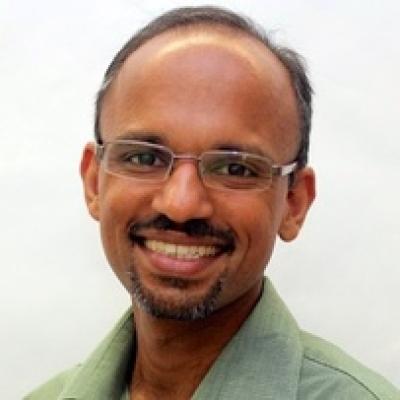
Deepak Ganesan is a Professor at the Manning College of Information and Computer Sciences (CICS) at the University of Massachusetts Amherst. His research focuses on low-power sensing and communication, networked systems, and machine learning applied to pervasive health monitoring and societal challenges. PhD, Computer Science, University of California, Los Angeles (2004) MS, Computer Science, University of California, Los Angeles (2000) BTech, Computer Science, Indian Institute of Technology, Madras (1998) Ganesan's work bridges wireless sensor networks, smart textiles, and healthcare applications. He designs ultra-low-power wearable devices for tracking health signals like drug use, smoking, and cognitive performance, often integrating machine learning for robust detection. His research emphasizes societal impact, particularly in aging and Alzheimer's care through the Massachusetts AI and Technology Center for Connected Care (MassAITC) and the Center for Personalized Health Monitoring (CPHM). Recent publications highlight innovations in edge-cloud collaboration, fabric-based sensors, and longitudinal health analytics. His NIH-funded MD2K Center for Excellence and affiliations with the Center for Data Science and Computational Social Science Institute further underscore his interdisciplinary approach. ACM Fellow NSF CAREER Award (2006) IBM Faculty Award (2008) UMass Junior Faculty Fellow (2008) UMass Lilly Teaching Fellow (2009) Best Paper at CHI 2013 Best Paper Runner-up at Mobicom 2014 Honorable Mentions at Ubicomp 2013 Ganesan leads the SENSORS: Wireless Sensor Networks Group and contributes to global initiatives like the Internet of Battlefield Things. His work spans academic research, industry partnerships, and policy development in AgeTech and digital health.
Giancarlo Ferrari Trecate is an Adjunct Professor at the Swiss Federal Institute of Technology Lausanne (EPFL) , affiliated with the School of Engineering and the SCI-STI-GFT department. He is also involved in teaching and research through the STI-SGM and EDRS-ENS programs. Research Interests : Automatic control, state estimation, system identification, machine learning, distributed control, hybrid systems, microgrids, biochemical networks, voltage and frequency stabilization in AC/DC microgrids. Publications Trends : His recent work focuses on integrating Neural ODEs and Hamiltonian structures for stable control systems, regret minimization in distributed control, and robust state estimation under uncertainty. Applications include autonomous mobility-on-demand , power grid optimization , and secure microgrid control against cyber-attacks. Scientific Awards : No specific awards mentioned in the provided data. Teaching & Advising : He supervises PhD students in mechanical engineering and teaches courses on Multivariable control and Networked control systems . His lab, DECODE , specializes in Dependable Control and Decision systems.
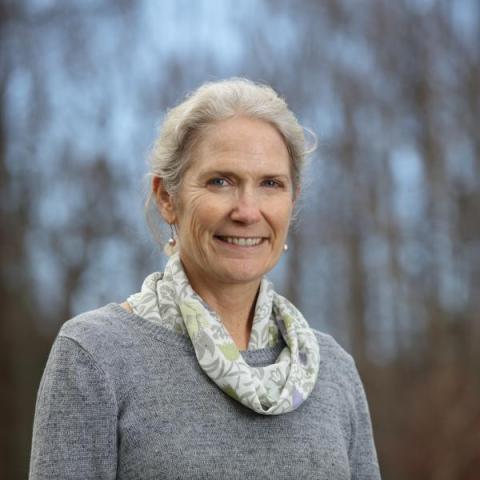
Maureen Kendrick is a Professor and Deputy Department Head in the Department of Language & Literacy Education at the University of British Columbia's Faculty of Education. Her research examines literacy and multimodality as integrated communicative practices, addressing social and cultural issues in diverse contexts with particular emphasis on visual communication and refugee/migrant education. Her research interests span digital literacies, multiliteracy and multimodality, and international perspectives on literacy education. She investigates how youth from refugee backgrounds use multimodal approaches to construct identities and engage with learning, often through digital storytelling and visual methodologies. Her work extends to health literacy in Ugandan contexts and the role of play in early childhood literacy development across Canada, Kenya, and Uganda. Analysis of her recent publications reveals consistent focus on refugee/migrant education, digital storytelling, and multimodal literacy. She examines how digital tools empower marginalized youth to express identities while addressing challenges in language learning and cultural integration. Her research also explores HIV/AIDS education through makerspaces and the intersection of arts-based practices with science literacy. Dr. Kendrick's scientific recognition includes: Canadian Committee for Graduate Students in Education (CCGSE) Mentorship Award (2024) Killam Teaching Prize (2012-13) Alan C. Purves Award (2013) She actively supervises graduate students across doctoral and master's programs, with current research focusing on refugee education and multilingual learners. Her SSHRC-funded projects include the 2025-2029 grant 'Digital Multimodal Composing-To-Learn' and the 'Language and Literacy Learning Among Refugee and Migrant Background Children' initiative, involving collaborators from UBC, York, and Western universities. Dr. Kendrick leads international research teams across Canada, Uganda, and Kenya, developing community-engaged approaches to literacy education that bridge academic research and classroom practice.
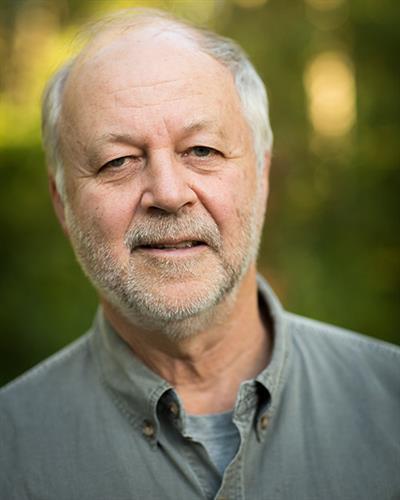
Philip Bell is a Professor in the Learning Sciences & Human Development at the University of Washington College of Education . He holds the Shauna C. Larson Endowed Chair in Learning Sciences and serves as Director of the Institute for Science + Math Education . Additionally, he co-directs the LIFE Science of Learning Center , focusing on equity-driven innovation in STEM education. Education : PhD and MEd in Human Development & Cognition, Science/Math Education from UC Berkeley (1998, 1996); BS in Electrical Engineering & Computer Science from University of Colorado Boulder (1989). Bell’s research emphasizes cognitive and cultural approaches to learning across diverse environments, including everyday science expertise , learning technology design , culturally expansive instruction , and large-scale educational reform . His work bridges formal and informal learning contexts , addressing equity through participatory design research. Recent research trends include culturally sustaining pedagogies , climate justice science education , and systemic equity in STEM . His team develops STEM Teaching Tools and collaborates with national networks to improve science standards and instructional coherence. Scientific Awards : Shauna C. Larson Endowed Chair in Learning Sciences. Bell mentors a diverse group of doctoral students and has advised numerous PhD/MEd graduates now in academic and research roles. His projects span K-12 STEM innovation , science communication , and equity-focused policy , including contributions to the Next Generation Science Standards . He leads the Institute for Science + Math Education and collaborates with the Research+Practice Collaboratory , Seattle/Renton school districts, and national teams to scale equitable science education.
Dr. Angeline Lillard is Commonwealth Professor of Psychology and Director of the Montessori Science Program at the University of Virginia. She leads the Early Development Lab, focusing on children's social and cognitive development, particularly Montessori education's impact on learning and wellbeing. A Fellow of AAAS, APA, and APS, she earned her BA in English Literature from Smith College and PhD in Psychology from Stanford University. Research Interests: Dr. Lillard's work bridges Montessori pedagogy with developmental psychology, analyzing how play, educational environments, and culturally responsive teaching shape child outcomes. She explores standardized testing disparities, discipline equity, and the neurobiological underpinnings of pretend play. Key themes in her 15 most recent publications include Montessori's role in reducing educational inequality, the cognitive effects of fantasy in media, and the use of multilevel modeling to assess school discipline patterns. Her research spans preschool to adult wellbeing, emphasizing self-determination theory and longitudinal data. Scientific Recognition: Awarded the Nancy Staub Award for Puppetry Research (2024) Recognized for her book with the Cognitive Development Society Book Award (2006) James McKeen Cattell Sabbatical Fellow (2005-06) Albert Bandura Graduate Research Award (2016-17) Advising and Grants: Mentored 15+ graduate students including Lee LeBoeuf and Christina Carroll. Secured IES funding for a 600-child study on public Montessori preschools and Arnold Foundation support for kindergarten data collection.
Ricardo Filipe da Silva Pocinho is an academic researcher affiliated with the Higher School of Education and Social Sciences (ESECS) at the Polytechnic Institute of Leiria, Portugal. He joined the faculty in March 2022 and holds the role of Assessor in the Regional Health Administration of the Center (ARS Centro). His primary research focuses on educational evaluation , social competence development , and pedagogical innovation , with emphasis on school-based interventions and socioemotional learning programs. He has supervised five doctoral students and published extensively on topics including family involvement in education, pandemic impacts on teaching, and workplace happiness initiatives. His work integrates interdisciplinary approaches, combining educational psychology with social work methodologies. Recent publications highlight projects like the 'Smiling Team' workplace well-being program and evaluations of educational interventions for youth transitioning from residential care. He collaborates closely with institutions like the University of Coimbra and has presented at major conferences such as TEEM20 and the International Conference on Childhood and Adolescence. Key contributions include designing programs to promote socioemotional competencies in schools and analyzing social policies during pandemics. His research emphasizes practical applications, evidenced by projects like the 'Third Age Universities' study in Portugal and Brazil, and pedagogical innovations in technical director training.
Pamela Burnard is a Professor of Arts, Creativities and Educations at the University of Cambridge, UK. She also holds adjunct professorships at the University of Sydney, Western Sydney University, University of Foggia, and Instituto Katarina Gurska. A Fellow of prestigious organizations like the Royal Society of Arts and Chartered College of Teaching, she specializes in creativity research across arts, education, and interdisciplinary fields. Her qualifications include a PhD from the University of Reading and degrees in Music Performance and Education from institutions like the University of Melbourne and Indiana University. Research & Education : Burnard's work focuses on creativities theories, STEAM education, urban musics, and posthumanist approaches. She has supervised over 30 doctoral students and contributed to global projects like the Global Institute of Creative Thinking and the CUMIN network. Her research explores transdisciplinary practices, digital technologies, and policy impacts on education. Publications & Awards : Author/co-author of 20+ books and 120+ articles, she has published in journals like Thinking Skills and Creativity and Music Education Research . Awards include the Hugh Childers' Prize for her DipEd and fellowships in leading academic societies. Advisory Roles : She advises the REF Sub-Panel SP33 and serves on editorial boards for journals like Journal of Thinking Skills and Creativity . Her collaborations span universities globally, emphasizing creative pedagogies and inclusive education. Labs & Teams : Leads the Arts and Creativities Research Group (A&CRG) at Cambridge and contributes to networks like CRiCLE and NRICH. Her work bridges academia, industry, and communities to advance creative practices in education.
Robert Östling is a Professor of Economics at the Stockholm School of Economics (SSE), affiliated with the Department of Economics and the Karl-Adam Bonnier Center for Governance within the House of Governance and Public Policy. He holds a PhD from SSE (2008) and previously worked at Stockholm University's Institute for International Economic Studies until 2018. His research focuses on applied microeconomics and behavioral economics, particularly examining how wealth impacts attitudes, behavior, and life outcomes using Swedish lottery data. He teaches econometrics, behavioral economics, and economics for MBA students, and serves as program director for SSE's MSc in Economics. Key roles include board membership of the Swedish Economics Association and the Expert Group on Public Economics (ESO), and membership in the scientific advisory board of the Swedish Consumer Protection Agency. He co-founded the popular economics blog Ekonomistas , recognized as 'Swede of the Year' in 2017. Awards include the Assar Lindbeck Medal (2021) and the Arnberg Prize (2009). His research spans wealth effects on labor supply, health, child development, and political behavior. Notable projects include studying lottery winners' long-term well-being and portfolio decisions. Teaching innovations include using animated GIFs for econometrics instruction. He has contributed to policy debates on economic reforms, consumer protection, and pandemic responses. Outreach activities include public writing and policy advisory roles. His research has been featured in outlets like the New York Times and Swedish media. He remains active in academic networks, including the Network for Evidence-Based Policy.
W. George Scarlett is a Teaching Professor at Tufts University's Eliot-Pearson Department of Child Study & Human Development within the School of Arts and Sciences . He has held progressive academic roles at Tufts since 1990, including Assistant Professor (1990-1992), Lecturer (1992-2012), Senior Lecturer (2012-2024), and currently as Teaching Professor (2024-present). PhD in Developmental Psychology, Clark University (1978) MDiv in Theology, Episcopal Theological School (1971) BA in Psychology, Yale University (1967) His research focuses on children's development as earth stewards , children's play dynamics , behavioral approaches to challenging childhood behaviors , and lifespan religious/spiritual development . He emphasizes interdisciplinary connections between psychology, education, and environmental stewardship. Key publication trends show consistent contributions to classroom management theory (2015 Sage Encyclopedia), play therapy applications (2017), and spiritual development frameworks (2006-2020). His work integrates developmental psychology with practical educational interventions . He leads Tomorrow's Earth Stewards , an online platform for environmental educators, and has developed artful explanation guidelines merging creative nonfiction with academic analysis to enhance educational leadership.
Luca Iocchi is a Full Professor at Sapienza University of Rome, where he teaches in the Master in Artificial Intelligence and Robotics program. He is affiliated with the Department of Computer, Control, and Management Engineering and the Faculty of Engineering of Information, Computer Science and Statistics. Iocchi serves as an Associate Editor for Artificial Intelligence Journal and has been the scientific coordinator of Spoke of PNRR project FAIR (Future AI Research). His educational background includes: Master in Engineering in Computer Science (Laurea in Ingegneria Informatica) cum Laude, Sapienza Università di Roma, 1995 PhD in Engineering in Computer Science (Dottorato in Ingegneria Informatica), Sapienza Università di Roma, 1999 Professor Iocchi's research focuses on cognitive robotics, task planning, multi-robot coordination, robot perception, robot learning, human-robot interaction, and social robotics. His work has significant applications in security, surveillance, and environmental monitoring. He has published over 200 referred papers with an h-index of 46 (Google Scholar). His research bridges theoretical AI with practical robotic systems operating in real-world environments, with a particular emphasis on developing intelligent systems that can interact effectively with humans. His recent publications show a strong trend toward multi-agent reinforcement learning, trust modeling in human-AI teams, UAV coordination, and planning systems. There's a clear focus on making robotic systems more reliable, efficient, and capable of operating in complex real-world scenarios like healthcare facilities and smart cities. His work increasingly integrates formal planning approaches with machine learning techniques. Professor Iocchi has received numerous scientific awards: 1999 Top Paper Award WebNet'99 2006 Best Paper Award RoboCup 2006 2008 Best Robotics Demo Award AAMAS 2008 2014 Best Paper Award For Engineering Contribution RoboCup 2014 2017 RoboCup@Home SSPL 2017 - 3rd place 2018 Canada-Italy Innovation Award 2019 Best Paper Award For Engineering Contribution RoboCup 2019 As an academic advisor, Iocchi has directed the PhD Program in Engineering in Computer Science from 2020 to 2023. He has been Principal Investigator for numerous research projects including SciRoc (European Robotics League), AI4EU (European AI project), BUBBLES, AIPlan4EU, ROSITA, Trust Your Agents, and FAIR. His research has been supported by EU H2020 programs, national grants, and industry collaborations, demonstrating strong connections between academia and practical applications. Professor Iocchi is actively involved with the Cognitive Cooperating Robots Lab (LabRoCoCo) and is a key member of the RoboCup Federation, having served as Vice-President from 2019 to 2024. He has played a significant role in benchmarking domestic service robots through RoboCup@Home and the European Robotics League Service Robots (ERL-SR), which he helped establish. His leadership in organizing international scientific robot competitions has been instrumental in advancing the field of service robotics.
Elin Org is a Professor of Microbiomics at the University of Tartu's Institute of Genomics, where she also serves as Head of the Estonian Genome Centre and Vice Director of the Institute. Her academic career spans over two decades with significant contributions to microbiome and genomic research. Education: PhD in Genetics, University of Tartu (2006) Master's Degree in Molecular Biotechnology and Biomedicine, University of Tartu (2000) Bachelor's Degree, University of Tartu (1997) Classical Singing, Heino Eller Tartu Music School (1996) Professor Org's research primarily focuses on the intricate relationships between host and gut microbiota and their influence on metabolism and common complex diseases. Her work bridges microbiomics, genomics, and complex disease research, with particular emphasis on understanding how gut microbiome composition affects human health. She has pioneered research connecting long-term antibiotic usage with microbiota-dependent effects and has made significant contributions to understanding the role of gut microbiome in conditions such as gestational diabetes, endometriosis, and polycystic ovary syndrome. Her approach integrates advanced computational methods with comprehensive health data to uncover causal relationships in microbiome research. Her recent publications demonstrate a strong trend toward integrating microbiome data with extensive digital health metrics, using machine learning approaches to identify microbial predictors of health outcomes. This work is increasingly focused on translating microbiome research into clinical applications for disease prediction and personalized medicine approaches, particularly in the context of the Estonian Biobank initiative. Major Scientific Recognition: 2025 National Science Award in medical and health sciences 2023 and 2022: Recognized among the world's top 1% most cited researchers by Clarivate Analytics 2020: Member of AcademiaNet, a portal for top female researchers 2017: EMBO Installation grant 2013: Marie Curie International Outgoing Fellowship Professor Org has secured substantial research funding as principal investigator for multiple significant projects, including 'DISCERN - Discovering the causes of three poorly understood cancers in Europe' (€245,466, European Commission) and 'Improving colorectal cancer screening and prediction using microbiome-based biomarkers' (€760,450, Estonian Research Council). She has served as an opponent for numerous PhD theses across European institutions, contributing to the development of emerging researchers in her field. As Head of the Estonian Genome Centre, Professor Org leads a multidisciplinary research team that plays a crucial role in Estonia's transition from biobanking to personalized medicine applications. She is actively involved in international collaborations through COST networks including INFOGUT (focused on in vitro colon models) and ML4Microbiome (statistical and machine learning techniques in human microbiome studies), positioning her at the forefront of global microbiome research initiatives.
Sam Pizelo is an Assistant Professor of Game Studies at the Institute for Communication, Culture, Information & Technology (ICCIT), University of Toronto. His research investigates the role of games as modeling technologies in the development of computing, artificial intelligence, and neoliberal capitalism. He is actively engaged in both scholarly and creative practices, integrating media art, data science, and game design into his academic work. Research Interests: Sam's work spans game studies, digital humanities, media theory, and critical computing. He explores how games function as epistemic tools that shape knowledge production, particularly in technoscientific domains. His research connects historical analysis with contemporary digital methods to examine the cultural and philosophical implications of games. The recent publications reflect a strong focus on the historical and systemic roles of games in shaping modern computing and thought. Themes include the modeling revolution, systems thinking, and the deep cultural roots of game logic. His work bridges humanities scholarship with computational practice. Scientific Contributions: Co-creator of Project Quintessence , a corpus exploration framework combining machine learning and dynamic visualizations for archival research. Founding member of the Degrowth Game Design Project (DeGDP) , a multi-campus initiative exploring games for post-growth futures. Sam Pizelo is an active researcher and media practitioner without listed advisees or awards in the provided text. He maintains academic affiliations with the University of Toronto and previously held a visiting position at NYU.