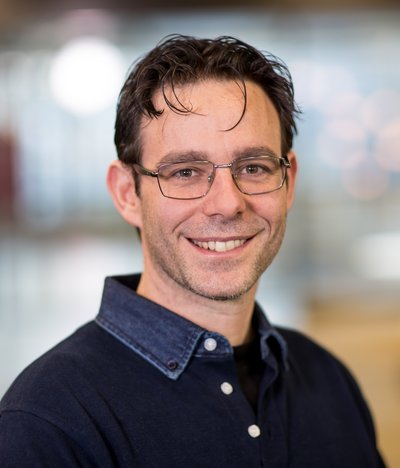
Massimo Mischi is a Full Professor at the Faculty of Electrical Engineering of the Eindhoven University of Technology (TU/e) and chairs the Signal Processing Systems (SPS) Division , the largest division at TU/e with over 250 researchers. He founded the Biomedical Diagnostics (BM/d) Lab in 2012, which now includes 180 researchers and clinical/industrial advisors, focusing on biomedical signal processing for diagnostics and monitoring.
Dr. Paul Poodt is Associate Professor in Applied Physics at Eindhoven University of Technology, specializing in advanced thin film deposition techniques. His research advances plasma-enhanced and atmospheric-pressure atomic layer deposition for solar cells and electronic devices. Work focuses on conformal coating processes, surface passivation, and novel precursor chemistries. Recent innovations enable nanoscale material control on complex 3D structures for energy applications. Publications in high-impact journals demonstrate breakthroughs in deposition speed and material performance. Collaborations include industry partnerships for semiconductor manufacturing improvements.
Anna Salvati is an Associate Professor specializing in nanomedicine and drug delivery systems. Her research focuses on nanoparticle-cell interactions, biomolecular corona formation, and the physicochemical properties governing nanomaterial behavior in biological environments. Key research themes include cellular uptake mechanisms, toxicity of nanomaterials, and nanoparticle targeting strategies. Recent publications highlight her work on nanoparticle stability, membrane interactions, and environmental impacts of microplastics. Her studies integrate multiomics approaches, advanced imaging, and interlaboratory validation to address challenges in nanomedicine design and safety testing. Current projects explore the role of high-density lipoproteins in nanoparticle functionality and the modulation of drug release kinetics through material engineering.
Roger J.E. Jaspers is an Associate Professor at Eindhoven University of Technology (TU/e) and a part-time Professor at Ghent University in Belgium, affiliated with the Applied Physics and Science Education school and specializing in the Science and Technology of Nuclear Fusion. His research focuses on spectroscopic diagnostics of ion processes in fusion plasmas, particularly energetic alpha particles in fusion-born reactions. Collaborations include international fusion experiments like W7-X (Germany), JET (UK), and KSTAR (South Korea). He leads the scientific R&D for the ITER CXRS instrumentation system and has authored over 90 peer-reviewed papers. His work spans topics such as: Relativistic electrons Plasma energy transport Magneto-hydrodynamics (MHD) Fusion reactor instrumentation He contributes to educational initiatives like the TU/e Fusion Master program, FUSENET, and the Erasmus Mundus Programme FUSION-DC.
Daniel Vanmaekelbergh is a Professor in the Department of Chemistry at Utrecht University, where he leads research in the Condensed Matter and Interfaces group within the Debye Institute for Nanomaterials Science. His academic career spans over two decades with continuous contributions to nanomaterials science and semiconductor physics. Professor Vanmaekelbergh's research focuses on the fundamental properties of semiconductor nanocrystals, quantum dots, and artificial electronic lattices. His work bridges theoretical and experimental approaches to investigate electron transport, quantum confinement effects, and the optical properties of nanoscale materials. He has made significant contributions to understanding the formation mechanisms of nanocrystal superlattices, the electronic structure of artificial honeycomb lattices, and the dynamics of excitons in confined systems. His research group, known as the Vanmaekelbergh Lab, employs advanced techniques including scanning tunneling spectroscopy, electron microscopy, and optical spectroscopy to probe nanoscale phenomena. Analysis of his recent publications reveals a strong emphasis on the physics of quantum-confined systems, particularly in lead chalcogenide and cadmium selenide nanocrystals. His work explores the relationship between nanocrystal structure and electronic properties, with applications in optoelectronics and quantum technologies. Recent research has focused on oriented attachment processes, artificial quantum systems with fractal geometries, and the fundamental limits of light-matter interactions in nanoscale materials. Professor Vanmaekelbergh has established a productive research program with numerous collaborations across the Netherlands and internationally. His work has been published consistently in high-impact journals including Nature Physics, Nano Letters, and ACS Nano, demonstrating the significance of his contributions to the field of nanomaterials science.
Tos T.J.M. Berendschot is a University Researcher in Biomedical Engineering at Eindhoven University of Technology , specializing in Medical Image Analysis . His work spans interdisciplinary domains linking diabetes, neurodegeneration, and ophthalmology. Email: t.t.j.m.berendschot@tue.nl Research Interests focus on diabetic complications, retinal neurodegeneration, and AI-driven medical imaging. Key areas include: Maturity Onset Diabetes of the Young (MODY) Microvascular dysfunction Advanced Glycation End-Products (AGEs) Retinal vascular tree analysis Keratoconus detection via AI Optical Coherence Tomography (OCT) Selected Publications highlight AI applications in ophthalmology, diabetic neurodegeneration, and vascular connectivity studies. Collaborations include Maastricht University Medical Center and international conferences in computer vision. Media Contributions feature expert commentary on cataract surgery, keratoconus, Alzheimer's disease biomarkers, and intraocular lens calculations.
Silke A. Peeters is a Doctoral Candidate at Eindhoven University of Technology, affiliated with the Applied Physics and Science Education department and the Plasma & Materials Processing research group. Her work bridges materials science and quantum technology with a focus on plasma-assisted thin film deposition methods. Education : Bachelor's thesis (2020) on lightning initiation modeling; Master's thesis (2022) on superconducting tantalum carbonitride for quantum devices. Research interests span superconducting materials , atomic layer deposition , and quantum device fabrication . Her 2022-2025 publications demonstrate expertise in optimizing plasma-enhanced thin film processes for nanoscale superconducting films and atmospheric discharge modeling. Key subfields include corona inception mechanisms, quantum technology materials, and ion-energy-controlled deposition techniques. Recent work trends show specialization in: High-rate plasma-assisted deposition Superconducting nitride/carbonitride films Quantum device material synthesis Thundercloud hydrometeor electrodynamics Scientific recognition : NEVAC-prijs (2025) for student research Best Student Oral Presentation Award (2023) Best Presentation Award (2025) Active in science communication with media coverage in Blog Review (July 2022). Collaborations span Netherlands-based institutions and international networks in materials science and quantum engineering.
Edgar J.D. Vredenbregt is an Associate Professor in the Department of Applied Physics at Eindhoven University of Technology (TU/e). His research focuses on quantum technologies, including ultracold atom trapping for quantum computing and novel charged particle sources. He leads projects on Rydberg atom-based quantum computing and ultracold ion beams for nanoscale applications. Education: MSc in Applied Physics (TU/e, 1986), PhD in Atomic and Molecular Physics (TU/e, 1990). Postdoctoral research at SUNY Stony Brook (1991-1993) and NIST (1998). He holds a KNAW fellowship (1995-2000) and has been a project member in KAT-1: Rydberg Atom Quantum Computing and Simulation since 2020. Research interests include ultracold electrons/ions for high-brightness applications, Rydberg atom arrays for quantum gates, and laser-cooled ion beams for nanotechnology. He has developed ultracold electron sources for ultrafast diffraction and focused-ion beam tools for 1 nm-scale silicon wafer modification. Publications span quantum computing, atomic physics, and nanotechnology. He teaches courses like Hybrid Quantum Computing and Physics of Plasma and Radiation. Supervised 69 student works but no names are listed in the provided texts.
Sirui Li is a Postdoctoral Researcher in the Department of Chemical Engineering and Chemistry at Eindhoven University of Technology, specializing in plasma-based technologies for sustainable chemical processes. Their research focuses on carbon capture and utilization, plasma catalysis, and reactor design for CO 2 conversion and nitrogen fixation. Research interests center on plasma-assisted CO 2 conversion , with key areas including: Plasma-sorbent systems for simultaneous CO 2 capture and conversion Gliding arc and DBD reactor design for NO x synthesis and methane conversion Techno-economic analysis of plasma-based sustainable processes Dielectric materials and nanoparticle synthesis for catalytic applications Recent publications demonstrate a clear trend toward integrated plasma-reactor systems for carbon management, with emphasis on process intensification, thermal effects analysis, and scalability. The work bridges fundamental plasma chemistry with industrial application feasibility, particularly in renewable energy integration and fertilizer production. Award highlights include: Baldur Eliasson Award (2022) Best oral presentation award for 'Plasma-sorbent system for CO 2 capture and conversion' (2022) IEEE NPSS Young Professional Travel Grant (2024) Li actively contributes to major research projects including PLACHEM (plasma-assisted CO 2 conversion), GICO (gasification with CO 2 capture), and LEAP-Agri (on-site fertilizer production), while serving as guest editor for Frontiers of Chemical Science and Engineering and participating in international symposia on plasma technology.
Rudie P.J. Kunnen is an Associate Professor at the Faculty of Applied Physics and Science Education , Eindhoven University of Technology, leading the Turbulent and Multiphase Flows group. His research focuses on heat, mass, and particulate transport in turbulent flows, with applications in geophysics and industry. Active in UN Sustainable Development Goals related to environmental protection Collaborator in projects like Active Contamination Control for Equipment and SubstrateS Research Interests : Turbulent flow dynamics, rotating convection, vortex structures, thermophoresis, plasma-liquid interactions, and geostrophic turbulence. His work combines experimental and numerical approaches (e.g., direct numerical simulation, particle image velocimetry). Scientific Awards : NWO Vici Prize (2024) Advising and Collaborations : Supervised multiple BSc and MSc theses at TU/e. Collaborates with researchers like F. Toschi and H.J.H. Clercx on turbulence projects.
Advanced Research Center for NanolithographyNetherlands
Kjeld Eikema is a Researcher and Group Leader of the EUV Plasma Processes department at ARCNL (Amsterdam Research Center Netherlands). His work focuses on advanced plasma-based technologies, particularly in the context of extreme ultraviolet (EUV) light generation and plasma process modeling. He collaborates with interdisciplinary teams across ARCNL's research divisions, including Plasma Theory and Modeling, Ion Interactions, and Computational Imaging. ARCNL's mission involves advancing fundamental and applied research in plasma physics, materials science, and nanoscale imaging. Eikema’s group specializes in understanding plasma dynamics for EUV applications, with implications for semiconductor manufacturing and precision metrology. His research leverages cutting-edge experimental setups and computational tools to address challenges in high-intensity laser-plasma interactions. Contact details: Email | ARC-NL Website
Elisabeth Huis in 't Veld is an Assistant Professor at Tilburg University's Department of Cognitive Science and Artificial Intelligence, part of the Tilburg School of Humanities and Digital Sciences. She also serves as Group Leader for Donor Cognition at Sanquin in Amsterdam and co-founded AINAR B.V., a company focused on AI applications in healthcare (https://www.ainar.io). Her research spans cognitive neuroscience, medical psychology, and AI-driven solutions for health challenges. Key interests include vasovagal reactions during needle procedures, serious games for decision-making studies, and blood donor behavior analysis. Recent projects include developing predictive models for vasovagal responses using facial analysis and creating the 'Sustainable Port' serious game to study expert decision-making in port management scenarios. Publications highlight interdisciplinary work, blending AI techniques (e.g., CNNs, time-series classification) with clinical and behavioral insights. Her work addresses real-world challenges in healthcare, donor recruitment, and game-based training systems. Professional affiliations include leadership roles in academic and industry collaborations, emphasizing translational research between cognitive science and practical health applications.
Wolter Elbersen is a full-time researcher at Wageningen University & Research, specializing in Biorefinery & Fibre Technology. His work focuses on converting agricultural residues like oil palm biomass into advanced biofuels and carbon-based materials through pyrolysis technologies, with a strong emphasis on circular economy principles and greenhouse gas emission reduction. Key Research Areas: Pyrolysis, lignocellulosic biomass valorization, circular economy implementation, and sustainable feedstock utilization. Projects: Leading initiatives like MesOil (mesocarp oil mobilization) and Monitoring Circulariteit Agro-reststromen (biomass residue tracking). Collaborations: Active in international networks, particularly in Southeast Asia and Africa, for biomass-to-biofuel systems. His recent publications analyze plasma-assisted pyrolysis of palm residues and sustainable biomass residue flows in the Netherlands. He contributes to EU-funded projects like SUSTRACK and BIKE, focusing on bioenergy sustainability and policy instruments.
Dr. Sander Kramer is an Assistant Professor at Utrecht University's Faculty of Law, Economics and Governance , specifically within the Department of Public Administration and Organizational Science . His work bridges organizational theory, mental health ethics, and migration studies, with a focus on transformative education and data-driven governance. Research Interests: Kramer investigates the intersection of organizational practices and social impact , particularly in contexts involving asylum seekers and refugee mental health . He explores ethical dilemmas in healthcare, cultural adaptation in Western societies, and data-intensive public health through projects like GECCO's exposome studies. Publication Trends: His recent work includes critical praxis in education ( 2024 ), cross-cultural mental health diagnosis ( 2022 ), and data analytics for health geographics ( 2020 ). Earlier studies focus on refugee coping mechanisms ( 2004 ), ethical challenges ( 2018 ), and veterinary biomarkers ( 2012 ).
Dr. Esther Zaal serves as an Assistant Professor at Utrecht University's Faculty of Veterinary Medicine, Department of Biomolecular Health Sciences, specializing in Cell Biology, Metabolism & Cancer. Her research focuses on the intersection of cellular metabolism and disease mechanisms, particularly in cancer and immunological contexts. Her research interests center on cancer metabolism, with particular emphasis on metabolic reprogramming in malignancies such as multiple myeloma. Dr. Zaal investigates how metabolic pathways influence drug resistance mechanisms and tumor progression. Her work spans immunometabolism, examining how metabolic processes regulate immune cell function, particularly T cells and dendritic cells. She also explores metabolic vulnerabilities in cancer that could serve as therapeutic targets, with significant work on nucleotide synthesis, amino acid metabolism, and lipid metabolism in tumor cells. Analysis of Dr. Zaal's recent publications reveals a consistent focus on metabolic adaptations in disease states. Her work demonstrates how metabolic rewiring occurs in cancer cells to resist therapeutic interventions and how similar processes affect immune cell function in inflammatory conditions. The research shows particular strength in metabolomics approaches and stable isotope tracing techniques to map metabolic fluxes in various disease models. Dr. Zaal actively supervises research projects and collaborates extensively with the Berkers laboratory and other research groups at Utrecht University. Her work bridges basic metabolic research with potential clinical applications, particularly in developing strategies to overcome drug resistance in cancer treatment. She maintains laboratory facilities focused on metabolomics and cell biology research, utilizing patient-derived organoids, cell culture models, and advanced mass spectrometry techniques to investigate metabolic pathways in health and disease.