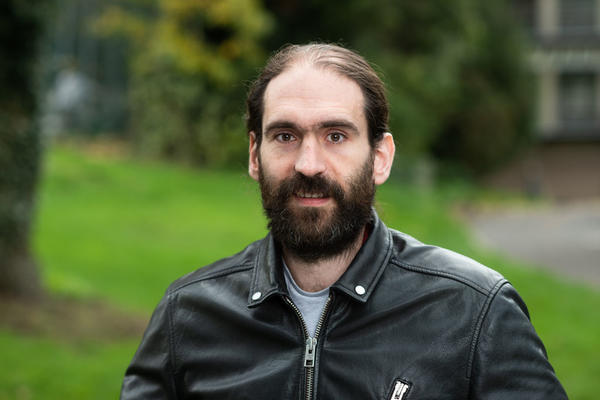
Yan Liu is a Senior Lecturer in Glycosciences at Imperial College's Department of Metabolism, Digestion and Reproduction (Faculty of Medicine). She leads the Wellcome Trust-funded Carbohydrate Microarray Facility and co-leads the GlycoTWINNG Network. Her research focuses on glycan-mediated interactions in host-microbiota interfaces, with applications in infectious diseases and reproductive health. She holds a B.Sc. from Peking University and a Ph.D. from the University of Bristol, followed by postdoctoral work at Imperial College under Professor Ten Feizi FRS. Her academic journey includes roles as a Microarray Project Leader and co-investigator in the March of Dimes European Preterm Birth Research Centre. She is PI of a £1.34M Wellcome Trust grant maintaining Imperial's Carbohydrate Microarray Facility, advancing glycan array technologies. Research interests span microbiology, immunology, and biomolecular chemistry, with a focus on glycobiology. Key contributions include defining glycan interactions in pathogen-host systems (e.g., Candida albicans, adenoviruses), developing glycan probes, and analyzing vaginal microbiota impacts on preterm birth. Grants and collaborations include EPSRC Translational funding and the UK 'FluTrialMAP' consortium. Labs affiliations include the Glycosciences Laboratory and Imperial's Institute of Infection.
Professor Tariq Butt of Swansea University's Faculty of Science and Engineering leads the Biocontrol and Natural Products (BANP) group , focusing on entomopathogenic fungi and natural product-based biopesticides for managing pests impacting food security , human health , and agriculture . He co-directs the Natural Products BioHub and Health Technology Solutions Research Institute . His cross-disciplinary research includes collaborations with Dr Joel Loveridge (Chemistry) for chemical ecology, Professor Chedly Tizoui (Engineering) for plant-based molluscicides, and Professor Dan Eastwood (Biosciences) for fungal biocontrol. Externally, he works with experts in Greece, Brazil, Turkey, Saudi Arabia , and companies like Certis Belchim and Lallemand . Recent publications highlight his work on fungal volatile organic compounds for pest control, mosquito repellents , and microbial consortia to reduce chemical dependencies. He has supervised over 35 PhD/MSc students and contributed to 174+ peer-reviewed articles and 14 book chapters .
Professor Michael W. Shaw is a distinguished academic at the University of Reading's School of Agriculture, Policy and Development, Department of Plant Sciences, with a research career spanning over two decades. His expertise lies at the intersection of plant pathology, disease epidemiology, and sustainable disease management strategies. Shaw's research interests encompass plant-pathogen interactions , particularly focusing on fungal diseases affecting major crops. His work investigates the epidemiology of plant diseases , fungicide resistance mechanisms , biological control strategies , and asymptomatic pathogen infections . He has made significant contributions to understanding pathogen evolution, host specificity, and the environmental factors influencing disease development. His recent publications demonstrate a consistent research trajectory examining the molecular, ecological, and epidemiological aspects of plant diseases. Shaw's work spans multiple pathosystems including Botrytis cinerea (gray mold), Venturia inaequalis (apple scab), begomoviruses affecting okra, and banana Xanthomonas wilt. His research integrates molecular techniques, field studies, and mathematical modeling to address complex plant health challenges. Professor Shaw has contributed significantly to the understanding of fungicide resistance development, particularly in cereal pathogens, and has explored innovative approaches to disease management through biological control agents and integrated strategies. His work on asymptomatic infections has revealed novel insights into host-pathogen relationships that extend beyond traditional disease paradigms. His collaborative research network spans internationally, with co-authors from multiple countries, reflecting the global relevance of his work in plant health and food security. Shaw's research has practical applications for sustainable agriculture and crop protection strategies worldwide.
Dr. Lida Derevnina is a leading researcher in plant-pathogen interactions and immune receptor networks at the University of Cambridge , affiliated with the School of Biological Sciences and the Department of Plant Sciences . She heads the Crop Pathogen Immunity Group at the Crop Science Centre , focusing on NLR (Nucleotide-binding and Leucine-Rich Repeat) immune receptor networks and pathogen effector functions to engineer durable crop resistance. Education: PhD in Plant Pathology and Phytopathology, University of Sydney (2008-2012) BSc in Agricultural Science, University of Sydney (2004-2007) Her research explores how pathogens evade plant immunity through effector proteins and how NLR networks can be bioengineered to counteract these mechanisms. This work bridges molecular biology, evolutionary genetics, and sustainable agriculture, with recent advances in resistosome activation models and effectorome characterization. Scientific awards include the Crop Science Centre Fellowship (2022) , Marie Skłodowska-Curie Individual Fellowship (2016) , and the Jeanie Borlaug Laube Women in Triticum Award (2012) . Her work has been published in top journals such as Science , Nature , and PLoS Biology . Dr. Derevnina is actively engaged in public outreach, including the Talking Biotech podcast and a YouTube video explaining plant immunity . Her laboratory collaborates on projects related to global food security and pathogen genomics.
Professor Aris Katzourakis is a Professor of Evolution and Genomics at the University of Oxford, leading the Paleovirology Lab. His research focuses on viral evolution, particularly through the study of endogenous viral elements (EVEs) preserved in host genomes. He investigates retroviruses, SARS-CoV-2, HIV, and other viruses to understand long-term evolutionary dynamics. His work bridges paleovirology with modern epidemiology, addressing issues like zoonotic origins and viral adaptation. He serves as an associate editor for BMC Evolutionary Biology and editorial board member of Evolutionary Biology . Education: Background in virology and evolutionary biology, though specific qualifications are not detailed in the text. Research interests include: Endogenous retroviruses (ERVs) and their role in host immunity/evolution SARS-CoV-2 origins and epidemiology Evolutionary mechanisms of viral pathogenesis Phylogenetic analysis of viral families (e.g., hepaciviruses, papillomaviruses) Recent articles highlight his work on bat viruses ancestral to SARS-CoV-2, virophage interactions, and viral diversity in endangered species. His lab has mentored students like Charles Reuben Hugo de Souza and Nikita Trojanskis. Grants and collaborations are implied through his extensive publication record and editorial roles. The Paleovirology Lab is part of Oxford's interdisciplinary initiatives, such as Oxford Mosaic.
Sanchayan Banerjee is an Associate Professor of Economics & Public Policy at King’s College London’s Policy Institute, with a dual appointment as Visiting Professor at Grenoble-IAE (Université Grenoble Alpes). He previously held a tenured position as Assistant Professor of Environmental and Behavioral Economics at Vrije Universiteit Amsterdam (2022-2024). His research focuses on citizen-oriented, participatory behavioral public policies, tested through experiments in food, energy, health, and charitable policy domains. He co-developed the NUDGE+ framework emphasizing citizen agency in policy design. Affiliations: Visiting Fellow, London School of Economics Affiliate, Amsterdam Sustainability Institute & Institute for Environmental Studies Academic Lead for Professional Education, Policy Institute Research Interests: Behavioral economics, environmental economics, experimental methods, and policy effectiveness. His work bridges behavioral insights with real-world policy challenges, emphasizing participatory approaches and ethical considerations. Recent Article Trends: Recent work analyzes public support for pandemic policies, vaccine uptake drivers across G7 nations, and the ethical implications of behavioral nudges. He explores how experimental methods (field, lab, online) validate policy impacts while addressing equity concerns. Awards: Three consecutive LSE Teaching Awards Teaching Innovation Grants (VU Amsterdam) FHEA (UK Higher Education Academy Fellow) Grants & Leadership: Co-leads NWO ALIGN4energy (€5.7M), a Netherlands-based energy sustainability project. Serves on editorial boards for Scientific Reports , PLOS One , and Humanities & Social Sciences Communications . Previously co-edited Behavioral Public Policy ’s New Voices section. Labs/Teams: Leads King’s Policy Institute’s behavioral policy research group and collaborates across institutions on interdisciplinary projects like the NUDGE+ toolkit development.
Professor Samuel Fountain is a leading academic in pharmacology at the University of East Anglia, where he serves as Chair of Pharmacology within the School of Biological Sciences. He holds additional leadership roles as Associate Pro-Vice-Chancellor of the UEA Doctoral College and has previously served as Associate Dean for Postgraduate Research and Director of the Biomedical Research Centre. He is actively supervising multiple PhD students and securing major research funding. BSc (Hons) Pharmacology, University of Leeds (1997–2000) MRC-funded PhD, University of Leeds (2000–2004) Wellcome Trust Research Associate, University of Manchester (2004–2008) BBSRC David Phillips Fellow, University of Leeds (2008–2010) Lecturer to Professor of Pharmacology, University of East Anglia (2010–present) His research focuses on the role of ion channels—particularly P2X receptors—in vascular and adipose tissues, with implications for cardiometabolic diseases. His work integrates pharmacology, physiology, and molecular biology to understand neurovascular and neuroadipose communication, receptor-ligand interactions, and drug discovery. He employs techniques such as pressure myography, patch-clamp electrophysiology, calcium imaging, and molecular modelling. The analysis of his recent publications reveals a strong emphasis on purinergic signalling, ion channel pharmacology, and autonomic control of blood vessels and fat tissue. His work bridges basic science with translational applications, particularly in hypertension, obesity, and metabolic syndrome. Collaborations with AstraZeneca, Merck, and the British Heart Foundation underscore the clinical and pharmaceutical relevance of his research. Notable scientific recognition includes the prestigious BBSRC David Phillips Fellowship. He also contributes to the academic community through editorial roles, including as Editor of Purinergic Signalling , and as a member of the British Pharmacological Society and The Physiological Society. Professor Fountain actively mentors postdoctoral researchers and PhD students, several of whom are funded by BBSRC, BHF, and AstraZeneca iCASE awards. His lab is supported by significant grants from the British Heart Foundation, BBSRC, and industry partners, enabling cutting-edge research in vascular and metabolic pharmacology. He leads multiple active projects on neurovascular transmission, purinergic control, and drug discovery for P2X receptors. His research group operates within the Cells and Tissues research theme at UEA and utilizes advanced experimental platforms including human tissue studies, high-throughput screening, and computational ligand docking. The lab fosters interdisciplinary collaboration between pharmacologists, physiologists, and clinicians, positioning it at the forefront of autonomic and metabolic research.
Cyril Zipfel is a Professor and Senior Scientist at The Sainsbury Laboratory (TSL), affiliated with the University of East Anglia's Plant Sciences department. His research focuses on plant immunity, particularly the molecular mechanisms underlying pathogen recognition and immune signaling. He leads projects funded by organizations like the Biotechnology and Biological Sciences Research Council (BBSRC) and Plant Response Biotech, investigating durable disease resistance in crops through pattern recognition receptors and microbial elicitors. Key areas of research include bacterial effector functions, immune receptor activation pathways, and the integration of cell wall integrity sensing with defense responses. Zipfel has contributed extensively to understanding how plants recognize pathogens and activate protective mechanisms, with implications for crop disease management. His lab's work bridges fundamental biology and applied biotechnology, aiming to enhance agricultural resilience against plant pathogens. Notable projects include the identification of novel immune receptors and the characterization of conserved proteins in plant innate immunity. His publications span peer-reviewed articles and reviews in journals like Trends in Microbiology and Nature Plants , highlighting his expertise in plant-pathogen interactions and signaling networks.
Dr Ruan Elliott is Dean of the Doctoral College and Senior Lecturer in Nutrition at the University of Surrey's School of Biosciences. He holds a PhD in Nutritional Metabolism (2017) and BA in Natural Sciences from Cambridge (1988). His research focuses on nutritional modulation of DNA repair mechanisms, functional genomics in nutrigenomics, and micronutrient homeostasis of iron, copper, selenium, and zinc. He has led studies on vitamin D efficacy, food bioavailability, and oxidative stress biomarkers. Education: PhD (University of Surrey, 1992), BA (University of Cambridge, 1988) Previous Roles: Senior Scientist (Institute of Food Research, 1994-2009), Postdoctoral Fellow (University of British Columbia, 1992-1994) His research integrates molecular biology and nutrition to address health impacts of dietary components. Recent work explores oat-based milk alternatives' sensory profiles, vitamin D supplementation efficacy, and DNA repair pathways in cardiovascular disease. He collaborates internationally on projects like the D2-D3 Study and NuGO initiatives. Publications emphasize translational research, including systematic reviews on insect protein efficacy and meta-analyses of vitamin D supplementation. His work bridges lab-based models (e.g., Caco-2 cells for iron studies) and clinical applications. No scientific awards were explicitly listed in the provided texts. He advises on doctoral training programs and has contributed to grant-funded projects like the University of Surrey's food and infection biosciences initiative (2024). Collaborations include studies on probiotics' immune effects and transcriptomic analysis of metabolic conditions.
Jian Lu is a Professor in the Department of Biological Physics at The University of Manchester, affiliated with the Christabel Pankhurst Institute. He holds a Doctor of Philosophy from The University of Hull (1991), specializing in Emulsion stability and breakdown. His research focuses on biological physics, biomaterials, biointerfaces, and peptide self-assembly, with a strong emphasis on antimicrobial peptides, nanostructure fabrication, and neutron scattering techniques. Key projects include investigations into structural changes of antibody molecules at interfaces, development of novel biocides against antimicrobial resistance, and contributions to the Manchester Bioelectronics Network. Lu has supervised 33 research students and led/co-led projects totaling £2.5M in funding. His work spans UN Sustainable Development Goals related to health and environmental sustainability. Research highlights include enzyme-triggered drug delivery systems, surfactant-pesticide interactions, and pH-responsive peptide gels. His lab employs advanced techniques like neutron reflectivity and molecular dynamics simulations to study protein-surface interactions and antimicrobial mechanisms. Lu's recent work explores biocompatible nanomaterials for medical applications and sustainable water purification using bioinspired materials.
Pietro Spanu is a Professor of Molecular Plant Pathology at the Department of Life Sciences, Imperial College London, within the Faculty of Natural Sciences. His work focuses on understanding plant-pathogen interactions, particularly the genomics and molecular mechanisms of powdery mildews. He leads research into how pathogens manipulate host cellular processes and evade immune responses. Key affiliations include the Agri Futures Lab, Fungal Science Network, and Microbiome Network. His research interests span the genomics of powdery mildews, effector proteins, and host-pathogen communication via extracellular vesicles. He employs cutting-edge techniques like AI-guided discovery and transcriptomics to study pathogen virulence and host defense. Recent work highlights effector interference with endosomal complexes, RNA fragment roles in cross-kingdom signaling, and evolutionary dynamics of plant pathogens. Spanu’s contributions include groundbreaking studies on barley and wheat powdery mildews, revealing mechanisms behind fungal adaptation and virulence. His lab integrates molecular genetics, genomics, and computational biology to address agricultural challenges like crop disease resistance and food security. Collaborations span microbiome networks and interdisciplinary platforms like the Industrial Biotechnology Hub.
Dr. Peng Zhang is a Research Fellow at the University of Birmingham's School of Geography, Earth and Environmental Sciences, where he leads research in nanotechnology applications for environmental and agricultural sustainability. He joined as a Marie Curie Fellow in 2018 following a Ph.D. and assistant professorship at the Chinese Academy of Sciences' Institute of High Energy Physics, and a research fellowship at McGill University, Canada. His work focuses on nanomaterial fate analysis using synchrotron techniques, including pioneering isotope labeling for nanomaterial tracking in plants. He also explores nanotechnology in sustainable agriculture, such as nanopesticides and nanofertilizers, with over 80 publications in top journals like Nature Protocols and ACS Nano . Dr. Zhang holds editorial roles in journals like Reviews of Environmental Contamination and Toxicology and co-edited Nano-enabled Agriculture (Elsevier). His research integrates environmental toxicology, nanomaterial safety, and interdisciplinary approaches combining AI with nanotechnology. He has been awarded the 2022 American Chemical Society James J Morgan Early Career Award for his contributions to nanotechnology and sustainability. Key research themes include environmental fate of engineered nanomaterials, biointerface reactions between nanomaterials and organisms, and nanomaterials for pollution remediation. His work bridges fundamental science and practical applications, addressing global challenges in agriculture and environmental health.
Adam Kleczkowski is a Professor in the Department of Mathematics and Statistics at the University of Strathclyde, where he holds the Global Talent Chair. He is actively involved in research, supervising PhD students, and contributing to public health policy, particularly in epidemiological modeling. University: University of Strathclyde School: Faculty of Science Department: Department of Mathematics and Statistics Position: Professor Email: a.kleczkowski@strath.ac.uk ORCID: 0000-0003-1384-4352 Twitter: @aklecz Education: Doctor of Science in Theoretical Physics, Jagiellonian University (1989) Master of Physics, Jagiellonian University (1984) Adam Kleczkowski's research focuses on mathematical biology, particularly in modeling infectious diseases in human, animal, and plant populations. His work integrates ecological modeling, bioeconomic analysis, and public health, with applications in food security, sustainability in aquaculture, and pollination services. He specializes in parameter estimation for epidemiological systems and develops models to inform disease control strategies. His recent contributions include modeling the spread of COVID-19 in Scottish care homes and analyzing the risks of measles outbreaks due to declining vaccination rates. His recent publications and blog posts reflect a strong trend in combining rigorous mathematical modeling with accessible science communication. He frequently writes for The Conversation and maintains two blogs—'Statistically (in)significant' in English and 'Pandemia 2021' in Polish—covering topics such as tuberculosis, immigration, aging populations, and election data. His scientific work is supported by major funders including NERC, MRC, BBSRC, Scottish Government, and Defra. Scientific Contributions and Outreach: Member, Science Advice and Response Team, Plant Health Centre (Scotland) Expert contributor to Scottish Government on Plant Health business case Contributor to Scottish Government and Public Health Scotland COVID-19 modeling Author of 14 articles in The Conversation (over 1.5 million reads) Regular science blogger and tweeter (@aklecz) He has led or participated in 24 research projects, including international collaborations such as a Memorandum of Understanding with ICRISAT. He has supervised multiple research students and projects, and his work contributes to UN Sustainable Development Goals related to health, food security, and sustainable agriculture. He is also an Honorary Professor at the University of Stirling (2018–2020), reflecting his ongoing academic influence.
Royal Holloway, University of LondonUnited Kingdom
Laurence Bindschedler is a Senior Lecturer in the Department of Biological Sciences at Royal Holloway, University of London , specializing in plant-pathogen interactions and crop proteomics. Previously active in research output until 2023, they focus on molecular plant pathology and stress responses in crops. Plant Molecular Sciences Mass spectrometry applications Stable Isotope labeling in hydroponics Research interests span effector protein mechanisms in Blumeria graminis infections (barley and strawberry powdery mildew), in planta gene silencing methods, and reactive oxygen species' role in biotic/abiotic stress. Their work adapts quantitative proteomics (N15 labeling) to Brassicas and other crops. Article trends emphasize fungal effector biology, proteomic responses to pathogens, hormone signaling, and stress adaptation in cereals. Keywords include plant pathology, proteomics, genomics, and molecular genetics. Projects include BBSRC-funded phytogene therapy development (2015-2019) and EPSRC-supported chemical biology networks (2013). They served as Programme Committee Member at the 2013-2014 INPPO conference and presented at multiple plant pathology meetings. Labs & teams collaborate internationally on fungal pathogen research, with recent country-level network connections. Their work contributes to UN Sustainable Development Goals related to food security and sustainable agriculture.
Dr. Marianna Cerasuolo is a Reader in Numerical Analysis and Scientific Computation at the University of Sussex's School of Mathematical and Physical Sciences. Her research focuses on mathematical and computational modeling for medical, biological, and environmental applications, including cancer dynamics, soil microbiome analysis, and sustainable agriculture. She has held positions at the University of Portsmouth and Rothamsted Research, and leads projects like the Horizon Europe-funded BIOservicES and the H2020 Diverfarming initiative. Her work integrates statistical, mathematical, and computational methods to address problems in oncology, ecology, and public health. Education: Advanced degrees in applied mathematics and mathematical biology (not explicitly listed). Research Interests: Cancer modeling, epidemiology, plant-environment interactions, bio-statistics, and computational biology. Her grants include the £6M BIOservicES (2023-2028) and a London Mathematical Society grant on microbial dynamics. She teaches courses like Machine Learning and Statistics for Health and Monte Carlo Simulations. Key contributions include developing the SusDiver app for agricultural sustainability and models predicting prostate cancer therapy efficacy.