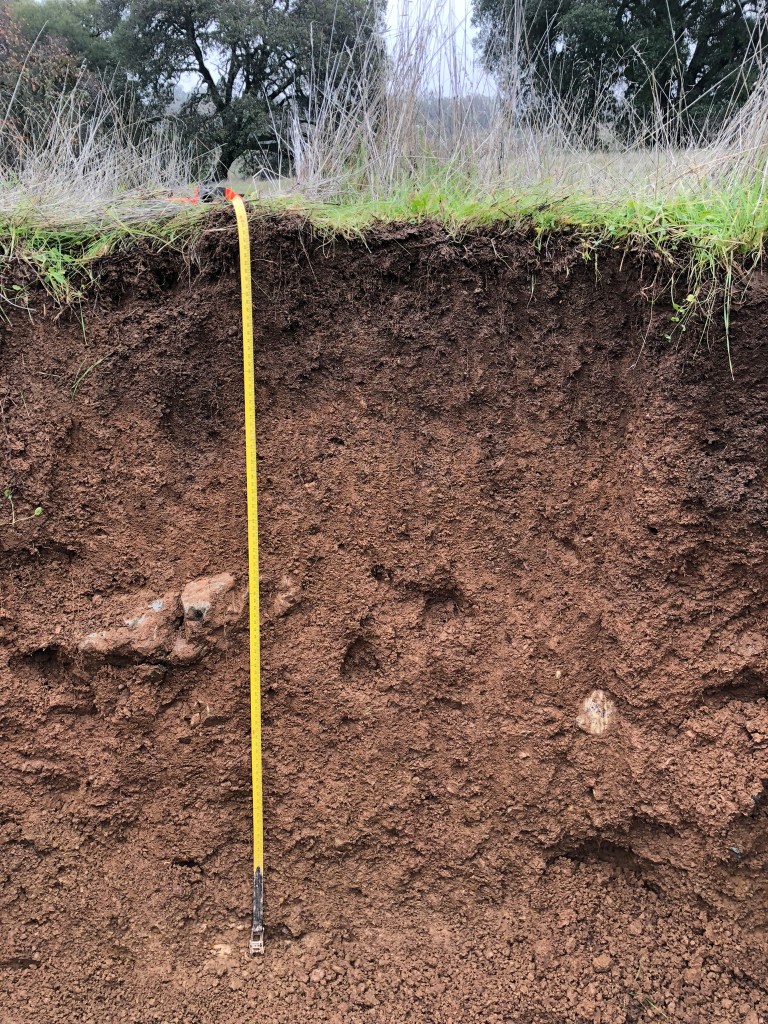
Eric Slessarev is an Assistant Professor at Yale University , affiliated with the Department of Ecology and Evolutionary Biology and the Yale Center for Natural Carbon Capture. His research focuses on soil biogeochemistry, particularly how soil properties influence carbon and nutrient cycling in terrestrial ecosystems, with applications to climate change mitigation strategies like enhanced rock weathering and perennial grass cultivation. Teaches Ecology of Landforms and General Ecology Labs located at KGL 318 (research) and KGL 417 (office) His recent publications highlight interdisciplinary approaches to understanding mineral-organic matter interactions, microbial controls on carbon cycling, and policy implications for soil-based carbon removal strategies. Key methodologies include global data synthesis, isotope tracing, and experimental manipulation of soil-plant systems across depth profiles. Notably, his 2025 work demonstrates drought impacts on carbon persistence, microbial harnessing for CO2 removal, and economic modeling of reversible carbon storage. 2024 studies explore deep-rooted plant effects on carbon fractions, calcium's role in mollisol formation, and policy optimization for carbon sequestration.
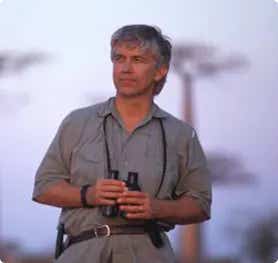
Russell Mittermeier is an Adjunct Professor at the State University of New York at Stony Brook and Chief Conservation Officer at Re:wild. He holds a Ph.D. and M.A. in Biological Anthropology from Harvard University and a B.A. from Dartmouth College (Summa Cum Laude, Phi Beta Kappa). His career spans over 45 years in biodiversity conservation, with fieldwork in 30+ countries, focusing on Amazonia, Atlantic Forest, and Madagascar. Education : Ph.D. and M.A. in Biological Anthropology (Harvard), B.A. (Dartmouth) Mittermeier's research centers on primate and herpetofauna conservation, species discovery (18 new species described), and linking biodiversity to climate change mitigation. He has authored 35 books and over 650 publications, advocating for conservation corridors and partnerships with indigenous communities. His 2015–2019 publications demonstrate interdisciplinary work across primatology, herpetology, and conservation policy, with a focus on tropical ecosystems. Recent studies include taxonomic revisions of titi monkeys, cactus extinction risks, and Amazon turtle hotspots. Scientific Awards : TIME Magazine Hero for the Planet Honorary Doctorate from SUNY Stony Brook Lifetime Honorary IUCN Member Mittermeier collaborates with global institutions like IUCN, Conservation International, and the Margot Marsh Biodiversity Foundation, emphasizing fieldwork, scientific rigor, and community engagement to protect Earth's most vulnerable ecosystems.
Jeremy Wang, PhD is an Assistant Professor in the Department of Genetics at the UNC School of Medicine . His research focuses on applying high-performance computational methods and machine learning to analyze high-throughput sequence data using long-read technologies (e.g., Oxford Nanopore) to advance precision personalized medicine . Key disease areas include Inflammatory Bowel Diseases (IBD) Respiratory Infectious Diseases His lab specializes in microbiome analysis , host-pathogen interactions , and computational genomics , working with collaborators in clinical, translational, and computational domains. His publications demonstrate expertise in long-read sequencing applications for Pediatric cancer classification SARS-CoV-2 genomic epidemiology Microbiome spatiotemporal dynamics Murine disease models Drosophilid genome assemblies Metagenomic bias analysis Collaborations span UNC and global institutions, with current work extending to clinical laboratory partnerships for pathogen sequencing and oral microbiome sampling methodology.
Andrzej Majkowski is an Associate Professor at the Institute of the Theory of Electrical Engineering, Measurement and Information Systems, Faculty of Electrical Engineering, Warsaw University of Technology. His career spans over two decades of research in biomedical engineering, focusing on brain-computer interfaces, signal processing, and emotion recognition. Active in both teaching and research, he contributes to advancing methodologies in electrophysiological signal analysis. Warsaw University of Technology Institute of the Theory of Electrical Engineering, Measurement and Information Systems Faculty of Electrical Engineering Specializing in biomedical engineering , Majkowski's research bridges control systems and information technologies with neuroscience applications. His work explores brain-computer interfaces , EEG/EMG signal processing , and emotion recognition using multimodal physiological data. Recent studies focus on deep learning architectures for artifact removal and classification tasks. Recent publications highlight trends in CNN-LSTM hybrid models for signal denoising, convolutional networks for seizure detection, and machine learning applications in visual evoked potential analysis. His work spans both clinical applications (epilepsy monitoring) and human-computer interaction (emotion recognition, sign language detection). With over 98 documented publications and significant bibliometric indicators (h-index 13 in Scopus), Majkowski has supervised 95 promoted theses. His research includes one funded project and collaborations in biomedical instrumentation, though specific award details remain unspecified in available records.
Professor Jill Edmondson serves as a Professor of Ecosystem Sustainability and NERC Knowledge Exchange Fellow at the School of Biosciences, University of Sheffield, where she has been a Senior Lecturer since 2021. Her research focuses on enhancing ecosystem sustainability and resilience in urban and agricultural contexts through interdisciplinary approaches bridging soil science, plant ecology, and social dimensions. Her core research pillars include: Urban Horticulture , where she leads the national MYHarvest citizen science project quantifying home-grown food production while assessing ecosystem co-benefits and soil pollutant risks; Soil Carbon Dynamics , specializing in black carbon's role in urban soil carbon sequestration; and Urban Forest Ecology , investigating how pollution and infrastructure encasement impact tree health and ecosystem services like heat mitigation. Her work consistently integrates field studies with policy-relevant applications for city planning. Analysis of her 2020-2025 publications reveals intensifying focus on climate adaptation, with dominant themes including urban food security quantification, soil contaminant bioavailability, green infrastructure performance, and urban tree resilience. Methodologically, she pioneers citizen science integration and interdisciplinary field measurements, yielding actionable insights for urban sustainability policy. Her major recognitions include: NERC Knowledge Exchange Fellow (2022-present) EPSRC Living with Environmental Change Fellow (2016-2021) Professor Edmondson supervises undergraduate literature reviews and research projects across multiple programs (MBiolSci, MEnvSci, MSc, MRes), mentoring the next generation of sustainability scientists. Her grant portfolio features competitive fellowships supporting urban ecosystem research with direct policy applications through partnerships with local governments and environmental NGOs. She directs the MYHarvest citizen science initiative and collaborates extensively with the University of Sheffield's Institute for Sustainable Food, leading a multidisciplinary team spanning soil science, ecology, and engineering to develop evidence-based strategies for resilient urban ecosystems.
Dr. Thilina Halloluwa is a Teaching Focused Lecturer in the Department of Human-Centred Computing at The University of Queensland (UQ). He holds a PhD in Human-Computer Interaction from Queensland University of Technology (2019) and a Computer Science undergraduate degree from the Sri Lanka Institute of Information Technology. With over 15 years of academic and industry experience, his research emphasizes real-world impact in education technology, financial inclusion, smart agriculture, and HCI. Educational Background: PhD in Human-Computer Interaction, Queensland University of Technology (2019) Bachelor of Computer Science, Sri Lanka Institute of Information Technology Research Interests: Education for All: Leveraging technology to enhance collaborative learning and social experiences in education. Human Money Interaction: Designing ethical AI solutions for financial services, particularly for underserved communities. Smart Agro: Developing AI-driven tools for crop disease detection, yield optimization, and precision agriculture. Software Project Estimation: Improving effort estimation accuracy through explainable AI (Metrix project). Key Contributions: Developed UrbanAgro (tomato disease detection) and BellCrop (bell pepper disease datasets). Pioneered Dhana Labha , a financial management tool for rural Sri Lankan communities. Advanced online exam proctoring systems for low-resource settings. Previous Roles: Lecturer at University of Sydney (2023) Senior Lecturer at University of Colombo (2013–2023) Lab/Team Affiliations: Smart Agro Project: AI-driven agricultural solutions Metrix Initiative: Software project estimation frameworks
Katrine Eldegard is a Professor at the Norwegian University of Life Sciences (NMBU), Faculty of Environmental Sciences and Natural Resource Management (MINA), Department of Ecology and Natural Resource Management (INA). She leads BatLab Norway and contributes extensively to national and international conservation science policy. Institution: Norwegian University of Life Sciences School: Faculty of Environmental Sciences and Natural Resource Management Department: Department of Ecology and Natural Resource Management Position: Professor Her research centers on understanding how human activities and land use affect natural ecosystems and species across taxa and spatial scales. She specializes in the behavioral, population, and community-level responses of mammals, birds, and insects to anthropogenic pressures such as energy infrastructure, transport networks, and forestry. A major focus is on bat ecology and conservation, pollination dynamics, and biodiversity monitoring in boreal and agricultural landscapes. Her recent publications reveal strong trends in climate change impacts on bat morphology and distribution, pollinator-plant interactions under environmental change, and the ecological consequences of infrastructure development. These works integrate field ecology with advanced modeling and policy-relevant assessments. She has played leading roles in key scientific committees: Chair, Mammal Committee, Norwegian Red List for Species (2021) Chair, Mammal Committee, Norwegian Alien Species List (2023) Member, Norwegian Scientific Committee for Food and Environment (VKM), CITES Expert Panel Norway’s representative, UNEP/Eurobats Advisory Committee Eldegard has supervised numerous research projects and collaborated with government agencies and private partners on applied ecology. She teaches courses including NATF200 Vern og forvaltning av norsk natur and the upcoming NATF300 Conservation Science. Her work is supported by extensive fieldwork, interdisciplinary collaboration, and integration of ecological theory with practical conservation. She leads BatLab Norway, a research group dedicated to advancing knowledge on bat ecology, behavior, and conservation through innovative methods including telemetry, acoustic monitoring, and landscape analysis.
Charless Fowlkes is a Professor in the Department of Computer Science at the University of California, Irvine (UCI). His research focuses on computational vision, spanning human visual system understanding, machine vision systems, and applications in biomedical informatics and forensic science. He holds a Ph.D. from UC Berkeley (2005). His work integrates techniques from computer vision, AI, and applied mathematics to address challenges in automated biological data analysis, morphology, and spatial gene expression. Key research areas include forensic science (e.g., shoeprint matching via 3D reconstruction), biomedical applications (e.g., heart function mapping and pollen classification), and AI-driven systems for scene understanding. Recent projects include a $20M forensic science center funded by the National Institute of Justice. His publications emphasize geometric reasoning, 3D reconstruction, and adaptive learning algorithms. Notable contributions include developing algorithms for 3D human pose estimation with scene constraints, automated pollen identification via CNNs, and frameworks for cross-domain forensic analysis. His work bridges theoretical computer vision with real-world applications in forensics, healthcare, and environmental science.
Emine Ayaz is a Professor at Istanbul Technical University's Department of Electrical Engineering. Her research spans fault detection in electric motors, signal processing, and nuclear power plant monitoring, with recent work integrating deep learning (e.g., dual RNN architectures) and medical applications (e.g., parasitology, plant-based wound healing). Key Collaborations : International partnerships in motor diagnostics and nuclear engineering. Projects : Led grants on high-voltage training and predictive maintenance for TEİAŞ and industrial processes. Research Trends : Recent publications emphasize neural networks for motor fault classification, coherence analysis for insulation diagnostics, and interdisciplinary work in plant biotechnology and parasitology. Labs & Teams : Involved in projects analyzing vibration signals, wavelet transforms, and sensor fusion for industrial and nuclear systems.
Scott E. Miller is Senior Biodiversity Advisor, Senior Research Entomologist, and Curator of Lepidoptera at the Smithsonian's National Museum of Natural History. He has held numerous leadership positions including Deputy Under Secretary for Collections and Interdisciplinary Support, Deputy Under Secretary for Science, Associate Director for Science at the Smithsonian's National Zoological Park, and Interim Director of Smithsonian Libraries and Archives. Prior to the Smithsonian, he held leadership roles at the International Centre of Insect Physiology and Ecology in Nairobi, Kenya, and the Bishop Museum in Honolulu, Hawaii. Miller earned his BS from the University of California at Santa Barbara and his PhD from Harvard University. His academic journey has been marked by significant contributions to entomology and biodiversity research. Dr. Miller's research focuses on the integration of systematics, ecology, biogeography and conservation of insects and plants. His current work uses museum-based taxonomy and systematics to mobilize biodiversity information to empower ecology, conservation, and agriculture. Major research themes include moth systematics, biogeography and phylogenomics (particularly Dalceridae, Geometridae, and other families), insect food web and ecology projects in Papua New Guinea, Kenya and elsewhere, and building DNA reference libraries from museum vouchers for ecological applications. He has been instrumental in developing DNA-based identification tools through initiatives like the Consortium for the Barcode of Life. His recent publications demonstrate a strong focus on biodiversity informatics, DNA barcoding, and the application of museum collections to contemporary ecological questions. Miller's work spans tropical ecology, systematics, and the development of new methodologies for biodiversity assessment, with significant fieldwork conducted in Papua New Guinea, Kenya, and other biodiversity hotspots. Dr. Miller has contributed significantly to scientific infrastructure development, including co-chairing the US Government's Interagency Working Group on Scientific Collections and helping establish the Consortium for the Barcode of Life. His leadership extends to international scientific collaboration and the development of research centers like Mpala Research Centre in Kenya. As Senior Biodiversity Advisor, he oversees major initiatives that connect museum collections with contemporary biodiversity challenges. His laboratory and team focus on leveraging the extensive moth collections at NMNH for phylogenomic studies and ecological applications, working closely with international collaborators on projects spanning multiple continents.
Matthew D. Barrett is a researcher at James Cook University , specializing in plant systematics and fungal taxonomy. His work spans diverse areas including angiosperm phylogenomics, fungal biodiversity, and conservation biology of rare Australian flora. Research Focus : Phylogenomic analysis, fungal systematics, and ecological adaptations of Australian plant species. Publications : Contributed to major studies in Nature , Studies in Mycology , and Telopea , with a particular emphasis on Western Australian endemics. His recent publications highlight integrative approaches combining morphological and molecular data for taxonomic revisions, particularly in Basidiomycota and Orchidaceae.
Nathan G. Swenson is a Professor in the Department of Biological Sciences at the University of Notre Dame and serves as the Gillen Director of the Environmental Research Center (UNDERC). He has held prior academic positions at the University of Maryland and Michigan State University, advancing from Assistant to full Professor. His research integrates genomics, ecology, and evolutionary biology to understand forest biodiversity and dynamics. Research Interests: Ecology and Environmental Biology Evolutionary Biology Genetics and Genomics Global Change Biology Forest Ecology Functional and Phylogenetic Ecology Tree Physiology and Demography His research focuses on leveraging intra- and interspecific variation in tree performance to predict forest biodiversity patterns. He employs integrative approaches from genomes to forest canopies and utilizes large-scale global datasets. Recent publications emphasize intraspecific trait variation, transcriptomic responses to drought, ecological forecasting, and functional group dynamics in tropical and temperate forests. Scientific Awards: Winner of 2017 British Ecological Society John Harper Prize (awarded to J. Zambrano; Swenson was senior author) Advising and Grants: Dr. Swenson has mentored numerous researchers, including M.N. Umana, S.J. Worthy, and J. Yang, who frequently co-author high-impact papers. His lab receives substantial research funding, evident from large collaborative projects and participation in global networks like ForestGEO and the TRY plant trait database. He has secured support for long-term ecological research, genomic studies, and international fieldwork. Labs and Teams: He leads the Swenson Lab, which conducts research on woody plant ecology in dynamic environments. The lab emphasizes community transcriptomics, functional trait analysis, and large-scale ecological modeling. It collaborates widely across institutions and is involved in major initiatives such as ForestGEO and NEON.
Charles C. Davis is a Professor of Organismic and Evolutionary Biology at Harvard University and Curator of Vascular Plants in the Harvard University Herbaria. He leads the Davis Lab, focusing on plant diversity through integrative research in systematics, paleobiology, ecology, and molecular biology. His work emphasizes phylogenetic theory, biogeography, and the application of herbarium collections to address global change challenges. Davis is particularly noted for leveraging herbarium specimens to study plant responses to climate change, phenology, and biodiversity patterns. Research interests include plant-insect interactions, genome architecture evolution in parasitic plants, and the ethical use of herbarium specimens. His lab has pioneered high-throughput phylogenomic pipelines (e.g., PhyloHerb) and explored the future of herbaria in the digital age. Collaborations span global institutions, emphasizing digitization, spectral imaging, and AI-driven analysis of biodiversity data. Recent work highlights the impact of anthropogenic change on plant communities, the role of phenology in species survival, and strategies to mitigate collecting biases in herbaria. Davis teaches courses on plant systematics and evolution, and his lab actively participates in public engagement through exhibits like the HMNH’s *In Search of Thoreau’s Flowers*. His research has been featured in *Trends in Ecology & Evolution*, *Molecular Phylogenetics and Evolution*, and *Current Biology*, with a focus on advancing methodologies for biodiversity science while addressing ethical challenges in specimen sampling.
Jonathan Dennis, PhD, is a Professor in the Department of Biological Sciences at the University of Alberta. He specializes in Molecular Microbiology with a focus on bacterial pathogenesis, antibiotic resistance, and phage therapy. His research targets the Burkholderia cepacia complex (Bcc), a group of opportunistic pathogens causing severe infections in cystic fibrosis patients. He develops bacteriophage-based therapies to combat antibiotic-resistant bacteria. He teaches courses such as GENET 270, MICRB 316, and MICRB 516. His research combines genetic and genomic approaches to identify virulence factors in Bcc and explores phage isolation, characterization, and aerosol delivery for clinical applications. Key projects include phage-antibiotic synergies and phage therapy efficacy in animal models. He has pioneered the use of Galleria mellonella larvae and rice plant models for infection studies. Dr. Dennis leads a lab with expertise in phage genomics, synthetic biology, and respiratory infection treatments. His work aims to overcome antibiotic resistance through phage cocktails and modified phages. He collaborates on developing inhalable phage powders and investigates phage-mediated virulence reduction in bacteria.
Dr. Richard Y. Zhao is a tenured Professor in the Department of Pathology and Microbiology-Immunology at the University of Maryland School of Medicine. His research combines molecular biology, fission yeast genetics, mammalian biology, and virology to study virus-host interactions, particularly for HIV and Zika virus. He previously held academic positions at Northwestern University and Columbia University and has contributed to over 120 peer-reviewed articles. B.S., China Oceanography University (1981) M.S., Oregon State University (1995) Ph.D., Oregon State University (1991) Postdoctoral Training, Columbia University (1991-1992) Dr. Zhao's research focuses on: Virus-host interactions and pathogenicity High-throughput drug screening for antivirals Role of viral proteins in neuroinflammation and cancer Translational genomics in precision medicine His recent publications highlight SARS-CoV-2 ORF3a, Zika envelope proteins, and HIV protease inhibitors, emphasizing host-pathogen mechanisms across species. He has served on NIH panels and editorial boards for journals like Cell Research and Retrovirology . Scientific awards include: Fellow, American Academy of Microbiology (2019) Bernard L Mirkin Endowed Chair (2001-2004) Honorary Director, Shandong Gallo Institute (2009) Distinguished Service from SCBA (2015) Outstanding Service from CBA-USA (2016) Dr. Zhao also contributes to clinical diagnostics and personalized medicine through molecular testing and pharmacogenetics programs.