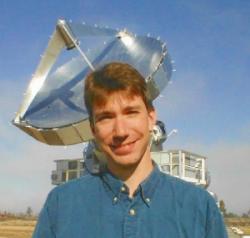
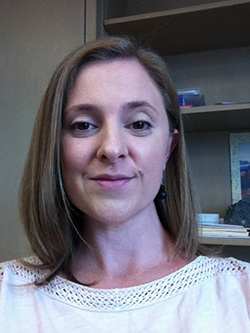
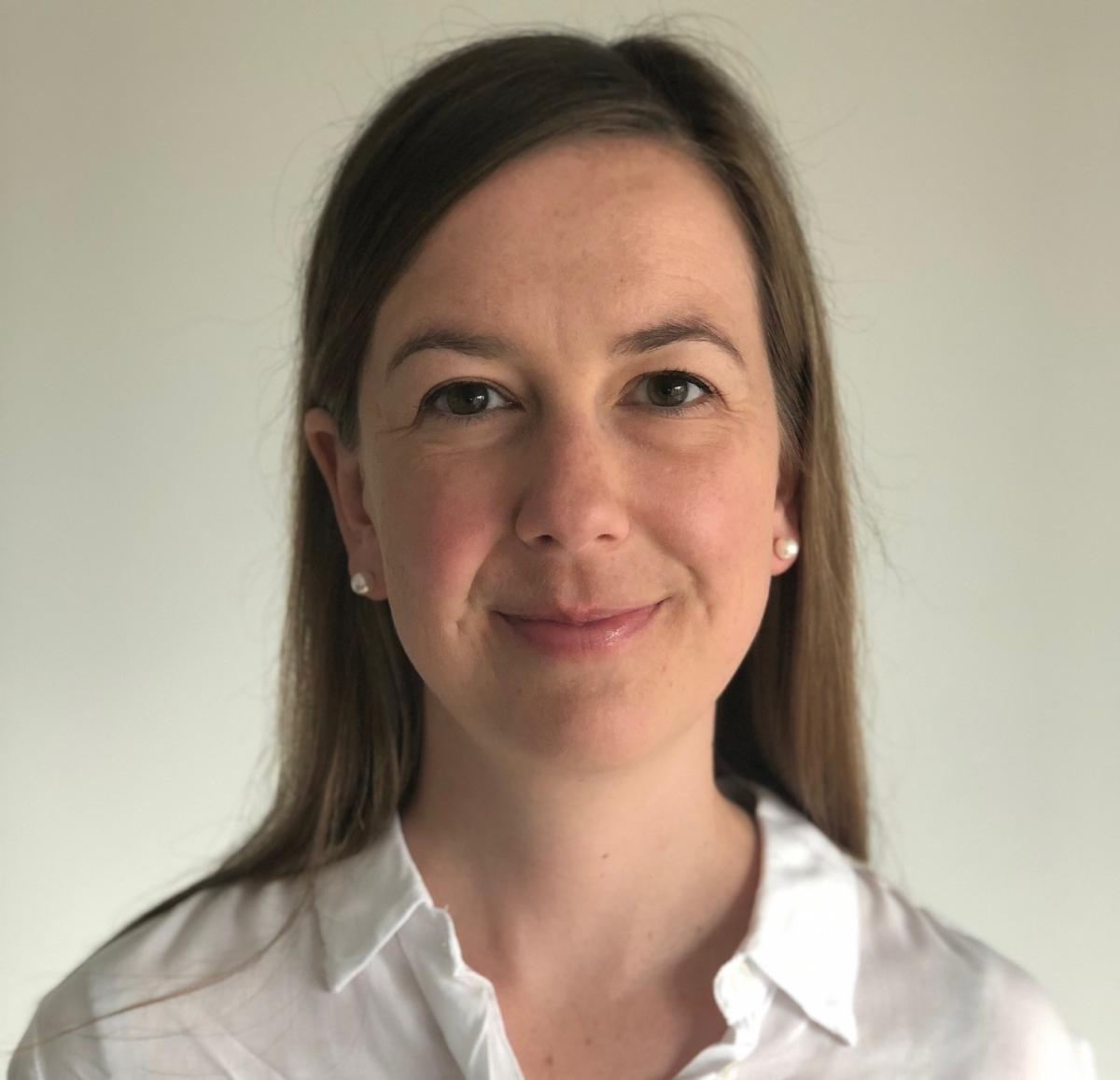
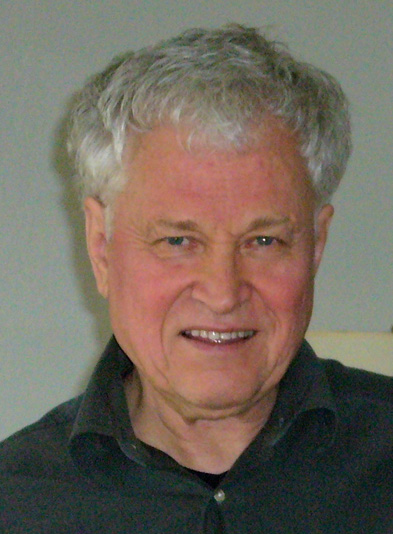
Giang Nguyen is a Postdoctoral Researcher at McGill University. He holds a Master's and PhD from York University, supervised by John Moores. His research focuses on planetary environments, including Martian polar caps and volatile trapping mechanisms in airless bodies. Currently, he develops atmospheric models for lava planets like K2-141b, which are critical for detecting terrestrial atmospheres beyond the Solar System. His work bridges planetary climate dynamics and exoplanet characterization, emphasizing how polar regions and mineral atmospheres inform planetary evolution. Giang's research highlights lava planets as optimal targets for studying extraterrestrial atmospheres due to their high signal-to-noise ratios.
Jess F. Adkins is the Smits Family Professor of Geochemistry and Global Environmental Science at the California Institute of Technology (Caltech), within the Division of Geological and Planetary Sciences. He holds a Ph.D. from MIT and a B.S. from Haverford College. His research focuses on geochemical investigations of past climates using corals, sediments, and interstitial waters, with emphasis on deep ocean circulation, metal tracers, radiocarbon, and sulfur biogeochemistry. Education: B.S., Haverford College, 1990; Ph.D., MIT, 1998. Professional roles include Professor at Caltech since 2010, Associate Professor (2006–2010), and Assistant Professor (2000–2006). He has led numerous sea expeditions, including chief scientist roles on the R/V Atlantis and R/V Thompson. Research interests span chemical oceanography, paleoclimatology, and biomineralization. Notable awards include Fellowships from the American Geophysical Union and Geochemical Society, the Shackleton Medal, and the Chow Lecture. His work integrates field studies, lab experiments, and theoretical models to understand climate evolution and ocean dynamics. Teaching includes courses like Ge/ESE 149 (Marine Geochemistry), Ge/ESE 154 (Readings in Paleoclimate), and ESE/Ge 142 (Aquatic Chemistry of Natural Waters). His lab group explores cutting-edge methods in coral dating, porewater analysis, and isotopic tracing to uncover Earth's climate history.
Bradley L. Jolliff is the Scott Rudolph Professor of Earth, Environmental, and Planetary Sciences at Washington University in St. Louis, where he also directs the McDonnell Center for the Space Sciences. He holds a PhD from the South Dakota School of Mines and Technology. His research focuses on planetary materials, including lunar and Martian geology, using techniques like electron microprobe analysis and remote sensing. He leads the Planetary Materials Research Group and is a key figure in the NASA ANGSA program analyzing Apollo samples. His work integrates sample studies with orbital data, particularly for the Moon and Mars. Research interests include mineralogy/petrology of planetary materials, volcanic processes, impact cratering, and space weathering. He collaborates on projects such as Lunar Reconnaissance Orbiter imaging, Martian meteorite analysis, and Chang’e-5 sample studies. His teaching includes advanced courses like Planetary Materials (EPSc 567). Jolliff also contributes to Artemis mission planning, emphasizing volatile studies and landing site selection. Key collaborations involve Dr. Alian Wang on spectroscopy, Dr. Randy Korotev on lunar meteorites, and Dr. Kun Wang on geochemical analyses. He developed the Quantitative Microanalysis Explorer tool for sample visualization. Recent work includes investigating Taurus-Littrow Valley geology and silicic volcanism in the Moon's South Pole-Aitken Basin.
Ryan Ogliore is an Associate Professor of Physics at Washington University, specializing in astrophysics and the evolution of the Solar System. He is affiliated with the McDonnell Center for the Space Sciences, the Institute of Materials Science & Engineering, and the Department of Physics. He holds a PhD, MS, and BA from the California Institute of Technology and Claremont McKenna College, respectively. His research focuses on analyzing extraterrestrial materials such as comet Wild 2 samples, asteroid Ryugu grains, lunar samples, and interplanetary dust particles. Techniques include secondary ion mass spectrometry (SIMS) and synchrotron methods to study planetary formation, transport dynamics, and space environmental interactions. Recent work includes studies on Mars Sample Return and Io sample return missions. He teaches Physics I (Physics 191), a calculus-based course covering classical mechanics and relativity. His group collaborates on NASA missions and contributes to understanding planetary processes through sample analysis. Current projects involve investigating lunar volcanic gas chemistry, Martian atmospheric sampling, and plume dynamics on Io.
Marco Fiorentini is a Professor at The University of Western Australia (UWA), affiliated with the School of Earth Sciences and the International Space Centre. He holds roles including Deputy Head of the School of Earth Sciences, Senior Research Leader at the Centre for Exploration Targeting (CET), and former Node Director of the ARC Centre of Excellence for Core to Crust Fluid Systems. His research focuses on igneous petrology, isotopic geochemistry, and magmatic mineral systems, particularly sulfur and metal cycles in the lithosphere. He has secured over AUD$25M in funding and supervised over 30 students. Awards include the 2022 School of Earth Sciences Senior Research Award. Education: PhD from UWA/Monash University (2004), industry-funded AMIRA project. Research interests include planetary evolution, ore deposit dynamics, and sustainable mineral exploration. His work bridges fundamental science and industry applications, with tools like sulfur isotope mapping and zircon-based exploration indicators. Collaborations span global institutions and industries (e.g., BHP, Rio Tinto). Current projects address fluid dynamics in magmatic systems and Earth-Mars metal cycles. Publications (selected 15 most recent) reflect expertise in sulfide systems, mantle processes, and ore genesis. Awards highlight contributions to mineral system science.
Michiel Hogerheijde: Academic Overview Dr. Michiel Hogerheijde is an Associate Professor and Education Director at Leiden University's Leiden Observatory. His primary research focuses on the origin of planetary systems, utilizing (sub)millimeter and infrared astronomy to study protostellar cores, protoplanetary disks, and cometary composition. He leads observational campaigns with instruments like the James Clerk Maxwell Telescope, ALMA, and Spitzer, and develops radiative transfer models to interpret data. Education & Affiliations Leiden Observatory, part of Leiden University's Faculty of Science, is his primary affiliation. He has held roles such as Programme Director for the MSc Astronomy program and temporary Programme Director. His work involves collaborations with institutions like UC Berkeley (as a Miller Fellow) and the Netherlands Research School for Astronomy (NOVA). Research Interests Hogerheijde's research spans star formation, disk dynamics, and astrochemistry. Key themes include: - Protoplanetary disk structure and evolution, - Molecular line and dust continuum observations, - Interferometric techniques (e.g., ALMA, SMA), - Cometary volatile content as a probe of solar system history. Awards & Grants VIDI Grant (NWO, 2004) for studying planet-forming disks with submillimeter facilities. Advising & Grants He supervises PhD and postdoc researchers, including current candidates Osmar Guerra Alvarado and Luna van Haastere. Notable former advisees include Olja Panic (PhD 2009) and Demerese Salter (PhD 2011). His research group focuses on observational and theoretical studies of disks, with grants supporting instrumentation development and data analysis. Labs & Teams He leads the Allegro project, the ALMA Regional Center node in the Netherlands, and collaborates with the laboratory astrophysics group of Prof. Ewine van Dishoeck. His team includes postdocs (e.g., Pamela Klaassen, Attila Juhasz) and students working on disk chemistry, hydrodynamics, and radiative transfer modeling.
Rita Economos is a Research Professor and Adjunct Faculty at Southern Methodist University. Her research focuses on magma processes, including crystallization, degassing, and eruption dynamics, with an emphasis on understanding these processes through geochronology and geochemistry. She specializes in analyzing stable isotope ratios of volatile elements (e.g., sulfur, chlorine, oxygen) in minerals like apatite to reconstruct magma behaviors in ancient and modern systems. Research Interests: Volatile element behavior in magmas, igneous processes on planetary bodies (Moon, Mars), and the interplay between tectonics and magmatism. Analytical Methods: Secondary Ionization Mass Spectrometry (SIMS), Field Emission Scanning Electron Microscopy (FE-SEM), and cathodoluminescence. Her current projects include studying volatile histories in lunar apatites, tectonic evolution in the Mojave Desert, and the Sesia Magmatic System in the Italian Alps. She employs novel isotope proxies to quantify magma dynamics and explores the geologic record of super-eruptions. Fieldwork and structural analysis are central to her research, with a focus on mapping and sampling in diverse geologic settings. Her work bridges terrestrial and extraterrestrial igneous systems, contributing to understanding volcanic hazards, resource formation, and planetary evolution.
Jens Hoeijmakers is an Associate Senior Lecturer in the Department of Physics at Lund University, specializing in astrophysics with a focus on exoplanet atmospheres and transmission spectroscopy. He is a Principal Investigator in the eSSENCE collaboration, contributing to projects like the ANDES spectrograph for the Extremely Large Telescope (ELT). His research explores atmospheric composition, dynamics, and chemistry of exoplanets, particularly ultra-hot Jupiters, using advanced instruments such as ESPRESSO and CRIRES+. He investigates topics like titanium chemistry, volatile/refractory ratios, and atmospheric oxidation processes, with implications for planetary habitability and formation. Collaborations include studies of exoplanet transits, stellar abundances, and the development of observational techniques for future missions. Key research interests include high-resolution spectroscopy, exoplanet dynamics, and the application of machine learning to spectral analysis. Notable projects include the HEARTS survey (Hot Exoplanet Atmospheres Resolved with Transit Spectroscopy), the Mantis Network for template-based analyses, and the Hot Rocks Survey to study terrestrial exoplanets. His work bridges observational astrophysics with theoretical models, advancing understanding of planetary atmospheres and their evolution. Publications highlight contributions to exoplanet atmospheric characterization, including studies of WASP-121b, KELT-9b, and WASP-189b. He actively participates in international collaborations, leveraging cutting-edge instruments and methodologies to push the frontiers of exoplanet science.
Jennifer Bhatnagar is an Associate Professor in the Department of Biology at Boston University, affiliated with the College of Arts and Sciences. She holds a PhD from the University of California, Irvine, and leads research focused on microbial ecology, biogeochemistry, and ecosystem science. Her work explores the biochemical mechanisms by which fungi drive large-scale biogeochemical processes, particularly in forest ecosystems. Key research areas include fungal species interactions, mycorrhizal symbiosis, and microbial responses to climate change. Dr. Bhatnagar’s research integrates biochemical analyses, sequencing technologies, and computational modeling to study fungal roles in nutrient cycling, decomposition, and stress adaptation. Her current projects investigate molecular mechanisms of fungal interactions, secretome dynamics in plant-fungal associations, and microbial resilience to climate shifts. She maintains an active lab group and collaborates on interdisciplinary studies linking microbiome data to ecological forecasts. Education: PhD in Biology, University of California, Irvine Lab Website: https://microbesatbu.wordpress.com/ Focus Areas: Fungal Ecology, Biogeochemical Cycles, Climate Change Impacts Publications highlight her contributions to understanding fungal-driven processes in soils, including studies on ectomycorrhizal symbiosis, litter decomposition, and microbiome predictability. Her work bridges microbial biology with ecosystem-level phenomena, informing strategies for ecosystem restoration and climate resilience.
Dr. Stamatis Flemetakis is a Lecturer at the Department of Earth and Planetary Sciences at ETH Zurich, affiliated with the Institute of Geochemistry and Petrology (GeoPetro). His research focuses on experimental geochemistry, mantle dynamics, and volatile cycles, particularly investigating processes in subduction zones, mantle metasomatism, and the behavior of halogens and isotopes in magmatic systems. His work combines experimental petrology with analytical techniques to understand Earth's deep processes. Key research areas include: Thermal stability of minerals (e.g., phlogopite, antigorite) in mantle environments Halogen partitioning in melts and minerals Chlorine isotope behavior in subduction zones Geochemical tracers for mantle source characterization He teaches courses such as Composition and Evolution of the Earth and Planets and has published extensively on topics like volatile cycling, experimental mineral stability, and magmatic processes. His experimental work often involves high-pressure/high-temperature conditions to simulate mantle and subduction zone environments. Laboratory affiliations include the Institute of Geochemistry and Petrology at ETH Zurich, where he utilizes advanced analytical facilities for microprobe analysis and geochemical experimentation.
Dr. Razvan-Gabriel Popa is a Lecturer at the Department of Earth and Planetary Sciences, ETH Zurich. He specializes in volcanology, geochemistry, and petrology, with a focus on magma processes, eruption dynamics, and geotourism potential analysis. His recent research explores caldera cycles, magma storage conditions, and the interplay between volatile content and eruption styles. He teaches courses such as 'Microscopy of Magmatic Rocks' and 'Seminar I: Heat and Mass Transfers in Magmatology.' His work combines field studies with analytical techniques like isotopic dating and spectroscopic methods to understand volcanic systems and their environmental impacts. Notable contributions include studies on Nisyros-Yali and Aso volcanoes, emphasizing magma chamber dynamics and eruption triggers. Dr. Popa also investigates interdisciplinary topics like geotourism development in Romania's Buzău region.
Dr. My Riebe is a Lecturer at the Department of Earth and Planetary Sciences, ETH Zürich, within the Institute of Geochemistry and Petrology. She holds a PhD in Cosmochemistry from ETH Zürich (2016) and is currently pursuing a Master of Advanced Studies in Management, Technology, and Economics. Her research focuses on solar system formation and evolution using extraterrestrial materials, particularly volatile elements and organics. Key tools include noble gas mass spectrometry, Raman spectroscopy, and SEM. She leads the Lunar Gateway dust science team at ESA and contributed to JAXA’s Hayabusa2 mission analyzing Ryugu samples. She teaches agile project management and geochemistry courses at ETH. Education: B.Sc./M.Sc. in Geology from Lund University (2012), PhD in Cosmochemistry (2016), and ongoing MAS in Management (2023–2025). Research funding includes a SNSF Ambizione Fellowship (CHF 903,697) and NASA Emerging Worlds grants. Awards include the SNSF Early Postdoc Mobility Award. Research emphasizes micrometeorite analysis, atmospheric entry effects, and protoplanetary disk chemistry. She chairs the Meteoritical Society’s McKay Award Committee and serves on ESA’s ASTERIA team. Supervised 10+ students in PhD/MSc projects. Active in conference organization (e.g., Goldschmidt 2020, Noble Gas workshops). Key projects include Lunar Gateway dust studies, Hayabusa2 sample analysis, and experimental work on micrometeorite heating effects. Her work bridges cosmochemistry with management innovations for academic research teams.
Herbert Palme is a renowned geochemist and former Professor of Mineralogy and Geochemistry at the University of Cologne (1994–2008). He holds a Ph.D. in nuclear physics from the University of Vienna (1971) and habilitation in mineralogy from the University of Mainz (1985). His research focuses on meteoritics, mantle and core geochemistry, and cosmochemistry. Palme has held positions at the Max-Planck-Institut für Chemie, the University of Chicago, and the Lunar and Planetary Laboratory. He currently collaborates with the Senckenberg Research Institute in Frankfurt. Education: Ph.D. (1971), University of Vienna; Habilitation (1985), University of Mainz Key Positions: Max-Planck-Institut für Chemie (1971–1994), University of Cologne (1994–2008) His research explores elemental abundances in planetary bodies, core formation processes, and isotopic chronometry. Palme has contributed to understanding lunar differentiation, asteroid accretion, and mantle dynamics. His work has been recognized with prestigious awards, including the Leonard Medal (2003) and Urey Medal (2006). Professional service includes editorial roles at journals like Geochimica et Cosmochimica Acta and leadership in organizations such as the Meteoritical Society and the German Mineralogical Society. His contributions span cosmochemical modeling, experimental geochemistry, and planetary science.
Claudia Romano is a Full Professor at the Department of Sciences, Università Roma TRE since 2019, with prior roles as Associate Professor (2014-2019) and Researcher (1996-2014) at the same institution. Her career spans experimental volcanology, magma dynamics, and mineralogical analysis, with a focus on volcanic processes and thermal maturity of organic matter. Education: PhD in Earth Sciences (1994) and Laurea in Earth Sciences (1990) from University of Rome ‘La Sapienza’ Romano’s research bridges volcanic processes (magma transport, eruption dynamics, degassing) with material properties (electrical conductivity, structural characteristics of melts and minerals). Her work integrates experimental data with field observations, particularly in the Phlegraean Volcanic District and Somma-Vesuvius area. Recent publications highlight her expertise in Raman spectroscopy for thermal maturity assessment, magma rheology , and conduit dynamics . These studies span Chemical Geology , Lithos , and Marine and Petroleum Geology , reflecting interdisciplinary applications to geodynamics and energy systems. Scientific Honors: Best PhD Thesis in Earth Science (S.I.M.P, 1995) As a mentor, she has supervised/co-supervised 12 PhD students and numerous master’s students over 26 years of teaching. She leads the Laboratory of Experimental Volcanology and Petrology (EVPlab) and serves as Chief Editor of Chemical Geology and Editor of Minerals . Her 200+ conference participations and editorial roles underscore her leadership in earth and planetary sciences.
Wendy Bohrson is a Professor in the Department of Geology and Geological Engineering at the Colorado School of Mines. Her research focuses on understanding physical and chemical changes in magmas during crustal storage and transport, with a particular emphasis on open-system thermodynamic modeling. She develops computational tools like the Magma Chamber Simulator (MCS) to track compositional and phase equilibria in evolving magmas. Key research interests include magma mush processes, crustal magmatism, timescales of melt/crystal aggregation, and linking petrologic data with geophysical signals at active volcanoes. Education background and affiliations: Her academic career includes positions at Colorado School of Mines and collaborations with institutions globally. She has authored/co-authored over 100 peer-reviewed articles since 2012, focusing on volcanic systems, planetary magmatism, and computational modeling. Research highlights include studies on the Steens Basalt, Mount Etna eruptive records, and lunar magma ocean dynamics. Her work integrates experimental petrology, geochemical analysis, and computational simulations to unravel magmatic processes. Projects often combine fieldwork with advanced modeling to address questions like crustal contamination, magma mixing, and eruption dynamics. Grants and funding support her research into flood basalt systems, magma chamber dynamics, and planetary crust formation. She contributes to STEM education initiatives like the Science Talent Expansion Program (STEP) at Central Washington University. Labs/teams: She leads the Computational Petrology Group at Mines, focusing on open-source tools like MCS. Collaborations include international volcano observatories and planetary science institutions.