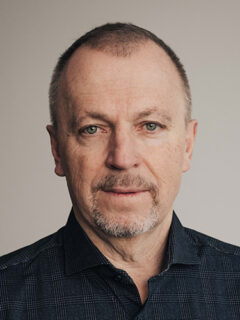
John Redmond is Professor of English Literature at the University of Liverpool's School of the Arts, specializing in contemporary poetry and creative writing. He holds a D.Phil and is an established poet with three collections published by Carcanet Press. His critical work examines privacy in poetic interpretation and Irish literary traditions. Research intersects creative practice with critical analysis, exploring poetry's relationship with folk drama, online culture, and food (gastro-criticism). Authored the textbook 'How to Write a Poem' and edited James Liddy's Selected Poems. Current projects include a novel and new poetry collection. Regularly participates in literary events including readings at the Anthony Burgess Foundation and Christ Church, Oxford. Chairs the School Extenuating Circumstances Committee and contributes to the Centre for New and International Writing.
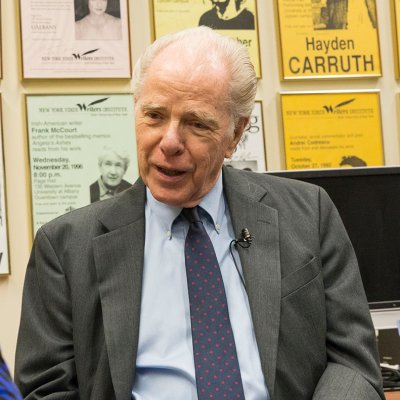
William Kennedy is a Professor in the English Department at the University at Albany, State University of New York. For over 40 years, he has crafted a body of literature centered on Albany, New York, creating what is known as the "Albany Cycle" of novels. His work has established Albany as a significant place in American literature, comparable to Joyce's Dublin and Bellow's Chicago. His educational background includes a BA from Siena College, following attendance at Public School 20 and Christian Brother's Academy. Professor Kennedy's creative work focuses on American fiction, particularly historical and urban narratives rooted in Albany's cultural and political landscape. His writing explores machine politics, family sagas, and the interplay between individual lives and historical events, rendering Albany's "outcasts and machine politicians, lowlifes and swells" with profound humanity. His narratives transform the city into a mythic capital of national memory. His publications consistently draw from Albany's history, with recurring themes of political corruption, redemption, and the resilience of marginalized communities. The "Albany Cycle" demonstrates his mastery in blending local history with universal human struggles across multiple literary forms. William Kennedy's distinguished honors include: John D. and Catherine T. MacArthur Foundation Fellowship Election to the American Academy of Arts and Letters National Endowment for the Arts Fellowship Regents Medal of Excellence from SUNY Governor's Arts Award Commander of the Order of Arts and Letters in France Election to the American Academy of Arts and Sciences As an educator, Kennedy taught creative writing and journalism at the University at Albany from 1974-1982 and Cornell University in 1982-83. His MacArthur Fellowship directly funded the creation of the New York State Writers Institute at Albany, with matching funds from the university and legislative support from Governor Cuomo. He has served on the New York State Council for the Humanities board and the Academy of Motion Picture Arts and Sciences. William Kennedy co-founded the New York State Writers Institute in 1984, which has grown into a major literary hub conducting statewide cultural and educational activities. The Institute remains central to his legacy, fostering literary arts through readings, workshops, and educational programs across New York.
David Harvey is a Distinguished Professor of Anthropology and Geography at the City University of New York (CUNY) Graduate Center and Director of Research at the Center for Place, Culture and Politics. He has been teaching and writing about Karl Marx’s Capital for over 50 years, earning recognition as a leading Marxist scholar and urban theorist. Research Interests Cultural anthropology Political economy Urbanization and capitalist development Environmental justice Geographical theory Advanced capitalist countries Publications & Trends Harvey’s work spans Marxist theory, neoliberalism, and urban studies, with recent focus on Grundrisse and capitalist contradictions. His scholarship connects historical materialism to contemporary crises, emphasizing spatial fixes, environmental limits, and anti-capitalist resistance. Awards & Honors Outstanding Contributor Award (Association of American Geographers) Centenary Medal (Royal Scottish Geographical Society, 2002) Isaac and Tamara Deutscher Book Prize (2010) for The Enigma of Capital Honorary degrees from University of Bristol, Goldsmith College, Kent, Buenos Aires, Roskilde, Uppsala, and Ohio State University
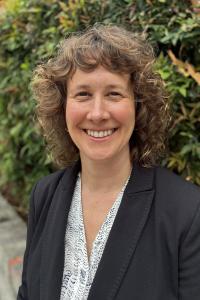
Kathleen R. McNamara is Professor of Government and Foreign Service at Georgetown University, where she also co-founded the Global Political Economy Project with Professor Abe Newman. Her work centers on the European Union, globalization, and the cultural and political foundations of market authority. Her research interests include the political economy of the European Union, monetary politics, culture and identity in global markets, institutional change, and the democratic legitimacy of supranational governance. She examines how ideas, norms, and collective identities shape economic integration and state formation, especially in Europe. Her recent publications (2020–2024) reveal a strong focus on the EU’s geopolitical turn, industrial policy transformation, the impact of crises like COVID-19 on globalization, and the interplay between democracy and populism. These works reflect a deep engagement with both theoretical and policy-relevant dimensions of contemporary European and global political economy. International Studies Association 2018 Distinguished Scholar in International Political Economy ISA 2020 SWIPE Award for Mentoring Women in International Political Economy German Marshall Fund Fellow Fulbright Fellow Simone Veil Fellow at the European University Institute (2023) McNamara has been a visiting scholar at the Russell Sage Foundation, taught at Princeton University and Sciences Po (Paris), and advised the US National Intelligence Council. She is active in public scholarship, writing for Foreign Affairs , Foreign Policy , and The Washington Post . She is a founding figure in the Global Political Economy Project, which aims to reframe the study of global markets through interdisciplinary and critical lenses.
Jiwon Min serves as a Visiting Assistant Professor in the Department of English at Emory University, teaching undergraduate courses including ENG 185 Writing and Inquiry in the Liberal Arts and ENG 256 Survey of English Literature since 1660. Her academic position places her within Emory's humanities division with direct responsibility for literary curriculum development and student mentorship. Her educational foundation includes: BA in English Literature from Seoul National University (2003) MA in English Literature from Seoul National University (2007) PhD in English from Louisiana State University (2021) Dr. Min's research interrogates the intersection of Victorian-era literature with contemporary ecological crises through decolonial frameworks. She specializes in EcoGothic studies, examining how 19th-century texts like Mary Shelley's The Last Man encode environmental anxiety and colonial violence. Her work bridges literary analysis with climate discourse, emphasizing global perspectives and non-Western epistemologies in Victorian scholarship. Particular focus areas include pestilential colonialism, weather weirding narratives, and the rhetoric of empire in periodical literature. Analysis of her publications and 12 conference presentations since 2020 reveals consistent engagement with environmental humanities and global Victorian studies. Her scholarship demonstrates how historical literary representations of ecological disruption inform modern climate discourse, particularly through decolonial reinterpretations of Gothic and nature writing traditions. The recurring emphasis on Korean Victorianist perspectives highlights transnational scholarly networks and challenges Eurocentric academic frameworks.
Marianna Patrick is a Research Fellow at the School of Education, Learning and Communication Sciences (SELCS), University of Warwick. She holds a PhD in Intercultural Communication (2025), MA in Global Communication from the Chinese University of Hong Kong (2013), and BA (Hons) in Politics and International Studies from Warwick University (2012). Her research focuses on generative AI in academic writing, migration narratives, and intercultural communication. She leads a Leverhulme Trust-funded project on AI chatbots' impact on academic writing practices, collaborating with the University of Edinburgh and Sophia University Tokyo. Research & Education: Her doctoral work explored language and place construction in serial migration narratives, supervised by Prof. Stephanie Schnurr and Prof. Steve Mann. She also contributed to Monash-Warwick Alliance projects on multicultural cricket team inclusivity. She teaches professional skills and research methods across Computer Science and Applied Linguistics departments, supervising MSc dissertations in intercultural communication. Awards & Engagement: Received the People's Choice Prize at the Warwick Research Festival. Actively promotes interdisciplinary collaboration through initiatives like the Social Sciences Research Exchange Group (co-founder) and chairs the Applied Linguistics PGR Student-Staff Liaison Committee. She also contributed to EDI efforts as part of the Athena Swan team and served as Assistant Director of Student Experience and Progression for the Faculty of Arts.
Timo Kaartinen serves as Professor of Social and Cultural Anthropology and Vice Dean for Research and Doctoral Education at the University of Helsinki 's Faculty of Political Science . Since 1992, he has conducted extensive research in Southeast Asia with a focus on Indonesia, exploring communicative practices, narratives, and cultural responses to uncertainty. His teaching spans social change in bachelor's, master's, and doctoral programs, covering environmental anthropology, political anthropology, cosmologies, religions, and linguistic anthropology. PhD in Anthropology, University of Chicago (2001) Docent (Adjunct Professor), University of Helsinki (2011) Research interests center on ethical discourse in Indonesian Islamic universities, resource politics in oil palm estates, and linguistic anthropology with emphasis on storytelling, folk poetry, and minority language revitalization. His work combines ethnographic focus on Southeast Asia with theoretical contributions to frontier studies and postcolonial anthropology. Recent publications examine frontier temporalities (2020-2025), Islamic transformations (2019), and oral narrative structures (2017-2013). Key projects include ARCTIC Research Centre (2025-2029), Diversity in Society and Life (DIVSOL) (2025-2030), and Religious Movements in Ethical Life (2019-2023). Grants from the Academy of Finland and University Profiling Funding support these initiatives. Academic activities include keynote speeches at international conferences (e.g., Empowering Local Wisdom 2014, Labor Migration in Asia-Pacific 2013) and editorial roles. He has conducted fieldwork in Indonesia since 1992, focusing on Bandanese cultural heritage and Maluku religious dynamics . His methodological approach combines ethnographic fieldwork with historical document analysis .
Casey Boyle serves as Associate Professor in the Department of Rhetoric and Writing at the University of Texas at Austin's College of Liberal Arts, where he also directs the Digital Writing & Research Lab. His academic profile demonstrates significant contributions to digital rhetoric, accessibility studies, and posthuman theory through both research and teaching. Boyle's research interests span Rhetorical Theory, Digital Rhetoric, Accessibility, Aesthetics, Digital Humanities, Media Studies, AI & Reading/Writing, Techno-poetics/ethics, and Posthumanism . His work explores how digital technologies reshape rhetorical practices, with particular attention to accessibility as both ethical imperative and theoretical framework. His book Rhetoric as a Posthuman Practice examines information as embodied material practice, arguing that digital rhetoric concerns how bodies become informed through practice that includes not only traditional communication but also how information technologies organize those bodies. Analysis of Boyle's recent publications reveals consistent engagement with posthuman and material approaches to rhetoric, with increasing focus on accessibility, digital environments, and the intersection of rhetoric with environmental concerns. His work demonstrates interdisciplinary reach across philosophy, media studies, and digital humanities, with recurring themes of embodiment, materiality, and the ethics of digital communication. Through his teaching, Boyle offers courses such as RHE 330C (Access Designed), RHE 391 (Rhetoric and Aesthetics), and RHE 325M (Advanced Writing), with course descriptions emphasizing experiential learning and practical application of accessibility principles. His Racing to Empathy project (with Terrance Green) develops immersive digital environments to address implicit bias against Black girls in primary education, while A Version to Access (with Nathaniel Rivers) explores accessibility ontologically through the concept of nonequal design.
Prof. Dr. Andreas Hirsch is a Professor in the Department of Chemistry and Pharmacy at Friedrich-Alexander University Erlangen-Nürnberg (FAU) . His research focuses on organic chemistry , graphene functionalization , carbon nanomaterials , and molecular solar thermal systems , with significant contributions to 2D material engineering and supramolecular chemistry . Chair of Organic Chemistry II (FAU Erlangen-Nürnberg) ResearchGate: Profile Google Scholar: Profile His work spans graphene patterning via laser writing , black phosphorus stabilization using perylenediimides , and covalent functionalization of 2D materials like MoS 2 and carbon nanotubes . Recent studies include non-covalent passivation of BP nanosheets and electroswitchable catalysis for solar thermal energy storage . His scientific awards include the Second Place Poster Award (2023) and Robert C. Haddon Research Award (2021) . Collaborative projects highlight smart nanoparticle systems for radiation therapy and environmental remediation applications.
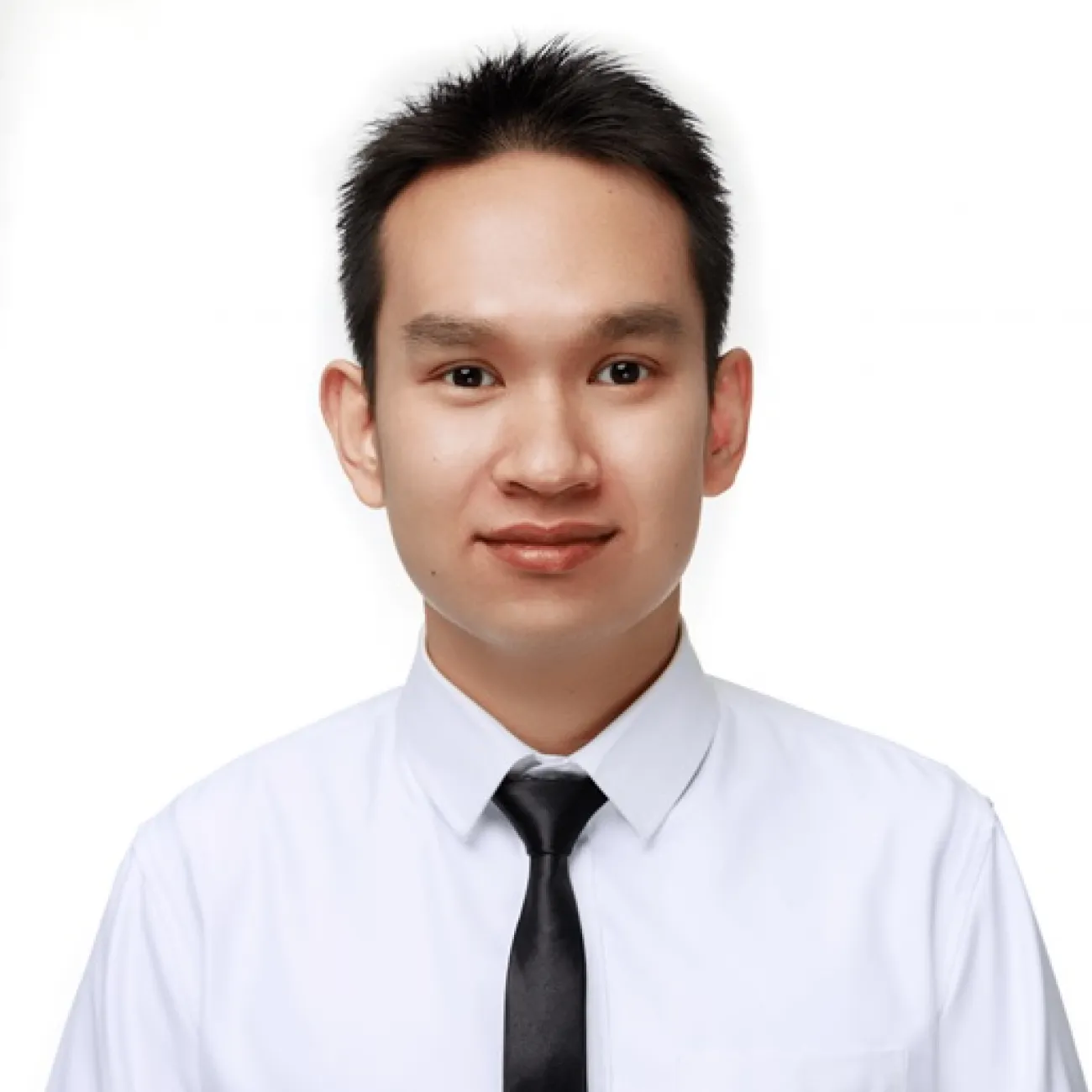
Dr. Tan Viet Tuyen Nguyen is a New Frontiers Fellow (Lecturer) in AI at the University of Southampton, specializing in Human-Centered Artificial Intelligence and Social Human-Robot Interaction. His research focuses on multimodal learning for robots to adapt their behavior to human social needs, with applications in healthcare, education, and service environments. Prior to this role, he was a Research Associate at King’s College London and a Research Assistant on the EU-funded CARESSES project, developing culturally-aware assistive robots for elderly support. Education: PhD in Information Science (Robotics) from Japan Advanced Institute of Science and Technology. He has organized conferences such as the IEEE RO-MAN 2022 special session on nonverbal communication and served as a reviewer for top-tier robotics and AI conferences. Research Interests include: Human-Robot Collaboration, Multimodal Perception, Generative AI for Social Interaction, and Context-Aware Robot Behavior Generation. His work has been recognized with awards including the Best Paper Award at ROMAN 2022 and the Prospective Research Award at ICServ 2023. Teaching Responsibilities include courses on Biologically Inspired Robotics, High-Level Programming, and MSc/Undergraduate project supervision. He currently oversees two PhD students and collaborates on projects like 'Exploring the impact of AI-driven writing of engagement in climate change' and 'Bridging Generations and Cultures through Generative AI.' Labs/Teams: Member of the Agents, Interaction and Complexity Centre and the Centre for Robotics Research at Southampton.
Sir Paul Collier is a distinguished Professor of Economics and Public Policy at the Blavatnik School of Government, University of Oxford, where he also directs the Centre for the Study of African Economies. He serves as the Oxford Academic Director of the International Growth Centre, a collaboration between the London School of Economics and Oxford University. Professor Collier has established himself as a leading authority on development economics, particularly focusing on African economies, poverty reduction, and the political economy of development. His academic journey includes significant public service, having served as Director of the World Bank Research Development Department from 1998 to 2003. He currently advises the International Monetary Fund Strategy and Policy Department and writes regularly for major publications including The Independent and The New York Times. His extensive contributions to economic thought have been recognized with numerous prestigious awards. Professor Collier's research interests span a wide range of critical development issues. He has made significant contributions to understanding the "bottom billion" - the poorest populations in the world - and has developed innovative approaches to addressing regional inequality, natural resource management, and the political barriers to development. His work consistently bridges academic rigor with practical policy applications, making complex economic theories accessible to policymakers and the general public alike. His publications reveal a consistent focus on practical solutions to development challenges. Recent works have examined urbanization in developing countries, the relationship between elections and economic performance, infrastructure investment in Africa, and the cultural foundations of economic success or failure. His research demonstrates how institutional design, cultural factors, and appropriate policy frameworks can enable neglected regions to "spiral up" toward prosperity. A.SK Social Science Award (2013) Arthur Ross Prize (for The Bottom Billion) Handesblatt Prize (for The Future of Capitalism) Adam Smith Prize by Glasgow's Philosophical Society (2023) Global Citizenship Award by Belgium's cooperative movement (2018) Professor Collier is actively engaged in advising governments on practical approaches to regional renewal. His recent work emphasizes the importance of local agency, collective learning, and moral leadership in addressing the challenges faced by neglected communities in both developed and developing countries. He challenges conventional economic orthodoxies that prioritize market forces alone and advocates for more nuanced, context-specific policy approaches that recognize the complex interplay of economic, social, and political factors in development processes.
Kathryn Lanouette is an Assistant Professor of Learning Sciences and Science Education at William & Mary’s School of Education. She holds faculty affiliate appointments in the Arts & Sciences (ENSP, IIC). Her research explores place-based pedagogies, emerging technologies, and their roles in fostering joyful, ethical science and data science learning for K-8 students. She collaborates with schools, museums, and youth-serving organizations to design curricula and outdoor learning experiences. Education: Ph.D. in Learning Sciences and Human Development, University of California, Berkeley (2017) M.A. in Museum and Childhood Education, Bank Street Graduate School of Education B.A. in Politics, Oberlin College Research Interests: Lanouette focuses on intersections between emotion, place, and data literacy, emphasizing participatory approaches to environmental and socio-ecological education. Her work bridges theory and practice, advocating for equitable, interdisciplinary STEM+ curricula that connect students to local ecosystems and global challenges. Recent Trends in Publications: Her articles emphasize participatory methodologies (e.g., digital mapping, data storytelling), socio-political dimensions of learning, and ethical frameworks for data science education. Recent work highlights collaborations between educators and community organizations to co-create knowledge about climate change and socio-ecological systems. Awards: Outstanding Short Paper Award (2025), International Society of the Learning Sciences NSF-funded ‘Writing Data Stories’ postdoctoral research (2017–2020) Teaching & Mentorship: Lanouette teaches courses on education research, science pedagogy, and applied conservation sciences. She mentors students through interdisciplinary projects, such as the NSF-funded ‘Writing Data Stories’ initiative and NOAA’s Teacher at Sea program. Labs/Teams: Collaborations include partnerships with UC Berkeley’s Science Education Lab, museums, and K-12 schools to develop place-responsive curricula and community-driven data projects.
Dr. Catríona Clutterbuck is a Lecturer in the School of English, Drama and Film at University College Dublin (UCD), where she has been a core faculty member since 1996. Her academic work centers on modern and contemporary Irish poetry, with a strong emphasis on gender, ethics, faith, and aesthetics in literature. She has made significant contributions through publications, teaching, and academic service. Research Interests: Her research spans modern and contemporary Irish poetry , women’s poetry , gender and nation , subjectivity and ethics , memory and mourning , and creative writing . She explores the intersections of personal and national identity, particularly in the works of poets like Eavan Boland, Seamus Heaney, and Thomas Kinsella. The most recent articles (2021–2024) demonstrate a consistent focus on emotional and ethical dimensions in Irish poetry, especially themes of grief, vulnerability, faith, and the role of art in processing loss. Her work frequently engages with female poets and feminist reinterpretations of national narratives, employing close textual analysis and cultural criticism. Scientific Awards: College of Arts and Humanities Award for Teaching Excellence (2018) Foreign and Commonwealth Scholarship Award (1993) Graduate Scholarship (1993) Postgraduate Studentship (1992) Advising and Grants: While no specific PhD advisees are listed, she has coordinated postgraduate modules such as Dissertation Research Methods and Irish Poetry: Representing Self and Other , indicating active involvement in graduate supervision. She has served as an external examiner for PhD theses and undergraduate programs at multiple institutions, reflecting her recognized expertise. There is no mention of research grants in the provided text. Labs and Teams: No formal research labs are mentioned. However, she has been an active member of academic communities, including the Committee for the Study of Anglo-Irish Literature at the Royal Irish Academy and editorial boards for journals like Irish University Review .
Dr. Emily Cuming is a Senior Lecturer in the Humanities and Social Science school at Liverpool John Moores University , specializing in British literature, culture, and social history from the 19th century to the present. Her research focuses on maritime relations, working-class girlhood, life writing, and representations of domestic spaces including council estates, slums, and bedsits. PhD, MA, BA in English & Russian from University of Manchester (2006, 2002, 2001) Editor of Key Words: A Journal of Cultural Materialism Co-leader of the Home and Domestic Cultures research network Committee member of the Research Institute for Literature and Cultural History Board member of the Centre for Port and Maritime History Her research combines literary analysis with historical and cultural studies, emphasizing material culture, port cities, and marginalized voices. Recent publications include Maritime Relations: Life, Labour and Literature at the Water’s Edge, 1830-1914 (Cambridge University Press, forthcoming 2025) and Housing, Class and Gender in Modern British Writing, 1880-2012 (CUP, 2016). She has received multiple research grants including AHRC Connected Communities funding and Liverpool John Moores University QR awards. Dr. Cuming teaches undergraduate modules on Life Stories , Representing Domestic Space , and Waterscapes , as well as MA courses on Place: Imagining Place in Modern Times . She supervises three PhD projects and welcomes new supervisees in her research areas. 2025: Enhancing Research Cultures funding for 'The Sinking of the Lancastria' 2024: Editorial board member of Journal of Victorian Culture 2023: NCCPE Engage Prize for 'Around the Toilet' project 2022: Caird Short-term Research Fellowship 2016: NCCPE Engage Prize winner
Professor Barbara Pini is a faculty member at Griffith University's School of Humanities, Languages and Social Science , with a focus on rural sociology, gender studies, and media analysis. She holds a PhD from Queensland University of Technology (2001) and an MBA from the University of New England (1997). Research Interests: Pini's work examines rural identities, gender representation in media, disability studies, and affective geographies. Her projects often intersect with Sustainable Development Goals like Gender Equality and Reduced Inequalities , using interdisciplinary approaches to analyze visual culture, policy, and social narratives. Funded Research: She has received grants from the PA Research Foundation (2021-2022) and the Australian Research Council (2011-2017) for studies on emergency care and rural disability experiences. Scientific Awards: Notable grants include the ARC Discovery Projects DP110102719 and PA Research Foundation's 'Rethinking Emergency Medicine' grant. Teaching & Supervision: Pini has supervised over 14 doctoral and master's students at Griffith University, including Hannah Ruth Adler, Marnie Cruickshank, and Laura Rodriguez Castro, across topics like medicinal cannabis, gendered financialization, and decolonial research.