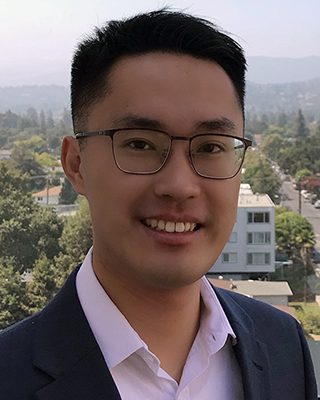
Timothy K. ShihView profile
Professor
Timothy K. Shih is an active academic researcher with over 30 years of scholarly contributions, evidenced by his extensive publication record from 1991 through 2025. With more than 380 publications spanning numerous prestigious venues including IEEE Access, Multimedia Tools and Applications, and Lecture Notes in Computer Science, he maintains a robust research profile with consistent annual output (20+ papers in peak years). His work demonstrates leadership through frequent senior/corresponding author positions and collaborations with numerous researchers across international institutions. Dr. Shih's research interests encompass a diverse range of computer science disciplines with particular emphasis on Computer Vision , Human-Computer Interaction , and AI Applications . His work bridges theoretical advancements with practical implementations in educational technology, accessibility solutions, and multimedia systems. Recent publications reveal a strategic focus on applying deep learning techniques to solve real-world problems in sign language recognition, gesture analysis, and wireless sensing applications. Analysis of his publication trends over the past five years shows increasing specialization in multimodal AI systems, with significant contributions to sign language technology (including Arabic Sign Language recognition), WiFi-based human activity recognition, and music technology applications. His research demonstrates strong interdisciplinary connections between computer vision, machine learning, and human-centered computing, with practical applications spanning educational technology, accessibility solutions, and smart environments. Through his mentorship, Dr. Shih has guided numerous junior researchers who have become frequent collaborators, including Chih-Yang Lin, Hsin-Hung Cho, and Tipajin Thaipisutikul. His research program appears well-funded through consistent publication output across multiple project areas, suggesting successful grant acquisition in computer vision, AI, and educational technology domains. Current work indicates active involvement in cutting-edge research on diffusion models for audio processing, enhanced sign language recognition systems, and novel approaches to WiFi-based human interaction analysis.