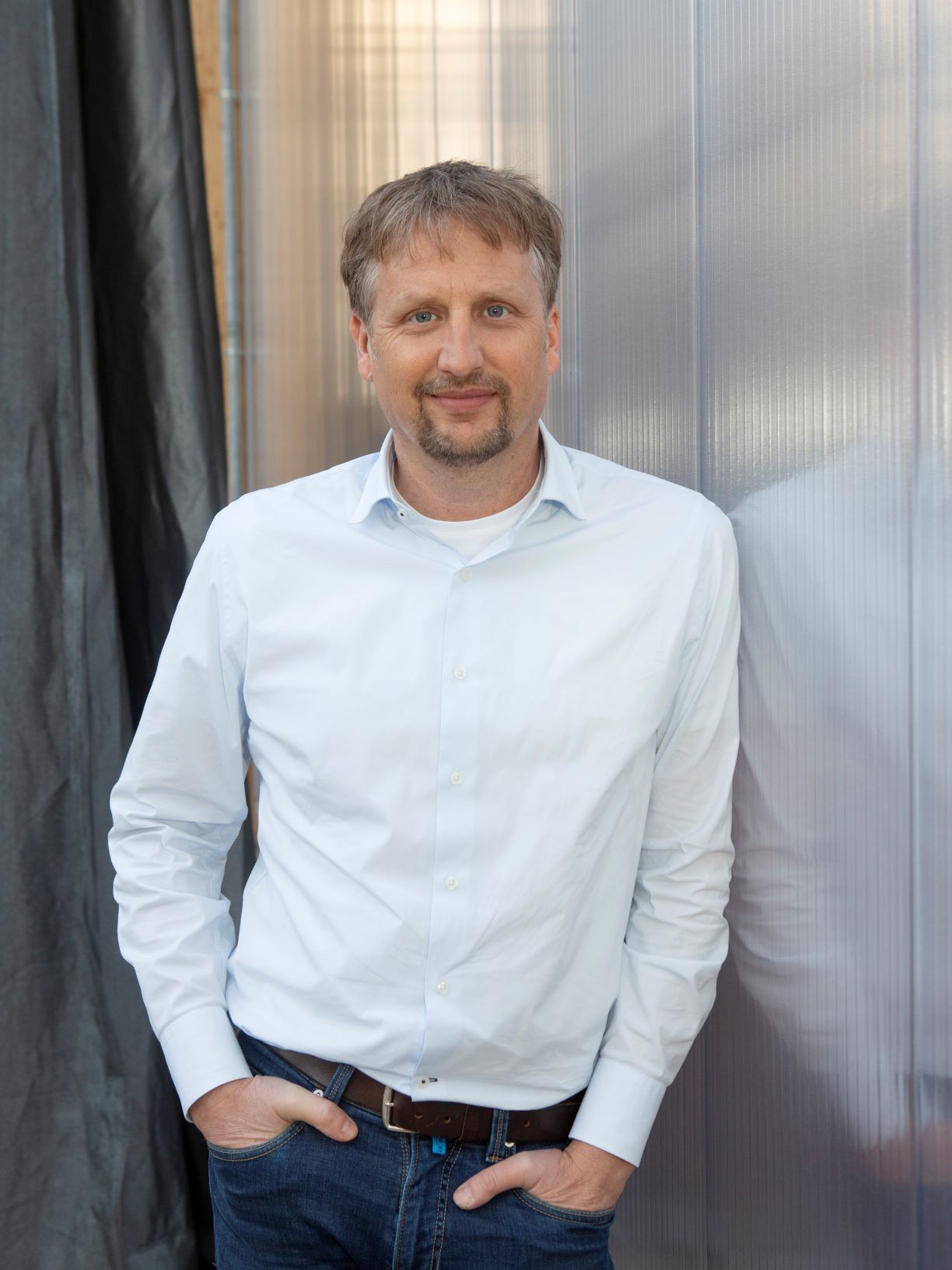
Prof. Alexander Holleitner leads the Chair of Nanotechnology and Nanomaterials at the Department of Physics, Technical University of Munich , under the Walter Schottky Institute. His research focuses on ultrafast optoelectronics, quantum optoelectronics, and excitonic systems in nanoscale circuits. Research Directions : Ultrafast optoelectronics, quantum optoelectronics, excitonic systems, THz time-domain spectroscopy, and nanofabrication of mixed organic/inorganic systems. Publications : Recent work spans hyperbolic polaritons, interlayer excitons, graphene nano-gap dynamics, and defect engineering in 2D materials. Collaborations include interdisciplinary projects with groups studying semiconductor heterostructures and quantum technologies. His lab welcomes students and researchers interested in experimental physics, quantum electronics, and nanofabrication.
Christine Selhuber-Unkel is a Full Professor (W3) for Molecular Systems Engineering at the Institute for Molecular Systems Engineering and Advanced Materials (IMSEAM) at Heidelberg University. She serves as co-chair of the Executive Board of the Flagship Initiative 'Engineering Molecular Systems' and is a spokesperson for the 'Cellular Biophysics' section of the German Biophysical Society. Additionally, she is a member of the executive board of the Cluster of Excellence '3D Matter Made to Order'. Education: Studied physics at Heidelberg University (2000-2002) M.Sc. degree in Physics from Uppsala University (2003) PhD in Physics from Heidelberg University (biological adhesion on nanopatterned substrates) Professor Selhuber-Unkel's research focuses on functional interfaces and their interactions with biological systems, including responsive interfaces, micro-/nanostructured interfaces (including 2-photon laser printing), and biofunctionalized hydrogels. Her work specifically targets controlling cellular properties such as parasite migration, with potential applications in soft robotics and biomaterials. She also experimentally studies biophysical properties of cells including mechanosensing, cellular force generation, adhesion forces, and statistical properties of intracellular motion and migration. Her research group is involved in multiple projects related to parasite physics, including studies on Giardia adhesion, Plasmodium infected erythrocytes, and Toxoplasma gondii. Her recent publications demonstrate a strong focus on hydrogel engineering, cellular mechanics, and microfluidic systems for studying cell behavior. The research spans from fundamental biomaterials development to applications in ophthalmology, tissue engineering, and parasite mechanics. Scientific Awards: European Research Council Consolidator Grant (PHOTOMECH) European Research Council Starting Grant (CELLINSPIRED) Feodor Lynen Fellow for research stay at Cornell University Emmy Noether postdoctoral fellowship Otto Hahn Medal from the Max Planck Society Professor Selhuber-Unkel has received significant research funding, including multiple ERC grants and DFG funding. She previously served as spokesperson for the DFG research training group 'Materials for Brain' at Kiel University (2017-2020). Her research group maintains strong collaborations across multiple institutions focused on biophysical approaches to understanding cellular and parasite mechanics. Her laboratory develops advanced techniques including traction force microscopy, atomic force microscopy (AFM), and microengineered systems for studying cellular mechanics in confined environments. The group's work bridges materials science, biophysics, and parasitology to develop novel approaches for understanding and controlling cellular behavior.
Roman Schnabel is a Professor of Experimental Physics at the University of Hamburg , affiliated with the Institute for Laser Physics under the Faculty of Mathematics, Informatics and Natural Sciences. He leads cutting-edge research in quantum optics, gravitational wave detection, and quantum technologies. Education : PhD in Physics (1999, Leibniz Universität Hannover); Physics degree (1988–1994, Leibniz Universität Hannover) Awards : QCMC 2018 Award, Gruber Cosmology Prize 2016 (LIGO team), Special Breakthrough Prize in Fundamental Physics 2016 (LIGO team), Joseph F. Keithley Award 2012 His recent work explores high-frequency gravitational wave observatories , entanglement generation , and quantum-enhanced sensing . He holds patents for gas sensors and optical surface imaging technologies. Schnabel co-founded the start-up Noisy Labs in 2023 and served as Director of Outreach & Transfer for the Cluster of Excellence 'Quantum Universe' (2019–2022).
Markus Schmidt is a Professor of Fiber Optics at Friedrich Schiller University Jena and serves as Head of the Research Department of Fiber Photonics at the Leibniz Institute for Photonic Technologies (IPHT), where he leads the Hybrid Fibers work group. He previously held a team leadership position at the Max Planck Institute for the Science of Light (2006–2012) and conducted research at Imperial College London (2011). His research integrates fiber optics and photonics for applications in biophotonics, optofluidics, plasmonics, and nonlinear optics. Key innovations include 3D nanoprinted holograms for remote focus control, liquid-core fibers for stable supercontinuum generation, and fiber-integrated platforms for nanorheology and quantum spectroscopy. His work bridges materials science and applied photonics , enabling advancements in telecommunications, environmental monitoring, and bioanalytics. Scientific awards and student mentorship details are not explicitly mentioned in the provided texts. His email is markus.schmidt@leibniz-ipht.de .
Prof. David Hunger leads the Cavity Quantum Optics Group at the Physics Institute (PHI) of Karlsruhe Institute of Technology (KIT). His research focuses on optically addressable spins in condensed matter, cavity-enhanced light-matter interactions, and quantum photonics with applications in sensing, spectroscopy, and quantum computing. The group develops fiber-based microcavities for coherent spin-photon interfaces, rare-earth ion qubits, and cavity-enhanced imaging of nanoscale systems. Notable projects include the BMBF-funded NEQSIS and SPINNING initiatives for quantum communication and diamond-based quantum computing. The group also pioneered Qlibri , a spin-off company commercializing optical fiber microcavities for quantum optics and microscopy. Recent breakthroughs include record spin coherence in SnV centers and ultra-stable nanopositioning platforms for cryogenic experiments. Affiliations: Faculty of Physics, KIT; Max Planck School of Photonics Grants: BMBF Grand Challenge (Quantum Communication), BMBF SPINNING (Diamond Qubits) Labs/Teams: Cavity Quantum Optics Group, Qlibri spin-off Students and postdocs in the group work on topics like collective cavity effects, molecular spin platforms, and cavity-enhanced sensing of liquid-phase nanosystems.
Prof. Dr. Beata Dunin-Borkowska is a full professor (Universitätsprofessorin) specializing in the Physics of Photonic Materials at Forschungszentrum Jülich GmbH, specifically within PGI-9 (Institute for Quantum Control), located in Jülich, Germany. Her research focuses on advanced materials for photonic applications, operating at the intersection of quantum physics, materials science, and photonics. This interdisciplinary work contributes to the development of novel quantum technologies and photonic devices. No recent publications or scientific awards were listed in the provided text. She is actively involved in research and teaching, though specific details about advisees, grants, or educational background are not available. Her work is situated within a leading German research center, suggesting strong institutional support and collaborative opportunities.
Professor Emiliano Cortés is a faculty member at the Ludwig Maximilian University of Munich (LMU), where he leads research in Plasmonic and Photonic Chemistry at the Nano-Institute Munich. His work bridges the fields of nanotechnology, physical chemistry, and materials science, focusing on light-matter interactions for energy conversion applications. Dr. Cortés' research focuses on plasmonics , photocatalysis , and electrocatalysis at the nanoscale. His group investigates how the dynamics of photons, plasmon-polaritons, carriers, phonons, and molecular states influence chemical reactivity. A key aspect of his work involves developing techniques to study plasmonic systems at the single particle level and designing rational synthesis approaches for plasmonic colloidal photo and electrocatalysts. His research has significant implications for sustainable energy technologies, environmental remediation, and advanced sensing applications. Analysis of Professor Cortés' recent publications reveals a strong focus on energy conversion processes, with particular emphasis on CO2 reduction, ammonia synthesis, and hydrogen production. His work integrates plasmonic effects with catalytic processes to enhance reaction efficiencies, often through innovative interface engineering and nanostructure design. The research spans fundamental studies of charge carrier dynamics to practical applications in energy storage and environmental technologies. Professor Cortés actively mentors doctoral candidates and postdoctoral researchers, currently advertising open positions for projects on Single particle photo and electrocatalysis and Synthesis of hybrid colloids . His research group, the Hybrid Plasmonics Lab (www.hybridplasmonics.org), receives funding from various sources to support their work on plasmon-mediated chemistry for sustainable applications. The Cortés research group operates within the Nano-Institute Munich, utilizing state-of-the-art facilities for nanomaterial synthesis, characterization, and testing. Their work combines experimental approaches with theoretical modeling to understand and harness light-matter interactions at the nanoscale for practical applications in energy conversion and environmental technologies.
Prof. Jürgen Rühe is a Full Professor of Chemistry and Physics of Interfaces at the Institute of Microsystems Technology, Albert Ludwigs University of Freiburg, within the Faculty of Engineering. He serves as Deputy Coordinator of Research Area C and Principal Investigator for Research Areas A, B, C, and D. His expertise spans polymers at interfaces, metamaterials, biomedical surfaces, and self-healing materials. He leads the Cluster of Excellence liv MatS, focusing on adaptive and energy-autonomous materials systems. Education: Not explicitly stated in text. His research emphasizes programmable materials, 4D printing, and bioinspired design, with projects funded by the German Research Foundation (DFG). Notable contributions include anti-fog coatings, magnetic microactuators for cell stimulation, and hygromorphic materials for adaptive architecture. He supervises doctoral and postdoctoral researchers, advancing fields like tribology and surface functionalization. Key scientific achievements include developing C,H-insertion cross-linking (CHic) for durable polymer networks and exploring smart materials for biomedical and environmental applications. His work bridges fundamental polymer chemistry with practical applications in energy, healthcare, and sustainable architecture. He advises over ten doctoral students and collaborates with industry partners. His lab, part of the Institute of Microsystems Technology, focuses on micro- and nanostructuring, with projects funded by the Cluster of Excellence.
Rupert Huber is a Professor at the Department of Experimental and Applied Physics, University of Regensburg, where he has held a chair since 2010. His research focuses on ultrafast quantum phenomena, terahertz science, and lightwave electronics, with a strong emphasis on nanoscale imaging and quantum materials. He leads the Huber group, which has launched the ERC project 'Orbital Cinema' and produced numerous high-impact publications in journals like Nature and Nano Letters . Chair for Experimental and Applied Physics, University of Regensburg (2010–present) Emmy Noether Group Leader, University of Konstanz (2007–2010) Alexander von Humboldt Fellow, UC Berkeley/Lawrence Berkeley National Lab (2004–2006) His research explores terahertz spectroscopy , quantum materials , and ultrafast nanoscopy , often combining experimental innovation with theoretical insights. Recent work includes groundbreaking studies on exciton dynamics in van der Waals magnets and subcycle imaging of electron wave motion. The group’s publications frequently appear as coverstories in Nature Photonics and Nano Letters . Huber has received prestigious awards such as the Gottfried Wilhelm Leibniz Prize (2019) , ERC Starting Grant (2012) , and OSA Fellowship (2018) . He has supervised numerous Ph.D. and Master’s students, including recent awardees like Joshua Mornhinweg (faculty dissertation prize, 2024) and Josef Riepl (best tutor award, 2024).
Max Born Institute for Nonlinear Optics and Short Pulse SpectroscopyGermany
Prof. Stefan Eisebitt is a Director at the Max-Born-Institut für Nichtlineare Optik und Kurzzeitspektroskopie and holds a Professorship in Experimental Physics at the Technische Universität Berlin. His research focuses on ultrafast magnetization dynamics, nanoscale structure analysis, and novel imaging techniques using coherent XUV/X-ray spectroscopy. He leads the Transient Electronic Structure and Nanoscience group and is involved in cutting-edge projects involving femtosecond laser-driven X-ray sources and spintronic materials. Education and Career: He obtained his Diplom (1992) and Ph.D. (1996) from Cologne University, followed by postdoctoral research at the University of British Columbia and Forschungszentrum Jülich. He became a Privatdozent at Humboldt-Universität Berlin (2005) and held professorships at TU Berlin (2008–2015) and Lund University (2012–2015) before his current role since 2015. He leads the Functional Nanomaterials joint research group between Helmholtz-Zentrum Berlin and TU Berlin. Research Interests: His work spans transient electronic structure, ultrafast optical manipulation of magnetization, nanoscale material characterization, and advanced coherent imaging methods. Key techniques include XUV/X-ray spectroscopy, laser-driven plasma sources, and femtosecond time-resolved studies. Professional Roles: He chairs the Physikalische Gesellschaft zu Berlin and the Elettra Scientific Advisory Council. He has held leadership roles in the European XFEL Scientific Advisory Committee and the Komitee für Forschung mit Synchrotronstrahlung (KFS). His lab develops state-of-the-art setups for ultrafast X-ray scattering and holography.
F. Ömer Ilday is a distinguished physicist and Alexander von Humboldt Professor at Ruhr University Bochum since July 2023, holding a joint appointment in the Faculty of Electrical Engineering and Information Technology and Faculty of Physics and Astronomy. His pioneering work in ultrafast laser technology has transformed non-linear laser-matter interactions, with applications spanning precision manufacturing, medical surgery, and nanofabrication. Education: PhD in Physics, Cornell University (2003) Postdoctoral Research Scientist, Massachusetts Institute of Technology (2003-2005) Ilday's research centers on ultrafast laser development and materials science, focusing on GHz-repetition-rate burst-mode systems, nonlinear laser lithography, and self-organization phenomena. His interdisciplinary approach bridges photonics, plasma physics, and materials engineering to enable breakthroughs in nanostructuring, silicon processing, and laser-based manufacturing. Current work emphasizes developing high-power laser sources and exploring fundamental laser-matter interaction mechanisms for next-generation applications. His recent publications (2023-2025) reveal dominant trends in high-repetition-rate burst-mode lasers (up to 50 GHz), ablation efficiency optimization, and nonlinear laser lithography for 3D silicon structuring. These works demonstrate strong convergence between fundamental physics and industrial applications, particularly in medical surgery, nanofabrication, and materials synthesis, with increasing emphasis on self-organization principles in laser systems. Scientific awards: Turkish Academy of Sciences Outstanding Young Scientist Award (2006) Marie Curie International Reintegration Grant (2006) ERC Consolidator Grant (2014) - Turkey's first ERC Advanced Grant (2022) Election to Academia Europaea Election to Turkish Academy of Sciences Membership in Turkish and American Physical Societies Ilday has secured major competitive grants including two ERC awards and a Marie Curie fellowship, directing research teams at Bilkent University's Ultrafast Optics & Lasers Laboratory (UFOLAB) which developed technologies adopted globally. At RUB, he is establishing the Center for Complex Laser-Matter Interactions as an interdisciplinary hub fostering collaborations between photonics, plasma research, and materials science, with explicit goals for spin-off company formation and transdisciplinary innovation in manufacturing technologies. As founding director of UFOLAB at Bilkent University, Ilday developed laser systems deployed by research institutions worldwide and established Turkey's first laser company. His RUB center integrates electrical engineering and physics expertise to advance complex laser-matter interaction research, focusing on self-organizing laser systems, nanostructuring techniques, and applications in semiconductor manufacturing and medical technology through close industry partnerships.
Prof. Dr. Sven Höfling is the Head of Chair and leader of the '2D Materials' Group at the Department of Technical Physics, University of Würzburg. His research focuses on semiconductor nanostructures, photonic systems, and quantum materials, with expertise in low-dimensional systems and light-matter interactions. He leads projects in the Cluster of Excellence ct.qmat and collaborates on EU, DFG, and industry-funded initiatives in quantum technology and nanophotonics. Affiliations: Chair of Technical Physics, University of Würzburg Address: Am Hubland, P1 Building (Room AU26), 97074 Würzburg, Germany Research highlights include topological polariton lasers, quantum dot photonics, and mid-infrared optoelectronics. His work spans experimental physics with strong ties to theoretical models, emphasizing applications in quantum computing and optoelectronic devices. Recent advances include room-temperature polariton lasers and strain-tunable single-photon sources. Key projects include the Würzburg-Wroclaw Nanophotonics Center and collaborations with KAIST-JMU on quantum technology. His lab employs advanced fabrication techniques like circular Bragg gratings and resonant tunneling diodes.
Yongjie Yuan is a Researcher at the Technical University of Munich under the Associate Professorship of Computational Photonics within the TUM School of Computation, Information and Technology. His research focuses on quantum cascade devices, Josephson traveling-wave parametric amplifiers, and noise modeling in superconducting circuits. Institution: Technical University of Munich School: TUM School of Computation, Information and Technology Academic Rank: Researcher Email: yongjie.yuan@tum.de Yuan's work integrates quantum mechanics with computational photonics , emphasizing the modeling of superconducting circuits and microwave parametric amplifiers . He investigates dissipative-dispersive systems , flux-driven amplifiers , and nonlinear junction topologies to enhance quantum device performance. Recent publications highlight his contributions to quantum amplifier design , Josephson junction modeling , and noise dissipation analysis in microwave photonics. His research is associated with the EU Project QOMBS, focusing on quantum cascade devices and parametric amplification. Quantum Cascade Devices Josephson Traveling-Wave Parametric Amplifiers Quantum Noise Modeling Nonlinear Circuit Analysis Microwave Photonics Yuan actively participates in teaching and supervising activities, contributing to courses on computational photonics , quantum engineering , and partial differential equations for electrical engineering. He collaborates with researchers like Christian Jirauschek and Michael Haider on quantum device simulations.
Max Born Institute for Nonlinear Optics and Short Pulse SpectroscopyGermany
Dr. Alexandre Mermillod-Blondin is a Principal Investigator heading a DFG-funded project on 'Micromachining with few-cycle pulses' at the Max Born Institute. His research focuses on fundamental laser-matter interactions and direct laser writing of 3D micro-optical systems in transparent materials. Key investigations include plasma formation mechanisms in dielectrics, relaxation dynamics, and applications in photonic device fabrication. His group utilizes phase-contrast microscopy and time-resolved techniques to characterize ultrafast processes.
Lukas Seitner is a researcher at the Technical University of Munich (TUM), affiliated with the School of Computation, Information and Technology and the Department of Electrical Engineering. He operates within the Associate Professorship of Computational Photonics led by Prof. Christian Jirauschek, focusing on advanced modeling of quantum cascade devices and terahertz photonics systems. His research spans quantum cascade lasers (QCLs), terahertz frequency combs, optical solitons, and computational photonics. Seitner has developed sophisticated simulation frameworks including Maxwell-Bloch and density matrix approaches to study nonlinear dynamics in optoelectronic devices. Key contributions involve passive mode-locking mechanisms in THz QCLs, graphene-integrated saturable absorbers for pulse generation, and backscattering effects in ring-cavity soliton formation. His work bridges theoretical modeling with practical device engineering for next-generation terahertz sources. As an educator, Seitner serves as assistant lecturer for multiple courses including Computational Photonics Laboratory (5 PR), Partial Differential Equations for Electrical Engineering (4 VI), and Simulation of Quantum Devices (4 VI). He actively participates in doctoral candidate seminars and specialized courses on quantum engineering, demonstrating strong commitment to academic training in photonics and quantum device physics. His teaching integrates cutting-edge research concepts into practical computational exercises. Seitner maintains active collaboration within the EU Project QOMBS and contributes to TUM's Computational Photonics group research infrastructure. His technical expertise encompasses numerical methods for partial differential equations, semiconductor device simulation, and nonlinear optical modeling. Current projects focus on optimizing THz comb sources for spectroscopic applications and extending quantum walk models for novel frequency comb generation mechanisms.