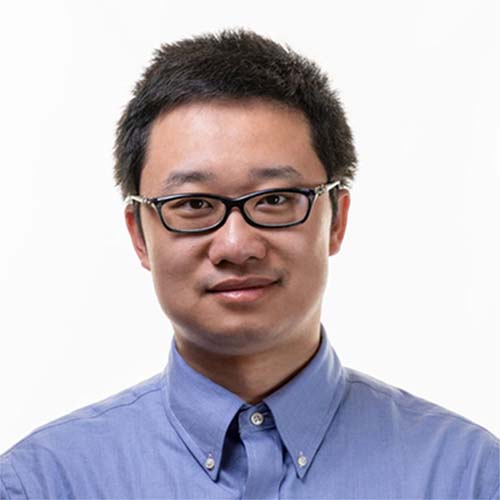
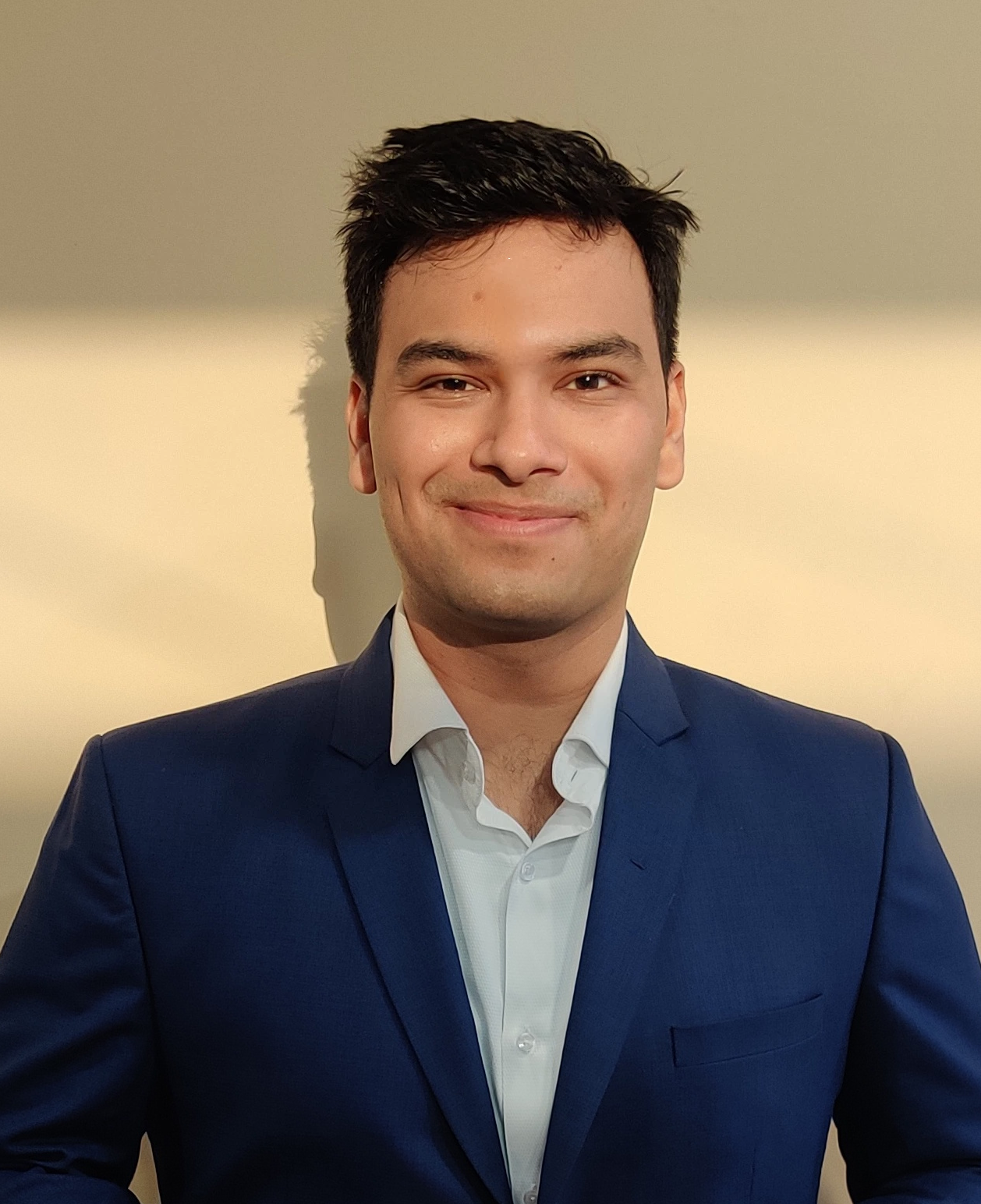
Xiaonan Guo is an Assistant Professor in the Department of Information Sciences and Technology at George Mason University. His research focuses on security and privacy in cyber-physical systems, mobile device security, IoT, mobile healthcare, and machine learning applications in mobile computing. He holds a PhD in Computer Science from the Hong Kong University of Science and Technology. His work spans innovative applications of mmWave technology for authentication, health monitoring, and activity recognition, alongside contributions to privacy-preserving systems and mobile deep learning optimization. Recent research emphasizes contactless human concentration monitoring, secure mobile DNN execution, and universal adversarial attacks against mmWave-based systems. Xiaonan’s publications reflect a strong focus on mobile and IoT-driven healthcare solutions, wearable device security, and cross-technology localization. His articles often bridge theoretical advancements with real-world applications in smart healthcare systems and pervasive computing environments.
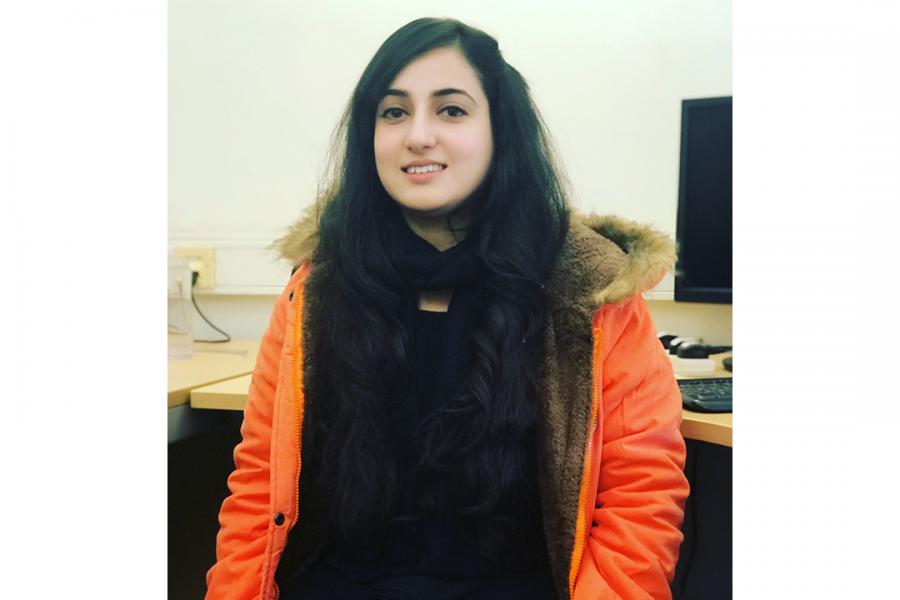
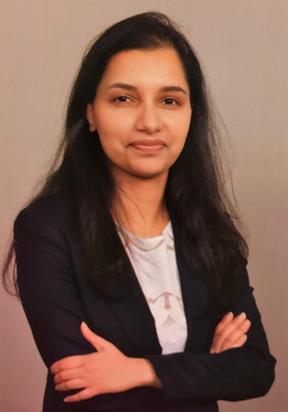
Hina Shaheen is an Assistant Professor in the Department of Statistics , Faculty of Science, University of Manitoba. Her research integrates statistical methods with computational neuroscience and neurodegenerative disease modeling. Email: Hina.Shaheen@umanitoba.ca Lab: NeuroStats Lab Research Interests: Shaheen specializes in neurodegenerative disorders like Alzheimer’s and Parkinson’s disease, with a focus on: Multiscale and network modeling of brain dynamics Bio-statistical and machine learning approaches BAYESIAN inference and STOCHASTIC processes Calcium signaling and PROTEIN dynamics in disease pathology Publication Trends: Recent work combines data-driven stochastic modeling with connectomic insights to study neurodegenerative mechanisms. Key themes include: Integration of machine learning and BAYESIAN frameworks in brain network analysis Applications to Alzheimer’s (amyloid-beta/calcium interactions, exosomal spread) and Parkinson’s (DBS treatment, neural dynamics) Development of multiscale co-simulation techniques for clinical data interpretation Academic Engagement: Shaheen actively mentors graduate students and collaborates across disciplines. She participated in the V AMMCS International Conference (2019) and maintains affiliations with computational neuroscience communities.
Haitham Abu-Rub is a Professor at Texas A&M University at Qatar specializing in power systems, renewable energy integration, and power electronics. His research focuses on developing innovative solutions for grid stability, EV charging infrastructure, and intelligent control systems. He has published extensively in IEEE journals and conferences, addressing challenges in smart grids and sustainable energy systems. His work spans power converter design, fault diagnosis, and AI applications in energy management. Recent projects include decentralized PV trading systems, resilient inverter networks, and physics-informed neural networks for insulation diagnostics. Dr. Abu-Rub collaborates internationally on projects involving grid-interactive buildings, digital twins for power converters, and adaptive control techniques for electric vehicle charging.
Simon Parkinson is a Professor at the University of Huddersfield specializing in cybersecurity and machine learning applications in security systems. His research focuses on empirical analysis of access-control systems, threat prediction, and defensive AI strategies. Parkinson's work combines data mining, behavioral analysis, and computational methods to address real-world security challenges. Recent publications demonstrate strong emphasis on biometric security, IoT protection, and forensic investigation techniques. His 2023-2025 research explores LLM-based event log analysis, wearable biometric cryptosystems, and zero-day DDoS detection in IoT networks. Collaborative projects include international case studies in Bahrain and innovative applications of computer vision in security diagnostics. Parkinson contributes to cybersecurity education initiatives and stakeholder engagement for security standardization.
Dr. Khoa Phan is a Senior Lecturer in the Department of Computer Science and Information Technology at La Trobe University, Australia. He holds an ARC DECRA Senior Research Fellowship (2020-2023) and has held prior positions at UCLA, Monash University, and others. His academic background includes a B.Eng. (UNSW), two M.Sc. degrees (University of Alberta and Caltech), and a Ph.D. in Electrical Engineering from McGill University. Dr. Phan's research focuses on optimizing next-generation communication networks, particularly in wireless communications, IoT, satellite systems, and machine learning applications. He has secured significant grants, including ARC Discovery Projects and industry partnerships. His work emphasizes secure cyber-physical systems, federated learning, and edge computing. He has received prestigious awards such as the ARC DECRA and Atwood Fellowship. His research spans over 100 publications, with contributions to areas like OTFS modulation, secure satellite communications, and graph-based anomaly detection. He actively supervises PhD students and collaborates internationally, including initiatives to strengthen ties between La Trobe University and Vietnamese institutions. Grants include ARC Discovery Projects (totaling $1.3M+), CRC SmartSAT, and industry scholarships. His work addresses energy efficiency, secure resource allocation, and AI-driven solutions for 5G/6G networks and the metaverse.
Moharram Challenger is a tenure-track Assistant Professor in the Department of Computer Science at the University of Antwerp's Faculty of Sciences. Previously, he served as an assistant professor at Ege University (2017-2018) and as a post-doctoral researcher at the University of Antwerp (2019-2020) working on Flanders Make projects PACo and DTDesign. His academic journey includes R&D leadership roles at UNIT IT Ltd. (2012-2016), post-doctoral research at Wageningen University (2016-2017), and tenure-track faculty positions at IAU-Shabestar University (2005-2009). His research spans Cyber-physical Systems , Multi-agent Systems , and Domain-specific Modeling Languages , with recent publications focusing on quantum machine learning, digital twinning, and IoT optimization. Key projects include ITEA ModelWriter, ITEA Assume, and Flanders Make initiatives. His work demonstrates strong integration of model-driven engineering with emerging technologies like quantum computing and reinforcement learning. Challenger actively contributes to the academic community as a member of IEEE and ACM . His publication record shows consistent output across top venues, with 2025 featuring significant work in quantum-enhanced learning and CPS security. Current research emphasizes practical applications in drone energy modeling, medical diagnostics, and industrial IoT systems. His advising activities focus on cyber-physical systems and agent-based modeling, supported by grants from TUBITAK and Flanders Innovation & Entrepreneurship. Key collaborations include European ITEA projects and partnerships with industrial entities through UNIT IT Ltd. Challenger maintains active development through GitHub repositories related to code refactoring, model-driven engineering, and legacy system modernization, reflecting his commitment to practical software engineering solutions.
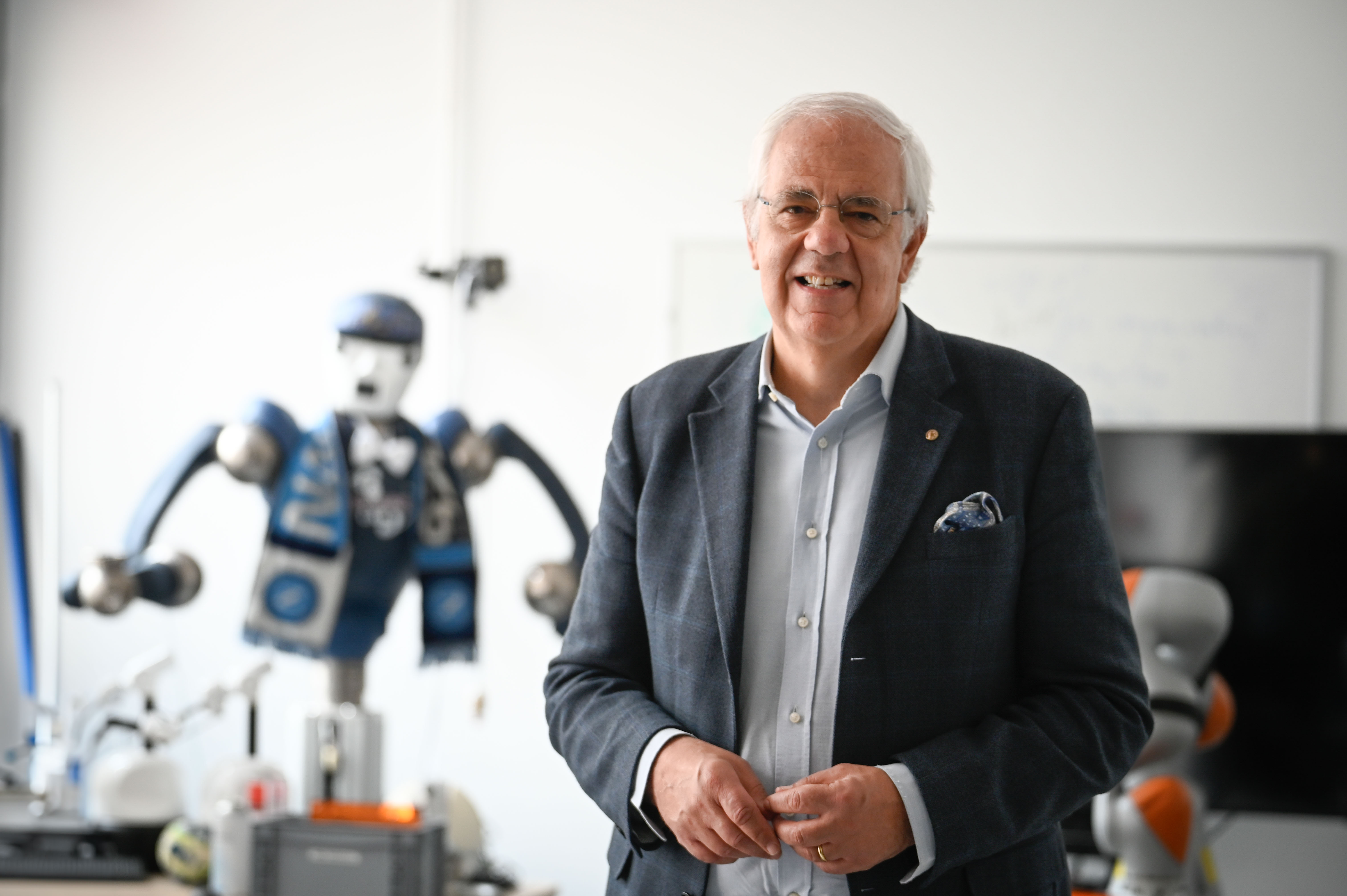
Prof. Bruno Siciliano is a full Professor of Automatics and Robotics at the University of Naples Federico II's Department of Electrical Engineering and Information Technology (DIETI). He directs the PRISMA Lab and chairs the Scientific Council of the ICAROS Center. His research focuses on robotics, automation, and human-robot interaction, with notable contributions to medical robotics, deformable object manipulation, and AI integration. He has received prestigious awards such as the 2024 IEEE RAS Pioneer Award and is a Fellow of multiple international organizations. Affiliations: Director, PRISMA Lab Chair, ICAROS Center Scientific Council Member, ACN Technical-Scientific Committee Research Interests: His work spans robotics education, surgical robotics, non-prehensile manipulation, and AI-driven robotic systems. Notably, his projects include the ERC-funded EndoTheranostics initiative for robotic colonoscopy and RoDyMan for dynamic manipulation. His contributions bridge robotics with healthcare, automation, and cognitive systems. Awards & Honors: 2024 IEEE RAS Pioneer in Robotics and Automation Award Genio Award (2024) for pioneering Italian robotics Fellowships: IFAC, IEEE RAS, and international AI associations Grants & Leadership: ERC Synergy Grant (2023, 10M€) and Advanced Grant (2013) Leadership roles in IEEE RAS and international robotics initiatives Labs & Teams: PRISMA Lab focuses on robotics paradigms like design, knowledge, and human-robot interaction, with projects in medical robotics and autonomous systems.
Michael Zurel is a NSERC Postdoctoral Fellow in the Department of Mathematics at Simon Fraser University, working under Dr. Nadish de Silva, Canada Research Chair in the Mathematics of Quantum Computation. His research focuses on foundational aspects of quantum computation, quantum information, and nonclassical physics. Key interests include quantum contextuality, negativity in quasiprobability representations, and classical simulation algorithms for quantum systems. He holds a PhD, MSc, and BSc in Physics and Mathematics from the University of British Columbia (2024, 2020, 2019), all supervised by Dr. Robert Raussendorf. His doctoral work explored classical descriptions of quantum computations via hidden variable models and quasiprobability representations. His master’s thesis addressed hidden variable models and classical simulation algorithms for quantum computation with magic states on qubits. Research interests emphasize bridging quantum foundations with computational efficiency, particularly how nonclassical features like contextuality enable quantum advantage. Collaborators include prominent figures such as Robert Raussendorf, Juani Bermejo-Vega, and Cihan Okay. His scientific achievements include the NSERC Postdoctoral Fellowship. Advising and grants are not explicitly detailed, but his work is supported by foundational research grants. He collaborates actively within quantum information theory and computational physics communities.
Ricardo A. Calix is a Professor of Computer Information Technology at Purdue University Northwest. His research focuses on Machine Learning, Natural Language Processing, AI applications in Cyber Security and Healthcare, and Deep Learning methodologies. He holds a Ph.D. in Engineering Science from Louisiana State University. Key research areas include ethical AI model analysis, reinforcement learning for aerospace control systems, and industrial automation through machine learning. His work spans cybersecurity tools (e.g., CyberSecTK) and healthcare data mining from social media. Calix has secured grants as PI/Co-PI for projects like 'Detection of Potential Drug Effects from Twitter Data' (NIH) and 'A Smart and Fast IDS' (Northrop Grumman). He authored Getting Started with Deep Learning: Programming and Methodologies Using Python (2017). Recent publications (2023-2024) address biases in AI models, blast furnace automation, and autonomous aircraft control via reinforcement learning. His work bridges theoretical AI with practical applications in industry and security.
Dr. Nghi Tran is a Professor in the Department of Electrical and Computer Engineering at the University of Akron's College of Engineering. His research focuses on communication and information theories, wireless communications, energy-efficient wireless networks, and security. He has published over 160 papers and served as an editor for multiple IEEE journals. Education: Ph.D. in Electrical & Computer Engineering (University of Saskatchewan, 2008) Education: M.Sc. in Electrical & Computer Engineering (University of Saskatchewan, 2004) Education: B.Sc. in Electrical Engineering (Hanoi University of Technology, 2002) Dr. Tran's research spans wireless communication systems, with special emphasis on physical layer security, energy-efficient networks, full-duplex technologies, and channel coding. His work bridges theoretical foundations with practical implementations in next-generation wireless systems. His recent publications (2023-2025) demonstrate expertise in physical layer security, full-duplex antenna design, polar codes for GNSS, and machine learning applications in MIMO systems. Key trends include optimization of wireless networks, robust error correction, and cross-layer security approaches. Scientific Awards: NSERC Postdoctoral Fellowship Professional Recognition: IEEE Senior Member As an ABET coordinator for ECE and frequent journal editor, Dr. Tran contributes to academic leadership. His research has received funding from the US National Science Foundation, Office of Naval Research, Air Force Research Laboratory, and industry partners.
Rishabh Dabral is a Research Group Leader at the Max Planck Institute for Informatics since August 2024, leading the "3D Visual Intelligence" group. He is also affiliated with the Research Training Group on Neuro-Explicit Models of Language, Vision, and Action at Saarland University. Expertise: 3D computer vision, computer graphics, human-object interaction modeling, and motion synthesis. Leadership: Conducts cutting-edge research on 3D human performance capture and physical plausibility in motion. His research focuses on: 3D human pose estimation under gravity constraints Multi-modal gesture synthesis using neural architectures Quantum auto-encoding for 3D representations Wearable robotics informed by human behavior Temporal dynamics in human-object interaction Recent publications at top venues like SIGGRAPH , CVPR , and ICCV demonstrate his work on: Music-driven motion synthesis Egocentric motion capture systems Reactive two-person interaction models Diffusion-based gesture generation Object-aware motion prediction Wearable robotic limb design
Anjali Sandip is a Teaching Assistant Professor in the Mechanical Engineering Department at the University of North Dakota's College of Engineering and Mines. She holds a Ph.D. in Mechanical Engineering from the University of Kansas and maintains an active research program in computational mechanics, high-performance computing, and machine learning. Her educational background includes a Doctor of Philosophy and Master of Science in Mechanical Engineering from the University of Kansas, and a Bachelor of Engineering in Mechanical Engineering from Osmania University in Hyderabad, India. She previously served as a post-doctoral researcher at the University of Nebraska, where she developed patient-specific computational models for peripheral artery disease treatment. Dr. Sandip's research spans computational mechanics, high-performance computing, uncertainty quantification, physics-informed machine learning, and multi-physics modeling. Her work has significant applications in ice sheet dynamics, medical device modeling, and multi-phase flow simulations. She has developed open-source software frameworks that integrate finite element and finite volume methods with uncertainty quantification tools. Her recent publications demonstrate a strong focus on developing computational frameworks for multi-physics problems, with particular emphasis on GPU acceleration, uncertainty quantification, and machine learning integration. The research shows consistent application of these methods to challenging problems in earth sciences, biomedical engineering, and traditional mechanical engineering domains. Scientific Awards: NSF EPSCoR Research Fellow (2024-25) Dr. Sandip actively mentors both undergraduate and graduate researchers, and she is currently seeking Master's and Ph.D. students interested in computational mechanics, applied mathematics, scientific machine learning, and earth sciences. She serves as an active member of the Association of Computational Mechanics (USACM & IACM) and has delivered numerous presentations at professional conferences. Her research has received support from prestigious organizations including the National Science Foundation (NSF), Department of Energy (DOE), and NVIDIA. She teaches courses including Introduction to Mechanical Engineering, Thermodynamics, Machine Component Design Laboratory, Advanced Finite Element Methods, Modeling Glaciers and Ice Sheets, Statics, and Engineering Ethics, demonstrating her broad expertise across mechanical engineering disciplines.
Dr. Hendra Nurdin is a Senior Lecturer in the School of Electrical Engineering and Telecommunications at the University of New South Wales (UNSW), where he has been employed since 2012. His academic journey began with a Sarjana Teknik (equivalent to a Bachelor of Engineering) in Electrical Engineering from Institut Teknologi Bandung, Indonesia, followed by an MSc in Engineering Mathematics from the University of Twente in the Netherlands, and culminated with a PhD in Engineering and Information Science from the Australian National University in 2007. His educational background includes: PhD in Engineering and Information Science, Australian National University, 2007 MSc in Engineering Mathematics, University of Twente, The Netherlands Sarjana Teknik (ST, equivalent to Bachelor of Engineering) in Electrical Engineering, Institut Teknologi Bandung, Indonesia Dr. Nurdin's research lies at the intersection of control engineering and systems theory with quantum physics and energy systems. He has made significant contributions to quantum control systems, quantum information processing, and microgrid control. His work combines theoretical advances in quantum stochastic processes with practical applications in quantum computing and renewable energy systems. He has developed novel approaches to quantum reservoir computing, quantum parameter estimation, and control of distributed energy resources. His recent publications reveal a strong focus on quantum reservoir computing, non-Markovian quantum systems, and the intersection of quantum information with machine learning. There's a clear trend toward practical implementations of quantum information processing systems, particularly exploring how quantum systems can enhance computational capabilities. His work bridges fundamental quantum theory with engineering applications, demonstrating how quantum phenomena can be harnessed for practical computing and sensing tasks. Dr. Nurdin has received recognition including an ARC APD Fellowship (2009-2011). His research has resulted in numerous publications in top-tier journals including Nature Communications, Physical Review series, and IEEE Transactions. He has successfully supervised multiple PhD students to completion, including Dr. Jiayin Chen (2022), Dr. Jiacheng Li (2021), Dr. Muhammad Ali (2021), and Dr. Zhan Shi (2016). Currently, he is supervising Mr. Wen Liu as a PhD candidate. His research is supported by various funding mechanisms including Sydney Quantum Academy scholarships and UNSW research grants, enabling him to pursue cutting-edge research in quantum systems and control. Dr. Nurdin is actively involved with the Sydney Quantum Academy, supervising research in quantum systems and control. His work contributes to Australia's growing quantum technology ecosystem, collaborating with researchers across multiple institutions to advance quantum information processing and quantum engineering applications.
Professor Wei Zhang is a Full Professor at the School of Electrical Engineering & Telecommunications, University of New South Wales (UNSW), where he has been serving since May 2008, progressing from Senior Lecturer (2008-2012) to Associate Professor (2013-2017) and finally to Full Professor in November 2017. He received his PhD degree in Electronic Engineering from the Chinese University of Hong Kong in 2005 and was a Research Fellow at the Department of Electronic and Computer Engineering, Hong Kong University of Science and Technology from 2006 to 2007. Professor Zhang's research spans cognitive radio, massive MIMO, 5G/6G networks, UAV communications, orbital angular momentum, and reconfigurable intelligent surfaces. His publications demonstrate a strong theoretical foundation combined with practical implementations, addressing critical challenges in modern wireless systems including spectrum efficiency, secure communications, and network intelligence. With over 200 papers in IEEE journals and conferences along with three authored books, his work has significantly impacted the field of wireless communications. Analysis of his recent publications (2023-2025) reveals a clear trajectory toward next-generation wireless technologies with emphasis on reconfigurable intelligent surfaces (RIS), orbital angular momentum (OAM), non-orthogonal multiple access (NOMA), and the integration of machine learning with traditional communication techniques. A substantial portion of his current work focuses on satellite-terrestrial integrated networks, UAV communications, and secure wireless transmission techniques, showing increasing sophistication in addressing complex communication challenges through innovative approaches. Professor Zhang's scientific achievements have been recognized with prestigious honors including: Fellow of the IEEE Fellow of the IET Distinguished Lecturer of IEEE Communications Society (2016-2017) His leadership in the academic community is evident through his editorial roles as Editor-in-Chief of IEEE Wireless Communications Letters (2016-2019) and currently as Editor-in-Chief of Journal of Communications and Information Networks (JCIN). As Area Editor of IEEE Transactions on Wireless Communications and former editor for multiple IEEE Transactions journals, he has significantly influenced the direction of wireless communications research. His active participation in major IEEE conferences as TPC Chair and Co-Chair demonstrates his commitment to advancing the field through scholarly exchange. Currently serving as Chair of IEEE Wireless Communications Technical Committee and Vice Director of IEEE Communications Society Asia Pacific Board, Professor Zhang continues to shape the future of wireless communications research globally, bridging the gap between academic innovation and industry implementation in next-generation wireless networks.
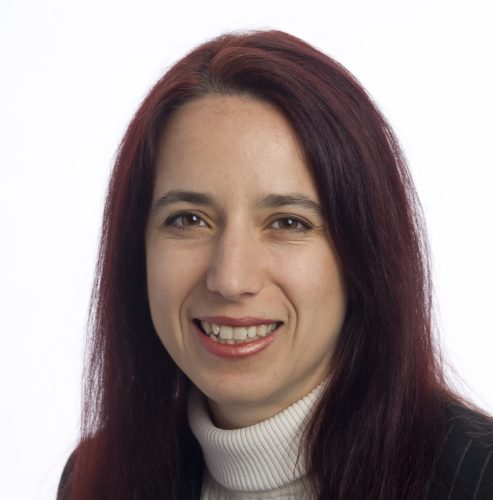
Irena Vodenska is Professor of Finance and Director of Finance Programs at Boston University’s Metropolitan College, Department of Administrative Sciences. She holds a PhD in statistical finance and an MA in economics from Boston University, an MBA from Vanderbilt University, and a BS in computer information systems from the University of Belgrade. She is also a Chartered Financial Analyst (CFA) charter holder. Her research is at the intersection of finance, complexity science, and artificial intelligence, focusing on systemic risk modeling, ESG investments, and financial network dynamics. She has led major interdisciplinary research projects funded by the National Science Foundation, the European Commission, and the U.S. Army Research Office. PhD, Statistical Finance – Boston University MA, Economics – Boston University MBA – Owen Graduate School of Management, Vanderbilt University BS, Computer Information Systems – University of Belgrade Dr. Vodenska’s research interests include network theory in finance, systemic risk propagation, AI-powered ESG analysis, cryptocurrency price forecasting, and financial regulation. She employs big data, machine learning, and natural language processing to analyze financial news, market dynamics, and corporate sustainability. Her work investigates how climate disinformation spreads via social networks and influences public policy and governance. The recent articles highlight a consistent focus on modeling financial and economic systems using network science and AI. Trends include systemic stress testing, sentiment analysis in financial markets, cascading failures, and the interplay between macroeconomic indicators and financial networks. Her work spans econophysics, behavioral finance, public health economics, and ethical AI in fintech. National Science Foundation (NSF) research grant (2023) NSF EAGER Award (2014–2015) European Commission FET Open Grant (2012–2014) U.S. Army Research Office (ARO) Grant (2020–2021) MEXT Post-K Computer Grant, Japan (2016–2019) Alexander Hamilton Fulbright Fellowship (1994) Owen Graduate School Fellowship (1995–1996) Dr. Vodenska teaches core finance courses such as Investment Analysis and Portfolio Management, Derivatives Securities, and Financial Regulation and Ethics. She co-developed the MET AD 678 course with Professor Tamar Frankel from BU Law, emphasizing real-world case studies and ethical decision-making. Her research grants have supported innovative work in systemic risk modeling, AI for ESG, and financial network stability. She is actively involved in mentoring, conference organization, and editorial roles in leading journals. She is a key organizer of the International School and Conference on Network Science (NetSci) and the Big Data in Economics, Science, and Technology (BEST) Conference. Her lab and research team focus on complexity in financial systems, bringing together economists, physicists, computer scientists, and data analysts to study global financial stability and sustainability.