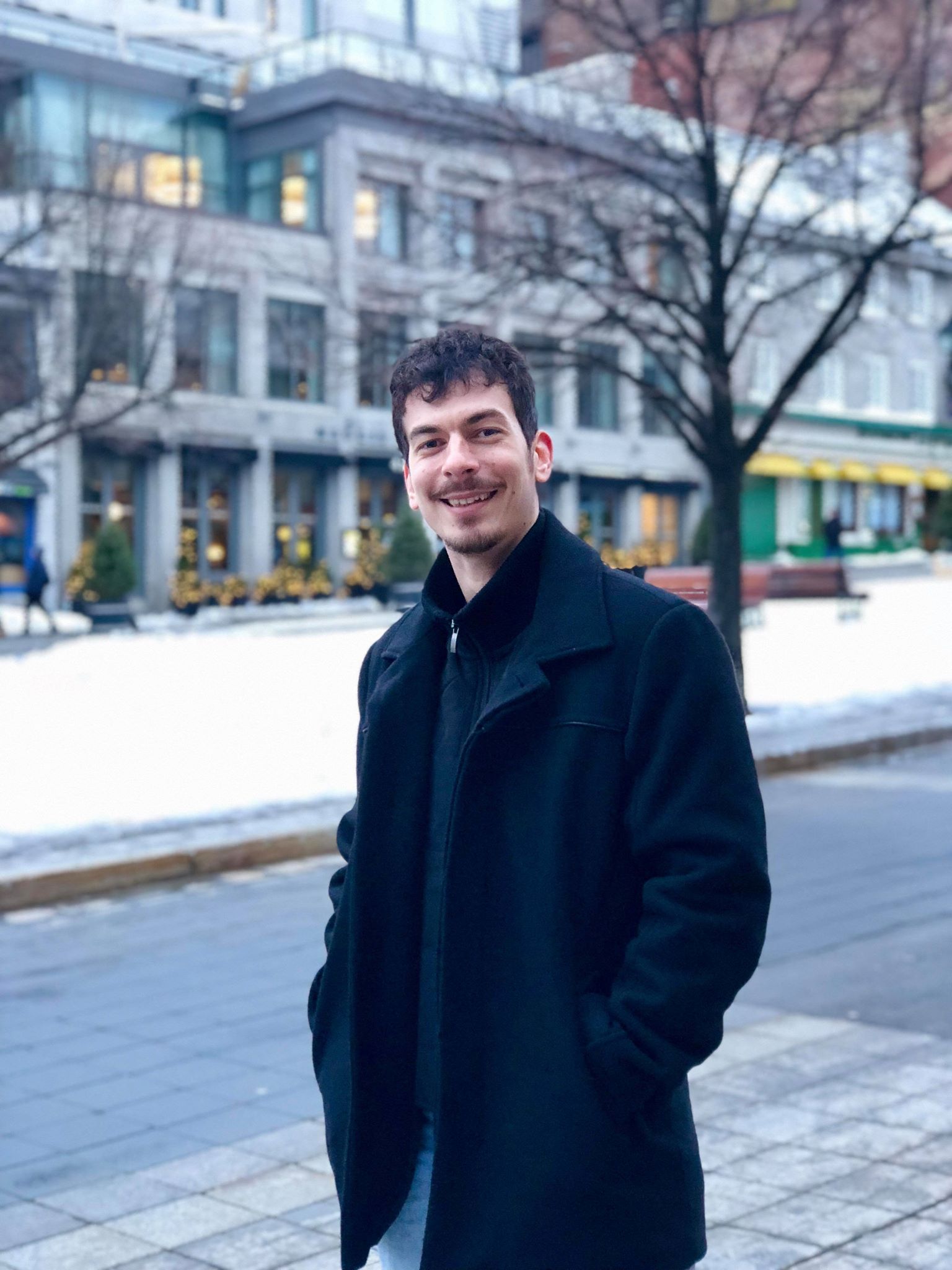
Alexandros Kontogiannis is a research fellow at the University of Cambridge, Department of Engineering, specializing in fluid dynamics and applied mathematics. His work combines Bayesian inference, machine learning, and physics-informed algorithms to solve inverse problems in magnetic resonance velocimetry (MRV) and fluid-structure interaction. EPSRC National Fellow in Fluid Dynamics Member of Energy, Fluids and Turbomachinery Division Research Focus: Development of digital twin frameworks that integrate MRV data with Navier-Stokes equations to reconstruct flowfields, infer rheological parameters in non-Newtonian fluids, and estimate hidden quantities like pressure and wall shear stress. Key innovations include: Physics-informed compressed sensing for sparse MRV data Simultaneous boundary shape and flowfield estimation Bayesian turbulence model parameter learning Scientific Awards: ASME Fluids Engineering Division Graduate Student Scholar (2021) Technical Chamber of Greece (TEE) Award (2018) Limmat Foundation Academic Excellence (2017) Mentzelopoulos Scholarship for international studies (2017) Greek State Scholarships Foundation Award (2012) Key Contributions: Algorithms for 3D flow reconstruction with adaptive discretization, viscous signed distance field regularization, and multi-objective aerodynamic shape optimization. His methodologies enable 27x reductions in MRI scanning time while maintaining diagnostic accuracy.
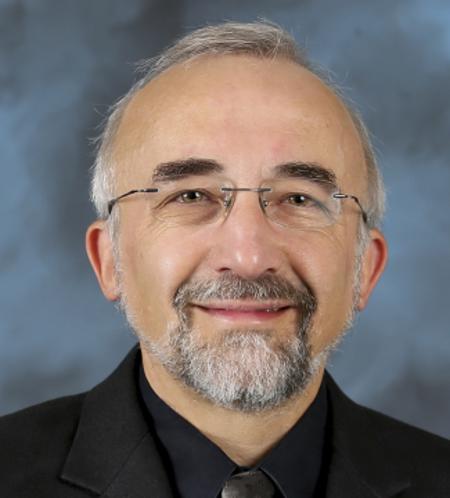
Dr. Ramsey Faragher is a Senior Research Associate at the Computer Laboratory , University of Cambridge, and a Bye-Fellow at Queens' College. His work focuses on infrastructure-free indoor positioning systems, sensor fusion, and improvements to smartphone sensing capabilities. Academic Affiliation : University of Cambridge (Computer Laboratory) Professional Roles : Bye-Fellow at Queens' College, Senior Research Associate His research spans multiple disciplines within computer science and engineering, emphasizing innovative navigation solutions and signal processing techniques. Key areas include GNSS robustness, wireless security, and machine learning applications for positioning systems. Recent publications highlight advancements in supercorrelation for automotive GNSS, sensor data calibration, and motion-compensated signal processing. Articles frequently address challenges such as spoofing mitigation, urban navigation, and infrastructure-free localization. Scientific Recognition Fellow of the Royal Institute of Navigation Chartered Physicist (CPhys)
Kohei Nakajima is an Associate Professor at the Department of Intelligent Mechano-Informatics, Graduate School of Information Science and Technology, The University of Tokyo. He holds concurrent positions at the Department of Creative Informatics and the Next Generation Artificial Intelligence Research Center (AI Center). As an Endowed Chair in Advanced Artificial Intelligence Education, he leads the Physical Intelligence Lab, which focuses on the intersection of soft robotics, nonlinear dynamics, and physical computing. His research interests center on Physical Reservoir Computing (PRC), a paradigm that exploits the natural dynamics of physical systems for computation, with applications in soft robotics, spintronics, and quantum machine learning. Nakajima's work demonstrates how physical systems can inherently process information without traditional digital computation, leveraging phenomena like chaos, bifurcations, and embodied intelligence. Nakajima's publications reveal a strong focus on understanding how physical systems can perform computational tasks. His recent work spans from biological applications (jellyfish cyborgs, ostrich-inspired robotics) to fundamental theoretical advances in reservoir computing. The research demonstrates how physical phenomena can be harnessed for information processing, with implications for energy-efficient computing and novel robotic control paradigms. As the organizer of the Reservoir Computing Seminar, Nakajima has built a vibrant research community exploring the nature of information processing across disciplines. His lab actively recruits graduate students and postdocs, indicating strong research momentum and institutional support for his work in physical intelligence.
Dr. Yanjie Fu is an Associate Professor in the School of Computing and AI at Arizona State University, part of the Ira A. Fulton Schools of Engineering. He maintains his office in BYENG 506 at the Tempe campus and can be reached at yanjie.fu@asu.edu. Dr. Fu received his Ph.D. from Rutgers University in 2016, the B.E. degree from the University of Science and Technology of China, and the M.E. degree from the Chinese Academy of Sciences. His industry research experience includes positions at Microsoft Research Asia and IBM Thomas J. Watson Research Center. His research focuses on developing disruption-robust machine intelligence that can handle imperfect and complex data. Dr. Fu's work spans two major efforts: Data for AI (D4AI), exploring how structure knowledge of data can guide AI, and AI for Data (AI4D), investigating how AI can augment, reprogram, and knowledgeize data. His current research interests include space-time intelligence, data-centric AI, sim2decision, multimodal reasoning, and LLM with agentic AI. His lab has contributed projects including D4AI-spatial, D4AI-timeseries, D4AI-causal outliers, AI4D-RL, AI4D-Gen, and AI4D-LLM. Dr. Fu's recent publications reveal a strong trend toward integrating causal reasoning with deep learning for robust anomaly detection, advancing time series forecasting with novel normalization techniques, and applying generative AI to urban planning. His work increasingly bridges traditional machine learning with large language models, particularly focusing on data-centric approaches for tabular data transformation and feature engineering. US NAE FOE early career engineer (2023) US NSF CAREER (2021) NSF CRII (2018) ACM KDD18 Best Student Paper Finalist IEEE ICDM Best Paper Finalist (2014, 2021, 2022) ACM SIGSpatial Best Paper Runner-up (2020) 2022 Baidu Scholar global top Chinese young scholars in AI 2021 Aminer.org AI 2000 Most Influential Scholar Award Honorable Mention Dr. Fu has successfully mentored multiple Ph.D. students who have secured tenure-track faculty positions at prestigious institutions including University of Kansas, Chinese Academy of Sciences, Great Bay University, Portland State University, and University of Macau. His research has been supported by significant grants including the NSF CAREER award, and he currently serves as Associate Editor of ACM Transactions on Knowledge Discovery from Data. He is also a senior member of both ACM and IEEE. Dr. Fu leads a research group focused on developing trusted and safe machine intelligence. The lab connects computing issues across representation learning, self-supervised learning, interactive learning, adaptive learning, and stream learning to build disruption-robust frameworks. The group executes two key steps: data representation construct (integrating structure knowledge, self-optimization, explainability) and learning strategy construct (integrating robust representations with adaptive and interactive learning).
Dr. Dandolo Flumini is a Researcher at the Zurich University of Applied Sciences (ZHAW), School of Engineering, specializing in Applied Complex Systems Science. His research focuses on artificial life, morphological computation, blockchain applications, and computational modeling. He serves as team member or project lead in multiple interdisciplinary initiatives including Bio-HhOST (bio-hybrid tissues), Agroforestry Carbon Token System, and blockchain-based voting solutions. His primary research interests include: Complex Systems Science : Emergent behaviors in biological and artificial systems Morphological Computation : Physical systems performing computational tasks Artificial Chemistry : Programmable chemical systems using droplet networks Blockchain Applications : Decentralized finance and voting systems Computational Ethics : Responsible implementation of AI and modeling Flumini's recent publications (2019-2023) demonstrate strong focus on microfluidic systems, droplet agglomeration physics, programmable chemistry, and ethical AI. His work frequently appears in artificial life and computational modeling venues, with increasing emphasis on real-world applications in sustainability and decentralized systems. He maintains active collaborations through the Applied Complex Systems Science research group at ZHAW, contributing to projects involving microfluidic device design, blockchain architectures, and bio-hybrid tissue engineering.
Roberto Garello is a Tenured Associate Professor at the Department of Electronics and Telecommunications (DET) of Politecnico di Torino . He specializes in Communication Systems , Satellite Networks , and Channel Coding , with a focus on 5G/6G Technologies and Non-Terrestrial Networks . His work aligns with the School of Master’s Programmes and Lifelong Learning . Research Interests: Satellite communications systems, Direct-to-Satellite IoT constellations, Mega-constellation services in space, and physical layer advancements for 5G/6G. Teaching: Offers courses like Information Theory for Data Science , Communication and Network Systems , and Space Exploration and Resources , while supervising Applied Signal Processing Laboratory . Projects: Leads initiatives such as DitDSSS (satellite localization), RESTART (future telecommunications), and TESL@ (ICT energy efficiency). Scientific Awards: Received Best Paper Awards at CTRQ 2010 and COCORA 2013. Students: Supervises PhD candidates including Alessandro Compagnoni, Agbotiname Lucky Imoize, and Riccardo Tuninato, focusing on topics like Wireless Communication, Machine Learning, and Non-Terrestrial Networks. Publications: His recent work explores OTFS vs. OFDM, spectrum sensing algorithms, MIMO with cylindrical arrays, and 5G NTN synchronization, reflecting trends in satellite IoT and machine learning integration.
Witold "Witek" Nazarewicz is a John A. Hannah Distinguished Professor in the Department of Physics & Astronomy at Michigan State University and serves as the Chief Scientist at the Facility for Rare Isotope Beams (FRIB). He is also a Corporate Fellow Emeritus at Oak Ridge National Laboratory (ORNL) and maintains a professorship at Warsaw University, Poland. Nazarewicz previously held positions as James McConnell Distinguished Professor at the University of Tennessee and served as Scientific Director of ORNL's Holifield Radioactive Ion Beam Facility from 1999-2012. His academic career spans multiple international institutions including Lund University, University of Cologne, Kyoto University, University of Liverpool, and Peking University. Nazarewicz's research focuses on theoretical nuclear physics with particular emphasis on exotic nuclei at the limits of nuclear existence. His work spans quantum many-body problems, physics of open quantum systems, superheavy elements, and nuclear fission. He has pioneered approaches to unify structure and reaction aspects of nuclei based on open quantum system many-body formalism, including the Gamow Shell Model. His research connects nuclear physics with high-performance computing, developing comprehensive descriptions of all nuclei through theoretical and experimental investigations of rare atomic nuclei. An analysis of Nazarewicz's recent publications reveals a strong focus on cutting-edge nuclear structure research, particularly concerning exotic nuclei near the driplines, charge radii measurements, superheavy elements, and the development of advanced computational methods. His work increasingly incorporates machine learning and Bayesian analysis techniques to address nuclear physics challenges. The publications demonstrate his leadership in connecting fundamental nuclear physics with applications in nuclear astrophysics, while also addressing foundational questions about the limits of nuclear existence and the nature of nuclear forces. Fellow of the American Physical Society Fellow of the U.K. Institute of Physics Fellow of the American Association for the Advancement of Science 2008 Carnegie Centenary Professor Honorary Doctorates from University of the West of Scotland (2009) and University of York (2019) 2012 Tom W. Bonner Prize in Nuclear Physics 2012 ORNL Distinguished Scientist 2013 UT-Battelle Corporate Fellow 2017 G.N. Flerov Prize 2025 Marian Smoluchowski Medal Nazarewicz has authored approximately 500 peer-reviewed publications with over 37,000 citations and an h-index of 103 (Web of Science). He has delivered over 220 invited talks at major international conferences and organized approximately 70 scientific meetings. His research has been supported by numerous grants from the Department of Energy, National Science Foundation, and international funding agencies. Nazarewicz plays a leadership role in major nuclear physics initiatives including the UNEDF, NUCLEI, and BAND collaborations, and has contributed to several National Academies reports on nuclear physics. As FRIB Chief Scientist, Nazarewicz leads theoretical efforts at one of the world's premier facilities for rare isotope research. His research group at MSU collaborates extensively with experimentalists worldwide, bridging theoretical predictions with cutting-edge measurements. He directs the FRIB Theory Alliance, fostering international collaboration in nuclear theory, and has established strong connections between nuclear physics and other disciplines including quantum information science and machine learning.
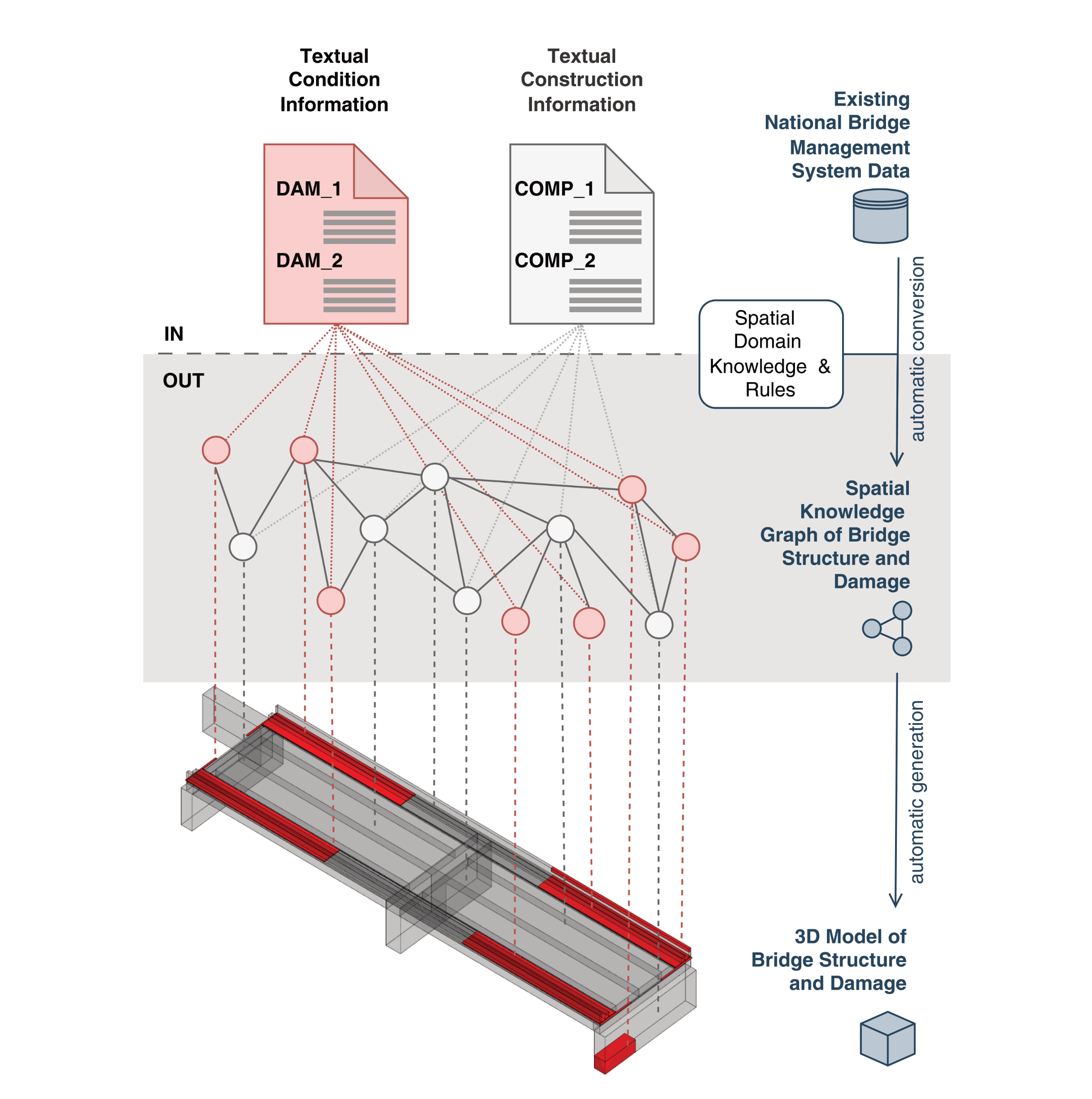
Prof. Dr. Jakob Beetz serves as a University Professor at RWTH Aachen University's Faculty of Architecture, leading the Design Computation (DC) research group. His work addresses critical challenges in sustainable built environments through digital innovation, focusing on integrating knowledge, information, and data across disciplines to reduce the sector's energy and material consumption—which accounts for over one-third of global totals—while advancing climate goals under the European Green Deal. His research spans Building Information Modeling (BIM), digital twins, and artificial intelligence, with emphasis on graph-based data federation, semantic web technologies, and large language models in construction. Key interests include evidence-based planning, parametric design optimization, building physics simulation, and networked knowledge modeling. Recent projects explore federated digital twin ecosystems for infrastructure management, intelligent damage assessment systems, and AI-driven solutions for wood structure preservation, directly contributing to sustainable development targets. Analysis of his 2024-2025 publications reveals a cohesive trajectory toward decentralized data environments and AI integration in Architecture, Engineering, and Construction (AEC). His work bridges theoretical foundations in knowledge representation with practical applications in bridge maintenance, road infrastructure, and timber construction, demonstrating consistent innovation in spatial data querying, federated issue management, and ontology-based process modeling. Prof. Beetz actively supervises PhD candidates, as evidenced by DC.Promotions 2024, and drives international collaboration through events like the Forum Construction Informatics 2025 and CIB W78 conferences. His research group engages with industry standards including Industry Foundation Classes (IFC) and Common Data Environments (CDEs), emphasizing open data principles and interoperability to transform construction workflows.
Ulisses M. Braga-Neto is a Professor in the Department of Electrical and Computer Engineering at Texas A&M University. His work focuses on statistical signal processing, pattern recognition, and machine learning. Research Interests : Statistical Signal Processing Machine Learning (including physics-informed ML and deep neural networks) Pattern Recognition Nonparametric Classification Regression Analysis Additional Information : Affiliated with the TAMIDS Scientific Machine Learning Lab Author of a widely recognized book on machine learning with Python integration Active in graduate education and curriculum development
Ole Morten Aamo is a Professor at the Department of Engineering Cybernetics within the Faculty of Information Technology and Electrical Engineering at the Norwegian University of Science and Technology (NTNU) in Trondheim, Norway. His office is located at Elektro D/B2, D344, Gløshaugen, O. S. Bragstads plass 2, and he can be reached at aamo@ntnu.no or by phone at 73594386. Professor Aamo's research focuses on control theory with particular emphasis on partial differential equations (PDEs) and their applications in drilling engineering and the petroleum industry. His work spans multiple areas including boundary control of hyperbolic systems, adaptive control methodologies, vibration control in drilling operations, and leak detection systems for pipe networks. His research combines theoretical control developments with practical applications in the oil and gas sector, particularly addressing challenges related to stick-slip phenomena, torsional vibrations, and pressure oscillations in drilling operations. His publication record reveals a consistent trajectory of high-impact research in control systems, with a notable shift toward integrating machine learning approaches with traditional control theory in recent years. The majority of his work centers around hyperbolic PDE systems, with applications primarily in drilling engineering and fluid dynamics. His research demonstrates a strong connection between theoretical control developments and practical implementations in the petroleum industry. Professor Aamo has actively supervised multiple graduate students, as evidenced by the master's theses listed in his publication record. His work often appears in top-tier control journals including IEEE Transactions on Automatic Control, Automatica, and IEEE Control Systems Letters, as well as petroleum engineering venues like SPE Journal and ASME publications.
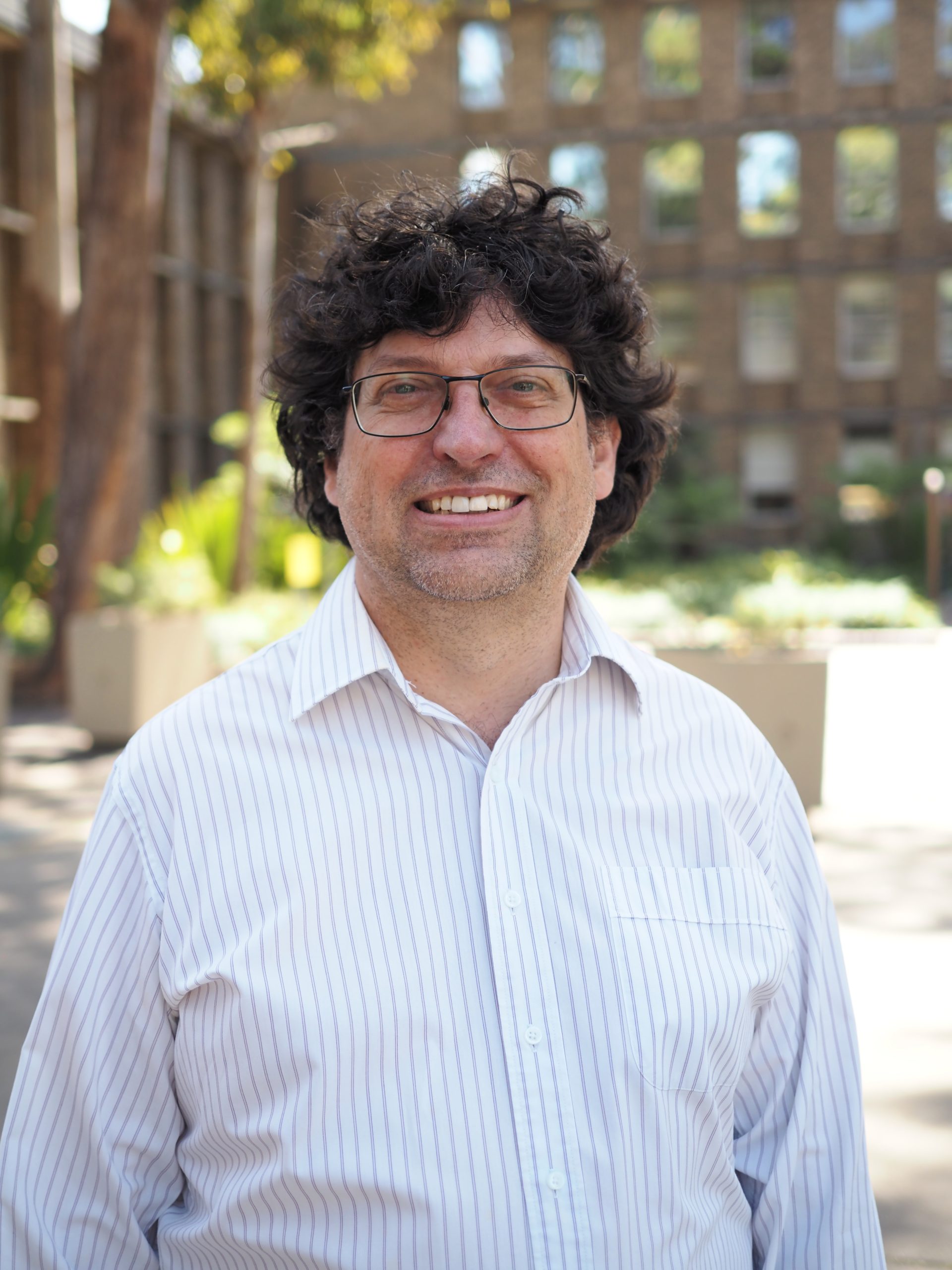
Professor Jason Evans is a leading climate scientist at the University of New South Wales (UNSW), serving as Chief Investigator at the Climate Change Research Centre. He completed his undergraduate degrees in physics and mathematics at Newcastle University in 1996 and earned his PhD in Environmental Management from the Australian National University in 2001. After six years as a postdoctoral and research fellow at Yale University, he returned to Australia in 2007 to join UNSW's Climate Change Research Centre. Education: Bachelor's degrees in Physics and Mathematics, Newcastle University (1996) PhD in Environmental Management, Australian National University (2001) Research Interests: Professor Evans specializes in regional climate dynamics, focusing on land-atmosphere interactions and the water cycle in the context of climate change. His research integrates advanced modeling tools with extensive observational datasets, particularly emphasizing satellite-based remote sensing and earth observations . His work addresses critical questions about regional climate change impacts, including urban climate dynamics, extreme weather events, drought mechanisms, and renewable energy implications under changing climate conditions. His research spans multiple interconnected domains: from developing novel approaches for moisture source identification using Lagrangian methods , to investigating flash drought prediction using deep learning techniques , and evaluating the performance of high-resolution climate simulations across diverse geographical regions including Australia, Alaska, and Saudi Arabia. Scientific Recognition: Lead Author, IPCC Special Report on Climate Change, Desertification, Land Degradation, Sustainable Land Management, Food Security, and Greenhouse Gas Fluxes in Terrestrial Ecosystems Member, Science Advisory Team for CORDEX (World Climate Research Programme) Editor, Journal of Climate (2016-2022) Fellow, Modelling and Simulation Society of Australia and New Zealand (2020) Biennial Medal, Modelling and Simulation Society of Australia and New Zealand (2021) Fellow, Royal Society of New South Wales (2021) Research Impact and Contributions: Professor Evans has made significant contributions to understanding regional climate change through his extensive publication record of over 50 articles since 2021. His work has advanced knowledge in areas including urban climate dynamics , drought mechanisms and prediction , extreme weather events , and renewable energy impacts under climate change . His research has informed climate policy through his role as a Lead Author for the IPCC and his involvement with international climate research initiatives like CORDEX.
Xuming He is an Associate Professor at the School of Information Science and Technology (SIST), ShanghaiTech University, where he leads the PLUS Lab. His research spans computer vision and machine learning with a focus on developing algorithms that operate effectively under limited supervision and evolving data conditions. His core research interests include weakly-supervised and few-shot learning for scenarios with sparse annotations, continual learning frameworks for knowledge retention during sequential task acquisition, semantic segmentation techniques for scene understanding, and multimodal vision-language representations. He emphasizes interpretable machine learning to build transparent AI systems capable of human-understandable reasoning, addressing critical challenges in model trustworthiness and deployment reliability. Recent publications reveal strong trends toward novel class discovery in long-tailed recognition scenarios, physics-informed generative modeling for scientific applications, and robust segmentation under distribution shifts. His work increasingly integrates large language models for multimodal reasoning while maintaining focus on efficiency in resource-constrained environments like robotic grasping and medical imaging analysis. He actively mentors students, having supervised Qian He to PhD completion and Chuanyang Hu to Master's degree in 2023. He welcomes prospective graduate students through ShanghaiTech's Computer Science & Technology program and offers undergraduate research projects requiring minimum six-month commitments. The PLUS Lab under his direction drives innovation in learning under supervision constraints, with recent work spanning medical tumor analysis, cross-view geolocation, photonic computing, and semiconductor design verification. The lab's research bridges theoretical advances with practical applications across healthcare, robotics, and scientific discovery domains.
Figen S. Oktem is an Associate Professor in the Department of Electrical and Electronics Engineering at Middle East Technical University (METU), Ankara, Turkey. Her research focuses on advanced imaging systems and algorithms, including computational imaging, inverse problems, and machine learning applications in signal processing. Ph.D., Electrical and Computer Engineering, University of Illinois at Urbana-Champaign (UIUC) (2014) M.S., Electrical and Electronics Engineering, Bilkent University (2009) B.S., Electrical and Electronics Engineering, Bilkent University (2007) Her work bridges physics-informed machine learning and computational optics, with applications in spectral imaging, radar, and microwave systems. She has also explored Fourier phase retrieval, denoising diffusion models, and real-time MIMO radar imaging. Recent publications highlight trends in phase retrieval using deep learning ( prNet , I2I-PR , DDRM-PR ), 3D MIMO imaging, and compressive spectral imaging. Techniques often integrate plug-and-play regularization, stochastic refinement, and physics-based priors. She can be contacted via email at figeno@metu.edu.tr . Curriculum vitae and publications are accessible through her Google Scholar profile.
Miguel Mahecha is Professor of Environmental Data Science and Remote Sensing at the University of Leipzig, where he serves as Institute Head of the Institute for Earth System Science and Remote Sensing. He is also affiliated with the Remote Sensing Centre for Earth System Research, a collaboration between Leipzig University and the Helmholtz Centre for Environmental Research (UFZ). Mahecha is a member of the German Centre for Integrative Biodiversity Research (iDiv) and serves as Principal Investigator in the Centre for Scalable Data Analytics and Artificial Intelligence. Additionally, he is a Fellow of the European Laboratory for Learning and Intelligent Systems and co-spokesperson for the National Research Data Infrastructure for Earth System Sciences (NFDI4Earth). Full Professor for Modelling Approaches in Remote Sensing, University of Leipzig (since 03/2020) Research Group Leader: Empirical Inference in the Earth System, Max Planck Institute for Biogeochemistry, Jena (12/2012 - 03/2020) PostDoc, Max Planck Institute for Biogeochemistry, Jena (10/2009 - 11/2012) PhD in Environmental Sciences, ETH Zürich (06/2006 - 09/2009) Diploma in Geoecology, Bayreuth University (10/2000 - 04/2006) Mahecha's research focuses on understanding ecosystem responses to climate extremes and human-environment relationships during these events. He investigates macro-ecological dynamics and ecosystem functioning using data-driven methods and high-dimensional Earth observations. A key contribution is his co-development of the Earth System Data Cube concept, which integrates empirical methods with theoretical understanding to analyze complex Earth system interactions. His work spans biogeography, ecosystem functioning, and advanced data science methodologies for environmental monitoring. His recent publications demonstrate a strong emphasis on analyzing compound climate extremes, particularly heatwaves and droughts, and their impacts on ecosystems. Mahecha has pioneered methods using Earth System Data Cubes to integrate diverse environmental datasets, enabling novel insights into biosphere-atmosphere interactions. His research increasingly incorporates artificial intelligence and machine learning approaches to understand spatiotemporal patterns in ecological systems, with applications in real-time forest monitoring and biodiversity assessment. Fellow of the European Laboratory for Learning and Intelligent Systems Co-spokesperson for NFDI4Earth (National Research Data Infrastructure for Earth System Sciences) Mahecha leads multiple significant research projects including Digital Forest (real-time forest monitoring), NFDI4BioDiversity, and XAIDA (extreme events: AI for Detection and Attribution). His work receives funding from diverse sources including EU, DFG, and Stiftungen Inland. He collaborates extensively with the German Centre for Integrative Biodiversity Research (iDiv) and the Centre for Scalable Data Analytics and Artificial Intelligence. His research group, Earth System Data Science (ESDS), focuses on developing methods to extract valuable information from long-term environmental observations to understand coupled Earth system dynamics. At the Remote Sensing Centre for Earth System Research, Mahecha's ESDS group investigates how ecosystem functions respond to climate extremes, societal vulnerability to environmental hazards, and nonlinear interactions in coupled Earth systems. The group leverages citizen science data, remote sensing observations, and advanced computational methods to address pressing environmental questions.
Jie Chen is an Assistant Professor in the Department of Mechanical Engineering at Virginia Tech's College of Engineering. Their research bridges machine learning with engineering analysis and design under uncertainty, focusing on process-structure-property-performance relationships. PhD, Mechanical Engineering (2022) – Arizona State University MS, Civil Engineering (2018) – Beihang University BS, Civil Engineering (2015) – Beihang University Research interests include: physics-informed machine learning, uncertainty quantification, predictive maintenance, materials design, and advanced manufacturing. The SEAD Lab develops methods to integrate engineering analysis into stochastic machine learning algorithms and uses AI for knowledge discovery in uncertain environments. Recent publications emphasize: Digital twin frameworks combining machine learning and Bayesian optimization Graph neural networks for high-entropy alloy and molecular mixture property prediction Physics-guided neural networks for fatigue life analysis of additively manufactured alloys Uncertainty quantification in imbalanced regression tasks and multi-fidelity data fusion Real-time imaging of polymer deformation mechanisms The lab actively mentors students, including PhD candidate Yisheng Lu, and manages projects in predictive maintenance, fatigue modeling, and materials design.