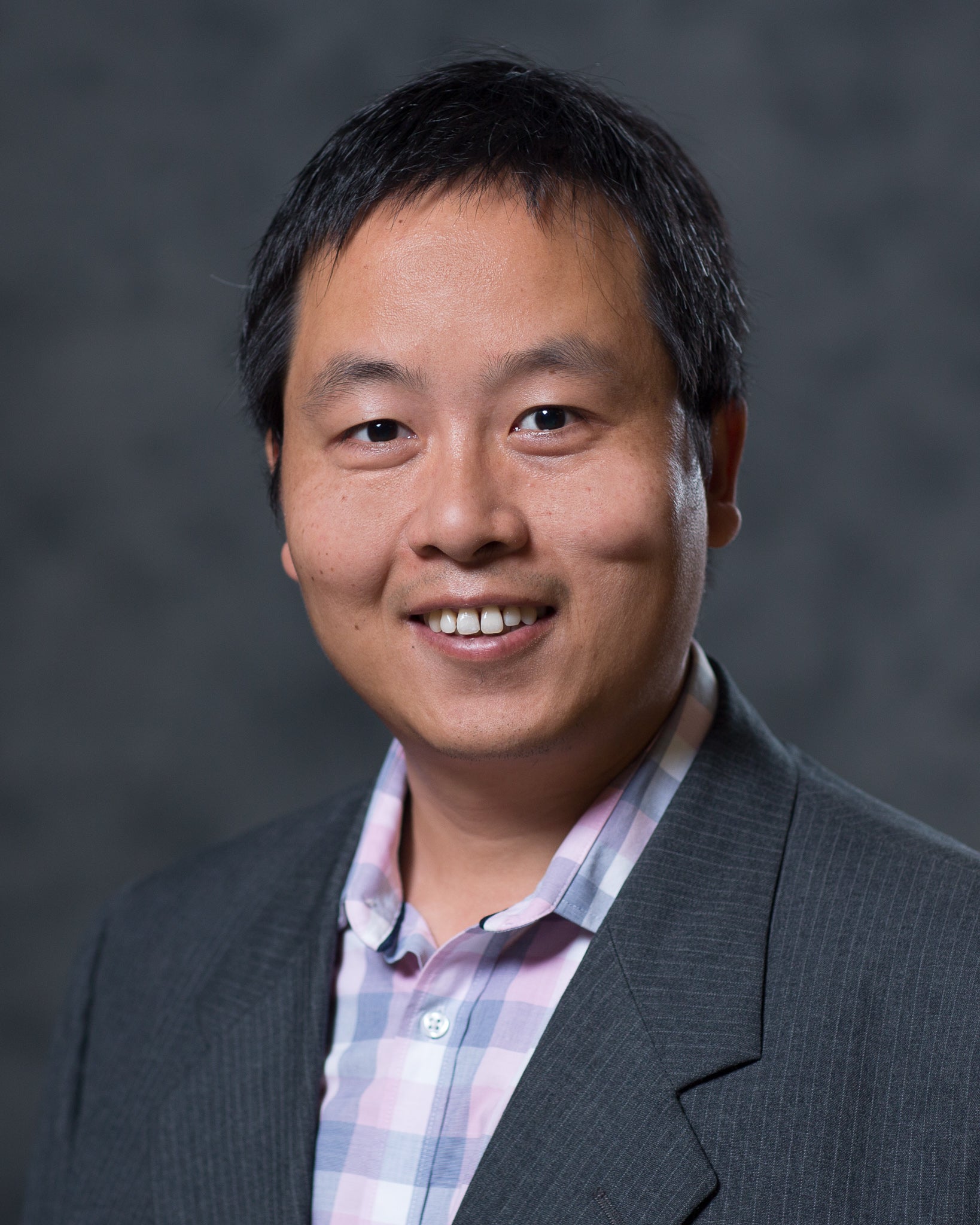
Jianxi Gao is an Associate Professor in the Department of Computer Science at Rensselaer Polytechnic Institute (RPI). His research focuses on network science, particularly network resilience, robustness, and control, integrating network theory, control theory, statistical physics, and operations research. He also explores the intersection of network science and AI, including applications of AI to network analysis and vice versa. His work aims to understand, predict, and control the resilience of complex systems against cascading failures. Key research areas include network resilience in transportation systems, quantum networks, and biological systems, with applications to pandemic response and infrastructure optimization. Gao's contributions span theoretical frameworks and computational tools, such as the NuRsE MATLAB package for network resilience analysis. His GitHub repositories (e.g., NuRsE and NON) showcase his open-source contributions to network science and computational methods. His recent publications address topics like AI-driven network analysis, quantum network percolation, and pandemic-induced healthcare system stress. He actively collaborates on interdisciplinary projects, emphasizing real-world applications of network science principles.
William S. Oates is the Cummins, Inc. Professor of Engineering in the Department of Mechanical Engineering at Florida A&M / Florida State University. He holds affiliations with the Mechatronics and Energy Center and the Florida Energy Systems Consortium (FESC). His research focuses on solid mechanics of multifunctional materials, quantum-informed continuum modeling, and applications in robotics, aerospace, and energy systems. He has advised over 20 graduate students and holds awards including ASME Fellow (2018) and NSF CAREER Award (2011). Education: Ph.D. from Georgia Institute of Technology. Research spans smart materials, fractal media mechanics, and quantum computing for material modeling. Key projects include high-temperature sapphire pressure sensors, photomechanical polymers, and Bayesian uncertainty quantification in materials science. Notable awards include DARPA Young Faculty Award (2009) and FSU Guardian of the Flame Teaching Award (2010). His lab collaborates with the National High Magnetic Field Lab and Challenger Learning Center for K-12 outreach. Current research includes quantum algorithm implementation for engineering applications and fractal-based viscoelastic models.
Alexandru G. Bardas is an Associate Professor at the University of Kansas in the Department of Electrical Engineering & Computer Science (EECS) and the Institute for Information Sciences (I2S) . He received his PhD from Kansas State University under advisors Xinming (Simon) Ou and Scott A. DeLoach. His research focuses on cybersecurity from a systems perspective , including moving target defenses, security operations center (SOC) metrics, DevOps security, power grid cybersecurity, and defensive technologies for political activists. He explores UDP-based DDoS detection, DNS traffic analysis, and the intersection of AI with cybersecurity, emphasizing foundational knowledge over tool-specific training. Key research areas: Cybersecurity, Systems Security, Moving Target Defenses, SOC Metrics, DevOps Security Recent publications in ACSAC 2024 , USENIX Security 2024/2023 , and IEEE Security & Privacy 2022 Dr. Bardas has received significant recognition including: NSF CAREER Award (2022) for SOC automation Bellows Scholar (2021) at KU NSA SoS Honorable Mention (2023) He actively advises students across disciplines, with graduates now at Sandia National Laboratories , Blue Cross Blue Shield , and Pacific Northwest National Laboratory . Dr. Bardas participates in NSF grant reviews , serves on program committees for SOUPS and MILCOM , and leads outreach initiatives like the GenCyber Summer Camp .
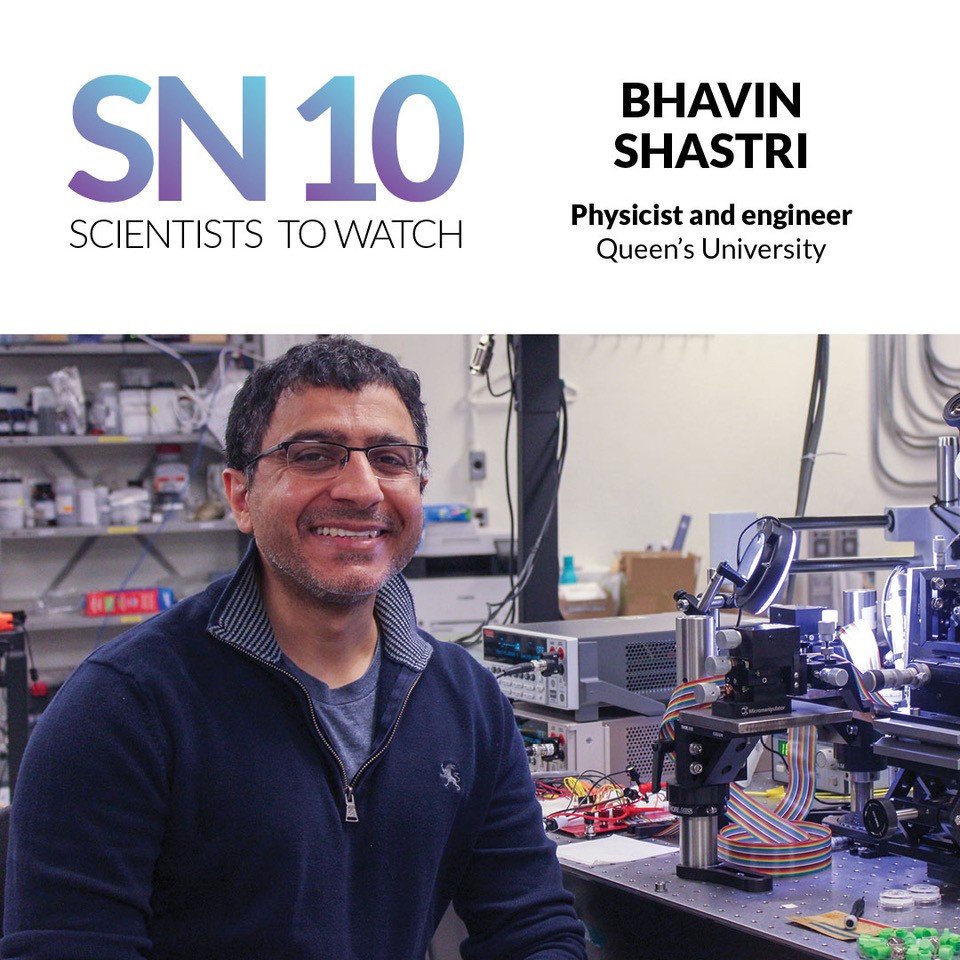
Bhavin Shastri is Canada Research Chair in Neuromorphic Photonic Computing and Assistant Professor of Engineering Physics at Queen's University. He directs research developing light-based computing systems that mimic neural processing for AI applications. His lab designs photonic integrated circuits that implement neural network architectures on chip-scale platforms. Research focuses on overcoming limitations of conventional computing through nanophotonic physics and novel materials. Publications demonstrate advances in photonic tensor cores, quantum photonic neural networks, and microwave photonic processors. Recent work achieves orders-of-magnitude improvements in processing speed and energy efficiency over electronic systems. Awards include: Alfred P. Sloan Research Fellowship (2025) Royal Society of Canada College Member (2024) Science News SN10 Scientist to Watch (2024) SPIE Early Career Award (2022) As Scientific Co-Director of NSERC's NUCLEUS program, he leads national efforts in photonic computing. Guides 12+ graduate students researching silicon photonics, neuromorphic architectures, and quantum photonics.
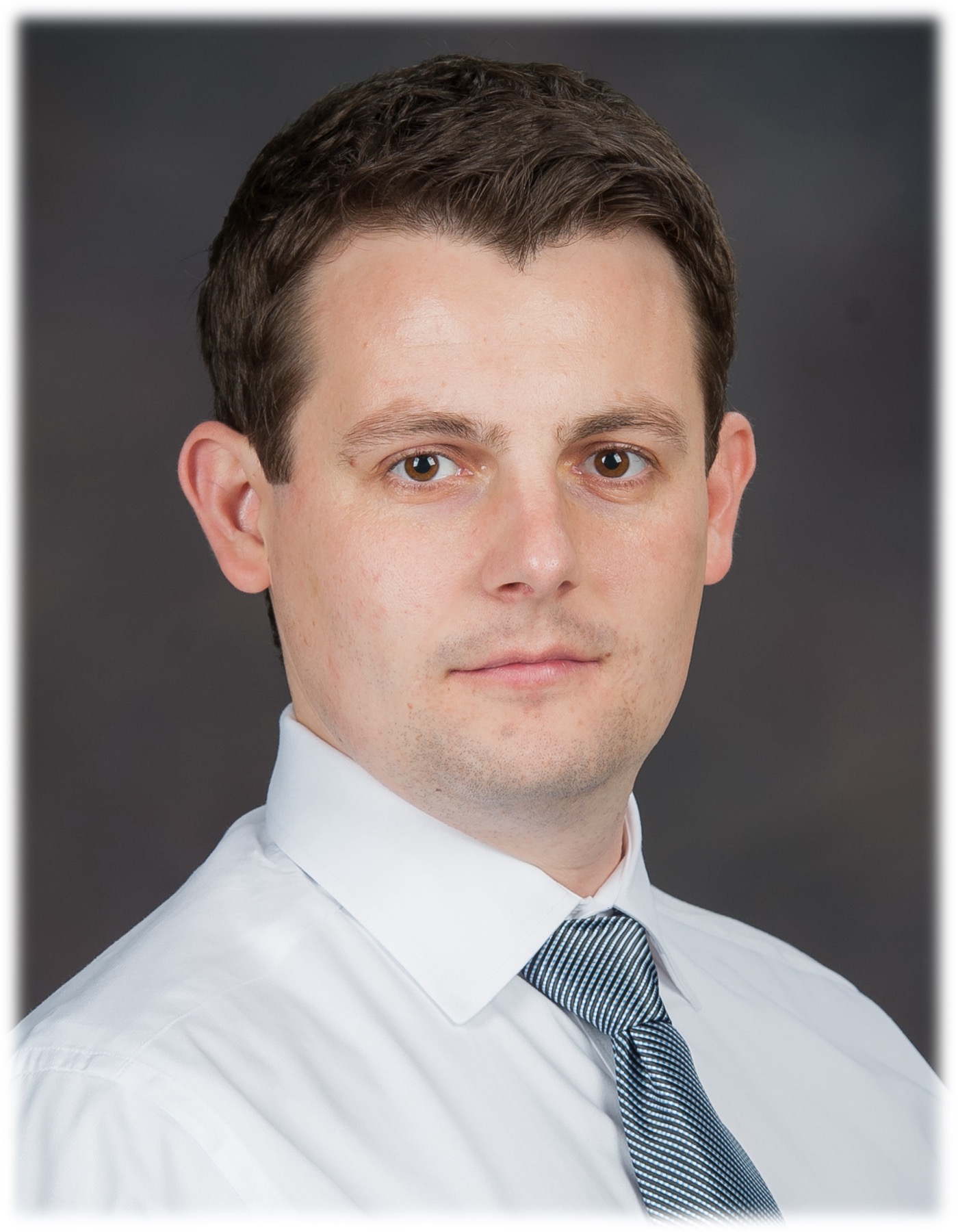
Roland N. Horne is the Thomas Davies Barrow Professor of Earth Sciences at Stanford University and Senior Fellow at the Precourt Institute for Energy. He holds positions in the Department of Energy Science & Engineering and is an Affiliate at the Stanford Woods Institute for the Environment. With degrees from the University of Auckland (BE, PhD, DSc), Horne has established himself as a leading expert in geothermal reservoir engineering and energy production optimization. His research focuses on inverse problems in reservoir modeling, including tracer analysis of fractures, computer-aided well test analysis, production schedule optimization, and automated history matching. Horne has made significant contributions to understanding geothermal reservoir engineering and multiphase flow of boiling fluids through porous materials and fractures. The analysis of his recent publications (2023-2025) reveals a strong emphasis on enhanced geothermal systems (EGS), with particular focus on flexible operations, economic modeling, and advanced characterization techniques. His work increasingly incorporates machine learning approaches for reservoir analysis and has expanded into microbial tracing methods for interwell connectivity assessment. There's also significant attention to US geothermal resource potential and integration into the broader energy transition. Honorary Member of the Society of Petroleum Engineers Member of the US National Academy of Engineering Multiple SPE Distinguished Lecturer appointments (1998, 2009, 2020) John Franklin Carl Award recipient Five Best Paper awards from Geothermal Resources Council Patricius Medal from German Geothermal Society Core Values Award from Women in Geothermal (2023) Horne has supervised 60 PhD and 135 MS students throughout his career. His current teaching includes undergraduate and graduate courses in Fundamentals of Energy Processes, Geothermal Reservoir Engineering, Mass and Energy Transport in Porous Media, and Well Test Analysis. He previously served as President of the International Geothermal Association (2010-2013) and Technical Program Chair for multiple World Geothermal Congress events. Horne maintains active research collaborations worldwide, including with the University of Tokyo (where he was a Fellow of the School of Engineering in 2016) and China University of Petroleum. His current research group focuses on advancing EGS technologies and developing more accurate reservoir characterization methods for geothermal applications.
NG Hui Khoon is an Associate Professor at the National University of Singapore , affiliated with Yale-NUS College and the Centre for Quantum Technologies . She holds a PhD in Physics from the California Institute of Technology (Caltech), USA (2009). Research Interests: Her work focuses on theoretical aspects of quantum information and computation, particularly quantum error correction and fault tolerance , quantum noise modeling , and quantum tomography . She investigates how resource constraints limit quantum computing and develops adaptive methods for quantum state estimation using neural networks. Publication Trends: Her recent articles (2021–2013) emphasize quantum error correction frameworks, tomography techniques, and statistical methods for quantum systems. Key themes include fault tolerance under amplitude-damping noise, randomized benchmarking for time-correlated dephasing, and Bayesian approaches for prior-data conflict checking. Scientific Awards: Early Career Teaching Award (2019, Inaugural recipient) CQT Fellowship (2019 – current) Advising & Grants: No explicit advising or grant details are provided. She collaborates with institutions like the Centre for Quantum Technologies and Yale-NUS College. Labs & Teams: She is associated with the Centre for Quantum Technologies, a leading research center in quantum information science.
Kathleen H. Sienko is the Arthur F. Thurnau Professor in the Department of Mechanical Engineering at the University of Michigan's College of Engineering. She directs the Sienko Research Group, a multidisciplinary lab focused on developing technological solutions at the intersection of healthcare and engineering. Her work spans medical device design, design science, and engineering education with a strong emphasis on global health contexts. Dr. Sienko earned her Ph.D. in Medical Engineering and Bioastronautics from the Harvard-MIT Division of Health Sciences and Technology (HST) program in 2007, an S.M. in Aeronautics & Astronautics from MIT in 2000, and a B.S. in Materials Engineering from the University of Kentucky in 1998. Ph.D., Medical Engineering and Bioastronautics, Harvard-MIT Division of Health Sciences and Technology, 2007 S.M., Aeronautics and Astronautics, Massachusetts Institute of Technology, 2000 B.S., Materials Engineering, University of Kentucky, 1998 Her research focuses on sensory augmentation, rehabilitation engineering, biomechanics, and medical device design with emphasis on global health contexts and task-shifting devices. She has pioneered efforts to incorporate global health technology constraints within engineering design education at undergraduate and graduate levels, establishing field sites in sub-Saharan Africa and Asia where numerous devices have been conceptualized and refined with local stakeholders. Her work in design science examines how and when designers use prototypes in development cycles and how prototypes assist during stakeholder interactions and user requirements identification. Her recent publications reveal a strong trend toward human-centered approaches in global health design, with increasing focus on stakeholder engagement, contextual factors in engineering design, and equity considerations in health technology development. Her work bridges biomechanics, rehabilitation engineering, and design methodology with applications in balance assessment, medical device development for low-resource settings, and engineering education. Dr. Sienko has received numerous prestigious awards including the NSF CAREER Award, University Undergraduate Teaching Award, Provost's Teaching Innovation Prize, and the Miller Faculty Scholar Endowed Award. Her recognition spans teaching excellence, research innovation, and outreach contributions. NSF CAREER Award, 2009 Provost's Teaching Innovation Prize, 2012 Miller Faculty Scholar Endowed Award, 2013 University Undergraduate Teaching Award, 2012 Raymond J. and Monica E. Schultz Outreach and Diversity Award, 2011 She has advised numerous graduate students including Nick Moses (who defended his dissertation in December 2023), Lucy Spicher, Marty Kilbane, and Ibrahim Mohedas. Her research has been supported by significant grants from the National Science Foundation, including the CAREER program, Research Initiation Grants in Engineering Education, and the Graduate Research Fellowship program, as well as funding from the University of Michigan's Rackham Merit Fellows program and Center for Research on Learning and Teaching. The Sienko Research Group operates as a talented multidisciplinary lab developing novel methodologies to create technological solutions addressing pressing societal needs at the healthcare-engineering intersection. Current research thrusts include Design Science, Autonomous Vehicles, Balance, Sensory Augmentation, and Wearable Devices, with particular emphasis on how design ethnography can inform medical device development and how engineering students develop ethnographic skills for global health contexts.
Taylor Johnson is an Associate Professor of Computer Science and Electrical and Computer Engineering at Vanderbilt University's School of Engineering. He directs the Verification and Validation for Intelligent and Trustworthy Autonomy Laboratory (VeriVITAL) and serves as a Senior Research Scientist in the Institute for Software Integrated Systems. Previously, he was an Assistant Professor at the University of Texas at Arlington from 2013 to 2016. His research focuses on formal verification techniques for cyber-physical systems (CPS), emphasizing safety, reliability, and security through hybrid systems, formal methods, and control theory. He has published extensively on neural network verification, earning best paper awards and recognition from IEEE, IFIP, and ACM. Education: Ph.D., Electrical and Computer Engineering (University of Illinois at Urbana-Champaign, 2013) M.Sc., Electrical and Computer Engineering (University of Illinois at Urbana-Champaign, 2010) B.S.E.E., Electrical and Computer Engineering (Rice University, 2008) Research Interests: Formal verification of neural networks and CPS, safety-critical systems, autonomous systems, and AI/ML security. His work bridges theoretical foundations (e.g., hybrid systems) with practical applications in aerospace, energy systems, and robotics. Key Contributions: Developed the NNV tool for neural network verification, led the Verification of Neural Networks Competition (VNN-COMP), and pioneered techniques for robust federated learning and malware detection. Awards: AFOSR YIP Award (2016), NSF CRII Award (2015), and multiple best paper honors. His research is funded by AFRL, NSF, Intel, NVIDIA, and industry partners. Labs & Collaborations: VeriVITAL Lab (Vanderbilt), collaborations with United Technologies Research Center, Boeing, and Toyota.
Sarah Masud Preum is an Assistant Professor of Computer Science at Dartmouth College, with adjunct roles in the Department of Biomedical Data Science at Geisel School of Medicine and as Faculty Affiliate at the Center for Technology and Behavioral Health (CTBH). She also serves as Technical Associate Director of the Dartmouth Center for Precision Health and Artificial Intelligence. Her work focuses on machine learning for computational health, including natural language processing, temporal modeling, and human-AI interaction to develop personalized decision support systems in healthcare. Education includes a B.Sc. from Bangladesh University of Engineering and Technology, followed by M.Sc. and Ph.D. degrees from the University of Virginia. Previously, she was a postdoctoral research scholar at Carnegie Mellon University's School of Computer Science, recognized as a Rising Stars in EECS (2020) for her academic excellence and contributions to equity in STEM. Her research interests span Human-AI Interaction, Natural Language Processing, Mobile Health, and Cyber-Physical Systems. Over 2020–2023, her publications emphasize AI-driven solutions for healthcare challenges like conflict detection in health information and cognitive assistants for emergency response. Earlier work includes behavioral prediction models (MAPer) and spatial database optimizations (Maximum Visibility Queries). Awards: Rising Stars in EECS (2020) In teaching, she offers courses like Transforming Healthcare through Machine Learning and Machine Learning and Statistical Data Analysis. Her affiliations with multidisciplinary centers reflect her commitment to bridging technology and healthcare.
Professor Raja Jurdak is a leading academic in distributed systems and applied data sciences at Queensland University of Technology (QUT), where he directs the Trusted Networks Lab. He holds dual roles as Professor of Distributed Systems and Chair in Applied Data Sciences, alongside leadership in the Centre for Data Science. His research focuses on dynamic network modeling, blockchain-based trust frameworks, and IoT applications, with particular emphasis on cybersecurity, energy efficiency, and mobility-driven diffusion processes. Jurdak formerly led CSIRO's Distributed Sensing Systems Group and maintains a visiting scientist role there. Education: PhD in Information and Computer Science, University of California, Irvine MS in Computer Networks and Distributed Computing, University of California, Irvine BE in Computer and Communications Engineering, American University of Beirut Research Interests: Network science, blockchain technology, IoT security, sustainable energy systems, and data-driven decision-making. His work bridges theoretical advancements with practical applications in smart grids, health surveillance, and urban mobility. Awards: Finalist for the 2019 Eureka Prize, multiple CSIRO accolades, and IEEE Senior Member status. His research has received industry recognition for interdisciplinary innovation, including the DiNeMo project's real-time disease surveillance system. Advisory & Grants: Leads high-impact projects funded by government and industry partnerships. Supervises PhD candidates in areas like decentralized data processing and privacy-preserving AI. Holds editorial roles at journals such as Ad Hoc Networks and PLoS ONE . Labs & Teams: Directs the Trusted Networks Lab at QUT, fostering collaborations with institutions like Oxford University and MIT. His work emphasizes cross-disciplinary teams to address global challenges in cybersecurity and sustainable systems.
Parinaz Naghizadeh is an Assistant Professor in the Department of Electrical and Computer Engineering at the University of California San Diego (UCSD), affiliated with the Design Lab. She holds a PhD from the University of Michigan and has prior roles at Ohio State University and postdoctoral positions at Purdue and Princeton. Her research focuses on network economics, game theory, AI ethics, optimization, and cybersecurity. She received the NSF CAREER Award (2022), Rising Stars in EECS (2017), and Barbour Scholarship (2014). Education: PhD in Electrical Engineering (University of Michigan), M.Sc. in Mathematics and Electrical Engineering (University of Michigan), B.Sc. in Electrical Engineering (Sharif University of Technology, Iran). Research Interests: She develops mathematical models to analyze decision-making in complex networks, with emphasis on AI ethics, multi-agent systems, and cybersecurity. Recent work explores biases in AI, strategic classification, and incentive mechanisms for security investments. Article Trends: Her recent publications (2023-2025) address strategic classification challenges, multiplex network equilibria, federated learning fairness, and robust control in cyber-physical systems. Themes include ethical AI, game-theoretic security design, and optimization under uncertainty. Awards: NSF CAREER Award (2022), Rising Stars in EECS (2017), Barbour Scholarship (2014) Advising & Grants: No student advisees listed, but active in securing research grants (e.g., NSF CAREER). Works with interdisciplinary teams in UCSD's Design Lab. Labs/Teams: Affiliated with UCSD's Design Lab, focusing on innovative engineering solutions for societal challenges.
Christian Jacob is a Professor in the Department of Computer Science within the Faculty of Science at the University of Calgary . He holds a B.S. in Computer Science and a Doctor of Engineering Science from Erlangen University . His research focuses on nature-inspired algorithms, biocomputing, and agent-based simulations applied to biological systems and education. Key initiatives include the LINDSAY Virtual Human Project , which uses immersive virtual reality to explore human anatomy and physiology. He contributes to the university's strategic priorities in Digital Worlds and Health and Life initiatives. His work integrates evolutionary algorithms, cellular automata, and swarm intelligence into creative and medical applications. Notable achievements include the ASTech Award (2015) from Alberta Science and Technology. His projects emphasize interactive education through tools like LeukemiaSIM , Eukaryo , and the Giant Walkthrough Gut . Jacob also explores visualization techniques, such as evoVision3D and LifeBrush , to enhance scientific understanding. His research bridges computational methods with real-world applications in healthcare, architecture, and game design. Collaborative efforts include developing agent-based models for immune systems, nervous responses, and crowd behavior. Jacob's work spans interdisciplinary fields, blending computer science with biology, engineering, and the arts.
Edriss S. Titi is a University Distinguished Professor and Arthur Owen Professor of Mathematics at Texas A&M University within the College of Arts & Sciences. His research focuses on nonlinear partial differential equations, applied mathematics, and geophysical fluid dynamics. He leads studies on fluid mechanics, atmospheric and oceanic dynamics, data assimilation, and control theory. His work often addresses mathematical rigor in modeling complex systems like climate dynamics and turbulent flows. Research Interests: Nonlinear PDEs and their applications Fluid dynamics and turbulence Data assimilation algorithms Climate and ocean modeling Infinite-dimensional dynamical systems Recent publications emphasize Navier-Stokes equations , primitive equations , and data assimilation in chaotic systems . His methodologies bridge theoretical analysis and computational modeling, with applications to weather prediction and geophysical flows. Collaborations include the Institute for Applied Mathematics and Computational Science (IAMCS) at Texas A&M. Notable contributions include rigorous analysis of global well-posedness for oceanic models and development of CDAnet, a physics-informed deep learning framework for fluid flow downscaling.
Chen Wei Wayne is an Assistant Professor in the Department of Mechanical Engineering at Texas A&M University. His research focuses on generative design AI, machine learning, uncertainty quantification, and advanced manufacturing. He leads the DIGIT Lab, which develops AI methods for design innovation, automation, and manufacturing integration. Education: Ph.D., Mechanical Engineering, University of Maryland, College Park (2019) M.S., Mechanical Engineering, Chongqing University, China (2015) B.S., Mechanical Engineering, Chongqing University, China (2012) Research Interests: Generative adversarial networks (GANs) for design synthesis Data-driven metamaterials and multiscale systems Uncertainty quantification in engineering design AI-driven design automation Awards & Honors: ASME Journal of Mechanical Design Reviewer of the Year Award (2023) ASME DAC Best Paper Award (2022) Journal of Mechanical Design Editors’ Choice Honorable Mention (2021) Lab Activities: Recent lab milestones include successful completion of TAMUQ Summer Research Programs (2024) Hosts undergraduate researchers like Wisam Gadam and Eddie Guerrero
Dr. Shoufeng Lan is an Assistant Professor in the Department of Mechanical Engineering at Texas A&M University's College of Engineering, with affiliated appointments in Electrical & Computer Engineering and Materials Science & Engineering. His research focuses on advanced nanophotonics, exploring light-matter interactions across disciplines including quantum photonics, metamaterials, and 2D materials. Educational background includes a Ph.D. in Electrical and Computer Engineering with a Physics minor from Georgia Institute of Technology (2017), M.S. in ECE/Physics from University of New Mexico (2012), and dual B.S./B.E. degrees from Nankai University/Tianjin University (2007). Research interests span: Light-assisted control, sensing and manufacturing mechanics Plasmonic/metamaterial development Nonlinear/quantum/topological photonics Photon-induced chemical and biomedical synthesis His publications demonstrate consistent innovation in nanophotonics with recent focus on optical metamaterials, exciton control, and machine learning applications in photonics. Award highlights include the 2022 IAC Undergraduate Teaching Award and 2018 Sigma Xi Best Thesis Award. Current doctoral students include Yixin Chen and Sam Lin. Funded research includes NSF-supported work on Optical Hybrid Materials and DARPA-supported semiconductor manufacturing initiatives. Leads the Lán Laboratory (Lab for Advanced Nanophotonics) focusing on photon-matter interactions for energy and information technology applications.