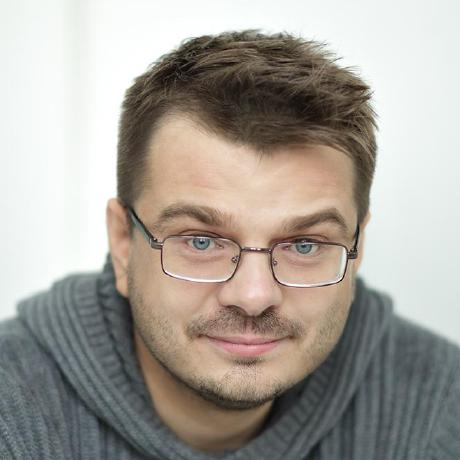
Prof. Dr. Stefan Heim leads the Neuroanatomy of Language working group at Research Center Jülich's Institute of Neuroscience and Medicine (INM-1). His research bridges cognitive neuroscience and computational approaches to language processing. Research Focus His work investigates the structural and functional organization of language networks in the brain, combining neuroanatomical approaches with advanced computational methods. Current projects explore machine learning applications in neuroscience and computational linguistics. Publication Trends Recent publications focus on machine learning innovations including large language models, efficient training techniques, and applications in scientific domains like plasma physics and renewable energy.
Luca Magri is a Reader in Data-Driven Fluid Mechanics at Imperial College London's Department of Aeronautics. He holds affiliations as a Fellow of The Alan Turing Institute and a Hans Fischer Fellow at the Technical University of Munich (TUM). His research focuses on physics-constrained machine learning, chaotic systems, and fluid mechanics. Magri’s work bridges computational methods with fluid dynamics, addressing challenges in turbulence, combustion, and acoustics through innovative approaches like reservoir computing and adjoint-based optimization. Education & Career PhD in Engineering, University of Cambridge (2015) Postdoctoral Fellow, Stanford University Center for Turbulence Research (2015–2017) Lecturer at Cambridge University Engineering Department (2017–2018) Current: Reader at Imperial College London since 2018 Research Interests Magri’s research integrates machine learning with fluid dynamics to model chaotic systems, optimize combustion processes, and analyze turbulence. Key areas include: Physics-informed neural networks for extreme event prediction Adjoint-based methods for thermoacoustic stability Bayesian data assimilation in nonlinear systems Publications & Awards His impactful work has been recognized with awards such as the ERC Starting Grant (2019), Royal Aeronautical Society Fellowship (2022), and multiple fellowships from Stanford and Cambridge. Over 50 publications span journals like Journal of Fluid Mechanics and Proceedings of the Royal Society A . Grants & Collaborations Magri leads projects funded by the EU Horizon 2020, UKRI, and the ERC. He collaborates globally, including with TUM’s Institute for Advanced Study and Cambridge’s Engineering Department.
Nikolay Koldunov is a Senior Scientist at the Alfred Wegener Institute (AWI) in Bremerhaven, Germany, specializing in Climate Dynamics. He leads projects on high-resolution climate modeling and AI-based climate systems. His work focuses on integrating advanced computational methods and large language models (LLMs) to improve climate predictions and data accessibility. Primary affiliation: Alfred Wegener Institute (AWI), Climate Dynamics department Key roles: Senior Scientist, developer of FESOM2 ocean model, contributor to Destination Earth project Education includes a Ph.D. in Physical Oceanography from the University of Hamburg (2010), and M.Sc. degrees in Applied Polar and Marine Science (University of Bremen) and Hydrometeorology (St. Petersburg State University). His research spans high-resolution climate modeling, Arctic Ocean dynamics, and applying AI to climate science. Recent achievements include a 1st place win in the Helmholtz Best Scientific Image Contest 2022 for visualizing wind gusts in a coupled climate model. Projects like ClimSight and FESOM2 aim to democratize climate data and enhance model resolution capabilities. Active in software development (e.g., pyfesom2) and international collaborations (nextGEMS, DestinE).
Dr. Attila Cangi is the Head of Department for Machine Learning for Materials Design at the Center for Advanced Systems Understanding (CASUS) , part of the Helmholtz-Zentrum Dresden-Rossendorf (HZDR) . His roles include leading research in computational materials science and developing scalable ML methods for electronic structure calculations. He has held permanent staff scientist positions at HZDR and Sandia National Laboratories, with postdoctoral experience at the Max Planck Institute. His research focuses on accelerating materials discovery through AI-driven simulations for energy storage, thermoelectrics, spintronics, and semiconductor modeling. Education: Ph.D. in Chemistry (Chemical and Materials Physics), University of California, Irvine (2011) M.Sc. in Physics, Rutgers University (2006) Research Interests: Dr. Cangi’s work integrates machine learning with first-principles simulations to model electronic structures, predict material properties (e.g., conductivity, magnetism), and simulate phase transitions. His lab leverages high-performance computing to address challenges in warm dense matter, plasma physics, and quantum transport phenomena. Key areas include: Development of physics-informed ML algorithms (e.g., MALA package) Electronic structure modeling at extreme conditions Design of sustainable materials for energy applications Lab & Collaborations: The Machine Learning for Materials Design group collaborates on projects like the European XFEL and employs tools such as atoMEC for average-atom modeling. Their work bridges theory and experiment, enabling predictions for novel materials under extreme environments.
Valeriy Vyatkin is a Professor at Aalto University's Department of Electrical Engineering and Automation within the School of Engineering. He also maintains an affiliation with Luleå University of Technology in Sweden. His research spans industrial automation, distributed control systems, and digital transformation of manufacturing processes. Vyatkin leads a significant research group focusing on next-generation industrial control architectures and has established himself as a leading authority in the IEC 61499 standard for distributed industrial automation systems. Professor Vyatkin's research interests center around industrial automation systems with particular emphasis on distributed control architectures, formal methods for verification of industrial control systems, and digital twin technologies. His work bridges theoretical computer science with practical industrial applications, developing methods for model checking, virtual commissioning, and formal verification of industrial automation systems. He has pioneered approaches for applying reinforcement learning to industrial process control, particularly in steel manufacturing and energy systems. His recent work explores the integration of generative AI with industrial control systems, focusing on rapid prototyping and code generation for IEC 61499 applications. The analysis of Professor Vyatkin's recent publications (2023-2025) reveals a strong research trajectory focused on advancing industrial automation through multiple complementary approaches. His work demonstrates a consistent emphasis on the IEC 61499 standard as a foundation for distributed control systems, with growing integration of AI techniques, particularly generative models and reinforcement learning. A notable trend is the progression from theoretical foundations toward practical implementation frameworks, with increasing attention to security, privacy, and human factors in industrial settings. His research group has expanded into new application domains including energy systems, horticulture, and nuclear instrumentation while maintaining core expertise in manufacturing automation. Professor Vyatkin has made significant contributions to the field through his editorial work, including serving as guest editor for special issues in IEEE Transactions on Industrial Informatics. His research has been supported by multiple grants from national and international funding agencies focusing on industrial digitalization and smart manufacturing initiatives. Professor Vyatkin actively supervises numerous PhD and Master's students, with a consistent research group of 8-10 students and postdoctoral researchers. His advising approach emphasizes both theoretical rigor and industrial relevance, with many students collaborating directly with industry partners. His research group has established collaborations with major industrial players in manufacturing, energy, and automation sectors across Europe. The research activities are centered around the Industrial Automation research group at Aalto University, which maintains strong connections with the international IEC 61499 community. The team operates a dedicated laboratory for industrial automation research with capabilities for virtual commissioning, digital twin development, and formal verification of control systems. The group participates in multiple European research projects focused on Industry 4.0 and 5.0 technologies, with particular emphasis on human-centric automation and secure industrial systems.
Jihoon Choi is a Professor in the Department of Electrical Engineering at Korea University's College of Engineering. With an extensive publication record spanning over two decades from 2000 to 2025, he has established himself as a leading researcher in wireless communications and signal processing. His work primarily focuses on MIMO systems, space-time coding techniques, and channel estimation methodologies. Choi's research interests center around advanced wireless communication techniques, particularly in next-generation wireless systems. His work spans multiple specialized areas including Space-Time Line Coding, mmWave communications, physical layer security, and intelligent reflecting surface technologies. He has made significant contributions to the development of novel precoding and combining strategies for multiuser MIMO systems, with special emphasis on rate balancing and interference management techniques. Analysis of his recent publications (2021-2025) reveals a strong research trajectory focused on space-time line coding applications across diverse scenarios including UAV systems, SAR imaging, and physical layer security. His work demonstrates a consistent pattern of innovation in wireless communications, with increasing emphasis on practical implementations for 5G/6G systems. The publications show a clear evolution from fundamental signal processing techniques to more complex system-level implementations addressing real-world challenges in wireless communications. Throughout his career, Professor Choi has maintained a highly productive research output with over 70 publications in prestigious IEEE journals and conferences. His work demonstrates strong collaboration patterns, particularly with researchers like Jingon Joung, Wonjun Lee, and Yong Hoon Lee, suggesting active participation in research groups or laboratories focused on wireless communications. His recent publications indicate ongoing research activity with multiple 2025 publications currently in process.
Peter C.-H. Cheng is a Professor in the Department of Informatics at the University of Sussex, with a distinguished career spanning over three decades in the fields of diagrammatic reasoning, cognitive science, and visual representation systems. His research has significantly contributed to our understanding of how humans interpret and utilize visual representations for problem-solving and knowledge acquisition. Cheng's research interests focus on the cognitive aspects of visual representations, diagrammatic reasoning, representation systems theory, and mathematical knowledge representation. His work bridges cognitive science, computer science, and educational technology, exploring how different representational formats impact human cognition and problem-solving abilities. He has developed theoretical frameworks such as Representational Systems Theory (RST) and has investigated the cognitive properties of various diagrammatic notations including Feynman diagrams, truth diagrams, and algebra diagrams. His recent publications demonstrate a continued focus on the intersection of human cognition and machine intelligence, particularly in how humans and AI systems can collaboratively select and use appropriate representations for problem-solving. His work on Oruga, a system implementing Representational Systems Theory, shows his commitment to translating theoretical insights into practical applications. Expertise in diagrammatic reasoning and visual representation systems Development of theoretical frameworks like Representational Systems Theory Research on mathematical knowledge representation Investigations into cognitive aspects of visualization Applications in educational technology and AI systems Professor Cheng has maintained an active research program with consistent publications in top venues including CHI, CogSci, and Diagrams conferences. His work continues to influence both theoretical understanding of human cognition and practical applications in human-computer interaction and AI systems.
Khaled M. Khan is a Professor at Qatar University's KINDI Computing Lab with additional affiliations at Western Sydney University's School of Computing and Information Technology and Southern Cross University. He received his PhD from Monash University in 2005 and has maintained an active research career spanning over three decades in cybersecurity and software engineering. His research focuses on the intersection of human factors and technical security systems, with particular emphasis on social engineering vulnerabilities, cloud computing security, and industrial control systems protection. Khan's work uniquely bridges psychological aspects of security with technical implementations, examining how demographic factors, personality traits, and cognitive processes influence security decisions and vulnerabilities. Recent publications (2023-2025) demonstrate a strong trend toward machine learning applications for security optimization, particularly in virtual machine migration security, social engineering detection, and industrial control system protection. His research consistently addresses real-world security challenges through both theoretical frameworks and practical implementations. Multiple publications on social engineering and human vulnerability factors Significant contributions to cloud security optimization techniques Research on machine learning applications for security threat detection Work on access control policy management frameworks Professor Khan maintains an extensive collaborative network, frequently working with researchers including Raian Ali, Mahmoud Barhamgi, Armstrong Nhlabatsi, and Raj Jain across multiple institutions. His research has practical applications in enterprise security, cloud infrastructure protection, and human-centered security design.
Chan Yeob Yeun is a Professor at United Arab Emirates University in the College of Information Technology, with prior affiliation at Qatar University's Department of Computer Science. His research focuses on cybersecurity, machine learning, and biometric authentication systems, particularly in industrial IoT and digital twin environments. Current Affiliation: United Arab Emirates University, College of Information Technology Prior Affiliation: Qatar University, Department of Computer Science His work spans multiple domains including: Explainable AI for healthcare and security Biometric authentication using EEG and ECG signals Blockchain applications in UAV networks and industrial systems Federated learning security and data poisoning defense Digital twin threat modeling Recent publications demonstrate technical innovation in: YOLOv3-based safety monitoring Physics-informed neural networks Hybrid TESLA protocol security Shadow AI cybersecurity Metaverse threat intelligence
Diego Reforgiato Recupero is an academic affiliated with the Università degli Studi di Cagliari, Italy. His work focuses on advancing artificial intelligence, knowledge graphs, and their applications in domains like healthcare, robotics, and digital transformation. He has collaborated extensively with researchers from institutions such as the University of Maryland, College Park (former affiliation). His research interests span Knowledge Graphs, Natural Language Processing, Machine Learning, and Robotics. Notable contributions include developing tools for knowledge graph construction (e.g., py-amr2fred) and applying AI techniques to solve real-world problems like job matching and virtual coaching systems. Diego’s publications (over 262 entries) reflect a strong emphasis on interdisciplinary applications of AI, including semantic web technologies, data science, and ensemble learning strategies. He has pioneered methods for integrating large language models with knowledge graphs to enhance scholarly research and industry applications. His work frequently addresses challenges in human-robot interaction, sentiment analysis for mental health, and ethical AI integration within cyber-physical systems. Current research trends indicate continued exploration of AI-driven solutions for education, finance, and healthcare sectors.
Mónica Menéndez is a Professor at New York University Abu Dhabi, UAE, specializing in transportation engineering and intelligent mobility systems. Her research focuses on urban traffic flow modeling, signal control optimization, and machine learning applications for transportation networks. Key Affiliations: New York University Abu Dhabi Coauthors: Alexander Genser, Saif Eddin Jabari, Kaidi Yang, Lukas Ambühl Her research interests include traffic flow analysis, connected vehicle technologies, and sensitivity analysis of transportation models. Recent work explores modular vehicle deployment for congestion mitigation, kinematic wave theory integration with deep learning, and network-level fundamental diagram modeling. Selected publications (2022-2025) demonstrate trends in applying supervised learning to traffic signal control, synthetic trip generation, and perimeter control strategies. She has contributed to journals like IEEE Transactions on Intelligent Transportation Systems and CoRR , with peer-reviewed conference papers at ITSC and VEHITS. As an advisor, she has mentored researchers working on autonomous vehicle impacts, traffic data imputation, and modular transit systems. Her lab collaborates on global multi-source traffic data analysis and sustainable urban mobility solutions.
Tokuro Matsuo is a Professor in the Department of Computer Science at Nagoya Institute of Technology's College of Engineering, with a distinguished research career spanning over two decades. His academic work demonstrates consistent contributions to artificial intelligence, bio-inspired computing, and information systems, with 155 publications documented from 2002 to 2025. He maintains active research collaborations with prominent Japanese academics including Takayuki Ito, Naohiro Ishii, and Satoshi Takahashi across multiple institutions. Professor Matsuo's research interests focus on artificial intelligence applications, particularly bio-inspired neural networks, decision support systems, and electronic commerce innovations. His work bridges theoretical computer science with practical applications in convention management systems, educational technology, and cyber-physical systems. Recent publications demonstrate his evolving research trajectory toward Industry 4.0 and Society 5.0 applications, with increasing emphasis on practical implementations of AI systems in real-world contexts. Analysis of his 15 most recent publications reveals a strong research focus on bio-inspired computing architectures (appearing in 7 of 15 papers), text processing technologies (4 papers), and optimization systems for education and business applications (4 papers). His work consistently applies computational intelligence methods to solve practical problems across diverse domains including finance, transportation, and e-commerce. The publications show a clear progression from theoretical AI research toward applied implementations with industry relevance. Professor Matsuo has served as guest editor and provided forewords for academic journals, demonstrating leadership within his research community. His keynote address on Cyber-Physical Systems in Industry 4.0 and Society 5.0 highlights his recognition as a thought leader in emerging technology applications. His research methodology combines theoretical analysis with practical implementation, evident in publications that address both fundamental neural network properties and their applied uses in banking, traffic management, and educational systems. The consistent publication record across top venues including IEEE Access, IEICE Transactions, and multiple international AI conferences demonstrates sustained research productivity and relevance.
Ying Jiang is a Professor in the Department of Computer Science at Sun Yat-sen University's School of Data and Computer Science. With an extensive publication record spanning from 1995 through projected 2026 papers, Dr. Jiang has established herself as a leading researcher in interdisciplinary AI applications. Her work bridges theoretical advances with practical implementations across medical imaging, remote sensing, transportation systems, and virtual reality. Dr. Jiang's research focuses on developing novel algorithms in computer vision and machine learning with applications in diverse domains. Her work emphasizes attention mechanisms in deep learning, sensor fusion techniques, physics-based simulations, and predictive modeling. Key contributions include breast MRI classification systems, LiDAR-camera calibration methods, cloud workload prediction models, and 3D outfit simulation frameworks. Her research group consistently publishes in top venues including IEEE Transactions, ACM Transactions, and CVPR. Analysis of Dr. Jiang's recent publications reveals a strong trend toward practical AI applications with real-world impact. Her work spans medical diagnostics (breast cancer detection, liver injury monitoring), environmental monitoring (tunnel mapping, infrared target detection), transportation optimization (vessel scheduling, adaptive platoons), and virtual reality (3D outfit simulation). The consistent theme across these diverse applications is the development of efficient, accurate AI models that operate within practical constraints. Dr. Jiang has mentored numerous students and junior researchers, with frequent collaborators including Tianyi Xie, Chang Yu, Xuan Li, and Ziran Zuo appearing across multiple publications. Her research group demonstrates expertise spanning computer graphics, physics-based simulation, and machine learning, with strong connections to medical institutions, transportation authorities, and technology companies. While specific grant details aren't provided in the publication records, the interdisciplinary nature of her work suggests funding from multiple sources focused on AI applications in healthcare, transportation, and environmental monitoring.
Xiaojun Li is a Professor affiliated with the Department of Mechanical Engineering at the University of Maryland, with additional research ties to Texas A&M University and institutions in China. His work spans interdisciplinary fields including machine learning, computer vision, and engineering systems. He has contributed to over 130 publications since 1985, focusing on topics like deep learning applications in healthcare, seismic modeling, and intelligent systems for infrastructure. His research emphasizes practical solutions in domains such as medical diagnostics, tunnel construction optimization, and energy forecasting. Key contributions include the development of JaunENet for jaundice detection, advanced seismic wave modeling techniques, and intelligent systems for automated tunnel construction. He collaborates extensively with experts in data science, environmental engineering, and computer science. His work bridges theoretical advancements with real-world applications, addressing challenges in healthcare technology, sustainable infrastructure, and energy management. Recent projects highlight innovation in multimodal hate speech detection, smart evacuation systems using VR, and the application of graph-based methods for EEG emotion recognition. His research often integrates big data analytics and AI-driven approaches to solve complex problems in both technical and societal contexts.
Jie Su is a researcher affiliated with Zhejiang University of Technology, College of Information Engineering, Institute of Cyberspace Security. Their work spans interdisciplinary areas including machine learning, control systems, medical imaging, environmental science, and computer vision. Notable contributions include advancements in reinforcement learning for sepsis treatment, prescribed-time control theory, and Arctic sea-ice motion analysis using satellite data. They also contribute to medical AI applications like bone marrow image analysis for hematological disorders and adversarial robustness in object tracking systems. Research interests emphasize applying machine learning to solve real-world challenges in healthcare, environmental monitoring, and engineering systems. Recent work focuses on neural dynamics models for decision-making, energy-efficient hybrid vehicle systems, and vibration analysis in urban infrastructure. Their interdisciplinary approach bridges theoretical foundations (e.g., control systems, signal processing) with practical applications in biomedical and environmental domains. Publications reflect a strong focus on AI-driven solutions, including medical image analysis, adversarial machine learning, and physics-informed algorithms. Collaborations span multiple disciplines and institutions, evidenced by frequent co-authorships on topics ranging from biomedical engineering to civil engineering applications.