Rong Zhang is affiliated with the University of Southampton's School of Electronics and Computer Science in the UK. Their research spans interdisciplinary areas including artificial intelligence, biomedical engineering, and computational mathematics. Recent work focuses on autonomous systems, medical image analysis, and graph theory applications. Key research interests include machine learning for healthcare, computer vision, quantum walks, and environmental remote sensing. Publications from 2024-2025 highlight contributions to autonomous driving decision models, medical imaging segmentation techniques, and mathematical analysis of graph spectra.
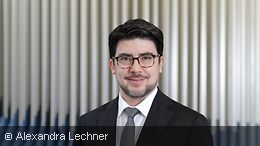
Dr. Yalin Gündüz is a Research Professor at the Bundesbank's Research Centre, specializing in credit risk analysis, financial markets, and banking regulation. His work focuses on theoretical and empirical analysis of credit risk models, pricing and liquidity of bonds and credit default swaps (CDS), market microstructure, central counterparty platforms, and sovereign risk. He has contributed extensively to understanding systemic risk capital surcharges, banking regulation, and the implications of sovereign CDS usage during crises. His research spans academic publications in top journals including the Journal of Fixed Income , European Financial Management , and Physica A . Key areas of investigation include liquidity dynamics in corporate bond markets, the impact of regulatory policies on financial stability, and the interplay between sovereign risk and financial institutions. Gündüz holds a Ph.D. in Financial Engineering from the University of Karlsruhe (now Karlsruhe Institute of Technology), Germany. Recent articles highlight his exploration of bond market liquidity, the effects of systemic risk capital requirements, and the role of CDS markets in hedging and risk management. His interdisciplinary approach combines quantitative methods with institutional analysis, addressing both theoretical and applied aspects of financial markets.
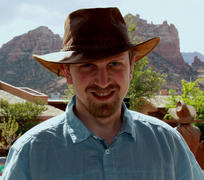
Prof. Dr.-Ing. René Schenkendorf is a Professor of Smart Manufacturing/Industry 4.0 at Harz University of Applied Sciences since September 2021. Previously, he led the Pharmaceutical Process Systems Engineering group at TU Braunschweig (2016–2021) and held research roles at the German Aerospace Center (DLR) and Max Planck Institute. His expertise spans process digitalization, sensitivity analysis, model-based design, and hybrid modeling in manufacturing. Education: - 2007: Dipl.-Ing. in Engineering Cybernetics from Otto von Guericke University Magdeburg - 2012: PhD in Systems Engineering from Max Planck Institute for Dynamics of Complex Technical Systems. Research Interests: AI-driven process optimization Hybrid modeling for digital twins Robust experimental design under uncertainty Process automation and Industry 4.0 integration His lab focuses on advancing Smart Manufacturing through AI and model-based tools. Publications: Over 50+ peer-reviewed articles, with recent work emphasizing machine learning applications in process control, electrochemical synthesis optimization, and robust design of experiments. Key themes include hybrid modeling, digital twin development, and uncertainty quantification. Students/Teams: Supervises researchers such as Subiksha Selvarajan (HS Harz/TU Braunschweig), Moritz Schulze (KIT Karlsruhe), and Lina Holzapfel (Fraunhofer IKTS). Labs/Teams: Leads the Smart Manufacturing working group at Harz University, collaborating on projects like physics-informed neural networks and pharmaceutical process systems engineering.
Prof. Volker Skwarek is a Professor for Technical Informatics at the Department of Industrial Engineering and Management, Hamburg University of Applied Sciences. He leads the research group DLT³-Hamburg and heads the research and transfer center for digital business processes. His work focuses on cybersecurity in distributed systems, IoT security, and blockchain applications in industrial environments. He has held leadership roles including Deputy Head of the Department HWI and coordinates the graduate focus area 'Information Science'. Research interests include ultra-low-power IoT systems, self-sovereign identity frameworks, and secure blockchain-sensor integrations. Prof. Skwarek has authored over 30 peer-reviewed articles, 2 books, and multiple patents. He actively contributes to international standardization of blockchain technologies and serves on editorial boards for distributed ledger journals. His projects span smart grid security, decentralized energy trading systems, and forensic blockchain analysis. Notable projects include WaterGridSense 4.0 (smart grid resilience), LegalBlock (legal frameworks for smart contracts), and TrustedCamApp (secure video streaming in sensor networks). He emphasizes practical applications alongside theoretical advancements, collaborating closely with industry partners to address real-world challenges in digital security and automation. Prof. Skwarek holds national/international awards for research and education innovation. His teaching includes courses on technical informatics, programming in C, and cybersecurity fundamentals. He advocates for continuous professional development through academic-industry partnerships and standardization initiatives.
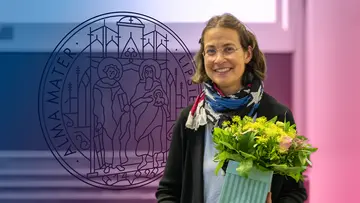
Lynn Kaack is an Assistant Professor of Computer Science and Public Policy at the Hertie School in Berlin. Her research focuses on applying machine learning and statistical methods to inform climate mitigation policy in the energy sector and AI policy related to climate action. She co-founded and chairs Climate Change AI, an organization advancing machine learning applications for climate solutions. Previously, she was a Postdoctoral Researcher and Lecturer at ETH Zürich’s Energy Politics Group. She holds a PhD and Master’s in Machine Learning from Carnegie Mellon University and degrees in Physics from the Free University of Berlin. Education: PhD in Engineering and Public Policy, Carnegie Mellon University Master’s in Machine Learning, Carnegie Mellon University MS and BS in Physics, Free University of Berlin Research Interests: Her work bridges computer science and public policy, emphasizing data-driven approaches for climate policy design. Key areas include energy system decarbonization, AI ethics in environmental governance, and scalable solutions for urban sustainability. She develops tools to analyze policy text, monitor transport emissions, and model building energy efficiency at city scales. Key Contributions: Kaack leads the Horizon Europe project AI-EFFECT and contributes to initiatives like the POLIANNA dataset for policy design analysis. Her work on spatiotemporal machine learning for urban traffic and solar panel detection exemplifies her focus on actionable climate data science. Awards: No specific awards listed, though her impactful contributions to Climate Change AI and policy-relevant research are notable. Teaching & Leadership: Teaches courses on Deep Learning and AI & Climate Change at the graduate level. Serves as faculty advisor for the Hertie School’s Climate Policy initiatives and collaborates with global institutions on sustainability projects.
Prof. Drew Dimmery is the Professor of Data Science for the Common Good at the Hertie School's Data Science Lab. He holds a PhD in Politics from New York University (2016), with a focus on causal inference and machine learning. Prior to joining Hertie, he served as Scientific Coordinator at the University of Vienna’s Data Science Research Network (2021–2023) and worked on Facebook’s Core Data Science team (2016–2020), developing experimentation tools and methods. His research emphasizes methodological innovation in causal inference and machine learning, particularly applied to social media and internet studies. Key areas include experimental design, algorithmic transparency, and policy applications of data science. He has published in top-tier journals like ICML, KDD, and Science, and his work bridges computational methods with societal challenges such as electoral integrity, digital governance, and public welfare provision. Recent publications analyze the impact of social media platforms on elections, user behavior, and mental health, leveraging large-scale experimentation and causal analysis. His endowed professorship, supported by the Dieter Schwarz Foundation, includes scholarships for the Master of Data Science for Public Policy program, reflecting his commitment to applying data science for societal benefit.
Prof. Till Becker is a Professor of Business Information Technology at the University of Applied Sciences Emden/Leer. He holds a doctorate and previously worked in business consulting and auditing before joining academia. His research focuses on data-driven modeling of complex systems, digital transformation in enterprises, and AI applications in logistics and manufacturing processes. He leads projects on autonomous drone inspection, sustainable mobility, and logistics optimization funded by institutions like the German Research Foundation (DFG). Education: Studied Wirtschaftsinformatik (Business Information Technology), completed doctoral studies in Bremen. Professional Experience: Prior roles in enterprise consulting and auditing. Research interests include stochastic network analysis, process mining in logistics, and human factors in cyber-physical production systems. He has published extensively on topics such as material flow network modeling, supplier selection optimization, and AI-driven logistics solutions. Professional Roles: Dean of the School of Economics, reviewer for scientific journals and conferences. Active in grant evaluation and academic governance. Involved in interdisciplinary projects bridging industry and academic research. Labs/Teams: Participates in the 'Transfer Center for Sustainable Mobility' and other applied research initiatives focused on logistics innovation and digital transformation strategies.
Paolo Bellavista is a Professor at the University of Bologna, Department of Electrical, Electronic, and Information Engineering, specializing in Computer Science and Engineering. His research focuses on cutting-edge technologies bridging the physical and digital worlds, with particular emphasis on Digital Twins, Edge Computing, Federated Learning, and IoT systems across various application domains. His research interests span Digital Twins implementation in industrial settings, Edge Computing architectures, Federated Learning techniques, Internet of Things applications, 5G/6G networking, Cloud Computing paradigms, and Smart Manufacturing systems. His work demonstrates a strong focus on practical implementations of theoretical concepts, particularly in the context of distributed systems where latency, reliability, and security are critical concerns. Analysis of his recent publications reveals a strong trend toward integrating Digital Twin technology with edge computing infrastructure, developing privacy-preserving federated learning techniques, and creating efficient communication protocols for industrial IoT applications. His work spans both theoretical contributions and practical implementations across smart factories, transportation systems, aviation, and urban infrastructure. While specific awards are not mentioned in the available data, his extensive publication record in top-tier venues demonstrates significant recognition within the academic community. His collaborations span numerous institutions and researchers across Europe and beyond. Professor Bellavista actively supervises research in distributed systems, with numerous PhD students and postdoctoral researchers contributing to his projects. His research has been supported by various grants focused on next-generation networking, edge computing, and industrial digitalization initiatives. His laboratory work centers around the IoTwins platform for implementing distributed digital twins in industrial manufacturing and facility management settings, with applications spanning smart factories, urban environments, and transportation systems. Current research directions include entanglement-aware middleware for digital twins, federated unlearning techniques, and adaptive resource management in cloud-to-edge continuum environments.
Ali Forootani is a Research Associate in the Department of Bioenergy at the Helmholtz Centre for Environmental Research (UFZ) in Leipzig, Germany. His work focuses on integrating machine learning with environmental and energy systems, including bioenergy optimization, stochastic control, and reinforcement learning applications. Education : Ph.D. in Information Technology & Automatic Control (2018), University of Sannio, Italy M.Sc. in Electrical Engineering (2011), SBU, Tehran, Iran B.Sc. in Electrical Engineering (2008), Azad University, Iran Research Interests : Ali's research spans machine learning, reinforcement learning, approximate dynamic programming, and their applications in environmental modeling, energy systems, and bioenergy. His work emphasizes practical stabilization techniques, system identification, and AI-driven tools for sustainability. Publications : His recent work includes advancements in federated learning, climate-aware neural networks, and physics-informed models for partial differential equations. He has contributed to impactful projects like the BENOPT bioenergy optimization model and the EE-Monitor tool for renewable energy assessment. Awards : IEEE Senior Member recognition highlights his contributions to control systems and machine learning. He has secured multiple postdoctoral fellowships across top institutions in Italy, Ireland, and Germany. Advising & Grants : Leads the Man0EUvRE EU project on net-zero energy systems, focusing on AI-driven scenario generation and stakeholder engagement. Collaborates on projects like InPositiv exploring renewable energy's biodiversity benefits. Labs & Teams : Active in the UFZ Bioenergy team, developing tools like the Bio-Eng-LMM AI chatbot and the GS-PINN framework for PDE parameter estimation.
Christof Koch is a renowned neuroscientist serving as Meritorious Investigator at the Allen Institute for Brain Science and Chief Scientist at the Tiny Blue Dot Foundation. His primary research explores the neural mechanisms underlying consciousness, integrating theoretical neuroscience with experimental approaches. With over 300 publications, his work spans neurophysiology, computational modeling, and clinical applications of consciousness research. His research focuses on understanding how neuronal activity gives rise to subjective experience, utilizing techniques ranging from single-cell recordings to large-scale brain mapping. Koch investigates neural correlates of consciousness through integrated information theory and develops neurotechnological approaches for brain disorders. Koch's recent publications demonstrate a strong focus on cortical circuit mechanisms, consciousness assessment methodologies, and comparative neuroanatomy. His work combines advanced neuroimaging, electrophysiological techniques, and theoretical modeling to unravel brain complexity. The research consistently bridges fundamental neuroscience with clinical applications, particularly in neuromonitoring and brain-computer interfaces. He leads multidisciplinary teams at the Allen Institute and collaborates internationally, driving innovations in brain mapping and consciousness research. Koch mentors numerous early-career neuroscientists through the MindScope program and various institutional initiatives.
Jürgen Jost is an Honorary Professor in the Department of Mathematics at the University of Leipzig and a retired Director at the Max Planck Institute for Mathematics in the Sciences. He is a member of multiple prestigious academies including the Leopoldina and the Santa Fe Institute for the Sciences of Complexity. His research focuses on geometric analysis, complex systems, network science, and applications in chemistry and neuroscience. Key areas include Ricci curvature in networks, Dirac-harmonic maps, and the evolution of chemical knowledge systems. Jost has received major awards such as the Leibniz Prize (1993) and an ERC Advanced Grant (2010). His work bridges pure mathematics with interdisciplinary applications, including topological data analysis and mathematical biology. He leads the Max Planck School of Cognition and has contributed to foundational studies on minimal surfaces, geometric flows, and information geometry.
Mateusz Malinowski is a researcher at the Max Planck Institute for Informatics, part of the Saarland Informatics Campus, working in the Computer Vision and Machine Learning department. His work focuses on the intersection of visual understanding and language processing, with particular emphasis on developing systems that can answer questions about visual content. He received his Master's Degree with Honors in Computer Science from Saarland University in Germany, and completed his undergraduate studies in Computer Science at the University of Wrocław in Poland. His doctoral research at Universität des Saarlandes (completed in 2017) laid foundational work for visual question answering systems. Malinowski's research interests center around the synergy between machine vision and natural language understanding, with specific focus on visual question answering, text-to-image retrieval, and spatial reasoning. His work has pioneered approaches to understanding real-world images through questioning, developing the DAQUAR dataset (the first question-answering dataset about real-world images) and neural architectures that can interpret both visual and linguistic inputs. His research bridges computer vision, natural language processing, and cognitive science to create more holistic AI systems. His publication record shows a clear progression in visual question answering research, evolving from foundational work on spatial relations and pooling methods (2013-2014) to sophisticated neural architectures for visual question answering (2015-2017), and further to more complex tasks like visual what-if questioning and boundary prediction (2018-2019). The research consistently demonstrates innovation in multimodal learning, with increasing sophistication in handling the interplay between visual and linguistic information. Malinowski has served as a reviewer for top-tier conferences including NIPS, CVPR, ECCV, and journals such as TPAMI and IJCV, demonstrating his standing in the computer vision and machine learning communities. He has advised Master's students including Ashkan Mokarian (2016) on deep learning for image captioning and Sreyasi Nag Chowdhury (2015) on contextual media retrieval. He has also contributed to teaching as a teaching assistant for Deep Learning Seminar (2015) and Probabilistic Graphical Models (2013) courses. His work is associated with the Scalable Learning and Perception group at the Max Planck Institute, where he collaborates with researchers including Mario Fritz, Marcus Rohrbach, and Bernt Schiele on advancing the state of the art in computer vision and multimodal learning.
Dmitry Kobak is a group leader in the Department of Data Science at the Hertie AI Institute, University of Tübingen, Germany. He holds the title of Privatdozent at the Faculty of Computer Science and served as a visiting professor (Vertretungsprofessor) at Heidelberg University during the 2023/24 winter semester. His research focuses on machine learning and data science applications in biology, including self-supervised learning, dimensionality reduction, and topological data analysis. He is also engaged in statistical forensics, analyzing electoral fraud, war fatalities, and excess mortality patterns. Education: BSc in Computer Science (St. Petersburg ITMO University), MSc in Theoretical Physics (St. Petersburg State University), PhD in Computational Motor Control (Imperial College London). Postdoctoral work with the Machens Lab (Champalimaud Institute) and Mehring Lab (Freiburg University/Imperial College London). Teaching: Introductory machine learning courses for MSc students in Tübingen and BSc students in Heidelberg. Recent courses include Einführung ins Machinelle Lernen (German) and Transformers, Large Language Models, and their use in Physics (English). Research supervision includes postdocs (Sebastian Damrich), PhD students (Rita González Márquez, Niklas Böhm), and multiple MSc students. Active in reviewing for top venues like NeurIPS, ICML, and Nature journals. Labs/Teams: Member of the ELLIS Society, Cluster of Excellence «Machine Learning for Science», and IMPRS-IS associated scientist. His work bridges machine learning theory with practical applications in neuroscience, forensics, and biomedical research.
Anna Wienhard is an Honorary Professor at the University of Leipzig's Mathematical Institute and Director of the 'Geometry, Groups, and Dynamics' division at the Max Planck Institute for Mathematics in the Sciences. Her research focuses on geometric structures, representation varieties, and their applications in mathematics and data science. She leads collaborative initiatives like the International Max Planck Research School and ScaDS.AI, integrating geometric methods with machine learning. Research Interests: Her work spans higher Teichmüller theory , Anosov representations , and geometric structures on manifolds. Recent projects explore applications of Higgs bundles, moduli spaces, and persistent homology in quantum dynamics and data analysis. Publications: Her 2025 papers advance Anosov representation theory and total positivity, while 2021 works apply geometric methods to machine learning. Earlier contributions include foundational studies on maximal surface group representations and Hitchin components. Awards: Membership in the Hector Fellow Academy (2021). Grants: Leads AEI-DFG projects on stability and representation varieties, and coordinates DFG-funded clusters like STRUCTURES and SFB/TRR 191. Teaching: Oversees doctoral training programs and collaborates with Leipzig University’s Mathematical Institute. Labs/Teams: Directs the Max Planck division, collaborates with ScaDS.AI, and chairs international workshops on Teichmüller theory and geometric dynamics.
Florian Marquardt is a Professor at the University of Erlangen-Nürnberg and Scientific Director of the Theory Division at the Max Planck Institute for the Science of Light in Erlangen, Germany. His research focuses on the intersection of quantum physics, optics, and machine learning, with a particular emphasis on neuromorphic computing and quantum technologies. He holds a PhD from the University of Basel (2002) and has held roles including Emmy-Noether Fellow (2007-2012) and Full Professor at FAU Erlangen-Nürnberg (2010-2016). His work bridges theoretical physics and applied AI, aiming to advance quantum control, topological photonics, and energy-efficient computing. Education: PhD in Theoretical Physics, University of Basel (2002) Diplom Physics, University of Bayreuth (1998) Research Interests: The Marquardt Group explores quantum optomechanics, neuromorphic computing, and machine learning applications in physics. Current projects include designing analog neuromorphic systems, optimizing quantum error correction, and leveraging deep learning for inverse design in photonics. Recent work emphasizes AI-driven strategies for quantum circuit discovery and topological material engineering. Awards: Walter Schottky Prize (2009) ERC Starting Grant (2011) Emmy-Noether Fellowship (2007-2012) Grants & Collaborations: Leads research networks including the Max Planck School of Photonics and the MPC for Extreme and Quantum Photonics. His lab collaborates on EU-funded projects and organizes workshops on topics like quantum metrology and neuromorphic computing. Labs & Infrastructure: Directs the Theory Division, which hosts interdisciplinary teams working on photonic neural networks, quantum machine learning, and topological transport. The group uses advanced simulation tools like dCG (differentiable connected geometries) for multi-domain optimization.