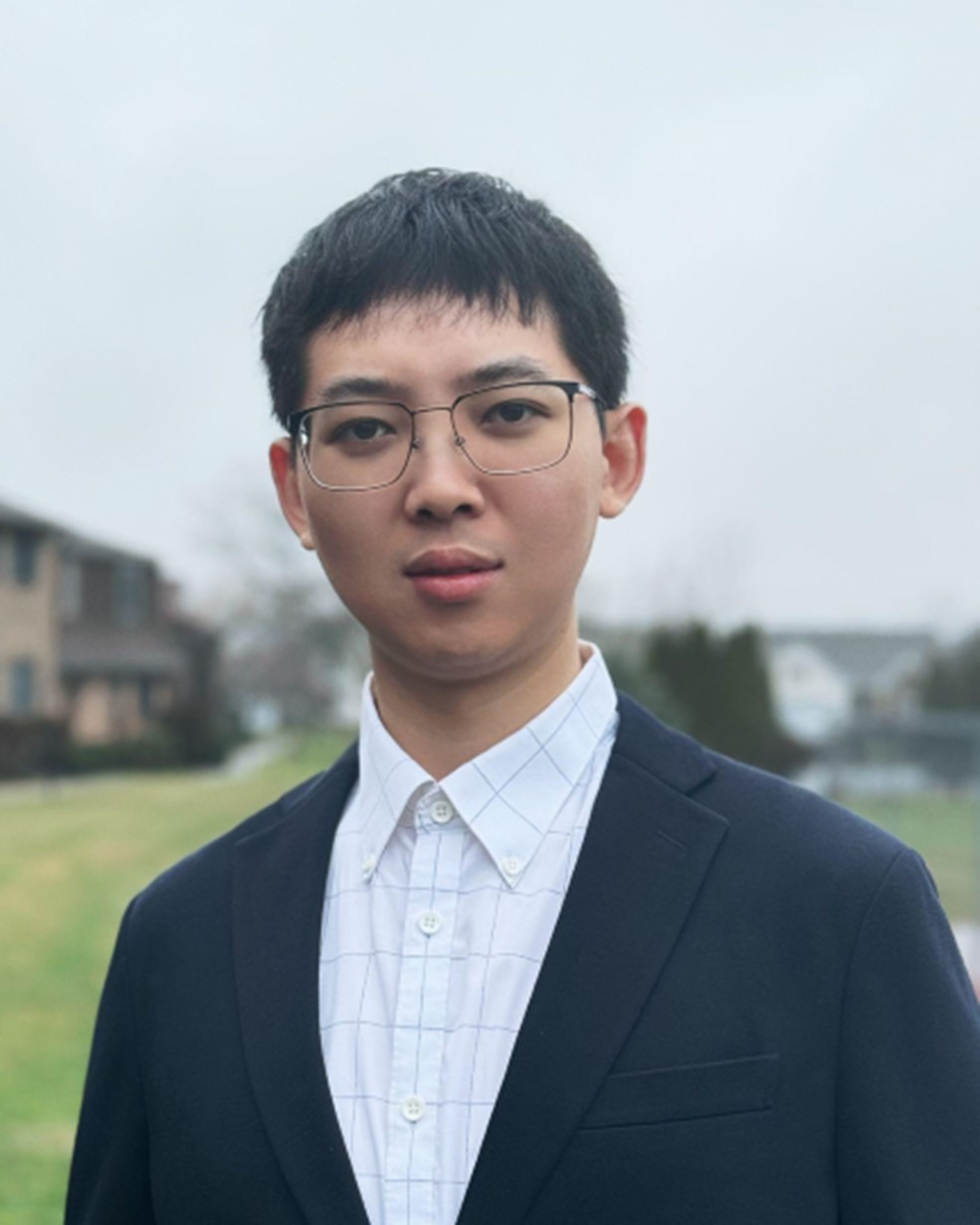
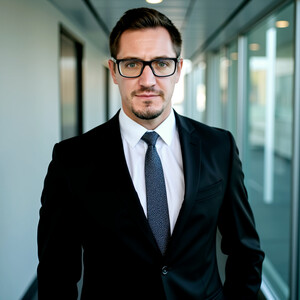
Shawn Xingshan Cui is Associate Professor in the Departments of Mathematics and Physics & Astronomy at Purdue University. His research bridges low-dimensional topology, quantum field theory, and quantum information science, with focus on topological quantum computation and tensor category applications. His work develops mathematical frameworks for topological quantum computing using knot theory, Hopf algebras, and modular tensor categories. Recent publications explore quantum error correction in topological codes (Kitaev model, toric code), non-semisimple invariants of 3-/4-manifolds, and quantum circuit implementations. He leads research on constructing fault-tolerant quantum gates using topological phases and anyonic braiding. Current projects investigate Floquet codes, fracton models, and the application of neural networks to quantum state representation. His SIAM News article 'Fighting Errors with Space' highlights spatial approaches to quantum error correction. He supervises graduate students working on quantum algorithms, topological phases of matter, and mathematical foundations of quantum computation. Teaching includes MA 261: Multivariate Calculus and specialized topics in topological quantum computation.
Xiajun Jiang is an Assistant Professor in the Department of Computer Science at the University of Memphis, joining in Fall 2024. He holds a PhD in Computing and Information Sciences from Rochester Institute of Technology (2024), an M.S. in Computer Science from the University of Southern California (2018), and a B.S. in Electrical Engineering and Automation from Zhejiang University (2016). His research focuses on adaptive AI computing, physics-informed deep learning, and their applications in healthcare, particularly in medical imaging and cardiac simulation. Key contributions include hybrid neural state-space modeling for electrocardiographic imaging and physics-informed frameworks for bi-ventricular electrophysiological simulations. Education: PhD, Rochester Institute of Technology, 2024 M.S., University of Southern California, 2018 B.S., Zhejiang University, 2016 Research Interests: Machine learning for healthcare Adaptive computing in AI models Physics-informed deep learning His work bridges machine learning and biomedical engineering, with applications in cardiac imaging and electrophysiology. Recent articles highlight advancements in hybrid models for ECGI and meta-learning approaches for personalized cardiac simulations. He has reviewed for top conferences like ICLR, NeurIPS, and MICCAI, and contributed to projects like the Computational Biomedical Lab (CBL).
Professor Jennifer Whyte is a Professor and Director of the John Grill Institute for Project Leadership at the University of Sydney's School of Project Management (Faculty of Engineering). Her research focuses on project leadership, systems integration, digital transformation in construction, and future-making practices. She previously led the School of Project Management (2021-23) and holds a retained Professorship at Imperial College London's Department of Civil and Environmental Engineering. She is a Policy Fellow of the Institution of Civil Engineers, contributing to industry policy and advisory boards such as the UK Construction Leadership Council. Education: Holds a PhD and is a Fellow (FICE) of the Institution of Civil Engineers. Her work bridges academia and industry, emphasizing practical impact through tools like digital twins and visualization technologies. Current projects include the Alan Turing Institute's Data-Centric Engineering Programme (Grand Challenge III) and the EPSRC-funded VENTURA Project's Virtual Decision Room initiative. Research interests span infrastructure projects, innovation ecosystems, and leadership in complex environments. She actively supervises doctoral students exploring areas like risk management in construction and digital transformation in public institutions. Awards include recognition for policy contributions and leadership in project-based organizations. Grants include funding for Big Data-driven stakeholder engagement in mega-projects and collaborations on new energy technologies. Her global links include Imperial College London and ongoing partnerships with institutions in the UK and Australia.
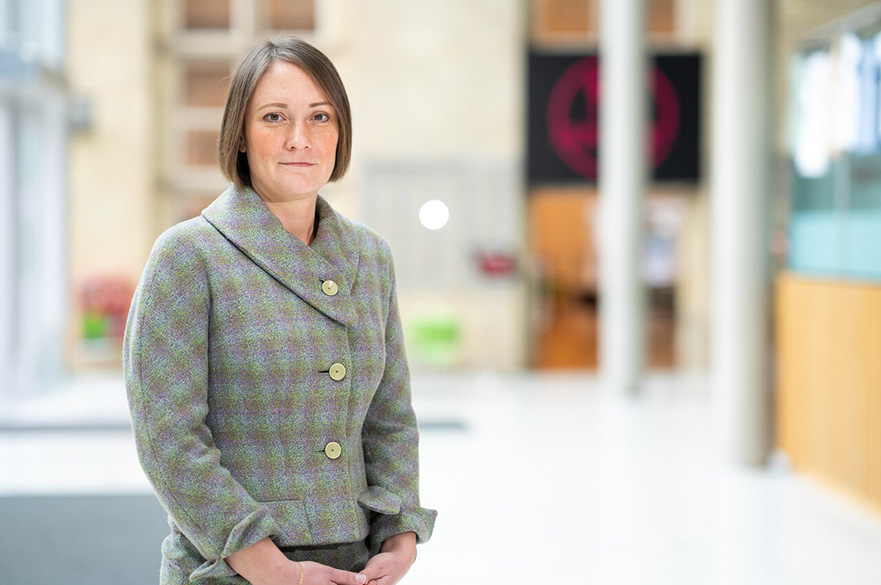
Associate Professor Christine Preston at the University of Sydney's Faculty of Education and Social Work specializes in primary science education with a focus on early childhood development. She maintains active classroom experience through her kindergarten science teaching and leads research on science diagrams, toy-based learning, and teacher professional development. Her work integrates embodied learning and representational pedagogies to enhance conceptual understanding in STEM subjects. Dr. Preston's research examines innovative approaches including citizen science integration, digital technologies, and adaptive curriculum design. She currently lectures in primary science and technology education, while supervising doctoral candidates exploring computational thinking and marine biology education. Her scholarly contributions emphasize practical classroom applications and teacher support resources. Award recognition includes multiple Excellence in Teaching awards (2007, 2016) and the 2001 NSW Quality Teaching Award. She maintains active membership in international science education associations including ASTA, ESERA, and NSTA, serving on editorial boards for science education journals.
Dr. Tarek Alskaif is an Associate Professor of Energy Informatics at Wageningen University & Research, specializing in the intersection of information technology and energy systems. He leads research on smart energy systems, focusing on electricity markets, distributed energy resources, and AI-driven solutions. His work integrates modeling, optimization, and big data analytics to advance the sustainable energy transition. Education: PhD in Energy Informatics (2012–2016, Cum Laude) from Universitat Politècnica de Catalunya, Spain. Postdoc at Utrecht University’s Copernicus Institute (2016–2020). Current roles include coordinating the BSc Data Science Minor and teaching Python and Big Data courses. Research interests emphasize leveraging digitalization for energy systems, including smart grids, electric mobility, and battery storage. Notable projects include HighLO Energy Markets (EU-funded, using particle physics and AI for market transparency) and MESSM (coordinated via TKI Urban Energy). He also leads the AI ELSA Lab (NWO-funded). Editorial roles include Associate Editor for IEEE Transactions on Smart Grid and IEEE Power Engineering Letters . Member of IEEE, the Netherlands Institute for Research on ICT (4TU.NIRICT), and the Technical Program Committee for IEEE SmartGridComm and PSCC 2026. Has supervised over 50 students (MSc/BSc) and 7 PhDs. Projects address challenges like grid congestion, EV charging optimization, and decentralized energy trading. His work bridges academic research with industry collaborations, including partnerships with CERN and ACER.
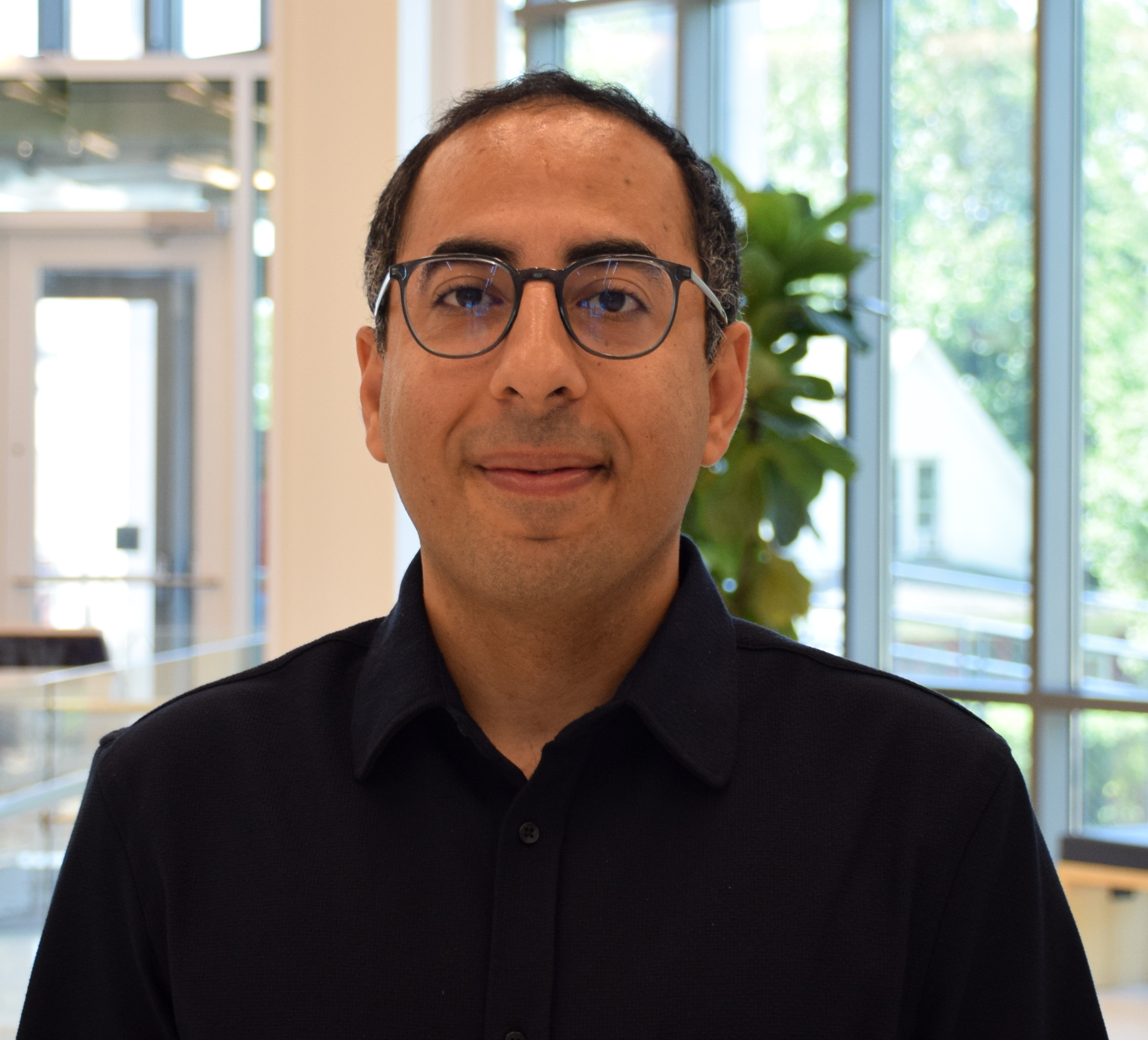
Dr. Wael El-Dakhakhni is a Professor of Civil Engineering at McMaster University, holding the Martini, Mascarin and George Endowed Chair in Masonry Design. He serves as Director of the INTERFACE Institute and NSERC CaNRisk-CREATE program, focusing on systemic risk and resilience in complex systems. His research spans interdependent networks, data-driven modeling, and infrastructure resilience under climate and disaster scenarios. He leads the INViSiONLab, advancing AI-driven solutions for urban resilience through digital twins. El-Dakhakhni is a Fellow of the American Society of Civil Engineers and a Member of the Royal Society of Canada, with notable awards including the NSERC Discovery Accelerator Supplement (twice), Ontario Early Researcher Award, and John B. Scalzi Research Award. His work bridges academia and industry, contributing to codes, standards, and real-world applications in structural engineering and disaster response. Education: BSc (Ain Shams University, Egypt), MSc and PhD (Drexel University, USA). Research Interests: Complex systems simulation, systemic risk quantification, resilient infrastructure design, AI applications in urban planning, and climate resilience frameworks. His work integrates advanced machine learning, network theory, and physics-informed models to address multi-hazard challenges in energy, transportation, and urban systems. Key Projects: CITYDNA, McMasterDNA, and infrastructure digital twins for pandemic and climate crisis decision-support systems. He collaborates with governments and organizations to enhance infrastructure resilience through predictive analytics and adaptive strategies. Labs/Teams: INViSiONLab, McMaster INTERFACE Institute, NSERC-CaNRisk-CREATE program, and the Centre for Effective Design of Structures. His research has informed policy and standards in North America, emphasizing interdisciplinary solutions for systemic risk mitigation.
Tina Comes is a Full Professor in Decision-Making & Digitalisation at the University of Maastricht, Netherlands. She holds a part-time position (0.2 FTE) and has previously held academic roles at TU Delft (Associate Professor in Decision-Making for Resilience, 2017), University of Agder (Full Professor in ICT, 2015-2017), and Visiting Professor at Lamsade, Université Dauphine, Paris (2014). Her research focuses on Crisis Informatics , Decision Theory , Disaster Management , Humanitarian Logistics , and Resilience . Her work spans building simulation , ventilation systems , and energy-efficient design , with grants totaling €9.6 million since 2012. Key projects include Resilient Systems (NL Ministry of Defense, 2020-2026), H2020 HERoS (2020-2023), and Climate Resilient Urban Infrastructure (Amsterdam, 2020-2022). She has supervised 6 PhD students at TU Delft (2017-2022), 3 Postdocs/PhDs at University of Agder (2013-2020), and 1 PhD at Université Toulouse (2014-2018). Her scientific awards include: 2020 José Maria Sarriegi Award by the Spanish Red Cross 2019 Emerald Literati Award 2016 Delft Technology Fellowship (acceptance rate 2012 Best Paper Award at ISCRAM Conference
Jeffrey S. Debies-Carl is a Professor in the Psychology Department and Sociology Program at the University of New Haven's College of Arts and Sciences. His research focuses on the interplay between physical and virtual environments and social behavior, including urban legends, conspiracy theories, and subcultural dynamics. He holds a Ph.D., M.A., and B.A. in Sociology from Ohio State University and Kent State University. Debies-Carl's work spans methodologies from quantitative analysis to ethnography, addressing topics like the transformation of legends in digital spaces, urban environments' influence on attitudes, and subcultural use of physical/virtual spaces. He has authored/co-authored books and articles in journals such as Journal of Folklore Research and Social Science Information . He has received an Honorable Mention Award for Best Article in the Journal of Urban Affairs (2015). His teaching includes courses in sociology, social psychology, and research methods, emphasizing experiential learning. He actively mentors students and contributes to media discussions on topics like conspiracy theories and public spaces.
Zhaolin Chen is an Associate Professor in the Department of Data Science & AI at Monash University's Faculty of Information Technology. He holds a PhD in Biomedical Imaging from Monash University and has held roles at the University of Melbourne, Florey Neuroscience Institutes, and the medical imaging industry in Europe. He is an Australian Research Council MCR Industry Fellow and leads Australia's first Point-of-Care MRI network at the National Imaging Facility. His research focuses on AI-driven medical imaging, MRI/PET methods, and multimodal data analysis. He has secured over $8M in research funding, including leadership roles in major projects like the National Mobile MRI Network. Education: PhD in Biomedical Imaging, Monash University Research Fellowships at University of Melbourne and Florey Neuroscience Institutes Research Interests: Deep learning and machine learning in medical imaging MRI/PET acquisition/reconstruction methods Multimodal imaging (e.g., simultaneous MR-PET) Translational research with 10+ patents (5 commercialized) Awards & Grants: ARC Discovery Project (Primary Chief Investigator) 5 highly cited papers (top 10% worldwide in 2021) 2021 SciVal: 90% publications in top 10% journals Recipient of Douglas Lampard Research Prize, ISMRM Magna Cum Laude Leadership & Service: President-Elect, ANZ Chapter of ISMRM (2024) Associate Editor for IEEE ISBI (2022-2023) Program Committee Member for ISMRM (2018-2021) Labs & Teams: Monash Biomedical Imaging leadership National Mobile MRI Network project leadership Collaborations across global institutions (e.g., Hyperfine Inc., University of Queensland)
Sakari Lahti is a Lecturer in the Department of Computing Sciences at Tampere University, within the Faculty of Information Technology and Communication Sciences. His primary responsibilities include teaching digital logic and hardware design. He holds an ORCID identifier: 0000-0002-9915-4784 . Lahti's research focuses on High-Level Synthesis (HLS) for FPGAs, with emphasis on optimizing embedded systems, real-time applications, and digital signal processing. His work spans FPGA implementation techniques, compiler optimizations for HLS tools, and practical applications in media processing and wireless communications. Notable projects include real-time HEVC video encoding and nonlinear self-interference cancellation systems. His publications reflect a sustained contribution to FPGA-based hardware design, with a decade of work from embedded systems (2002) to modern C++ integration in HLS (2023). Collaborations include colleagues like Teemu Hämäläinen and Jari Vanne, focusing on bridging software and hardware design methodologies. His research also extends to educational aspects, such as real-world product development in system design courses. Lahti’s work is peer-reviewed and published in prestigious venues like IEEE Transactions and conferences like DDECS and ISCAS. His research unit is the Unit of Computing Sciences at Tampere University.
Robert S. Laramee is a Professor at the University of Nottingham (previously at Swansea University), specializing in visualization research. His work focuses on data visualization, scientific visualization, and computational fluid dynamics. He has authored over 170 publications in top journals like IEEE Transactions on Visualization and Computer Graphics, Computer Graphics Forum, and IEEE Computer Graphics and Applications. Research Interests: His research spans information visualization, flow visualization, visual literacy, and educational aspects of visualization. He emphasizes practical applications in fields like healthcare, digital humanities, and computational science. Recent Trends: Recent work includes studies on treemap literacy, educational frameworks for visualization, and interactive systems for clinical data. He has also contributed to visualization resources and surveys, aiming to bridge academic and industry needs. Grants & Collaborations: Collaborations include projects on visualization for smart cities, protein-lipid interactions, and quantum chromodynamics data analysis. No specific grant details are provided in the text. Labs & Teams: Affiliated with visualization research groups at Nottingham and Swansea, though specific lab names are not mentioned.
Murat Arcak is a Professor of Electrical Engineering and Computer Sciences and Mechanical Engineering at the University of California, Berkeley, holding the Robert M. Saunders Endowed Chair in the College of Engineering. His research spans control theory, autonomous systems, and multi-agent systems with applications in transportation, energy, and biology. Dr. Arcak received his Ph.D. in Electrical Engineering from the University of California, Santa Barbara in 2000, following an M.S. from the same institution in 1997 and a B.S. from Bogazici University in Istanbul, Turkey in 1996. His research interests focus on developing scalable control design and verification methods for complex systems with many interconnected components, nonlinear dynamics, and learning capabilities. He has made significant contributions to control theory, particularly in areas like reachability analysis, dissipative systems, and compositional verification methods. His work bridges theoretical advances with practical applications in transportation systems, energy networks, and biological systems. A leading researcher in control systems, Dr. Arcak's recent publications demonstrate a strong focus on data-driven approaches for system verification, synthetic biology applications, and formal methods for traffic control. His research combines mathematical rigor with practical implementation, often developing novel theoretical frameworks that address real-world engineering challenges. CAREER Award from the National Science Foundation (2003) Donald P. Eckman Award from the American Automatic Control Council (2006) Control and Systems Theory Prize from SIAM (2007) Antonio Ruberti Young Researcher Prize from IEEE Control Systems Society (2014) Brockett-Willems Outstanding Paper Award (2021) IFAC Fellow (2020) IFAC Automatica Paper Prize (2020) CSS Transactions on Control of Network Systems Outstanding Paper Award (2017) Electrical Engineering Award for Outstanding Teaching (2014) CSS Antonio Ruberti Young Researcher Prize (2014) IEEE Fellow (2012) SIAM Activity Group Control and Systems Theory Prize (2007) Dr. Arcak has advised numerous graduate students and postdoctoral researchers, though specific names are not listed in the available information. His research has been supported by various grants from the National Science Foundation and other funding agencies, enabling his work on control theory and applications across multiple domains. He is affiliated with several research centers at UC Berkeley including the Berkeley Artificial Intelligence Research Lab (BAIR), Berkeley Deep Drive (BDD), the Center for the Theoretical Foundations of Learning, Inference, Information, Intelligence, Mathematics and Microeconomics at Berkeley (CLIMB), the Institute of Transportation Studies (ITS), and Partners for Advanced Transit and Highways (PATH).
Dr. Marc Schmitt serves as a Research Associate in the Department of Computer Science at the University of Oxford while concurrently leading as Managing Director of the DEIM Research Institute in Germany. His interdisciplinary work bridges academic research and industry applications across artificial intelligence, cybersecurity, and financial systems. Academic Background: PhD in Computer and Information Sciences (AI in Finance), University of Strathclyde MSc in Quantitative Finance, University of Strathclyde MSc in Software Engineering, University of Oxford BA in Business Administration, Technische Hochschule Nürnberg Georg Simon Ohm Dr. Schmitt's research focuses on AI-driven decision-making at the intersection of finance, business analytics, and cybersecurity. His work examines how intelligent systems integrate into organizational structures while addressing systemic risks in digital ecosystems. Recent investigations include generative AI threats in social engineering, no-code AutoML applications, and policy frameworks for AI-enhanced security systems. His publications demonstrate consistent methodological innovation across theoretical and applied domains. Analysis of his publication trajectory reveals growing emphasis on generative AI security implications (2024-2025), with foundational work in business analytics applications (2023). The research shows strong interdisciplinary connections between computer science, financial economics, and human-centered design principles, reflecting his unique background spanning technical and business domains. Prior to academia, Dr. Schmitt held strategic positions including Senior IT Partner for Equity Finance at Siemens Financial Services and management consulting roles at d-fine and Deloitte, where he advised Fortune 500 companies on digital transformation and risk management. His industry experience directly informs his research approach, emphasizing practical implementation challenges alongside theoretical innovation.
Rowena Hill is a Professor of Psychology at Nottingham Trent University's School of Social Sciences, specializing in disaster psychology and emergency response systems. She holds key roles including ESRC Policy Fellow for Climate Change, Honorary Research Lead for the Fire Fighters Charity, and Chair of the National Fire Chiefs Council's Academic Collaboration Group. Her work bridges academic research with policy, focusing on resilience strategies for emergency responders, community risk management, and mental health support systems. Education: Not explicitly stated in provided texts Her research emphasizes psychological health in emergency contexts, including pandemic response, climate adaptation, and familial impacts of frontline work. She has led over 60 evidence-based reports for UK pandemic policy during her 2020–21 secondment to the C19 National Foresight Group. Key interests include humanitarian assistance frameworks, public risk communication, and organizational resilience in critical sectors. Recent publications analyze firefighter wellbeing, police resilience training, and extreme weather preparedness. Notable achievements include establishing evaluation frameworks for fire service interventions and advising national security inquiries. Awards: Fellow of the British Psychological Society, Fellow of the Higher Education Academy Dr. Hill collaborates with governmental bodies and emergency services, contributing to policy development through evidence synthesis. Her work addresses systemic challenges in emergency service collaboration, climate change adaptation, and psychological support structures for responders and affected communities. She leads the NTU Emergency Services Research Unit, focusing on operational learning and health strategies for emergency personnel. Current projects explore long-term resilience in post-pandemic recovery and climate-related disaster preparedness.
Mohsen Heidari is an Assistant Professor in the Department of Computer Science at Indiana University, Bloomington. He is affiliated with the IU Quantum Science and Engineering Center (QSEc) and the NSF Center for Science of Information (CSoI). He previously held positions as a Visiting Assistant Professor at Purdue University and as a Postdoctoral Research Associate at CSoI. Ph.D. in Electrical Engineering (2019) and M.Sc. in Applied Mathematics (2017) from the University of Michigan His research focuses span quantum computing, theoretical machine learning, and information theory. Key themes include: Quantum algorithm design and sample complexity Fourier-based learning frameworks Quantum-classical duality in learning problems Information-theoretic approaches to biological systems Article trends show a strong emphasis on quantum-classical learning intersections (6/15 papers), Fourier analysis applications (5/15), and information-theoretic foundations (12/15). Notable venues include NeurIPS, IEEE Transactions, and ISIT. He directs research involving: Quantum Neural Network development Quantum measurement simulation Quantum data compression techniques Quantum algorithm implementation constraints