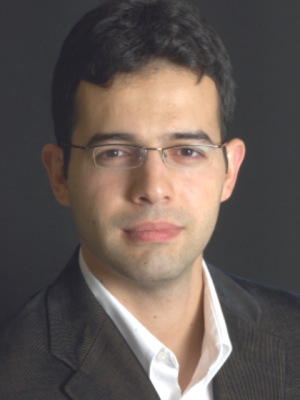
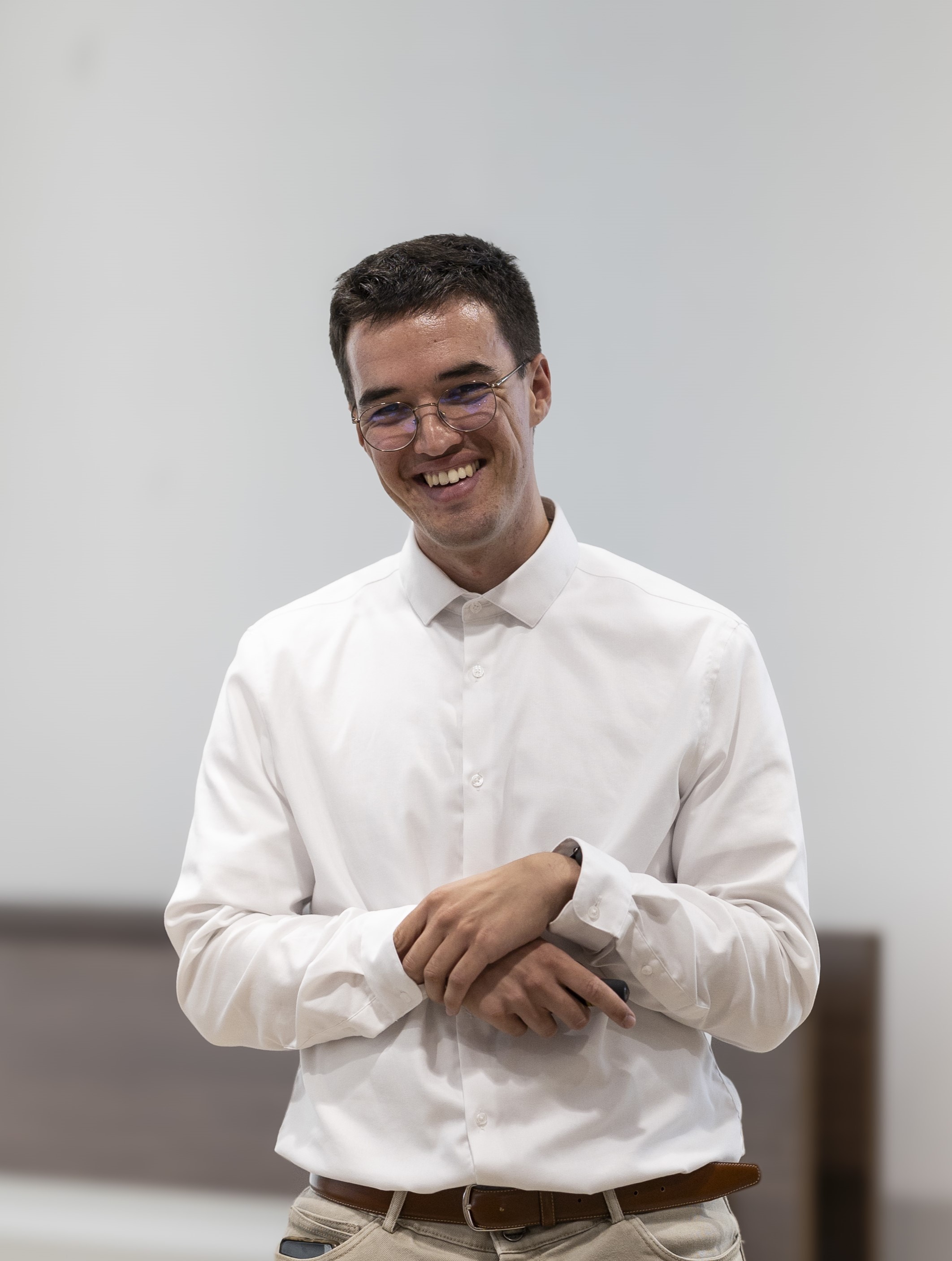
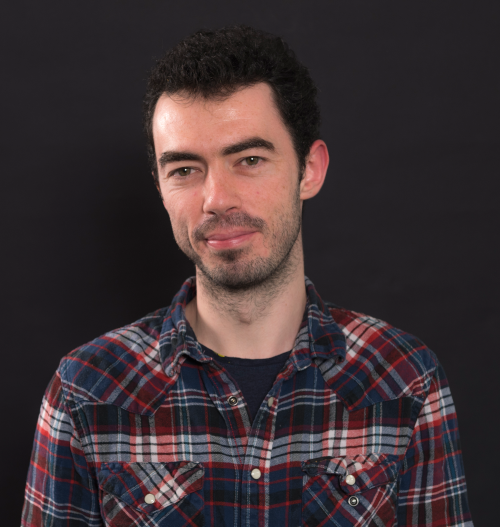
Dr. Andreas Streich is a Lecturer at the Department of Computer Science at ETH Zurich. His research focuses on Machine Learning, Data Science, and their applications in fields like medical imaging and signal processing. He teaches courses including Computer Science I, Building ML/AI Applications, and Data Science & Machine Learning. His work spans neural networks, clustering algorithms, and multi-label classification. He has contributed to advancements in medical diagnostics via deep learning and acoustics-based signal processing. No scientific awards or student advisees are explicitly mentioned in the provided texts.
Dr. Yanwen Li is a Researcher affiliated with the Professorship for Food and Soft Materials Science at ETH Zürich's Institute of Food, Nutrition and Health. Her work focuses on advanced materials science, particularly magnetic fluids and their applications in damping, sealing, and energy harvesting systems. She explores bioinspired designs, smart materials, and multiphase fluid dynamics, with notable contributions to magnetic fluid shock absorbers and triboelectric nanogenerators. Her research bridges mechanical engineering, computational modeling, and industrial applications. Key research areas include magnetic fluid behavior under varying conditions, optimization of sealing systems, and development of adaptive damping technologies. She has pioneered lattice Boltzmann models for high-viscosity fluid flows and investigated bioinspired hexagonal structures for enhanced damping efficiency. Her work frequently integrates machine learning approaches, such as physics-informed neural networks for hydrodynamic lubrication analysis. Publications span 2018–2024, emphasizing energy conversion, vibration control, and material characterization. Notable trends include exploration of biomimetic principles, improvement of sealing technologies, and application of magnetic fluids in automotive and industrial systems. No scientific awards or student advisement records are explicitly mentioned in the provided data. Her contributions highlight interdisciplinary innovation in soft materials science and mechanical systems.
Yves Weinand serves as Full Professor of Timber Construction at École Polytechnique Fédérale de Lausanne (EPFL), where he directs the transdisciplinary Wood Construction Laboratory (IBOIS) within the School of Architecture, Civil and Environmental Engineering. His appointment spans the Institute of Civil and Environmental Engineering (IIC) and teaching units in Architecture (SAR) and Civil Engineering (SGC), reflecting his interdisciplinary focus at the intersection of structural engineering and architectural design. His research expertise spans computational geometry processing, robotic timber construction, and experimental joinery techniques, with particular emphasis on digital fabrication workflows for complex wood structures. Weinand's work integrates augmented reality systems with traditional craftsmanship and develops novel computational methods for timber plate structures and through-tenon connections. Analysis of his recent publications reveals a strong trend toward hybrid digital-physical construction workflows, with increasing focus on AI-assisted fabrication, real-time quality control, and sustainable material utilization. His research bridges fundamental structural mechanics with practical building applications through technology transfer projects. Lignum Prize - Western Region Mention (2018) French Academy of Architecture silver medal (2017) Grand Prix d'architecture de Wallonie for Vidy theater (2019) Wood Distinction 2019 for Vaud Parliament building (2019) Medal for Research and Technique from French Academy of Architecture (2017) Weinand supervises numerous doctoral candidates while teaching ten courses across bachelor to postgraduate levels, including computational architecture and digital timber construction. His laboratory collaborates with industry partners through technology transfer contracts for projects like the Annen Vault, Rossinière Centre, and Brussels Sportstower, implementing EPFL-developed computational methods in real-world construction. The IBOIS laboratory operates as a transdisciplinary research hub connecting architectural design exploration with structural engineering innovation, maintaining active partnerships with timber industry stakeholders and architectural practices across Europe.
Dr. Philipp Ackermann is a researcher and academic leader at ZHAW Zurich University of Applied Sciences, School of Engineering. His roles include Deputy Head of the Human-Centered Computing Research Group, Head of the Visual Computing Lab, Deputy Programme Director for Medical Informatics, and Delegate for Entrepreneurship in the School of Engineering. His research focuses on Visual Computing (especially Augmented Reality), Medical Informatics , and Digital Health . He leads projects like AR Patterns (design patterns for AR experiences) and Automated Recognition of Modular Product Structures in AR , which explore circular economy applications. His work bridges technical innovation with practical implementation, emphasizing collaboration in immersive technologies and data-driven solutions. Key research trends in his articles include: Advancements in XR technologies (e.g., 3D inference pipelines, physically-based rendering) Collaborative systems in AR/VR environments Applications of AR in healthcare and industrial settings Systematic reviews of collaboration in virtual spaces He has contributed to projects as both leader and team member, addressing topics from surgical proficiency training to intelligent viticulture. His work often emphasizes real-world impact through partnerships between academia and industry. Philipp leads the Visual Computing Lab , fostering interdisciplinary innovation in computer graphics and immersive technologies. His educational contributions include teaching the CAS Advanced Statistical Data Analysis course.
Prof. Richard Hahnloser is a Full Professor at ETH Zürich's Department of Information Technology and Electrical Engineering, affiliated with the Institute for Neuroinformatics. He holds a PhD in Physics from ETH Zurich (1999, awarded the ETH Medal) and conducted postdoctoral research at MIT, Howard Hughes Medical Institute, and Bell Labs. His research focuses on neural mechanisms underlying vocal learning in songbirds, particularly auditory-motor signal processing and synaptic plasticity in neural networks. Education: Physics studies at ETH Lausanne and Zurich (Diploma 1996, PhD 1999). Career highlights include roles as a Swiss National Science Foundation Professor (2004–2007) before becoming a Full Professor at ETH Zurich in 2007. He explores interdisciplinary approaches combining experimental neuroscience, theoretical modeling, and bioimaging. Research interests include decoding neural networks of song systems, studying motor control via X-ray CT and Neuropixels recordings, and applying machine learning to vocal behavior analysis. Recent work highlights vocal plasticity, sleep-related neural dynamics, and neurotechnology for chronic neural recording. Notable achievements include the ETH Medal for his PhD and contributions to understanding syrinx anatomy and sensorimotor adaptation. His lab develops tools like MODOC for scientific text analysis and employs correlative microscopy techniques to study neural circuits.
Prof. Mehmet Fatih Yanik is a Full Professor at the Department of Information Technology and Electrical Engineering at ETH Zürich and Deputy Head of the Institute of Neuroinformatics. He leads the Yanik Lab, focusing on neurotechnology, neuroengineering, and high-throughput screening systems for drug discovery. His career includes tenured positions at MIT (2006-2014) and postdoctoral work at Stanford University. He holds a BS and MS from MIT (Electrical Engineering/Physics and Computer Science) and a PhD in Applied Physics from Stanford. Educations: BS in Electrical Engineering and Physics, MIT (1999) MS in Engineering and Computer Science, MIT (2000) PhD in Applied Physics, Stanford University (2006) Research Interests: Prof. Yanik’s work spans neurotechnology platforms for large-scale neural recording and stimulation, high-throughput in vivo screening systems for drug discovery, and advanced neuroimaging techniques. He pioneered ultra-flexible neural electrodes and non-invasive focused ultrasound neuromodulation. His lab integrates machine learning with neurotechnology to study brain circuit dynamics and anesthetic states. Awards: NIH Director’s Pioneer Award (youngest recipient) ERC Consolidator Award Bridge Discovery Award Technology Review’s 'Top 35 Innovators Under 35' Advising & Grants: His research is supported by NIH, ERC, NSF, and industry partnerships. He directs the NSC Master’s program and teaches courses like "Bioelectronics and Biosensors" . The Yanik Lab collaborates widely, advancing translational neurotechnology for clinical applications. Labs & Teams: The Yanik Lab at ETH Zürich develops cutting-edge tools for neuroscience, including neural interface technologies and AI-driven analysis pipelines for behavioral and neural data.
Michael F. Herbst is a tenure-track Assistant Professor at the Swiss Federal Institute of Technology Lausanne (EPFL) with joint appointments in Mathematics and Materials Science. He leads the Mathematics for Materials Modelling (MatMat) research group, focusing on algorithm development for quantum-chemical simulations of solids and error control in computational modeling. His work bridges mathematics, solid-state physics, and computer science through interdisciplinary research. His research interests include: Density-functional theory (DFT) and Kohn-Sham equations Error propagation in materials property predictions High-throughput screening algorithms Julia programming for scientific computing Tensor networks and reduced basis modeling Self-consistent field convergence methods Recent publications highlight his contributions to: Efficient response property calculations in DFT Rotationally equivariant machine learning operators GPU-accelerated electronic structure methods Polarizable continuum solvation models Robust black-box quantum chemistry algorithms Open-source software development Teaching activities span mathematics, computer science, and chemistry curricula, including interdisciplinary workshops on electronic structure numerics and Julia programming for materials science. He has mentored PhD students Bruno Ploumhans and Niklas Frederik Schmitz.
Romain Pic is a Researcher (Post-doctoral) at the Research Institute for Statistics and Information Science, University of Geneva. He holds a PhD in Statistics and Machine Learning from Université Bourgogne Franche-Comté (2024), and Master’s degrees in Statistics and Machine Learning (Université Lyon 2) and Physics of Complex Systems (Sorbonne Université). His research focuses on probabilistic forecasting, machine learning applications in meteorology, and statistical evaluation methods. He has collaborated with institutions like ETH Zurich and Météo-France. Key research interests include theoretical properties of probabilistic forecasts, ensemble postprocessing, and the development of proper scoring rules for multivariate predictions. Recent work includes advancements in distributional regression U-Nets for precipitation forecasting and aggregation-based scoring rules. His articles emphasize practical applications in weather systems and methodological contributions to statistical theory. Publications span topics such as CRPS evaluation frameworks, Wasserstein distance applications, and ensemble forecast verification. Romain has contributed to open-source code repositories for his methodologies, reflecting his commitment to reproducible research.
Friedemann Zenke is an Assistant Professor at the University of Basel and a Junior Group Leader at the Friedrich Miescher Institute for Biomedical Research (FMI), Basel, Switzerland. His research lies at the intersection of computational neuroscience, machine learning, and neuromorphic engineering, focusing on modeling memory formation and information processing in neural networks. Assistant Professor, University of Basel (2022–present) Junior Group Leader, FMI (2019–present) SNSF Eccellenza Fellow (2022–2027) Education: PhD, School of Computer and Communication Sciences, EPF Lausanne, Switzerland (2014) Diplom in Physics, University of Bonn and Australian National University (2009) Postdoctoral Fellow, Stanford University (2015–2017) Sir Henry Wellcome Postdoctoral Fellow, University of Oxford (2017–2019) His research interests center on understanding how plasticity mechanisms—such as Hebbian, homeostatic, and predictive plasticity—enable learning and memory in biologically inspired neural networks. He develops computational models using spiking and rate-based networks, leveraging high-performance computing and machine learning tools. His work integrates theoretical analysis from dynamical systems and statistical physics with practical dimensionality reduction techniques to compare model outputs with experimental data. A major focus is on surrogate gradient methods for training non-differentiable spiking networks, enabling their application in neuromorphic hardware. The recent publications highlight a strong trend toward bridging theoretical neuroscience with practical AI and hardware applications. Key themes include credit assignment in spiking networks , energy-efficient neuromorphic learning , biologically plausible plasticity rules , and benchmarking frameworks for emerging neural models. His work increasingly emphasizes the co-design of algorithms and hardware for next-generation brain-inspired computing systems. Scientific Awards: SNSF Eccellenza Fellowship (2022–2027) Wellcome Trust Postdoctoral Fellowship (2016–2019) Swiss National Science Foundation Postdoctoral Fellowship (2015–2016) Teaching Award, EPFL (2012) Marie Curie PhD Fellowship (2010–2014) DAAD Fellowship (2006) Friedemann Zenke leads an active research group at FMI, advising multiple PhD students and mentoring postdoctoral fellows. His research is supported by competitive grants, including the SNSF Eccellenza grant. He is a key member of the Computational Neuroscience Initiative Basel , fostering interdisciplinary collaboration between theoretical and experimental neuroscience. His lab develops large-scale neural network simulations and contributes to open tools for evaluating spiking neural networks, such as the Heidelberg Spiking Data Sets. Future work aims to further unify principles of biological learning with scalable, efficient AI systems.
Alexandre Caboussat is a Consultant Lecturer at the École Polytechnique Fédérale de Lausanne (EPFL), affiliated with the School of Basic Sciences in the Mathematics Department. He contributes to the Euler Programme and the SMA - Teaching unit, focusing on advanced mathematical analysis and computational methods. Research Interests : Numerical Analysis, Scientific Computing, Numerical Optimization, Variational Problems, Computational Fluid Dynamics, Free Surface Flows, Air Quality Modeling, and Computational Chemistry. His recent work emphasizes numerical methods for partial differential equations, particularly the Monge-Ampère equation, adaptive finite element techniques, and physics-informed neural networks. Applications span from optimal transport to laser surface melting and environmental flows. Students : Girardin Maude, Peruso Anna, Diserens Léo Aurélio, Gourzoulidis Dimitrios, Landry Chantal, Mrad Arwa. Contact : alexandre.caboussat@epfl.ch
Raoul de Charette is a Research Director in computer vision at Inria Paris, leading the Astra-Vision group within the ASTRA team. His academic journey includes a PhD from Mines Paris (2012) and Habilitation (HDR) in 2022, with research stints at Carnegie Mellon University (2011), Mines Paris (2013), and the University of Makedonia (2014). His educational background comprises: PhD from Mines Paris (2012) Habilitation (HDR) (2022) De Charette's research centers on robust and interpretable visual scene understanding , spanning 3D scene reconstruction, domain adaptation, material recognition, and physics-grounded vision foundation models. His work integrates physical principles and synthetic data to enhance model robustness in real-world scenarios like autonomous driving and urban environments. Key contributions include uncertainty-aware 3D scene completion (PaSCo), material extraction from single images (Material Palette), and prompt-driven domain adaptation (PODA). Recent publications reveal a strategic shift toward vision-language integration, material-centric scene understanding, and foundation models that minimize labeled data dependency. His group pioneers physics-informed approaches to improve interpretability and resilience against environmental challenges like adverse weather conditions. Key scientific recognition includes: Best Paper Honorable Mention at EGSR 2025 for MatSwap ELLIS Membership PR[AI]RIE-PSAI Fellowship De Charette actively mentors four PhD students—Fatima Balde, Mohammad Fahes, Ivan Lopes, and Tetiana Martyniuk—often in industry collaborations with Valeo.ai and Kyutai. He secures funding through fellowships and industry partnerships, regularly opening PhD positions (including a 2025 opening for Physics-Grounded Vision Foundation Models). As an area chair for CVPR, ECCV, WACV, and IROS, he shapes the field through conference leadership and co-organizing initiatives like the African Computer Vision Summer School. He directs the Astra-Vision group within Inria Paris' ASTRA team, driving interdisciplinary research at the intersection of computer vision, machine learning, and physics-based modeling for real-world deployment in robotics and intelligent transportation systems.
Prof. Dr. Wojciech Samek is a leading researcher in machine learning and artificial intelligence, currently serving as a professor in the Department of Electrical Engineering and Computer Science at Technical University of Berlin and Head of the AI Department at Fraunhofer Heinrich Hertz Institute (HHI) in Berlin, Germany. His work focuses on Explainable AI (XAI) , Trustworthy Deep Learning , and Machine Learning for Communications . Samek has made significant contributions to the development of methods for explaining and interpreting deep neural networks, particularly with the Layer-wise Relevance Propagation (LRP) technique. His research spans multiple domains including computer vision, natural language processing, medical applications, and 5G networks. He has developed various software toolboxes such as the Keras Explanation Toolbox, LRP Toolbox, TensorFlow LRP Wrapper, and Quantus Toolbox for explainable AI research. His work in Explainable AI has led to numerous publications on visualizing, explaining and interpreting deep learning models He has pioneered Distributed and Federated Learning techniques that reduce communication costs while maintaining model performance Samek has contributed to Medical AI applications including ECG, EEG, and neuroimaging data analysis He has developed Neural Network Compression methods applicable to mobile and embedded systems Prof. Samek has received multiple best paper awards and has co-authored over 200 peer-reviewed publications. He is actively involved in standardization activities as part of the ISO/IEC MPEG-17 NNC working group and serves as a Fellow at BIFOLD and the ELLIS Unit Berlin. He has organized numerous tutorials and workshops on Explainable AI at major conferences including ICML, CVPR, ECML-PKDD and ICASSP.
Dr. Martin Loeser is a Professor and Program Director of Electrical and Computer Engineering at the ZHAW Zurich University of Applied Sciences, School of Engineering, Department of Information Technology, Electrical Engineering and Mechatronics. He holds a Ph.D. in Computational Physics from ETH Zurich (2008) and a Master's degree in Electrical and Computer Engineering from the Technical University of Munich (2003). His educational background includes: Ph.D. in Computational Physics, ETH Zurich (2004-2008) Master of Science in Economics and Management, University of Hagen (2010-2012) Master of Science in Electrical and Computer Engineering, Technical University of Munich (1997-2003) Study Abroad Degree in Applied Physics, University of Sydney (2001-2002) Dr. Loeser's research spans multiple interdisciplinary fields with a strong focus on Machine Learning, AI-Based Signal Processing, and Digital Image Processing . His work bridges theoretical computational methods with practical applications in healthcare, education, and optoelectronics. Recent research has focused on using machine learning and virtual reality for early detection of cognitive impairments, developing AI-based educational tools, and creating medical diagnostic devices. His earlier work centered on computational physics and optoelectronic device modeling, particularly for LEDs and solar cells. His publication record shows a clear evolution from fundamental computational physics and optoelectronics (2006-2010) toward AI applications in healthcare and education (2015-present). This transition reflects his ability to adapt core computational expertise to emerging technological challenges. His recent work demonstrates strong interdisciplinary collaboration, particularly with medical researchers for cognitive impairment detection and with educational specialists for AI-enhanced teaching tools. Among his recognitions is being named "Best graduate of the year in the Master's degree program in Management" from the University of Hagen in June 2012. Dr. Loeser maintains active research collaborations across disciplines and institutions, as evidenced by his diverse publication record spanning computer science, healthcare technology, education, and traditional engineering fields. His current research program focuses on edge AI applications, particularly in healthcare diagnostics and educational technology.
Prof. Rudolf Marcel Füchslin is a Professor at the ZHAW School of Engineering, specializing in Applied Complex Systems Science. His research spans interdisciplinary fields including biomedical engineering, quantum computing, medical physics, and data science. His work integrates computational modeling with practical applications in cancer therapy optimization, hyperthermia-radiation synergy, and quantum machine learning. He leads numerous projects involving advanced therapies, complex systems analysis, and AI-driven solutions. Notable projects include optimizing tumor control probability in hyperthermia-radiotherapy, developing quantum neural networks, and simulating droplet-based chemical systems. He has authored/co-authored over 50 peer-reviewed articles and edited books on topics like morphological computation and complex systems. Füchslin actively contributes to international conferences (e.g., ALIFE, ESHO) and collaborates with institutions globally. His research emphasizes translating theoretical models into real-world solutions, particularly in healthcare and engineering.
Roland Schwan is a researcher at the Automatic Control Laboratory (LA) within the School of Engineering at the École Polytechnique Fédérale de Lausanne (EPFL) . His work focuses on control systems, optimization algorithms, and the integration of machine learning with physical models. He is actively involved in projects involving model predictive control (MPC), stability verification of neural network controllers, and real-time optimization-based control for robotics applications. His research interests span physics-informed machine learning , quadratic programming solvers , and embedded systems . Key contributions include the development of the PIQP solver for convex quadratic programming and stability analysis frameworks for neural network controllers. He has also explored applications in hovercraft dynamics identification and rocket trajectory control using advanced MPC techniques. Schwan collaborates closely with institutions like the Swiss National Science Foundation and has published extensively in venues such as IEEE Transactions on Automatic Control and IEEE Conference on Decision and Control . His work bridges theoretical control methodologies with practical embedded system implementations.