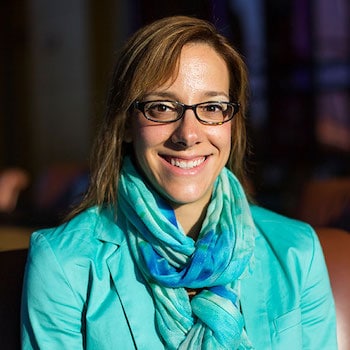
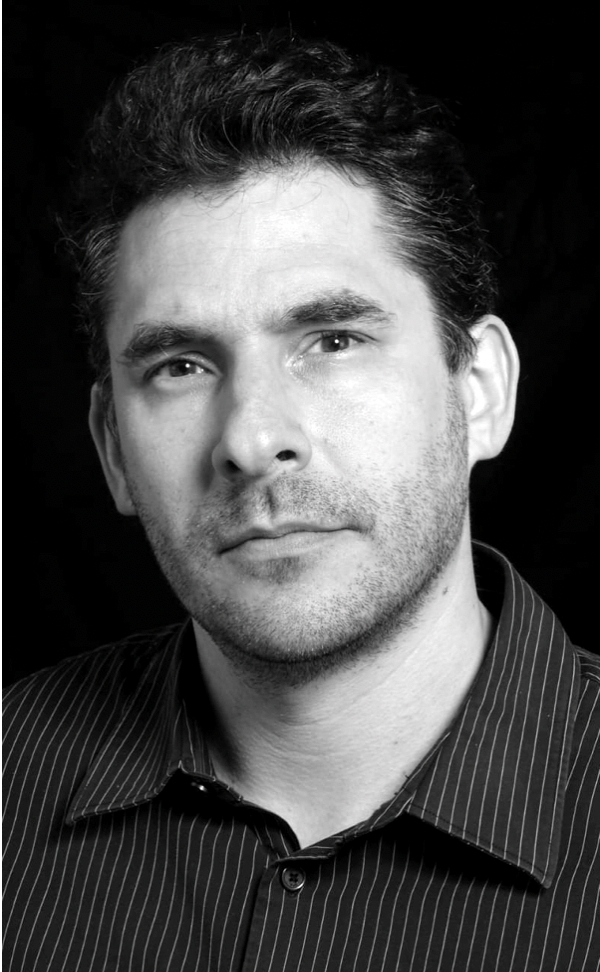
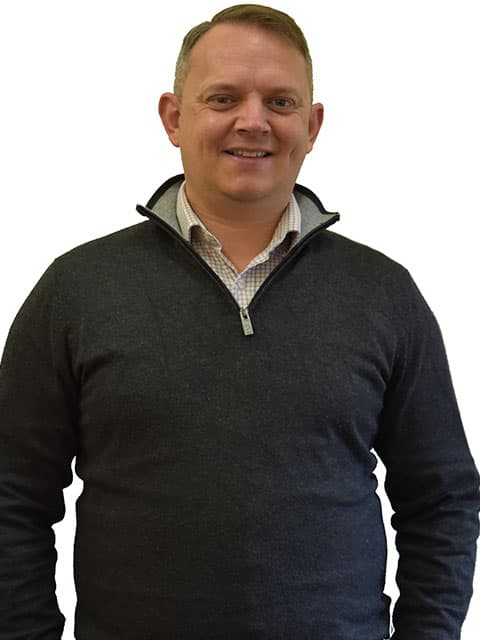
Professor Ana Ferreira is a leading seismologist at University College London, focusing on deep Earth structure and earthquake source processes. Her research integrates seismic and geodetic data to understand planetary dynamics from the surface to the lowermost mantle. Her work includes pioneering seismic tomography, such as the SGLOBE-rani 3D anisotropy model, and earthquake source analysis using InSAR and normal mode data. She leads the Seismological Laboratory and teaches Seismology II and Field Geophysics. Recent projects include the UPFLOW experiment, which deployed 49 ocean bottom seismometers in the Atlantic, and studies on Greenland ice sheet evolution and Tonga volcanic eruptions. Her EU-funded research emphasizes multidisciplinary data integration and numerical modeling. Key article trends cover mantle anisotropy, global tomography, earthquake source inversion, cosmology-inspired machine learning, and ocean bottom seismology applications in geodynamics and cryospheric processes.
Adriano Jorge Cardoso Moreira is an Associate Professor with Habilitation at the Department of Information Systems, School of Engineering, Universidade do Minho, Portugal. He is also a Senior Researcher at the Algoritmi Research Centre and Scientific Coordinator of the Urban and Mobile Computing department at Centro de Computação Gráfica. His research focuses on indoor positioning , mobile and context-aware computing , urban computing , and simulation of wireless networks . Research Interests : Indoor Positioning, Mobile Computing, Urban Mobility, Sensor Networks, Wi-Fi and UWB Localization, Smart Cities. Leadership : Coordinated the Computer Communications and Pervasive Media Group (2008-2016), Scientific Committee member (Director of MAP-tele PhD program in multiple terms), and leads the Master in Telecommunications and Informatics since 2021. Publications : Over 100 papers, including IEEE Transactions and Sensors journal articles, with an h-index of 23 and 2136 citations. Awards : First and second prizes in EvAAL-ETRI Indoor Localization Competitions (2015, 2016, 2017).
Susan T. Lepri is a Professor in the Department of Climate and Space Sciences and Engineering at the University of Michigan's College of Engineering, where she serves as Director of the Space Physics Research Laboratory. Her work focuses on heliospheric physics, utilizing spacecraft data from missions like ACE, WIND, and Solar Orbiter to investigate solar wind origins and coronal mass ejections. Her educational background includes: Ph.D. in Atmospheric and Space Sciences, University of Michigan M.S. in Atmospheric and Space Sciences, University of Michigan B.S. in Physics, Astronomy and Astrophysics, University of Michigan Lepri's research centers on tracing charged particles in the heliosphere using heavy ion measurements to study solar wind sources, coronal mass ejection physics, and particle acceleration mechanisms. She develops space-based ion mass spectrometers for missions including the European Space Agency's Solar Orbiter (Heavy Ion Sensor) and the Interstellar Mapping and Acceleration Probe. Her work integrates statistical analysis of solar wind composition with magnetohydrodynamic model validation to unravel plasma behavior in space environments. Analysis of her 15 most recent publications (2015-2017) reveals consistent focus on solar wind composition dynamics, particularly charge state evolution and elemental fractionation. Key themes include magnetic reconnection signatures in slow solar wind formation, anomalous composition in depleted interplanetary coronal mass ejections, and solar wind charge exchange contributions to X-ray backgrounds. Her instrumentation work bridges observational gaps in inner heliospheric measurements. Major recognitions include: 2018 Claudia Joan Alexander Trailblazer Award (University of Michigan) 2012-2013 Kenneth M. Reese Outstanding Research Scientist Award 2008 JGR-Space Physics Excellence in Refereeing Citation NASA Graduate Fellowship (2001-2003) Lepri actively mentors through outreach programs including K-12 initiatives with the Michigan Space Grant Consortium and Detroit Area Pre-College Engineering Program. She has coordinated Rochester Adams High School STEAM fairs and elementary science outreach while developing educational content like MConnex videos. Her research is supported by NASA grants enabling instrument development for Solar Orbiter and IMAP missions, with collaborations spanning international space agencies and academic institutions. As Director of the Space Physics Research Laboratory, she leads teams developing next-generation space instrumentation, particularly ion mass spectrometers for heliospheric exploration. Current projects include the Heavy Ion Sensor for Solar Orbiter (measuring inner heliospheric composition) and innovative sensors for IMAP, advancing capabilities to trace solar wind sources and particle acceleration mechanisms.
Edgar Weippl is a Professor at the Faculty of Computer Science, University of Vienna, where he serves as Vice Dean and Head of the Research Group Security and Privacy. His work spans cybersecurity, blockchain, and machine learning, with teaching roles in information security and software security courses. Current Positions: Vice Dean (Faculty of Computer Science), Head (Security and Privacy Research Group), Deputy Head (Neuroinformatics & Knowledge Engineering Groups) Research Interests: Cybersecurity, blockchain, IoT security, code obfuscation, privacy technologies, reinforcement learning, and socio-technical systems security Selected Publications: Focus on blockchain privacy, VoWiFi security, code obfuscation, and reinforcement learning applications
Carl-Mikael Zetterling is a Professor and Head of Department at Kungliga Tekniska Högskolan (KTH) in Stockholm, Sweden, affiliated with the School of Electrical Engineering and Computer Science (ICT) and the Electronics and Embedded Systems department. His research focuses on process technology and device design for high-temperature, high-power silicon carbide (SiC) electronics, expanding into SiC-based analog and integrated circuits. He has authored over 300 publications, including books on SiC process technology and plagiarism prevention. Dr. Zetterling has held leadership roles such as Vice Dean of the School of ICT (2013–2017) and teacher representative on KTH's faculty board. He has collaborated internationally at Stanford University, Kyoto University, and Kyoto Institute of Technology. His work addresses applications in extreme environments, including Venus exploration and fusion reactor monitoring, with a focus on radiation tolerance and thermal resilience. The 15 most recent publications highlight trends in wide bandgap semiconductors, gamma irradiation effects on SiC devices, and high-temperature integrated circuits. His articles span structural health monitoring with machine learning, novel SiC diode designs, and radiation-hardened electronics. Key contributions include advancements in self-aligned contacts, trench MOSFETs, and compact modeling for extreme conditions. While no formal awards are listed, his roles in technical program committees (TMS Electronic Materials Conference, IEEE SISC Conference) and editorial work demonstrate significant academic service. He teaches courses ranging from digital design to high-temperature electronics, overseeing degree projects in embedded systems, communication, and nanotechnology.
Prof. Florian Zaussinger is a faculty member at the Faculty of Applied Computer and Life Sciences at Mittweida University of Applied Sciences. His research focuses on thermal convection, fluid dynamics, and numerical simulations in both geophysical and astrophysical contexts. He has contributed extensively to studies on microgravity experiments, including the GeoFlow and AtmoFlow projects conducted on the International Space Station (ISS). University: Mittweida University of Applied Sciences Faculty: Applied Computer and Life Sciences Department: Mathematics Contact: +49 3727 58-1381 | florian.zaussinger@hs-mittweida.de | Building 6, Room 6-131 His research involves advanced numerical modeling of complex fluid systems, including spherical convection, dielectric heating, and double-diffusive processes. He has developed and applied computational tools like the ANTARES code to simulate convection in DA white dwarfs, planetary atmospheres, and Earth's mantle. His work bridges theoretical fluid mechanics with experimental validation in space-based microgravity environments. Recent publications highlight his expertise in thermo-electrohydrodynamic convection, planetary fluid flow analysis, and microgravity-induced instabilities. While the scraped data does not list scientific awards or students directly, his academic profile emphasizes interdisciplinary collaboration with engineering and life sciences, particularly in applied mathematics for fluid dynamics and experimental data processing.
Matthew R. Edwards is an Assistant Professor of Mechanical Engineering at Stanford University, affiliated with the School of Engineering. His research focuses on high-power lasers and plasma physics, developing optical diagnostics for fluids and plasmas, and exploring light-matter interactions. He holds a PhD and prior degrees from Princeton University in Mechanical and Aerospace Engineering, followed by a Lawrence Fellowship at Lawrence Livermore National Laboratory. Education : PhD in Mechanical and Aerospace Engineering, Princeton University (2019) MA in Mechanical and Aerospace Engineering, Princeton University (2015) BSE in Mechanical and Aerospace Engineering, Princeton University (2012) Research Interests : Edwards' work bridges mechanical engineering and plasma physics, emphasizing ultrafast laser-plasma interactions, plasma-based optical components, and applications in energy science. His lab, the SAPPHIRE Laser Laboratory, explores femtosecond laser technologies for creating novel optical elements (e.g., plasma gratings, holographic lenses) and advancing laser-driven particle acceleration, fusion research, and diagnostic tools. Key areas include: Design of plasma-based optical components for high-power laser control Simulation of laser-matter interactions at relativistic intensities Development of compact light and particle sources Research Trends : His recent articles (2024–2025) highlight advancements in plasma gratings, relativistic birefringence, and laser wakefield acceleration. Notable contributions include ionization-based compression of ultrafast laser pulses and polarization control in underdense plasmas. Awards/Grants : No awards explicitly listed, but his Lawrence Fellowship indicates prior recognition. His work aligns with grants in plasma physics and laser technology. Labs/Teams : He leads the SAPPHIRE Laser Laboratory , collaborating with the PULSE Institute and National Ignition Facility (NIF) on plasma optics and high-energy laser applications.
Dr. George Karakostas is an Associate Professor in the Department of Computing and Software at McMaster University. His research focuses on Scientific Computing, Optimization, and Theoretical Computer Science, with a particular emphasis on algorithms, scheduling, and resource management in data centers and mobile networks. He is actively involved in advising graduate students and contributes to cutting-edge research in digital twins, edge computing, and approximation algorithms. Dr. Karakostas holds a PhD (implied by title) and has authored numerous publications addressing challenges in workload distribution, thermal management, and task scheduling under deadline constraints. His work often intersects with practical applications in IoT, wireless networks, and energy-efficient infrastructure. Key research trends include optimizing resource allocation in distributed systems, developing efficient offloading strategies for mobile devices, and leveraging digital twins for system performance enhancement. Despite the volume of his publications, the focus consistently revolves around theoretical rigor paired with real-world applicability. Dr. Karakostas is affiliated with the Digital & Smart Systems research cluster and teaches advanced courses such as CAS 744: Advanced Topics in Design of Algorithms (Theory). His contact information includes karakos@mcmaster.ca and a faculty profile page at www.cas.mcmaster.ca/~gk.
Dr. Craig Hancock is a Research Professor in Geospatial Engineering with 15 years of research experience in Surveying and Geodesy. His expertise spans GNSS error mitigation, structural monitoring, and geospatial techniques for digital construction. He has supervised 10 PhD students and published over 80 academic papers. Education: BSc and PhD in Surveying/Geomatics Key Projects: Principal Investigator for projects on GNSS error mitigation, structural health monitoring, and marine economy technology. His research focuses on three core areas: GNSS error categorization and mitigation (particularly ionospheric effects), structural and environmental change monitoring, and geospatial data acquisition for BIM and digital construction. Recent work includes improving 3D modeling accuracy, UAV-based GNSS spoofing detection, and BIM-enabled facility management in healthcare infrastructure. His articles explore topics like sensor optimization, structural dynamics, and geospatial data fusion. Grants include £150k for bridge deformation studies and £9k for ionospheric error analysis. He actively contributes to teaching and enterprise initiatives, integrating geospatial technologies with industry needs.
Wout Joseph is a Professor in the domain of Experimental Characterization of wireless communication systems at Ghent University (Belgium), where he has been working since October 2009. He is also an IMEC Principal Investigator since 2017. His research is conducted within the wireless, acoustics, environment & expert systems (WAVES) research unit at the Department of Information Technology (INTEC). Dr. Joseph was born in Ostend, Belgium on October 21, 1977. He received his M.Sc. degree in electrical engineering from Ghent University in July 2000. From September 2000 to March 2005 he was a research assistant at the Department of Information Technology (INTEC), where his scientific work focused on electromagnetic exposure assessment around base stations for mobile communications related to health effects. This work led to his Ph.D. degree in March 2005. Professor Joseph's research expertise spans multiple domains within wireless communications and bioelectromagnetics. His primary research interests include electromagnetic field exposure assessment, in-body electromagnetic field modeling, electromagnetic medical applications, propagation for wireless communication systems, IoT, antennas and calibration. He also specializes in wireless performance analysis, industry 4.0 applications, wireless localization, and Quality of Experience metrics. His work is particularly notable for its focus on dosimetric studies in the radiofrequency range, where his research is ranked first in number of peer-reviewed studies. His research has practical applications in wireless network planning, occupational safety, and public health policy related to electromagnetic fields. His extensive publication record (over 886 publications with an h-index of 45 in ISI Web of Science and 66 in Google Scholar) demonstrates a clear trajectory from fundamental electromagnetic field measurements to applied research in industrial wireless networks and bioelectromagnetic applications. Recent work shows a strong emphasis on 5G exposure assessment across multiple European countries, millimeter-wave channel modeling, and the application of machine learning techniques to exposure assessment and wireless localization. EBEA council board member (2015-2018) EBEA board member at large (2019) Bioelectromagnetics Society board member (2022) Bioelectromagnetics Society board member (2024) 24 research awards Professor Joseph leads significant research efforts in electromagnetic field exposure assessment, with particular emphasis on developing measurement methodologies and computational models for real-world exposure scenarios. His work bridges theoretical electromagnetic modeling with practical applications in wireless communications and bioelectromagnetics. His research group within the WAVES unit is highly active in both theoretical and experimental aspects of wireless communications and bioelectromagnetics, with current projects focusing on 5G exposure assessment across Europe, millimeter-wave channel modeling for data centers and industrial environments, and the development of novel exposure assessment methodologies using advanced signal processing and machine learning techniques.
Tristan Kershaw is a Senior Lecturer at the University of Bath's Department of Architecture & Civil Engineering. His research focuses on climate resilience, building physics, and urban microclimate adaptation. He holds an MPhys (2004) and PhD in low-temperature solid-state physics (2008) from the University of Exeter. His work explores how urban design and green/blue infrastructure can mitigate climate change impacts on buildings and communities. He has led projects funded by EPSRC, the Royal Academy of Engineering, and the EU, addressing topics like heatwave mitigation, sustainable land management, and climate adaptation in underserved regions. Key contributions include the CIBSE Napier Shaw Medal (2012) for developing probabilistic future weather models. His research emphasizes long-term building sustainability, thermal comfort, and nature-based solutions for urban resilience. He collaborates internationally and actively supervises doctoral students in climate change resilience, urban heat islands, and zero-carbon design. Education: MPhys (Exeter, 2004), PhD (Exeter, 2008) Affiliations: Centre for Climate Adaptation & Environment Research (CAER), Centre for Regenerative Design & Engineering (RENEW) Grants: EPSRC-funded projects on urban green infrastructure and heatwave impacts Recent projects include designing climate-resilient buildings in Qatar and developing urban models for thermal observation. His work aligns with UN SDGs related to climate action (SDG13) and sustainable cities (SDG11).
Dr. Patrick W. C. Ho is a Lecturer in the Department of Electrical & Computer Systems Engineering (ECSE) at Monash University Malaysia School of Engineering. He holds a PhD in Electronics Engineering from the University of Nottingham Malaysia Campus (2016), with research focusing on non-volatile FPGA architectures using memristors. His academic journey includes roles as a Scholarly Teaching Fellow and unit coordinator for courses like ECE2131 Electrical Circuits and ECE4063 Large Scale Digital Design. He has industry experience with Intel Microelectronics and Altera Corporation, alongside teaching A-level Physics at Methodist College Kuala Lumpur. Education: BEng (First Class Honours) in Engineering (2009) MSc in Science (2012) PhD in Electronics Engineering (2016) Research Interests: Dr. Ho specializes in memristor-based non-volatile memory systems, VLSI design, and FPGA architectures. His work bridges hardware design with emerging materials, as seen in his Q1 journal article on memristive LUTs. Collaborations with CAD-IT expand his focus into AI, image processing, and object recognition. Recent projects include studies on memristor substrate performance (2023–2026) and UAV communication reliability (2021–2024). Teaching and Industry Engagement: As ECSE’s Industrial Training Advisor and IAP representative, he actively connects academic curricula with industry needs. His teaching spans foundational engineering courses and advanced digital design modules. Labs and Collaborations: Active in CAD-IT partnerships for student FYP co-sponsorship. Research groups focus on nanotechnology, machine learning integration in UAV systems, and memristor material analysis.
Professor Wang Li-Lian is a faculty member in the Division of Mathematical Sciences at Nanyang Technological University (NTU), Singapore. He holds the rank of Professor of Applied Mathematics and has been affiliated with NTU since 2006, progressing through roles including Assistant and Associate Professor before his current position. His research focuses on spectral methods, computational acoustics/electromagnetics, and PDE-based image processing. He has supervised multiple PhD and Master's students, including Zhang Jing, Gu Ying, Yang Zhiguo, and others. Education and career highlights include a Postdoctoral Research Associate at Purdue University (2002-2003), followed by a Visiting Assistant Professorship (2003-2005). His academic work spans spectral element methods, fractional differential equations, and high-order numerical techniques for wave scattering problems. Notable contributions include advancements in spectral-Galerkin methods for nonlocal operators and exact nonreflecting boundary conditions for Maxwell's equations. Research interests emphasize high-accuracy numerical schemes, with applications to fractional PDEs, metamaterial simulations, and image processing. His publications (over 100+ articles) reflect expertise in spectral methods, computational physics, and mathematical modeling. Teaching responsibilities include courses on partial differential equations, numerical analysis, and scientific computing.
Dr. Ousmane Seidou is a Full Professor in the Department of Civil Engineering at the University of Ottawa, where he has served since 2007. He leads the Hydraulics Lab and holds affiliations with the Faculty of Engineering's Centre for Indigenous Community Infrastructure. His academic journey includes a PhD from École Polytechnique de Montréal (2002) and postdoctoral research at the Institut National de la Recherche Scientifique, Quebec. Dr. Seidou specializes in climate change impacts on water resources, hydrological modeling, and transboundary water management. Education: Ph.D. in Civil Engineering (Hydraulics), École Polytechnique de Montréal (2002) M.Sc. in Water Resources Engineering, École Polytechnique de Montréal (2002) Postgraduate Diploma in Hydroinformatics, École Inter-États des Ingénieurs de l'Équipement Rural (1998) Undergraduate Degree in Civil Engineering, École Mohammadia d'Ingénieurs (1996) Research Focus: Dr. Seidou’s work integrates hydrological modeling with climate adaptation strategies, emphasizing Africa’s water security. Key areas include: Climate change impacts on river basins (e.g., Niger, Congo) Development of flood early warning systems in West Africa Water-Energy-Food-Environment (WEFE) nexus frameworks Environmental flow estimation in wetland ecosystems He leads international projects involving multi-country collaborations and agencies like the United Nations Development Programme and the World Bank. Recent Projects: Principal Investigator for the Niger Basin Authority’s WEFE Nexus initiative Technical leadership in the Dutch-funded BAM-GIRE project (Mali/Guinea wetlands) Development of flood early warning systems for Niamey and Gaya (Niger) Teaching: Courses include Climate Change Impacts on Water Resources, Advanced Hydrological Modeling, and Water Resources Management. He mentors PhD students in hydrology and climate adaptation. Grants & Funding: Secured multi-million-dollar projects with organizations like Wetlands International and the UAE-BELEM Programme. Recent funding includes $135,000 for hydrological modeling tools in the Niger Basin. Labs/Teams: Director of the Hydraulics Lab at the University of Ottawa. Active in global initiatives like the Global Goal on Adaptation (GGA) indicator development under the Paris Agreement.
Jef Poortmans is a Visiting Professor at KU Leuven, Belgium, specializing in photovoltaic technologies and solar energy systems. His research spans multiple applications including conventional solar installations, agrivoltaics, vehicle-integrated photovoltaics, and tandem solar cell configurations. Affiliated with the Electa department at KU Leuven, he maintains an active research profile with numerous publications extending into 2025. His research interests focus on advancing photovoltaic technology across multiple dimensions. Poortmans investigates thermal modeling to improve energy yield predictions, develops lightweight PV modules for vehicle integration, explores agrivoltaic systems that combine agriculture with solar energy production, and works on next-generation perovskite and tandem solar cell technologies. His work often addresses practical implementation challenges including reliability under various environmental conditions, mechanical integration requirements, and performance optimization for specific applications. Analysis of his recent publications reveals a strong emphasis on practical implementation challenges of photovoltaic systems. His work spans fundamental materials science (particularly for perovskite and thin-film technologies), system integration challenges (especially for vehicle applications), and innovative approaches to land use optimization through agrivoltaics. A recurring theme is addressing reliability and performance issues under real-world operating conditions rather than ideal laboratory settings. Poortmans frequently collaborates with researchers across multiple institutions, indicating strong industry and academic connections within the photovoltaics community. His work appears in high-impact journals including Solar Energy Materials and Solar Cells, Scientific Reports, and Advanced Functional Materials, demonstrating recognition within the field. While specific grant information isn't detailed in the provided materials, his extensive publication record across diverse photovoltaic applications suggests successful funding acquisition for multiple research projects. His involvement in PhD theses supervision indicates active mentorship of next-generation researchers in the photovoltaics field. His research group appears to focus on bridging fundamental photovoltaic science with practical engineering applications, particularly addressing the reliability and integration challenges that prevent wider adoption of solar technologies in non-traditional applications like vehicles and agricultural settings.