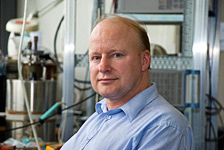
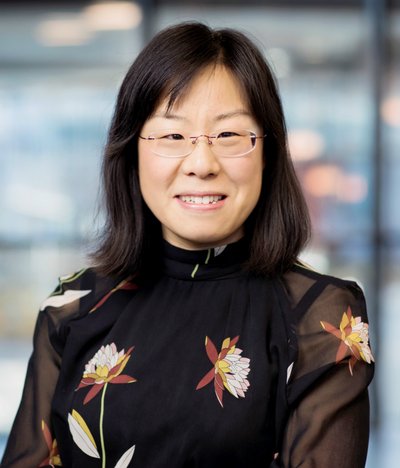
Prof. dr. ir. C.H. (Caspar) van der Wal is a Full Professor in Physics of Quantum Devices at the Faculty of Science and Engineering , University of Groningen. His research focuses on spintronic and quantum information functionalities using electron/nuclear spins in semiconductor devices, combining quantum optical and electron transport methods. PhD in Quantum Transport (Delft University of Technology, 2001) Postdoc in Quantum Optics at Harvard University (2001-2003) Scientific Director of Zernike Institute for Advanced Materials (2016-2022) Research keywords include Quantum Optics , Spintronics , Quantum Information , and Semiconductor Physics . Recent work explores 2D/3D semiconductor heterostructures , spin defects in SiC , and transition metal dichalcogenides . His scientific contributions have earned him the NWO-Vidi Grant (2005) , ERC Starting Grant (2011) , and multiple teaching awards. Publications since 2001 span topics like quantum superpositions in superconducting circuits, spin relaxation in quantum dots, and telecom-ready spin centers in silicon carbide. Grants : NWO-Vidi (2005), ERC Starting Grant (2011) Leadership : Scientific Director, Zernike Institute (2016-2022) Teaching : Teacher of the Year (2015), Education Prize (2012) Current affiliations include the Physics of Nanodevices group at the Zernike Institute for Advanced Materials. Collaborations span institutions like MIT, Harvard, and AMOLF.
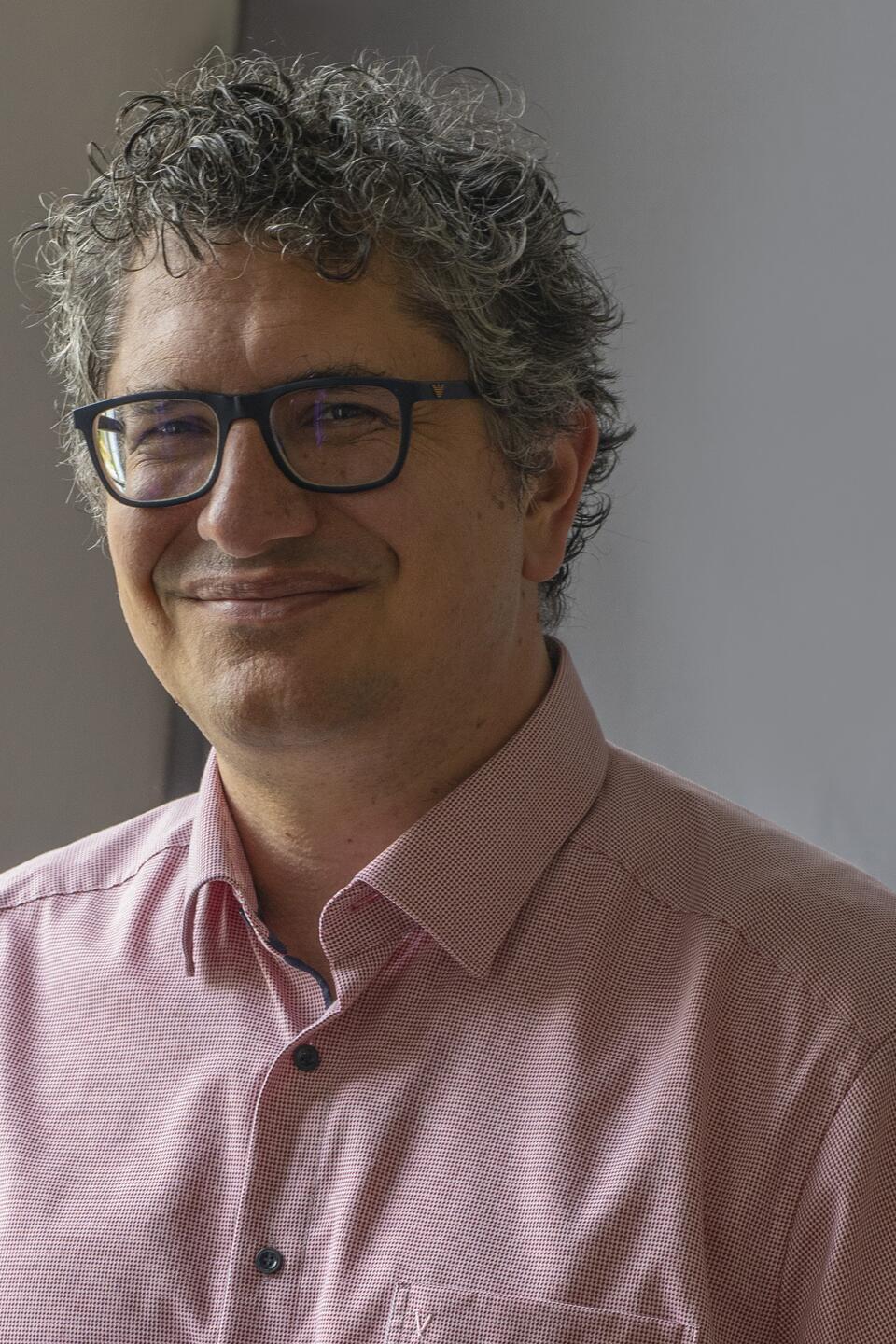
Professor Jasper van Wezel is a distinguished academic in the field of Condensed Matter Theory at the University of Amsterdam's Faculty of Science, where he serves as Professor in the Institute for Theoretical Physics (ITFA) within the Institute of Physics. With a career spanning over two decades, he has progressed from Assistant Professor (2014-2016) to Associate Professor (2016-2024) and currently holds the position of Professor since 2024. His academic journey began with a PhD in theoretical condensed matter physics from Leiden University in 2007, followed by prestigious fellowships at Argonne National Laboratory and Homerton College, Cambridge. PhD in theoretical condensed matter physics (cum laude), Leiden University, 2007 Master's diploma in theoretical condensed matter physics (cum laude), Leiden University, 2003 Dutch VWO Diploma (cum laude), Dalton Scholengemeenschap, Den Haag, 1997 US High School Diploma (cum laude), Sanford High School, Maine, USA, 1998 Professor van Wezel's research focuses on several interconnected areas within Condensed Matter Theory. His work explores competing instabilities in Charge Density Wave materials, including Superconductivity and Charge Order, Combined Charge and Orbital Order, and Transition-metal dichalcogenides. He has made significant contributions to Topology in Condensed Matter, particularly examining the Role of crystal symmetries and Topology in non-Hermitian systems. A major theme in his research involves investigating the Connections between Quantum and Classical behaviour, with special emphasis on Spontaneous Symmetry Breaking both in equilibrium (The role of the Thin Spectrum) and dynamically (Spontaneous loss of Unitarity). Analysis of Professor van Wezel's recent publications reveals a strong focus on quantum phenomena in condensed matter systems, with particular attention to topological aspects, symmetry breaking, and connections to fundamental physics concepts like black hole thermodynamics. His work often bridges theoretical concepts with potential experimental realizations, as evidenced by studies on electron patterns in materials like TaS2 and theoretical frameworks for understanding quantum phase transitions. Bristol Physics Teaching Award (2014) Students' Award for Outstanding Teaching (2014) Fellow of the Higher Education Academy (2014) Aneesur Rahman Fellowship at Argonne National Laboratory (2010-2012) Junior Research Fellowship at Homerton College, Cambridge (2007-2010) Physics 'Discovery of the year' by Leiden University Physics department (2005) 'Onderwijsprijs Natuurkunde' teaching award (2004/2005) Professor van Wezel has secured numerous research grants including an ENW-M grant (2023), an ENW-Groot project with Leiden University (2021), and a prestigious VIDI personal grant from NWO (2014). He has supervised over 50 students at various levels, including PhD candidates, MSc students, and BSc students, fostering the next generation of physicists. His leadership extends to organizing conferences, serving on PhD committees, and holding administrative roles such as chair of the educational committee for the Dutch Research School in Theoretical Physics. His research group at the University of Amsterdam's Institute for Theoretical Physics maintains active collaborations with institutions worldwide, including Leiden University, University of Cambridge, University of Bristol, and research centers in France, Germany, and Poland. The group's work combines analytical theoretical approaches with computational methods to tackle fundamental questions in quantum condensed matter physics.
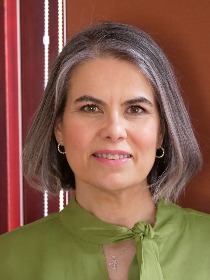
Beatriz Noheda is a Full Professor of Functional Nanomaterials at the University of Groningen's Faculty of Science and Engineering, where she chairs the Solid State Materials for Electronics group at the Zernike Institute for Advanced Materials. She also serves as the founding Director of the Groningen Cognitive Systems and Materials center (CogniGron). Her academic journey began with a PhD in Physics from the Autonomous University of Madrid in 1996, followed by research positions at Brookhaven National Laboratory and various European institutions before joining Groningen through the prestigious Rosalind Franklin Fellowship program in 2004. Her research interests span the physics of functional materials with particular emphasis on ferroelectric, piezoelectric, and multiferroic thin films . She investigates the relationship between structure and functionality, focusing on nano-domain control through strain engineering and the unique properties of domain walls. Her work bridges fundamental physics with two promising application areas: piezoelectric energy harvesting for low-power electronics and the development of novel materials for neuromorphic computing . This dual focus reflects her vision of enabling the next technological revolution through materials science. Noheda's publication record shows a clear evolution from fundamental structural studies of ferroelectric materials toward cutting-edge research in hafnia-based ferroelectrics and neuromorphic computing materials. Her most recent work focuses on oxygen migration in hafnium-zirconium oxide systems, metal-insulator transitions in nickelates, and the development of novel ferroelectric phases suitable for next-generation electronic devices. These publications demonstrate her leadership in advancing the field from basic understanding toward practical applications in memory devices and cognitive computing systems. Fellow of the American Physical Society (2011) - awarded for fundamental structural studies of new phases in perovskite-type ferroelectric materials and domain nanostructures IEEE Robert E. Newnham Ferroelectrics Award (2020) - for outstanding contributions to understanding giant piezoelectricity in lead zirconate titanate Member of the Netherlands Academy of Technology and Innovation (AcTI) (2022) Elected Senior member IEEE (2021) Rosalind Franklin Fellowship (2004) - enabling her successful academic career in Groningen Noheda has secured substantial research funding throughout her career, including a Rosalind Franklin Fellowship (2004-2009), VIDI-NWO Fellowship (2004-2008), TOP-NWO project on Functional Nanowalls (2007-2012), multiple Zernike Institute Dieptestrategie grants, and a significant TOP-PUNT grant (2016-2021). She has supervised numerous students and early-career researchers, contributing to the development of the next generation of materials scientists. Her leadership extends to editorial roles on prestigious journals including Science, Physical Review Applied, and npj Quantum Materials. As Director of CogniGron, Noheda leads an interdisciplinary center focused on developing materials and systems for cognitive computing. Her team combines expertise in functional oxides, nanoelectronics, and neuromorphic engineering to create novel computing paradigms inspired by the human brain. The center represents a strategic initiative at the University of Groningen to position itself at the forefront of cognitive systems research.
Prof. B.J. (Bart) van Wees is a Professor of Applied Physics at the University of Groningen, affiliated with the Faculty of Science and Engineering and the Zernike Institute for Advanced Materials. He leads research in nanodevices, focusing on spintronics, magnonic spin transport, and quantum materials. His work includes pioneering contributions to spin caloritronics and graphene-based spintronic devices. Education: PhD in Physics from Delft University (1989), postdoc in mesoscopic superconductivity. Research interests include spin transport in 2D materials, chiral systems, and antiferromagnetic spintronics. He has held leadership roles in EU Graphene Flagship (Spintronics Workpackage) and the QuMat Zwaartekracht consortium. Key achievements: 2015 Spinoza Award, 2021 ERC Advanced Grant, Fellow of the American Physical Society. Awards also include KNAW membership and multiple grants. Research spans magnon transistors, graphene magnetism, and van der Waals heterostructures. Lab affiliations: Physics of Nanodevices group, Zernike Institute for Advanced Materials. Collaborations include EU-funded projects and international teams in spintronics and quantum materials.
Daniel Vanmaekelbergh is a Professor in the Department of Chemistry at Utrecht University, where he leads research in the Condensed Matter and Interfaces group within the Debye Institute for Nanomaterials Science. His academic career spans over two decades with continuous contributions to nanomaterials science and semiconductor physics. Professor Vanmaekelbergh's research focuses on the fundamental properties of semiconductor nanocrystals, quantum dots, and artificial electronic lattices. His work bridges theoretical and experimental approaches to investigate electron transport, quantum confinement effects, and the optical properties of nanoscale materials. He has made significant contributions to understanding the formation mechanisms of nanocrystal superlattices, the electronic structure of artificial honeycomb lattices, and the dynamics of excitons in confined systems. His research group, known as the Vanmaekelbergh Lab, employs advanced techniques including scanning tunneling spectroscopy, electron microscopy, and optical spectroscopy to probe nanoscale phenomena. Analysis of his recent publications reveals a strong emphasis on the physics of quantum-confined systems, particularly in lead chalcogenide and cadmium selenide nanocrystals. His work explores the relationship between nanocrystal structure and electronic properties, with applications in optoelectronics and quantum technologies. Recent research has focused on oriented attachment processes, artificial quantum systems with fractal geometries, and the fundamental limits of light-matter interactions in nanoscale materials. Professor Vanmaekelbergh has established a productive research program with numerous collaborations across the Netherlands and internationally. His work has been published consistently in high-impact journals including Nature Physics, Nano Letters, and ACS Nano, demonstrating the significance of his contributions to the field of nanomaterials science.
Matthias Schlottbom is an Associate Professor specializing in Mathematics of Computational Science, with a focus on numerical methods and their applications in physics, biology, and engineering. His research integrates advanced computational techniques with interdisciplinary problems, including radiative transfer, photonic crystals, and chemotaxis modeling. Research Interests: Schlottbom’s work spans numerical analysis, finite element methods, and machine learning. He develops high-order discretization schemes, iterative solvers for anisotropic transport, and mathematical frameworks for biological network formation. Publications: Recent articles highlight his contributions to accelerating radiative transfer simulations, extending component mode synthesis for Helmholtz equations, and analyzing diffusion limits in kinetic models. His work often bridges computational mathematics with practical applications in photonics and multiscale systems. Collaborations: He actively collaborates on datasets for optical simulations, radiative transfer algorithms, and photonic crystal modeling, contributing to open-access repositories like 4TU.Centre and Zenodo. Activities: Schlottbom has organized workshops such as the Kinetic Theory Workshop in the Netherlands and delivered keynotes on residual minimization and data-driven methods for transport equations. Scientific Awards: No specific awards or fellowships are mentioned in the provided materials. Advising & Grants: Details about students, advising roles, or grant funding are not included in the available data.
Erik Bakkers is a Full Professor at Eindhoven University of Technology leading research in quantum materials and nanodevices. His group pioneers nanowire-based systems for quantum computing applications, with breakthroughs in Majorana fermion detection and topological materials. Key research directions: Quantum information carriers in semiconductor nanowires Light-emitting silicon and germanium alloys High-efficiency nanowire solar cells He directs the 'Enabling Majorana Braiding' project (2018-2028) and collaborates with IBM, Microsoft, and Philips on quantum technology development. His work has been recognized with multiple ERC grants and the NWO Vici Award.
Cyrus C.C. Mody is a Professor in the History of Science, Technology, and Innovation and Director of the STS Program at Maastricht University. Formerly an Associate Professor (2014–2015) and Assistant Professor (2007–2014) at Rice University's Department of History, his research focuses on the commercialization of academic science, energy humanities, and the technopolitics of scarcity. He leads the NWO-funded 'Managing Scarcity and Sustainability' project and co-leads the ERC Synergy 'Nanobubbles' initiative examining scientific record correction. His expertise spans applied physics, university-industry partnerships, and countercultural science in the US since 1965. Education: Ph.D. (2004), M.A. (2001), Cornell University, Science and Technology Studies A.B. (1997), Harvard University, Engineering Sciences (magna cum laude) Research Interests: Mody explores how scientific knowledge interacts with industry, policy, and culture. Key themes include: Energy transitions and environmental diplomacy Historical roles of oil and semiconductor industries Responsible innovation frameworks Risk communication in science Grants & Collaborations: NWO Vici Grant (2020–2025): Investigates oil industry's role in sustainability debates ERC Synergy 'Nanobubbles': Addresses scientific discourse integrity Postdoc and PhD supervision in energy humanities and nanotechnology ethics Public Engagement: Mody critiques authoritarian threats to science, advocates for interdisciplinary education, and publishes in venues like Volkskrant and Science & Education . His 2022 MIT Press book The Squares analyzes 1970s scientist activism.
Federico Toschi is a Full Professor at Eindhoven University of Technology (TU/e), holding joint appointments in Applied Physics and Mathematics and Computer Science departments. His research focuses on multi-scale transport phenomena, combining statistical physics, fluid dynamics, and computational methods. He leads projects in the 4TU Centre for Multiscale Phenomena and EAISI. Education: PhD in Physics (University of Pisa, 1998) and academic background at Scuola Normale Superiore di Pisa. Interdisciplinary expertise in fluid dynamics turbulence, Lagrangian turbulence, crowd dynamics, and Lattice Boltzmann methods. Recipient of APS Fellow (2015), Euromech Fluid Mechanics Fellow (2012), and Ig Nobel Prize for Physics (2021). Research emphasizes turbulence modeling, pedestrian dynamics, and active matter, with applications in environmental flows and crowd management. His work bridges computational innovations with experimental validations. Recent articles explore kinetic data-driven turbulence modeling, pedestrian flow optimization, and turbulence effects in biological systems. Projects include digital twins for seismicity modeling and rarefied gas dynamics. Teaches fluid mechanics, computational physics, and chaos theory courses. Founded Flow Matters Holding BV, applying research to practical solutions.
Louise Jawerth is an Assistant Professor at the Leiden Institute of Physics (LION), Biological, Soft and Complex Systems group, within Leiden University's Faculty of Science. Her research bridges soft condensed matter physics and biological material studies. Research Focus: Protein condensates, fiber formation in neurodegenerative diseases, and emergent mesoscale behaviors. Key Techniques: High-resolution imaging, atomic force microscopy, quantitative image processing. Collaborations: Works with theoretical physicists to develop frameworks for material properties. Her work on protein condensates explores their liquid-solid phase transitions and interactions with fibrous growth patterns. She received a Vidi grant in 2021 for her innovative research directions. Scientific Awards: Vidi grant (2021) for understanding protein fiber dynamics
Erik PAM Bakkers is a Professor in the Applied Physics and Science Education department at the Technical University of Eindhoven, where he leads the Advanced Nanomaterials & Devices research group and is affiliated with the Center for Quantum Materials and Technology Eindhoven. He also serves as a part-time professor at Delft Technical University in the Quantum Transport group, maintaining dual academic appointments. His research spans three primary domains: Nanomaterials, with a focus on Majorana particles in collaboration with Delft University, where recent discoveries have opened new frontiers in quantum information processing Light emission from silicon through crystal structure engineering, potentially revolutionizing fiber-optic communications Nanowire applications in solar cells, achieving significant efficiency gains through flexible designs using III/V semiconductor nanowires embedded in PDMS polymer Bakkers' publication record reveals a strong trajectory in quantum technologies and nanomaterials science, with emphasis on Majorana fermions, topological superconductivity, and quantum transport phenomena. His work consistently appears in premier journals including Nature, Science, and Nature Nanotechnology, demonstrating exceptional impact across quantum computing and renewable energy fields. His scientific recognition includes: NWO Vici Award (2010) for "Control of nanomaterials" ERC Consolidator Grant (HELENA, 2013) ERC Advanced Grant (2019) for "New nanomaterial to definitively demonstrate teleportation of Majorana particles" Professor Bakkers has supervised 77 students throughout his career and currently leads the "Enabling Majorana Braiding" project (2018-2028). His research group, established at Eindhoven in 2017, maintains strategic partnerships with industry leaders including IBM, Microsoft, and Philips, bridging fundamental research with practical applications in quantum computing and sustainable energy technologies.
Christian A. Nijhuis is a Full Professor at the University of Twente's MESA+ Institute for Nanotechnology, within the Faculty of Science and Technology. His research focuses on hybrid materials for opto-electronics, molecular electronics, and nanotechnology, with emphasis on self-assembled monolayers, molecular tunnel junctions, and plasmonic devices. He leads the Hybrid Materials for Opto-Electronics group, driving innovations in molecular-scale devices and electronic hardware. His work integrates chemistry, physics, and engineering to develop advanced materials and nanoscale systems. Notable contributions include molecular-scale reconfigurable electronics, plasmonic energy harvesting, and biomimetic sensors. Recent projects explore proton-coupled electron transport, self-assembled monolayer stability, and plasmonic waveguide engineering. Research trends in his publications highlight molecular-level control over charge transport, plasmonic phenomena, and integration of organic-inorganic systems. He actively collaborates internationally, advancing optoelectronic devices and sensor technologies. His group's work addresses challenges in energy-efficient computing and sustainable materials. He has delivered invited talks on 'Intelligent molecular materials' and 'Biomolecular interactions', showcasing interdisciplinary research impact. His lab develops cutting-edge tools for in-operando characterization of molecular junctions and nanoscale systems.
Shuxia Tao is an Associate Professor at the Department of Applied Physics, Eindhoven University of Technology (TU/e), leading the Computational Materials Physics Group. Her research bridges quantum mechanics and macroscopic material performance through first-principles simulations and machine learning. Education: MSc in Physical Chemistry (Nankai University, China) and PhD (TU/e, 2011) in computational materials design. Roles: Affiliated with Materials Simulation & Modelling (MSM) division, Computational Center for Energy Research (CCER), and Eindhoven Institute for Renewable Energy Systems (EIRES). Her work focuses on chiral-induced spin selectivity (CISS), spin electrochemistry (SEC), and quantum phenomena in halide, oxide, and nitride materials. Recent publications analyze temperature-dependent chirality in perovskites, circular dichroism modeling, and band gap engineering for optoelectronic applications. Scientific awards include: 2024 NWO Open Competition M Grant 2024 ERC Consolidator Grant 2023 Aspasia Award 2022 NWO VIDI 2019 NWO START-UP 2016 CSER Tenure Track Fellowship She serves as Associate Editor for AI for Science (IOP Publishing) and on editorial boards of Applied Physics Letters . Her group collaborates with national and international research communities in Nano, Quantum, and Materials Physics.
Prof. Henk Stoof is a theoretical physicist at Utrecht University's Department of Theoretical Physics (ITF), specializing in condensed matter and quantum systems. His research focuses on collective quantum phenomena in ultracold atomic gases, neutron stars, and topological materials like Weyl semimetals and quantum Hall systems. He has pioneered studies on space-time crystals, excitonic dynamics in nanomaterials, and holographic models of strongly correlated systems. Recipient of prestigious grants: NWO VICI (2003), NWO Gravitation (2012) Fellow of the American Physical Society (2006) Distinguished Simons Lecturer (2004) His work bridges quantum many-body theory with experimental systems, including Bose-Einstein condensates and light condensates. Key contributions include discovering space-time crystalline order in superfluids and advancing understanding of topological excitons and strange metal behavior. Teaching responsibilities include courses on statistical field theory and complex systems. He collaborates internationally and advises on grants related to quantum hydrodynamics and topological phases.
Dr. Vadim Cheianov is an Associate Professor in the Leiden Institute of Physics (LION) within the Faculty of Science at Leiden University. He leads the Cheianov Group, which specializes in theoretical quantum many-body physics with applications in condensed matter and ultracold atomic systems. His research interests span several cutting-edge domains in theoretical physics, including the behavior of mobile quantum impurities in quantum fluids, adiabatic protocols in driven many-body systems, mechanisms of non-ergodicity in quantum systems such as many-body localization and integrability, and the macroscopic manifestations of quantum anomalies like the chiral magnetic effect in condensed matter and cosmological contexts. The recent publications from his group reflect a strong focus on quantum dynamics, topological effects, and fundamental aspects of quantum statistical mechanics. These works integrate concepts from condensed matter, ultracold atoms, quantum field theory, and mathematical physics, often bridging theoretical predictions with potential experimental observations in quantum simulators and solid-state devices. Scientific Awards: NWO Physics Projectruimte Grant (2018) Dr. Cheianov has secured competitive research funding, including the NWO Physics Projectruimte grant awarded in 2018, which supports innovative and high-risk theoretical physics research. While formal advising roles are not detailed in the provided text, his leadership of an active research group implies mentorship of PhD and master’s students. His work contributes significantly to foundational understanding in quantum matter and has implications for quantum technologies and emergent hydrodynamic phenomena in quantum systems. The Cheianov Group operates within the Quantum Matter and Optics division of LION, collaborating with experimental and theoretical physicists to explore non-trivial quantum phenomena in both synthetic and natural quantum materials.