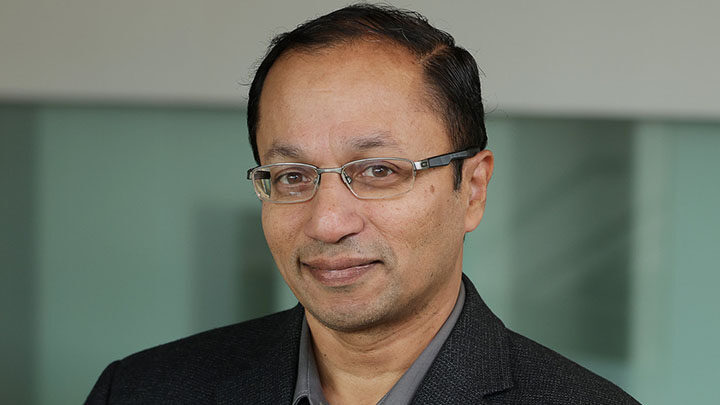
Chris Atkeson is a Professor at the Robotics Institute of Carnegie Mellon University. His research focuses on achieving human-level competence in machines through humanoid robotics and human-aware environments. He explores machine learning techniques such as reinforcement learning, nonparametric methods, and memory-based learning to develop robots capable of complex tasks like manipulation, locomotion, and perception. His work emphasizes bridging the gap between simulation and real-world applications (sim2real transfer), with contributions to tactile sensing (e.g., FingerVision), dynamic walking control, and human-robot collaboration. Notable projects include participation in the DARPA Robotics Challenge with Team WPI-CMU, where his team developed reliable humanoid behavior for disaster response scenarios. Atkeson’s research spans robotics, computer vision, and control systems, with a focus on enabling robots to perceive, learn, and act in unstructured environments. His recent work includes advancements in 3D scene capture, soft robotics, and energy-based planning for compositional tasks.
Andrew Zisserman is a Royal Society Research Professor at the University of Oxford's Department of Engineering Science, affiliated with the Visual Geometry Group (VGG). His research focuses on computer vision, artificial intelligence, and neural networks, with significant contributions to multimodal learning, video understanding, and 3D scene analysis. He leads projects exploring visual-language models, audio-visual synchronization, and clinical imaging applications. Key research areas include: Video analysis and temporal modeling Multimodal systems for sign language translation and action recognition 3D shape estimation and physical property inference Foundation models and cross-modal retrieval Recent work highlights: Developed Flamingo and Tapir models for video-language tasks Advancements in spinal MRI analysis and clinical imaging Leadership in EGO4D and VoxCeleb challenges Honors include Fellowship of the Royal Society (FRS) and the ISSLS Prize in Clinical Science 2023 for spinal analysis innovations. His lab collaborates globally, emphasizing real-world applications in healthcare and autonomous systems.
Megan Valentine is a Professor of Mechanical Engineering at the University of California, Santa Barbara (UCSB), affiliated with the College of Engineering. She leads an interdisciplinary research group focused on biological and bioinspired materials, investigating how forces are generated and transmitted in living systems to design responsive synthetic materials. Her work bridges engineering, physics, chemistry, and biology. Education: PhD in Physics from Harvard University, MS in Physics from the University of Pennsylvania, and BS in Physics from Lehigh University. Affiliations include the California NanoSystems Institute (CNSI), Materials Research Laboratory (MRL), Neuroscience Research Institute, and the Center for Stem Cell Biology and Engineering. Research interests span soft material mechanics, bioengineering, and systems biology, with applications in marine-inspired materials, mechanobiology, and soft robotics. Her lab employs advanced experimental techniques to study biophysical and biochemical mechanisms in living systems and translate them into engineered materials capable of self-healing, movement, and environmental responsiveness. Notable awards include the NSF Early CAREER Award, Fulbright Scholarship, and election as Fellow of the American Physical Society and American Institute for Medical and Biological Engineering. Her contributions emphasize creativity, collaboration, and diversity, with a focus on addressing societal challenges through interdisciplinary innovation.
Sarah Billington is the UPS Foundation Professor of Civil and Environmental Engineering at Stanford University and a Senior Fellow at the Woods Institute for the Environment. Her research program focuses on sustainable building design, human wellbeing, and ethical supply chain practices. Education: PhD, University of Texas at Austin, Structural Engineering (1997) MSE, University of Texas at Austin, Structural Engineering (1994) BSE, Princeton University, Civil Engineering & Operations Research (1990) Her lab employs interdisciplinary methods to study how built environments impact human physical, psychological, and social wellbeing. Current projects include developing tools to quantify nature exposure in buildings, exploring affordable housing's role in wellbeing, and using AI to assess forced labor risks in material supply chains. While no longer active in this area, her group previously pioneered research on sustainable construction materials like bio-based composites and ductile cement-based composites. Her recent publications address topics such as nature integration in architecture, workplace design optimization, and health impacts of building materials. The Billington Lab at Stanford fosters collaborative team science, welcoming partnerships to advance occupant-centric engineering solutions.
Harvey B. Meyer is a Professor of Theoretical Physics at Johannes Gutenberg University Mainz since 2014. Previously, he held positions including Junior Professor at Mainz (2010), Fellow at CERN's Theoretical Physics Division (2009), Research Scientist at MIT (2008), and postdoctoral roles at MIT (2006-2008) and DESY (2004-2006). He earned his D.Phil. in Theoretical Physics from the University of Oxford (2001-2004) and a Diplome de Physique from the University of Lausanne (1996-2001). His research focuses on lattice field theory, QCD phase diagrams, thermal field theory, and hadron structure. He leads the NEPhEuQCD collaboration and has received the ERC Consolidator Grant (2018) for the SIMDAMA project. Meyer teaches courses in theoretical physics and mathematical methods at Mainz, including 'Theoretische Physik 4' and 'Mathematische Rechenmethoden'. His work integrates advanced computational techniques to address fundamental questions in particle and nuclear physics. Key achievements include pioneering studies on the muon's anomalous magnetic moment, hadronic light-by-light scattering, and quark-gluon plasma dynamics. Collaborations include MIT, CERN, and institutions globally through lattice QCD projects. His lab and team contributions are central to the PRISMA+ Cluster of Excellence at Mainz.
Osman Yağan is a Research Professor in the Department of Electrical and Computer Engineering at Carnegie Mellon University (CMU), with affiliate faculty status in the School of Computer Science. He is also a core member of CyLab Security and Privacy Institute. Prior to joining CMU in 2013, he was a Postdoctoral Research Fellow at CyLab. He holds a Ph.D. in Electrical and Computer Engineering from the University of Maryland (2011) and a B.S. from Middle East Technical University (2007). His research focuses on modeling, analysis, and optimization of computing systems, leveraging applied probability, network science, data science, and machine learning. Key areas include multi-armed bandits, resilient machine learning, contagion processes in networks, and cybersecurity. Research Interests include Machine Learning, Data Science, Network Science, Cybersecurity, and Robustness in Cyber-Physical Systems. He has advised numerous students, including current PhD candidates Yurun Tian, Orkun İrsoy, and Ishank Juneja, as well as notable alumni such as Mansi Sood (now at MIT) and Jun Zhao (Assistant Professor at Nanyang Technological University). Key Awards include the CIT Dean's Early Career Fellowship, IBM Academic Award, and Best Paper Awards at ICC 2021, IPSN 2022, and ASONAM 2023. His work spans theoretical contributions (e.g., contagion models in multi-layer networks) and applied research (e.g., mitigating cascading failures in power systems). He leads or co-leads grants from ONR, NSF, and ARO, focusing on resilient machine learning, network robustness, and pandemic modeling.
Sandro Carrara is a Full Professor at École Polytechnique Fédérale de Lausanne (EPFL), where he leads the Bio/CMOS Interfaces (BCI) laboratory. He is affiliated with the School of Engineering (STI), the Institute of Electrical Engineering (SCI-STI-SC), and the Integrated Systems Laboratory (LSI). His academic leadership spans teaching, doctoral supervision, and editorial roles in major journals including IEEE Sensors Journal and BioNanoScience. Education: Diploma in Electronics, National Technical Institute of Albenga, Italy Master in Physics, University of Genoa, Italy PhD in Biochemistry and Biophysics, University of Padua, Italy His research focuses on the integration of biological systems with CMOS technology, particularly in the development of nanoscale biosensors for health monitoring. Key areas include memristive biosensors, wearable and implantable sensors, electrochemical detection, and therapeutic drug monitoring. His work bridges electronics, nanotechnology, and biomedicine to enable point-of-care diagnostics and personalized medicine. His recent publications (2023–2025) show a strong trend toward sustainable printed electronics, machine learning for biosensing, in-memory computing for cancer diagnostics, and remote health monitoring. These works appear in high-impact journals such as IEEE Sensors Journal , Nanoscale , and Biosensors and Bioelectronics: X . Scientific Awards: IEEE Fellow (2015) IEEE Sensors Council Technical Achievement Award (2016) Distinguished Lecturer, IEEE Sensors Council (2017) Best Paper Award, IEEE MeMeA Symposium (2020) Multiple Gold and Bronze Leaf Prizes at PRIME and IEEE conferences Best Poster Awards at EMBEC and Nano-Tera meetings He actively advises PhD students and leads research projects involving CMOS-based biosensors, wireless implants, and smart sensor systems. His lab collaborates widely across disciplines and institutions, focusing on real-world applications in oncology, neurology, and environmental health. He has also contributed to the development of battery-free wearable devices, optical power transfer systems, and IoT-enabled telemedicine platforms. Laboratories and Teams: Bio/CMOS Interfaces (BCI) Laboratory, EPFL Integrated Systems Laboratory (LSI), EPFL Collaborations with IEEE Sensors Council and Circuits and Systems Society Editorial leadership in IEEE Sensors Journal and BioNanoScience
Hadi Meidani is a Clinical Associate Professor at the Carle Illinois College of Medicine , specifically within the Department of Biomedical and Translational Sciences at the University of Illinois at Urbana-Champaign . He teaches courses in Civil and Environmental Engineering, including topics like Systems Engineering & Economics , Machine Learning in CEE , and Uncertainty Quantification . Ph.D., Civil Engineering, University of Southern California (2012) M.S., Electrical Engineering, University of Southern California (2012) M.S., Structural Engineering, Sharif University of Technology (2005) B.S., Civil Engineering, K.N. Toosi University of Technology (2002) Dr. Meidani's research focuses on uncertainty quantification , scientific machine learning , and optimization under uncertainty for engineering systems. His work spans stochastic multiscale analysis , physics-informed machine learning , and model reduction techniques. His recent publications emphasize machine learning for infrastructure systems , graph neural networks , physics-informed models , and traffic assignment . Key trends include deep learning , multi-fidelity modeling , and neural operator transformers applied to metamaterial design , seismic reliability , and autonomous freight delivery .
Ram Vasudevan is an Associate Professor and Associate Chair of Graduate Studies in the Department of Robotics at the University of Michigan. His research focuses on developing tools for safe and robust deployment of robotic systems, emphasizing optimization, nonlinear control, and real-world applications. Key areas include legged robot locomotion, shared control systems, and safety-critical autonomous systems. Research Interests: Optimization and control of nonlinear systems, locomotion of legged robots, shared control active safety systems, and automation of diagnostic/rehabilitative tasks. His ROAHM Lab prioritizes mathematical guarantees for robotic performance, with applications in medical robotics, autonomous vehicles, and soft robotics. Recent work emphasizes trajectory optimization, sensor fusion, and safety-aware control strategies. He has contributed to benchmarks for autonomous vehicle perception and novel methods in thermal image restoration using neural radiance fields. Awards: None explicitly listed in provided text. Labs/Teams: Directs the ROAHM Lab, collaborating on projects like robotic tail mechanics, real-time motion planning, and sensor data analysis. Active in academic conferences including RSS and ICRA.
Harvey Reall is a Professor of Theoretical Physics at the University of Cambridge , affiliated with the Department of Applied Mathematics and Theoretical Physics (DAMTP) and a Fellow of Trinity College . His research focuses on General Relativity and Effective Field Theory , particularly in the context of black hole mechanics , higher-dimensional gravity , and cosmic censorship . He has held prestigious positions including a Royal Society University Research Fellowship from 2005 to 2013. Education: PhD from DAMTP, University of Cambridge. Previous Appointments: Lecturer at the University of Nottingham (2005-2007); Postdoctoral positions at the Kavli Institute (2003-2005), Queen Mary University of London (2000-2003), and University of California, Santa Barbara (2003-2005). Reall's work explores the uniqueness and stability of black holes , causality in gravitational theories , and effective field theory approaches to gravity . His recent publications address nonperturbative second law formulations , event horizon dynamics , and axisymmetry theorems in extended theories of gravity. He has supervised numerous researchers including Aidan McSharry (2025-) , Maxime Gadioux (2022-) , and Iain Davies (2020-24) , contributing to the training of the next generation of physicists. Scientific Awards: Royal Society University Research Fellow (2005-2013)
Dr. Krishnan Mahesh is a Professor at the University of Michigan with joint appointments in Mechanical Engineering and Naval Architecture and Marine Engineering. He serves as Director of the Center for Naval Research and Education and leads the Computational Fluids Laboratory, where he develops advanced numerical methods for simulating multi-physics turbulent flows. Education: Ph.D. (1996), M.S. (1990) from Stanford University, B.Tech (1989) from IIT Bombay Leadership: Director, Center for Naval Research and Education (2022-present) His research focuses on high-fidelity simulations of turbulent flows with applications in marine propulsors, multiphase systems, cavitation, hydroacoustics, superhydrophobic surfaces, biofouling, fluid-structure interaction, and flow stability. His group develops the MPCUGLES software for unstructured grid simulations on parallel computing platforms. Recent work examines cavitation dynamics , tip vortex flows , and roughness-induced transition in complex marine and aerospace systems. His 15 most recent articles demonstrate expertise in LES/DNS of multi-physics flows, with emphasis on marine propulsion, bubble collapse, and turbulent noise prediction. Scientific Honors: 2021 AIAA Best Paper Award 2018 Fulbright Scholar 2017 Marine Propulsors Symposium Best Paper 2011 APS Fellow 2010 Taylor Award for Distinguished Research He mentors numerous graduate students and postdoctoral fellows, with collaborative projects spanning jet in crossflow analysis, gas turbine simulations, and shock-turbulence interactions. His research receives funding from ONR, NSF, and international naval programs.
Jon Simon is the Joan Reinhart Professor and Professor of Applied Physics at Stanford University . He leads the Simon Lab , which explores the convergence of condensed matter physics , quantum optics , and quantum information science , focusing on creating synthetic materials from light and investigating topological and strongly correlated quantum systems. His research spans constructing photonic materials in quantum circuits, studying small quantum systems with strong correlations, and applying Hamiltonian engineering to realize exotic states of matter. The lab has achieved milestones like the first Mott insulator of photons and topologically insulating circuits . Collaborative projects with the Schuster Lab leverage superconducting quantum circuits for synthetic matter studies. Jon's students include Adam Shaw (PhD, now at Stony Brook) Lavanya Taneja (PhD, now at Atom Computing) Ruichao Ma (Postdoc, now faculty at Purdue) among others. The lab's recent publications focus on cavity arrays, hybrid quantum systems, and topological photonics. Research is supported by grants and affiliations with Stanford's Department of Applied Physics and interdisciplinary institutes.
Takuya Ooura is an Assistant Professor at the Research Institute for Mathematical Sciences (RIMS) at Kyoto University, specializing in numerical analysis and mathematical software development. His work bridges theoretical mathematics with practical applications in scientific computing and software development. Dr. Ooura earned his educational credentials through a rigorous academic path: he graduated from Hokuriku High School in 1987; completed his undergraduate studies at Nagoya University's School of Science in 1992; earned his Master of Engineering from the Department of Applied Physics at the University of Tokyo in 1994; and completed his PhD (Engineering) from the same department in 1997. His academic journey continued with a Research Fellowship from the Japan Society for the Promotion of Science (1997) followed by a position as Research Associate at RIMS, Kyoto University (2000). Dr. Ooura's research focuses on numerical integration algorithms, particularly his groundbreaking double exponential formula for Fourier-type integrals, which has been incorporated into Mathematica's NIntegrate function. He has also developed a high-speed FFT library that's utilized in Google Chrome browser (visible in chrome://credits). His work on continuous Euler transformation for accelerating convergence of slowly decaying integrals represents significant innovation in numerical analysis. His research spans both theoretical development and practical implementation of mathematical algorithms with real-world applications. His publication record demonstrates consistent contributions to numerical analysis, with particular emphasis on quadrature methods, integral transforms, and high-precision computation. His work shows a clear progression from theoretical foundations to practical implementations, with several algorithms achieving widespread adoption in commercial and open-source software. Paper prize awarded by JSIAM (2000) for 'A continuous Euler transformation and its application to Fourier transforms of slowly decaying functions' Paper prize awarded by JSIAM (2001) for 'Improvement of the PI Calculation Algorithm and Implementation of Fast Multiple-Precision Computation' Paper prize awarded by JSIAM (2005) for 'An Improved Convergence Test for the Double Exponential Formula' Japan Society for Industrial and Applied Mathematics 4th Achievement Award (2014) for 'Pioneering and practical development of the double exponential numerical integration method' Dr. Ooura has developed several widely used mathematical software packages including the double exponential integral formula, Clenshaw-Curtis numerical integration rule, and a general-purpose FFT library. His FFT package is particularly notable for its speed and accuracy, with benchmark tests showing superior performance compared to other implementations. His software has been incorporated into major projects including Google Chrome and SETI@home, demonstrating the practical impact of his theoretical work. His future research directions include further development of numerical computation libraries and applying his methods to various computational problems.
Ajmal Mian is a Professor of Computer Science at the University of Western Australia (UWA), affiliated with the School of Physics, Maths and Computing. He holds an Australian Research Council Future Fellowship (2022) and leads research in Artificial Intelligence, Computer Vision, and Machine Learning. His work focuses on 3D computer vision, adversarial AI defense, and explainable AI. His research interests include 3D point cloud analysis, face recognition, human action recognition, and remote sensing. He has published over 300 papers and secured major grants from ARC, NHMRC, and DARPA, totaling millions in funding. He has supervised 29 PhD students and mentored 12 postdoctoral researchers. Key projects include 3D diffusion models for scene generation, robust 3D vision systems, and defense against AI deception attacks. He serves as a fellow of IAPR, an ACM Distinguished Speaker, and has editorial roles at IEEE Transactions on Neural Networks and Pattern Recognition. Research Awards: HBF Mid-Career Scientist of the Year, West Australian Early Career Scientist of the Year, IAPR Best Scientific Paper Award. Grants: ARC Discovery Projects, National Intelligence & Security Discovery grants, DARPA grants for AI security. His teaching spans computer vision, machine learning, and programming courses. Collaborations include defense, medical, and agricultural applications.
Brenden Lake is an Associate Professor of Computer Science and Psychology at Princeton University, starting Fall 2025. Previously, he was an Associate Professor of Psychology and Data Science at New York University. He is the principal investigator of the lab for Human & Machine Intelligence, which moved from NYU to Princeton in 2025 and is jointly affiliated with the Department of Computer Science and the Department of Psychology. His lab is located in Princeton's Peretsman Scully Hall, rooms 117, 120, and 121. Ph.D., Massachusetts Institute of Technology, 2014 Lake's research focuses on the intersection of human and machine intelligence, specifically examining human cognitive abilities that elude current AI systems. His work centers on few-shot learning of new concepts, learning by generating new goals, learning by asking questions, and learning by producing novel combinations of known components. He employs modern neural network modeling approaches including meta-learning, fine-tuning LLMs, neuro-symbolic modeling, and learning from child headcam videos. His research aims to advance both psychology and computer science by exploring what makes human intelligence unique and using those insights to develop more powerful AI systems. Lake's recent publications demonstrate significant trends in grounded language acquisition through child perspectives, systematic generalization in neural networks, and the intersection of developmental psychology with AI. His work has appeared in top-tier venues including Science (2024) and Nature (2023), with multiple publications exploring how insights from human cognition can improve machine learning systems. His research shows how incorporating human cognitive ingredients can make AI systems more powerful and human-like while addressing longstanding debates about neural network capabilities. Science publication (2024) on Grounded language acquisition through the eyes and ears of a single child Nature publication (2023) on Human-like systematic generalization through a meta-learning neural network Multiple publications covered by major media outlets including New York Times and Washington Post Lake advises Ph.D. students in computer science, psychology, and related fields through his lab. His research is supported by publications in top venues across computer science and cognitive science. He teaches courses including Computational Cognitive Modeling and Advancing AI through Cognitive Science, bridging the theoretical and practical aspects of his research. Lake leads the lab for Human & Machine Intelligence, which studies the ingredients of intelligence in humans and machines. The lab investigates human cognitive abilities that current AI systems cannot replicate, with the dual goal of advancing psychological understanding of human intelligence while developing more capable artificial intelligence systems. Current research focuses on few-shot concept learning, learning through goal generation, and learning by asking questions.