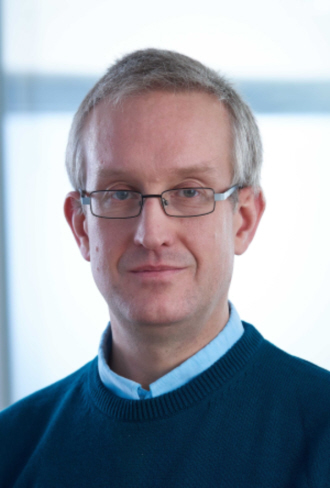
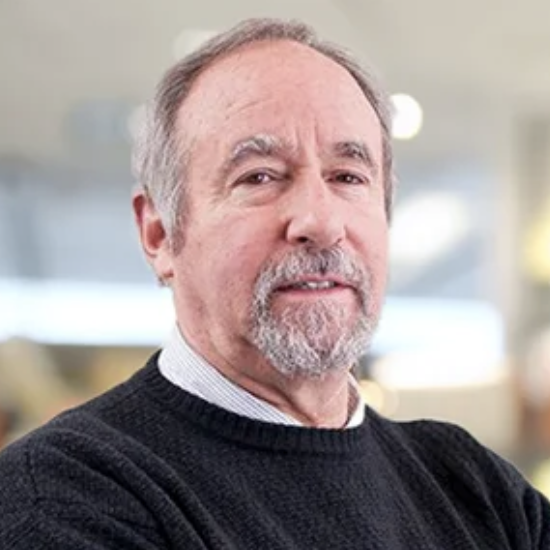
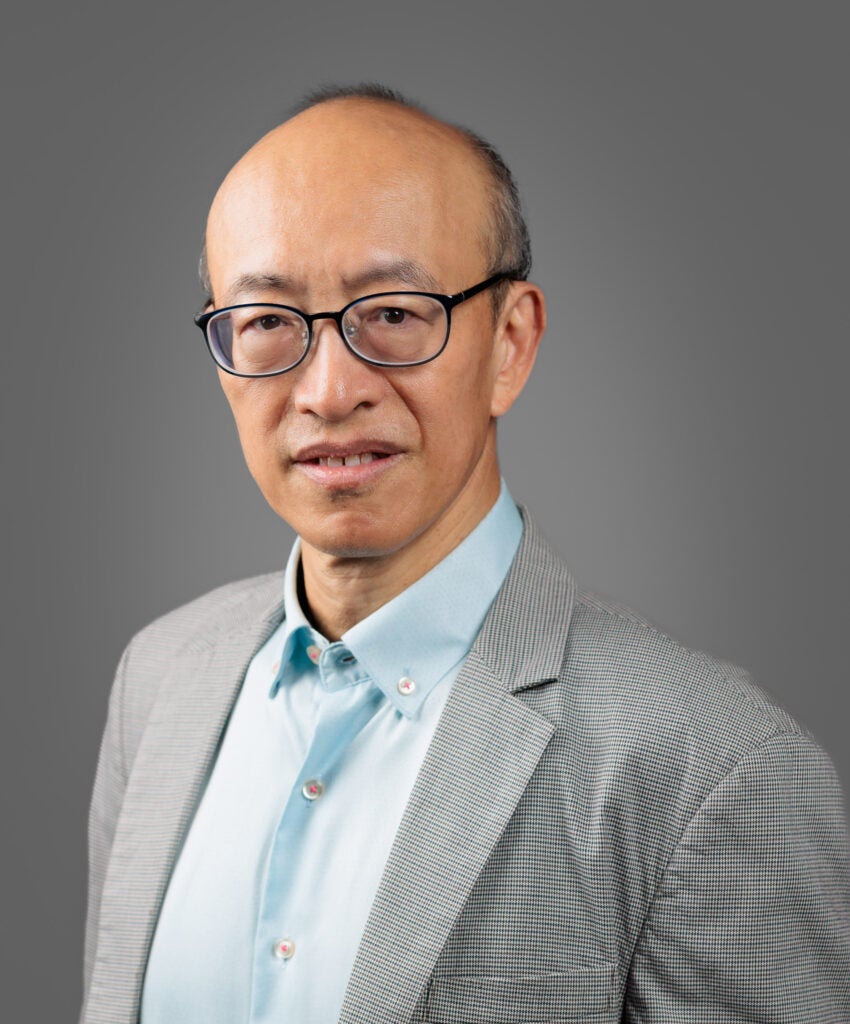
Tom Mitchell is a Professor of Audio and Music Interaction at the University of the West of England (UWE), Bristol . As leader of the Creative Technologies Laboratory , his research focuses on interactive technologies for creative expression, blending computer science, music, and artificial intelligence. He is the principal investigator for the UKRI Future Leaders Fellowship project "Sensing Music Interactions from the Outside-In" and co-investigator for the Bridge , a £3M creative technology facility. His research spans digital musical instrument design , GPU-accelerated audio processing , and sonification of scientific data . Recent work includes accessibility improvements in virtual environments, AI-driven DMI development, and interdisciplinary collaborations like the MiMU Gloves with Imogen Heap. He also contributes to robotics teleoperation through auditory feedback systems. Selected publications highlight trends in GPU acceleration for audio , generative AI in musical contexts , and human-robot collaboration via sonification. As a software developer , he specializes in C++ and the Juce library , with applications in live performance systems and scientific visualization projects like Soma and danceroom Spectroscopy . UKRI Future Leaders Fellow Active in AHRC and WECA-funded projects Best paper nominations at EvoMUSART and International Faust Conference Mitchell collaborates with institutions including the Bristol Robotics Laboratory , Computer Science Research Centre , and Pervasive Media Studio . His work bridges academic research with commercial applications through ventures like May Productions and x-io Technologies.
Rune Strandberg is an Associate Professor at the Department of Engineering Sciences, University of Agder. He holds a PhD in solar cell physics from NTNU and specializes in photovoltaic materials, solar cell physics, and energy conversion. His research focuses on advanced solar cell concepts including tandem cells, intermediate band solar cells, and thermoradiative energy harvesters. Education: Master of Technology (2005) and PhD (2010) in solar cell physics from NTNU. Pedagogical training includes Uniped courses (2014-2015) and PhD supervision qualification. Current teaching: Renewable Energy, Solar Energy Systems, Electromagnetism, Advanced Photovoltaics Prior roles: PhD student at NTNU (2005-2009), Senior Researcher at Teknova AS (2010-2013) Research areas: New photovoltaic concepts, characterization of photovoltaic cells, solar cell physics, emissive energy harvesters His recent publications analyze band gap optimization, radiative coupling in multi-junction cells, temperature sensitivity, and theoretical efficiency limits across multiple high-impact journals. Collaborators include Anne Gerd Imenes, Alfredo Sanchez Garcia, and Sissel Tind Kristensen. Key contributions include development of analytical models for solar cell performance, field testing of PV modules in Norway, and studies on temperature effects in multicrystalline silicon wafers.
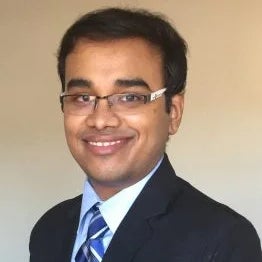
Dr. Sumanta Das is an Associate Professor and Graduate Director in the Department of Civil and Environmental Engineering at the University of Rhode Island. His research focuses on sustainable infrastructure materials, with particular expertise in cementitious materials, composite structures, and advanced computational modeling techniques. He directs a vibrant research group that bridges experimental mechanics with computational modeling and machine learning approaches to address challenges in infrastructure durability and performance. Dr. Das received his educational training from prestigious institutions: Ph.D. in Materials and Structures from Arizona State University (2015) M.Tech. in Structural Engineering from Indian Institute of Technology, Kanpur (2012) B.E. in Civil Engineering from Jadavpur University (2010) His research interests center around developing sustainable and durable infrastructure materials through innovative design approaches. Dr. Das investigates microstructure-property relationships in cementitious systems, with special focus on materials containing microencapsulated phase change materials for freeze-thaw durability, fiber-reinforced composites, and smart cementitious materials with self-sensing capabilities. His work integrates advanced experimental techniques like nanoindentation with computational modeling approaches including finite element analysis, molecular dynamics simulations, and machine learning algorithms to predict material behavior and optimize performance. Dr. Das's recent publications demonstrate a clear trajectory toward integrating machine learning with traditional materials science approaches. His research group has made significant contributions to understanding the behavior of cementitious composites under extreme conditions, developing multifunctional composites with embedded sensing capabilities, and creating computational frameworks that bridge multiple scales from molecular to structural levels. The work shows increasing sophistication in combining experimental validation with predictive modeling. Dr. Das has successfully secured numerous research grants as PI or Co-PI from diverse funding sources including the Office of Naval Research, Department of Defense, US Department of Transportation, and industry partners like Goetz Composites. His research portfolio spans infrastructure durability, composite materials for marine applications, and smart sensing technologies for structural health monitoring. As an educator and mentor, Dr. Das has supervised multiple doctoral and master's students who have completed theses on topics including: Multiscale simulation and machine learning-assisted performance prediction for cementitious composites Performance-based multiscale tuning of inclusion-modified and 3D printed composites Enhancing freeze-thaw durability of cementitious composites through innovative materials design Underwater explosion response of composite structures Implosion pulse mitigation using additively manufactured filler profiles
Ayden Mccarthy is a Lecturer at the Department of Health Sciences within Macquarie University's Faculty of Medicine, Health and Human Sciences. His research focuses on biomechanics, military science, and wearable technology integration for physical performance assessment. Ph.D. in Health Sciences Specializes in predictive modeling and biomechanical validation Active in military ergonomics and wearable sensor research His work applies machine learning to military manual handling and load carriage biomechanics , with recent studies examining 3D body scanning accuracy and joint angle measurement systems under armor conditions. Publications emphasize physical fitness assessment and gender-specific performance metrics in tactical mobility tasks. Article trends show specialization in military ergonomics , biomechanical modeling , and wearable technology validation , with interdisciplinary connections to computer science and health informatics . Collaborations span Medicine , Sports Science , and Engineering domains. Scientific Awards: Best Student Presentation, ABC Sydney (2023) Correspondence available via ayden.mccarthy@mq.edu.au or ayden.mccarthy@hdr.mq.edu.au .
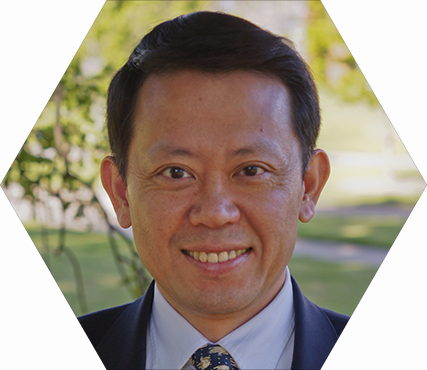
Steven Y. Liang , Regents' Professor at the Georgia Institute of Technology 's Woodruff School of Mechanical Engineering, focuses on precision manufacturing , additive manufacturing , and materials-driven process optimization . His research program bridges materials science and computational mechanics to develop predictive models for advanced manufacturing systems. Ph.D., University of California, Berkeley (1987) M.S., Michigan State University (1984) B.S., National Cheng-Kung University, Taiwan (1980) Dr. Liang's work emphasizes physics-based modeling of thermal-mechanical interactions in machining and additive manufacturing, particularly for Ti6Al4V and Inconel 718 alloys. Recent publications highlight tool wear prediction , laser-assisted micro-milling , and residual stress modeling using machine learning and analytical mechanics. His research has been recognized with the ASME Milton C. Shaw Manufacturing Research Medal (2016) , SME Gold Medal (2021) , and Outstanding Lifetime Service Award of NAMRI/SME (2021) , among others. Funded by federal agencies and aerospace/automotive industries, his work provides scientific foundations for process planning and optimization.
Ina Fichtner is a Professor at the Faculty of Digital Transformation of University of Applied Sciences HTWK Leipzig since 2022. Previously, she led the MINT department at the Institute for Applied Training Science (IAT) in Leipzig for 13 years (2009–2022), focusing on integrating mathematics, informatics, and natural sciences into sports research. Her work bridges computer science , biomechanics , and sports informatics , with extensive projects on athlete movement analysis, data systems (IDA), and digital tools for elite sports. PhD in Computer Science (2007) from TU Dresden and Leipzig University Diplom in Mathematics and Computer Science (2002) from Jena, Dresden, and Sheffield Her research spans data science , sports technology , and applied informatics , particularly in ski jumping , dive analysis , and athlete biomechanics . She has co-authored numerous publications in theoretical computer science and applied sports informatics , including studies on 3D body scanning , inertial sensors , and force-velocity profiling . She served as Alumni Representative and Treasurer of the Friends' Association at HTWK Leipzig, with memberships in German Mathematical Society and German Sports Science Association .
Professor Joseph Wood is a Professor of Visual Analytics at City St George's, University of London, where he serves as a founding member of the giCentre. His academic career spans over three decades, with continuous contributions to Geographic Information Science and visualization since 1990. He previously served as Head of Department for Computer Science at City University between 2014 and 2017. Professor Wood's educational background includes a PhD in Geographical Information Science from the University of Leicester (1996), an MSc in the same field from the University of Leicester (1990), and a BSc in Physical Geography & Geology from the University of Sheffield (1989). His academic progression shows steady advancement from Research Scholar at the University of Leicester (1990-1992) through various lecturer and senior positions to his current professorship. His research interests center on visual analytics and data visualization, with particular expertise in geographic information science and terrain analysis. Professor Wood has developed innovative methods bridging GI Science, Data Visualization, and education domains. His specific interests include narrative of visual analytic design, computational thinking in pedagogy, and novel visualization design for geographic data. His work demonstrates a consistent focus on making complex spatial data understandable through innovative visualization techniques. Analysis of Professor Wood's recent publications reveals a strong emphasis on practical applications of visualization techniques across diverse domains including transportation, epidemiology, sports analytics, and historical migration patterns. His work shows an evolution from foundational geographic information science toward broader applications in visual analytics, with increasing focus on narrative structures, responsive design, and accessibility considerations in visualization. The interdisciplinary nature of his research is evident in collaborations spanning computer science, geography, urban planning, and public health domains. Professor Wood has been actively involved in the academic community, serving on organizing and program committees for major international conferences including IEEE Infovis and VAST, Eurovis, GIScience, Spatial Accuracy, and Geomorphometry. His contributions to the field have been recognized through invitations to deliver keynote talks at prestigious venues ranging from GeoComputation to TEDx, where he presented on topics such as visualizing movement behavior of cyclists. As an advisor, Professor Wood has supervised numerous PhD and Master's students, with current supervision of Julia Crossley (Student conceptualisation of abstraction in computer science) and Jude Nzemeke (Understanding student misconception in recursive algorithmic thinking). His extensive supervision history includes completed PhDs on topics ranging from cycling behavior to spatio-social relations in photographic archives. His academic leadership extends to software development, with contributions to tools like litvis, elm-vega/el-vegalite, giCentre Utils, handy, and LandSerf GIS. Professor Wood is an active member of professional organizations including IEEE (2007-present), Association of Computing Machinery (ACM) (2007-present), and Association of Geographic Information (AGI) (1997-present), demonstrating his commitment to interdisciplinary collaboration across computer science and geographic information domains.
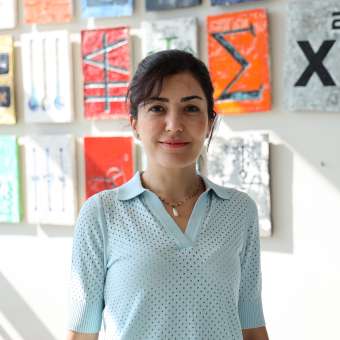
Dr. Sueda Saylan is an Assistant Professor at the Faculty of Engineering, Özyeğin University, since 2024. Her academic journey includes a Ph.D. in Interdisciplinary Engineering (2016) from Masdar Institute (now Khalifa University), postdoctoral research at Khalifa University (2016-2022), and an MSCA Postdoctoral Fellowship at Bilkent University (2022-2024). She has also held visiting researcher positions at MIT (2014) and the University of Tokyo (2016). Education Doctorate: Interdisciplinary Engineering, Masdar Institute of Science and Technology (2016) Master's: Microelectronic Manufacturing Engineering, Rochester Institute of Technology (2004) Bachelor's: Mechanical Engineering, Middle East Technical University (2002) Dr. Saylan's research focuses on memristive devices , photovoltaics , and light-matter interactions at micro/nanoscale . Her work bridges materials science and electronic engineering, with recent publications on memristor-based sensors, spectral filtering in silicon, and machine learning integration for biomedical diagnostics. Key trends from her 15 most recent articles (2013-2025) include: Advancing memristor technology for radiation sensing and vacuum monitoring Optimizing photovoltaic efficiency through light management and antireflection coatings Developing compact, low-power diagnostic devices for pathogen detection Exploring nanoscale electrode materials and switching mechanisms Applying Fourier transforms and interferometry in optical systems Scientific Awards Marie Skłodowska-Curie Actions (MSCA) Postdoctoral Fellowship (2022-2024) Dr. Saylan has received research support from prestigious programs and has contributed to interdisciplinary projects involving semiconductor physics, optical engineering, and biomedical diagnostics. Her collaborations span institutions like Khalifa University, MIT, and the University of Tokyo.
Professor Oliver Johnson is a faculty member at the School of Mathematics, University of Bristol, UK, where he serves as Head of School and holds the Professor of Information Theory position. His research bridges information theory, probability, and statistics, focusing on entropy convergence, group testing, and fundamental limits in data analysis. Current PhD students: Kieran Morris, Conor Crilly Ex-PhD students: Matt Aldridge, Leonardo Baldassini, Dan Cowley, Vaia Kalokidou, Tom Kealy, Jennifer Chakravarty, Zichen Gui, Chrys Paschou Ex-postdoc: Erwan Hillion His work includes ORCiD profile and collaborations across information theory, cybersecurity, and ecological modeling.
Husheng Li is a Professor of Aero and Astro Engineering at Purdue University's School of Aeronautics and Astronautics. He holds a PhD in Electrical Engineering from Princeton University and bachelor's and master's degrees in Electronic Engineering from Tsinghua University. Education: PhD in Electrical Engineering, Princeton University BS and MS in Electronic Engineering, Tsinghua University Research Interests: Dr. Li's work focuses on autonomous and connected systems , UAV sensing and communications , and joint design of control and communication systems . His research integrates cyber-physical systems , statistical signal processing , and wireless communications , with recent emphases on integrated sensing and communications (ISAC) , MIMO systems , and waveform optimization . His innovations span OTFS modulation , secure ISAC networks , and multi-functional waveform design . Publications: His articles explore cutting-edge topics like waveform sensitivity analysis , spectral efficiency in ISAC , and secure communication protocols . His work bridges theoretical information theory with practical system implementations , often validated through experimental demonstrations. Grants & Advising: While specific grants or student advisees are not detailed here, his research aligns with major trends in autonomous systems and 6G communication technologies . His lab likely contributes to Purdue's broader efforts in smart infrastructure and cyber-physical systems .
Kevin Lynch is a Professor of Mechanical Engineering and Director of the Center for Robotics and Biosystems at Northwestern University. He holds a Ph.D. in Robotics from Carnegie Mellon University and a B.S.E. in Electrical Engineering (with honors) from Princeton University. His research focuses on robotic manipulation, robot locomotion, physical human-robot interaction, and distributed control of robot swarms. He has pioneered advancements in exoskeleton control, swarm formation algorithms, and haptic interaction frameworks. Professor Lynch has received significant recognition, including the IEEE Fellow distinction (2010), the Harashima Award (2017), and the Charles Deering McCormick Professor of Teaching Excellence award (2007–2010). He serves as Editor-in-Chief of the IEEE Transactions on Robotics and has authored over 150 peer-reviewed publications. Key contributions include the development of safety-aware human-robot collaboration systems and self-healing swarm control algorithms. He created the ME 333 Introduction to Mechatronics course and the Mechatronics Design Laboratory, fostering interdisciplinary robotics education. His lab, the Center for Robotics and Biosystems, integrates biomechanics with advanced robotics to address challenges in rehabilitation and autonomous systems.
David Garlan is a Professor at the Software and Societal Systems Department within the School of Computer Science at Carnegie Mellon University , where he also serves as Associate Dean for Master’s Programs . He received his Ph.D. from Carnegie Mellon in 1987 after working in industry as a software architect. His research focuses on controlling complexity in large software systems through formalized architectural design, self-adaptive systems, and cyber-physical systems. He developed AcmeStudio , a widely used architecture design environment, and pioneered formal representation and analysis of software architecture. Education : Ph.D. in Computer Science (Carnegie Mellon, 1987) Research Interests include: Software Architecture: Formal methods for architectural design, end-user composition, and architectural styles Self-Adaptive Systems: Stochastic planning, model checking, security adaptation, and uncertainty reduction Cyber-Physical Systems: Multi-view design methods, consistency checking, and automotive systems Recent Article Trends address microservice resiliency, hybrid planning (combining formal methods and ML), simulation-augmented robotics, and sustainable machine translation. Themes include stochastic modeling , probabilistic verification , and adaptive decision-making . Scientific Awards : Stevens Award Citation (2005) ACM SIGSOFT Outstanding Research Award (2011) Allen Newell Award for Research Excellence (2016) IEEE TCSE Distinguished Education Award (2017) Nancy Mead Award (2017) Fellow of IEEE and ACM Advising and Grants : He has advised 25+ graduate students and collaborated on projects with Toyota and the Software Engineering Institute. His work includes model-based adaptation, automated planning, and formal verification of adaptive systems. Labs & Teams : Affiliated with the Institute for Software Research and works on tools like AcmeStudio, Rainbow, and IPL for architectural modeling and self-adaptation.
Professor Ding Jun is a faculty member in the Department of Materials Science and Engineering at the National University of Singapore's College of Engineering. His research spans additive manufacturing and nanomaterials with applications in energy, environment, and healthcare. Contact details include office location E2-03-17 and phone 65164317. His primary research interests include: Additive Manufacturing for multi-material and multi-functional devices Nanomaterials fabrication for energy harvesting/storage, water purification, and sensor development 3D printing of metals, ceramics, and graphene-based structures Analysis of his 10 most recent publications reveals strong focus on practical applications of 3D printing across energy storage (Li-O 2 batteries, water splitting), environmental remediation (air filters, water purification), and advanced manufacturing techniques (robocasting, metallization). Key technological themes include hierarchical porous structures, multi-material integration, and performance optimization at high current densities. No scientific awards were mentioned in the source material. Professor Ding teaches core materials engineering courses including MLE3203 Engineering Materials, MLE3111 Materials Properties & Processing Laboratory, MLE4212 Advanced Structural Materials, and MLE5301 Advanced Metallic and Ceramic Materials in Additive Manufacturing. No information on research grants or student supervision was provided. His work demonstrates strong integration between novel 3D printing methodologies and real-world environmental/energy applications, with particular emphasis on creating functional architectures for electrochemical systems and pollution control.
David Del Rey Fernández is Assistant Professor and Pratt & Whitney Canada Chair in Industrial Artificial Intelligence in the Department of Applied Mathematics at University of Waterloo. His research develops efficient numerical algorithms for solving partial differential equations on high-performance systems. He holds a PhD from University of Toronto and previously worked at NASA Langley Research Center. Research focuses on robust numerical methods, mesh adaptation, and machine learning acceleration. His work includes entropy-stable schemes, summation-by-parts methods, and discretizations for compressible flows. Recent publications address Lyapunov-consistent discretizations and scalable reduced-order modeling.
Fernando Camelli is an Associate Professor in the Physics & Astronomy Department at George Mason University, holding dual roles as Instructional Faculty and Faculty. His research focuses on computational fluid dynamics (CFD), urban environmental modeling, and high-performance computing. He specializes in simulating complex fluid flows in urban environments, subway systems, and industrial applications, with particular emphasis on turbulence modeling, fluid-structure interaction, and GPU-accelerated algorithms. Key research areas include: CFD for urban airflow and contamination dispersion Meshless and immersed boundary methods Integration of geographic information systems (GIS) with CFD Large-scale simulations using parallel computing His work addresses practical challenges such as subway ventilation optimization, emergency contaminant dispersion prediction, and urban infrastructure design. Recent studies emphasize scalability improvements for fluid-structure interaction simulations and GPU-based code modernization.