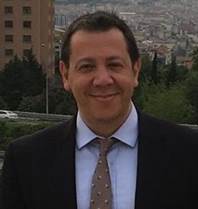
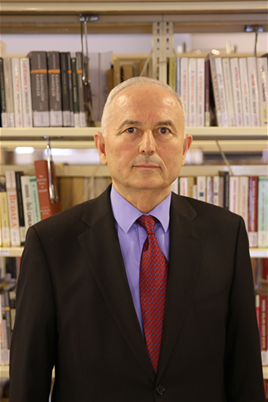
Assoc. Prof. Dr. Esra Baş is an academic at Istanbul Technical University , affiliated with the Department of Industrial Engineering . She holds a PhD in Industrial Engineering from Istanbul Technical University (2008) and a Master's degree in Business Administration (Non-Thesis) from Yeditepe University (2001), alongside a Mechanical Engineering licentiate from Yıldız Technical University (1999). She has served as Vice President of her department since 2013 and has been an Associate Professor since 2014. Her research focuses on Engineering Economics , mineral and resource recovery , and waste management , particularly in extracting valuable metals from electronic waste and optimizing mineral processing techniques. Her recent work emphasizes physical and chemical methods for rare earth element extraction and particle analysis in industrial applications. No scientific awards are explicitly listed, but her contributions to resource recovery and metallurgical processes are notable. She has advised no listed students, and her grants and lab affiliations are unspecified.
Sedat ŞENGÜL is an Assistant Professor in the Department of Physics at Trakya University's Faculty of Science, where he also serves as Faculty of Science Vice Dean since January 2021 and Department of Physics Vice-Head since October 2019. Previously, he held the Vice-Head position from September 2013 to July 2017. High School: Graduated in 1995 from Fatih Vatan College Bachelor's Degree: Graduated in 1999 from Department of Physics, Faculty of Science, Trakya University Master's Degree: Graduated in 2002 from Department of Physics, Institute of Natural Sciences, Trakya University Doctoral Degree: Graduated in 2008 from Department of Physics, Institute of Natural Sciences, Trakya University Dr. ŞENGÜL's research focuses on computational materials science with emphasis on molecular dynamics simulations of metallic systems. His work spans metallic glasses, nanowire mechanics, liquid metal structure, and phase transitions under various conditions including high pressure and rapid cooling. He has extensively studied structural evolution during glass formation, deformation mechanisms in alloys, and size-dependent properties in nanomaterials. His publication record demonstrates consistent productivity with over 30 articles since 2001, accelerating significantly after 2016. The research shows strong thematic continuity in molecular dynamics applications to metallic systems, with increasing focus on ternary and quaternary alloys, nanoscale phenomena, and pressure/temperature effects. Recent work emphasizes practical applications in metallic glass design and nanomaterial mechanics. Dr. ŞENGÜL has supervised Master's research including Alper Koray GÜNER's 2021 thesis on rhodium nanowires and currently advises Oğuz KINA on layered nanoparticles. His work demonstrates strong collaboration patterns with researchers including M. Celtek, U. Domekeli, and V. Guder across multiple publications.
Assoc. Prof. Dr. Ahmet Mustafa ERER is a faculty member at Karabük University's Department of Physics, part of the Faculty of Science. He holds a Doctorate from Bülent Ecevit University (2011) and has been active in academia since 1995. His research focuses on condensed matter physics, material physics, and surface physics, with a particular emphasis on solder alloy properties, corrosion dynamics, and radiation measurements. He has supervised 7 PhD and master’s students and contributed to 5 research projects. Prof. Erer has authored or co-authored over 40 publications, including studies on wetting behaviors of Pb-free solder alloys and radon concentration analysis. He currently serves as Deputy Head of the Physics Department and has held roles such as Erasmus Coordinator and Head of Department. His teaching spans undergraduate and graduate courses in physics and surface science. Education: PhD in Physics (2011), MSc in Physics (1997), BEng in Physics Engineering (1994) Research Interests: Solder alloy microstructure, interfacial properties, corrosion kinetics, and environmental radioactivity Recent Projects: Analysis of Al and In additives in solder alloys, radon measurement in environmental samples Grants: Led projects on solder alloy wetting and corrosion funded by TÜBİTAK and university grants
Assoc. Prof. Dr. Aynur Manzak is a faculty member at the Department of Chemistry within the Faculty of Science at Sakarya University . She holds the academic rank of Associate Professor and has maintained a full-time position in academia. Her research focuses on Physical Chemistry , Polymer Science , and Water/Wastewater Treatment , with significant contributions to Membrane Processes and Metal Ion Extraction . Her recent work demonstrates expertise in Polymer Inclusion Membranes (PIMs) and Emulsion Liquid Membranes , particularly in extracting organic acids and metal ions using carriers like Aliquat 336, Trioctylamine, and TOPO. She has supervised multiple MSc theses on topics including succinic acid extraction and humic acid recovery. Her research trends emphasize Environmental Remediation , Industrial Applications , and Sustainable Separation Techniques . Scientific Contributions : Developed novel adsorbents for dyestuff removal, characterized membranes for metal retention, optimized hydrophilic polymer effects on membrane morphology. Projects : Led research on rubber compound design (2025), microwave-assisted transesterification kinetics (2010), and polymer membranes for metal recovery (2012). Students : Supervised Cem Kurşun (2016), Melek Sönmezoglu (2008), and others in organic acid/metal extraction studies. Awards : Recognized with Yayın Teşvik Awards for scholarly contributions.
Prof. Servet İbrahim Timur is a full-time Professor at Istanbul Technical University's Department of Metallurgical and Materials Engineering, where he leads research in advanced materials synthesis and characterization. His laboratory focuses on electrochemical processing techniques for energy storage and functional materials. His research interests span: Electrochemical synthesis of borides and rare-earth metals Computational materials design for semiconductor applications Supercapacitor technologies using nickel/vanadium borides Surface engineering through boriding and multilayer coatings Thermodynamic modeling of doped semiconductor systems His recent publications demonstrate a strong focus on energy storage materials (particularly supercapacitor electrodes) and computational approaches to material defects. The work frequently combines experimental electrochemistry with atomistic modeling. Major scientific recognitions include: 1996 Best Doctoral Thesis Award R&D 100 Awards (2017) Graduation Design Project Competition Prize (2020) He currently leads 12 active research projects including: Molten salt electrolysis of rare earth oxides (2022-2023) Platinum group metal recovery from catalytic converters (2023-2025) Selective extraction of rare earth elements (2021-2023) He has supervised 38 graduate students through research projects.
SAFFET NEZIR serves as a Professor in the Department of Physics within the Faculty of Engineering and Natural Sciences, specializing in Solid State Physics. His academic career centers on advanced materials research with emphasis on experimental and theoretical characterization of physical properties. His primary research domains include: Solid State Physics Superconductivity Materials Science Nanomaterials Condensed Matter Physics He investigates structural, electrical, magnetic, and mechanical behaviors of ceramic superconductors and nanomaterials through advanced synthesis and analytical techniques. Analysis of his 2017-2021 publications reveals sustained focus on YBCO-based superconductors with rare-earth doping (Er, Cs, Lu), while expanding into biomedical nanomaterials like silver-doped hydroxyapatite and reduced graphene oxide. His work demonstrates interdisciplinary convergence across physics, materials engineering, and biomedical applications, with methodological emphasis on ultrasonic spray pyrolysis and computational modeling. The research trajectory shows consistent evolution from fundamental superconductor studies toward applied nanomaterial solutions for energy and healthcare sectors.
Sercan BASİT is an Assistant Professor at Kırşehir Ahi Evran University's Faculty of Engineering and Architecture, Department of Mechanical Engineering. He holds a PhD in Metallurgical and Materials Engineering from Yıldız Technical University (2020) and has been active in research areas such as alloy development, biomaterials, and casting technologies. Education: BSc: Metallurgical and Materials Engineering, Yıldız Technical University (2012) MSc: Production, Yıldız Technical University (2015) PhD: Production, Yıldız Technical University (2020) His research focuses on biodegradable metallic materials, solidification processes, and sustainable recycling technologies. He leads national and international projects in these domains and is a member of the BIOMATAM research group at Yıldız Technical University. His recent publications explore the role of static electrical fields in eutectic alloy solidification, biodegradable zinc-based alloys for biomedical applications, and data-driven methods for copper recovery. These works span materials science, solidification physics, and sustainable metallurgy. Scientific Awards: Best Paper Award (2023), The Academy of Romanian Scientists He has advised multiple Master's students and contributed to projects funded by TUBITAK and university initiatives. His work bridges fundamental solidification studies with applied research in additive manufacturing and eco-friendly material recovery.
Prof. Dr. Selim GÜRGEN serves as a Professor in the Department of Aviation Science and Technologies at Eskisehir Osmangazi University, Turkey. His research integrates advanced materials science with aerospace engineering to develop next-generation protective systems for aviation applications. Education: Ph.D. in Mechanical Engineering, Eskisehir Osmangazi University (2013-2017) M.Sc. in Mechanical Engineering, Middle East Technical University (2009-2011) B.Sc. in Mechanical Engineering, Gazi University (2005-2009) Visiting Fellow, University of Wollongong, Australia (2015-2016) His research centers on smart composite materials with emphasis on shear-thickening fluids (STF) and cork-based systems for impact mitigation. Key investigations include energy absorption mechanisms in cellular composites, vibration damping in thin-walled aerospace structures, and sustainable protective solutions using renewable materials. His work bridges rheology, material science, and structural engineering to address critical challenges in aircraft safety and performance. Analysis of his 2023-2025 publications reveals three dominant trends: (1) Multifunctional STF composites for simultaneous impact resistance and electrical conductivity, (2) Sustainable cork agglomerates as eco-friendly alternatives in protective systems, and (3) Advanced numerical modeling of hypervelocity impact scenarios for space debris shielding. These studies consistently target weight reduction while enhancing safety margins in aerospace applications. No scientific awards were documented in available sources. While specific student advisement details were not provided, his research methodology combines experimental testing with computational modeling across multiple material systems. Current projects appear focused on optimizing STF-cork composites for low-speed aerial vehicle applications and developing multifunctional triboelectric nanogenerators. His laboratory work involves rheological characterization, impact testing (including drop-weight and hypervelocity systems), and advanced manufacturing of composite specimens. Collaborative efforts appear concentrated on sustainable material solutions that meet stringent aerospace certification requirements.
Assoc. Prof. Dr. Emre TABAR is a faculty member at the Department of Physics, Faculty of Science, Sakarya University. His research focuses on nuclear physics, radiation shielding, and materials science with applications in environmental and computational domains. He leads projects supported by TÜBİTAK and contributes to international peer-review activities. His teaching includes advanced physics courses such as Quantum Mechanics and Nuclear Physics. Education & Training: Expertise in theoretical and experimental nuclear physics, with emphasis on computational modeling. Research Interests: Nuclear structure properties, radiation shielding materials, low-energy electromagnetic excitations, and geophysical radon studies. His recent articles explore radiation shielding in composite materials, nuclear dipole modes in heavy nuclei, and geophysical radon variations along fault lines. Notable awards include recognition from Sakarya and Ege Universities. He supervises graduate theses on nuclear excitations and material science. Labs & Collaborations: Member of the Nuclear Physics Research Group at Sakarya University, collaborating on international projects and conferences.
Burc Misirlioglu is a Professor at Sabancı University's Materials Science and Engineering Program, Faculty of Engineering and Natural Sciences. His research focuses on functional oxides, defects, interfaces, and microstructure in confined dimensions, with applications in energy storage, non-volatile memories, and electrooptical devices. Education: Ph.D. (2006), M.Sc. (2001), and B.Sc. (1998) in Materials Science and Metallurgy from University of Connecticut and Istanbul Technical University. Research: Investigates defects' impact on phase transitions, polarization, and caloric effects in ferroelectric and ferromagnetic systems. Grants: Principal Investigator for TÜBİTAK 1001 projects on electrocaloric effects and negative capacitance. Students: Advises current Ph.D. candidates like Cihan Arlı and mentors alumni now in academia or industry (e.g., Barış Okatan at İzmir Institute of Technology). Invited Talks: Presented at MRS 2023 Fall Meeting and Photonics Workshop 2023 on voltage amplification and optical phase transitions. Publications: Recent work spans the electrocaloric effect, polarization reversal mechanics, and chirality control in nanoscale magnetic systems. Scientific Awards: Recipient of the AvH Fellowship at Max Planck Institute (2006-2007).
Prof. Kerim Mehmet Murat Tunç is a distinguished faculty member at İstanbul Bilgi University, where he has been serving as a Professor in the Industrial and Systems Engineering Department since September 2013. Previously, he held academic positions at Yeditepe University and the Technical University of Istanbul, where he advanced from Research Assistant to full Professor. His expertise lies in thermodynamics, heat transfer, exergy analysis, and energy systems, with a strong focus on industrial applications in steel production and renewable energy. His educational background includes a PhD and MS in Mechanical Engineering from the Technical University of Istanbul, and a Postdoctoral Fellowship from the University of New Brunswick, Canada. He has also been awarded prestigious research scholarships from Belgium, Canada, and Italy. His research spans energy modeling, sustainable power generation, and computational analysis of thermal systems. His recent publications reflect a deep engagement with topics such as geothermal energy, wind power optimization, solar plant investments, and climate policy impacts on energy systems in Turkey. He frequently collaborates with students and colleagues on interdisciplinary projects involving exergy efficiency, hydro scheduling, and biomedical modeling. His scientific awards include the Belgian Government Predoctoral Scholarship, Von Karman Institute Research Scholarship, and postdoctoral fellowships from the University of New Brunswick and ICTP, Italy. Belgian Government Predoctoral Research Scholarship, 1978 Von Karman Institute Research Scholarship, 1982 University of New Brunswick, Canada Postdoctoral Fellowship, 1983 International Center For Theoretical Physics (ICTP), Italy, Research Scholarship, 1986 Prof. Tunç has advised numerous graduate students, including Dr. Ünal Çamdalı and Dr. Sedat Şişbot, and has led research in computer-integrated manufacturing, energy policy, and industrial process optimization. He has also contributed to engineering education through textbooks in programming and heat transfer. He is a member of the American Society of Mechanical Engineers (ASME). His work continues to influence both academic research and industrial energy practices in Turkey and beyond.
Mustafa SERTÇELİK is an Associate Professor in the Department of Chemical Engineering at Kafkas University's Faculty of Engineering and Architecture. He has been serving in this position since 2021, following his tenure as a Doctoral Lecturer (2014-2021) and Specialist (2012-2014) at the same institution. His academic career is complemented by various administrative roles including Department Vice Chair, Research Application Center Deputy Director, and Head of Department. Dr. SERTÇELİK holds the following educational qualifications: PhD in Chemistry, Kafkas University, Institute of Science (2011-2014) Master's Degree in Chemistry, Kafkas University, Institute of Science (2007-2009) B.Sc. in Chemistry, Kafkas University, Faculty of Arts and Sciences (2003-2007) Dr. SERTÇELİK's research primarily focuses on Inorganic Chemistry , with specific emphasis on coordination compounds and metal complexes. His work spans several interconnected areas including spectroscopy, chemical kinetics, crystal engineering, and structural characterization of novel compounds. A significant portion of his research involves the synthesis and characterization of metal complexes with various organic ligands, particularly benzoic acid derivatives and nitrogen-donor compounds. His work demonstrates a strong interdisciplinary approach, bridging traditional inorganic chemistry with applications in medicinal chemistry, materials science, and environmental science. The consistent use of advanced analytical techniques including X-ray crystallography, spectroscopic methods, and computational modeling reflects his commitment to thorough structural and functional characterization of synthesized compounds. Analysis of Dr. SERTÇELİK's recent publications reveals a clear trajectory of increasingly sophisticated research in coordination chemistry. His work has evolved from fundamental synthesis and characterization studies toward more application-oriented research with potential implications in pharmaceutical development, materials science, and environmental monitoring. A notable trend is the integration of computational methods with experimental work, particularly in the areas of Hirshfeld surface analysis and molecular docking studies. His research group has shown particular expertise in synthesizing mixed-ligand complexes and exploring their structural, optical, and biological properties. Dr. SERTÇELİK has successfully supervised multiple Master's students, guiding research on metal complexes with various ligands. His research is supported by multiple projects funded by higher education institutions, demonstrating the significance and applicability of his work. His collaborative network extends across numerous institutions, reflecting the interdisciplinary nature of his research. His research group maintains strong laboratory capabilities for synthesizing and characterizing metal-organic compounds, with particular expertise in crystal growth and structural analysis. The group's work often involves collaborations with researchers specializing in biological testing, computational chemistry, and materials characterization, creating a comprehensive research environment.
İlyas ÇAĞLAR is a Lecturer at Kafkas University's Kazım Karabekir Technical Sciences Vocational School in the Electricity and Energy Department since 2013. His academic work focuses on radiation physics and environmental radioactivity , with significant contributions to gamma radiation shielding materials and radioactivity in agricultural/medical products. Education: MSc in Physics (2014) and BSc in Physics (2011), both from Kafkas University. Research Interests include: Gamma radiation shielding properties of glasses and composites Natural radioactivity in soil, plants, and food products Radiation safety in medical and agricultural contexts Development of radiation detection methods Publication Trends show sustained research in radiation protection (2015-2024), with recent emphasis on nanostructured materials for shielding and radiation risk assessment in unconventional contexts like cancer drugs and dental zirconia. Collaborations span institutions including Başkent University, Gaziantep University, and Süleyman Demirel University. Projects include environmental radioactivity monitoring in Kars Province (2017-2019). His work has achieved 64 citations with an h-index of 5 (WoS/Scopus).
Dr. Naki KAYA is an Assistant Professor at Kafkas University’s Kağızman Vocational School, Department of Medical Services and Techniques. With a PhD in Physics (2020) from Gazi University and a Master’s (2012) and Bachelor’s (2009) in Physics from Kilis 7 Aralık University and Gaziantep University respectively, their academic career has focused on superconductivity, nanotechnology, and general physics. Research Interests: Their work primarily investigates superconducting materials like MgB₂ and Bi-based systems, with emphasis on structural characterization, doping effects (e.g., carbon nanotubes, Zn(NO₃)₂·6H₂O), microhardness properties, and dielectric behaviors. They employ techniques such as CVD doping, XRD, AFM, and Vickers hardness testing. Current affiliations: Kafkas University (2025–present), Istanbul Gelişim University (2022–2023), Istanbul Arel University (2016–2022). Leadership roles: Deputy Director of Kağızman Vocational School (2022–present), Department Chair at Istanbul Arel University (2020–2022). Scientific Contributions: Their publications (14 articles, 11 conference papers, 1 book, 4 book chapters) explore superconducting phase transitions, synthesis methods, and mechanical properties. Key projects include the Hi-SCALE initiative on high-temperature superconductivity (2020–2024) and TÜBİTAK-supported research on MgB₂ fabrication.
Hüseyin CÖMERT is a Professor in the Department of Mechanical Engineering at Beykent University's Faculty of Engineering and Architecture, where he has held academic responsibilities since 2006. His educational background includes a doctorate in Physical Metallurgy and Materials Science from the University of Birmingham (1981), where he researched cobalt-zinc and cobalt-tin systems using solid oxide galvanic cells, and an undergraduate degree from Istanbul University's Faculty of Science (1972). Professor CÖMERT's research focuses on: Advanced materials science with emphasis on superconductors and alloy systems Thermodynamic properties of metallic compounds and oxide materials Surface engineering including boride formation on industrial steels Computational studies of molecular structures and optical properties His recent teaching responsibilities include courses such as Materials Science in Mechanical Engineering, Materials Laboratory, and Physics II, delivered in both English and Turkish. Professor CÖMERT's publications primarily explore: Experimental and theoretical investigations of superconducting materials (BSCCO systems) Thermodynamic behavior of cobalt-based alloys Surface modification techniques for industrial steels Computational analysis of optical materials This body of work demonstrates consistent focus on materials characterization and physical properties across four decades. His scientific recognitions include: British The Royal Society Grant (1995) Tuition Fee for Ph.D studies (1979) Master's Scholarship in England (1976)