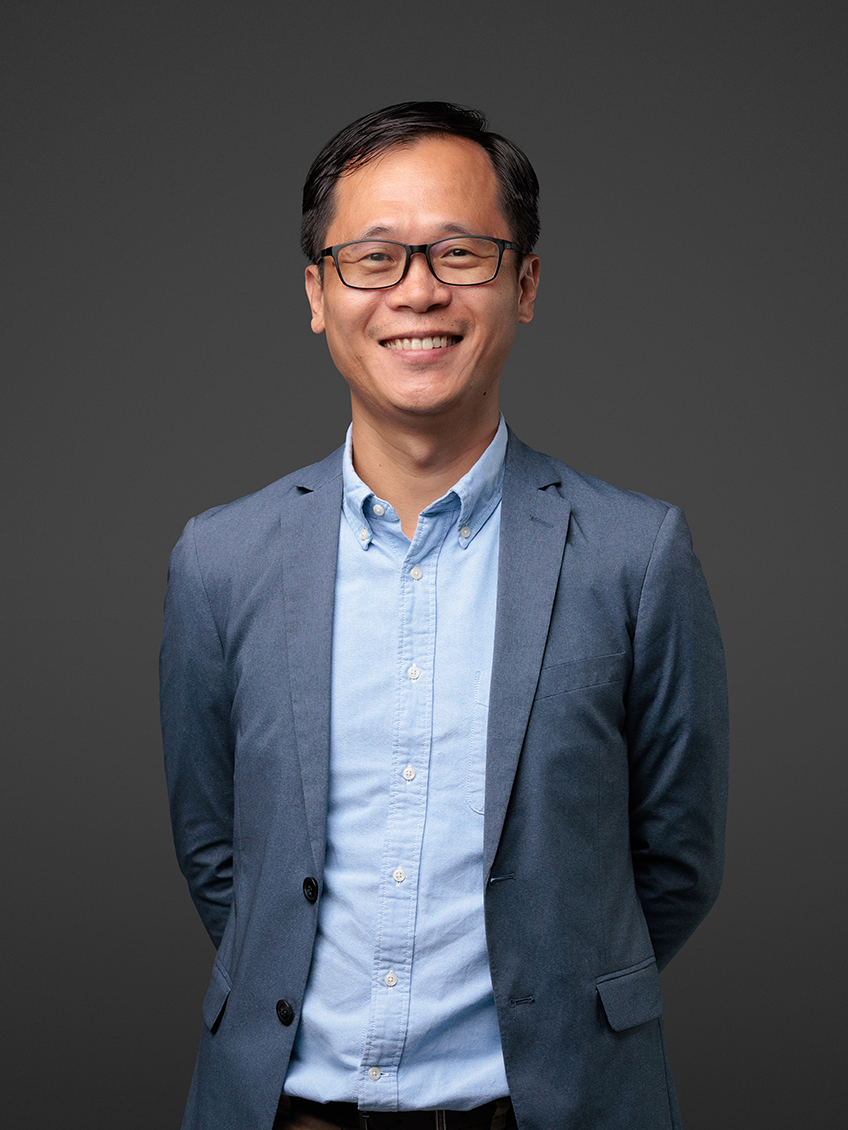
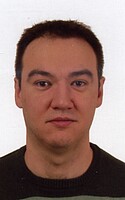
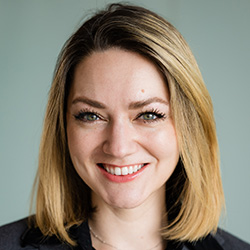
Roberto Garello is a Tenured Associate Professor at the Department of Electronics and Telecommunications (DET) of Politecnico di Torino . He specializes in Communication Systems , Satellite Networks , and Channel Coding , with a focus on 5G/6G Technologies and Non-Terrestrial Networks . His work aligns with the School of Master’s Programmes and Lifelong Learning . Research Interests: Satellite communications systems, Direct-to-Satellite IoT constellations, Mega-constellation services in space, and physical layer advancements for 5G/6G. Teaching: Offers courses like Information Theory for Data Science , Communication and Network Systems , and Space Exploration and Resources , while supervising Applied Signal Processing Laboratory . Projects: Leads initiatives such as DitDSSS (satellite localization), RESTART (future telecommunications), and TESL@ (ICT energy efficiency). Scientific Awards: Received Best Paper Awards at CTRQ 2010 and COCORA 2013. Students: Supervises PhD candidates including Alessandro Compagnoni, Agbotiname Lucky Imoize, and Riccardo Tuninato, focusing on topics like Wireless Communication, Machine Learning, and Non-Terrestrial Networks. Publications: His recent work explores OTFS vs. OFDM, spectrum sensing algorithms, MIMO with cylindrical arrays, and 5G NTN synchronization, reflecting trends in satellite IoT and machine learning integration.
Chen Binbin is an Associate Professor and Associate Head of Pillar (Innovation and Enterprise) in the Information Systems Technology and Design (ISTD) pillar at Singapore University of Technology and Design (SUTD). He serves as Deputy Director for the Future Communications Research and Development Programme (FCP), Singapore. Previously, he was a Principal Research Scientist at the Advanced Digital Sciences Center (now Illinois ARCS), affiliated with the University of Illinois. Education: PhD in Computer Science from National University of Singapore, and Bachelor's from Peking University. Research focuses on wireless networking, distributed systems, and cyber security for critical infrastructures like smart grids and industrial control systems. His work addresses secure communications, intrusion detection, and resilience against cyber-physical threats. Notable contributions include error-estimating coding, provenance verification in ICS, and AI-driven network security solutions. Key awards include the 2010 ACM SIGCOMM Best Paper Award for error-estimating coding research. His grants span agencies like Singapore's National Research Foundation (NRF), Cyber Security Agency (CSA), and Energy Market Authority (EMA). He leads projects on secure smart grid communication, industrial control system defense, and AI-enhanced cybersecurity tools. Technical leadership involves developing frameworks like CyberSAGE for security assessment and CMD for IoT malware detection. Active in collaborations with industry and government, his work bridges theory and practice in securing critical infrastructure systems.
Ashish Khisti is an Associate Professor at the University of Toronto's Department of Electrical and Computer Engineering (ECE), where he directs the Signals, Multimedia and Algorithms Laboratory (SMA Lab). He holds the Canada Research Chair (Tier II) and maintains affiliations with the Vector Institute for Artificial Intelligence. His research bridges communication systems, information-theoretic security, and machine learning, with a focus on real-time streaming and privacy-preserving algorithms. Research Trends: Recent publications emphasize streaming codes for latency-sensitive networks , machine learning-driven compression , and privacy mechanisms in federated learning . Scientific Recognition: Canada Research Chair (Tier II), 2012 and 2017 renewal Cisco Research Center Award, 2017 Ontario Early Researcher Award, 2012 Best Paper at NeurIPS 2021 Deep Generative Models Workshop Academic Contributions: Supervised PhD students Ahmed Badr, Farrokh Etezadi, and Si-Hyeon Lee. Served as Associate Editor for IEEE Transactions on Communications (2012-2015) and IEEE Transactions on Information Theory (2015-2018). Labs & Collaborations: Leads the Signals, Multimedia and Algorithms Laboratory, collaborating with institutions like KAUST, Texas A&M University (Qatar), and the Vector Institute. Organized workshops at BIRS and IEEE conferences.
Prof. Dr. Moritz Helias is a University Professor and leads the Theory of Multi-Scale Neuronal Networks group at the Institute for Advanced Simulation (IAS-6), Computational and Systems Neuroscience, Forschungszentrum Jülich. His research bridges biological and artificial neural networks, focusing on dynamics, information processing, and the physics of AI. The group is part of a larger interdisciplinary institute that integrates theory, simulation, and data analysis to understand the brain. Institution: Forschungszentrum Jülich School: Institute for Advanced Simulation Department: IAS-6, Computational and Systems Neuroscience Position: Professor and Group Leader Email: m.helias@fz-juelich.de His research interests lie at the intersection of statistical physics and neuroscience. He investigates how structure shapes dynamics in both biological and artificial networks, aiming to uncover general principles of information processing. Using methods from statistical physics, his work enables a unified framework for understanding collective phenomena, learning, and generalization. Key areas include spiking neural networks, renormalized field theory, and the theoretical foundations of AI. The recent publications reflect a strong trend toward multi-scale modeling of neural systems, integrating statistical physics with neuroscience. Topics include spiking network dynamics, mean-field theory, renormalization, and applications of machine learning in physics. The work spans biological realism and artificial intelligence, with implications for neuromorphic computing and brain-inspired AI architectures. While no scientific awards are listed in the provided texts, his group actively contributes to open science through tools like NEST and theoretical frameworks that influence both neuroscience and AI. Prof. Helias supervises a research group focused on theoretical and computational approaches, contributing to collaborative projects involving large-scale simulations and data analysis. His team works closely with experimentalists and theorists to validate models and advance understanding of brain function. The group is also involved in developing simulation technologies and theoretical tools that support reproducible neuroscience. The Theory of Multi-Scale Neuronal Networks group is embedded within a vibrant research environment at IAS-6, collaborating with teams in statistical neuroscience, computational neurophysics, and future simulation architectures. This fosters a loop between data, theory, and simulation, enabling cutting-edge research on brain function and artificial intelligence.
Berk Sunar is a Professor of Electrical & Computer Engineering and the founder of the Vernam Applied Cryptography and Cybersecurity Laboratory at Worcester Polytechnic Institute (WPI). He joined WPI in 2000 after holding postdoctoral and research roles at Oregon State University (OSU) and Trust Inc. His work focuses on applied cryptography, microarchitectural security, AI security, post-quantum cryptography, and homomorphic encryption. Sunar received his BSc from Middle East Technical University (1995) and PhD from Oregon State University (1998). Research interests include vulnerabilities in hardware (e.g., Rowhammer, TPM-FAIL), side-channel attacks, and cryptographic implementations. Notable contributions include discovering flaws in Intel CPUs and TPM chips affecting billions of devices, as well as developing defenses like cuHE (GPU-accelerated homomorphic encryption). Publications highlight breakthroughs in transient execution attacks (e.g., LVI, RIDL), post-quantum signature schemes (Dilithium), and cloud security (Firecracker VMM vulnerabilities). Awards include NSF CAREER (2002) and IBM Pat Goldberg Best Paper (2007). Advised over 30 graduate students, many of whom hold senior roles in academia and industry. Current research addresses AI security, quantum-resistant algorithms, and automated attack detection via machine learning. The Vernam Lab remains a hub for cybersecurity innovation.
Dr.-Ing. Ullrich Mönich is a Senior Researcher and Lecturer at the Technical University of Munich (TUM) , affiliated with the Chair of Theoretical Information Technology and leading research activities at the Advanced Communication Systems and Embedded Security Lab (ACES Lab) . Since 2019, he has been instrumental in shaping experimental and theoretical research in 6G communications, physical layer security, and signal processing. Education: Dr.-Ing. in Electrical Engineering, Technische Universität München (2011) – supervised by Prof. Holger Boche Previous affiliations include MIT (2012–2015) and TU Berlin Research Focus: His research spans signal processing, wireless communications, machine learning, and sampling theory , with a strong emphasis on physical layer security , computability in signal processing , and 6G communications . He explores theoretical foundations and practical implementations, including neuromorphic computing, digital twinning, and secure modular coding schemes. Publications & Trends: His recent publications (2023–2025) are heavily concentrated in 6G communications , integrated sensing and communications (ISAC) , semantic physical layer security , and digital twinning . These works often combine theoretical analysis with experimental validation using 5G/6G testbeds and neuromorphic hardware. Teaching & Supervision: Regularly teaches "Foundations of Analog, Digital, and Quantum Computers" (tutorials since 2018) Previously taught "Applied Functional Analysis" and "Advanced Signal Theory" Involved in practical courses like "Software Defined Radio Laboratory" Labs & Teams: He leads the ACES Lab at TUM, which focuses on experimental validation of advanced communication systems, including physical layer security, neuromorphic computing, and 6G testbeds. The lab collaborates with national and international partners, including MIT, and is supported by major funding bodies such as the German Federal Ministry of Education and Research (BMBF) and the German Research Foundation (DFG).
Alex X. Liu is a Professor in the Department of Computer Science & Engineering at Michigan State University (2016-2022), currently serving as Chief Information Security Officer and President of Midea Software Engineering Institute. His academic career includes roles as Associate Professor (2012-2016) and Assistant Professor (2006-2012) at the same institution. He holds a Ph.D. and M.S. in Computer Science from The University of Texas at Austin, and a B.S. in Computer Science from Jilin University, China. Education Ph.D. in Computer Science (UT Austin, 2006) M.S. in Computer Science (UT Austin, 2002) B.S. in Computer Science (Jilin University, 1996) Liu's research focuses on Dependable computing , Networking algorithms , Cloud computing , Mobile computing , Privacy computing , and Computer/network security . His work spans secure systems, network protocols, and resource optimization in distributed environments. Recent publications address quantum neural networks , microservices autoscaling , RFID tag recognition , network traffic classification , and hybrid physical-layer authentication , demonstrating expertise at the intersection of AI and network security. Key trends include deep learning applications for cloud systems and robust security protocols. Scientific Awards IET Fellow (2021) IEEE Fellow (2019) ACM Distinguished Scientist (2019) Withrow Distinguished Scholar Awards (Senior 2019, Junior 2011) NSF CAREER Award (2009) IEEE & IFIP William C. Carter Award (2004)
Maarten van Steen is a Professor active in the fields of Distributed Systems , Artificial Intelligence , and Cybersecurity . With an h-index of 35 and over 5,400 citations, his work focuses on Edge AI , Privacy Preservation , and WiFi-Based Sensing . His research emphasizes non-intrusive authentication, anonymization techniques, and crowd monitoring without compromising individual privacy. Key research areas: Distributed Systems, Privacy Preservation, WiFi Security Recent projects: RoomKey, LocKey, FlowPrint Crowd-monitoring applications: Subway travelers, pedestrian dynamics Van Steen's work combines Machine Learning with Homomorphic Encryption to develop privacy-first solutions. He has contributed to mobile app fingerprinting , WiFi authentication , and blockchain scalability challenges. His 2024–2025 publications reveal trends in contextual security , crowd behavior analysis , and automated threat intelligence . Notable methods include Bloom Filters, automata learning, and WiFi beacon frame analysis. Dutch Cyber Security Best Research Paper Award 2024 Runner-up (shared prize) Van Steen supervises research teams and collaborates on datasets like Code for Threat Intelligence Processing and DeepCASE . His work spans 20+ years , with 208 total research outputs and significant contributions to decentralized systems, network traffic analysis, and urban mobility.
Luis Castedo Ribas is a Professor at the Faculty of Informatics , University of A Coruña (UDC) , Spain, since 2001. Previously held research positions at the University of Southern California (USC) and École supérieure d'électricité (SUPELEC). PhD in Telecommunications Engineering (1993), Technical University of Madrid Department of Computer Engineering Research Group: Electronic and Communications Technology Group Research Interests: Specializing in Signal Processing and Information Theory for Wireless Communications Engineering , with focus on MIMO Communication Systems , 5G Radio Interfaces , Joint Source-Channel Coding , and High-Speed Wireless Communications . His work bridges theoretical advancements with practical prototyping of digital communication systems. Recent Article Trends: Publications span Massive MIMO , Beamforming , AI/ML for Wireless , and Quantum-Inspired Coding , reflecting his leadership in evolving telecom standards (5G→6G). Collaborative work with institutions like IEEE and European consortia. Scientific Awards: Best Student Paper (2007, 2013, 2017) General Co-Chair, IEEE Sensor Array Workshop (2014) General Co-Chair, European Signal Processing Conference (2019) Grants & Collaborations: Principal Investigator in over 50 projects funded by Spanish Ministry of Science, EU programs, and companies like Atos Origin. Key roles in national and international research consortia.
Petar Popovski is a Professor at the Department of Electronic Systems within the Technical Faculty of IT and Design at Aalborg University, Denmark. His research focuses on next-generation wireless communication systems, with a strong emphasis on ultra-reliable low-latency communication (URLLC), Internet of Things (IoT), multiple access, and 6G technologies. He leads several high-impact research projects, including the Classique - Center for Classical Communication in the Quantum Era funded by the Danish National Research Foundation and WATER (Wireless Architectures for intelligent and Trusted connectivity in the posT-5G ERa) supported by Villum Fonden. His research interests span key areas in modern communication theory and systems, including random access , non-terrestrial networks , satellite communication , and machine learning for reliable communication . He is actively involved in advancing the integration of sensing and communication, digital twin technologies, and quantum-era classical communication frameworks. The recent publications highlight a strong trend toward deterministic and reliable access in wireless networks, integration of sensing and communication for industrial automation, and novel physical-layer techniques using reconfigurable intelligent surfaces. These works are published in top IEEE journals such as IEEE Transactions on Communications , IEEE Transactions on Haptics , and IEEE Transactions on Vehicular Technology . Award highlights include the Best Student Paper Award (2021) , recognizing his mentorship and collaborative research excellence. Prof. Popovski serves as a principal investigator (PI) and supervisor in multiple research projects, securing significant funding from national and international bodies such as the Danish National Research Foundation and the European Space Agency (ESA). He hosts visiting researchers regularly and contributes to scientific leadership through editorial roles and conference participation. He is a key figure in the Connectivity section at Aalborg University and leads cutting-edge research in future wireless systems, contributing to both theoretical foundations and practical implementations in smart infrastructure, space communication, and dependable 6G networks.
George N. Karystinos is currently a Professor and Dean of the School of Electrical and Computer Engineering at the Technical University of Crete , Greece. He joined TUC in 2005 and was promoted to full Professor in 2019. His academic journey began with a Ph.D. in Electrical Engineering from SUNY Buffalo (2003) and a Diploma in Computer Engineering and Science from the University of Patras (1997). Specialty: Communication theory, coding theory, adaptive signal processing Key research areas: Wireless communications, signal waveform design, L1-norm principal component analysis Leadership: Dean of School of ECE (2021–present) His work focuses on noncoherent detection for RFID/IoT systems and L1-norm PCA for robust signal processing. Recent publications explore power line communication and low-complexity sequence detection . Scientific Awards: 2003 IEEE Transactions on Neural Networks Outstanding Paper Award 2001 IEEE ICT Best Paper Award 2018 IEEE MOCAST Best Student Paper Award 2015 IEEE ICASSP Best Student Paper Award 2013 IEEE ISWCS Best Paper Award 2011 IEEE RFID-TA Second Best Student Paper Award He is affiliated with the Telecommunications Laboratory at TUC and has supervised award-winning research in wireless systems and signal processing.
Guannan Liu is an Assistant Professor of Computer Science at the Colorado School of Mines, specializing in cybersecurity and network security. He holds a Ph.D. in Computer Engineering from Virginia Tech (2023) and a BS from Purdue University (2016). His research focuses on system/network security, human-factor security, cloud computing security, and user authentication mechanisms. He has identified critical vulnerabilities in online services, collaborating with major tech firms to address resource mismanagement issues. Dr. Liu's work has been published in top-tier security conferences. He actively seeks motivated students for cybersecurity research projects. His honors include a Student Travel Grant for DSN 2022 and academic recognition through Dean’s List distinctions. His research bridges theoretical insights with practical impact, particularly in identifying real-world system vulnerabilities through comprehensive measurements. Key areas of exploration include container registry typosquatting, cloud gaming service misuse, DNS query analysis, and acoustic side-channel attacks on IoT devices. His interdisciplinary work integrates software engineering, artificial intelligence, and network measurement techniques to enhance security across diverse systems.
Leila Musavian is a Professor of Wireless Communications at the University of Surrey's Department of Electrical and Electronic Engineering within the Faculty of Engineering and Physical Sciences. She is a leading researcher in next-generation wireless communication systems with a focus on 5G/6G technologies, particularly in the areas of non-orthogonal multiple access (NOMA), energy harvesting communications, physical layer network coding, and ultra-reliable low-latency communications (uRLLC). Her research has significant implications for vehicular networks, IoT applications, and future wireless infrastructure. Her research interests span multiple critical areas of modern wireless communications, including energy-efficient resource allocation, security in wireless networks, massive MIMO systems, and reconfigurable intelligent surfaces. She has pioneered work on the performance analysis of NOMA systems under statistical quality of service constraints, which has become increasingly important for emerging applications requiring ultra-reliable and low-latency communications. Her research bridges theoretical foundations with practical implementations, often incorporating machine learning techniques for optimization of wireless networks. Her publication portfolio shows a clear evolution toward cutting-edge topics in wireless communications, with recent focus on holographic beamforming via dynamic metasurface antennas, robotic wireless energy transfer, and deep reinforcement learning applications for vehicular optical camera communications. These works demonstrate her ability to identify and address emerging challenges in next-generation wireless systems, particularly those related to 6G technologies and beyond. Professor Musavian has successfully supervised numerous PhD students who have gone on to become active researchers in the field, with many continuing to collaborate with her on cutting-edge projects. Her research has been supported by significant grants from national and international funding bodies, though specific grant details are not visible in the current dataset.
Kate Smith is an Assistant Professor of Computer Science at Northwestern University, affiliated with the McCormick School of Engineering. She holds a PhD in Electrical Engineering from Southern Methodist University (SMU), along with MS and BS degrees in Electrical Engineering and Mathematics from the same institution. Her research focuses on quantum computing, specifically in system architecture, optimized compilation, error mitigation, and security. Prior to joining Northwestern in 2024, she worked at Infleqtion managing the Superstaq compiler team and as a postdoctoral scholar at the University of Chicago under the CQE/IBM program. She has contributed to over 25 peer-reviewed publications and served on technical committees for major conferences like MICRO, ISCA, and DAC. Education: SMU (PhD 2019, MS 2015, BS in EE/Math 2014). Professional experience includes roles at EPFL (Switzerland), Texas Instruments, and the Darwin Deason Institute for Cyber Security. Her honors include the 2022 HPCA Best Paper Award, MIT EECS Rising Star (2021), and the IEEE TC-MVL Early Career Award (2021). Research interests span quantum compilation, distributed systems, qudit processing, and quantum security. She co-organized the 2023 CCC Workshop on Next Steps in Quantum Computing and chaired the 2022 ISMVL conference. Her work emphasizes bridging hardware-software gaps to enable scalable quantum systems. Grants and collaborations include the EPiQC group at the University of Chicago and projects funded by the Swiss NSF. Teaching experience includes courses on quantum computing fundamentals and digital design at SMU, University of Chicago, and adjunct roles.
Professor Parastoo Sadeghi is a distinguished academic in the School of Engineering and Information Technology at the University of New South Wales (UNSW) Canberra, where she serves as Professor of Electrical Engineering. She joined UNSW Canberra in October 2020 after spending 15 years at the Australian National University (2005-2020). Professor Sadeghi received her bachelor's and master's degrees in electrical engineering from Sharif University of Technology, Tehran, Iran, in 1995 and 1997, respectively, and completed her Ph.D. in electrical engineering from UNSW Sydney in 2006. Professor Sadeghi's research spans several cutting-edge areas in information theory and communications, with particular emphasis on information theory , data privacy , network and index coding , wireless communications theory and systems , and spherical signal processing . Her work has resulted in over 200 refereed journal articles and conference papers, plus a book on Hilbert Space Methods in Signal Processing published by Cambridge University Press in 2013. Her recent publications demonstrate a strong focus on differential privacy mechanisms, information leakage analysis, and network coding optimization, with significant contributions to the theoretical foundations of these fields. Professor Sadeghi has held several prestigious positions in the academic community, including serving as Associate Editor for coding techniques for the IEEE Transactions on Information Theory (2016-2019), General Co-chair of the 2021 IEEE International Symposium on Information Theory in Melbourne, and as an elected member on the Board of Governors of the IEEE Information Theory Society (2019-2020). She has been a Senior Member of the IEEE since 2007 and has conducted research visits at leading institutions including the Technical University of Munich (2008) and MIT (2009, 2013, 2020). Her recent work shows increasing focus on privacy-preserving technologies and the theoretical foundations of secure communications, with numerous publications in top-tier venues. Senior Member of IEEE (since 2007) General Co-chair of 2021 IEEE International Symposium on Information Theory Associate Editor for IEEE Transactions on Information Theory (2016-2019) Elected member, IEEE Information Theory Society Board of Governors (2019-2020) Professor Sadeghi actively supervises graduate students in fundamental problems related to information theory, wireless communications, data privacy, and network coding. She offers competitive scholarships of $35,000 AUD for high-achieving PhD students with strong mathematical backgrounds. Her research group maintains strong international collaborations, as evidenced by her frequent research visits to top global institutions and numerous co-authored publications with international researchers. She continues to be an active contributor to the advancement of information theory and its applications to modern communication and privacy challenges.