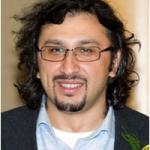
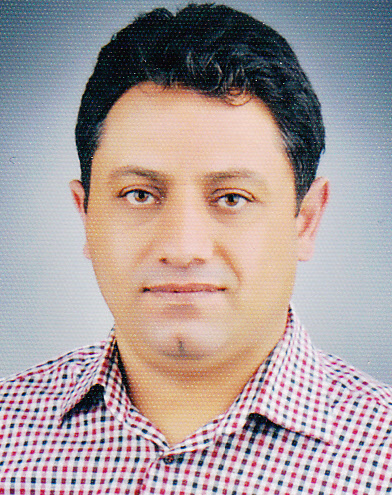
Metin Sitti is a Professor and currently serves as a part-time adjunct professor at Koç University's Faculty of Medicine and Engineering. He is also the President of Koç University and Director of the Max Planck Institute for Intelligent Systems since 2014. His research spans robotics , micro/nanorobotics , physical intelligence , bio-inspired robotics , and materials science . Undergraduate: Boğaziçi University (Electrical and Electronics Engineering, 1992) Master's: Boğaziçi University (1994) PhD: University of Tokyo (Electrical Engineering, 1999) His research focuses on small-scale robotics for biomedical applications, including magnetic microrobot swarms , biohybrid systems , and functional materials . Recent publications emphasize 3D control , wireless actuation , and clinical translation of robotic systems. Scientific Awards : 2020 Scientific Breakthrough of the Year 2018 Koç University Rahmi M. Koç Science Medal 2014 IEEE/ASME Best Mechatronics Paper Award 2013/2012 World RoboCup Micro-Robotics First Prize He has advised numerous students and collaborates with institutions like Carnegie Mellon University and University of Stuttgart. His work integrates physical intelligence into miniature robots for medical imaging , drug delivery , and autonomous systems .
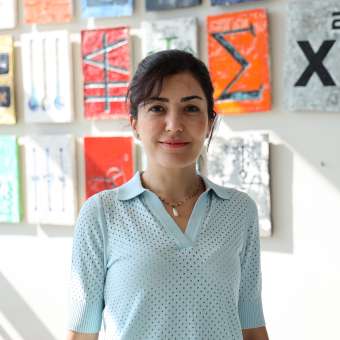
Assoc. Prof. Dr. Sema Alaçam Doğan has been affiliated with Istanbul Technical University since 2014, serving as an Associate Professor in the Department of Architecture . She has held administrative roles including Deputy Head of Department and Erasmus Coordinator. Education : PhD in Informatics in Architectural Design (2008-2014), MS in Informatics in Architectural Design (2005-2008), and BS in Architecture (1999-2005) from Istanbul Technical University. Her research explores Computational Design , Artificial Intelligence in Architecture , and Sustainable Material Innovation . She investigates digital tools for heritage preservation, daylight optimization in BIM, and cognitive development in architecture students. Recent publications analyze AI-assisted design literacy , machine learning for Sinan mosques , and environmental comfort in Harran houses . Her work integrates algorithmic frameworks with sustainable practices. Scientific awards include multiple ITU Publication and Performance Awards (2021-2024), FABFEST Prizes , and the 2024 Artemis Educator Award from NASA. Active projects like "Physical Computation in Architectural Drawing" and "Robotic Fabrication with Recycled Wind Turbine Blades" demonstrate her leadership in computational and sustainable research.
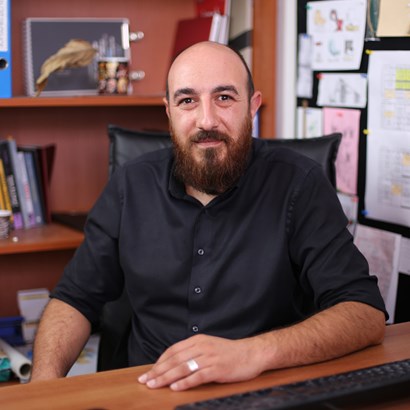
Cem Say is a Professor in the Department of Computer Engineering at Boğaziçi University's Faculty of Engineering, where he has established himself as a leading researcher in theoretical computer science and artificial intelligence. His academic journey began with the completion of his doctoral dissertation titled Qualitative System Identification in 1992, which was the first thesis of Boğaziçi University's Computer Engineering PhD program. Professor Say's research interests span multiple domains of computer science, with significant contributions to quantum computing, artificial intelligence, and theoretical computer science. His early work focused on qualitative reasoning and simulation, particularly through the QSIM algorithm, where he made significant improvements to filtering techniques and addressed challenges in representing physical systems. Over time, his research evolved toward quantum computation, where he has made substantial contributions to quantum finite automata theory, space-bounded quantum computation, and quantum complexity classes. His recent work explores the energy complexity of computation, bridging theoretical computer science with thermodynamics. His publication record shows a clear evolution from classical AI and qualitative reasoning toward quantum computation. The most recent articles demonstrate his focus on space-bounded quantum computation, energy complexity of regular languages, and interactive proof systems with minimal resources. His work consistently addresses fundamental questions about computational limits, particularly in quantum and sublogarithmic-space models. Professor Say has also made significant contributions to science communication through several books written for general audiences, including 50 Soruda Yapay Zekâ (2018), Yeni Dünya, Yeni Ağ (2020), and En Hakiki Mürşit (2021), which explain complex concepts in artificial intelligence and scientific methodology in accessible terms. Throughout his career, Professor Say has been actively involved in the Turkish academic community, editing proceedings for multiple Turkish symposia on artificial intelligence and neural networks. His doctoral dissertation established foundational work in qualitative system identification, and his subsequent research has consistently pushed boundaries in theoretical computer science, particularly in quantum computation where he has collaborated extensively with Abuzer Yakaryılmaz and other researchers.
Prof. Dr. Metin Sitti is a leading academic and researcher currently serving as Director at the Max Planck Institute for Intelligent Systems and affiliated faculty at Carnegie Mellon University's Robotics Institute and Koç University's Schools of Medicine and Engineering. His interdisciplinary work bridges robotics, materials science, and biomedicine. His research interests center on medical microrobotics , bio-inspired robotics , and physical intelligence , exploring how intelligent behaviors can emerge from material properties and system design. He leads the Physical Intelligence Research Group , pioneering novel approaches in soft and micro-robotic systems. The scientific publications attributed to Prof. Sitti span diverse areas including micro-robotic locomotion, stimuli-responsive materials, and collective behavior in synthetic systems. Though specific titles are not listed, his body of work consistently contributes to robotics, nanotechnology, and biomedical engineering. Rahmi M. Koç Science Award ERC Advanced Grant IEEE Fellow National Science Foundation CAREER Award SPIE Nanoengineering Pioneer Award IEEE/ASME Best Mechatronics Paper Award Robotics: Science and Systems Conference Best Paper Award IEEE/RSJ Intelligent Robot Systems Conference Best Paper and Video Awards IEEE Robotics and Automation Conference Best Paper and Video Awards IEEE Robotics and Biomimetics Conference Best Paper and Video Awards Prof. Sitti has secured major grants including the ERC Advanced Grant and NSF CAREER Award, supporting high-impact research in intelligent materials and robotic systems. He has mentored numerous researchers and students across institutions, though specific advisees are not listed. His entrepreneurial initiative led to the founding of nanoGriptech Inc. in 2009, commercializing gecko-inspired microfiber adhesives. He leads the Physical Intelligence Department at the Max Planck Institute, where his team develops novel robotic materials and microsystems that exhibit intelligence through physical design rather than computation alone.
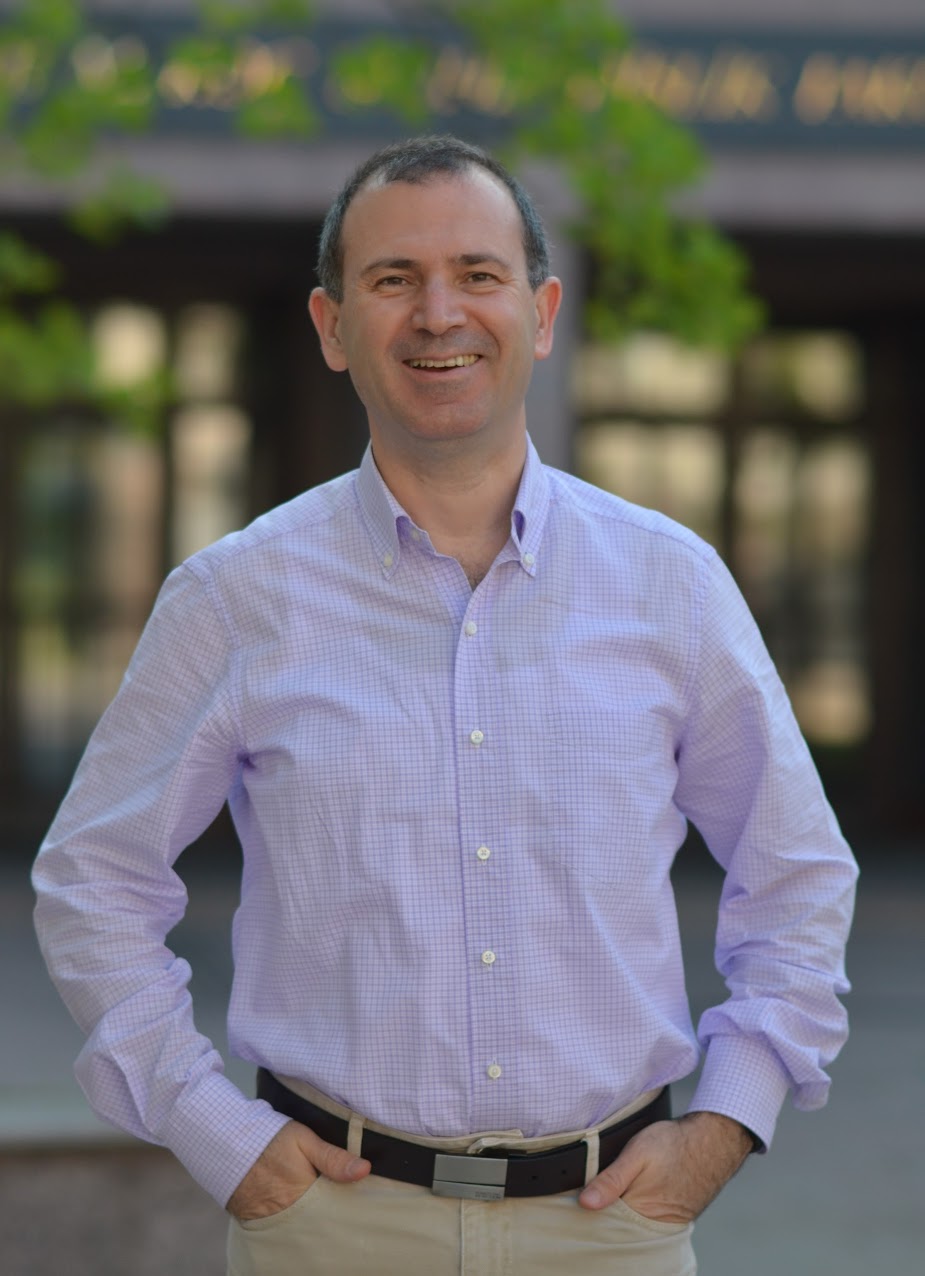
Professor Hakan Ali Çırpan is a distinguished faculty member at Istanbul Technical University's Faculty of Electrical and Electronics Engineering, where he serves as Professor in the Department of Electronics and Communication Engineering. He also holds the position of Vice Dean at Istanbul Technical University since 2021. With over three decades of academic experience, Professor Çırpan has established himself as a leading researcher in signal processing and communications. His educational background includes: PhD from Stevens Institute of Technology (1993-1997) Master's degree in Electrical-Electronic Engineering (with thesis) from Istanbul University (1989-1992) Bachelor's degree in Electrical and Electronic Engineering from Uludağ University (1985-1989) Professor Çırpan's research spans multiple domains within signal processing and communications. His primary interests include wireless communications, radar systems, machine learning applications in communications, and electronic warfare. His work on channel estimation, orthogonal frequency division multiplexing, and maximum likelihood methods has been particularly influential. He has pioneered research in areas such as source localization, spectrum sensing, and physical layer security. His recent work focuses on 5G/6G networks, AI-enhanced communications, and integrated sensing and communication systems. Analysis of his recent publications (2023-2025) reveals a strong focus on next-generation wireless technologies, particularly 5G/6G networks, AI integration in communications, and electronic warfare applications. His research demonstrates a consistent pattern of addressing fundamental challenges in signal processing while adapting to emerging technological needs. A significant portion of his recent work involves machine learning applications for spectrum management, optimization techniques for radar systems, and novel approaches to network slicing and resource allocation. His notable scientific achievements include: ASELSAN ACADEMY THESIS COMPETITION WINNER (2020) Professor Çırpan has supervised 59 theses throughout his career, mentoring numerous graduate students in the fields of signal processing and communications. He has secured significant research funding, including the "AI-Enhanced 5G/6G Networks with Integrated Camera and ISAC Systems" project (2023-2024) and the "Railway Vehicle Infrastructure New Generation Secure Communication Systems" TÜBİTAK project with a budget of ₺955,000. His research has practical applications in defense systems, railway communications, and next-generation wireless networks. His laboratory work focuses on wireless communications systems, radar signal processing, and AI-enhanced communication technologies. Professor Çırpan leads research teams working on projects related to 5G/6G networks, electronic warfare countermeasures, and secure communication systems. His group collaborates with industry partners like ASELSAN and conducts research with practical applications in national defense and critical infrastructure.
Prof. Dr. Mehmet Reşit Tolun is a full-time Professor in the Department of Software Engineering at Çankaya University (Turkey) since 2022. Previously held full-time professor positions at Konya Food and Agriculture University (2020-2022), Aksaray University (2013-2017), and TED University (2011-2013), along with a part-time professorship at Başkent University (2017-2020). Specializes in Artificial Intelligence , Machine Learning , and Data Mining , with a focus on deep learning applications in aerospace, biomedical data analysis, and software process improvement. PhD in Computer Science (University of Kent, 1985) MSc in Computer Science (University of Kent, 1982) BSc in Physics and Computer Science (University of Kent, 1981) Research Interests span deep learning frameworks, hybrid expert systems, software engineering methodologies, and biomedical signal processing. Publications emphasize practical implementations in medical diagnostics, robotics, and agricultural pest detection. Scientific Awards include the IEEE Third Millenium Medal (2000). Supervised over 55 graduate students, including Burak Çetin, Uğur Özotuk, and Mahinur Doğan. Collaborated with researchers from Orta Doğu Teknik Üniversitesi , Çankaya University , and Aksaray University .
Dr. Sueda Saylan is an Assistant Professor at the Faculty of Engineering, Özyeğin University, since 2024. Her academic journey includes a Ph.D. in Interdisciplinary Engineering (2016) from Masdar Institute (now Khalifa University), postdoctoral research at Khalifa University (2016-2022), and an MSCA Postdoctoral Fellowship at Bilkent University (2022-2024). She has also held visiting researcher positions at MIT (2014) and the University of Tokyo (2016). Education Doctorate: Interdisciplinary Engineering, Masdar Institute of Science and Technology (2016) Master's: Microelectronic Manufacturing Engineering, Rochester Institute of Technology (2004) Bachelor's: Mechanical Engineering, Middle East Technical University (2002) Dr. Saylan's research focuses on memristive devices , photovoltaics , and light-matter interactions at micro/nanoscale . Her work bridges materials science and electronic engineering, with recent publications on memristor-based sensors, spectral filtering in silicon, and machine learning integration for biomedical diagnostics. Key trends from her 15 most recent articles (2013-2025) include: Advancing memristor technology for radiation sensing and vacuum monitoring Optimizing photovoltaic efficiency through light management and antireflection coatings Developing compact, low-power diagnostic devices for pathogen detection Exploring nanoscale electrode materials and switching mechanisms Applying Fourier transforms and interferometry in optical systems Scientific Awards Marie Skłodowska-Curie Actions (MSCA) Postdoctoral Fellowship (2022-2024) Dr. Saylan has received research support from prestigious programs and has contributed to interdisciplinary projects involving semiconductor physics, optical engineering, and biomedical diagnostics. Her collaborations span institutions like Khalifa University, MIT, and the University of Tokyo.
Dr. Emre PINAR is an active Researcher at Çukurova University's Faculty of Architecture, Department of Interior Architecture. His work bridges innovative design with critical safety and sustainability considerations. Faculty Affiliation: Faculty of Architecture, Çukurova University Academic Rank: Researcher Research interests span biomimetic design principles, earthquake-resistant furniture solutions, and the integration of artificial intelligence in interior architecture. His recent work explores: Biomimetic furniture design systems (LOT-US, 2025) Non-structural seismic safety elements (2022) AI collaboration in design workflows (2019) Historical structural analysis of Eastern Black Sea rural buildings (2018) Design methodologies emphasize space optimization in constrained environments and preservation of traditional architectural knowledge through modern analytical frameworks.
Prof. Dr. Seden Acun Özgünler is a faculty member at the Faculty of Architecture, Istanbul Technical University , where she has served as Professor since 2021. Her research spans material science in architecture, focusing on durability, maintenance, and sustainable building technologies . She has supervised numerous theses and led projects on natural binders, thermal insulation, and historical preservation . Education: PhD in Building Science (Dr), Istanbul Technical University. Academic Roles: Department Head (2023), Associate Professor (2013-2021), Research Assistant (1999-2003). Research Trends include: Material Innovation: Mycelium-based composites, natural hydraulic binders, and geopolymer concrete. Sustainability: LCIA models, waste material utilization, and energy-efficient designs. Historical Preservation: Volcanic tuff conservation, grouting methods for masonry repair, and adaptive reuse of structures. Scientific Awards: 2nd Young Türkiye Summit Academy Award (2017) for Mimar Sinan Cultural Wealth Preservation. Publication-based Academic Performance Awards (2022, 2025) from Istanbul Technical University. Key Projects involve biocomposite materials, natural cement reproduction, and chromic glass applications in facades. Her work bridges traditional building techniques with modern sustainability through experimental and computational approaches.
Sevil Yazıcı is an Associate Professor at the Department of Architecture , Istanbul Technical University , with a focus on computational design, material efficiency, and structural performance in architecture. She previously served as a Doctor Lecturer at Ozyegin University (2013–2020). Educational background: PhD in Building Sciences (2009–2013), Istanbul Technical University Degree in Architecture from Architectural Association School of Architecture (2004–2006) Research interests span computational design, bio-inspired material organization, and sustainable construction. Her recent work explores VR-driven spatial performance analysis, demolition waste reuse, and microstructure-informed shell topologies. Selected trends in publications include: Integrating environmental/structural data in early design Material-efficient generative models Biomimetic computational analysis AI-assisted architectural creativity Scientific awards highlight her achievements: 2024 Best Article Award (Frontiers of Architectural Research) 2018 Gold Medal (Istanbul International Invention Fair) 2016 UK Graduate Professional Achievement Award 2014 ITU Most Successful Doctoral Thesis Award Advising includes theses on reversible structures, sustainable façades, AI-driven design, and material-efficient fabrication. She served on the Executive Board of the Informatics in Architectural Design Graduate Program (2021–present) and was Deputy Head of Department (2022).
Prof. Dr. İlhan TOKSÖZ is a Professor and currently serves as the Department Head of Sports Management Sciences at Trakya University's Faculty of Sports Sciences. He has held various academic and administrative positions at Trakya University since 1985, including Founding Director of the School of Physical Education and Sports (16 years), Director of the Kırkpınar and Values Research and Application Center, and Member of the University Senate. He is also actively involved with the Turkish National Olympic Committee, serves on the Boards of Directors of federations affiliated with the Ministry of Sports, and works as a consultant for international universities. His educational background includes: Bachelor's Degree (1984) - Marmara University, Atatürk Faculty of Education Master's Degree (1988) - Marmara University Institute of Social Sciences (Thesis: Determination of Aerobic Capacities of Male University Students) PhD (1992) - Marmara University Health Sciences Institute (Thesis: A Study of the Relationship of Lipoproteins with Training on Various Sports) Post Doctorate (2006) - Kadir Has University Sports Law Research and Application Center Bachelor's Degree (2020) - Anadolu University Health Management Prof. Toksöz's research spans sports management, physical education, sports psychology, recreation studies, and traditional Turkish sports. His work bridges theoretical knowledge with practical applications in sports administration, athlete development, and community recreation programs. He has made significant contributions to understanding Kırkpınar Oil Wrestling as cultural heritage and has published extensively on sports biomechanics, exercise physiology, and recreation management. His research often focuses on practical applications for improving athletic performance and developing effective sports management strategies across Balkan countries. His publication record shows a consistent focus on practical sports science applications, with recent articles emphasizing mindfulness in sports education, recreation's impact on quality of life, and traditional Turkish sports. His earlier works focused more on physiological assessments of athletes in various sports including handball, wrestling, and tennis. Throughout his career, he has maintained a strong connection between academic research and practical sports applications. Prof. Toksöz has received several prestigious awards including the International Publication Incentive Award (2011) and multiple appreciation certificates from governmental institutions. He has served as an advisor for 44 completed postgraduate theses and has been involved in numerous research projects, including the Balkan Sports Games Project and comparative studies of higher education systems in the Balkans. He has also served as editor for multiple journals and as scientific committee member for numerous international conferences. As a founding figure in sports education at Trakya University, Prof. Toksöz has established research centers, organized international symposiums on Kırkpınar wrestling, and contributed to sports policy development at national and international levels. His leadership in establishing the Kırkpınar and Values Research and Application Center demonstrates his commitment to preserving traditional Turkish sports culture while advancing modern sports science.
Engin Erzin is a Professor at Koç University's College of Engineering, leading the KUIS AI Lab and Multimedia, Vision and Graphics Lab . His research focuses on AI-driven human-centric systems, affective computing, and multimodal interaction analysis. He has contributed extensively to robotics, speech processing, and human-robot interaction through over 70 peer-reviewed publications since 2008. Research interests include: Affective computing and emotion recognition from speech/gestures Human-robot interaction and socially engaging agents Speech-driven animation and gesture synthesis Multimodal data fusion for interaction analysis Deep learning applications in robotics and biomedical engineering Recent work emphasizes: Developing adaptive pHRI controllers for manufacturing tasks Creating engagement measurement frameworks for human-machine interfaces Advancing Turkish speech recognition through self-supervised learning Designing multimodal databases for interaction studies Labs: KUIS AI Lab : Focuses on AI applications in robotics and human-computer interaction Multimedia Lab : Specializes in vision, graphics, and audiovisual analysis
Cavit Fatih Küçüktezcan is an Assistant Professor in the Department of Electrical Engineering at Istanbul Technical University, College of Engineering. His research focuses on power system security, optimization methods, and smart grid technologies. He actively contributes to advancements in electric vehicle energy systems, battery modeling, and resilience of renewable-rich power grids. Research Interests: His work spans power system dynamic security , preventive and corrective control , heuristic and evolutionary optimization (e.g., differential evolution, mean-variance mapping, genetic algorithms), and the application of machine learning for transient stability prediction. He also investigates electric vehicle battery systems , including optimal cell selection and real-time energy consumption modeling. The publication trends show a shift toward data-driven and AI-enhanced approaches in power systems, especially in modeling cyber-attack impacts and improving grid resilience. His recent articles emphasize practical applications in sustainable transportation and secure grid operation under uncertainty. Scientific Contributions: Developed optimization frameworks for preventive control with search space reduction. Applied mean-variance mapping optimization to enhance dynamic security. Explored machine learning benchmarks for transient stability under cyber threats. Contributed to battery modeling and energy efficiency in electric buses. Advising and Grants: While specific details on students or funded projects are not available in the provided text, his collaborative research patterns suggest active supervision and team-based research in power systems and energy technology. He frequently co-authors with researchers from Istanbul Technical University, indicating strong institutional collaboration. Labs and Teams: Though no specific lab or research group is named, his work aligns with smart grid, energy systems, and optimization research teams within the Department of Electrical Engineering at ITU. His focus on real-time data and cyber-physical systems suggests potential involvement in intelligent grid monitoring and control initiatives.
Professor AYTAÇ GÜVEN is a faculty member at Gaziantep University's College of Engineering, Department of Civil Engineering, specializing in Fluid Mechanics and Numerical Modeling . With a PhD from Gaziantep University (2008), he progressed from Research Assistant (2001-2008) to Professor (2017). His research focuses on Hydrology , Climate Change Impact on water resources, Dam Safety , and Hydropower Assessment using Genetic Programming and Neural Networks . He served as Department Head (2020-present) and Vice Head (2009-2014). Education: PhD (Civil Engineering, Gaziantep University, 2008) MS (Civil Engineering, Gaziantep University, 2005) BS (Civil Engineering, Gaziantep University, 2000) His research interests span: Climate change adaptation in water resources Advanced numerical modeling for hydraulic structures Hydropower potential assessments Scour and sediment yield prediction Machine learning applications in hydrology Dam failure risk analysis His 57 peer-reviewed publications (including 2 books) emphasize hybrid modeling techniques, with recent work on CMIP6 climate scenarios , steppe spillways , and dam safety tools . He has advised 5 PhD and 21 Master's theses. Scientific awards include: 2024 Stanford Career Impact Award 2018 Best PhD Thesis (Baraj Güvenliği Derneği) 2016 Gaziantep University Science Award 2010 Best Master's Thesis (Baraj Güvenliği Derneği) 2018 Best Presentation (International Academic Association)
Tayfun Akgül is a Professor at Istanbul Technical University's Faculty of Electrical and Electronics Engineering, Department of Electronics and Communication Engineering. With academic affiliations spanning decades, he combines engineering rigor with innovative research in signal processing and underwater acoustics. His research focuses on advanced signal processing techniques, including Compressive sensing and cyclostationary analysis Underwater acoustic monitoring and sensor arrays Thermal imaging and infrared reflection modeling Biometric identification through facial attributes Seismic signal processing Recent publications demonstrate expertise in Propeller noise analysis in maritime environments Micro-Doppler helicopter signature detection Seismic activity precursor identification Novel fisheye camera human detection systems Awarded Most Successful Doctoral Thesis Award from TESID (2024) IEEE Top 10 Award (2013) he maintains active IEEE membership since 1992 and has led multiple high-impact projects including casualty detection systems and electric vehicle warning systems.