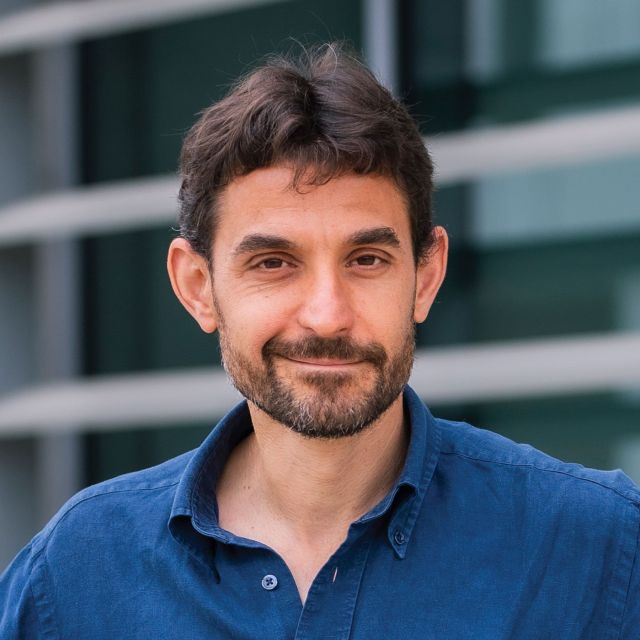
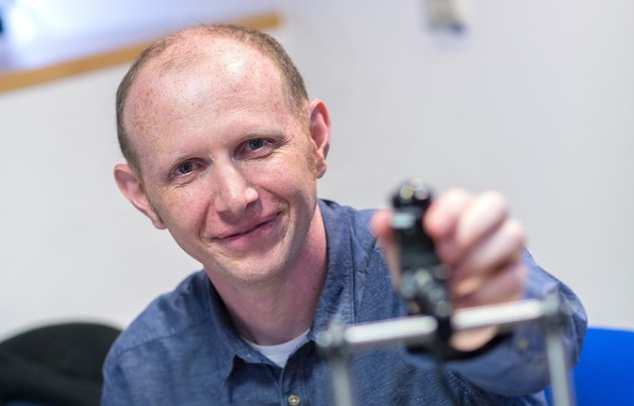
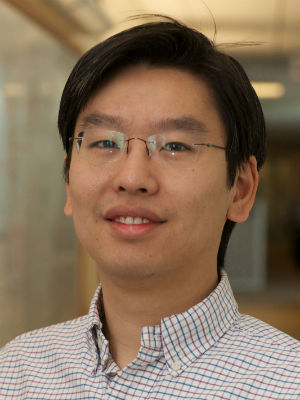
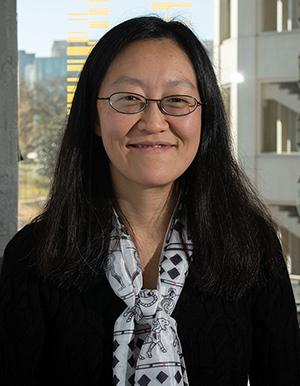
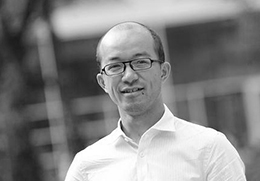
Hao Su is an Associate Professor in the Department of Computer Science and Engineering at University of California, San Diego . He serves as Chairman & CTO of Hillbot Inc , and leads the SU Lab which focuses on building autonomous systems that learn actively in physical environments. His affiliations include the Institute for Learning-enabled Optimization at Scale , Artificial Intelligence Group , Contextual Robotics Institute , Halicioğlu Data Science Institute , and Center for Visual Computing . As a researcher in Computer Vision, Robotics, and Neural Geometry , he has made significant contributions to 3D foundation models, reward-free world models, diffusion policy frameworks, and GPU-accelerated simulation environments. His 2024-2025 publications include advancements in hand-eye calibration, dynamic mesh reconstruction, and multi-stage robotic manipulation. His scientific awards include: Frontiers of Science Award (2025) TPAMI Young Research Award (2025) NSF CAREER Award (2023) ACM SIGGRAPH Best Doctorate Thesis Honorable Mention (2019) He has served as Program Chair for CVPR 2025 and Area Chair for ICLR 2022 and NeurIPS 2023 , while previously serving as Publication Chair for 3DV 2016 and Program Committee for SIGGRAPH Asia Workshops .
Professor Omar A. Saleh is a distinguished physicist and materials scientist at the University of California, Santa Barbara, holding appointments in both the Materials and Physics Departments. Since summer 2023, he has served as Chair of the Materials Department and maintains a minority appointment in the Biomolecular Science and Engineering (BMSE) Program, where he previously served as Director from 2013-2017. His educational background includes a B.S. in Physics from MIT (1997) and a Ph.D. in Physics from Princeton (2003), supported by a Hertz Fellowship. Following postdoctoral work at École Normale Supérieure in Paris developing single-molecule techniques for motor protein/DNA studies, he joined UCSB in 2005. Saleh's research centers on fundamental principles of biomolecular behavior through experimental investigation of biopolymer elasticity and biomimetic organelles. His lab pioneers precision single-molecule stretching experiments to study entropic/energetic contributions in soft systems and creates life-like behaviors using reconstituted nucleic acid/protein assemblies. Key focus areas include DNA nanostar phase separation, liquid-liquid phase behavior, intrinsically disordered proteins, and non-equilibrium biomolecular systems. His publication trends reveal a strong emphasis on biomolecular condensates (2023-2025), with recurring themes in DNA nanotechnology, polyelectrolyte physics, and single-molecule mechanics. Recent work explores tension-mediated control of phase separation, transcriptional regulation of biomolecular liquids, and active matter principles in DNA systems. NSF CAREER Award (2008) Bessel Research Award from Alexander von Humboldt Society (2017) Fellow of the American Physical Society (2019) Saleh actively mentors graduate students and postdocs including Sam Wilken, Gabrielle Abraham, Anna Nguyen, and Aria Chaderjian, whose research spans DNA nanostar liquids, active droplets, and complex coacervation. His lab develops innovative instrumentation including high-speed magnetic tweezers and GPU-based tracking systems, supported by grants such as NSF/MCB-BSF: Direct force measurements of intrinsically disordered proteins. The Saleh Group operates at BioE 3006, focusing on creating quantitative models of biological function through physical reconstitution.
Professor Andrew Davison holds the position of Professor of Robot Vision at Imperial College London's Department of Computing. He leads the Dyson Robotics Laboratory and the Robot Vision Research Group, focusing on advancing SLAM (Simultaneous Localization and Mapping) and Spatial AI. His groundbreaking work includes the MonoSLAM algorithm (2003), enabling real-time 3D vision for robotics and AR/VR. Current research emphasizes scalable, semantic-rich Spatial AI systems, as outlined in his FutureMapping papers (2018–2019). Education: BA in Physics (Oxford, 1994), D.Phil. (Oxford, 1998). Postdoctoral work at AIST, Japan (1998–2000), followed by a lectureship at Imperial (2002–present). Industrial collaborations include SLAMcore, a Spatial AI startup, and Dyson Robotics Lab. Over 18 PhD students supervised, many now leading roles at Meta, NVIDIA, SLAMcore, and academia. Notable contributions include DTAM, KinectFusion, and Event Camera SLAM. Recognized for software tools like SceneLib and contributions to robotics benchmarks (SLAMBench). Active on Twitter (@AjdDavison) for research updates.
Harris H. Wang is an Associate Professor in the Department of Systems Biology and Department of Pathology and Cell Biology at Columbia University's Vagelos College of Physicians and Surgeons, where he also serves as Interim Chair of Systems Biology. He is affiliated with the Center for Computational Biology and Bioinformatics (C2B2) and the Integrated Program in Cellular, Molecular and Biomedical Studies (CMBS). B.S., Physics and Mathematics, MIT Ph.D., Biophysics, Harvard University Dr. Wang's research lies at the intersection of systems and synthetic biology, focusing on developing foundational technologies for genome engineering, microbiome manipulation, and synthetic genomics. His lab pioneers methods such as MAGE, MAGIC, CAST, and CAMII to enable high-throughput genetic manipulation, in situ microbiome engineering, and AI-driven microbial culturomics. Key research themes include understanding microbial community dynamics, engineering cellular memory systems, designing biocontained genetic circuits, and applying synthetic biology to human health challenges in personalized medicine and infectious disease. His recent publications reveal a strong trend in spatial and functional metagenomics, CRISPR-based microbiome editing, and synthetic biology tools for data storage and genetic stability. The articles span high-impact journals like Nature , Science , and Nature Biotechnology , reflecting his leadership in developing scalable, programmable biological systems. Scientific Awards: NIH Director’s Early Independence Award Forbes 30 Under 30 in Science Sloan Research Fellowship NSF CAREER Award ONR Young Investigator Award Burroughs Wellcome Fund PATH Award Schaefer Scholar Blavatnik National Award Vilcek Prize PECASE Dr. Wang has advised numerous PhD and postdoctoral researchers, many of whom have gone on to independent scientific careers. His lab is supported by major grants from NIH, NSF, DARPA, DOE, and foundations including the Bill & Melinda Gates Foundation and CZ Biohub NY. He is actively involved in educational initiatives, including organizing Columbia’s iGEM team and the Cold Spring Harbor Laboratory Synthetic Biology course. The Wang Lab is based at the Columbia University Irving Medical Center and is part of national consortia such as the Engineering Biology Research Consortium (EBRC) and the Genome Project-Write (GP-Write) initiative. The lab develops and applies cutting-edge technologies in automation, machine learning, and synthetic biology to engineer microbiomes for applications in medicine, global health, and climate change.
Tomas Palacios is a Professor of Electrical Engineering at the Massachusetts Institute of Technology (MIT) , where he directs the Center for Graphene Devices and 2D Systems and leads the Microsystems Technology Laboratories (MTL). His research focuses on pushing the boundaries of microelectronics through novel semiconductor materials and device architectures, including Gallium Nitride (GaN) and 2D materials like graphene and molybdenum disulfide (MoS2). Professor, MIT Electrical Engineering and Computer Science Director, MIT Center for Graphene Devices and 2D Systems Clarence J. LeBel Professor, MIT Faculty Director, Northeast Microelectronics Internship Program (NMIP) Research Interests span multiple cutting-edge domains: High-frequency electronics (>300 GHz) for 6G and quantum applications High-voltage power devices (600V–10kV) for energy conversion Post-silicon logic devices using 2D materials High-temperature electronics (e.g., Venus rover applications) Distributed neural networks on large-area 2D materials Graphene-based biosensors and chemical detection systems Scientific Contributions include: Double recipient of the IEEE George Smith Award for groundbreaking GaN transistor work Co-invented first MoS2 electronic circuits Developed world’s first Wi-Fi-to-electricity conversion antenna Led MIT’s Microsystems Technology Laboratories since 2021 Advising Philosophy emphasizes cross-layer expertise, with students gaining experience from materials synthesis to system-level prototyping. His lab has incubated startups like Vertical Horizons , focused on GaN power devices for AI and EVs.
Hang Lu is a Professor and holds the Cecil J. "Pete" Silas Chair of Chemical & Biomolecular Engineering at the Georgia Institute of Technology. Dr. Lu also holds a Love Family Professorship and leads the Lµ Fluidics Group, which focuses on engineering microfluidic systems and machine learning tools to address complex questions in neuroscience, developmental biology, and cell biology that are difficult to address with conventional techniques. Dr. Lu's research lies at the intersection of engineering and biology, with primary interests including: Microfluidic systems for high-throughput screens and image-based genetics and genomics Systems biology: large-scale experimentation and data mining Microtechnologies for optical stimulation and optical recording Big data, machine vision, and automation Developmental neurobiology, behavioral neurobiology, and systems neuroscience Cancer biology, immunology, embryonic development, and stem cells Her laboratory engineers microfluidic devices and BioMEMS to study neuroscience, genetics, cancer biology, and biotechnology. These miniaturized Lab-on-a-chip tools operate at scales comparable to biological systems, leveraging unique micro and nano-scale phenomena to gather large-scale quantitative data about complex biological systems. Current projects include Microfluidics for Life Sciences, Optical Neuron Recordings and Manipulations, Machine Learning Tools for Neuroscience, Measuring and Modeling Behavior, and High-throughput, High-content Cell-based Assays. Analysis of Dr. Lu's recent publications (2024-2025) reveals a strong trend toward integrating microfluidics with advanced computational methods: Development of deep learning frameworks for biological image analysis Advanced neuron tracking and functional imaging techniques Non-invasive characterization of 3D organoid cultures Sophisticated neuromechanical modeling of locomotion Microfluidic temperature control systems for in vivo studies Label-free imaging pipelines for neural development Dr. Lu's significant professional honors include: Cecil J. "Pete" Silas Chair of Chemical & Biomolecular Engineering Love Family Professorship The Lµ Fluidics Group actively mentors students and postdocs, currently accepting new postdoctoral researchers. The lab receives substantial funding for interdisciplinary projects at the engineering-biology interface, with research implications spanning fundamental biological understanding to therapeutic development. The group operates within Georgia Tech's School of Chemical & Biomolecular Engineering, with specialized facilities for microfluidic device fabrication, biological experimentation, and advanced imaging, maintaining strong collaborative ties across engineering, neuroscience, and biological disciplines.
Sarah Billington is the UPS Foundation Professor of Civil and Environmental Engineering at Stanford University and a Senior Fellow at the Woods Institute for the Environment. Her research program focuses on sustainable building design, human wellbeing, and ethical supply chain practices. Education: PhD, University of Texas at Austin, Structural Engineering (1997) MSE, University of Texas at Austin, Structural Engineering (1994) BSE, Princeton University, Civil Engineering & Operations Research (1990) Her lab employs interdisciplinary methods to study how built environments impact human physical, psychological, and social wellbeing. Current projects include developing tools to quantify nature exposure in buildings, exploring affordable housing's role in wellbeing, and using AI to assess forced labor risks in material supply chains. While no longer active in this area, her group previously pioneered research on sustainable construction materials like bio-based composites and ductile cement-based composites. Her recent publications address topics such as nature integration in architecture, workplace design optimization, and health impacts of building materials. The Billington Lab at Stanford fosters collaborative team science, welcoming partnerships to advance occupant-centric engineering solutions.
Maria Gorlatova is an Associate Professor of Electrical and Computer Engineering at Duke University's Pratt School of Engineering, where she leads the Intelligent Interactive Internet of Things (I3T) Lab. She also holds a secondary affiliation as Faculty Network Member of the Duke Institute for Brain Sciences and has previously served as Assistant Professor of Computer Science. Dr. Gorlatova earned her Ph.D. in Electrical Engineering from Columbia University (2013), following M.Sc. and B.Sc. (Summa Cum Laude) degrees in Electrical Engineering from University of Ottawa, Canada. Prior to joining Duke, she was an Associate Research Scholar in the Electrical Engineering Department and Associate Director of the Princeton EDGE Lab at Princeton University (2016-2018). She also has industry experience with Telcordia Technologies, IBM, and D. E. Shaw Research. Her research focuses on advancing intelligent behavior in Internet of Things systems and applications, particularly in mobile pervasive systems and the Internet of Things. Her work crosses traditional discipline boundaries, requiring thinking across multiple layers of system and protocol stacks. Current research themes include breaking barriers for technologies that enable fundamentally new deployments and experiences, such as energy harvesting, artificial intelligence adapted to IoT constraints, and augmented reality. Her lab specifically develops edge- and IoT-enabled intelligent augmented reality platforms, with applications in healthcare and human-robot collaboration. Analyzing her recent publications reveals a strong focus on augmented reality systems, particularly for medical applications. Her work spans computer vision for AR, spatial tracking, SLAM systems, vision-language models for AR security, and VR/AR applications in neurosurgery and rehabilitation. A significant portion of her recent work addresses challenges in mixed reality for medical procedures, demonstrating the translational impact of her research. Google Anita Borg USA Fellowship Canadian Graduate Scholar CGS NSERC Fellowships Columbia University Presidential Fellowship Columbia University Jury Award for Outstanding Achievement in Communications ACM SenSys Best Student Demonstration Award IEEE Communications Society Young Author Best Paper Award IEEE Communications Society Award for Advances in Communications Best Research Artifact Award, IEEE IPSN (2020) N2 Women Rising Star, Networking Networking Women (N2Women) (2019) Dr. Gorlatova's research has been supported by various funding sources that enable her work on edge computing for augmented reality, IoT systems, and medical applications. She actively mentors graduate students who frequently appear as first authors on her publications, indicating strong student involvement in her research. Her I3T Lab at Duke focuses on creating human-facing pervasive mobile computing platforms that enable transformative applications, with recent emphasis on creating advanced augmented reality platforms that integrate edge computing and IoT technologies. The I3T Lab is developing next-generation AR systems with capabilities in edge AI, collaborative spatial awareness, AR user cognitive context sensing, and AR QoS/QoE evaluation. Current projects include applications in healthcare (particularly neurosurgery guidance and rehabilitation) and human-robot collaboration scenarios, demonstrating the lab's focus on real-world impact of pervasive computing technologies.
Seth Aubin is a Professor of Physics at the College of William & Mary, affiliated with the College of Arts & Sciences. His research focuses on experimental atomic, molecular, and optical physics, with emphases on precision measurements and quantum phenomena. Key projects include developing atom chip technologies for trapping ultracold atoms, Rydberg atom-based sensors for charged particle diagnostics, and francium spectroscopy for weak interaction studies. Education: License de Physique (ENS Paris/MIP), 1994 B.Sc. in Physics, Yale University, 1995 Ph.D. in Physics, SUNY Stony Brook, 2003 Research Themes: Quantum Trapping Techniques: Innovations in AC Zeeman atom chip traps and RF microtraps to suppress potential roughness Rydberg Atom Sensors: Pioneering applications in electron beam profiling and electromagnetic field imaging Franium Spectroscopy: Collaborative work on parity-violation measurements and isotope shift analyses Recent Article Trends: Recent work emphasizes practical implementations of quantum sensors (e.g., charged particle beam diagnostics) and foundational trapping technology advancements. Over 30 peer-reviewed publications since 2018 reflect sustained contributions to atom chip systems and precision measurements. Awards: American Physical Society Fellow (APS Fellow) Grants & Collaborations: Lead PI on atom chip-based interferometry projects Contributing member to the FrPNC collaboration at TRIUMF (atomic parity violation studies) Developed hybrid optical dipole traps for magnetometry applications Labs & Infrastructure: Manages state-of-the-art atomic physics labs at W&M, including ultrahigh-vacuum systems for francium trapping and laser stabilization setups. Active in developing microwave/radio-frequency atom chip platforms for next-generation quantum sensors.
Adriana Tapus is a Full Professor at ENSTA Paris, affiliated with Institut Polytechnique de Paris, leading the Autonomous Systems and Robotics Laboratory (SAR) within the Computer Science and Systems Engineering Unit (U2IS). She holds an HDR (Habilitation) and a PhD from EPFL, Switzerland, with postdoctoral experience at USC. Her research focuses on socially assistive robotics, human-robot interaction (HRI), and personalized therapy for individuals with physical/cognitive impairments. She directs the IP Paris Doctoral School and coordinates national/international projects like the EU-funded ENRICHME and SWEET. Education: PhD in Mobile Robotics, EPFL (2005) Habilitation (HDR), ENSTA Paris (2011) M.S. Computer Science, University Joseph Fourier Engineer, Politehnica University of Bucharest Research Interests: Tapus pioneers socially assistive robotics, integrating machine learning, human modeling, and multimodal communication (verbal/non-verbal/para-verbal). Her work addresses adaptive therapies for vulnerable populations using robotics, physiological data interpretation, and context-aware interaction. Key themes include: Human-robot cooperation and trust Emotion recognition and expression Personalized rehabilitation systems AI ethics and human-centered design Publications: Over 150 articles, with recent work exploring humor in HRI, teleoperation trust models, and cross-cultural intelligent vehicles. Notable 2025 contributions include studies on robot laughter efficacy and multimodal facial expression frameworks. Awards: 2025: 4 IROS papers accepted 2016: 25 Women in Robotics recognition 2010: Romanian Academy Award Multiple conference best paper awards (RO-MAN, ICRA, etc.) Advising & Grants: Supervised over 20 PhD students and led projects like EU Horizon 2020 ENRICHME. Current students focus on teleoperation dynamics, robot humor, and haptic interfaces. Active in editorial roles (IJSR, THRI) and conference organization (HRI General Chair 2019). Labs/Teams: Founder of RoboticsByDesign lab and co-initiator of the Hi! Paris interdisciplinary AI center. The SAR lab develops systems for healthcare, education, and human-robot collaboration.
Changxi Zheng is an Associate Professor in the Department of Computer Science at Columbia University's School of Engineering and Applied Science (SEAS). He directs Columbia's Computer Graphics Group (C2G2) within the Columbia Vision and Graphics Center (CVGC). After receiving his PhD from Cornell University, he joined the faculty of Computer Science Department at Columbia, where he has established himself as a leading researcher in computer graphics and scientific computing. Dr. Zheng's research spans multiple areas of applied computer science with a particular focus on computer graphics and scientific computing. His work centers around developing numerical models for simulating physical phenomena involving complex motions such as fluids, bubbles, and thin rods, along with their resulting acoustic waves. Leveraging computational insights from these models, he devises methods for improving tangible object creation, enabling novel human-computer interactions, and developing software tools for acoustic and photonic devices. His research has attracted significant public interest and media coverage, including projects like FontCode, AirCode, and Computational Metallophone Design. His recent publications reveal a strong interdisciplinary approach, bridging computer graphics, physics simulation, machine learning, and hardware design. His work demonstrates consistent innovation in computational methods for simulating physical phenomena and applying these techniques to practical problems in 3D printing, acoustic modeling, and interactive systems. The breadth of his research spans from fundamental physics-based simulations to practical applications in industry. Columbia SEAS Dean's Fellow (for advised students) NSF Graduate Research Fellow (for Ruilin Xu) Snap Research Fellow (for Rundi Wu) CKGSB Fellow (for Yun Fei) Adobe Research Fellow (for Gabriel Cirio) Marie Sklodowska-Curie Individual Fellow (for Rundi Wu) Best Paper Award at ACM International Conference on Multimedia (ACMMM), 2019 Dr. Zheng actively mentors a diverse group of students, including current PhD candidates and postdoctoral researchers. His research group has received support from various sources that enable their innovative work in computational graphics and physics-based simulation. He has supervised numerous successful students who have gone on to positions at leading technology companies including Adobe, Tencent, Facebook, and academic institutions. As director of Columbia's Computer Graphics Group (C2G2) within the Columbia Vision and Graphics Center (CVGC), Dr. Zheng leads a vibrant research team focused on advancing the state of the art in computer graphics, physics-based simulation, and their applications. The group maintains strong collaborations with industry partners and academic institutions worldwide, fostering an environment of innovation and practical application of theoretical concepts.
Gert Cauwenberghs is a Professor of Bioengineering at the University of California San Diego (UCSD), affiliated with the Jacobs School of Engineering. He co-directs the Institute for Neural Computation and holds a visiting professorship at MIT. His research focuses on neuromorphic engineering, energy-efficient neural interfaces, and wearable biosensors. Key contributions include silicon-based adaptive neural circuits, implantable neural recording systems, and in-ear biosensing devices. Education: M.Eng. in Applied Physics (University of Brussels, 1988), M.S. and Ph.D. in Electrical Engineering (Caltech, 1989–1994). Prior roles include Professorships at Johns Hopkins University and Visiting Professor at MIT. Research Interests: Biomedical integrated circuits, neuromorphic computing, brain-machine interfaces, and energy-efficient neural systems. His work bridges neuroengineering and clinical applications, emphasizing adaptive intelligence and low-power designs. Recent Work: Development of femtojoule-efficient neural chips, high-density neural interfaces, and closed-loop wearable systems. Projects include neurobench benchmarking frameworks and RRAM-based neuromorphic hardware. Awards: NSF Career Award (1997), ONR Young Investigator (1999), PECASE (2000), IEEE Distinguished Lecturer (2003–2004). Grants & Labs: Active in NIH and DoD-funded projects, co-directs the UCSD Institute for Neural Computation. Collaborates with industry on neural interface technologies. Labs/Teams: Cauwenberghs Lab at UCSD focuses on integrated neuroengineering systems, including neural recording systems and neuromorphic computing architectures.
David B. Lindell is an Assistant Professor in the Department of Computer Science at the University of Toronto, with affiliations to the Vector Institute and AXL. He is a founding member of the Toronto Computational Imaging Group. His research focuses on physically based intelligent sensing, integrating physical models, signal processing, and AI to advance sensing systems. Notable projects include imaging around corners, through scattering media, and developing machine learning algorithms for 3D scene reconstruction. Education: Ph.D. in Computational Imaging from Stanford University (advisor: Gordon Wetzstein). Awards include the 2024 Ontario Early Researcher Award and the Best Student Paper at CVPR 2025. His work combines computational imaging with applications in computer graphics and autonomous systems. Research interests span non-line-of-sight imaging, single-photon sensing, and neural representations. Key contributions include the Light-Cone Transform (Nature 2018), confocal diffuse tomography (Nature Communications 2020), and AutoInt (CVPR 2021). His lab develops systems for 3D reconstruction, transient imaging, and photon-efficient sensors. Selected grants and support: NSF CAREER Award, DARPA REVEAL program, and KAUST Visual Computing Center funding. Active collaborations with industry and academic institutions on autonomous driving and medical imaging applications.
Irene Taurino is an Assistant Professor (tenure track) in the Faculty of Engineering Science at KU Leuven, affiliated with the Department of Physics and Astronomy and the Department of Electrical Engineering (ESAT). She leads the Laboratory of Electrochemical Materials and Bio Interfaces (eMATI), focusing on nano- and microtechnologies for biomedical applications. Her work emphasizes developing advanced electrochemical systems for therapeutic and sensing purposes, including biodegradable platforms and stretchable substrates. Research Interests: Electrochemistry, Nanotechnology, (Bio)sensing, Drug delivery, Bimetals/Metal Oxides, and Smart materials. Projects include HumiPlast (plant transpiration sensors), QuantPAH (firefighter health monitoring), and TALENT (thin-film deposition technologies). She holds leadership roles in Leuven One Health, LIMNI, and the Plant Institute. Advising & Grants: Promotes/Co-promotes 10+ projects on biosensors, CO2 electroreduction, and smart farming. Key roles in funding initiatives like EU Horizon and industry partnerships. Labs/Teams: Heads eMATI, fostering interdisciplinary research in bioelectronics and soft materials. Emphasizes creativity and translational research from fundamental science to practical applications.
Prof. Dr. Malte Oppermann is a full Professor at the University of Basel , leading the Ultrafast Chiral Dynamics Laboratory within the Department of Chemistry. His group specializes in developing cutting-edge time-resolved spectroscopic techniques to probe molecular transformations on femtosecond to microsecond timescales, focusing on chirality and structural dynamics in complex systems. Research Focus: Ultrafast Chiral Spectroscopy : Using circularly polarized laser pulses to resolve structural changes in chiral systems. Molecular Motors & Protein Dynamics : Capturing conformational changes in synthetic motors and proteins in native environments. Photoactive Materials : Investigating light-energy conversion mechanisms in chiral photochemical systems. His research bridges physics and chemistry, employing state-of-the-art laser technology and collaborating internationally across synthesis, spectroscopy, and theory. Publications & Impact: Prof. Oppermann’s work (2011–2025) spans ultrafast spectroscopy , chiral dynamics , nanomaterials , and biomolecular photophysics . Key themes include spin-crossover dynamics, DNA photodamage, and plasmonic nanoparticles, with techniques like transient X-ray absorption and deep-UV circular dichroism. Team & Opportunities: The group actively recruits MSc/PhD students and postdocs in physics, chemistry, and materials science. Interested candidates are encouraged to contact Prof. Oppermann directly.