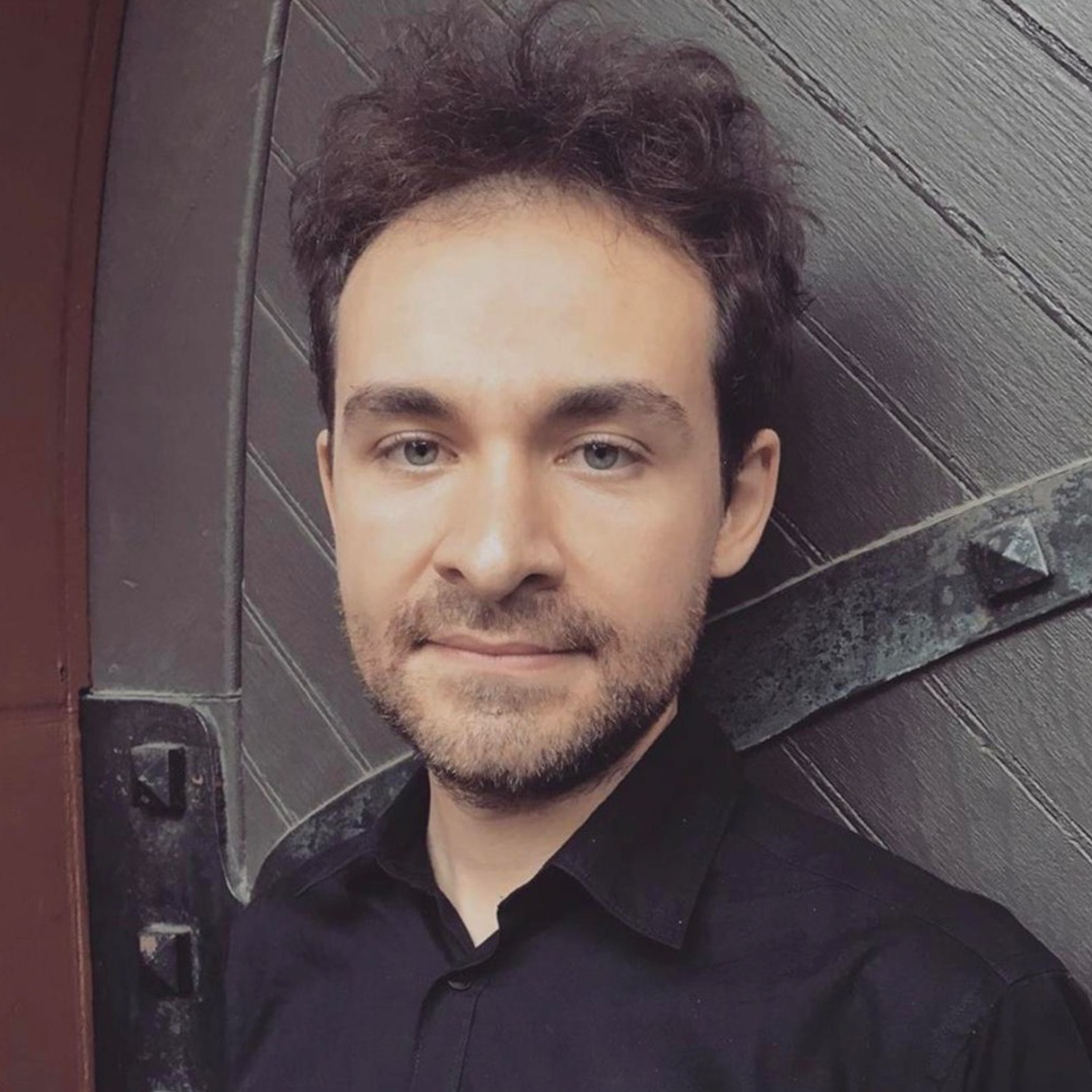
Prof. Dr. Malte Oppermann is a full Professor at the University of Basel , leading the Ultrafast Chiral Dynamics Laboratory within the Department of Chemistry. His group specializes in developing cutting-edge time-resolved spectroscopic techniques to probe molecular transformations on femtosecond to microsecond timescales, focusing on chirality and structural dynamics in complex systems. Research Focus: Ultrafast Chiral Spectroscopy : Using circularly polarized laser pulses to resolve structural changes in chiral systems. Molecular Motors & Protein Dynamics : Capturing conformational changes in synthetic motors and proteins in native environments. Photoactive Materials : Investigating light-energy conversion mechanisms in chiral photochemical systems. His research bridges physics and chemistry, employing state-of-the-art laser technology and collaborating internationally across synthesis, spectroscopy, and theory. Publications & Impact: Prof. Oppermann’s work (2011–2025) spans ultrafast spectroscopy , chiral dynamics , nanomaterials , and biomolecular photophysics . Key themes include spin-crossover dynamics, DNA photodamage, and plasmonic nanoparticles, with techniques like transient X-ray absorption and deep-UV circular dichroism. Team & Opportunities: The group actively recruits MSc/PhD students and postdocs in physics, chemistry, and materials science. Interested candidates are encouraged to contact Prof. Oppermann directly.
Prof. Dr. Oliver Reiser is a full Professor at the Institute of Organic Chemistry within the Faculty of Chemistry and Pharmacy at the University of Regensburg. His research group focuses on cutting-edge developments in organic synthesis, particularly in the areas of photocatalysis and visible light chemistry. He leads the Collaborative Research Centre CRC 325 on "Assembly Controlled Chemical Photocatalysis," which aims to develop new frontiers in photocatalysis for organic synthesis through designed control of catalyst-substrate interactions. University of Hamburg (PhD, 1989) IBM Research Center (Postdoc) Harvard University (Postdoc) University of Göttingen (Habilitation, 1995) Prof. Reiser's research spans multiple interconnected fields with a strong emphasis on sustainable chemistry. His group extensively utilizes modern techniques for organic synthesis including flow reactors, microwaves, and high-pressure systems. The primary research thrusts include catalysis (both metal and organocatalysts), unnatural amino acids and peptide foldamers, and natural product synthesis. His work on visible light photocatalysis has been particularly influential, with numerous publications in high-impact journals like Angewandte Chemie and Nature Catalysis. The group's research integrates experimental, spectroscopic, and computational techniques to analyze catalyst-substrate interactions for more rational design of photochemical reactions. Analysis of Prof. Reiser's recent publications (2023-2025) reveals a strong focus on copper-based photocatalysis, sustainable chemistry using earth-abundant metals, and innovative approaches to heterocycle synthesis. His work demonstrates a clear trend toward developing more efficient and environmentally friendly catalytic processes, with particular emphasis on visible light activation, catalyst immobilization for recyclability, and applications in medicinal chemistry. The research spans from fundamental mechanistic studies to practical applications in synthesis. German Academic Scholarship Foundation Minerva Foundation NATO Fellowship German Research Foundation Support Karl Winnacker Foundation Prof. Reiser has supervised numerous doctoral students, with recent PhD theses focusing on copper photoredox catalysis, magnetic nanoparticle-supported catalysts, and the synthesis of bioactive compounds. His research is supported by multiple collaborative projects, including the Collaborative Research Centre CRC 325, and involves extensive national and international collaborations with institutions such as the University of Kansas, the National Institute of Chemistry in Pune, the Institut Chimie de Coordination du CNRS in Toulouse, and the University of Zaragoza. The group maintains strong ties with pharmaceutical research through collaborations with Prof. A. Beck-Sickinger in Leipzig on neuropeptide ligands. The research group operates well-equipped laboratories with capabilities for advanced organic synthesis and characterization. They have developed specialized expertise in flow chemistry, high-pressure techniques, and magnetic nanoparticle-based catalyst systems. The CRC 325 initiative has provided significant infrastructure for collaborative research in photocatalysis, bringing together multiple research groups with complementary expertise in organic synthesis, spectroscopy, and computational chemistry.
Nathan Youngblood is an Assistant Professor in the Department of Electrical and Computer Engineering at the University of Pittsburgh , with a secondary appointment in the Department of Physics and Astronomy . His research focuses on reconfigurable photonic materials and devices for energy-efficient artificial intelligence applications. Educational Background: PhD in Electrical Engineering from the University of Minnesota Postdoctoral research at the University of Oxford (2017–2019) His work explores photonic in-memory computing, neuromorphic systems, and phase-change materials to minimize computing latency and energy consumption. Recent publications highlight advancements in magneto-optical non-reciprocity, coherent crossbar arrays, and plasmonic-enhanced phase-change devices. Scientific Awards: NSF CAREER Award (2024) AFOSR Young Investigator Award (2024) William Kepler Whiteford Faculty Fellowship (2024) Dr. Youngblood's lab develops photonic accelerators like LightML and LightBulb for machine learning, emphasizing scalable integration and novel material applications in silicon photonics.
Dr. Giacomo Crisenza is a Lecturer in Catalysis at the Department of Chemistry, University of Manchester. His research focuses on developing sustainable electrochemical and photocatalytic methods for converting carbon feedstocks into value-added chemicals. He holds a PhD from the University of Bristol and has held academic positions at Manchester since 2020. Education: PhD in Chemical Synthesis, University of Bristol (2013–2017) MSc and BSc, Università degli Studi di Milano (2007–2012) Chemical Synthesis CDT, University of Bristol (2012–2013) Research Interests: Electrochemical synthesis of novel organic compounds Photocatalytic activation of aromatic systems Design of sustainable catalytic protocols Radical-mediated C–C bond formations Development of carbon feedstock valorization strategies Articles Trends: His recent work emphasizes photocatalytic C–H functionalization strategies, asymmetric total syntheses, and metal-free arylation approaches. Key themes include visible-light-driven reactions and transition-metal catalyzed transformations. Advising & Grants: Supervised 2 PhD students (specific names not listed). Actively seeks external funding through schemes like MSCA and NIF for postdoctoral researchers. Labs & Teams: Leads the Crisenza Group within the Organic Chemistry Group at Manchester, focusing on net-zero catalysis and sustainable chemical synthesis.
Dr. Sonja Pullen is a Visiting Professor at the University of Amsterdam's Faculty of Science, affiliated with the Van 't Hoff Institute for Molecular Sciences. Her research focuses on photocatalysis, coordination chemistry, and supramolecular systems, with particular emphasis on developing sustainable energy conversion technologies. Key areas include molecular catalyst design, confined-space catalysis, and light-driven chemical transformations. Her work integrates advanced spectroscopic techniques (e.g., ultrafast spectroscopy) to study catalytic mechanisms, particularly in systems like diiron complexes and metal-organic frameworks (MOFs). Recent projects explore oxygen-tolerant catalysts, substrate-binding effects in photocatalytic dehalogenation, and the role of hydrogen bonding in catalytic activity. She also investigates functional materials such as coordination cages for artificial photosynthesis. Dr. Pullen’s publications highlight breakthroughs in catalyst stability, reaction selectivity, and energy-efficient processes. Her interdisciplinary approach bridges organic/inorganic chemistry, materials science, and renewable energy applications. Current trends in her work emphasize environmental sustainability and scalable photocatalytic systems for hydrogen production and CO2 conversion. Her lab at the Van 't Hoff Institute collaborates widely on topics like molecular encapsulation, MOF functionalization, and bioinspired catalysts. Ongoing projects aim to enhance photocatalytic efficiency through structural design and confinement strategies.
Jeff S Abramson is a Professor of Physiology in the David Geffen School of Medicine at the University of California Los Angeles (UCLA). His research focuses on the structural and functional characterization of membrane transport proteins, particularly sugar transporters and mitochondrial channels. He maintains an active laboratory investigating the molecular mechanisms of cellular transport processes. Dr. Abramson's primary research interests center on membrane transport proteins, with particular emphasis on sugar symporters and voltage-dependent anion channels (VDACs). His work combines structural biology, biophysics, and biochemistry to understand the molecular mechanisms of transport, including conformational changes during transport cycles, substrate recognition, and regulation by membrane potential. His research has significant implications for understanding metabolic disorders, mitochondrial function, and potential therapeutic targets. Analysis of Dr. Abramson's publication record reveals a consistent focus on membrane protein structure-function relationships over the past two decades. His work demonstrates expertise in X-ray crystallography, cryo-electron microscopy, and functional assays to characterize transport proteins. Recent publications show increasing emphasis on mitochondrial biology, particularly VDAC structure and function, while maintaining his longstanding interest in sugar transport mechanisms. His research bridges fundamental biophysical principles with potential biomedical applications in metabolic diseases. Dr. Abramson has been awarded multiple NIH grants supporting his research, including the R35GM135175 grant titled 'Deciphering molecular details of cellular sugar transport and their roles in disease' (2020-2024), R01GM124783 'Functional and structural studies of unique pathogenic transporters involved in glycobiology' (2017-2021), and R01GM078844 'Structural and functional characterization of sugar transporters in health and disease' (2006-2020). As Principal Investigator, Dr. Abramson has mentored numerous graduate students and postdoctoral researchers. His laboratory has made significant contributions to understanding the structure-function relationships of membrane transport proteins through collaborations with researchers across multiple disciplines. The lab utilizes advanced techniques including X-ray crystallography, cryo-EM, electrophysiology, and computational modeling to address fundamental questions about membrane protein mechanisms. Dr. Abramson's laboratory is part of UCLA's broader research ecosystem focused on structural biology and membrane protein research. His work intersects with several research centers at UCLA including those focused on metabolic diseases and structural biology. The lab maintains active collaborations with researchers specializing in biophysics, computational modeling, and disease mechanisms to translate basic findings into potential biomedical applications.
Lincoln J. Lauhon is a Professor of Materials Science and Engineering at Northwestern University. His research focuses on nanoscale structure-property relationships in low-dimensional materials, emphasizing synthesis, characterization, and device applications. He leads the Lauhon Research Group, which explores nanowires, 2D semiconductors, and heterostructures for quantum computing, high-power electronics, and energy conversion. Lauhon holds significant recognition including the Camille Dreyfus Teacher-Scholar Award (2008) and National Science Foundation CAREER Award (2005). His work bridges fundamental materials science with practical technologies through advanced microscopy and modeling techniques. Education: Postdoc in Chemistry at Harvard University, Ph.D. in Physics from Cornell University, and B.S. in Physics (Honors) from the University of Michigan. Research interests span nanowire synthesis, 3D nanotomography, scanning probe microscopy, and computational modeling. Current projects include III-As-Sb nanowire networks for quantum computing, GaN diodes for power electronics, and ferroelectric 2D materials. Lauhon's lab emphasizes collaboration across disciplines, with contributions to high-impact journals like Science Advances and Nano Letters . Awards highlight his dual excellence in teaching and research, including the Teacher of the Year award (2006). Professional service includes leadership roles in the Materials Research Society and organizing conferences on electronic materials. His team's innovations include novel nanomaterial synthesis methods and device architectures, with applications in computing, energy, and optoelectronics. The group actively engages in graduate and undergraduate training, fostering future leaders in nanotechnology.
Neil Champness is the Norman Haworth Professor of Chemistry at the University of Birmingham. He holds a prestigious academic position following roles at the University of Nottingham, including Professor of Chemical Nanoscience (2004-2020). His research focuses on supramolecular chemistry, crystal engineering, and metal-organic frameworks (MOFs). Champness leads a group pioneering studies on molecular self-assembly, surface chemistry, and functional materials. Education & Career - Began academic career with Teaching Fellowships at the University of Nottingham (1995) and Southampton (1994). - Became Lecturer in Inorganic Chemistry at Nottingham (1998), progressing to Reader (2003) and full Professor (2004). - Currently heads the Champness Group at Birmingham, established in 2021. Research Interests Champness’s work spans: - Design of porous materials (MOFs, HOFs) for gas storage and catalysis. - Surface self-assembly of 2D supramolecular frameworks. - Photoresponsive materials and molecular rotaxanes. - Chemical synthesis under constrained conditions. His group emphasizes interdisciplinary approaches, linking chemistry with materials science and nanotechnology. Awards & Recognition 2019: Elected Fellow of the European Academy of Sciences 2020: EPSRC Established Career Fellowship 2016: Royal Society of Chemistry Surfaces & Interfaces Award 2011: Thomson Reuters Highly Cited Researcher 2006: Corday-Morgan Medal (Royal Society of Chemistry) Advisory Roles & Grants - Editorial roles include Chem, Crystals, and CrystEngComm. - Served on Royal Society panels, Irish Research Council, and IUPAC. - Secured major grants from EPSRC and Royal Society. Labs & Collaborations His Birmingham group collaborates globally, with visiting professorships in Japan, Australia, and Brazil. Research is supported by advanced facilities in crystallography and surface chemistry.
Peter Oppeneer is a Professor in the Materials Theory group within the Department of Physics and Astronomy at Uppsala University, Sweden. His research program focuses on theoretical condensed matter physics with emphasis on ultrafast phenomena and magnetic materials. His research interests span femtosecond magnetism, ultrafast spin and orbital currents, out-of-equilibrium magnon and phonon dynamics, unconventional superconductivity, multipolar and hidden order parameters, and orbitronics. The group develops both analytical theories and numerical simulation codes, combining ab initio methods with model Hamiltonian approaches. Key research thrusts include ultrafast demagnetization mechanisms, spin-crossover materials, molecular spintronics, and topological quantum states in magnetic materials. Analysis of recent publications reveals strong focus on altermagnetism, terahertz spin dynamics, Dirac semimetals, and laser-induced phase transitions. The group's work bridges fundamental quantum theory with applications in next-generation spintronic devices and ultrafast magnetic switching technologies. Collaborative activities include work with experimental groups on ultrafast spectroscopy, X-ray magnetic circular dichroism, and terahertz emission studies. The group maintains active collaborations across Europe and internationally, particularly in the areas of femtosecond magnetism and topological materials. Research infrastructure includes development of specialized computational codes for Eliashberg theory, dynamical mean field theory, and ultrafast spin dynamics simulations. The group contributes to major international facilities including synchrotron and free-electron laser sources for time-resolved studies.
Yu Xia is a Post Doc at the Department of Chemistry, Stockholm University, Sweden. He is affiliated with the Tom Willhammar Research Group, focusing on advanced electron microscopy and diffraction techniques for structural characterization of materials. PhD (2019–2023) from a joint program between the University of Birmingham (UK) and the Southern University of Science and Technology (China). Research emphasizes fabrication of metallic nanoparticles with non-equilibrium structures and shapes using gas-phase condensation and thermal shock methods. Specializes in scanning transmission electron microscopy (STEM), in-situ heating experiments, and electron energy loss spectroscopy (EELS) for nanoparticle analysis. Current work prioritizes 4DSTEM imaging for electron beam-sensitive materials and Python-based post-processing of electron microscopy datasets. Yu Xia's research spans Materials Science , Nanotechnology , and Electrocatalysis , with applications in photocatalytic hydrogen evolution , graphene composites , and advanced electron microscopy techniques . His work often integrates computational image processing with structural characterization to optimize material properties. Publications highlight innovations in heterostructure engineering , metallic alloy catalysts , and electron beam-sensitive material imaging . No scientific awards are explicitly mentioned in the provided text. Yu Xia's technical expertise includes Python scripting for image analysis, in-situ electron microscopy , and multifunctional graphene-based materials .
Leigh David is a Professor of Chemistry at the University of Manchester, holding the Sir Samuel Hall Chair since 2014. Previously, he held prestigious roles such as the Forbes Chair of Organic Chemistry at the University of Edinburgh (2001–2012) and Chair of Synthetic Chemistry at the University of Warwick (1998–2001). His research focuses on synthetic molecular machines, supramolecular chemistry, and molecular knots, with notable contributions to the design of molecular motors and catenanes. David earned a BSc (Special Honours) and PhD in Chemistry from the University of Sheffield (1981–1987). He conducted postdoctoral research at the National Research Council of Canada (1987–1989) before joining the University of Manchester Institute of Science and Technology, where he advanced from Lecturer (1989–1996) to Readership (1996–1998). His research interests include developing synthetic strategies for molecular-scale machines, exploring applications in nanotechnology, and investigating dynamic covalent chemistry. Key areas involve creating molecular knots, interlocked structures, and systems capable of programmable motion. David has received numerous accolades, including the Royal Society Bakerian Medal (2013), ERC Advanced Grants (2008, 2014), and the Feynman Prize for Nanotechnology (2007). His work has been recognized globally through fellowships in the Royal Society (2009) and Royal Society of Edinburgh (2005). He leads a research group advancing molecular robotics and has secured major grants, such as the EPSRC Senior Research Fellowship (2005–2010). His lab focuses on translating molecular systems into functional devices with applications in materials science and biotechnology.
Hari Nair is an Assistant Professor in the Department of Materials Science and Engineering at Cornell University, part of the College of Engineering. His research focuses on the synthesis and characterization of complex oxide thin films using molecular beam epitaxy (MBE), with applications in power electronics, quantum materials, and optoelectronics. B.Tech. in Engineering Physics, Indian Institute of Technology Madras, 2006 M.S. in Electrical and Computer Engineering, The University of Texas at Austin, 2008 Ph.D. in Electrical and Computer Engineering, The University of Texas at Austin, 2013 His research interests lie at the intersection of semiconductor physics, materials synthesis, and advanced functional materials. He specializes in epitaxial strain engineering, heterostructure design, and the control of electronic and magnetic properties in oxide thin films. His vision is to leverage novel materials to enable revolutionary advances in electronic and optoelectronic devices. Analysis of his recent publications reveals a strong focus on β-Ga₂O₃ for high-power devices and ruthenate-based quantum materials such as Sr₂RuO₄ and SrRuO₃. His work spans ultra-wide bandgap semiconductors, strain-engineered phase transitions, superconductivity, and spin-orbit phenomena. Techniques include MBE growth, THz spectroscopy, and advanced electron microscopy. Notable scientific awards include: Student Paper Award, Device Research Conference (DRC), 2013 The Ben Streetman Prize for Outstanding Research in Electronic and Photonic Materials and Devices, 2013 Student Paper Award, Electronics Materials Conference (EMC), 2012 Hari Nair has advised several graduate students and postdoctoral researchers, though specific names are not listed in the provided text. His work has been supported by grants from federal agencies and institutional programs focused on advanced materials and quantum science. He is actively involved in collaborative research through centers and labs at Cornell, particularly those related to materials synthesis and characterization. He leads a research group focused on the growth and study of epitaxial thin films, working closely with the D.G. Schlom group and other collaborators in the Kavli Institute at Cornell. His lab utilizes state-of-the-art MBE systems and advanced characterization tools for probing electronic, magnetic, and structural properties at the nanoscale.
Edoardo Baldini is an Assistant Professor of Physics at the University of Texas at Austin, affiliated with the College of Natural Sciences. His research focuses on discovering and controlling emergent quantum phases in materials using ultrafast laser spectroscopy and advanced experimental techniques. Key affiliations include the Center for Complex Quantum Systems, Texas Quantum Institute, and Texas Materials Institute. Education: PhD from École Polytechnique Fédérale de Lausanne (2017), Postdoc at MIT (2017-2021). Research interests include quantum materials, ultrafast laser science, light-matter interaction, and multiferroics. His group develops techniques to study collective modes (phonons, magnons, excitons) and engineer novel functionalities via terahertz fields. Recent breakthroughs include manipulating spin waves in antiferromagnets and revealing hidden polar orders in quantum materials. Publications highlight discoveries in multiferroic oscillations, terahertz-driven magnon dynamics, and structural symmetry-breaking mechanisms in Ta₂NiSe₅. Awards include the 2025 Sloan Fellowship and NSF CAREER Award. Grants and recognitions include funding from the U.S. Department of Energy, Army Research Office, and Keck Foundation. His lab actively recruits students and postdocs in experimental condensed matter physics.
Paola Calza is a Full Professor in the Department of Chemistry at the University of Turin. Her research focuses on environmental chemistry, analytical chemistry, and advanced photocatalytic technologies for water purification. Her work addresses the degradation of emerging contaminants, transformation product analysis, and the development of novel materials for pollutant removal. She has contributed significantly to advancing photocatalysis, nanomaterial synthesis, and sustainable water treatment strategies. Her research spans diverse applications, including aquaculture water treatment, pharmaceutical pollution mitigation, and soil bioremediation. Key areas: Photocatalytic degradation, MXene-based nanocomposites, HPLC-HRMS analysis, and bio-inspired materials. Collaborations involve interdisciplinary approaches combining environmental science, materials engineering, and analytical techniques. Publications emphasize practical solutions for real-world water and soil contamination challenges.
Dr. Qing Guo is an Associate Professor in the Department of Chemistry at South University of Science and Technology (SUSTech), where he joined in April 2019 as a research group leader and doctoral supervisor. His research focuses on fundamental processes of energy-related catalytic reactions, with particular emphasis on surface photocatalysis and reaction mechanisms. Bachelor of Science: University of Science and Technology of China (2007) PhD: University of Chinese Academy of Sciences (2013) Research Assistant/Associate Fellow: Dalian Institute of Chemical Physics, Chinese Academy of Sciences (2013-2019) Associate Professor: SUSTech Department of Chemistry (2019-present) Dr. Guo's research interests center on surface catalysis mechanisms, particularly in energy-related photocatalytic reactions. He develops novel scientific instruments to investigate photocatalytic C-H bond activation of small alkane molecules, carbon chain growth, and the interaction mechanism between metal clusters and substrates. His work spans photocatalytic hydrogen production, alkane activation and conversion, biomass conversion, and single-atom catalysis. His innovative approach combines instrument development with fundamental surface science to address critical challenges in energy conversion. Analysis of Dr. Guo's recent publications reveals a strong focus on titanium dioxide-based photocatalysis, with particular attention to reaction mechanisms at the molecular level. His work systematically investigates the roles of surface oxygen species, photon energy effects, and reaction intermediates in hydrocarbon conversion processes. The research shows an increasing sophistication in both experimental techniques and theoretical understanding, with recent work extending to ammonia synthesis, electrocatalysis, and excitonic effects at molecule/metal oxide interfaces. Dr. Guo leads an active research group that has produced over 80 publications in high-impact journals including J. Am. Chem. Soc., JACS Au, Chem. Sci., and Adv. Mater. His work demonstrates significant contributions to understanding fundamental photocatalytic processes, with potential applications in green energy and sustainable chemical production. Dr. Guo serves as a doctoral supervisor and has mentored numerous graduate students, many of whom appear as co-authors on his publications. His research group has developed several large-scale research instruments, including a surface photochemical kinetics research device, an in situ catalytic mechanism research device, a surface scattering kinetics research device, and a device for preparing controllable size clusters. These instruments have enabled systematic investigation of important energy-related catalytic reactions. Dr. Guo's laboratory focuses on the development and application of advanced surface science techniques to study energy-related catalytic reactions. His team combines experimental surface science approaches with theoretical modeling to gain molecular-level understanding of photocatalytic processes. The group actively recruits postdoctoral researchers and research assistants with backgrounds in vacuum technology, optics, semiconductors, and surface chemistry.