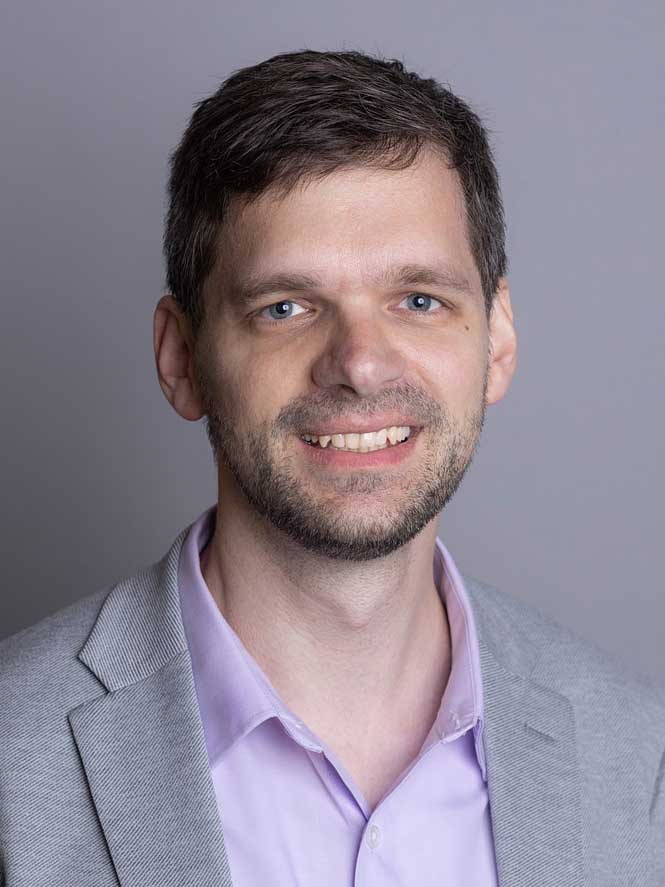
Peter Schindler is an Assistant Professor in the Department of Mechanical and Industrial Engineering at Northeastern University's College of Engineering. His research focuses on discovering novel materials for renewable energy applications using high-throughput density functional theory (DFT) and data-driven predictions. Key areas include surface science of thin-film growth, semiconductor fabrication, and heterogeneous catalysis. Schindler holds a Ph.D. in Physics from the University of Vienna (2015) and an M.Sc. in Physics from the same institution (2011). He has been recognized as an Erwin Schrödinger Postdoctoral Fellow (FWF, Austria). His teaching interests span Thermodynamics of Materials, Materials Science fundamentals, and Semiconductor Physics. Schindler's work bridges computational materials science with experimental validation, emphasizing machine learning-driven material discovery. Recent publications highlight breakthroughs in photocathode development, fuel cell catalysts, and thermoelectric material properties. His lab, D2R2 Group, focuses on accelerating materials innovation for energy systems. Labs/Teams: D2R2 Group Grants: Not explicitly listed in text Future Work: Expanding machine learning integration in high-throughput screening and exploring novel electrolyte materials for solid-state batteries.
Sol A Lee is a Postdoctoral Scholar Research Associate in the Department of Applied Physics and Materials Science at the California Institute of Technology (Caltech). His research focuses on advancing sustainable energy technologies through innovations in electrocatalysis, photoelectrochemistry, and materials science. Key areas include developing high-performance electrocatalysts for solar fuels production, improving water splitting efficiency, and enhancing CO₂ conversion systems. Lee’s work emphasizes the design of durable materials and scalable processes for renewable energy applications. His research interests span electrochemical energy storage, photocatalytic systems, and nanomaterials engineering. He explores novel catalysts for oxygen evolution reactions, solar-driven water oxidation, and CO₂ reduction, with a focus on material stability and reaction kinetics under real-world conditions. Lee has contributed to breakthroughs in operando measurements of membrane electrode assemblies and the development of 2D metal-organic frameworks for enhanced catalytic performance. Lee’s recent studies address challenges in variable-energy solar fuels systems and the integration of single-atom catalysts into membrane-coated electrolyzers. His work on graphene-based sensors and tailored nanostructures highlights interdisciplinary approaches to energy and environmental challenges. While no awards or grants are explicitly listed, his publications demonstrate impactful contributions to sustainable energy research.
Dr. Janusz Mikołajczyk is a Lecturer at the Institute of Optoelectronics, Warsaw University of Technology. His research focuses on optoelectronic systems, photodetectors, and laser-based sensing technologies. He specializes in infrared communication systems, gas detection using quantum cascade lasers, and advanced noise measurement techniques for photodetectors. His work spans applications in free-space optics, environmental monitoring, and military communication systems. With 155 publications and 7 research projects, he has contributed significantly to fields like cavity-enhanced spectroscopy, optoelectronic sensor development, and high-speed data transmission. His h-index of 20 (WoS) reflects his impactful research in optoelectronics and materials science. Key areas of exploration include THz radiation detectors, ultraviolet photodetectors, and hybrid communication systems combining optical and radio technologies. He has designed innovative detection modules and noise analysis systems, enhancing the reliability of optoelectronic devices in harsh environments.
Prof. Jacek Wojtas is a University Professor and Vice-Rector for Development at the Military University of Technology (WAT), where he leads the Optical Signal Detection Group. He holds a Ph.D. and habilitation in technical sciences (electronics) and specializes in optoelectronic sensors for trace gas detection. His research focuses on environmental monitoring, medical diagnostics, and security systems using advanced laser spectroscopy techniques. Education: Graduated first place from WAT in 2002, earned a doctorate (2007) and postdoctoral degree (2015). He has published over 230 papers, 100+ international, and led 4 NCBIR-funded projects. Currently directs 3 infrastructure and 3 research projects, including NATO-funded initiatives. Research Interests: Laser absorption spectroscopy (CEAS, WMS), quantum cascade lasers, gas sensors for volatile compounds, THz detection, and sensor applications in medicine and security. His work bridges fundamental research with practical systems like breath analysis tools and explosives detection. Awards: Includes medals from the Minister of National Defence, Rector’s/Director’s awards, and the title of 'Meritorious Academic Teacher'. Active in academic leadership, founded the Optoelectronics Student Research Group (2013), and chairs national committees like the Polish Academy of Sciences’ Metrology Committee. Grants & Labs: Led 4 major grants, built teaching/research labs, and contributed to NATO’s Science for Peace program. Supervised 17 diploma theses and advised doctoral research. His work has been recognized through 31 conference presentations and 45 reviews.
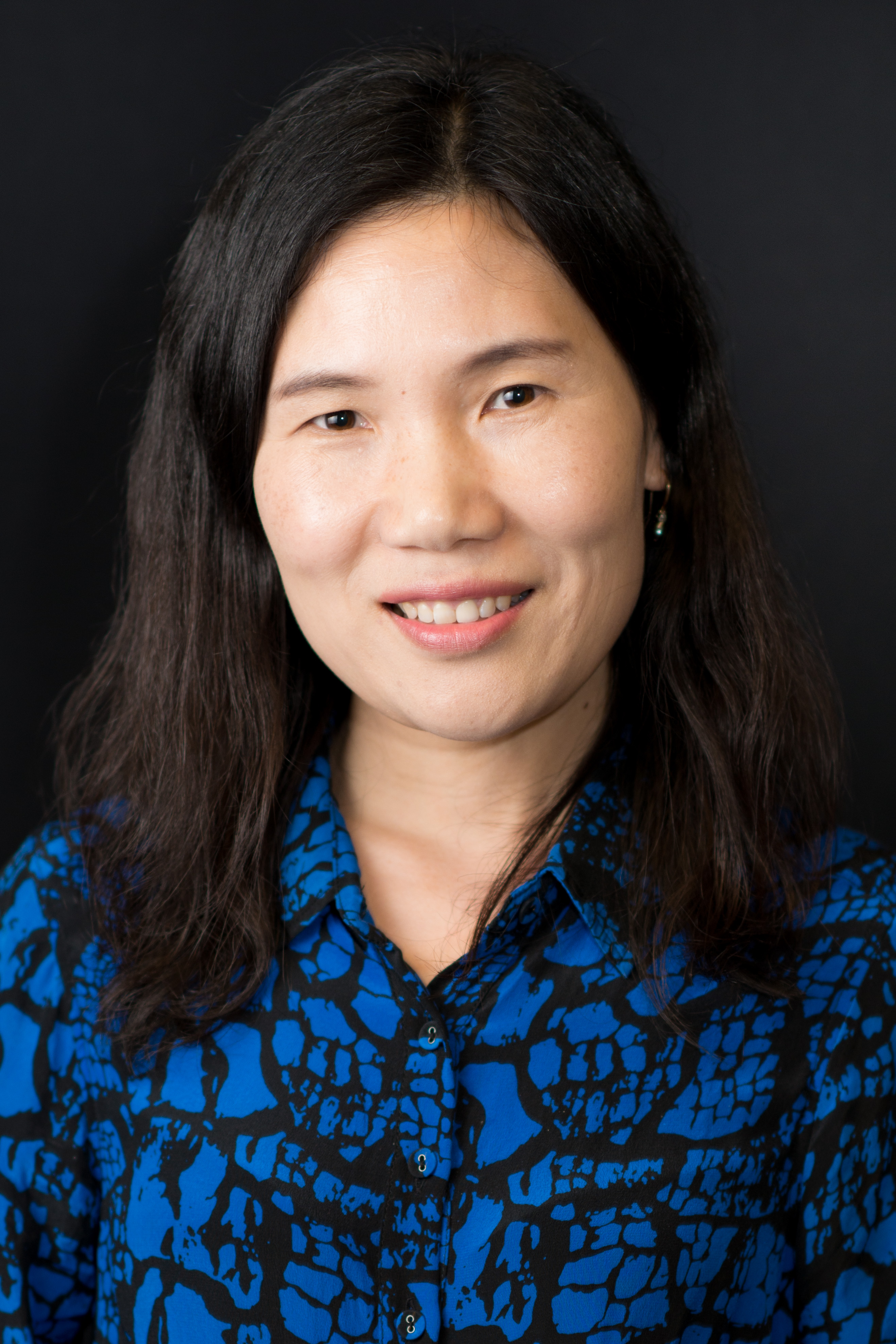
Scientia Professor Xiaojing Hao is a full Professor (tenured) and ARC Future Fellow at the School of Photovoltaic and Renewable Energy Engineering, University of New South Wales (UNSW). She is a Fellow of the Australian Academy of Technological Sciences and Engineering (FTSE), Fellow of the Australian Institute of Physics (FAIP), and Fellow of the Royal Society of Chemistry (FRSC), reflecting her significant contributions to renewable energy research. Professor Hao received her Bachelor of Engineering (1996-2001) and Master of Engineering (2001-2003) from the School of Materials and Metallurgy Science and Engineering at Northeastern University in Shenyang, China. She completed her PhD in 2010 from the School of Photovoltaics and Renewable Energy Engineering at UNSW, where she has remained as faculty. Bachelor of Engineering (1996-2001), School of Materials and Metallurgy Science and Engineering, Northeastern University, Shenyang, China Master of Engineering (2001-2003), School of Materials and Metallurgy Science and Engineering, Northeastern University, Shenyang, China PhD (2006-2010), School of Photovoltaics and Renewable Energy Engineering, University of New South Wales, Sydney, Australia Professor Hao's research focuses on low-cost, high-efficiency thin film solar cells and tandem solar cells, with over fifteen years of experience in the field. Her work initially centered on silicon-based solar cells before expanding to earth-abundant compound semiconductor materials such as chalcogenides for both solar photovoltaic and solar fuel applications. She leads a strong research group that has achieved numerous efficiency records on emerging thin film solar cells. Her research spans photovoltaic devices, functional materials, theory and design of materials, compound semiconductors, and nanomaterials, with particular emphasis on kesterite and perovskite solar cell technologies. Professor Hao has published over 250 peer-reviewed journal articles, including publications in high-impact journals such as Nature Energy and Energy and Environmental Science. Her recent research has focused on perovskite solar cells, kesterite solar cells, chalcohalide solar cells, and tandem solar cell configurations. She has made significant contributions to understanding defect engineering in solar cell materials, interface engineering, and developing scalable fabrication methods for next-generation photovoltaic technologies, with particular focus on cadmium-free alternatives and stability enhancement. Professor Hao has received numerous prestigious awards for her research excellence: Prime Minister's Prizes for Science: Malcolm McIntosh Prize for Physical Scientist of the Year (2020) Australian Academy of Science Pawsey Medal (2021) Fellow of the Royal Society of Chemistry (2024) Fellow of the Australian Academy of Technological Sciences and Engineering (2022) ARC Future Fellow (2019) Australian's Most Innovative Engineers 2019 NSW Premier's Prizes for Science & Engineering (Energy Innovation in NSW) (2018) Best Poster Award, the 7th World Conference on Photovoltaic Energy Conversion (2018) UNSW Scientia Fellowship (Inaugural) (2017) ARC DECRA (2015) Australian Renewable Energy Agency Postdoctoral Fellowship (2011) Professor Hao has secured substantial research funding as lead or chief investigator on numerous projects totaling millions of dollars. Her current grants include an ARC Industrial Transformation Research Hub ($5M, 2024-2029), UK-Australia Renewable Hydrogen Innovation Partnerships Funding ($1,396,414), multiple ARC Linkage and Discovery Projects, and several ARENA grants for research on efficient and stable chalcogenide-Si tandem cells, Si/perovskite tandem modules, and industrial high-throughput inspection methods. She supervises students in solar cell materials and devices and solar fuel devices, and teaches Engineering Postgraduate Coursework Research Skills, Vertically Integrated Projects, and Advanced Photovoltaics. Professor Hao leads a dynamic research group focused on advancing thin film solar cell technologies, with particular expertise in kesterite and perovskite materials. Her team works on both fundamental materials science and applied device engineering to develop next-generation photovoltaic technologies that are efficient, stable, and cost-effective, with strong industry partnerships for technology transfer and commercialization.
Prof. Johanna Eichhorn holds the Chair for Nanoscale Microscopy and Spectroscopy at the Walter Schottky Institute (WSI), Technical University of Munich. Her research focuses on photoenergy conversion, particularly solar water splitting and interfacial charge transport in semiconductor-based photoelectrodes. Key projects involve analyzing material stability under operational conditions and nanoscale structural properties using advanced microscopy/spectroscopy techniques. Her group investigates novel materials like Ta 3 N 5 , Zn 3 N 2 , and perovskite-based systems, emphasizing defect engineering and interface optimization. Collaborations include Munich Catalysis Alliance (MUniCat) and WSI's nanotechnology core facilities. She advises on advanced characterization methods for energy materials, with over 50 publications in top journals like Advanced Materials and ACS Nano . Teaching: Graduate courses on nanotechnology and energy materials at TUM Labs: Access to state-of-the-art facilities for in-situ XPS, AFM, and optical spectroscopy Grants: EU Horizon projects on photoelectrochemical systems and DFG-funded material synthesis initiatives Current work includes developing ALD-coated tandem cells and amorphous nitride semiconductors for scalable solar fuel production. Her team actively explores 2D materials and hybrid systems for next-gen energy conversion technologies.
Prof. Nicolas Plumeré holds a professorship in Electrobiotechnology at the TUM Campus Straubing, Technische Universität München. His research focuses on electrochemical systems, biohybrid energy conversion, and enzyme stabilization. Key areas include hydrogenase-based biofuel cells, oxygen-tolerant biosensors, and semi-artificial photosynthetic systems. His work bridges electrochemistry, biotechnology, and materials science to develop sustainable energy solutions. Research interests emphasize redox-active polymers for enzyme protection, bioelectrocatalytic CO₂ fixation, and light-driven hydrogen production. He has pioneered techniques such as redox hydrogel matrices that stabilize oxygen-sensitive enzymes. His publications highlight advancements in electrochemical analysis (e.g., diffusional voltammetry), bioelectrochemical systems for H₂ production, and novel biosensor designs. Recent work explores circular hydrogen economies and techno-economic assessments of carbon capture technologies. Plumeré's innovations include the Plug-Lock-Lid mechanism for hydrogenase activation and methods to suppress hydrogen peroxide formation in biocatalytic systems. His contributions advance both fundamental electrochemistry and applied bioenergy technologies.
Professor Souman Rudra is a faculty member at the Department of Engineering Sciences within the University of Agder (Norway) since 2022. He holds a Ph.D. in Energy Technology from Aalborg University (Denmark, 2013) and has served as Associate Professor (2013-2022) and Visiting Researcher at the University of Alberta (2012). His career spans institutions including Aalborg University, Ajou University, and CUET. Education : Ph.D. (Aalborg University, 2013), MSc (Aalborg University, 2010), BSc (Chittagong University, 2007) Pedagogical Training : Uniped courses, doctoral supervision qualifications, and lecturing skill development His research focuses on renewable energy systems with specialization in biomass conversion, thermal energy, quad-generation plants, and process simulation. Recent studies emphasize hydrodynamic cavitation for biomass processing, hydrogen production from waste, and advanced battery material development. His publications bridge chemical engineering, energy systems, and material science with applications in: Biofuel production from lignocellulosic materials Quad-generation system optimization Photocatalytic energy storage solutions Machine learning applications in thermal plants Industrial waste-to-energy technologies Current teaching responsibilities include courses on: ENE 415: Combined Heat and Power Systems ENE 227: Thermodynamic and Heating System ENE 230: Fluid Flow and HVAC System ENE 420: Bioenergy
Dr. Grace Manahan is a Research Fellow in the Department of Physics at the University of Strathclyde, part of the Faculty of Science. She is actively involved in experimental and computational research in plasma-based particle acceleration and advanced light sources, primarily through the Scottish Centre for the Application of the Physics of the Accelerator (SCAPA). Her research focuses on laser-driven particle acceleration, high repetition-rate ion sources, electron beam dynamics, and coherent radiation generation. Key interests include plasma wakefield acceleration, photocathodes, beam emittance control, and the development of compact, high-brightness light sources. She utilizes high-performance computing resources such as SHAHEEN II and JURECA for simulations supporting experimental work. The recent publications highlight a strong trend toward developing ultrafast, high-brightness electron beams for next-generation free-electron lasers and compact radiation sources. Her work bridges experimental laser-plasma physics with advanced beam diagnostics and computational modeling, contributing to breakthroughs in attosecond science and synchronized electron-laser systems. Scientific Awards: PIER Fellowship Recipient (2016) SUPA Postgraduate, Postdoctoral and Early Career Researcher Short-Term Visits (PECRE) Recipient (2015) Dr. Manahan has been a principal and co-investigator on multiple research projects involving high-performance computing for plasma acceleration modeling. She contributes to public engagement through events like the Glasgow Science Festival and regularly presents at conferences, including invited talks on SCAPA results. She collaborates extensively with leading researchers such as Bernhard Hidding, Dino Jaroszynski, and Mark Wiggins. She is involved in the development of high-repetition proton diagnostics and laser-driven ion acceleration systems at SCAPA. Her work supports broader efforts in creating compact accelerators for materials, life sciences, and space radiation simulation.
CUMHUR GÖKHAN ÜNLÜ is an Associate Professor in the Department of Biomedical Engineering at the Faculty of Technology, Pamukkale University, Turkey. He holds a Ph.D. in Physics from Muğla Sıtkı Koçman University and has been actively contributing to interdisciplinary research at the intersection of materials science, nanotechnology, and biomedical engineering. B.Sc. in Physics, Uludağ University (2003) M.Sc. in Physics, Uludağ University (2006) Ph.D. in Physics, Muğla Sıtkı Koçman University (2013) His research focuses on graphene-based biosensors , magnetic nanoparticles for hyperthermia , perovskite manganites , and nanomaterials for cancer therapy and energy applications . He employs advanced synthesis and characterization techniques to develop functional nanomaterials with applications in biomedicine and renewable energy. The 15 most recent publications highlight a strong trend toward biomedical nanotechnology , particularly in cancer theranostics using Mo₂C-MXene and perovskite-based nanohybrids . Other works explore graphene-modified solar cells , bioelectrochemical systems for solar fuel generation , and nanofuel combustion . The dominant keywords include magnetocaloric materials, biosensors, photocatalysis, and nanomedicine. Dr. Ünlü is actively involved in multiple national and international research projects, including several TÜBİTAK-funded initiatives and ERASMUS+ collaborations. His recent work emphasizes interdisciplinary innovation with real-world applications in oncology and sustainable energy. Rational design of efficient energy and charge transfer in biophotoelectrodes for direct conversion of CO2 into fuel (TÜBİTAK-1071) Development of Mo₂C MXene derivatives for triple-negative breast cancer combination therapy (TÜBİTAK-1001) Functional magnetic nanoparticles for glioblastoma combination therapy (TÜBİTAK-1001) Graphene-based field-effect transistor biosensor platform for ferritin detection (Helmholtz-Zentrum Dresden-Rossendorf) He also coordinates internal BAP projects on graphene-doped nanofibers and 2D molybdenum carbide crystals. His lab fosters collaboration across physics, materials science, and biomedical engineering, contributing to both fundamental science and translational applications. No scientific awards are explicitly mentioned in the provided text.
Prof. Beate Stelzer leads the Space-based Astrophysics and Experimental UV Astronomy working groups at the Department of Physics, Faculty of Science, Eberhard Karls Universität Tübingen. Her research spans magnetic activity in cool stars, star formation processes, and X-ray/UV astronomy using space-based instruments like XMM-Newton, Chandra, and eROSITA. Key research themes include protostellar disk interactions, accretion shocks, and coronal dynamics in young stars and brown dwarfs. She contributes to international projects such as PLATO, ESBO-DS, Athena, and GAPS. Her team develops advanced UV detectors for space missions, focusing on FPGA programming, photocathode optimization, and space-qualified imaging technology. Involvement in grants and collaborations includes memberships in the eROSITA Science Working Group, EXTraS, and Gaia-ESO Survey. Her group actively mentors PhD and Master’s students, with former members like Dr. Laura Venuti and Dr. Alexis Klutsch.
Sergey Baryshev is an Associate Professor in the Department of Electrical and Computer Engineering (ECE) at Michigan State University's College of Engineering. He holds a PhD in Condensed Matter Physics from the Ioffe Physico-Technical Institute (Russia, 2008) and an MS in Applied Physics from St. Petersburg Polytechnic University (2004). His research focuses on advanced materials for accelerator technologies, including diamond-based electron sources, plasma synthesis of nanomaterials, and high-gradient RF accelerator components. Before joining MSU, he worked at Argonne National Laboratory (2010–2013) and Euclid TechLabs (post-MSU), specializing in diamond field emitters and accelerator R&D. His work bridges materials science and engineering, with emphasis on nanocrystalline diamond films for applications in photonics, electron microscopy, and high-power devices. Key Research Areas: Field emission physics, CVD diamond synthesis, plasma dynamics, and accelerator instrumentation Notable Projects: Microwave plasma reactors for nanodiamonds, GHz time-resolved microscopy systems, and UNCD-based photocathodes Recognition: Gold Medal (Geneva Inventions Exhibition, 2009), FASIE Scholarship (2007–2009) His recent publications explore topics like breakdown mechanisms in RF cavities, tunable THz radiation sources, and scalable diamond wafer production. He collaborates extensively with national labs and industry partners to advance next-generation electron sources and beam technologies.
Annie Greenaway is a Researcher in the Materials Physics group at the National Renewable Energy Laboratory (NREL), focusing on novel semiconductors for optoelectronic and solar fuel applications. She joined NREL as a Director’s Postdoctoral Research Fellow in 2018 after completing her PhD in Chemistry at the University of Oregon. Education: Bachelor’s (Hendrix College), Master’s, and PhD in Chemistry (University of Oregon) Her research spans Nitride semiconductors , combinatorial materials discovery , and semiconductor photoelectrochemistry , with recent work on integrating II-IV-N2 semiconductors with GaN and developing photoelectrochemical cascades for solar-to-methanol conversion. While her publications emphasize semiconductor development for photovoltaics and solar fuels , they also highlight innovations in electron transport , protective layers for photocathodes, and organic-inorganic hybrid systems .
James L. Young serves as a Researcher IV in the Chemistry and Nanoscience department at the National Renewable Energy Laboratory (NREL), where he leads critical projects in photoelectrochemistry (PEC), low-temperature water electrolysis, fuel cells, and electrochemical ammonia synthesis. His research career at NREL began as an undergraduate intern in 2010, progressed through graduate research and postdoctoral work, and culminated in his current scientist position established in 2018. Dr. Young earned his PhD in Materials Science and Engineering from the University of Colorado Boulder under co-advisement of Steven George and Todd Deutsch, developing tandem III-V PEC devices and atomic-layer-deposited thin films. His undergraduate degree in Materials Science and Engineering came from the University of Illinois at Urbana-Champaign, establishing the foundation for his materials-focused energy research. His primary research interests span materials electrochemistry, electrochemical devices, electrochemical ammonia synthesis, photoelectrochemistry for solar fuels, electronic properties of materials, corrosion, and atomic layer deposition. This diverse portfolio reflects his work bridging fundamental materials science with practical energy applications, particularly in hydrogen production technologies. His extensive publication record of 56 research outputs from 2015-2025 demonstrates consistent high-impact contributions to the field. Young currently leads NREL's HydroGEN Consortium PEC projects, the H2NEW Consortium membrane electrode assembly performance ex-situ characterization task, a technology commercialization project on low-cost electrolysis diffusion media materials, and a Laboratory Directed Research and Development project on electrochemical ammonia synthesis. His recent publications focus on proton exchange membrane water electrolyzers, electrochemical deposition techniques, porous transport layers, hydrogen storage materials, and fuel cell catalyst layers. National Science Foundation Graduate Research Fellowship (2011) NREL Director's Award (2017) The Electrochemical Society Energy Technology Division Supramaniam Srinivasan Young Investigator Award (2022) U.S. Department of Energy Fuel Cell Technologies Office Hydrogen Production R&D Award (2017) U.S. Department of Energy Office of Science Outstanding Mentor Award (2021) Recognized for his mentorship with the DOE Office of Science Outstanding Mentor Award in 2021, Young actively contributes to the scientific community through memberships in the American Vacuum Society, Materials Research Society, and The Electrochemical Society. His research fingerprint shows significant activity across water splitting (100%), photocathode engineering (69%), surface science (44%), material density studies (42%), water electrolysis (34%), photoelectrochemical water splitting (34%), hydrogen evolution (33%), and photocurrent engineering (30%).
Emanuel Ronge is a researcher at Forschungszentrum Jülich's Institute of Energy and Climate Research, specializing in advanced materials for photoelectrochemical water splitting applications. His work focuses on developing stable semiconductor-based photocathodes for solar-driven hydrogen production. Dr. Ronge's research interests center on photoelectrochemistry, materials science for renewable energy, and semiconductor physics. He investigates stability mechanisms of silicon photocathodes protected by ultrathin TiO 2 layers, employing transmission and scanning electron microscopy to study degradation processes. His expertise includes atomic layer deposition techniques for creating corrosion-protective coatings and optimizing interfaces between multi-junction solar cells and protective layers. His publications demonstrate significant contributions to understanding the relationship between material properties and device performance in photoelectrochemical systems. Ronge's work has helped identify degradation mechanisms related to chlorine remnants in TiO 2 layers and has contributed to developing integrated devices achieving solar-to-hydrogen efficiencies up to 4.4% without external bias.