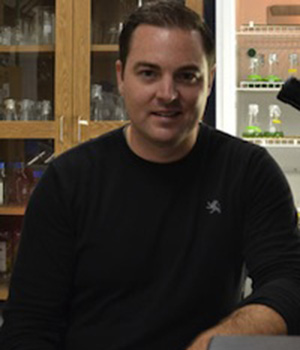
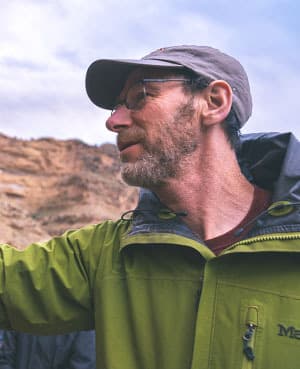
Dr. Yuanzhi Tang is the Georgia Power Professor at the Georgia Institute of Technology with joint appointments in the School of Earth and Atmospheric Sciences and School of Civil and Environmental Engineering. He directs the Center for Critical Mineral Solutions, co-founded the Georgia Partnership for Essential Minerals, and serves as Associate Co-Director of Interdisciplinary Research at the Brook Byers Institute for Sustainable Systems. He is also Co-Editor-in-Chief of Chemical Geology and Associate Editor of Geochimica et Cosmochimica Acta . His research investigates molecular-scale interfacial processes in natural and engineered systems, focusing on: Contaminant fate/transport at microbe-mineral-water interfaces Biogeochemical cycling of metals and nutrients Resource recovery from waste streams Synchrotron applications in environmental science Recent publications emphasize rare earth element recovery, waste valorization, and sustainable energy materials, employing advanced spectroscopic techniques to understand reaction mechanisms. Professor Tang leads an active research group with multiple postdoctoral researchers, graduate students, and undergraduates. His externally funded projects include: NSF: Rare earth elements in sedimentary systems DOE: Critical metal recovery from waste streams NASA: Manganese oxide formation mechanisms DoD: Rare earth separation technologies
Dr. Roselina Angel is a Professor in the Department of Animal and Avian Sciences at the University of Maryland's College of Agriculture and Natural Resources. With expertise in poultry nutrition, she holds a PhD in Poultry Nutrition from Iowa State University and has been with the university since 1998, initially joining as an Assistant Professor. Research Focus Areas Calcium and phosphorus metabolism in poultry Phytase and enzyme supplementation Environmental impact reduction Nutritional strategies for exotic animals Feed additive efficacy Mineral utilization optimization Her recent publications (2025–2023) concentrate on mechanistic modeling of mineral digestibility, circadian nutrient regulation in laying hens, and the environmental implications of poultry nutrition. These studies frequently examine interactions between dietary calcium/phosphorus ratios, phytase application, and ingredient selection across broilers and laying hens.
Daniel Vallero is an Adjunct Professor in the Department of Civil and Environmental Engineering at Duke University . He holds a Ph.D. from Duke (2000) , an M.S. from the University of Kansas (1996) , and a B.A. from Southern Illinois University (1974) . His career spans environmental engineering, exposure assessment, and climate change adaptation, with affiliations including North Carolina Central University (2012-2013) as Associate Professor. Education B.A., Southern Illinois University, 1974 M.S., University of Kansas, 1996 Ph.D., Duke University, 2000 Key Research Areas Environmental systems science Air pollution modeling and control Hazardous waste bioremediation Climate change governance Exposure-based chemical prioritization Biogeochemical cycling under climate stress Publication Trends Focus on PFAS exposure pathways , climate adaptation strategies , and pollutant fate in ecosystems Recent work includes high-throughput exposure models and environmental justice in global warming Scientific Awards Federal Honor Awards (2025) from the U.S. EPA Jeffrey B. Taub Award (1999) at Duke University Notable Contributions Authored Air Pollution Calculations and Environmental Systems Science Developed exposure prioritization tools like Ex Priori Post-9/11 environmental contamination studies in New York City
Aziz Amoozegar is a Professor in the Department of Crop and Soil Sciences at NC State University's College of Agriculture and Life Sciences. His research focuses on environmental soil physics, specifically investigating water and pollutant movement through soils, phosphorus dynamics, and soil characterization for agricultural and engineering applications. Research programs include evaluating soil-water interactions in contaminated environments, assessing fertilizer-enhanced phosphorus transport, and developing soil analysis techniques. Key areas of study involve pollutant migration through saprolite, cadmium release kinetics in amended soils, and hydraulic functioning of compacted soils. His work bridges environmental science, agricultural engineering, and soil chemistry. Recent publications cover topics such as phosphate mobility under unsaturated conditions, cadmium release in contaminated soils, and bioenergy grass residue effects on evaporation. He has contributed to methodological advancements in soil testing and remediation strategies for heavy metals like lead. Dr. Amoozegar's research emphasizes practical applications for sustainable agriculture and environmental protection. No specific awards or grants are listed in the provided information, but his involvement in USDA and EPA-related programs suggests active collaborative research efforts.
Dr. Sergio Abit is a Professor in the Department of Plant and Soil Sciences at Oklahoma State University (OSU), with a dual role as Plant & Soil Sciences Extension Specialist for Onsite Wastewater Management. He holds a Ph.D. in Soil Science from North Carolina State University (2009) and has been at OSU since 2012. His primary appointment is 85% teaching, focusing on courses such as Environmental Soil Science and Fundamentals of Soil Science. He also oversees undergraduate coordination and serves on the Environmental Science Program Steering Committee. His research emphasizes subsurface pollutant dynamics, pathogen transport in soils, and environmental impacts of wastewater systems. Abit leads statewide septic system education efforts and chairs multiple departmental committees. He has received prestigious awards including the Distinguished Early Career Faculty Award (2018) and the Alpha Zeta Outstanding Teacher Award (2019). Education: B.S. in Agriculture (Soil Science), Visayas State University, Philippines (Exact year not specified) M.S. and Ph.D. in Soil Science, North Carolina State University (2005 and 2009) Postdoctoral Research with USDA-ARS (2009–2012) Research Interests: Dr. Abit’s work focuses on: Subsurface fate of dissolved pollutants (e.g., nitrogen, phosphorus) Soil amendment effects on pathogenic bacteria migration Environmental impacts of wastewater effluent application Grants and Outreach: He leads grants such as "Determination of Optimum Subsurface Absorption System Sizes in OK" (2017–2019) and coordinates extension activities like the Oklahoma Onsite Wastewater Conference. His peer-reviewed publications (e.g., Journal of Environmental Quality , Geoderma ) and extension guides address septic system best practices and soil health. Awards and Recognition: Abit’s accolades reflect his teaching and research excellence, including the 2016 USAID-STRIDE Fellowship for Visayas State University collaboration and OSU’s Outstanding Faculty Member of the Year (2017).
State University of New York at BuffaloUnited States
Richelle Allen-King serves as Professor and Director of Graduate Studies in the Department of Earth Sciences within the College of Arts and Sciences at the University at Buffalo. Her academic career centers on hydrogeochemistry and environmental geochemistry, with specialized expertise in contaminant transport processes in groundwater systems. Her educational background includes: PhD in Earth Sciences (Hydrogeology) from the University of Waterloo (1991) Dr. Allen-King's research focuses on understanding the fate and transport of contaminants in groundwater , particularly organic pollutants like chlorinated solvents and nutrients. She integrates field measurements, laboratory experiments, and numerical modeling to investigate critical processes including sorption, diffusion, and biotic/abiotic degradation in heterogeneous aquifers. Her work addresses fundamental limitations in predicting natural attenuation and designing effective remediation strategies for contaminated sites, with significant contributions to understanding nonlinear sorption in low-organic-carbon sediments and aquifer heterogeneity effects. Analysis of her publication record reveals three dominant research trajectories: (1) Advanced characterization of chlorinated solvent behavior in sedimentary rock aquifers , particularly diffusion and degradation processes in low-permeability media; (2) Investigation of nutrient transport dynamics in watersheds with applications to Lake Erie eutrophication; and (3) Development of educational frameworks for early-career geoscientists. Her recent work increasingly incorporates high-fidelity modeling of heterogeneous systems and field validation at research sites like the Borden Aquifer. Her research is supported by major external funding including: SERDP Project ER-2533: Developing field methods for quantifying chlorinated solvent diffusion and degradation in low-permeability media NSF IGERT ERIE grant: Fostering interdisciplinary training in ecosystem restoration Dr. Allen-King has mentored 14 graduate students to completion, with alumni now working as hydrogeologists at firms including Geosyntec Consultants, Leggette Brashears & Graham, and Intera Inc. She teaches advanced courses in environmental geochemistry and supervises thesis research focused on contaminant hydrology. Her laboratory investigations frequently involve collaborative field work at the Borden Aquifer research site in Ontario, Canada, where she examines lithofacies controls on contaminant transport properties.
Jeffrey M. Farner is an Assistant Professor in the Department of Civil & Environmental Engineering at the Florida A&M University-Florida State University College of Engineering. His research focuses on environmental nanotechnology, microplastics/nanoplastics, water treatment, and photochemistry. He holds a Ph.D. in Civil and Environmental Engineering from Duke University (2016) and a B.S. in Chemistry from Purdue University (2004). His work addresses critical challenges in water quality, including nanoplastic behavior in aquatic systems, photocatalytic processes, and sustainable materials for contaminant removal. Farner has contributed to advancements in microplastic detection methods, aggregation kinetics, and the environmental fate of nanomaterials. His research integrates laboratory experiments, field studies, and modeling to inform sustainable engineering solutions. Recent studies explore the impact of nanoplastics on antibiotic resistance genes, UV/thermal degradation of microplastics, and the use of fibrous materials for advanced water treatment. Farner collaborates on initiatives like the Environmental Nanoresearch Centers and has published extensively in high-impact journals, focusing on interdisciplinary approaches to environmental challenges.
Dr. Stephanie Kulesza is an Assistant Professor at North Carolina State University (NC State), specializing in nutrient management and animal waste research. She is affiliated with the Animal Waste Management Lab, focusing on optimizing the use of animal manures in North Carolina's diverse cropping systems. Her work emphasizes maximizing crop yield and quality while minimizing environmental impacts, particularly through nutrient management strategies. Dr. Kulesza serves on critical state committees: the Senate Bill 1217 Interagency Committee (regulatory guidance for animal waste) and the Interagency Nutrient Management Committee (technical guidance). She teaches the annual Nutrient Management Training, a five-day certification course required for technical specialists writing nutrient management plans in North Carolina. Her research spans manure utilization in crop rotations, optimal application rates, and environmental risk mitigation. Key areas include soil phosphorus dynamics, poultry litter effects on weed emergence, and ammonia volatilization from manure injection. Recent studies also address antibiotic fate in soils and swine/slurry waste management. Her publications highlight themes in sustainable agriculture, environmental chemistry, and precision farming. She collaborates on applied research to bridge agricultural practices and environmental stewardship in North Carolina's agroecosystems.
Rattan Lal is a Distinguished University Professor of Soil Science at The Ohio State University's College of Food, Agricultural, and Environmental Sciences. He serves as Director of the Carbon Management and Sequestration Center (C-MASC) and holds adjunct professorships at the University of Iceland and the Indian Agricultural Research Institute. Additionally, he serves as Chair in Soil Science and Goodwill Ambassador for Sustainable Development Issues at the Inter-American Institute for Cooperation on Agriculture (IICA) in Costa Rica. Dr. Lal's research focuses on critical global issues related to soil health and sustainability. His work spans soil carbon sequestration and climate change , soil degradation and restoration , and soil health and global food security . He has made significant contributions to understanding soil carbon dynamics, soil structure management, and the fate of carbon transported by erosional processes. His research extends to sustainable management of soil and water resources, restoration of degraded soils including mine lands, and conservation agriculture practices worldwide. Analysis of Dr. Lal's recent publications reveals a strong emphasis on practical solutions for climate change mitigation through soil management. His work spans diverse geographical contexts from Ohio and the Appalachian region to tropical areas in Brazil, India, and China. Common themes include carbon sequestration potential of different agricultural systems, impacts of tillage practices on soil health, and innovative approaches to enhance soil organic carbon while maintaining or improving crop productivity. His research bridges fundamental soil science with practical agricultural applications. Japan Prize recipient for soil science contributions 2019 Alumni Medalist Award Recipient of an Honorary Degree International Agriculture Award winner Medal of Honor recognizing scientific impact Dr. Lal has been instrumental in establishing the Carbon Management and Sequestration Center (C-MASC) at Ohio State, which has grown into a leading research hub for soil carbon science. He has mentored numerous students and researchers, though specific names are not provided in the available materials. His work has influenced agricultural policies and practices globally, particularly in developing countries where sustainable soil management is critical for food security. He has been actively involved in international initiatives such as the 4 per Thousand Initiative for soil carbon sequestration. Dr. Lal leads the Lal Carbon Center, which continues to conduct significant research on soil carbon dynamics, including projects like C-FARM (Carbon Farming) that assess soil carbon stocks across various farming systems. His team collaborates with researchers worldwide to develop and implement soil management practices that enhance carbon sequestration while improving agricultural productivity.
Professor Gaboury Benoit holds the Grinstein Class of 1954 Professorship in Environmental Chemistry at Yale University's School of the Environment (YSE). He is a Fellow of Trumbull College and focuses on trace metals biogeochemistry, nonpoint source pollution, and watershed dynamics. His research integrates field studies with advanced analytical methods to address environmental challenges in aquatic ecosystems and urban areas. Education: B.S. Yale University; M.S. and Ph.D. from MIT-Woods Hole Oceanographic Institution. Research emphasizes metal speciation, watershed management, and sustainable land development. Key projects include investigating caffeine as a sewage tracer, sediment phosphorus immobilization, and trace metal cycling in freshwater systems. His work has been published in over 50 peer-reviewed articles and a book on sustainable land practices (2007). Awards include the Trumbull College Fellowship. Teaching includes courses on biogeochemistry, aquatic chemistry, and environmental policy. Lab locations: Kroon Hall (office) and Class of 1954 Environmental Science Center (lab).
Todd Miller is an Affiliate Professor at the School of Freshwater Sciences and Associate Professor in Environmental Health Sciences at the Zilber College of Public Health, University of Wisconsin-Milwaukee. He holds additional roles as Research Associate at the Center for Limnology and Department of Bacteriology, University of Wisconsin-Madison, and served as a Postdoctoral Scholar in Environmental Health Engineering at Johns Hopkins School of Public Health. Education: PhD in Marine Estuarine Environmental Sciences from the University of Maryland and BS in Biological Sciences from St. Norbert College. Research focuses on microbial regulation of toxin exposure in water/wastewater systems, with emphasis on cyanobacterial harmful algal blooms (HABs), toxin dynamics, and ecosystem impacts. His work integrates field monitoring technologies (e.g., Panther Buoy) with microbial community analysis to model toxin production and degradation in aquatic environments. Publications highlight advancements in real-time HAB monitoring, toxin epidemiology in vulnerable communities, and phosphorus dynamics in eutrophic systems. Collaborative efforts include community-driven initiatives like CLEAR (Community leaders engaged in aquatic research) to enhance urban waterway understanding. Labs/Teams: Directs the Miller Laboratory, pioneering innovations in water quality monitoring systems and cyanotoxin research. Current projects address toxin mitigation strategies, climate-driven bloom shifts, and interdisciplinary solutions for public health protection.
John R. White serves as Associate Dean of Research and Professor in the Department of Oceanography & Coastal Sciences at Louisiana State University's College of Coast & Environment, holding the John and Catherine Day Professorship. His leadership in coastal research directly informs restoration efforts in the Mississippi River Delta and Gulf Coast ecosystems. His academic background includes: B.S. in Geology, Washington and Lee University, 1988 M.S. in Geological Oceanography, Florida Institute of Technology, 1992 M.S. in Coastal Zone Management, Florida Institute of Technology, 1993 Ph.D. in Soil & Water Science (Wetland Biogeochemistry), University of Florida, 1999 Dr. White's research centers on biogeochemical cycling of carbon, nitrogen, and phosphorus in coastal wetlands, estuaries, and lake sediments. His work addresses critical challenges including nutrient dynamics in river diversions, constructed wetland treatment for pharmaceutical removal, microbial-mediated transformations, and plant-soil-nutrient interactions. This research provides essential data for coastal managers combating land loss and water quality degradation in deltaic systems. His extensive publication record (over 105 peer-reviewed articles) reveals consistent focus on Mississippi River diversions, wetland restoration efficacy, and climate change impacts. Recent work (2023-2025) emphasizes river reconnection effects on nutrient cycling, soil properties in created marshes, and blue carbon potential, with strong methodological integration of field measurements and molecular analysis. His distinguished awards include: Fellow of the Soil Science Society of America (2017) Dean’s Outstanding Service Award (2018) Multiple teaching awards including Tiger Athletic Foundation Undergraduate Teaching Award (2008, 2011) Coast & Environment Outstanding Faculty Research Award (2015) As mentor and educator, Dr. White teaches Wetlands and Water Quality (service-learning) and Biogeochemistry of Wetland Soils, with student-led publications indicating active graduate supervision. He directs the Wetland and Aquatic Biogeochemistry Laboratory and serves on the EPA Board of Scientific Counselors for Safe and Sustainable Waters, bridging academic research with federal environmental policy.
Professor Nicholas A. Baer is a faculty member at Colby-Sawyer College's School of Arts & Sciences since 2004. His expertise spans ecology, environmental studies, conservation biology, and aquatic chemistry. He holds a Ph.D. from the University of Maryland and a B.A. from the University of Vermont. Ph.D., University of Maryland B.A., University of Vermont His research focuses on mercury bioaccumulation in freshwater systems, dissolved organic carbon dynamics, and aquatic-terrestrial linkages. He integrates students into his studies of Lake Sunapee watershed foodweb interactions and collaborates with regional lake associations and cross-institutional researchers. Professor Baer's publications reveal a consistent focus on mercury cycling (8 entries), dissolved organic carbon effects on aquatic ecosystems (7 entries), and interdisciplinary collaborations (4 entries). Key subfields include aquatic entomology, watershed management, and bioindicators of environmental change. He teaches ecology and freshwater biology courses emphasizing fieldwork in New Hampshire's lakes and streams. His pedagogical work includes developing student-led lab modules that enhance quantitative analysis skills in ecological education. Current projects examine mercury transport through aquatic foodwebs and dissolved organic carbon's role in stream ecosystem function. He leads field-based learning expeditions across New England's diverse biomes.
Dr. Janice Brahney is an Associate Professor in the Department of Watershed Sciences within Utah State University's College of Natural Resources. Her research investigates watershed systems as integrated environmental units connecting climatology, hydrology, geology, and ecology, with particular focus on lakes as indicators of global change. She maintains active laboratory facilities and directs graduate research in biogeochemistry and paleolimnology. PhD in Geosciences (Biogeochemistry), University of Colorado, 2012 MS in Earth Science (Paleolimnology/Quaternary Geoscience), Simon Fraser University, 2007 BS in Environmental Sciences (Geology), Simon Fraser University, 2004 Her research program centers on three interconnected themes: anthropogenic controls on nutrient cycles, climate impacts on freshwater ecosystems, and applications of geochemistry to aquatic ecology. Recent work demonstrates how dust deposition alters lake productivity and community composition, while wildfire smoke inputs create novel nutrient pathways. She pioneered investigations into atmospheric microplastic transport and its watershed-scale implications, revealing plastic deposition even in protected areas. Her laboratory employs multi-proxy approaches including geochemical fingerprinting, paleolimnological reconstructions, and experimental manipulations to address critical questions in environmental change. Analysis of her 15 most recent publications (2021-2025) reveals strong emphasis on dust-mediated nutrient transport (33%), microplastic pollution dynamics (20%), and climate-wildfire interactions affecting water quality (17%). Key methodological innovations include advanced spectroscopy for nanoplastics detection and novel dust source characterization techniques. Her work consistently bridges fundamental biogeochemical processes with applied watershed management challenges. QCNR Graduate Mentor of the Year (2021) QCNR Faculty Researcher of the Year (2020) Editor's Award for Highly Cited Research in Aeolian Research (2016) Elizabeth Sulzman Award, 2nd Place (2014) Mercer Patriarch Publication of the Year Award (2011) Dr. Brahney has mentored 19 graduate students to completion since 2017, with current advisees pursuing research on dust impacts, microplastic cycling, and climate-lake interactions. Her laboratory receives funding from NSF, USGS, and EPA programs focused on critical zone processes and emerging contaminants. She leads the Environmental Biogeochemistry and Paleolimnology Laboratory, which maintains specialized facilities for sediment analysis, water chemistry, and paleoenvironmental reconstruction. Current projects include the DUST² Project investigating modern dust systems across southwestern North America and multi-institutional convergence research on watershed-scale microplastic pollution.
Dr. Frank J Coale is a Professor and Acting Assistant Dean at the University of Maryland within the College of Agriculture and Natural Resources , specializing in Environmental Science & Technology . His work bridges scientific research and practical extension, focusing on environmental stewardship through nutrient management. Research interests include: Soil phosphorus dynamics and agronomic practices Phosphorus over-enrichment in surface water Nutrient management for Chesapeake Bay protection Quantification of agricultural nutrient transport Soil health practices for water quality Key trends in his publications (2013–2025) emphasize phosphorus modeling, agricultural runoff mitigation, and sustainable nutrient management frameworks. His work spans from foundational studies on phosphorus chemistry (2000s) to policy-focused tools like phosphorus indices (2010s–2020s). As an Extension Specialist, Dr. Coale engages in outreach, translating research into actionable strategies for farmers and policymakers. His collaborations with multidisciplinary teams highlight applied environmental science in agricultural systems.