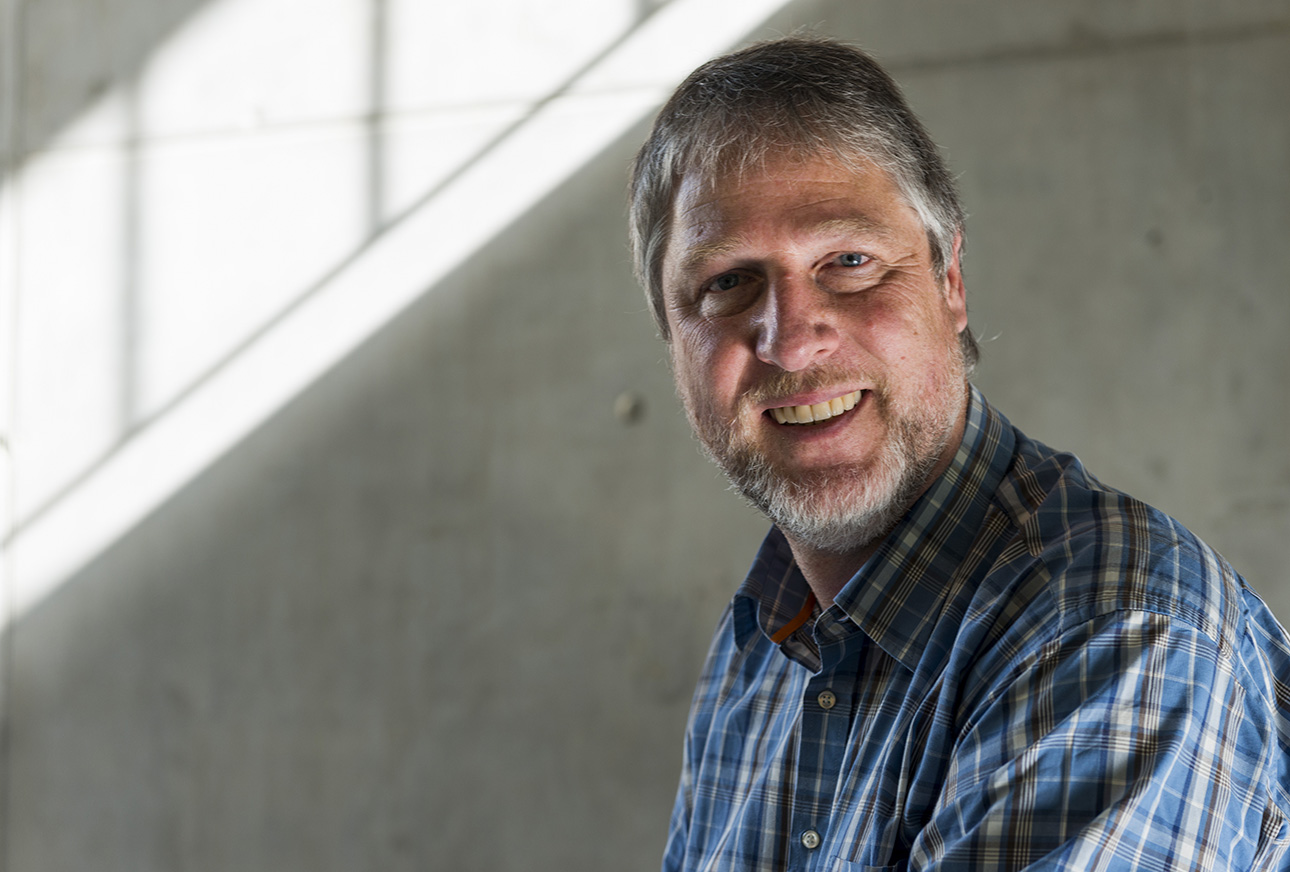
Professor Bernd Möbius is a leading academic in Phonetics and Phonology at the Department of Language Science and Technology, Saarland University. His research bridges phonetic theory with speech technology applications, focusing on text-to-speech systems, prosody modeling, and computational simulations of speech processes. Current research projects: DFG SFB 1102, C1: Information density and phonetic structure predictability DFG SFB 1102, C4: Slavic intercomprehension and surprisal theory (INCOMSLAV) Research Themes: Key areas include text-to-speech synthesis, speech prosody analysis, experimental methods in speech production/perception, information density in phonetics, and cross-linguistic studies of Slavic-Germanic languages. Scientific Contributions: Recent work explores Parkinson-induced dysarthria detection, breath noise acoustics, surprisal-driven speech behaviors, multilingual BERT models for idiomaticity, and perceptual consequences of acoustic adjustments.
Prof. Marianne Pouplier is a Professor at the Institute of Phonetics and Speech Processing (IPS) at Ludwig Maximilian University of Munich. Her research focuses on speech production mechanisms, particularly coarticulation, phonetic universals, and language-specific variations. She investigates articulatory timing, speech errors, and cross-linguistic differences in consonant clusters using advanced methodologies like real-time MRI and electromagnetic articulography. Her work bridges theoretical models (e.g., Articulatory Phonology) with empirical data, emphasizing the interplay between phonological representation and motor execution. Key contributions include studies on nasal coarticulation, larynx dynamics, and the role of articulatory effort in speech production. Selected publications highlight her expertise in analyzing speech motor control through interdisciplinary approaches. She collaborates internationally, contributing to projects like the Bavarian Archive for Speech Signals (BAS). No awards or grants are explicitly listed, but her extensive publication record underscores her scholarly impact.
Bistra Andreeva is a full Professor of Phonetics and Phonology at Saarland University, Department of Language Science and Technology. She is also a principal investigator of the DFG-funded project “Judeo-Spanish in Bulgaria: a contact language between archaism and innovation” (2022-2025) and leads or co-leads several other externally funded projects on prosody, information structure, and language contact. She teaches and has taught at Saarland University, Sofia University “St. Kliment Ohridski”, and other European universities. Education & Academic Background Habilitation (kumulative Habilitationsschrift): “Contrastive Prosody: Bulgarian vs. German”, Saarland University, 2016. PhD (Dr. phil.): “Zur Phonetik und Phonologie der Intonation der Sofioter-Varietät des Bulgarischen”, Saarland University, 2007. Research Interests Andreeva’s research focuses on the phonetics and phonology of intonation and rhythm, cross-language and individual differences in the production and perception of syllabic prominence, the relation between intonation and information structure, minority languages (especially Judeo-Spanish in Bulgaria), and the interaction between information density and prosodic structure. Her methodological expertise includes experimental phonetics, corpus-based studies, and acoustic analysis. Major Projects SFB 1102 C1: “Information Density and the Predictability of Phonetic Structure” (DFG, 2014-2026) JuSpa: “Judeo-Spanish in Bulgaria: a contact language between archaism and innovation” (DFG, 2022-2025) Prosodic aspects of Bulgarian compared to other languages with lexical stress (Bulgarian National Science Fund, 2019-2024) Prosodic manifestations of focus in French and English from a Bulgarian point of view (DAAD & Sofia University, 2021-2023) Scientific Awards & Recognition While no major named prizes are listed, Andreeva’s work has been continuously supported by competitive grants from the German Research Foundation (DFG), DAAD, and Bulgarian National Science Fund. Her publications appear in top-tier journals and conference proceedings (Journal of the Acoustical Society of America, Interspeech, Speech Prosody, International Congress of Phonetic Sciences). Teaching & Supervision She offers a broad spectrum of courses including Experimental Phonetics, Prosody, Phonetics & Phonology of Slavic Languages, Introduction to Instrumental Phonetics, and seminars on language contact. She has supervised numerous BA, MA, and PhD theses and regularly teaches at the PhD School of Sofia University. Labs & Teams She is affiliated with the Phonetics Laboratory at Saarland University and collaborates closely with the Institute for Bulgarian Language (Bulgarian Academy of Sciences), working in interdisciplinary teams involving phoneticians, computational linguists, and field linguists.
Dr. Stefanie Jannedy is a senior researcher at the Leibniz-Zentrum Allgemeine Sprachwissenschaft (ZAS) in Berlin, where she has been employed since 2008. She is a Principal Investigator of the DFG project C02 "Variation in Situated Interaction" within the Collaborative Research Center 1412 (CRC 1412) on "Register: Language-Users' Knowledge of Situational-Functional Variation." As a member of the Laboratory Phonology Group, her work focuses on sociophonetic aspects of language variation. Dr. Jannedy's research centers on language register, phonetic variation, and sociolinguistic patterns in speech. Her work particularly examines how situational contexts influence phonetic detail in speech production, with a focus on intra-individual variation. She has developed innovative experimental methods, including smartphone applications like "Plapper" for self-recording speech data in controlled conditions. Her research spans formal and informal speech contexts, examining speech rate, vowel dispersion, filler particles, and other phonetic features that vary systematically across different communicative situations. Analysis of her publication record shows a strong focus on register variation, particularly how speakers systematically adjust their speech across different social contexts. Her work combines experimental methods with corpus-based approaches to investigate fine phonetic detail in relation to situational factors. Recent publications demonstrate increasing interdisciplinary connections between phonetics, sociolinguistics, and cognitive science in understanding register knowledge. Dr. Jannedy has advised several students including Schüppenhauer, Gediminas, Witt, Johannes, and Hong, Nhung-Le. Her research is primarily supported through the CRC 1412 framework, which represents a major collaborative effort in register studies. Her laboratory work involves experimental setups that simulate tele-conference interactions to systematically manipulate social contexts while measuring subtle phonetic differences. This methodological innovation allows for controlled examination of register variation that would be difficult to capture in naturalistic settings.
Rhenish Friedrich Wilhelm University of BonnGermany
Prof. Robert Fuchs holds the Frommann Professorship of Applied English Linguistics at the University of Bonn, leading the Chair of Bonn Applied English Linguistics (BAEL) within the Department of English, American and Celtic Studies. His research focuses on World Englishes, corpus linguistics, sociolinguistics, and the impact of artificial intelligence on linguistic analysis. He actively supervises PhD students in topics aligned with his research group's interests, emphasizing empirical work and data science. Recent research explores language change in varieties like Hong Kong English, Trinidadian prosody, and intensifier usage across cultures. Fuchs frequently presents at international conferences, including ISLE, ICAME, and Sociolinguistics Symposium, and publishes extensively in journals like World Englishes and Language and Speech . His teaching includes advanced courses on corpus linguistics and language in culture, with a focus on climate change discourse analysis. He maintains an active academic presence through ResearchGate, Academia.edu, and LinkedIn. Research Interests: Fuchs investigates sociolinguistic variation, AI applications in linguistics, and the structural features of postcolonial Englishes. His work addresses topics such as vowel mergers in Hong Kong English, lexical stress perception in Indian English, and the role of gender in language use. He also explores diachronic changes in aspects like stative progressives and the perfect-past alternation across Asian Englishes. Advising & Grants: Fuchs oversees PhD student recruitment through research associate positions and self-funded scholarships, prioritizing applicants with strong empirical and analytical skills. His funded projects include studies on pandemic discourse (DisCOVIndUK) and linguistic trends in Caribbean English. His lab, BAEL, collaborates internationally, with ongoing work on Trinidadian prosody and Northeast Indian linguistic ecology. Labs/Teams: The Bonn Applied English Linguistics (BAEL) group, part of the University of Bonn's IAAK institute, focuses on cutting-edge research in global Englishes and computational linguistics, hosting international workshops and fostering interdisciplinary collaboration.
Felicitas Kleber is Professor of Speech Science in the Department of Language Science and Technology at Saarland University (Universität des Saarlandes). Her research profile demonstrates extensive expertise in experimental phonetics and laboratory phonology with a particular focus on German dialects and sound change phenomena. She maintains active research collaborations, most notably with J. Harrington and Ulrich Reubold, resulting in numerous high-impact publications in leading linguistics and phonetics journals. Her research interests span experimental phonetics and laboratory phonology with specific expertise in speech production and perception , sound change processes, German dialectology , phonological acquisition , and prosody and intonation analysis. Her work frequently examines the acoustic, perceptual, and articulatory dimensions of speech, particularly focusing on vowel and consonant quantity phenomena in German varieties. Analysis of her publication record reveals consistent methodological rigor with emphasis on acoustic analysis, perception experiments, and longitudinal studies. Her research often investigates sound changes in progress, particularly examining vowel fronting phenomena in both German and English varieties, and the relationship between speech production and perception mechanisms. Much of her work employs apparent-time analyses to track diachronic changes through synchronic variation across age groups. Professor Kleber serves as an Associate editor for the Journal of the Acoustical Society of America, reflecting her standing in the field. She has secured significant research funding including the DFG-funded project "Typology of vowel and consonant quantity in South German varieties: acoustic, auditory, and articulatory analyses of adult and child speakers" (2016-2024) and the DAAD-supported "Form and function of prosodic structure in Hungarian and German" (2015-2016). Her research methodology typically combines acoustic analysis with perception experiments and sometimes articulatory measurements to provide comprehensive insights into phonetic phenomena.
Prof. Gerhard Jäger holds the Chair of General Linguistics at the Faculty of Humanities, University of Tübingen . He serves as a Principal Investigator (PI) in the Clusters of Excellence Human Origins and Machine Learning for Science , and leads projects like Phylomilia (funded by Volkswagen Foundation) and CrossLingference (ERC Advanced Grant). His career spans multiple institutions, including Bielefeld University (2004-2009) and Stanford University (visiting scholar, 2004). Habilitation (2002) at Humboldt University Berlin with thesis on Anaphora and Type Logical Grammar PhD (1996) at Humboldt University Berlin on Dynamic Semantics His research bridges computational linguistics , phylogenetic analysis , and game theory , focusing on Bayesian models , language evolution , and cross-linguistic typology . Recent work explores phylogenetic inference from acoustic speech data and geographic influences on language trees . Key contributions include 15+ recent publications on topics spanning phylogenetic typology , cognate detection , and Bayesian language modeling . These works employ machine learning , statistical inference , and evolutionary game theory to analyze language change , typological variation , and linguistic stability . Honors include ERC Advanced Grant , Volkswagen Foundation funding , and DFG-Humanities Centre for Advanced Studies participation. He has taught courses in Computational Historical Linguistics , Phylogenetic Methods , and Bayesian Data Analysis across institutions like Tübingen, Bielefeld, and Stanford. He actively contributes to academic communities through workshop organization (e.g., Quantitative Theoretical Linguistics , Game Theory in Pragmatics ) and serves on the faculty council at Tübingen. His team collaborates with institutions like Max Planck Institute for Evolutionary Anthropology , University of Pennsylvania , and LMU Munich .
Dr. Yuko Sugita serves as Lecturer for Japanese language at the Institute of East Asian Studies, University of Duisburg-Essen, where she has been teaching since the winter semester of 2014/15. Holding a Dr. phil. from the University of Duisburg-Essen and an MA in General Linguistics from the University of Tokyo, she maintains an active academic presence with courses scheduled through summer semester 2025. Her academic profile encompasses: Japanese language instruction across multiple proficiency levels Research in conversation analysis with specialized focus on prosody and multimodality Documentation and revitalization efforts for endangered Ryukyuan languages Sociolinguistic studies of Okinawan youth communication Dr. Sugita's scholarly work demonstrates a consistent integration of theoretical linguistics with practical language teaching applications. Her research trajectory shows particular expertise in analyzing communication patterns among Okinawan youth and developing strategies for language preservation. She has made significant contributions to understanding how prosodic features function in conversational contexts and how local media can support language revitalization efforts. Her publication record spans diverse venues including the Journal of Pragmatics, Language and Society, and specialized conference proceedings. She has co-edited the volume "Japanese as Foreign Language in the Age of Globalization" (2008) with Patrick Heinrich, reflecting her engagement with global perspectives on Japanese language education. As an educator, Dr. Sugita emphasizes developing students' autonomous thinking and assertive communication skills. Her current teaching responsibilities include Japanese 4 and Intensive Japanese 2/II for summer semester 2025, continuing her long-standing commitment to Japanese language education in the German academic context.
Robert McColl Millar is a Professor at the University of Aberdeen specializing in historical linguistics and Scots language studies. His research examines language contact phenomena, dialectological variation, and sociolinguistic dynamics within Scottish linguistic communities. His primary research domains include: Historical development of Scots in relation to English and Gaelic Dialectology of Scottish regional varieties (particularly Doric and fishing community dialects) Language policy and standardization efforts for Scots Lexical variation and attrition in endangered dialects Sociolinguistic aspects of language identity and nationalism Historical sociolinguistics of Scotland Language contact-induced change Analysis of Millar's recent publications (2024-2016) reveals three dominant research trajectories: (1) Scots Language Documentation through dialect surveys, lexical studies, and orthographic analysis; (2) Language Contact Mechanisms examining borrowing, interference, and structural change in historical English; (3) Sociopolitical Dimensions exploring Scots' relationship with Scottish identity, nationalism, and language policy. His work consistently bridges theoretical linguistics with practical language planning concerns. No scientific awards are documented in the available sources. While student advising details remain unreported, his publications indicate extensive collaboration with research forums like the Forum for Research on the Languages of Scotland and Ulster. Grant funding specifics are not publicly itemized, though his edited volumes suggest institutional and conference-level support. No dedicated laboratories or research teams are specified in current public materials.
Dr. Jacek Kudera is a post-doctoral researcher in the Department of Phonetics at the University of Trier, coordinator of the LODinG project at the Trier Center for Digital Humanities, and adjunct faculty at WSB Merito University in Wrocław. His work bridges phonetics, Slavic linguistics, digital humanities, and forensic speech science. Education 2022 – PhD, Department of Language Science and Technology, Saarland University, Germany 2019 – MA (Linguistics), Department of Linguistics, Cognitive Science and Semiotics, Aarhus University, Denmark 2015 – Magister (Slavic Philology), Institute of Slavic Studies, University of Wrocław, Poland Research Interests His research focuses on phonetic and prosodic aspects of Slavic languages , cross-linguistic speech perception , forensic automatic speaker recognition , and human-robot interaction . He employs experimental methods such as eye-tracking, articulatory measurements (EMA), and large-scale digital corpora to investigate how speakers of closely related languages understand one another and how machines can replicate or support this process. Publication Trends Across more than 25 peer-reviewed articles (2014-2025), Kudera has consistently explored Slavic intercomprehension , speech technology evaluation , and digital humanities infrastructure . Recent work (2024-2025) targets voice cloning security , linked open data for linguistics , and mismatch conditions in forensic speaker recognition . Scientific Awards & Fellowships Visegrad Fellowship, University of Presov (2025) Erasmus+ Fellowships (Ostrava 2025, Zagreb 2014, Rijeka 2012-2013) NAWA Fellowship, Polish Academy of Sciences (2022) Nordlys Fellowship, University of Eastern Finland (2018-2019) CEEPUS & additional Central-European mobility grants (2014-2018) Projects & Funding Coordinator : “Mismatch conditions in machine speaker identification” (University of Trier Research Fund, 2024-2025) Coordinator : LODinG – Linked Open Data in the Humanities (Trier Center for Digital Humanities, ongoing) Coordinator : “Patterns: Linguistic Creativity and Variation” (Trier Center for Language and Communication, 2022-2024) Member : SFB 1102 “Information Density and Linguistic Encoding” (Saarland University, DFG, 2019-2022) Member : Digital Atlas of Dialects of Bosnia and Herzegovina (2017-2018) Member : CLARIN-PL & European Roadmap for Research Infrastructures (2014-2017) Labs & Teams He conducts research within the Phonetics Team at the University of Trier , collaborates closely with the Trier Center for Digital Humanities , and maintains affiliations with the Phonetics Group at Saarland University and the WSB Merito University in Wrocław.
Prof. Dr. Gabriele Sommer is Professor of African Linguistics I (Niger-Congo languages) at the University of Bayreuth, where she has been teaching since 2008. She is affiliated with the Faculty of Languages & Literatures, specifically within the African Linguistics I department. Her academic career spans over three decades, with significant contributions to the study of African languages, particularly in Southern Africa. Dr. Sommer's research focuses on Sociolinguistics, Historical Linguistics, and Language Contact, with particular emphasis on Bantu languages, Khoesan languages, and the complex interactions between these language families. Her work examines address forms, speech acts, language shift, and language endangerment in multilingual African contexts. She has conducted extensive fieldwork in Botswana, Namibia, and South Africa. Her recent publications explore variations in Shiyeyi language, shifting access rituals among Tanzanian Ngoni, Bantu-Khoesan language contacts, and comparative studies of address systems in Bantu languages. Her research demonstrates a consistent focus on the interplay between linguistic structures, cultural practices, and historical developments in African linguistic communities. Prof. Sommer has held significant administrative roles including Dean of Studies of the Faculty of Languages & Literature (2015-2018) and Chairwoman of Fachverband Afrikanistik (2012-2016). She currently coordinates a DAAD exchange program with the University of Fort Hare in South Africa and an online language course project on Xhosa. Her academic journey began with a Magister degree in African Linguistics, English, and Phonetics from the University of Cologne in 1988. She earned her PhD in 1993 from the University of Bayreuth with a sociolinguistic study on language shift in north-western Botswana, and completed her habilitation in 2003 on Historical Language Contacts between Afroasiatic and Nilosaharan Languages.
Felicitas Kleber is a Professor of Speech Science at the Department of Language Science and Technology, Saarland University. Her research focuses on experimental phonetics and laboratory phonology, emphasizing the interplay between speech production and perception in sound change processes. Research Areas : experimental phonetics, laboratory phonology, coarticulation dynamics, prosody and intonation, diachronic sound change, German dialects. Projects : Directed DFG-funded research on vowel/consonant quantity typology in Southern German varieties (2016–2024); DAAD-funded study on prosodic structure in Hungarian and German (2015–2016). Collaborations : Key partnerships with Jonathan Harrington (phonetics), Ulrich Reubold (acoustic analysis), and interdisciplinary teams in computational linguistics and sociophonetics. She serves as Associate Editor for the Journal of the Acoustical Society of America , integrating cognitive and social dimensions into sound change models.
Prof. Dr. Angelika Braun is a full Professor of Phonetics at the University of Trier since October 2009, with a career spanning forensic phonetics, sociophonetics, and cross-cultural speech analysis. She previously held roles at the Bundeskriminalamt (Wiesbaden/Düsseldorf) and Philipps-Universität Marburg, where she habilitated in Phonetics and Speech Processing (2000). Her work bridges academic research with forensic practice. Research Focus: Her Sociophonetics (language and emotions, gender-specific speech) Forensic Phonetics (speaker identification, voice analysis) Contrastive and Hawaiian Phonetics Speech prosody and toxin effects (smoking, alcohol) Intercultural dubbing studies Academic Contributions: Over 15 recent articles explore voice quality, emotional speech, forensic age estimation, and cross-cultural dubbing effects. Key conferences include Interspeech, International Congress of Phonetic Sciences, and ISCA. Her work appears in journals like Forensic Linguistics and The Phonetician . Scientific Honors: Fellow of the American Academy of Forensic Sciences (AAFS) Founder Member and former Chairperson of the International Association for Forensic Phonetics (IAFP) Life-Member of the International Phonetic Association (IPA) Leadership roles in ISPhS and GAL Practical Impact: Developed the Almeida-Braun Transcription System for dialect analysis and contributed to forensic audio enhancement protocols (e.g., Rodney King case). Serves as reviewer for Language and Speech , Forensic Linguistics , and JIPA . Collaborates on longitudinal studies of vocal aging and speaker identification.
Dr. Billian Otundo is a postdoctoral researcher at the Cluster of Excellence Africa Multiple and habilitation candidate at the Department of English Linguistics, University of Bayreuth (Germany). She investigates multilingual African learning spaces through translanguaging frameworks, focusing on the intersection of language, identity, and digital innovations in Kenya. Her research integrates quantitative and qualitative methodologies with tools like SPSS, R, Praat, and MAXQDA. Co-convener of Postdoctoral Working Groups at Africa Multiple Collaborating with University of Cologne’s Phonetic Laboratory on Kenyan English and Kiswahili intonation Research Interests: Sociolinguistics, World Englishes, Translanguaging, Code-switching, Sociophonetics, Decolonisation of Linguistics Curriculum, and Educational Linguistics. She examines language attitudes, variation in intonation, and inclusion policies in African education systems. Scientific Awards: DFG Postdoctoral Grant (2022) TWAS-DFG Cooperation Grant (2021) NWO-WOTRO Funding (2018) BIGSAS Doctoral Fellowship (2011-2015) Dr. Otundo actively contributes to academic service as an editorial board member of the Journal of Linguistics, Literary and Communication Studies and the Africa Multiple publication series. She founded the Philippines-Kenya Education Network and consults on inclusive policy design for Kenya’s Bungoma County Government.
Tanja Ackermann is a Professor of German Linguistics with a focus on Variation and Change at Bielefeld University , holding the position since 2023. She serves as project leader in two subprojects of the Collaborative Research Center 1646: Linguistic Creativity in Communication (projects A06 and B03), and as a member of BiSEd (Bielefeld School of Education). Her academic affiliations include the Faculty of Linguistics and Literary Studies and its Habilitation Committee . Doctorate in Linguistics (2017) Habilitation, Venia legendi in German Linguistics (2023) Prior academic roles: Acting Professor at University of Mainz (2020–2022), Research Associate at Freie Universität Berlin (2011–2023), and short-term lectureship at Peking University (2017). Research interests span diachronic and synchronic analysis of language variation (areal/sociolinguistic), language change (functional/contrastive), historical grammar (morphology/morphosyntax), and pragmatics (speech acts, address forms, (im)politeness, expressivity). She specializes in onomastics (name grammar, sociopragmatic aspects, phonology) and interactive linguistic creativity (interrogative forms, indirect meaning). Publications reflect trends in Germanic morphosyntax, historical pragmatics, and onomastic variation. Key themes include inflectional erosion , possessive markers , and gendered phonological patterns in proper names. Scientific Recognition Awarded Wilhelm von Humboldt Prize by the DGfS in 2019 Affiliation Highlights Project leader for SFB 1646 (linguistic creativity in communication) Previous involvement in SRC 980 'Episteme in Motion' (subproject C08, 2016–2020)