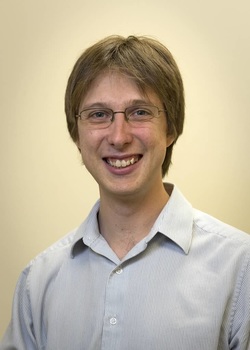
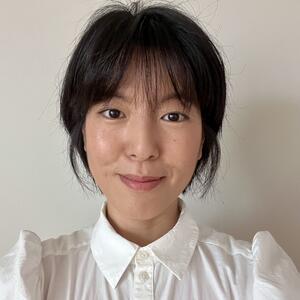
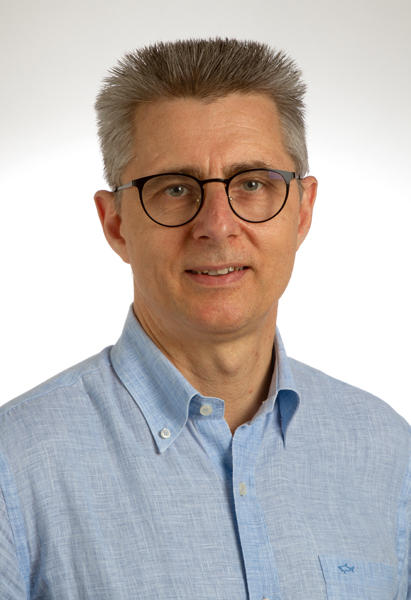
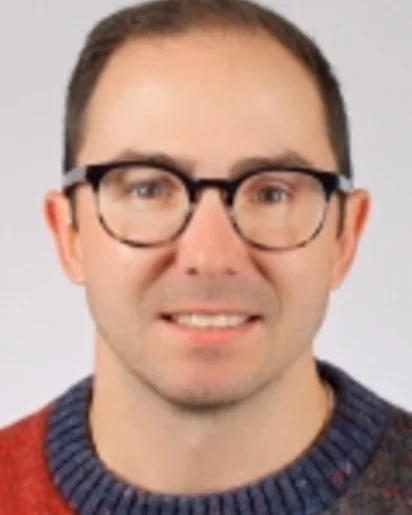
Graham Dobereiner is an Associate Professor and Robert L. Smith Early Career Professor in the Department of Chemistry at Temple University's College of Science and Technology. He received his Ph.D. from Yale University (2011) and completed postdoctoral research at MIT (2012-2014) after earning his B.S. from Brandeis University (2007). His research group develops novel homogeneous transition metal catalysts for synthetic chemistry applications spanning fine chemicals manufacturing, petrochemical processing, and drug discovery. The work integrates organometallic chemistry principles, combining organic molecular diversity with inorganic compound reactivity. Research areas include catalytic isomerization, oxidative synthesis, ligand design, and mechanistic studies of transition metal complexes. Analysis of his recent publications demonstrates strong emphasis on reaction mechanism elucidation, catalyst design for stereoselective transformations (particularly Z-selective isomerizations), and development of novel catalytic systems for sustainable synthesis. His group employs computational and experimental approaches to advance synthetic methodology.
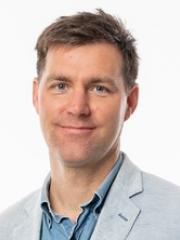
Scott Hopkins is a Professor in the Department of Chemistry at the University of Waterloo, specializing in Physical Chemistry. His research integrates machine learning with experimental techniques to study ion mobility, mass spectrometry, and spectroscopic analysis. He directs the Hopkins Laboratory, focusing on computational predictions of chemical behaviors and molecular interactions. His work addresses fundamental questions in gas-phase chemistry, cluster formation, and analytical method development. Research interests span physical chemistry, computational modeling, and analytical instrumentation, with a strong emphasis on developing predictive tools for complex chemical systems. Recent investigations explore ion-solvent dynamics, fragmentation mechanisms, and machine-learning applications for spectral interpretation.
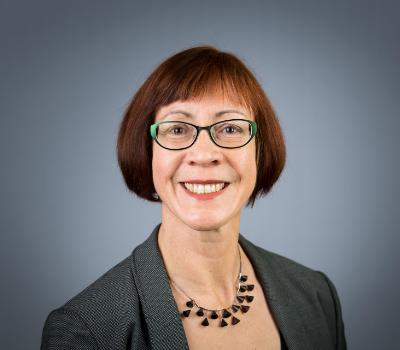
Lucia Lee is an Assistant Professor in the Department of Chemistry at Queen's University, affiliated with the Faculty of Arts and Science. Her research focuses on applying green chemistry principles to supramolecular interactions involving main-group elements, particularly sigma-hole interactions, with applications in materials science and medicine. She holds a PhD from McMaster University and has completed postdoctoral studies at the University of Geneva and Weizmann Institute of Science. Dr. Lee's educational background includes a PhD supported by an NSERC grant, which explored chalcogen bonding in supramolecular materials. Her postdoctoral work at Weizmann focuses on stimuli-responsive materials using chalcogen elements for photoswitching applications. She has also contributed to academic governance through roles in the McMaster Graduate Students Association. Her research interests span analytical chemistry, quantum chemistry, inorganic and bioinorganic chemistry, organic chemistry, and free radical chemistry. Key projects include integrating chalcogen bonding into d-metal coordination chemistry, catalysis, and chemical biology to create functional materials. Her lab, located in CHE513, emphasizes sustainable approaches to material design through main-group supramolecular systems. Her articles explore topics like chalcogen bonding mechanisms, anion transport, and photoswitching in confined spaces, reflecting a strong focus on molecular assembly and functional materials. She has no listed scientific awards but demonstrates significant contributions to supramolecular chemistry through her publications and cross-appointments at Queen's Carbon to Metal Coating Institute.
Ivana Brekalo is a Researcher at the Ruđer Bošković Institute in Zagreb, Croatia, affiliated with the Division of Physical Chemistry and the Laboratory for Applied and Sustainable Chemistry. She holds a Ph.D. in Chemistry from Georgetown University (2019), with a thesis on "Solid State Synthesis and Study of Porous Materials," and completed her Master's (2012) and Bachelor's (2010) degrees in Chemistry at the University of Zagreb. Her work bridges mechanochemistry and materials science, focusing on scalable synthesis methods for functional materials. Doctor of Philosophy, Chemistry, Georgetown University (2013–2019) Master of Science, Chemistry, University of Zagreb (2010–2012) Bachelor of Science, Chemistry, University of Zagreb (2007–2010) Her research emphasizes mechanochemical synthesis, particularly for porous materials like metal-organic frameworks (MOFs) and coordination polymers. She explores solvent-free methods, polymorphism control, and the role of gas-phase catalysts in solid-state reactions. Recent publications highlight thermally controlled milling for agrochemical cocrystals, conductivity in alkali metal coordination polymers, and real-time monitoring of mechanochemical processes. Key publications include Nature Reviews Chemistry perspectives on advanced mechanochemical synthesis and Inorganic Chemistry studies on low-dimensional magnetism in MOF-74 materials. Her work appears in journals like ACS Sustainable Chem. Eng. and Chemical Science , with a focus on green and scalable methods. Scientific Awards Scholarship of the Polish National Agency for Academic Exchange – Ulam Programme (2020) Bepina Sabalić Kunin Fellowship (2013-2015, 2017-2018) Ludo Frevel Crystallography Scholarship, IUCr (2017) CCDC award for best presentation (2022) Brekalo contributes to outreach as the 2019 ACS Volunteer of the Year and has received recognition for her work on solvent-free polymorphism and mechanochemical templation of ZIFs.
Professor Paolo Fornasiero is a Full Professor of Inorganic Chemistry at the University of Trieste, Department of Chemical and Pharmaceutical Sciences, where he has worked since 1998. He serves as Deputy Director of the department since 2021 and Scientific Responsible of the CNR Research Unit associated with the Institute of Chemistry of OrganoMetallic Compounds (ICCOM) since 2008. His career spans EU projects, bilateral collaborations with China, India, and Argentina, and leadership roles in journals like ACS Catalysis (Executive Editor since 2021). Full Professor (2016–present) Associate Professor (2006–2016) Assistant Professor (1998–2006) Post-Doc, University of Reading (1996–1997) His research focuses on multi-functional metal-oxide nanosystems for energy and environmental catalysis, including green hydrogen production , CO2 valorization , and methane emission control . He pioneered core-shell catalysts and single-atom systems for stability and selectivity. His work extends to solid oxide fuel cells and photocatalytic water depollution . Recent publications highlight trends in photothermal catalysis , single-atom catalysts , and CO2 electroreduction . His 280+ papers (3 in Science , 2 in Nature Communications ) reflect expertise across Environmental Catalysis , Nanomaterials , and Green Energy . 2022 Malatesta Medal 2021 European Academy of Sciences member 2017 Edoardo Kramer Award 2016 Heinz Heinemann Award 2013 Chiusoli Gold Medal He oversees PhD/postdoc advising and participates in global capacity-building via UNIDO and World Academy of Sciences . His lab collaborates with institutions like KAUST , Czech Academy of Sciences , and Dalian Institute of Chemical Physics .
Pedro Carlos De Barros Fernandes is an Associate Professor at Universidade Lusófona , Deputy Director of the 1st cycle in Biotechnology, and an integrated researcher at the Institute of Bioengineering and Biosciences (iBB-IST). He holds a PhD in Biotechnology (1999) and a Master in Biotechnology/Biochemical Engineering (1994) from Universidade Técnica de Lisboa (IST), along with a Chemical Engineering degree from IST (1989). A member of the Order of Engineers (ID 24667), he co-founded Biotrend, a Portuguese bioprocess development company. Education PhD in Biotechnology (1999), Universidade Técnica de Lisboa MSc in Biotechnology (1994), Instituto Superior Técnico BSc in Chemical Engineering (1989), Instituto Superior Técnico Research Interests span biocatalysis, enzyme immobilization for food and pharmaceutical applications, marine biotechnology, microfluidic device development for biosensing, and steroid bioconversions using mycobacterial systems. His work integrates process engineering principles with sustainable bioprocessing techniques. Publication Trends show a focus on microreactor technology, enzyme stabilization in non-conventional media, marine-derived biocatalysts, and food waste valorization. Key themes include biocatalytic process intensification, aqueous two-phase systems for biomolecule purification, and sustainable carbon sources for biopolymer production. Scientific Awards UTL/Santander Totta Scientific Award in Biological Engineering (2011) Advising has included supervision of 5 doctoral theses and over 32 master’s theses. His expertise extends to peer-reviewing scientific articles and evaluating R&D projects. Labs & Teams are associated with iBB-IST (Institute of Bioengineering and Biosciences) and BioRG (Universidade Lusófona), with contributions to the Ciência Viva program for science dissemination.
Waltraud M. Kriven is a Full Professor at the University of Illinois at Urbana-Champaign, holding joint faculty positions in the Materials Research Laboratory and Department of Materials Science and Engineering. She is also an Affiliate Professor in Mechanical Science and Engineering. Her expertise spans phase transformations in inorganic compounds, geopolymers, and ceramic composites. Kriven has pioneered research in low-temperature synthesis of ceramics and developed advanced geopolymer composites with applications in energy, infrastructure, and environmental sustainability. Education: PhD in Solid State Chemistry (University of Adelaide, 1976); B.Sc. (Hons) and Baccalaureate in Physical and Inorganic Chemistry and Biochemistry (University of Adelaide). Research Interests: Geopolymer-derived ceramics, carbothermal reduction processes, amorphous self-healing materials, and sustainable construction materials. Her work emphasizes nanoporous microstructure analysis and tailoring thermal expansion coefficients for advanced applications. Recent studies include neutron shielding geopolymers and environmental durability assessments. Conferences & Leadership: Organizer of over 22 international conferences on geopolymers, including the 2025 International Symposium on Geopolymers and Alkali Activated Materials. Served as Past-Chair of the Engineering Ceramics Division of the American Ceramic Society. Awards: Member of European Union Academy of Sciences (2020), Academician in World Academy of Ceramics (2005), Fellow of American Ceramic Society (1995), and recipient of the Mueller Award (2017) and Brunauer Award (1988, 1991). Industry Impact: Founded Keanetech LLC (2004), a technology transfer company specializing in ceramics and geopolymers. Collaborates with the US Army Corps of Engineers on infrastructure projects. Labs & Teams: Director of the Center for Geopolymer Research and Applications (CeGRA). Her research group develops in situ synchrotron furnaces for high-temperature ceramic studies.
Eric Riviere is a Researcher at Université Paris-Saclay , affiliated with the Institut de Chimie Moléculaire et des Matériaux d'Orsay (ICMMO) (UMR 8182), specifically within the LCI department. He is responsible for the Magnetic and Vibrational Studies Pole and the Magnetometry Service of the Instrumental Platform . Research Focus : His work centers on magnetic materials, spin-crossover systems, and nanomaterials. Key areas include: 1) Synthesis and characterization of magnetic nanoparticles for applications in hyperthermia and catalysis, 2) Investigating phenomena like spin-state switching and phase transitions in coordination compounds, 3) Designing materials with tailored magnetic properties through structural and compositional control. Publications Trends : Recent work emphasizes Optimization of Fe 3 O 4 nanoparticle fabrication for hyperthermia Understanding ferromagnetism in doped BiFeO 3 ceramics Photo(magnetic) properties of Prussian Blue analogs and cobalt ferrite nanoparticles Labs/Teams : Collaborates within ICMMO teams like SP2M (Surface Physics and Materials), CP3A (Peptide Mimetics Chemistry), and the Molecular Magnetism group.
David Aitken is a Professor of Organic Chemistry at the Institute of Molecular Chemistry and Materials of Orsay (ICMMO - UMR 8182) , University of Paris-Saclay. His research focuses on synthetic methodology , photochemistry , and the preparation of bioactive molecular scaffolds . He studied Chemistry at the University of Strathclyde (BSc 1983, PhD 1986), followed by a CNRS Researcher position at the University of Paris 5 before becoming a Professor at the University of Clermont-Ferrand 2 in 1998. Since 2006, he has led his research group at Orsay and currently serves as Director of ICMMO . Education : BSc and PhD in Chemistry (University of Strathclyde, Scotland) Research Interests : Synthetic methodology, photochemical transformations, hydrogen bonding in peptides, conformational control, and biologically relevant molecules Methodologies : Photochemistry, organocatalysis, tandem reactions, stereoselective synthesis, and computational modeling Structural Analysis : Hydrogen bonding, helical folding, and non-covalent interactions using spectroscopy and molecular modeling Current Role : Director of ICMMO research institute His recent publications highlight innovations in peptide helical folding , cyclobutane and cyclopropane synthesis , and enantioselective catalytic reactions . His work bridges organic synthesis with biological applications, particularly in protein interaction inhibitors and insulin-sensitizing molecules .
Daniel W Armstrong is a Professor at the University of Texas at Arlington in the Department of Chemistry and Biochemistry. With over 35 years of experience, he is a pioneering figure in chiral recognition, enantiomeric separations, and the biological relevance of D-amino acids. His work has led to over 740 publications, 35 patents, and 560 invited seminars worldwide. Developed first chiral recognition mechanism by cyclodextrins First to use macrocyclic antibiotics as chiral selectors Synthesized most new ionic liquids (ILs) globally Created ultra-fast separation techniques now standard in analytical chemistry Contributed to FDA 1992 guidelines on chiral drug separation His research focuses on chiral separations, ionic liquids, and the role of D-amino acids in biological systems. He has commercialized over 30 HPLC and GC columns, transforming analytical chemistry and pharmaceutical analysis. Recent publications demonstrate continued innovation in chiral chromatography, biomarker analysis, and AI-driven separation optimization. His grants include industry collaborations with Merck, Alcon, and Sigma-Aldrich, emphasizing practical applications of his work. Scientific honors include multiple lifetime achievement awards, fellowships in the Royal Society of Chemistry and American Chemical Society, the Chirality Medal, and induction into the National Academy of Inventors. He has mentored over 100 PhD students, many from first-generation college backgrounds.
Dr. Alexander Yakimov is a Lecturer at the Department of Chemistry and Applied Biosciences, ETH Zürich, affiliated with the Laboratory of Inorganic Chemistry (LAC). He specializes in advanced spectroscopic techniques to study catalyst surfaces and reactive sites. His research focuses on Solid-State NMR Spectroscopy Transition Metal Surface Sites Zeolite and Titano-Silicate Catalysts Acid-Base Reactivity Descriptors CO2 Conversion and Hydrocarbon Processing using methods like X-Ray Absorption and high-field NMR. Recent work explores Ziegler-Natta catalysts, single-atom systems, and propane dehydrogenation mechanisms. He teaches the Practical Course General Chemistry (529-0011-04L/06L) and contributes to CO2 capture technologies. Contact: yakimov@inorg.chem.ethz.ch | ORCID: 0000-0002-8624-1002
Naoki Shida is an Associate Professor in the Department of Functional Creation at the Graduate School of Engineering, Yokohama National University. He also holds a concurrent position as a JST PRESTO Researcher. His academic journey began with a BS from Yokohama National University, followed by MS and PhD degrees from Tokyo Institute of Technology, where he specialized in bipolar electrochemistry. He has held postdoctoral positions at Tokyo University of Agriculture and Technology, California Institute of Technology, and worked as a specially appointed assistant professor before joining Yokohama National University. Dr. Shida's educational background includes: BS, Yokohama National University, School of Engineering (2011) MS, Tokyo Institute of Technology, Graduate School of Science and Engineering (2013) PhD, Tokyo Institute of Technology, Graduate School of Science and Engineering (2016) Dr. Shida's research focuses on organic electrosynthesis and electrocatalysis, with particular expertise in flow electrochemistry, bipolar electrochemistry, and polymer electrochemistry. His work bridges fundamental electrochemical principles with practical applications in sustainable chemistry. His research group develops innovative electrochemical methodologies for organic synthesis, with emphasis on green and sustainable approaches that minimize waste and energy consumption. The team specializes in designing novel electrochemical reactors, particularly flow microreactors and membrane-based systems, to enable efficient and selective transformations. Analysis of Dr. Shida's recent publications reveals a strong focus on electrocatalytic hydrogenation processes, particularly for nitrogen-containing heterocycles like pyridines and quinolines. His work also explores the development of novel electrochemical methodologies for C-C and C-N bond formation, as well as the creation of advanced electrochemical reactors using solid polymer electrolytes. A significant portion of his research addresses the fundamental understanding of electrolyte effects on electrochemical reactions, aiming to develop rational design principles for electrolyte systems. Dr. Shida has received numerous prestigious awards recognizing his contributions to electrochemistry, including: Young Scientists Award from the Minister of Education, Culture, Sports, Science and Technology Electrochemical Society Business Creation Pitch Contest Grand Prize Progress Award from the Chemical Society of Japan Electrochemical Society Progress Award Sano Prize Electrochemical Society Best Paper Award As a mentor and researcher, Dr. Shida leads multiple significant research projects funded by the Japan Society for the Promotion of Science, including grants for developing innovative molecular transformation processes based on solid polymer electrolyte electrolysis technology and green catalytic reactions using electrochemically generated main group element radical cations. His collaborative work spans multiple institutions and disciplines, reflecting the interdisciplinary nature of modern electrochemistry research. Dr. Shida's laboratory at Yokohama National University focuses on developing next-generation electrified organic synthesis methods, with particular attention to reactor design, catalyst development, and fundamental mechanistic understanding of electrochemical transformations. The group actively collaborates with researchers across Japan and internationally to advance the field of electrochemical synthesis.
Dr. David Bell is a Scientist at the Paul Scherrer Institute (PSI) within the Center for Energy and Environmental Sciences and Laboratory of Atmospheric Chemistry . Since 2017, he has conducted research on aerosol formation and aging processes, particularly focusing on secondary organic aerosol (SOA) from biomass burning and complex combustion sources. He transitioned to a Tenure Track position at PSI in 2021. Education : B.Sc. in Chemistry and Mathematics from University of Wisconsin-Stevens Point (2008); Ph.D. in Chemistry from University of Utah (2013); Postdoctoral Researcher at Pacific Northwest National Laboratory (2013-2017). His research systematically investigates aerosol source profiles using atmospheric simulation chambers and real-time chemical composition analysis. Key areas include secondary organic aerosol formation , oxidative potential of combustion aerosols , and humidity effects on aerosol behavior . He employs advanced instrumentation like extractive electrospray ionization mass spectrometry (EESI-TOF) for molecular-level insights. The 15 most recent publications (2023-2025) highlight his work on biomass burning emissions , α-pinene oxidation , NO3 radical impacts , and instrument development for aerosol analysis. His studies emphasize the interplay between inorganic-organic interactions (e.g., ammonia effects) and climate-relevant processes (e.g., cloud formation).
Associate Professor James Vaughan is the Chemical Engineering Metallurgy Major Lead and Leader of the Hydrometallurgy Research Group at the School of Chemical Engineering, University of Queensland. He holds a Bachelor's degree in Metallurgical Engineering from McGill University, and Master of Applied Science and PhD degrees in Materials Engineering from the University of British Columbia. Prior to joining UQ, he gained industrial metallurgical R&D experience with Glencore, Barrick, and BHP. His research focuses on fundamental aspects of hydrometallurgical processes including leaching, ion exchange, precipitation reactions, and membrane separations. These projects support base metals, precious metals, alumina refining industries, and value-added materials production. Key research areas include sustainable resource extraction, waste valorization, and critical metal recovery technologies. Current research projects demonstrate a strong focus on sustainable resource recovery: Extracting Queensland's rare earth elements sustainably Copper process innovations Zeolite production from clay/mine tailings Inorganic membrane percrystallisation Pressure oxidation optimization for gold extraction Battery metal recycling and purification Vaughan has led multiple Australian Research Council (ARC) Linkage and Discovery Projects. He teaches undergraduate and graduate courses in Hydrometallurgy and Electrometallurgy (METL6204) and Metal Production and Recycling (METL2201). As leader of the Hydrometallurgy Research Group, he oversees projects developing innovative extraction technologies for primary and secondary resources.
Melissa Santala is an Associate Professor in the Department of Mechanical, Industrial, and Manufacturing Engineering at Oregon State University (OSU), part of the College of Engineering. She holds a Ph.D. in Materials Science & Engineering from the University of California, Berkeley (2009), and additional degrees including an M.A. in Art Conservation (Queen’s University, 1996) and a B.A. in Art History (University of Massachusetts, 1993). Her research focuses on surfaces and interfaces in nanostructured materials, phase transformation kinetics, and advanced microscopy techniques like aberration-corrected TEM and photo-emission TEM. She leads the Santala Research Group, which collaborates with institutions such as the National Institute of Standards and Technology (NIST) and DOE national labs. Dr. Santala’s work emphasizes phase change materials (PCMs), particularly their crystallization behavior and applications in computer memory. She has received the NSF CAREER Award (2020) for her project on marginal glass formers. Her lab is located in Dearborn Hall, OSU, and her team includes graduate students like Ari Clauser and Izak McGieson. She advises on projects involving nanocalorimetry, in-situ microscopy, and material stability. Her contributions span over 30 peer-reviewed publications, with recent studies on Pt-alumina interfaces, Ag-In-Sb-Te crystallization, and additive-manufactured steels. Former postdoctoral and student collaborators include Rajib Alam, Harrison Nealley, and Zachary McClure. Her research highlights interdisciplinary approaches to materials science, blending experimental and computational methods to advance technology-driven materials development.