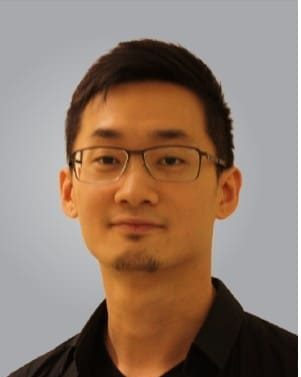
William Y. C. Huang is an Assistant Professor in the Department of Biophysics at Johns Hopkins University. He received his B.S. in Chemistry from National Taiwan University (2010) and Ph.D. in Chemistry from UC Berkeley (2016) under Dr. Jay Groves. After postdoctoral work at Stanford University (2018-2023) with Dr. James Ferrell, he launched his independent research program at Hopkins in 2024. Education: B.S. in Chemistry, National Taiwan University (2010) Ph.D. in Chemistry, University of California, Berkeley (2016) Research Focus: Quantitative study of biochemical reactions at cell membranes Signal transduction mechanisms Single-molecule imaging and spectroscopy Development of reconstituted membrane assays Investigation of protein condensation phase transitions Kinetic modeling of membrane-bound biochemical systems Scientific Awards: NIH Pathway to Independence Award Searle Scholar Contact: Email: whuang@jhu.edu Office: 168 Mergenthaler Hall Phone: (410) 516-0166
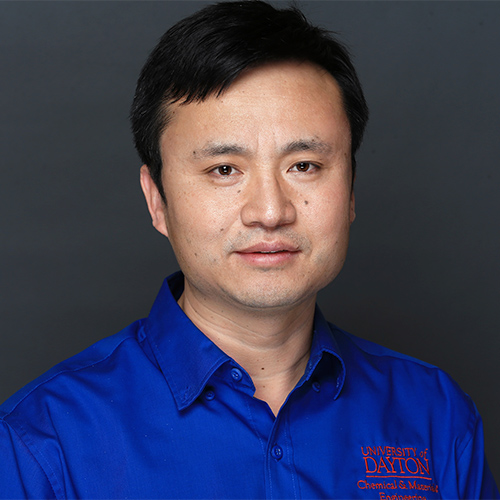
Li Cao is an Associate Professor in the Department of Chemical and Materials Engineering at the University of Dayton's School of Engineering. He holds a Ph.D. in Condensed Matter Physics from the Chinese Academy of Sciences, Beijing. His research focuses on interdisciplinary materials science, including additive manufacturing of advanced ceramics, nanocomposite design, and optoelectronic applications of nanomaterials. With over 100 publications and an h-index of 44, his work emphasizes thermal transport, energy conversion, and biomedical applications of nanomaterials. Research interests include nanocomposites reinforced with metals/ceramics/polymers, laser-based additive manufacturing processes, and functionalization of carbon-based nanomaterials. He serves as Editor-in-Chief of the 'Nanocomposite Materials' section in Nanomaterials (2024–present) and is a peer reviewer for over 20 journals, including ACS, APS, and RSC publications. His honors include the Susan G. Komen Breast Cancer Foundation Fellowship (2008). Courses taught include Engineering Thermodynamics, Additive Manufacturing, and Nanotechnology fundamentals. Professional activities include roles in the Materials Research Society and the Society for the Advancement of Material and Process Engineering (SAMPE). Notable projects involve developing carbon nanotube-reinforced alloys and boron nitride nanosheet composites for thermal management. His lab explores novel nanomaterials for applications in energy storage, biomedical imaging, and smart materials systems.
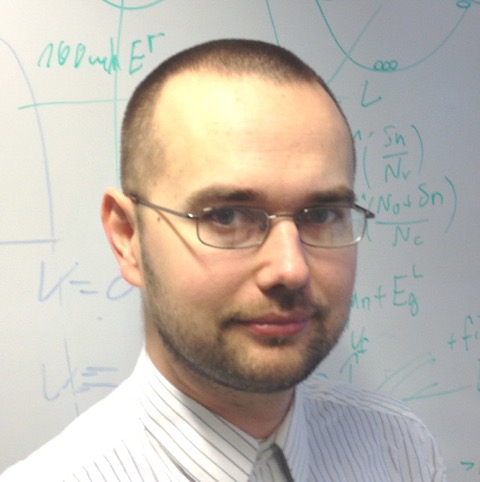
Dr. Dirk Peschka is a researcher at the Weierstrass Institute for Applied Analysis and Stochastics (WIAS) in Berlin, Germany, where he contributes to the Partial Differential Equations Research Group (FG1) . He is affiliated with the Berlin Mathematics Research Center MATH+ , the Society for Applied Mathematics and Mechanics (GAMM) , and the German Physical Society (DPG) . Research Interests Mathematical modeling of fluid dynamics and materials science using partial differential equations (PDEs). Applications in thin film dynamics, semiconductor devices, and reactive multiphase flows. Development of gradient flow frameworks and thermomechanical models via GENERIC formalism. Analysis of contact line behavior, dewetting processes, and fluid-structure interaction. Numerical methods for semiconductor simulations and geoscience applications. Publications Trends His recent work (2022–2025) emphasizes energy-based modeling of thin films, reactive flows, and semiconductor degradation. Key themes include contact line dynamics, gradient flows, and multiscale analysis of materials and fluid systems. Memberships Weierstrass Institute for Applied Analysis and Stochastics (WIAS) Berlin Mathematics Research Center MATH+ Society for Applied Mathematics and Mechanics (GAMM) German Physical Society (DPG)
Dr. Philip Bittihn serves as Group Leader and Scientist at the Max Planck Institute for Dynamics and Self-Organization in Göttingen, Germany, heading the Emergent Dynamics in Living Systems research group within the Department of Living Matter Physics. His work bridges physics and biology to decipher complex emergent behaviors in biological systems through innovative interdisciplinary approaches. His research spans nonlinear dynamics in biological systems , initially focusing on cardiac arrhythmia mechanisms where he identified novel termination strategies for life-threatening rhythms through topological defect analysis. Current work centers on growth-driven phenomena in cellular active matter , investigating mechanical interactions, expansion flows, orientational order, and shape development coupled with gene regulation and metabolism. He employs reaction-diffusion modeling, synthetic biology, and microfluidic experimentation to study pattern formation in microbial colonies and cardiac tissue. Analysis of recent publications reveals a dominant trend toward active matter physics in multicellular systems , particularly geometry-induced nematic order, phase separation in proliferating matter, and nutrient-mediated antibiotic responses. His group consistently explores how non-equilibrium growth processes generate complex patterns, with increasing emphasis on mechanical stress anisotropy and motility-induced transitions in confined cellular environments. The Emergent Dynamics in Living Systems group operates at the physics-biology interface, utilizing genetically engineered E. coli models (as demonstrated in their Nature Microbiology 2020 work on oscillating growth patterns), advanced microfluidic chambers, and computational frameworks to investigate fundamental principles of biological organization with potential biomedical applications.
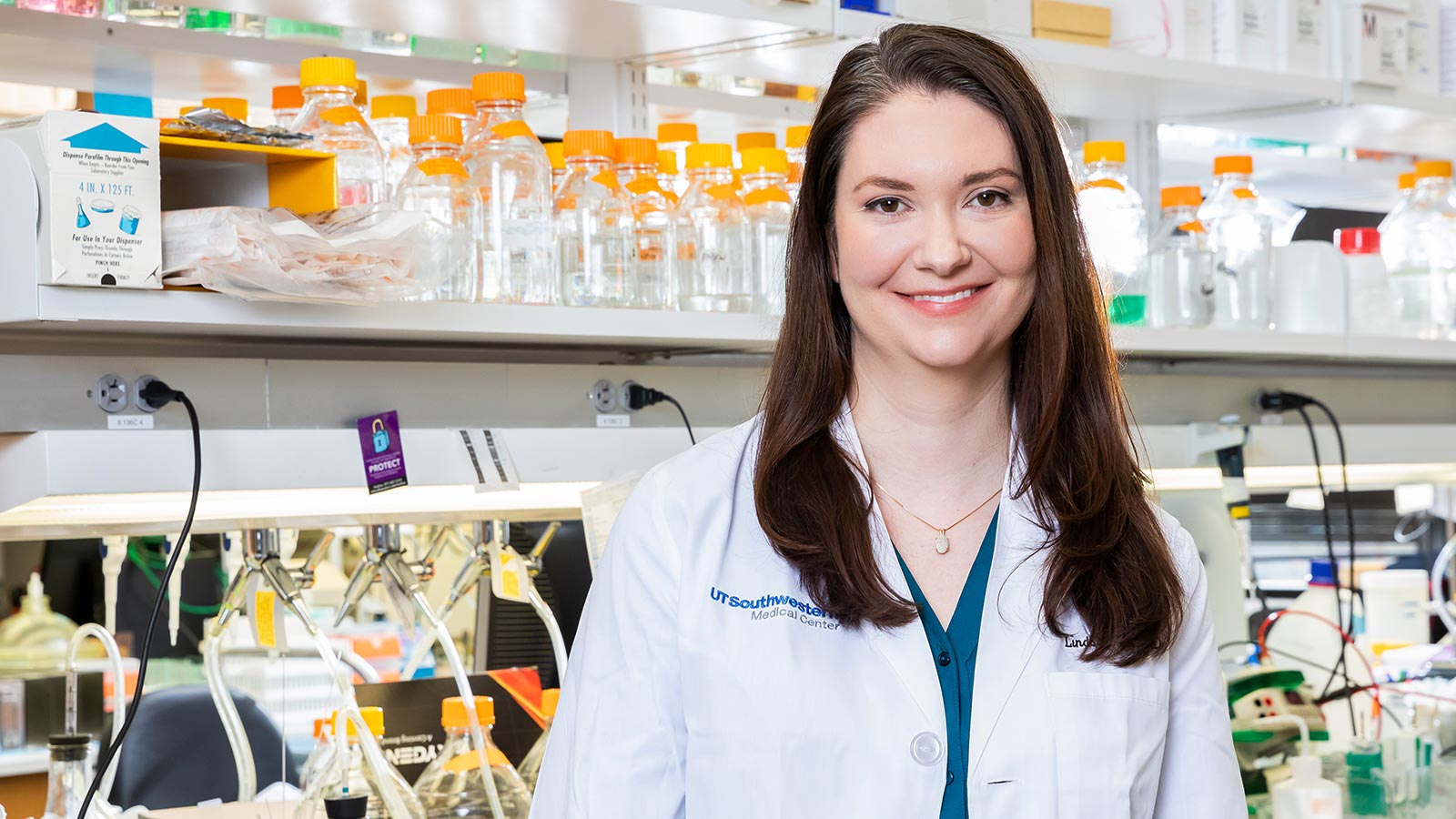
Lindsay Case is the Irwin and Helen Sizer Career Development Professor at the Massachusetts Institute of Technology (MIT), located in the Koch Biology Building. Her research focuses on how cells regulate the spatial organization of signaling molecules at the plasma membrane, particularly through mechanisms like phase separation and biomolecular condensates. She employs quantitative approaches from biochemistry, molecular biophysics, and cell biology to study transmembrane signaling pathways and their dysregulation in diseases such as cancer. Education: PhD (2014) in Molecular Biology from the University of North Carolina at Chapel Hill, and BA (2008) in Biology from Franklin and Marshall College. Research Interests: The lab investigates how receptor clustering and protein assemblies create membrane compartments with unique biochemical properties. Key themes include phase separation in signaling pathways, membrane-induced protein phase behavior, and the role of actin dynamics in adhesion and signaling. These studies use reconstituted systems and live-cell imaging to dissect molecular mechanisms. Key Awards: NSF Career Award (2025) Searle Scholar Award (2022) NIH Director’s New Innovator Award (2022) AFOSR Young Investigator Award (2021) Brown-Goldstein Award (2020) Damon Runyon-Dale F. Frey Breakthrough Scientist (2020) Her work bridges fundamental cell biology with disease mechanisms, emphasizing the biophysical and biochemical principles governing membrane-associated signaling processes.
Kristina Djinovic Carugo is a Full Professor of Structural Biology at the University of Vienna , affiliated with the Department of Structural and Computational Biology at Max F. Perutz Laboratories. Her career spans leadership roles including Head of Department (since 2009), Director of the Laura Bassi Center for Optimized Structural Studies (2010-2016), and Head of Structural Biology and Crystallography Unit at Sincrotrone Trieste (1999-2004). Education : PhD in Chemistry (1992, University of Ljubljana); Master's (1989, University of Ljubljana); Diploma in Chemistry (1986, University of Ljubljana) Her research focuses on structure-function analysis of metallo-enzymes involved in cellular protection, structural biology of actin-based cytoskeleton with emphasis on muscle Z-disk assembly, and X-ray induced radiation damage in protein crystals. Key techniques include X-ray crystallography, cryo-EM, and integrative structural approaches. Recent work explores liquid-liquid phase separation in sarcomeric Z-disc formation, Filamin C regulation by HSPB7 , and automated structural analysis tools like chalcogen bond detection in AlphaFold models. She has contributed to understanding protein interactions in hemidesmosomes, sarcomere mechanics, and redox-sensitive structural dynamics. Scientific Recognition : EMBO long-term postdoctoral fellowship (1995) Laura Bassi Center of Expertise (2010) EMBO member (2016) Her institutional roles include appointment committee memberships for tenure-track and professorship positions at Austrian universities and leadership in the Protein Technology Facilities user committee. Publications span high-impact journals including Science Advances, Cell, and PNAS, with over 145 peer-reviewed papers and an H-index of 44.
Bojan Zagrovic is a Professor at the Department of Structural and Computational Biology , University of Vienna. His research focuses on the interplay between protein structure, RNA interactions, and molecular dynamics, particularly in phase separation, enzyme mechanisms, and disease-related mutations. Key research areas: Structural Biology, Computational Biophysics, RNA-Protein Interactions, Phase Separation, and Protein Aggregation. Recent work includes studying FUS RGG3 phase separation, α-mannosidase pathophysiology, and SPOC domain interactions. His publications span molecular dynamics simulations, RNA modifications (e.g., N6-methyladenosine), and structural insights into ciliary proteins like CFAP410. He teaches courses in computational structural biology, molecular biophysics, and quantitative biology.
Céline Galvagnion-Büll is a Tenure Associate Professor in the Department of Drug Design and Pharmacology within the Faculty of Health and Medical Sciences at the University of Copenhagen. She leads research at the intersection of biology and biophysics, focusing on the molecular mechanisms of neurodegenerative diseases, particularly Parkinson's Disease. Her multidisciplinary approach combines cellular models with biophysical characterization of protein-membrane interactions. Education: PhD in Chemistry, Université Pierre et Marie Curie, Paris, France (2011) Diplôme d'ingénieur, École Nationale Supérieure de Chimie de Rennes, France (2007) Master of Science, University of Waterloo, Ontario, Canada (2007) Her primary research interests center on understanding the role of lipids in neurodegenerative diseases, with specific focus on protein and lipid biophysics and cellular disease models. Her laboratory investigates the interplay between disruptions in lipid homeostasis and Parkinson's Disease using multidisciplinary approaches that bridge biology and biophysics. Analysis of her recent publications reveals a consistent research trajectory focused on α-synuclein aggregation mechanisms, lipid-protein interactions, and Parkinson's disease pathology. Her work spans structural characterization, kinetic modeling, and cellular model systems, demonstrating an integrated approach to understanding neurodegenerative disease mechanisms at molecular, cellular, and systems levels. Scientific Awards and Fellowships: Hallas-Møller Emerging Investigator grant (2020-2025) Carlsberg Foundation Young Researcher Fellowship (2019-2023) Horizon 2020 Marie Curie Individual Fellowship (2017-2019) Alexander von Humboldt Research Fellowship (2016-2017) Multiple Parkinsonforeningen project grants (2019-2023) Dr. Galvagnion-Büll has secured substantial research funding including DFF project grants and EraPermed collaborative grants, supporting her laboratory's investigation into Parkinson's disease mechanisms. Her research group employs cellular models of Parkinson's disease and advanced biophysical techniques to characterize protein-membrane interactions and aggregation processes at the molecular level. She has presented her findings at numerous international conferences including FEBS advanced courses and Gordon Conferences.
Dr. Tsvetomir Ivanov serves as Group Leader of the Biocondensate Systems group within the Artificial Cells project at the Max Planck Institute for Polymer Research in Mainz, Germany. He completed his PhD in 2025 under Prof. Katharina Landfester after joining her department in 2020, following dual chemistry degrees from Hamburg University of Technology and Sofia's University of Chemical Technology and Metallurgy. His academic background includes: Double Chemistry Degree: Hamburg University of Technology & University of Chemical Technology and Metallurgy, Sofia (DAAD scholarship) Diploma Thesis: Max Planck Institute for Dynamics of Complex Technical Systems, Magdeburg (Prof. Kai Sundmacher) PhD in Polymer Research: Max Planck Institute for Polymer Research (2020-2025) Ivanov's research integrates organic chemistry, molecular biology, and engineering to develop multicompartmental artificial cell systems. His dual focus encompasses: (1) Engineering adaptive protocells with growth/division capabilities using stimuli-responsive block copolymers and integrated suborganelles, and (2) Constructing peptide-based coacervate systems to model biomolecular condensates for synthetic organelle communication. This work bridges materials science and cellular biology with direct applications in nanomedicine and synthetic cell networks. Analysis of his 2023-2025 publications reveals dominant themes in biomolecular condensates and compartmentalized catalysis, with consistent methodology using peptide-based coacervates and vesicular systems. The research spans synthetic biology, soft matter physics, and nanomedicine, emphasizing bottom-up assembly of functional microreactors for therapeutic applications. As Group Leader, Ivanov directs the Biocondensate Systems team within Prof. Landfester's department, overseeing the Artificial Cells project's development of minimal cell models. His position implies active supervision of junior researchers and management of research funding, though specific grant details remain unreported in the source material.
Marina Feric is an Assistant Professor in the Department of Biochemistry and Molecular Biology at Penn State University, with a courtesy appointment in Chemistry. She holds the Robert and Peggy Schlegel Early Career Professorship. Her research focuses on understanding how biophysical interactions across molecular, organellar, and cellular scales govern cellular organization and contribute to age-related diseases. Her lab employs advanced microscopy and quantitative analysis to study biomolecular condensates, particularly in mitochondrial transcription and cellular aging. Education: B.S. in Chemical Engineering (University of Maryland, 2010), M.A. and Ph.D. in Chemical Engineering (Princeton University, 2012-2016). Postdoctoral research at NIH/National Cancer Institute under Tom Misteli, supported by a NIGMS PRAT Fellowship. Research Interests: Biomolecular phase transitions, condensate dynamics, mitochondrial organization, super-resolution microscopy, and translational biomedical applications. Her work bridges chemical engineering principles with cell biology to uncover mechanisms behind cellular dysfunction in aging. Awards: Robert and Peggy Schlegel Early Career Professorship (2023–2025), NIGMS PRAT Fellowship (2018–2021). Affiliations: Center for Eukaryotic Gene Regulation, Center for Cellular Dynamics, and Molecular, Cellular, and Integrative Biosciences. Labs/Teams: Feric Lab (focusing on engineering cellular organization via biomolecular condensates) and collaborations across interdisciplinary centers.
Lewis Kay is a University Professor at the University of Toronto, holding a primary appointment in the Department of Biochemistry and a cross-appointment in the Department of Chemistry. His research focuses on developing novel NMR methodologies to study complex biological systems, particularly the molecular dynamics of phase-separated condensates and large biomolecular machines like the proteasome. The Kay Lab emphasizes understanding how dynamic processes regulate biological functions, with applications in drug discovery and disease mechanisms. Education backgrounds are not explicitly listed, but his work demonstrates expertise in biochemistry and physical chemistry. Research interests include NMR spectroscopy, protein dynamics, biomolecular condensates, and the role of molecular motion in cellular processes. Recent articles highlight advancements in NMR techniques for studying high-molecular-weight systems, phase separation in biomolecules, and allosteric regulation of proteasome function. These studies address critical gaps in understanding dynamic protein behaviors and their implications for health and disease. No scientific awards are explicitly mentioned in the provided text. Advising and grants are not detailed here, but his lab's focus on interdisciplinary research suggests significant grant support. The Kay Lab actively explores molecular mechanisms in health and neurodegenerative diseases, leveraging cutting-edge NMR innovations to push the boundaries of structural biology.
Masayuki Onishi is an Assistant Professor of Biology and Cell Biology at Duke University's Trinity College of Arts & Sciences. His research focuses on understanding fundamental mechanisms of eukaryotic cell division using the green alga Chlamydomonas reinhardtii as a model system. He investigates cytokinesis processes, organelle division coordination, and evolutionary conservation of cell division machinery. Education: Ph.D. from University of Tokyo (Japan). He leads the Onishi Lab, which has received NSF CAREER funding for studying actomyosin-independent cytokinesis. His work bridges molecular cell biology with evolutionary biology, utilizing advanced imaging techniques and genetic screens. Research interests include septin proteins' evolutionary roles, alternative proteoforms in humans and plants, and the interplay between cytoskeletal elements during cell division. Key contributions include discoveries about F-actin-independent cytokinesis and chloroplast division coordination mechanisms. Grants: NSF CAREER Award (2024-2029), NIH Training Grants (2020-2026) Students advised: Samed Delic, Yaning Yuan, Samuel Chen Lab collaborations: Princeton University, GMI Vienna, Carnegie Plant Biology Recent studies explore PKHD1/Fibrocystin's role in cell division and identify novel compounds affecting organelle division. His lab integrates cell biology, genetics, and evolutionary approaches to unravel ancient cellular processes.
Hye-Won Kang is an Associate Professor in the Department of Mathematics and Statistics at the University of Maryland, Baltimore County (UMBC). Her research focuses on stochastic modeling of biochemical systems, particularly in understanding complex biological processes such as enzyme clustering, microRNA signaling pathways in lung cancer and COPD, and multiscale reaction-diffusion systems. She holds a Visiting Research Fellowship from Merton College, University of Oxford. Her work integrates mathematical analysis, simulation, and experimental data to address challenges in systems biology. Key research areas include: Multiscale approximations for stochastic chemical networks Stochastic analysis of reaction-diffusion processes Modeling enzyme kinetics in metabolic diseases Gene regulatory networks and pattern formation Recent contributions include studies on glucosome condensate formation (2024), chemical systems with limit cycles (2023), and the role of microRNAs in lung cancer (2013). Her research has been published in high-impact journals such as Physical Biology , Bulletin of Mathematical Biology , and SIAM Multiscale Modeling and Simulation . She has advised PhD student Luan Chip Nguyen and has taught advanced courses in mathematical biology, statistics, and differential equations at UMBC since 2013.
Hongbo Zhao is an Assistant Professor jointly appointed in the Department of Physics and Department of Chemistry & Biochemistry at the University of California, San Diego (UCSD), effective September 2024. His research bridges biophysics, soft matter, active matter, physical chemistry, and applied mathematics, focusing on uncovering fundamental principles of soft and living matter through interdisciplinary approaches. Prior to UCSD, he was a Princeton Bioengineering Initiative (PBI2) Distinguished Postdoctoral Fellow at Princeton University, working with Andrej Košmrlj, Clifford P. Brangwynne, and Sujit Datta. He earned his Ph.D. in Chemical Engineering from MIT under Martin Z. Bazant, focusing on energy materials and data-driven discovery in chemical physics. Key research interests include biological phase separation and phase transitions, physics of soft and active matter, and data-driven discovery from image-based datasets. His work explores how biomolecular condensates organize cellular components, the interplay between nonequilibrium activities and phase separation, and emergent phenomena in active matter systems. He develops computational tools and statistical mechanics frameworks to analyze complex systems across scales. Zhao's recent publications highlight contributions to understanding condensate-driven DNA repositioning, chemotactic motility-induced phase separation, and learning reaction kinetics from X-ray imaging. His research has been supported by grants including the PBI2 Fellowship and collaborations with institutions like Stanford University and the SLAC National Accelerator Laboratory. He leads the Zhao Research Group at UCSD, fostering an interdisciplinary environment for graduate and undergraduate students in theoretical and computational biophysics.
Marileen Dogterom is a Professor of Bionanoscience at the Kavli Institute of Nanoscience, Delft University of Technology, and holds a dual appointment as a Medical Delta Professor at the Leiden Institute of Physics, Leiden University. Her research focuses on the quantitative biophysics of the cytoskeleton, particularly microtubule dynamics and their role in cellular organization and division. Her work integrates in vitro reconstitution , theoretical modeling , and live-cell experiments to dissect the physical mechanisms underlying cytoskeletal processes. She leads the national 'Building a Synthetic Cell' (BaSyC) initiative, aiming to construct a minimal synthetic cell, reflecting her pioneering role in bottom-up synthetic biology. Her lab investigates cytoskeletal crosstalk, DNA segregation systems, microtubule-kinetochore coupling, and force generation using advanced techniques like optical tweezers and liquid-phase electron microscopy. The most recent publications highlight a strong trend in mechanistic biophysics and synthetic cell engineering , with a focus on protein complexes (Ndc80, Ska), microtubule end dynamics, actin-microtubule coordination, and the development of minimal in vitro systems to model cellular processes like polarity and coacervate formation. Spinoza Prize (2018) : One of the highest scientific awards in the Netherlands. Member of the KNAW board (2017) : Elected to the Royal Netherlands Academy of Arts and Sciences. She actively supervises PhD and master’s students, fostering the next generation of scientists in biophysics and synthetic biology. Her lab collaborates widely, including with groups at TU Delft, Leiden University, and international institutions like BIOCEV in Prague. The lab is deeply involved in cutting-edge projects such as building light-controllable DNA segregation systems and visualizing microtubule dynamics with liquid-phase EM. Her research is conducted at the intersection of physics, biology, and engineering, primarily within the Marileen Dogterom Lab at TU Delft, and through collaborative efforts with the Koenderink group (TU Delft) , the Schneider lab (Leiden University) , and the broader European Synthetic Cell initiative .