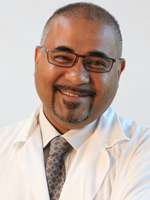
Carlos Chaccour is a researcher specializing in global health, particularly focused on malaria control and drug repurposing. His work integrates clinical trials, field epidemiology, and innovative technologies like AI-driven cough monitoring systems. He collaborates on large-scale studies such as BOHEMIA, investigating ivermectin's role in malaria vector control and collateral health benefits. His research spans tropical disease epidemiology, environmental health, and public health policy, emphasizing One Health approaches to combat neglected tropical diseases. Key research areas include: Evaluation of ivermectin's efficacy and safety in malaria and other parasitic infections Development of digital health tools for respiratory disease surveillance Impact assessment of air pollution on respiratory illnesses Health equity in malaria-endemic regions, especially in Mozambique and Venezuela His studies frequently employ randomized controlled trials, cohort designs, and advanced analytical techniques like MALDI-TOF MS for biomarker discovery. He advocates for evidence-based policy changes to address gaps in global health interventions, particularly in resource-limited settings.
Dr. Suresh Narine is a Professor at Trent University, holding appointments in the Departments of Physics and Astronomy and Chemistry, and serves as Director of the Trent Centre for Biomaterials Research. He is an Ontario Research Chair in Green Chemistry and Engineering (since 2010) and a NSERC Industrial Research Chair in Biomaterials (since 2010). Previously, he was a Professor and AVAC Research Chair at the University of Alberta (2006–2009), where he pioneered lipid-based polyurethane technologies. He also holds a presidential appointment as Director of Guyana’s Institute of Applied Science and Technology since 2005. His research focuses on biomaterials, green chemistry, lipid utilization, and biofuel technology, with collaborations spanning institutions in India, Israel, Brazil, and the Caribbean. Education: B.Sc. (Chemical Physics), M.Sc. (AMINSS), Trent University; Ph.D. (Food Science), University of Guelph Awards: Canada’s Top 40 Under 40 Leaders (2011), Growing Alberta Leadership Award (2005), Trent Distinguished Alumni Award (2006), Guyana/Canada Special Achievement Award (2007), and Guyana Presidential Award (2011) His research emphasizes renewable materials, including phase change materials, bio-based lubricants, and polyurethane foams derived from vegetable oils. Collaborations with global partners drive innovation in green technologies and capacity-building in developing nations. He has secured over $4.25 million in grants, including NSERC and Ontario government funding. A dedicated educator, he has won teaching awards such as the University of Alberta’s Students Union Leadership Award. Key projects include developing lipid-derived polymers, mitigating crystallization in biodiesel, and advancing metabolomics for natural product discovery. His lab’s partnerships enhance cross-border research and training in multi-disciplinary teams.
Thomas Stemler is an Associate Professor at the University of Western Australia (UWA), affiliated with the Department of Mathematics and Statistics within the School of Physics, Maths and Computing. He holds a PhD in Physics from Technische Universität Darmstadt (2006) and has been at UWA since 2007, initially as a postdoctoral researcher and since 2009 in a teaching and research role. His research focuses on dynamical systems theory and complex systems applications, including transport modeling, climate analysis, and ocean dynamics. He leads the Complex Systems Group and collaborates with industry and government on projects funded by ARC, offshore industries, and the Department of Infrastructure. Education: PhD in Physics (Technische Universität Darmstadt, 2006); MSc in Physics (Technische Universität Darmstadt, 2001). Research interests include traffic system modeling, nonlinear time series analysis, and uncertainty quantification. He has contributed to projects like the ARC Research Hub for Transforming Energy Infrastructure and the PATREC transport research center. His work addresses real-world challenges in transport infrastructure, environmental systems, and data-driven decision-making. Grants include funding from ARC, Main Roads WA, and iMove CRC for projects on roundabout modeling, automated vehicle impacts, and traffic incident detection. He is actively involved in PhD supervision and has published extensively on topics ranging from stochastic processes to swarm intelligence. Labs/Teams: Complex Systems Group (UWA), PATREC Transport Research Collaborative.
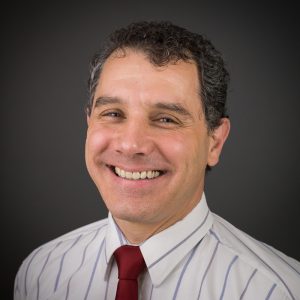
Dr. Nicolas Green is a Reader at the University of Southampton, specializing in Microfluidics, Dielectrophoresis, and Medical Machine Learning. He is affiliated with research groups such as the Digital Health and Biomedical Engineering and the Tony Davies High Voltage Laboratory. His work focuses on lab-on-a-chip technologies, electrokinetic phenomena, and applications in biomedical diagnostics. He currently supervises PhD student Shengqi Yin and serves on the editorial board of Scientific Reports . Key research interests include electrothermal microparticle trapping, optically induced microfluidic tweezers, and electrostatic discharge risk analysis. His projects, funded by the Royal Academy of Engineering, European Union, and EPSRC, explore advancements in microfluidics and medical AI. Notable awards include the Royal Society Brian Mercer Feasibility Award. Dr. Green's recent publications (2021–2025) highlight innovations in metalens-based particle sorting, AI-driven sustainability solutions, and electrostatic repulsion mechanisms. His work bridges fundamental physics with practical biomedical and engineering applications.
Curt Wittig is the Paul A. Miller Professor of Letters, Arts and Sciences at the University of Southern California (USC), holding a joint appointment in the Department of Chemistry within the Dornsife College of Letters, Arts and Sciences. He earned his Ph.D. in Electrical Engineering from the University of Illinois (1970) and completed postdoctoral work at USC, Cambridge University, and UC Berkeley. His research focuses on physical chemistry and chemical physics, particularly in gaseous and condensed phases, including photoinitiated reactions, molecular energy transfer, and dynamics in superfluid helium droplets and amorphous solid water (ASW). Notable projects include the Cold Water Project, investigating ASW's unique properties, and studies on tris(2-phenylpyridine)iridium photoionization. Wittig has received numerous honors, including Fellowships from AAAS and the American Physical Society, and has advised over 20 graduate students. He has held leadership roles such as Chair of the Chemistry Department and Director of the Center for the Study of Fast Transient Processes. His work spans experimental and theoretical collaboration, with a focus on molecular dynamics, quantum mechanics, and astrochemical applications. Education: B.S. (1966), Ph.D. (1970) from University of Illinois. Research highlights include contributions to molecular energy transfer, helium cluster dynamics, and ASW's role in astrobiology. His group's interdisciplinary approach combines experimental and computational methods, emphasizing student independence and innovation.
Dr. Tomas Ramirez Reina is a Visiting Professor of Chemical and Process Engineering at the University of Surrey and holds a Titular Professorship in Catalysis and Low-Carbon Energy at the University of Seville. His research focuses on heterogeneous catalysis for energy sustainability, particularly in CO2 conversion, renewable fuels, and green catalytic processes. He leads the Catalysis Unit at Surrey and has pioneered advanced catalysts for hydrogen production and biofuel technologies. His work includes developing innovative methods to convert CO2 into synthetic fuels and platform chemicals, with notable contributions to the design of dual-function materials for integrated CO2 capture and utilization. Education: PhD in Materials Science (University of Seville, 2014), MSc in Chemical Engineering, MChem. Affiliations: Editor of Frontiers in Chemistry , Associate Editor of Frontiers in Chemical Engineering , EPSRC Peer Review College member. His research interests span heterogeneous catalysis, oxidation catalysis, nano-sized catalysts, and catalytic biomass valorisation. He has led over 15 research projects funded by organizations like EPSRC and the European Union, focusing on CO2 conversion, green hydrogen, and low-carbon energy systems. Notable achievements include a £20,000 grant for greenhouse gas conversion (2022) and multiple awards, including the Young Scientist Award (2017, 2018) and Teacher of the Year (2019). Dr. Reina collaborates with institutions globally, including Imperial College London, Brookhaven National Laboratory, and universities in China and Colombia. His work bridges fundamental catalysis with industrial applications, emphasizing techno-economic feasibility and scalability of CO2 valorisation technologies.
Dr. Lucian Amerigo Lucia serves as a Full Professor in the Department of Forest Biomaterials and Chemistry at North Carolina State University. He also holds faculty positions in the programs of Fiber & Polymer Science and Environmental Sciences. Additionally, he maintains international appointments as Professor at South China University of Technology and Federal University of Amazonas in Brazil, and as Honorary Distinguished Professor at Qilu University of Technology in China. Professor, NC State University (Current) Professor, South China University of Technology (2003-Present) Professor, Federal University of Amazonas (2006-Present) Honorary Distinguished Professor, Qilu University of Technology (2014-2021) Dr. Lucia received his Ph.D. in organic chemistry from the University of Florida, where he researched modeling photoinduced charge separation states of novel Rhenium (I)-based organometallic ensembles as a first-order approximation of photosynthesis. He began his professional career as an Assistant Professor at the Institute of Paper Science and Technology at the Georgia Institute of Technology, examining the mechanism of singlet oxygen's chemistry with lignin & cellulose. Dr. Lucia's research focuses on green chemistry of renewable polymers, with particular emphasis on the chemical modification of cellulosics for biomedical applications. His laboratory, The Laboratory of Soft Materials & Green Chemistry, probes fundamental materials science topics in this area. He has co-founded and co-edits the open-access international research journal BioResources , dedicated to original research on lignocellulosic materials. His recent publications span topics including sustainable packaging, nanocellulosic materials, bio-based barrier layers, and chemical analyses of polymer surface abrasion. His work shows a strong trend toward developing sustainable, biodegradable alternatives to conventional materials, with applications in food packaging, biomedical devices, and environmental remediation. Fulbright Scholar (Brazil) Dr. Lucia teaches courses including Forest Biomaterials Chemistry (WPS 723), From Papyrus to Plasma Screens: Paper & Society (PSE 220), Green Chemistry (PSE/CH 335), and the FB Graduate Student Seminar Series (WPS 590/790) at NCSU, while also teaching Wood Chemistry and Green Chemistry at Qilu University of Technology in China. His laboratory, The Laboratory of Soft Materials & Green Chemistry, brings together interdisciplinary researchers working at the intersection of chemistry, materials science, and sustainability. The lab has developed several innovative approaches for modifying cellulose and other renewable polymers for advanced applications.
Neal Madras is a Full Professor in the Department of Mathematics and Statistics at York University's Faculty of Science. His research focuses on probability theory, discrete mathematics, and mathematical modeling in the sciences. He explores applications in statistical mechanics, theoretical computer science, communications networks, and biological systems. Notable interests include self-avoiding walks, polymer behavior modeling, and disease progression mechanisms. Madras has contributed to interdisciplinary studies, such as HIV dynamics and mosquito population modeling under climate influences. He is also actively involved in mathematics competitions like the Canadian Mathematical Olympiad. His work bridges theoretical rigor and practical applications, with a focus on stochastic processes, combinatorial problems, and computational methods. Publications span topics from graph theory and knot invariants to epidemic control strategies and polymer adsorption. Madras maintains an active research program, engaging with both foundational mathematical questions and real-world problem-solving.
Dr. Subashani Maniam is a Senior Lecturer in the School of Science at RMIT University. Her research focuses on organic synthetic chemistry, particularly energy storage materials and bioactive compounds with therapeutic applications. She holds a PhD in Supramolecular Chemistry from the Australian National University (2008) and has held postdoctoral positions at the University of Melbourne, CSIRO, and Monash University. Her work includes developing organic materials for redox flow batteries and exploring supercritical CO₂ for sustainable processes. Education: PhD (2008, ANU), Postdoc (2008-2011, Melbourne/CSIRO), Monash University collaboration (2011-2016). Awards: 2016 Victoria Fellowship, 2021 Green Chemistry Hot Article, 2019 Women Researchers' Network Poster Prize. Research interests include synthesizing organic materials for energy storage, hydrogen storage, fluorescent labels for cancer metabolites, and drug discovery targeting neurodegenerative diseases. She is involved in collaborative projects on recycling via supercritical CO₂ and sustainable energy solutions. Her teaching spans advanced chemistry theory and laboratory courses, including coordination of CHEM1040 and CHEM1041.
Joel Norris is a Professor at the Scripps Institution of Oceanography, University of California, San Diego, specializing in Climate Sciences, Cloud Physics, and Ocean-Atmosphere Interactions. He holds a B.S. from the California Institute of Technology and a Ph.D. from the University of Washington. His research focuses on cloud feedbacks in global warming, coupled atmosphere-ocean variability, and climate change impacts on California. Key topics include boundary-layer cloud processes, oceanic eddy effects, and aerosol impacts on cloud dynamics. He has contributed to understanding atmospheric rivers, low-cloud feedback mechanisms, and the role of radiative forcing in climate systems. Recent work emphasizes observational analysis of cloud behavior, satellite data interpretation, and model validation. His studies address critical questions about climate sensitivity, tropical expansion, and the influence of anthropogenic aerosols on weather patterns. Publications highlight trends in atmospheric river prediction, aerosol-cloud interactions in the equatorial Atlantic, and long-term cloud variability. Norris collaborates across disciplines, bridging observational meteorology with climate modeling to advance understanding of Earth's energy budget and hydrological cycles.
Shang-Ping Xie is a Professor of Climate Sciences and Physical Oceanography at the University of California San Diego's Scripps Institution of Oceanography, holding the Roger Revelle Chair in Environmental Science. His research focuses on ocean-atmosphere interactions, climate variability, and global warming mechanisms, with contributions to understanding ENSO dynamics, the WES feedback, and the Indian Ocean capacitor effect. He holds a D.Sc. from Tohoku University (Japan, 1991), M.Sc. from Tohoku University (1988), and B.Sc. from Shandong College of Oceanography (China, 1984). His research interests include tropical climate patterns, Hadley Cell dynamics, and monsoon systems, with a focus on how ocean processes influence global climate formation and predictability. Notable contributions include the discovery of the longest island wake and the 'warmer-get-wetter' hypothesis for rainfall changes under global warming. His awards include the Sverdrup Gold Medal (2017), Society Medal (Meteorological Society of Japan, 2002), and recognition as a Highly Cited Researcher (2014–2021). His work bridges observational studies and numerical models, addressing critical questions in climate science such as regional climate forecasts, ocean heat uptake, and climate sensitivity. His research has led to advancements in understanding mechanisms like the Pacific ITCZ displacement and the role of eddies in Hadley Cell responses. Collaborative efforts span global oceans and monsoonal regions, emphasizing interdisciplinary approaches to climate challenges.
Kimberly Boster is an Assistant Professor (Research) in Mechanical Engineering at the University of Rochester's Hajim School of Engineering & Applied Sciences. Her research merges computational and experimental fluid dynamics to study glymphatic transport—the brain's waste-clearance system. Education: PhD in Mechanical Engineering, Brigham Young University MS in Mechanical Engineering, Brigham Young University BS in Mechanical Engineering, Brigham Young University Research focuses on cerebral fluid mechanics, perivascular flow quantification, and hydraulic resistance modeling. Recent work employs AI velocimetry to measure in vivo brain fluid dynamics. Previously a Lillian Gilbreth Postdoctoral Fellow at Purdue University.
Dr. Lee T. Murray is a Professor at the University of Rochester, leading the Atmospheric Chemistry & Climate Group within the Department of Earth & Environmental Sciences. His research focuses on the interplay between atmospheric composition and climate systems, employing advanced global models and observational data to address air quality, climate change, and big data challenges. The group uses interdisciplinary approaches combining chemistry, physics, and computational methods to understand human impacts on Earth's atmosphere. Research interests include reducing uncertainties in air quality predictions, quantifying climate change drivers, and optimizing computational methods for handling large datasets. Dr. Murray’s work spans observational studies (e.g., aircraft measurements, satellite data) and model development (e.g., GEOS-Chem, GISS-E2.1). His team collaborates across departments, including Physics & Astronomy and the Goergen Institute for Data Science. Recent publications emphasize tropospheric ozone dynamics, nitrate chemistry in the northeastern U.S., and methane emissions from landfills. The group actively promotes diversity in geosciences and recruits students through interdisciplinary Ph.D. programs. Dr. Murray’s office is in Hutchison Hall 479, with labs in Hutchison Hall 130B.
Mikhail Gilman is an Associate Research Professor in the Department of Mathematics at North Carolina State University (NCSU), based in SAS Hall 3210. He serves as a core faculty member in NCSU's Radar Imaging research group, focusing on advanced radar technologies and their mathematical foundations. Dr. Gilman earned his PhD from the State Institute of Physical and Technical Problems in Russia in 1998. His academic journey spans interdisciplinary research connecting applied mathematics, electromagnetics, and remote sensing. His research centers on radar imaging, particularly synthetic aperture radar (SAR) systems. Key interests include mitigating phase distortions from turbulent media propagation (especially ionospheric effects), developing novel radar target models, and innovating change detection paradigms in SAR imagery. He integrates analytical methods, computational simulations, and machine learning to solve complex problems in transionospheric SAR imaging, with significant contributions to autofocus algorithms and ionospheric distortion correction. His work bridges theoretical mathematics and practical remote sensing applications. Recent publications reveal a concentrated focus on transionospheric SAR challenges, with 10 of the last 15 papers addressing ionospheric effects, autofocus techniques, and machine learning applications. His 2017 book Transionospheric Synthetic Aperture Imaging (Birkhäuser) established foundational frameworks, receiving positive reviews in SIAM Review and AMS MathSciNet. Dr. Gilman actively leads the Radar Imaging group at NCSU, which develops analytical tools and machine learning approaches for radar technology advancement. The group's work, detailed in their research flyer, emphasizes practical solutions for real-world remote sensing challenges.
Eric Duviella is a Professor at IMT Nord Europe, specifically within the Department of Automatic Control and Computer Sciences. He has been a permanent faculty member since 2007 and was promoted to full Professor in 2015. His academic affiliations include strong ties with the University of Lille, Universitat Politècnica de Catalunya, and the University of Seville through collaborative research and joint Ph.D. supervision. Education: Diplôme d'Ingénieur, Ecole Nationale d'Ingénieurs de Tarbes (ENIT), 2001 M.S., Institut National Polytechnique de Toulouse (INPT), 2001 Ph.D. in Industrial Systems, Institut National Polytechnique de Toulouse, 2005 HDR (Habilitation à Diriger des Recherches), University of Lille 1, 2014 His research interests center on Reactive Control Strategies , Supervision and Prognosis , and the Modeling of Large-Scale and Environmental Systems , particularly Hydrographical and Water Systems . His work aims at predictive maintenance, adaptive management under climate change, and improving navigation and water quality through advanced control techniques. The 15 most recent publications reflect a strong trend toward Model Predictive Control (MPC) , distributed and decentralized control architectures , leak detection in water networks , and resilience of inland waterways under climate stress . Keywords across these works include control engineering, water systems, fault diagnosis, and data-driven modeling, indicating a multidisciplinary approach combining automation, environmental science, and computational intelligence. Scientific Awards: Best paper award at CODIT 2017 Eric Duviella has actively supervised numerous Ph.D. and Master’s students from institutions including IMT Lille Douai, Universitat Politècnica de Catalunya, and the University of Seville. He has led significant research grants such as GEPET-Eau, CHEEF2, and CASTR-Eau, focusing on sustainable water management, hydropower optimization, and robotic monitoring. His work often involves partnerships with agencies like VNF, EDF, and local water authorities. He is involved in key research labs and teams including the Laboratoire d'Automatique, Génie Informatique et Signal (LAGIS), and collaborates internationally through mobility programs with UPC and the University of Seville. His leadership in organizing special sessions at major conferences (e.g., IFAC, HIC) underscores his role in shaping discourse in water system control and supervision.