David NewmanView profile
Professor
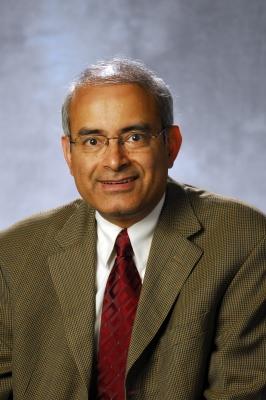
David Newman is a Professor in the Physics Department at the University of Alaska-Fairbanks, affiliated with the Geophysical Institute. He has maintained a substantial research program in plasma physics, turbulence, and complex systems for over two decades, with particular focus on self-organized criticality, power grid dynamics, and fluid mechanics. His research has been supported by significant grants from the Department of Energy (including a Young Investigator Award) and the National Science Foundation. Dr. Newman's research interests span multiple domains of physics and complex systems. He has made significant contributions to understanding turbulence in plasma physics, particularly in the context of fusion energy research, where he has investigated transport barriers and self-organized criticality phenomena. His work extends to infrastructure systems, where he has developed models of cascading failures in power transmission networks. He has also explored fluid dynamics in nanoscale systems, particularly flows through carbon nanotubes. His research approach often bridges theoretical modeling with practical applications across these diverse domains. His publication record shows consistent scholarly output across multiple disciplines, with recent work focusing on grid resilience, climate change impacts on energy systems, and advanced control techniques for fusion plasmas. His work demonstrates a distinctive interdisciplinary approach that connects fundamental physics with real-world infrastructure challenges. DOE Young Investigator Award (DE-FG03-00ER54599) NSF Grant (ECS-0085647) Dr. Newman has taught a wide range of physics courses from introductory to graduate level, including General Physics, Modern Physics, Fluid Dynamics, and specialized topics in plasma physics. His Physics Teaching Seminar (Physics 605) indicates his engagement with pedagogical development. He has maintained an active research group focused on Turbulence and Complex Systems, welcoming prospective graduate students and post-docs interested in his diverse research areas. His work on improving diversity in STEM areas demonstrates his commitment to broader educational impacts beyond his specific research domains.