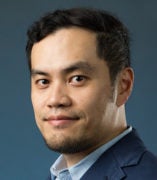
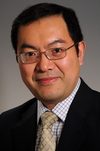
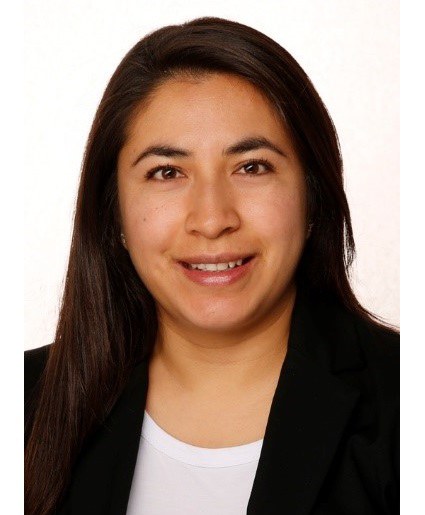
Trond Ytterdal is a Professor at the Department of Electronics and Telecommunications, Norwegian University of Science and Technology (NTNU), Faculty of Information Technology and Electrical Engineering. His research focuses on analog integrated circuits, mixed-signal systems, and nanoscale transistor modeling for THz applications. Fields of Interest: Analog circuit design, THz technology, and semiconductor device modeling. Affiliation: Centre for Innovative Ultrasound Solutions (CIUS), NTNU. Research Trends: Over the past five years, Ytterdal’s work has centered on ultra-low-voltage circuits (e.g., sub-100mV designs), THz spectrometers using TeraFET and GNRFET technologies, and noise/power optimization in nanoscale devices. His publications also explore memristor crossbar arrays, Josephson junction integration, and energy-efficient memory systems. Scientific Recognition: Senior Member of IEEE Member of The Norwegian Academy of Technological Sciences Collaborations: Regularly co-authors with researchers at Rensselaer Polytechnic Institute and industry experts in semiconductor modeling.
Oliver Kevin Hasler is a Research Fellow at the Department of Technical Cybernetics , Norwegian University of Science and Technology (NTNU). His work focuses on advanced sensing technologies, including hyperspectral imaging from drones, UAV navigation systems, and environmental monitoring applications. He has collaborated extensively with researchers in electrical engineering, geoscience, and marine biology to develop innovative solutions for georeferencing, signal processing, and autonomous navigation. Key research areas include: Robust navigation systems using signals of opportunity (e.g., 5G, LTE) Integration of hyperspectral imagery with photogrammetry for shallow-water mapping Lightweight UAV payloads for atmospheric and oceanographic measurements His recent work emphasizes low-cost sensor designs and validation campaigns in coastal regions. Hasler has contributed to multiple international conferences and journals, with a focus on IEEE platforms and remote sensing publications. Collaborations include projects on algal bloom monitoring, reflective environment navigation, and drone-based hyperspectral systems.
Peter Lukacs is a Research Fellow in the Electronic and Electrical Engineering Department at the University of Strathclyde's Faculty of Engineering. His work focuses on advanced ultrasonic imaging techniques for industrial applications, particularly in additive manufacturing quality control. His research interests center on laser-induced phased arrays, ultrasonic non-destructive testing, and surface acoustic wave spectroscopy. Key areas include volumetric imaging, defect characterization in additively manufactured components, and real-time adaptive data acquisition systems. His publications demonstrate expertise in grating-lobe suppression, sparse array design, and crosstalk mitigation for precision inspection. Lukacs' recent publications reveal a strong focus on applying laser-ultrasound techniques to nuclear fusion reactor components and wire-arc additive manufacturing. His work bridges theoretical array optimization with practical industrial implementation, particularly for near-surface defect detection in aerospace-grade materials. Lukacs serves as Principal Investigator for the EPSRC Doctoral Prize project and Co-investigator for multiple EPSRC-funded initiatives including 'Unveiling the grey area between surface and volume' and nuclear fusion reactor inspection systems. His professional activities include invited talks on adaptive laser-induced phased arrays at international symposia.
Emilio ARNIERI is an Associate Professor at the Department of Computer, Modeling, Electronics and System Engineering (DEIS) of the University of Calabria , Italy. His research focuses on microwave engineering , antenna design , and satellite communication systems , with particular emphasis on phased arrays , dielectric spectroscopy , and 5G/6G technologies . Academic Rank: Associate Professor Key Research Areas: Antenna Design, Microwave Sensors, Millimeter-Wave Communication Current Affiliation: University of Calabria (DEIS department) His recent work explores K/Ka-Band systems for SatCom-on-the-Move , hybrid multi-band sensors for microfluidic applications, and low-profile antennas for automotive and satellite use. Publications from 2023-2025 reveal a focus on dielectric spectroscopy , beamforming , and SIW (Substrate Integrated Waveguide) technology. Notable projects include the QV-Lift Project for satellite ground segments and BiCMOS integration for high-frequency applications. Recent articles indicate expertise in transmitarray antennas , vector modulators , and reconfigurable intelligent surfaces for 5G backhaul systems. Collaborations span satellite communication , automotive radar , and millimeter-wave infrastructure .
Dr. Paul Sibley is a researcher at the Australian National University (ANU), affiliated with the Centre for Gravitational Astrophysics. His work focuses on advanced optical technologies, particularly in interferometry, photonics, and control systems, with applications in space exploration and precision measurement. Centre for Gravitational Astrophysics, Australian National University Research Interests Heterodyne and homodyne interferometry Phase noise suppression and digital signal processing Optical communication systems for autonomous environments Gravitational wave detection technologies Beam steering and phased array applications Control systems for optical hardware Research Trends Sibley’s recent publications emphasize innovations in heterodyne interferometry, phase control, and digital signal processing. His work supports advancements in gravitational astrophysics and autonomous navigation systems, often integrating machine learning and real-time feedback mechanisms. Collaborations Collaborated with teams on the Breakthrough Starshot initiative Worked on projects involving optical gyroscopes and signal compression
Dr. Fabrizio Nichele is a quantum physicist affiliated with IBM Research – Zurich Lab and previously as an Adjunct Assistant Professor at the Center for Quantum Devices and Station Q Copenhagen of the University of Copenhagen . His research focuses on topological superconductivity , Josephson junctions , and spin-orbit coupling in hybrid superconducting-semiconductor systems. He earned a PhD in Physics from ETH Zurich and a Master’s degree from Politecnico di Milano , receiving the ETH Medal for his doctoral work. He has been recognized with an ERC Starting Grant (2018) and a Marie Curie Individual Fellowship . Research Themes : Topological quantum computing, Andreev bound states, Majorana modes, superconducting diodes, and gate-tunable Josephson junctions. Publication Trends : Recent work explores 2025 APS Global Physics Summit contributions on topological Andreev matter, 2024 PRX Quantum studies on parity transitions, and 2023 Nature Communications investigations into Andreev molecules. Scientific Awards : ERC Starting Grant (2018) ETH Medal for doctoral research Marie Curie Individual Fellowship At IBM, he leads projects on planar Josephson junctions and high-transparency semiconductor-metal interfaces , with patents filed for superconducting channel electron injection and device fabrication . His collaborations span institutions like Microsoft Research and ETH Zurich.
Jan Klärs is an Associate Professor at the MESA+ Institute, University of Twente, specializing in Adaptive Quantum Optics. His work bridges quantum mechanics and photonics, with a focus on Bose-Einstein condensates and optical resonator systems. Research interests include Photon Bose-Einstein condensation Quantum particle dynamics Non-Hermitian phase transitions Thermodynamics of quantum systems Waveguide and microcavity engineering Article trends reveal a focus on quantum thermodynamics, computational methods (e.g., Schrödinger equation inversion), and synchronization phenomena in photon condensates. His work spans theoretical and experimental approaches, with applications in energy-efficient computing and quantum fluid dynamics. Scientific awards include 1st Prize, University Competition 'Patente Erfinder' (2010) Dissertation Prize in Physics (2012) Klärs leads the Adaptive Quantum Optics group at MESA+ Institute, conducting experiments on photon gases and developing novel cooling and alignment techniques for optical systems. His research has been featured in media outlets discussing quantum-inspired energy efficiency.
Paul Bohn is the Arthur J. Schmitt Professor at the University of Notre Dame, with joint appointments in the Department of Chemical & Biomolecular Engineering (College of Engineering) and the Department of Chemistry & Biochemistry (College of Science). He leads an interdisciplinary research group that bridges chemistry, engineering, and health sciences, and is affiliated with the Berthiaume Institute for Precision Health and the Center for Bioanalytical Metrology. His research focuses on advancing chemical analysis at the nanoscale using molecular nanotechnology. Key areas include low-dimensional analytical electronics and photonics , analytical nanofluidics , and correlated imaging . His group develops innovative tools such as nanopore sensors, zero-mode waveguides, and microfluidic biosensors for applications in disease detection, microbial communication, and energy materials. By integrating nanofabrication, high-sensitivity spectroscopy, and electrochemistry, the Bohn Group pushes the limits of detection down to single molecules. The recent publications reflect a strong trend in developing ultrasensitive, miniaturized analytical platforms for biomedical and environmental applications. Themes include single-vesicle monitoring, bacterial metabolite detection, cytokine sensing for brain injury, and smart nanofluidic control. These works span journals in analytical chemistry, materials science, and microbiology, demonstrating the interdisciplinary nature of the research. Awarded numerous honors, including: C.N. Reilley Award in Electroanalytical Chemistry (2022) American Chemical Society Award in Electrochemistry (2017) Theophilus Redwood Award, Royal Society of Chemistry (2010) Fellow of the Royal Society of Chemistry and AAAS Repeated inclusion in The Analytical Scientist Power List Dr. Bohn has advised numerous graduate students and postdoctoral researchers, many of whom have gone on to academic and industrial positions. His research is supported by strategic university initiatives and collaborative centers involving multiple institutions and industry partners. He continues to lead active research projects, publish in top-tier journals, and present nationally, reflecting sustained leadership in analytical science. The Bohn Research Group fosters collaboration across disciplines and institutions, with strong ties to Purdue University, Indiana University, and biotechnology partners. The group emphasizes innovation in measurement science, aiming to translate fundamental discoveries into real-world diagnostic and therapeutic applications.
Prof. Pai-Yen Chen is a tenured Professor at the Department of Electrical and Computer Engineering , University of Illinois at Chicago (UIC), and a leading figure in applied electromagnetics, wireless sensors, and nanophotonic systems. His work bridges physics, device engineering, and circuit design for applications in IoT , telemedicine , and quantum information processing . Education : PhD (2013), University of Texas at Austin; MS (2006) and BS (2004), National Chiao Tung University, Taiwan. Research Interests : Applied electromagnetics, non-Hermitian systems, graphene nanoelectromagnetism, antenna-on-chip design, plasmonic metamaterials, and hardware security. His 150+ journal papers (including in Nature , Nature Electronics , and IEEE Transactions ) emphasize exceptional points in sensors , stretchable bioelectronics , and quantum-inspired security protocols . Recent work explores machine learning for electromagnetic design and 3D IC heterogeneous integration . Scientific Awards : IEEE Fellow (2024), NSF CAREER (2018), SPIE Rising Researcher (2018), IEEE Technical Achievement Award (2024). Editorial Roles : Senior Editor of IEEE Journal of Selected Areas in Sensors , Associate Editor for multiple IEEE journals and Optics Express . Students : Mentored 8 PhD graduates (e.g., Dr. Liang Zhu at X-wave Innovations Inc., Dr. Mehdi Hajizadegan at UI Health) and actively recruits postdocs in nanophotonics and RF sensor design .
Professor Yang Hao is a distinguished academic at Queen Mary University of London, where he holds the position of Professor of Antennas and Electromagnetics. He serves as Deputy VP for Strategic Research and Deputy Head and Research Lead of The Centre for Electronics within the School of Electronic Engineering and Computer Science. His research group spans multiple centers including the Centre for Electronics, Centre for Multimodal AI, and Centre for Networks, Communications and Systems. Professor Hao earned his Ph.D. from the Centre for Communications Research at the University of Bristol in 1998, followed by postdoctoral research at the University of Birmingham (1998-2000). He joined Queen Mary University of London in 2000 as a lecturer, was promoted to Reader in 2005, and to Professor in 2007. He currently holds the QinetiQ/Royal Academy of Engineering Research Chair and has completed executive leadership training at Oxford's Saïd Business School. His research spans antenna engineering, transformation optics, material discovery, bioengineering, metamaterials, and communication engineering. Professor Hao's pioneering work in metamaterials and transformation optics has reshaped electromagnetic device possibilities. His research laid the foundation for discovering unconventional material properties through AI/ML and robotic-controlled lab automation, enabling precise wave control. Beyond theoretical advancements, he has made significant contributions to wireless communication, wearable electronics, and in-body radio channels for medical applications, demonstrating the societal impact of his work. His recent publications reveal a strong focus on metamaterials, AI-driven material discovery, and practical applications in satellite communications and medical devices. There's a clear evolution from fundamental electromagnetic theory toward integrated systems with machine learning components, particularly in antenna design, material characterization, and wireless communication for next-generation (6G) systems. Fellow of the Royal Academy of Engineering (2020) Fellow of the IEEE (2013) Fellow of the IET (2010) Fellow of the ERA Foundation (2007) Royal Society Wolfson Research Merit Award (2013-2018) IET AF Harvey Research Prize BAE Chairman's Silver Award Professor Hao has supervised over 70 PhD students and postdocs since 2000, with many now working at leading global institutions and companies including Samsung, Airbus, and Isotropic Systems. He has secured approximately £60M in research funding from UKRI, Royal Society, Royal Academy of Engineering, ERC, and EU. Current projects include an EPSRC prosperity partnership project of £2.6M. His leadership extends to editorial roles including Editor-in-Chief for EPJ Applied Metamaterials and past Editor-in-Chief for IEEE Antennas and Wireless Propagation Letters (2014-2017). His research group operates across multiple domains including the Centre for Electronics, where they develop advanced antenna systems and metamaterials; the Centre for Multimodal AI, focusing on AI-driven material discovery; and the Centre for Networks, Communications and Systems, working on next-generation wireless communication architectures. The team has successfully translated research into practical applications, including co-founding Isotropic Systems (All.Space), which has created over 100 engineering jobs in Reading.
Pierre Millet is a Professor at the Institute of Molecular Chemistry and Materials of Orsay (ICMMO) within Université Paris-Saclay . His academic rank as a Professor confirms his faculty status. Over his career, he has focused on electrochemistry with particular emphasis on PEM water electrolysis , hydrogen production , and electrocatalyst development . PhD in Electrochemistry (1986) from Institut National Polytechnique de Grenoble Academic qualification for University Professorship in Chemistry (2004) Accreditation to supervise research (HDR) in Chemical Sciences (1986-1989) Advanced Diploma in Electrochemistry (1983-1984) His research interests span electrochemical hydrogen production , photoelectrochemical water splitting , metal hydride systems , and solid polymer electrolyte technology . He has published extensively on PEM fuel cells , catalyst design , and hydrogen storage mechanisms. His work with metal-organic frameworks , clathrochelate complexes , and nanomaterials demonstrates technical innovation in electrochemical systems . Recent publications show a clear trend toward novel catalyst architectures and advanced electrode designs for hydrogen evolution reactions . Analysis of his work reveals consistent focus on catalyst durability , non-noble metal alternatives , and industrial electrolysis scalability . His 2024 paper on top-down nanostructured MoS2 exemplifies his cutting-edge work in atomic-level catalyst engineering . Scientific Awards include: Paris-Sud University Research Promotion Award (2005) Essonne General Council Prize (2014) CETH-Siemens Research Award (2007) Innovation Award from Essonne Department Council (2014) As a leading figure in electrochemistry for energy applications , Pierre Millet has secured multiple commission memberships including: Scientific Advisory Board of Paris-Saclay Energy Efficiency Institute Review Panel Vice-Chair for European Commission's Marie-Curie Actions (2014) Grant reviewer for French National Research Agency (ANR) Expert for European Commission Fuel Cell and Hydrogen JU His work impacts both fundamental electrochemistry and industrial hydrogen technology through extensive patent development and prototyping of systems for high-pressure hydrogen production and electrochemical energy storage .
Dr Qi Luo is a Senior Lecturer in Radio-Frequency Engineering at the School of Physics, Engineering & Computer Science, University of Hertfordshire, UK. He holds a PhD in Telecommunications from the University of Porto and an MSc in Data Communications from the University of Sheffield. His career spans roles as a Research Fellow at Surrey Space Centre and Senior Research Fellow at the University of Kent, where he currently serves as a Visiting Senior Research Fellow. Education: PhD (Universidade do Porto), MSc (University of Sheffield) Collaborations: European Commission, British Engineering and Physical Sciences Research Council, global industry partners Editorial Roles: Associate Editor for IEEE Antennas and Wireless Propagation Letters and IEEE Access Dr Luo’s research focuses on advanced antenna technologies for next-generation wireless systems. He specializes in: Smart antennas and reconfigurable intelligent surfaces (RIS) Phased arrays, reflectarrays, and transmitarrays Electrically small and circularly polarized antennas Metasurfaces for beamforming and signal enhancement Millimeter-wave and terahertz antenna design Antenna miniaturization for mobile and implantable devices Recent publications highlight trends in terahertz metasurfaces, dual-frequency antenna design, and phased array performance optimization. His work addresses challenges in high-efficiency wireless power transfer for medical implants and hybrid RIS architectures for beyond-5G communications. Current Projects: High-efficiency wireless power transfer for implanted medical devices TERRAMETA: Terahertz reconfigurable metasurfaces for ultra-high-rate communications Millimetre-wave array antennas for mobile handsets Hybrid RIS hardware and signal processing frameworks Dr Luo actively mentors PhD students and collaborates with international academic and industrial partners. He is a Senior Member of IEEE and contributes to peer review for leading journals and conferences.
Dr. Kok Chiang Liang is a Lecturer and Program Coordinator for Electrical and Electronic Engineering at the School of Engineering , part of the College of Engineering, Science and Environment at Newcastle Australia Institute of Higher Education (NAIHE). He previously worked at DSO National Laboratories and SUSS, receiving multiple awards including the Design Innovation Award and Teaching Excellence Gold Awards . He holds a PhD and BEng (Honours) from Nanyang Technological University (NTU). Education PhD, Electrical & Electronic Engineering, NTU (2014) BEng (Honours), Electrical & Electronic Engineering, NTU As a researcher, Dr. Kok focuses on ASIC design for power management , robotics , artificial intelligence , and energy harvesting applications . His work bridges IoT and sustainable engineering, with over 50 publications in Q1/Q2 journals and conferences. Notably, he has pioneered innovations in medical device design, urban sustainability, and educational technology. His recent articles highlight trends in sustainable electronics and AI integration across domains. He has received significant recognition, including two Best Paper Awards and substantial research seed funding (over S$260,000). Dr. Kok also contributes to community service as a District Councillor and Grassroots Volunteer in Singapore, and serves on the STEM Industrial Advisory Board and IEEE committees . Scientific Awards Design Innovation Award (Individual), DSO National Laboratories (2018) Teaching Excellence Gold Award, SUSS (2020, 2025) Best Paper Award, 3rd ICESA (2021) Best Paper Award, 6th ICPEE (2024) Dr. Kok’s leadership extends to research grants as Principal Investigator and Co-PI, and to policy advisory roles for Singapore’s Ministry of Education. His interdisciplinary approach combines technical innovation with societal impact, reflected in his roles at People’s Action Party Meet-the-People Sessions and Ang Mo Kio Town Council .
Dr. Gabriela Figueroa Miranda serves as a Junior Groupleader and PostDoc Researcher at the Bioelectronics department (IBI-3) within the Institute of Biological Information Processing at Forschungszentrum Jülich. Her work focuses on developing advanced diagnostic tools for resource-limited settings, with malaria detection as a primary application area. Her research expertise spans biosensor development, specializing in aptamer-based electrochemical and plasmonic systems. Key interests include malaria biomarker detection (particularly Plasmodium falciparum histidine-rich protein II), SARS-CoV-2 diagnostics, neurotransmitter analysis, and point-of-care device optimization. She employs nanotechnology, flexible electrode arrays, and dual-mode transduction strategies to enhance sensor sensitivity while minimizing interference in complex biological samples. Analysis of her recent publications reveals consistent innovation in aptasensor design, with emphasis on truncated aptamers for variant-specific detection, antifouling surface modifications, and capacitance-matching techniques in organic electrochemical transistors. Her work bridges fundamental nanoscale characterization (using nano-IR spectroscopy) with practical diagnostic applications, demonstrating strong translational potential for field-deployable medical devices. As part of Forschungszentrum Jülich's Bioelectronics group, she contributes to interdisciplinary research at the intersection of molecular biology, nanoelectronics, and clinical diagnostics. The group maintains strong collaborations across Helmholtz Association institutes and international academic partners, focusing on transforming laboratory innovations into real-world healthcare solutions.
Robert Ward is a Research Fellow at the Australian National University's Centre for Gravitational Astrophysics, specializing in gravitational wave detection and space-based precision measurement technologies. With over 116 peer-reviewed publications, he contributes to global collaborations including LIGO and Virgo, and leads Australian Research Council-funded projects advancing detector instrumentation and space applications. His educational background includes doctoral research at the California Institute of Technology, where he worked on the LIGO 40m interferometer prototype, focusing on stochastic gravitational wave background searches. This foundational work preceded his optical design contributions to the Advanced Virgo detector at Paris's Astroparticle and Cosmology Laboratory. Ward's research spans two interconnected domains: gravitational wave detection systems and space measurement technologies. In the first domain, he develops squeezed light sources, low-frequency gravitational force sensors, and noise-reduction techniques for Advanced LIGO. His space applications work includes coherent free-space laser links for satellite communications, beam-combining systems for high-power lasers, and precision tracking methods for space debris mitigation. These efforts bridge fundamental physics with practical engineering solutions for next-generation observatories. Analysis of his 15 most recent publications reveals consistent focus on quantum-enhanced interferometry, thermal noise suppression, and space-based measurement systems. Key trends include the integration of quantum optics into gravitational wave detectors, development of silicon-based optics for cryogenic operation, and adaptation of precision measurement techniques for satellite navigation and debris tracking applications. Ward serves as Chief Investigator on three major Australian Research Council grants: Discovery Project DP160100760: Instrumentation for Gravitational Wave Science (2016-2019), addressing thermal and quantum noise limitations LIEF Grant LE160100045: Coherent laser links for space applications, supporting ESA and NASA missions LIEF Grant LE160100044: Silicon optics research for next-generation gravitational wave detectors He actively collaborates with international teams through the LIGO Scientific Collaboration and Virgo Collaboration, contributing to detector commissioning and data analysis. His laboratory work at ANU focuses on developing silicon mirror technologies for cryogenic interferometers and testing optical systems for space debris tracking, positioning him at the intersection of fundamental physics and applied aerospace engineering.