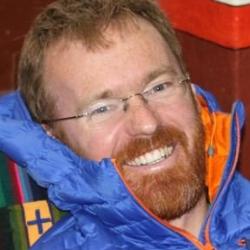
Dr Olly Bartlett is a Senior Lecturer in Remote Sensing and Geography at the University of Hertfordshire , affiliated with the Department of Psychology, Sport and Geography within the School of Life and Medical Sciences. His work focuses on planetary-scale remote sensing analysis of the cryosphere, with field campaigns in Greenland, Nepal, Svalbard, and the Peruvian Andes. Education: PhD in Physical Geography (University of Exeter, 2020); MSc in Polar and Alpine Change (University of Sheffield, 2016); BSc in Physical Geography (University of Sheffield, 2015) Dr Bartlett specializes in UAV-based remote sensing and Google Earth Engine , holding a UK GVC for UAV operations. His research tracks environmental changes in polar and alpine regions, including quantifying Antarctic Peninsula greening (1986–2021) and glacier dynamics in the Himalayas and Canadian Arctic. Recent publications highlight his methodological innovations in radar surveying and supraglacial hummock morphology studies. His work bridges glaciology and geospatial analysis , focusing on climate-induced glacial retreat impacts. He supervises PhD student Lottie Pearson on pan-Arctic permafrost thaw projects and collaborates internationally on cryospheric studies.
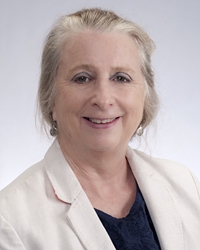
Professor Alex Copley holds the position of Professor of Tectonics at the Department of Earth Sciences, University of Cambridge. His research focuses on understanding Earth's crustal deformation, tectonic forces, and earthquake dynamics across scales from microcrystalline to continental. He employs integrated approaches combining field geology, geophysical data, numerical modeling, and petrological analysis. His work addresses key questions on earthquake controls, tectonic force origins, and crustal material properties, with global field projects spanning Asia, the Middle East, Europe, Africa, and South America. Research interests include: Earthquake mechanics and seismic hazard mitigation Continental tectonics and mountain belt evolution Crustal rheology and lithospheric dynamics Metamorphic petrology and continental collision processes Large-scale controls on critical mineral distributions Recent publications highlight studies on fault mechanics in Iran, Himalayan shortening, and the thermal evolution of mountain ranges. His work bridges fundamental geoscience with societal applications, including earthquake resilience and tectonic influences on resource formation. Affiliations include Bullard Laboratories and collaborations with global institutions. No formal awards are listed in the provided text, though his research has been published in high-impact journals like Nature and Geophysical Research Letters .
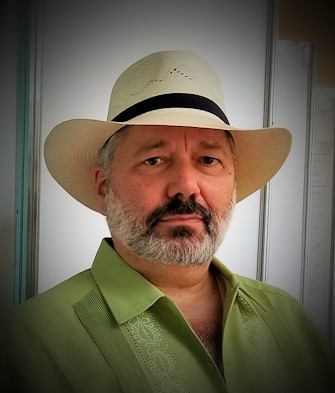
David Zakharov is an Assistant Professor in the Department of Geological and Environmental Sciences at Western Michigan University (WMU), specializing in petrology, stable isotope geochemistry, and water-rock interaction. His research focuses on the geochemical co-evolution of Earth’s crust and hydrosphere, particularly through igneous and metamorphic processes, with projects targeting Archean subaerial magmatism, Precambrian chert geochemistry, and fluid circulation in oceanic crust. At WMU, Zakharov established a stable isotope lab in January 2023, equipped with advanced instrumentation including a Thermo EA Isolink, Renishaw Raman microscope, and CO2 laser. His lab conducts high-precision triple O-isotope (δ¹⁸O, δD, Δ¹⁷O) analyses, geochronology, and SIMS measurements, collaborating on studies such as the 2025 Chemical Geology paper on exceptionally low δ¹⁸O zircon values and the 2024 Chemical Geology paper on experimental olivine-water reactions. He has presented at major conferences like Goldschmidt 2024 and AGU Fall Meeting 2022. Zakharov’s research integrates fieldwork, laboratory experiments, and analytical techniques to reconstruct ancient environmental conditions, such as seawater chemistry and hydrological cycles. His lab has hosted distinguished lecturers and workshops, including a 2024 SIMS Workshop at UCLA. Current projects involve PhD students Israr Hussain, Afrid Abdaly Sheik, and Zack Stevens, with recent publications highlighting reactive fluid dynamics, silicification processes, and isotopic constraints on early Earth environments.
Dr. Susan D. Hovorka is a Research Professor at the Bureau of Economic Geology, The University of Texas at Austin, specializing in geological techniques for environmental applications. She focuses on subsurface permeability dynamics in both tight and highly transmissive systems, with a primary emphasis on geological carbon sequestration and CO₂ storage security. Ph.D. in Geology (1990), The University of Texas at Austin M.A. in Geology (1981), The University of Texas at Austin B.A. in Geology (1974), Earlham College Her research addresses critical challenges in carbon geological storage, including: Characterizing salt formations as containment materials Analyzing carbonate fabrics for karst aquifer flow understanding Field CO₂ injection experiments for sequestration assessment Developing composite confining systems for secure CO₂ retention The articles she has contributed to since 2002 demonstrate a consistent focus on: Carbon capture and storage (CCS) technologies Reservoir pressure dynamics and fault permeability Permit-ready site workflows and risk mitigation Geological analogs from petroleum systems Dr. Hovorka actively collaborates with institutions like the Gulf Coast Carbon Center (GCCC) and participates in international CCS initiatives. Her work integrates sedimentology, geophysics, and environmental policy to advance subsurface carbon management solutions.
Justin Leidwanger is an Associate Professor of Classics at Stanford University with a courtesy appointment in Oceans at the Doerr School of Sustainability, specializing in Mediterranean maritime archaeology through fieldwork in southeast Sicily and southwest Turkey. His educational background includes: Ph.D. in Art and Archaeology of the Mediterranean World from the University of Pennsylvania (2011) M.A. in Nautical Archaeology and Anthropology from Texas A&M University B.A. in History & Classical Studies from Loyola University Chicago Leidwanger's research centers on Mediterranean mobilities, maritime communities, and exchange systems from the Roman period through late antiquity, using shipwrecks and port sites to analyze socioeconomic dynamics. His work integrates ceramic analysis, port network studies, and digital heritage methods to explore ancient technologies of distribution and long-term maritime interactions. Recent publications reveal consistent focus on Roman/late antique maritime economies with growing emphasis on digital documentation (3D modeling, GIS) and contemporary relevance through migration studies. Key trends include transport amphorae standardization, underwater survey methodologies, and the intersection of ancient maritime heritage with modern migration patterns in the central Mediterranean. Leidwanger actively advises students in classical archaeology while leading major field projects including the Marzamemi 'church wreck' investigation (2013-2019) and ongoing 'U Mari research in Sicily. His work combines underwater survey, community-based archaeology, and heritage activism addressing both ancient tuna fishing traditions (mattanza) and contemporary migration routes. He directs the Maritime Archaeology and Digital Heritage Lab (MEDLab) at Stanford's Archaeology Center, which supports advanced digital modeling (photogrammetry, laser scanning, network analysis) and ceramic analysis (petrography, pXRF, computational morphometrics) for field research and museum collaborations.
Robert B. J. Mason is an Associate Professor at the University of Toronto and serves as Archaeological Scientist and Database Technician at the Royal Ontario Museum (ROM). His interdisciplinary work bridges geological methodologies with archaeological studies, focusing on material culture and technological transmission. Education: PhD in Archaeology from the University of Oxford (1994), Bachelors in Anthropology (Archaeology) and Geology from the University of Toronto. Mason’s research emphasizes the archaeology of material culture , technological development , and long-distance exchange mechanisms , particularly through ceramic analysis. His fieldwork in Syria (1998–2009) and studies of sacred spaces reflect a deep engagement with the archaeology of Christianity and monotheism . Publications highlight his expertise in petrography , chemical analysis , and ceramic typology , with a focus on medieval Middle Eastern pottery. Recent publications align with his interests in archaeometry and technological change transmission , utilizing geological techniques to analyze production contexts and trade networks. Mason continues to contribute to sacred landscape studies through cataloging and research at the ROM. Current roles include teaching and research at the University of Toronto, alongside database and artifact management at the Royal Ontario Museum. His work integrates field surveys, laboratory analysis, and interdisciplinary collaboration to explore Neolithic origins of sacred spaces and the mobility of technological practices.
Dr. Maria Giuditta Fellin is a Lecturer at the Department of Earth and Planetary Sciences at ETH Zurich, affiliated with the Institute of Geochemistry and Petrology. She is part of the Earth Surface Dynamics Group and specializes in low-temperature thermochronology, using fission-track and (U-Th)/He dating techniques on zircon and apatite to study mountain belt exhumation and erosion processes. Her work focuses on linking tectonic activity, erosion patterns, and long-term landscape evolution. Her research spans global tectonic regions including the Pamir, Alps, Apennines, and Andes. She teaches courses on sedimentary petrography, microscopy, geochronology, and climate-soil-water interactions. No specific scientific awards are listed in the provided information. Her technical expertise includes advanced geochronological methods and quantitative modeling of tectonic-erosional systems.
Kostalena Michelaki is an Associate Professor in the School of Human Evolution and Social Change at Arizona State University. Her research focuses on integrating geochemical, archaeological, and anthropological approaches to understand material culture production, exchange networks, and human-environment interactions across diverse geographic and temporal contexts. Her work spans prehistoric Europe, Mesoamerica, and North America, with particular emphases on ceramic technology, provenance studies, and the application of archaeometric methods. Methodologically, she specializes in elemental analysis of materials (ceramics, lithics, and metals), spatial analysis of archaeological landscapes, and experimental archaeology. She critiques traditional typological approaches by emphasizing the importance of integrating physico-chemical data to reconstruct ancient production systems and social dynamics. Recent projects include geochemical sourcing of Stonehenge sarsen stones, analysis of La Quemada ceramics in Mexico, and investigations into European copper distribution in 17th-century Canada. Her research consistently highlights how material objects encode histories of human creativity, resource management, and cultural exchange. Michelaki's publications emphasize methodological rigor in data interpretation, advocating for transparent analytical frameworks to avoid over-interpretation of archaeological materials. She collaborates extensively with geologists, chemists, and Indigenous communities to contextualize technical data within socio-cultural narratives.
Prof. Ksenija A. Stojanović holds the position of Full Professor at the University of Belgrade's Faculty of Chemistry , Department of Applied Chemistry. She has been affiliated with the Faculty since 2008, progressing from Assistant Professor (2008–2013), to Associate Professor (2013–2018), and Full Professor since 2018. Education: PhD in Chemistry (2000–2004), Faculty of Chemistry, University of Belgrade Postdoctoral studies at the Institute of Petroleum Chemistry, Russian Academy of Sciences (2006–2007) Research focuses on organic geochemistry , chemometry , and environmental chemistry . Her work includes biomarker analysis, oil-source rock correlations, and studies on lignite and lacustrine sediments. She has led or contributed to national and international projects, including investigations into lignite utilization and organophosphate flame retardants. Awards: 2006: Best Paper Prize for Young Researchers at the International Conference on Oil and Gas Chemistry 2011: American Chemical Society Reviewing Award Administrative roles include serving as Chair of the Admission Committee for Basic and Integrated Studies (2016–2022) and Deputy Chairman of the Faculty Board (2018–2020). She is a member of the Serbian Chemical Society and European Association of Organic Geochemists. Her teaching covers courses such as Industrial Chemistry , Geochemistry and Soil Pollutants , and Biomarkers in Geological Evolution .
Teresa TRUA is an Associate Professor at the Department of Earth Sciences, University of Parma, where she has been employed since 1998. She teaches Petrography (12 ECTS) for the Geological Sciences (L-34) program and holds additional teaching appointments in Geothermal Energy and Active Magmatic Systems. Her academic career includes a Ph.D. in Earth Sciences (University of Pisa, 1997) and a geological sciences degree from the University of Calabria (1990). 1967: Born in Genova, Italy 1990: Degree in Geological Sciences, University of Calabria 1997: Ph.D. in Earth Sciences, University of Pisa Her research focuses on petrology and geochemistry of magmas in back-arc basins (Southern Tyrrhenian), rift areas (Ethiopian Rift; Hyblean Plateau), and post-collisional settings (Carpathian Arc), aiming to decipher magma petrogenesis and geodynamic relationships. She specializes in melt inclusions in olivine phenocrysts and crystal textural/chemical analysis as petrogenetic tools for plumbing system reconstruction. Recent publications (2024) analyze back-arc plumbing systems, carbonatite signatures in Southern Italy, and time scales of mush-dominated magmatic processes, building on 34+ international journal publications with 753 citations (h-index: 14, i10-index: 17 as of 2018). Collaborations include ISMAR-CNR (Bologna), IGG-CNR (Pisa, Padova, Pavia), DiBEST (University of Calabria), and CNRS-IRD (France). Teaching spans Petrography (I & II) at both first and second cycle degrees in Earth Sciences and Geological Sciences Applied to Environmental Sustainability (2013-2025). Her work integrates field-based volcanic rock studies, geochemical data, and experimental petrology to unravel mantle dynamics and crustal magma evolution.
Rossana Bellopede is an Associate Professor at the Politecnico di Torino, affiliated with the Department of Environmental, Land and Infrastructure Engineering (DIATI) . She leads the Raw Materials (DIATI) laboratory and contributes to projects like CITERIA (critical raw material recovery) and SHOWCAVE (tourist cave impact mitigation). Her roles include coordinating PhD programs in Civil and Environmental Engineering and teaching courses on Circular Economy , Natural Stone Characterization , and Occupational Safety . Research focuses on solid waste recovery (tunnel muck, mining tailings) natural stone durability (weathering, bowing phenomena) microplastic pollution (karst systems, groundwater, caves) asbestos testing (industrial safety) Recent publications examine textile wastewater microfibers (2025), microplastic transport in karst environments (2025), and critical raw material recovery techniques (2025). Her work aligns with SDG 12 (Responsible Consumption) and SDG 11 (Sustainable Cities). Scientific participations include Advisor for ANIM (National Mining Engineers Association) Organizing committee of Heritage Stones Workshop (2021) Research network PROMETIA (2018-2025) She manages commercial projects like CE marking for Piasentina Stone , develops FAST4C circular textiles protocols (2024-2028), and supervises PhD candidates studying microplastic pollution in karst systems stone durability mechanisms sustainable construction materials
Giuseppe Palladino is an Honorary Research Fellow at the University of Aberdeen's School of Geosciences. His research focuses on structural geology, sedimentology, and tectonics with particular emphasis on sandstone intrusions, landslide dynamics, and carbonate reservoir characterization. He has conducted extensive fieldwork in Southern Italy, California, and the Apennine regions, contributing to understanding hydrocarbon reservoir connectivity, tectonic deformation processes, and geohazard mitigation strategies. Key research areas include: Structural controls on sedimentary basin evolution Diagenetic processes in fault-related sandstone intrusions Landslide monitoring using InSAR and geophysical techniques Geoheritage preservation in Mediterranean mountain regions His recent work (2020-2025) emphasizes: UKCS hydrocarbon reservoir modeling using sand injectite analysis Tectonic reconstruction of Southern Apennines thrust belts Biomineralization in Triassic carbonates as paleoenvironmental indicators Publications (2017-2025) demonstrate interdisciplinary approaches integrating field geology, remote sensing, and quantitative petrographic analysis to address applied geological challenges in energy exploration and environmental management.
Helmholtz Centre Potsdam - German Research Centre for GeosciencesGermany
R. Wirth is a senior researcher in the Department of Geochemistry at the Deutsches GeoForschungsZentrum (GFZ), Potsdam, Germany, specifically within the 3.5 Interface Geochemistry group. Previously, he was affiliated with the 3.6 Chemistry and Physics of Earth Materials group at the same institution. He is actively engaged in cutting-edge research involving nanoscale analysis of geological materials using transmission electron microscopy (TEM) and other advanced microanalytical techniques. The research interests of R. Wirth span a broad range of topics in geochemistry and mineralogy, including interface geochemistry, shock metamorphism, hydrothermal alteration, nanomineralogy, high-pressure mineral physics, and the formation and transformation of Earth materials. His work frequently addresses fundamental questions in petrology, economic geology, and planetary science, often focusing on the micro- to nano-scale processes that govern mineral behavior under extreme conditions. An analysis of Wirth's recent publications reveals a strong trend toward interdisciplinary geochemical research, combining advanced analytical methods with field and experimental studies. His work often involves collaboration with international teams and contributes to understanding geological processes such as impact cratering, mantle metasomatism, ore formation, and fossilization. The keywords and subfields from his articles highlight a consistent focus on microstructures, phase transitions, fluid-rock interactions, and the application of high-resolution microscopy in Earth sciences. R. Wirth has made significant contributions to the scientific community through his extensive publication record in high-impact journals such as Geology , American Mineralogist , and Contributions to Mineralogy and Petrology . His research has advanced the understanding of mineral behavior at the nanoscale, with implications for resource exploration, planetary science, and fundamental geochemical processes. Although no specific grants or advising roles are mentioned in the provided text, his collaborative publication pattern suggests an active role in research teams and scientific networks. His laboratory work is centered on advanced electron microscopy techniques at GFZ, where he likely leads or is a key member of a research team specializing in nanogeoscience. The consistent use of TEM, EELS, and microdiffraction in his studies indicates a well-equipped and specialized laboratory environment focused on high-resolution characterization of geological materials.
Katarzyna Walczak serves as an Assistant Professor in the Department of Mineralogy, Petrography and Geochemistry at AGH University of Science and Technology's Faculty of Geology, Geophysics and Environmental Protection. Her office is located in room 28 (building A-0, high ground floor) with contact details: +48 12 617 23 76 and kwalczak@agh.edu.pl. Her research specializes in advanced cathode materials for rechargeable batteries, with particular emphasis on structural characterization and electrochemical behavior of sodium-ion battery compounds. Key focus areas include alluaudite-type phosphates, NASICON frameworks, and layered oxide systems where she investigates phase transitions, cation arrangements, and substitution effects. This work bridges mineralogical principles with energy storage applications through rigorous materials synthesis and analysis. Analysis of her 2016-2020 publications reveals consistent investigation into structure-property relationships in battery materials, particularly examining how atomic-scale arrangements (e.g., Na/Mn ordering in NaxMnO2) and phase coexistence (O3-P3 transitions in layered oxides) govern electrochemical performance. Her methodology integrates experimental techniques with theoretical modeling to address challenges in cycling stability and ion transport.
Agnieszka Klimek is a Research and Teaching Assistant Professor at the AGH University of Science and Technology in Kraków. She is affiliated with the Faculty of Geology, Geophysics and Environmental Protection, specifically within the Department of Mineralogy, Petrography and Geochemistry. Her work focuses on geological sciences and environmental protection. University: AGH University of Science and Technology School: Faculty of Geology, Geophysics and Environmental Protection Department: Department of Mineralogy, Petrography and Geochemistry Rank: Assistant Professor Email: aklimek@agh.edu.pl Research interests include mineralogy, petrography, geochemistry, and their applications in environmental protection. Her work likely involves analyzing Earth materials and processes through interdisciplinary geological and geochemical approaches.