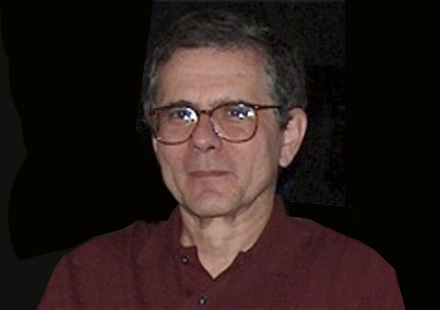
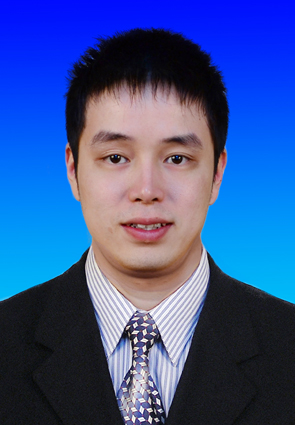
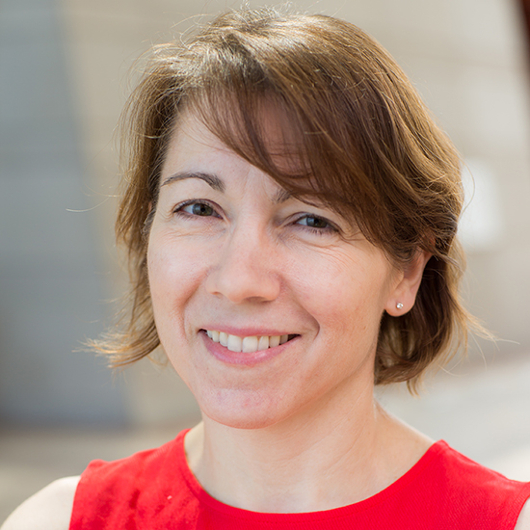
Professor James Taylor is a distinguished academic at Lancaster University where he holds a Personal Chair in Control Engineering within the School of Engineering . As Impact Champion for the School of Engineering and lead for Robotics & Control, he has been instrumental in advancing control engineering research. Previously, he served as group lead for Nuclear Science & Engineering (2019-24) and held senior administrative roles including Director of Teaching and Deputy Head of Engineering (2005-2018). Professor Taylor's research spans data-driven modelling and automatic control for challenging, uncertain systems with applications in Energy systems Healthcare Robotics Environmental monitoring His work has attracted over £10m in UK research council funding as co-investigator across 10+ projects. He has made significant contributions through his research on topics such as Electricity theft detection using machine learning Nuclear fuel analysis with hyperspectral imaging Digital twins for nuclear manufacturing Adaptive medical treatment systems Robotic plant phenotyping platforms Scientific recognition includes: Fellow of the Institution of Engineering & Technology (FIET) Member of IET Academic Accreditation Committee Editorial board member for three Elsevier journals Active participation in UK Automatic Control Council Professor Taylor has supervised numerous PhD students to successful completion and co-develops the internationally used CAPTAIN Toolbox (MATLAB) for system identification and control. He has been involved in developing control systems for Hydraulically actuated dual-arm robots Wave energy converters Assisted tele-operation systems Grow-cell agricultural facilities Motion planning algorithms
Sarah Gilmore is Professor of Organization Studies and Director of Research Impact at Cardiff Business School, Cardiff University. She also serves as Head of the Management, Employment and Organisation Department. With a distinguished career spanning over two decades, Professor Gilmore brings interdisciplinary expertise that bridges management studies, sport science, and psychoanalytic theory. Professor Gilmore's educational background includes a PhD in Business and Management from the University of Portsmouth (2001), an MSc in Theoretical Psychoanalytic Studies from University College London (2006), a Postgraduate Certificate in Teaching and Learning in Higher Education from the University of Portsmouth (2001), a Postgraduate Diploma in Personnel Management from the University of Portsmouth (1990), and a BA (Hons) in English and European Literature from the University of Essex (1982). Professor Gilmore's research makes significant contributions across three interconnected areas. First, her longitudinal ethnographic studies in elite sport examine the precariousness of sport science professionals, contributing to knowledge about emergent professions within management and organization studies. Second, she explores the emotional labor of sport scientists and the challenges this poses for their professional formation. Third, her work on organizational change and strategic HRM has provided models for how sports clubs can secure high performance outcomes through asset maximization, which has been adopted by several English Premier League and Championship clubs. Her secondary research stream employs psychoanalytical (object relations) theories to examine managerial work in fast-paced environments, particularly focusing on English football managers. This work has evolved to explore the materiality of leadership, collective leadership, and new understandings of socialization. These investigations build upon her earlier papers that used psychoanalytical theory to highlight the role of anxiety in professionally accredited environments. Professor Gilmore's extensive publication record demonstrates her influence across multiple disciplines. Her recent work shows a clear trajectory toward examining precarious work conditions, leadership pathologies (particularly vulnerable narcissism), gender dynamics in organizations, and the intersection of psychoanalytic theory with organizational studies. Her 2023-2025 publications reveal a growing focus on social justice issues, particularly around gender discrimination and resistance in organizational contexts. Best paper award for: Barker, J., Gilmore, S., & Gilson, C. (2013). Rhetorical profiling: Modes of meaning generation in organizational topoi. Canadian Journal of Administrative Science, 30(4), 280-291. Winner of EmeraldLiterati outstanding paper award (2008): Gilmore, S., & Williams, S. (2007). Conceptualizing the 'Personnel Professional': A Critical Analysis of the Chartered Institute of Personnel and Development's Professional Qualification Scheme. Personnel Review, 36(4), 398-414. Professor Gilmore actively supervises PhD students and serves as Series Editor for Dialogues in Critical Management Studies. She is also a valued member of editorial boards for several prestigious journals including Academy of Management Learning & Education, Canadian Journal of Administrative Science, Journal of Organizational Change Management, and Organization. Her commitment to academic service extends to her role as Representative at Large for the Academy of Management CMS Division (2012-2014 & 2015-2017). Professor Gilmore maintains strong connections with professional practice, having worked for not-for-profit organizations and one of the UK's largest public sector trade unions before entering academia. Her current research projects focus on Universal Basic Income impacts on the changing world of work and vulnerable narcissistic leadership, demonstrating her ongoing commitment to addressing contemporary organizational challenges.
Britta Kohler is an Adjunct Professor at the University of Tübingen's Faculty of Economics and Social Sciences, Department of School Education. She serves as the Representative for Studies and Teaching at the Institute of Educational Science since October 2022 and coordinates two Master's programs: Educational Science for Teacher Education (M.Ed.) and School Research and School Development (MA). Her academic career spans over three decades with continuous contributions to educational research and practice. 1984-1989: Teacher training at Pädagogische Hochschule Heidelberg 1991-1994: Studies in Educational Science, Psychology, and Sociology at Eberhard-Karls-Universität Tübingen 1997: PhD at Ludwig-Maximilians-Universität München 2004: Habilitation at Pädagogische Hochschule Schwäbisch Gmünd 2009-present: Academic Councilor and Senior Academic Councilor at University of Tübingen 2015: Appointment as Adjunct Professor Professor Kohler's research focuses primarily on homework practices, educational assessment, and school development. Her work examines how teachers assign and review homework, how students engage with homework tasks, and how homework practices can be improved. She also investigates oral grading systems, management of classroom heterogeneity, and the development of effective full-day schools. Her research combines theoretical frameworks with practical applications, making significant contributions to both academic discourse and classroom practice. Analysis of Professor Kohler's recent publications (2021-2025) reveals a strong emphasis on contemporary educational challenges, particularly the intersection of traditional homework practices with emerging technologies like AI. Her work increasingly addresses how digital tools are transforming homework completion and academic integrity. She maintains a consistent focus on practical applications of research findings for teachers, parents, and educational policymakers, often publishing in practitioner-oriented journals alongside academic venues. 2004 Prize from the German Society for Educational Science (DGfE) for outstanding work by young educational scientists As coordinator of two Master's programs and academic advisor in school pedagogy, Professor Kohler plays a significant role in shaping future educational professionals. She serves as a reviewer for multiple educational journals including 'Unterrichtswissenschaft,' 'Schweizerische Zeitschrift für Bildungswissenschaften,' and 'bildungsforschung.' Her editorial work includes serving as co-editor of 'Lernende Schule' since 2025 and previously editing educational content for 'Schulmagazin 5-10' from 2015-2025. Professor Kohler's work extends beyond traditional academic boundaries through media engagement, having participated in interviews with Deutschlandfunk, Badische Neueste Nachrichten, and Table Media discussing contemporary educational issues. Her research often involves collaborative projects with school practitioners and international educational researchers, particularly with Japanese educational institutions as evidenced by her comparative work on school systems.
Marco Antonio Casanova is a Full Professor at the Department of Informatics and Coordinator of the Central Planning and Evaluation Office of the Pontifical Catholic University of Rio de Janeiro (PUC-Rio). He has held significant leadership positions at PUC-Rio including Graduate Program Coordinator (2005-2007) and Director of the Department of Informatics (2007-2011). His research interests concentrate on database conceptual modeling, construction of database management systems, and applications of Large Language Models. Dr. Casanova's work focuses on technologies that facilitate the dissemination and interpretation of data on the Web, with particular emphasis on techniques for designing databases to facilitate interoperability. His academic journey began with a degree in Electronic Engineering from the Military Institute of Engineering (1974), followed by an M.Sc. in Informatics from PUC-Rio (1976), and culminated with an M.Sc. (1978) and Ph.D. (1979) in Applied Mathematics from Harvard University. His recent publications (2023-2025) demonstrate a strong focus on the intersection of Large Language Models with database technologies, particularly in developing advanced Text-to-SQL and Text-to-SPARQL systems. His research spans both theoretical database concepts and practical applications across various domains including engineering, healthcare, and cultural heritage. Dr. Casanova has been particularly active in exploring how LLMs can enhance traditional database query interfaces while addressing real-world challenges in complex database environments. Scientific Recognition: Recipient of the Scientific Merit Award from the Brazilian Computer Society (2012) CNPq Level 1B Productivity Grant recipient Dr. Casanova maintains an active research program with numerous collaborations across Brazil and internationally. His work bridges theoretical database research with practical applications, particularly in the evolving landscape of AI-enhanced database systems. He has contributed significantly to the field of semantic technologies, knowledge graphs, and natural language interfaces to databases, with a recent emphasis on leveraging Large Language Models to solve longstanding database interoperability challenges. His laboratory and research team at PUC-Rio focus on developing innovative approaches to database management that incorporate cutting-edge AI techniques while maintaining strong theoretical foundations in database systems.
Shilin Zhao is an Assistant Professor of Biostatistics at Vanderbilt University Medical Center, specializing in artificial intelligence applications for digital pathology and multi-omics integration. His work bridges computational methodology development with clinical pathology to address challenges in kidney disease, gut microbiome research, and metabolic disorders. Education PhD in Bioinformatics, Shanghai Institutes for Biological Sciences Research Focus Dr. Zhao's research centers on AI-driven pathology and spatial omics , with primary emphasis on: Glomerular and kidney layer segmentation using cross-species data integration Foundation model assessment for cell nuclei analysis in renal histopathology Multi-omics approaches to colitis, atherosclerosis, and metabolic diseases Development of graph networks for spatial transcriptomics prediction His methodologies frequently combine deep learning with biostatistical rigor to translate computational insights into clinical pathology applications. Publication Trends Dr. Zhao's 2025 publications demonstrate intense focus on AI pathology tools (14/15 articles), particularly glomerular analysis and spatial transcriptomics. Key themes include cross-species model adaptation (GLAM), multi-level attention networks (MagNet), and clinical validation of AI foundation models in kidney pathology. His work consistently targets diagnostic precision through computational innovation. Scientific Recognition No specific awards or honors were documented in the provided materials. Academic Contributions While student advising details are unavailable, Dr. Zhao actively contributes to methodological advances in biostatistics through high-impact publications. His involvement in the KPIS 2024 challenge indicates leadership in establishing glomerular segmentation benchmarks for the pathology AI community. Research Environment As primary faculty in Vanderbilt's Department of Biostatistics, Dr. Zhao likely collaborates with institutional resources including the Vanderbilt Biostatistics Data Coordinating Center (VBDCC) and Vanderbilt Technologies for Advanced Genomics Analysis and Research Design (VANGARD), though specific affiliations aren't explicitly stated.
Aaron Veenstra is an Associate Professor in the School of Communication & Multimedia Studies at Florida Atlantic University (FAU), where he teaches courses such as Political Communication and Mass Communication Theory. He holds a Ph.D. in Mass Communication from the University of Wisconsin-Madison and previously taught at Southern Illinois University Carbondale. His research focuses on how social and political identities shape media engagement, particularly in the digital age. He also integrates his background in web development to explore how digital environments influence information access and interpretation. Dr. Veenstra’s expertise spans political communication, media effects, online communities, and cognitive bias. His work examines topics like partisan media consumption, identity-driven media evaluation, and the role of social media in maintaining relationships among diaspora communities. He has published extensively on topics such as social identity theory, media framing, and the evolution of communication models. His recent articles highlight trends in AI’s impact on journalism education, the interplay of political identities in public policy debates, and the dynamics of social media discourse. While no scientific awards are explicitly mentioned, his contributions address contemporary challenges in digital communication and media literacy. He advises no listed students but maintains active involvement in graduate education through course instruction. Dr. Veenstra’s research often bridges theoretical frameworks with practical digital phenomena, emphasizing interdisciplinary approaches to communication studies. His work on Twitter’s role in political discourse and YouTube’s influence on partisan attitudes underscores his commitment to understanding evolving media landscapes.
Leah Findlater is a Professor at the University of Washington , Seattle, WA, USA. Her research focuses on Human-Computer Interaction (HCI) and Accessibility , particularly in developing AI and Machine Learning systems for users with disabilities. Key areas: Assistive Technologies , Speech Recognition , Visual Privacy Collaborators: Jon E. Froehlich, Dhruv Jain, Emma J. McDonnell, Abigale Stangl Her recent work includes sound personalization for Deaf users , AI-driven sign language generation , and privacy tools for blind individuals . She explores interactive machine learning and user-centered design to improve accessibility in smartwatches , AR , and generative AI . Articles highlight cross-disciplinary collaborations with disability communities , focusing on inclusive AI , sensory augmentation , and ethical technology design . She advocates for user-driven accessibility solutions in social media and urban environments .
Soon Hyeok Choi is an Assistant Professor of Real Estate Finance at the Saunders College of Business, Rochester Institute of Technology. He holds a Ph.D., MA, and MPS from Cornell University, and a BA from Bowdoin College. His research focuses on real estate finance, AI/ML applications, asset pricing dynamics, housing affordability, credit risk, and climate risk modeling. Current projects include neural network frameworks for detecting asset price bubbles, winner's curse effects in housing markets, and pricing co-tenancy clauses in retail contracts. He has received awards such as the Best Practitioner Research Award (2023) and the Innovative Thinking Award (2024). Professor Choi teaches courses in financial economics, personal finance, and hospitality asset management. His work bridges theoretical finance with practical real estate challenges, including climate risk's impact on real estate valuations and mortgage lending disparities. Collaborations with scholars like Robert Jarrow and Patrick Smith highlight his interdisciplinary approach to financial markets and real estate dynamics. Award-winning research includes analyzing federal lease terminations' impact on CMBS bonds and modeling network effects on real estate agent career trajectories. His lab integrates machine learning tools to uncover patterns in housing markets and financial systems, contributing to both academic and practitioner understanding of emerging risks and opportunities.
Kaisa Hartikainen is a Senior Lecturer at Metropolia University of Applied Sciences , specializing in interprofessional education development and digital learning environments. She serves as Head of the Master's Degree Programme in Developing Rehabilitation while pursuing doctoral research at the University of Turku. Master of Health Care Clinical Osteopath Physiotherapist Research Focus: Her work examines interprofessional collaboration, emphasizing educational planning and implementation strategies. She explores how digital learning environments can enhance interdisciplinary teaching and client-centered healthcare approaches. Publication Trends: Recent articles address interprofessional competency frameworks, digital transformation in healthcare education, and practical implementation tools. Key themes include collaborative problem-solving, curriculum innovation, and ethical practice models. Contact: Kaisa.Hartikainen2@metropolia.fi Competences: Interprofessional collaboration, educational planning, digital learning, ethics, teaching innovation
Kristof Vrancken is an Assistant Professor at the Faculty of Social Sciences, KU Leuven, and a researcher in the arts at the Media Culture & Policy Lab Future Scenarios in Genk, Belgium. His work bridges media culture, environmental humanities, and participatory design, focusing on the Anthropocene and regenerative futures through visual and material practices. Co-promotor : Changing gaze, changing perception - Participatory art practices for dementia care (2023-2027) Member : DigiSoc – KU Leuven Digital Society Institute Coordinator : Future Scenarios, Genk His research explores: Participatory art and design for ecological awareness Visual narratives addressing the Anthropocene Regenerative futures and multispecies coexistence Biodiversity valuation in agroecosystems Historical and contemporary garden design as ecological practice His recent publications examine: AI-driven community visual storytelling Biofuturing methodologies for multispecies futures Catalytic design processes Critical pedagogies for regenerative design Visual advocacy for invasive species He engages in: Interdisciplinary collaboration between arts, sciences, and policy Curatorial practices for environmental discourse Material experimentation with sustainable processes Designing frameworks for ecological empathy Exploring the intersection of technology and nature The Media Culture & Policy Lab Future Scenarios serves as a platform for: Developing innovative media methodologies Creating policy-relevant artistic interventions Advancing speculative design for societal challenges Cultivating cross-sector collaborations Investigating digital society's environmental implications
Pamela Souza is a Professor in the Department of Communication Sciences & Disorders at Northwestern University's School of Communication. She holds secondary appointments in Linguistics and Otolaryngology-Head and Neck Surgery. Her research focuses on auditory and cognitive factors influencing hearing aid outcomes, particularly in aging populations. She is affiliated with the Hearing Aid Laboratory and is a Fellow of prominent organizations like the Acoustical Society of America and the American Speech-Language-Hearing Association. Dr. Souza earned her PhD in Audiology from Syracuse University. Her clinical interests include severe hearing loss management, tinnitus, and hearing assistive technologies. She has led NIH-funded projects investigating hearing aid signal processing and cognitive-auditory interactions. Notable contributions include developing the Spectral Correlation Index and advancing remote hearing aid assessment methods. Her research spans 30+ years, with over 100 peer-reviewed articles. Key themes include speech recognition in complex environments, working memory effects on hearing aid performance, and individualized treatment approaches. She has pioneered studies on reverberation and noise reduction technologies, emphasizing real-world acoustic challenges. Dr. Souza's grants include NIH R01 awards for studying hearing aid outcomes and compression dynamics. She has advised multiple trainees and collaborates internationally on projects like the E-LOSPHERES initiative. Her lab develops tools like the Portable Automated Rapid Testing (PART) system for auditory research.
Gráinne Fitzsimons is the George C. Lamb, Jr. University Distinguished Professor of Business Administration at Duke University’s Fuqua School of Business and holds a joint appointment as Professor of Psychology and Neuroscience at Trinity College of Arts & Sciences. She specializes in self-regulation, interpersonal relationships, and motivation, with research published in top journals like Journal of Personality and Social Psychology . Her work explores how social contexts influence goal pursuit, including the dynamics of interdependent goals and the societal perception of ambition. Education: Ph.D. in Psychology from New York University (2004), B.A. from McGill University (Canada, 1999). Notable awards include the Wegner Theoretical Innovation Award (2016) and early-career accolades from the Relationship Researchers Interest Group and Foundation for Personality and Social Psychology. Research highlights include studies on goal dynamics in teams, social-class bias in hiring, and the interpersonal costs of high self-control. Her recent publications address topics like social-class perception of goals and the motivational impact of progress patterns. She teaches leadership and ethics courses, emphasizing practical applications of psychological insights in organizational settings. Professional activities include service on Duke’s Bass Connections Faculty Advisory Council (2014-2017) and contributions to interdisciplinary research initiatives. Her work bridges academic theory and real-world challenges, offering frameworks for understanding how relationships and environments shape goal achievement.
Giorgia Chinazzo is an Assistant Professor of Civil and Environmental Engineering at Northwestern University, leading the Architectural Engineering and Design Program. She holds a PhD in Building Science from EPFL and dual master's degrees from Politecnico di Milano and Politecnico di Torino. Her research integrates engineering, architecture, data science, and health sciences to create sustainable, human-centric buildings that enhance occupant well-being while reducing environmental impact. Key focuses include thermal comfort, indoor environmental quality, and smart technologies. Education: PhD in Building Science, Swiss Federal Institute of Technology in Lausanne (EPFL) MSc in Architectural Engineering, Politecnico di Milano (Double Degree) MSc & BSc in Architectural Engineering, Politecnico di Torino Research Interests: Multi-domain human-building interactions Climate-resilient building design Data-driven occupant feedback analysis Thermal comfort innovations Wearable sensor technologies Her work emphasizes bridging lab studies and real-world applications through living laboratories, advancing methodologies for sustainable building practices. Courses taught include Building Science fundamentals and professional development seminars.
Dr. Emily Winter is a Lecturer in Computing and Communications at Lancaster University, part of the School of Computing and Communications (SCC) since 2018. Her research focuses on socio-technical aspects of software engineering, including developer attitudes toward automation, human values in SE, and diversity in computing education. She holds a PhD in Sociology from Lancaster University, an MA in Sociological Research, and a BA in History. Emily has contributed to projects like the Fixie Project (investigating developer attitudes to automated tools) and the Values in Computing initiative. She is a Fellow of AdvanceHE and has received an ESRC 1+3 award for her postgraduate studies. Her external roles include serving as a Reviewer for Information and Software Technology , Workshop Chair for the International Workshop on Genetic Improvement (2022), and Program Committee member for several conferences. Emily teaches the SCC 130 module and actively engages in research addressing gender dynamics in CS education and ethical software design. Key research interests include qualitative methods in SE, developer-centric tool design, and fostering inclusive educational environments. Her work bridges social sciences and computing, emphasizing empirical studies of human-computer interaction in software development. Emily has published widely on topics like automatic program repair, SAST tool usage, and gender representation in CS. Her awards reflect her commitment to pedagogical innovation and social science contributions to computing. She is affiliated with the Security Lancaster research group and is based at InfoLab21.
Prof. Arnold Bakker is a Full Professor of Work and Organizational Psychology at Erasmus University Rotterdam, leading the Work and Organizational Psychology research group. He also serves as Secretary General of the Alliance for Organizational Psychology and holds adjunct professorships at Lingnan University (Hong Kong). His research focuses on positive organizational behaviors such as work engagement, flow, and job crafting, emphasizing the JD-R (Job Demands-Resources) theory co-developed with Evangelia Demerouti. Key contributions include internet applications like the Job Demands-Resources Monitor and the Happiness Indicator. Bakker’s work bridges theory and practice, addressing employee well-being and organizational health. He has authored over 500 publications in top-tier journals and serves on editorial boards such as Journal of Organizational Behavior . Research Interests : Positive organizational phenomena, burnout prevention, work-life balance, and interventions for sustainable employability. His work integrates motivational processes with recovery mechanisms to enhance workplace vitality. Recent Trends in Articles : Focus on playful work design, AI’s impact on job design, and global validation of scales like the International Work Addiction Scale. His recent work explores neuroscientific underpinnings of engagement and recovery, such as video gaming’s role in post-work recovery. Awards : APS Fellow (2013), Thomson Reuters’ Most Influential Scientific Minds (2013–present). Labs/Teams : Coordinates international collaborations via the JD-R research network, developing evidence-based interventions for organizations. His lab emphasizes empirical validation of scales and cross-cultural applicability.