Dr. Ananda Jayawardana is an Adjunct Senior Lecturer at the School of Business , University of New South Wales (UNSW) Canberra . His academic work focuses on organizational behavior, leadership, and human resource management, particularly in cultural and gendered contexts. Research Themes : Work engagement, regulatory focus in leadership, work-family conflict, absorptive capacity, and brain drain mitigation. Recent Publications (2022-2024) examine temporal flexibility in BPO industries, unethical decision-making dynamics, and digital economy impacts on remote work. Publications Trends : A strong emphasis on Sri Lankan organizational contexts, blended with global frameworks like transformational leadership and problem-based learning. His work spans from 1993 to 2024, showing enduring interest in self-managed production, textile operations, and cooperative governance.
Dr. Lorenzo Vigentini serves as an Adjunct Senior Lecturer in the Computer Science and Engineering Department within the Faculty of Engineering at the University of New South Wales (UNSW). With a background spanning psychology, higher education teaching, and extensive IT/e-learning experience, he contributes significantly to the academic community through his expertise at the intersection of cognitive psychology, differential psychology, education, and human-computer interaction. Vigentini's research focuses on learning processes, particularly examining how technology interacts with learning and the human-machine interface. His work emphasizes data-driven approaches to understanding educational patterns, with special interest in Learning Analytics and Educational Data Mining. He has led the development of the Learning Analytics and Educational Data Science research group at UNSW, positioning himself at the forefront of educational innovation. His research interests span technology evolution, student experience enhancement, Quality Assurance processes, and Quality Enhancement in educational contexts. Vigentini's publication record demonstrates consistent focus on learning analytics applications across educational contexts, with recent work examining dashboard development for both secondary schools and higher education institutions. His research shows a clear progression from theoretical frameworks to practical implementations, particularly in MOOC analytics and personalized learning support systems. His work bridges the gap between educational theory and technological implementation, with an increasing emphasis on institutional adoption of data-driven approaches. As a research leader, Vigentini has secured multiple significant grants totaling over AUD 1.9 million, including a major AUD 1.2 million UNSW 'Students as Partners' program in 2018. His grant history reflects a consistent focus on educational innovation, learning analytics implementation, and student experience enhancement across different educational contexts and platforms. Dr. Vigentini has established the Learning Analytics and Educational Data Science research group at UNSW, creating a collaborative environment for exploring data-driven approaches to education. His work integrates quantitative and qualitative methodologies to develop comprehensive understanding of learning processes and technological interventions in educational settings.
Thomas W. Price is an Assistant Professor in the Department of Computer Science at North Carolina State University's College of Engineering. He directs the Help through INTelligent Support (HINTS) Lab and is affiliated with NCSU's Center for Educational Informatics. His work bridges computer science, education, and artificial intelligence to create intelligent learning environments. Dr. Price earned his M.S. and Ph.D. in Computer Science from NC State University in 2015 and 2018 respectively, and was named the College of Engineering Doctoral Scholar of the Year in 2018. His research focuses on computing education with an emphasis on automatically generating programming hints and feedback using student data. He has evaluated innovative programming environments including block-based and frame-based systems, and designs intelligent support tools that integrate with these technologies. His work examines how students seek and use help in both classroom and online settings, with particular interest in open-ended programming projects, data-driven feedback systems, and understanding student programming behaviors. His recent publications reveal a strong trend toward integrating AI and educational data mining techniques to support programming education. His work spans from fundamental research on student help-seeking behaviors to practical tools that provide immediate feedback, detect student struggles, and offer personalized support. A significant portion of his recent work addresses emerging challenges like student use of generative AI tools and detecting AI-generated code submissions. College of Engineering Doctoral Scholar of the Year (2018) Exemplary Paper Award from International Conference on Educational Data Mining Exemplary Paper Award from ACM Technical Symposium on Computer Science Education Recognition by STARS Computing Corps for leadership in computing outreach Dr. Price mentors several Ph.D. students including James Skripchuk, John Thomas Bacher, and Keith Tran. He has secured over $4 million in research funding from the National Science Foundation for projects including infrastructure for sustainable innovation in computer science education, data-driven technologies for STEM instruction, and intelligent support for creative programming projects. His research has practical applications in classroom settings and aims to create scalable solutions that don't place additional burden on instructors. As director of the HINTS Lab, Dr. Price leads a team investigating how to re-imagine educational programming environments as adaptive, data-driven systems. The lab focuses on supporting students working in creative, open-ended contexts through automated tools for planning, hint generation, and progress monitoring. Their research emphasizes practical methods that can scale to new classrooms and contexts while providing personalized support tailored to individual student needs.
Hana Bida is a researcher at the University of Geneva's Faculty of Psychology and Educational Sciences, actively contributing to the Technologies de formation et d'apprentissage (TECFA) research group. Her work centers on digital education implementation within Swiss educational contexts, particularly examining how beginning teachers develop and apply digital competencies in classroom settings. Her research investigates critical intersections between educational psychology and technology integration, focusing on teachers' self-efficacy, digital skill transfer from training to practice, and environmental barriers to technology adoption. Key themes include the psychological dimensions of digital competence development, curriculum reform implementation challenges, and individual factors influencing teachers' capacity to integrate digital learning objectives. This work directly addresses Switzerland's Romandy curriculum digital reform (plan d'étude romand), providing empirical insights for educational policymakers. Analysis of her 2023-2024 publications reveals a cohesive research trajectory examining beginning teachers' experiences through multiple methodological lenses. Her studies consistently identify environmental constraints and individual variables as primary determinants of successful digital education implementation, while highlighting gaps between teacher training programs and classroom realities. The research demonstrates how perceived value of training correlates with effective digital skill application, offering practical frameworks for improving teacher preparation. Scientific Awards: No awards documented in available sources Advising and Grants: Hana Bida has not supervised any theses or dissertations per institutional records (Supervised works: 0). No research grants or funding sources are explicitly referenced in her publication metadata, though her work aligns with Swiss educational reform initiatives that typically involve institutional funding. Labs and Teams: She operates within TECFA (Technologies de formation et d'apprentissage), a prominent UNIGE research group specializing in technology-enhanced learning design, implementation, and evaluation. TECFA's interdisciplinary work bridges educational theory, cognitive science, and digital innovation, providing the methodological foundation for Bida's classroom-focused investigations into digital pedagogy and teacher development.
Eleonora Igorevna Leskina is an Associate Professor and Leading Researcher at the Faculty of Law, Department of Digital and Biolaw at the National Research University Higher School of Economics (HSE) in Moscow, where she has been employed since 2024. Previously, she served as an Associate Professor at Saratov State Law Academy in the Department of Information Law and Digital Technologies (2020-2024) and the Department of Labor Law (2017-2020). She holds a Candidate of Law degree from Saratov State Law Academy (2012) with a dissertation on "Axiological aspects in civil procedural law" and a Jurisprudence degree from Saratov State Academy of Law (2009). Dr. Leskina's research focuses on the intersection of law and emerging technologies, with particular expertise in Big Data regulation, artificial intelligence legal frameworks, personal data protection, blockchain applications, and digital labor relations. Her work addresses critical challenges in data governance, including synthetic data usage, sustainable data turnover, and the legal implications of metaverse environments. She has made significant contributions to understanding the legal regimes of data in various contexts, from healthcare to environmental protection. Her scholarly output demonstrates a consistent focus on contemporary digital law challenges, with numerous publications in leading Russian legal journals and edited volumes. Recent work examines the legal support for synthetic data in AI development, characteristics of Big Data legal regimes, and sustainable data turnover frameworks. Her research shows a clear trajectory toward addressing the most pressing regulatory questions emerging from technological advancement, particularly in the Russian legal context. Gratitude from the Ministry of Justice of the Russian Federation (2023) for effective assistance in solving tasks assigned to the Ministry of Justice, contribution to legal science and education, and training of highly qualified legal personnel Dr. Leskina actively participates in national and international academic discourse, regularly presenting at major conferences including the International Scientific and Practical Conference "Legal Regulation in the Era of Artificial Intelligence" in Samarkand (2025), where she presented on synthetic data for AI development. She has also participated in the Moscow Innovative Legal Forum, conferences at Lomonosov Moscow State University, and the State Duma roundtable on court fees. Her work bridges academic research with practical policy development in the rapidly evolving field of digital law.
Sunnie Lee Watson is a Professor of Learning Design and Technology at Purdue University’s College of Education and serves as the Assistant Dean for Engagement and Global Initiatives. Her work bridges attitudinal learning, critical systems thinking, and learner-centered pedagogy. Ph.D. in Educational Leadership and Policy Studies, Indiana University (2008) Ph.D. in Instructional Systems Technology, Indiana University (2008) M.Ed. in Instructional Systems Technology, Indiana University (2005) B.A. in Educational Technology, Ewha Woman’s University (2001) Dr. Watson’s research focuses on transforming educational paradigms through attitudinal learning and mindset change in formal and informal settings. She pioneers the integration of innovative educational technologies to foster learner-centered online instruction . Her recent publications emphasize MOOCs as tools for attitudinal change, analyzing self-regulated learning and social presence in digital environments. Themes include instructional design , educational psychology , and technology's role in equity . AERA AECT CIES
Dr. S. Zannettou is a Researcher specializing in Technology, Policy and Management with a focus on Organisation & Governance. He is an active contributor to the Cybersecurity (TPM) research project, investigating internet security, data governance, and information policy within socio-technical systems. His research spans interdisciplinary domains including: Cybersecurity infrastructure and threat analysis Social media algorithm behavior and user engagement Data donation methodologies for platform studies Toxicity dynamics in online communities Personalization systems in content recommendation Information dissemination patterns Recent publications analyze social media ecosystems through empirical data, examining TikTok's recommendation mechanics, news consumption patterns, and personalization tradeoffs. His work consistently employs computational methods to study platform governance, algorithmic bias, and user behavior across digital environments. He collaborates with international researchers on the Cybersecurity (TPM) project, which investigates: Cyber threat intelligence frameworks Internet infrastructure vulnerabilities Business risk modeling Information control mechanisms
Professor Neil Harris is a leading expert in atmospheric informatics and environmental science at the Cranfield Environment Centre , Cranfield University, where he has served as Chair in Atmospheric Informatics since April 2016. His work bridges atmospheric research with policy, focusing on ozone depletion, climate modeling, and environmental monitoring. Education: BA in Chemistry (Oxford University), PhD (University of California, Irvine). Research Leadership: Co-chair of the Stratosphere-troposphere Processes and their Role in Climate (WCRP) from 2014–2022; currently a member of the WCRP Safe Landing Lighthouse. Research Interests center on atmospheric chemistry, climate change, and environmental policy. Key projects include: Quantifying UK methane emissions using localized measurements. Measuring terrestrial isoprene emissions in Wytham Woods and Southeast Asia. Studying oceanic dimethylsulfide emissions in the Arctic and Antarctic. Developing autonomous instruments for reactive compound monitoring. Investigating aviation's non-CO2 climate impacts (contrails, NOx emissions). Article Trends reflect his focus on atmospheric data analysis, climate modeling, and environmental informatics, with significant contributions to understanding ozone variability, halocarbon transport, and biogenic VOC emissions. Scientific Awards include: NERC 50th anniversary International Impact Award. NERC 50th anniversary Overall Impact Award (Montreal Protocol contributions). Collaborations span NERC, DEFRA, the Royal Society, the European Union, and Newton Fund. He maintains a personal blog on climate and science issues.
Cecilia Åberg is a Senior Lecturer in Nursing at the School of Health Sciences, University of Skövde. She serves as program coordinator for the Nursing Program and is actively involved in teaching at both basic and advanced levels. Her research focuses on elderly health and well-being, particularly within the DHEAR research environment and the "Välbefinnande vid långvariga hälsoproblem" research group. Research Interests: Åberg specializes in person-centered care for the elderly, digital health interventions to combat existential loneliness, and reflective dialogue techniques to enhance meaning-making in long-term health problems. Her work integrates technology like the egenKRAFT app to support self-reflection and existential conversations. Recent Article Trends: Her 2024 publications emphasize digital tools for elderly engagement, reducing involuntary loneliness, and technology-assisted care delivery. Earlier works (2022–2015) explore qualitative experiences of digital interventions, existential dialogues, and clinical education methods. Projects: Åberg leads the ongoing DigiKRAFT project (2023–2028), which promotes healthy aging through structured existential conversations. Her doctoral research (2022) focused on reflective STRENGTH-giving dialogues for elderly with long-term health issues.
Pirko Tõugu is an Associate Professor of Developmental and Cognitive Psychology at the University of Tartu's Faculty of Social Sciences, Institute of Psychology, holding this position since March 2024. Previously, she served as Lecturer and Research Fellow in Developmental Psychology at the same institution since 2012, with a period as Visiting Professor at Tallinn University's School of Educational Sciences from 2018-2020. Her academic journey includes a Doctoral Degree in Psychology from University of Tartu (2012), Master's Degree in Psychology (2006), and postdoctoral training at Loyola University Chicago (2015-2017). Her research interests focus primarily on developmental psychology, with emphasis on autobiographical memory development, parent-child interactions during reminiscing, socialization processes across cultural contexts, and children's learning in informal educational settings like museums. Her work often examines how family interactions shape children's cognitive and social development, with particular attention to narrative processes and memory formation. Her publication record demonstrates a consistent research trajectory examining children's cognitive and social development through multiple lenses. The most recent articles reveal a strong focus on autobiographical memory development across the lifespan, the impact of the pandemic on family interactions and child development, and how museum environments facilitate children's learning. Her research frequently employs cross-cultural comparative approaches, longitudinal designs, and both qualitative and quantitative methodologies to understand developmental processes. AcademiaNet member (since 2022) Editorial board member of Infant and Child Development (since 2022) Dr. Tõugu has supervised 10 master's theses on topics ranging from children's pandemic memories to bullying experiences and museum learning. She currently leads significant research projects including 'Autobiographical memory as a multilayered construct: development beyond early childhood and a tool for learning' (2019-2025) with €312,896 funding, and 'Study: What age limits would be the most accurate approximations of young people's decision-making and responsibility capabilities?' (2025). Her research has attracted substantial funding from Estonian Research Council, Ministry of Education and Research, and other national funding bodies. Her work extends to public outreach, including media appearances discussing brain science (TeadusEST: 8. Aju, 2024) and pandemic effects on children (Vikerraadio ERR, 2023), demonstrating her commitment to translating research findings for broader societal impact.
Vahid Parvaresh is an Assistant Professor of English at the Faculty of Foreign Languages, University of Isfahan. His academic work bridges theoretical linguistics and practical language education while examining sociocultural dimensions of English as a global language. Education: PhD in Linguistics from University of Isfahan, MA in Applied Linguistics from University of Tehran Research focuses on: Discourse Analysis Cross-Cultural Pragmatics Language Pedagogy Intercultural Communication English Language Globalization Language Market Dynamics His publications from 2010-2013 reveal consistent exploration of: Language education's intersection with cultural phenomena Cross-cultural identity negotiation Sociolinguistic impacts of globalization Discourse analysis in real-world contexts Language market commodification Intergenerational language transmission
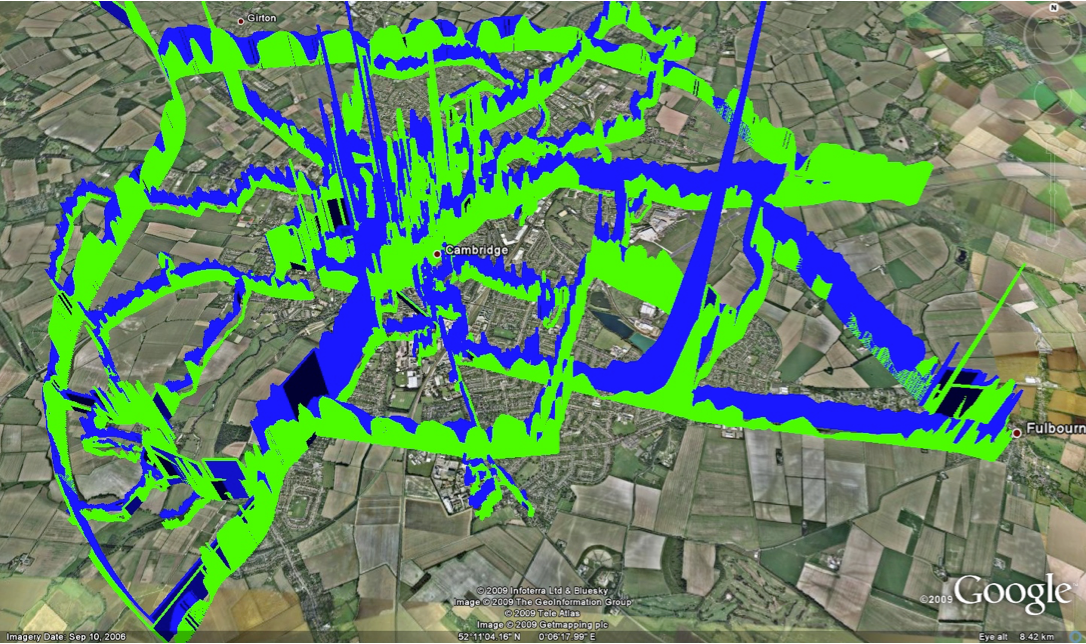
Professor Rod Jones is the Professor of Atmospheric Science at the Yusuf Hamied Department of Chemistry , University of Cambridge. He leads the Jones (R.) Group within the Centre for Atmospheric Science (CAS) , a joint venture between the Departments of Chemistry, Applied Mathematics and Theoretical Physics, and Geography. Research Highlights: Observational studies of atmospheric structure and photochemistry, bridging climate change, air pollution, and human health Development of low-cost air quality sensors for urban pollution monitoring in locations like Heathrow Airport , Beijing , and Delhi Investigations into airborne infection risk via CO2 monitoring and COPD health impacts in London and Beijing Advanced techniques like cavity ringdown spectroscopy and FAAM aircraft for sub-ppt level radical species measurements Contact: Email: rlj1001@cam.ac.uk Phone: 01223 336466
Elif Armbruster, PhD, is Professor of English in the College of Arts & Sciences at Suffolk University , Boston, where she teaches undergraduate and honors courses in American literature, women’s writing, and literary studies. A specialist in American realism (1870-1920) and women’s literary activism, she is the author of the monograph Domestic Biographies: Stowe, Howells, James, and Wharton at Home (Peter Lang, 2011) and editor or contributor to numerous scholarly volumes and classroom editions. Education PhD, American Studies, Boston University MA, American and New England Studies, University of Southern Maine BA, English and French, Haverford and Bryn Mawr Colleges Research Interests Armbruster’s scholarship interrogates the intersections of domestic space, gender, and authorship in late-nineteenth- and early-twentieth-century American literature. Her work on literary activism examines how women writers such as Louisa May Alcott and Harriet Beecher Stowe deployed realism to intervene in social debates on race, labor, and reform. She also explores material culture —houses, objects, and built environments—as narrative devices that illuminate character psychology and national identity. A second vein of research focuses on life writing , particularly autobiography and biography, to recover marginalized women’s voices and re-map the American literary canon. Publications & Current Projects Across essays appearing in Edith Wharton Review , Journal of International Women’s Studies , Legacy , and several edited collections, Armbruster has advanced new readings of canonical and understudied women authors. She is presently completing a monograph entitled Sisters by Design: The Intertwined Lives of Edith Wharton, Minnie Jones, and Beatrix Farrand , which traces the collaborative networks of female creativity in the Gilded Age. Recent and forthcoming articles (2023-2026) extend her archival research into post-Civil War Florida, #MeToo memoir pedagogy, and global receptions of Wharton’s letters. Teaching & Mentorship At Suffolk she offers courses ranging from introductory surveys ( American Literature I & II ; World Literature in English ) to advanced seminars ( Women Writing the American West ; Honor Rebel Girls and Nasty Women ) and the senior honors thesis. She invites students to interrogate nation, gender, and genre through interdisciplinary lenses that incorporate material culture, digital archives, and community-engaged learning. Contact Office: 73 Tremont St., Room 8050, Boston, MA 02108 Email: earmbruster@suffolk.edu Phone: 617-994-6437 Office Hours: Tuesday & Thursday 10:00–11:00 a.m. (in-person or Zoom by appointment)
William B. Cutrer is a Professor of Pediatrics and Anesthesiology at Vanderbilt University School of Medicine, with a focus on pediatric critical care. He serves as Senior Associate Dean for Undergraduate Medical Education and leads initiatives to enhance workplace learning and adaptive expertise in medical training. Doctor of Medicine - University of Kentucky, 2003 Fellowship - Texas Children's Hospital Master of Education - University of Cincinnati Residency - Texas Children's Hospital His research explores how medical students develop expert learning skills through the AMA’s Accelerating Change in Medical Education (ACE) Consortium and the AAMC’s Core Entrustable Professional Activities (EPAs) pilot project, focusing on personalized learning and competency frameworks. Recent publications examine adaptive expertise, clinical reasoning, and information systems in medical education. He chairs the AAMC Group on Educational Affairs and contributes to national medical education reforms. Board Certification : Pediatric Critical Care Medicine, 2010 Lab website: Cutrer Lab
Prof. Dr. Gergana Vladova serves as a Visiting Professor at the Institute of Computer Science , Humboldt University of Berlin. Her work bridges Computer Science and Education , focusing on technology-mediated teaching, digital sovereignty, and Industry 4.0 applications in learning environments.