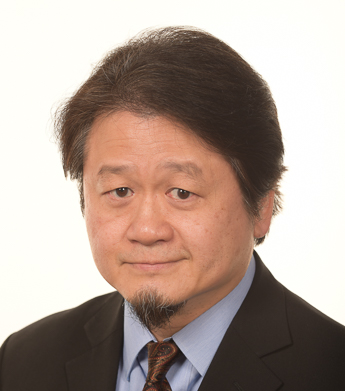
Nicholas Papouchis is a Professor in the Department of Psychology at Long Island University (LIU) and has served as Director of the Ph.D. Program in Clinical Psychology since 1984. He holds a Ph.D. from the City University of New York (1972) and completed postdoctoral training in Psychotherapy and Psychoanalysis at New York University (1978). His professional affiliations include roles at the Albert Einstein College of Medicine, Adelphi University's Derner Institute, the Manhattan Institute for Psychoanalysis, and the Center for Psychotherapy and Psychoanalysis of New Jersey. He is also involved in editorial boards for journals like the Journal of Infant, Child and Adolescent Psychotherapy . His research focuses on integrating attachment theory, object relational theories, and reflective functioning into clinical practice. Key interests include the therapeutic process, cultural influences on therapy, and mindfulness applications. He collaborates with doctoral students on projects exploring psychological phenomena linked to attachment and reflective functioning, with plans to expand into Interpersonal Neurobiology. Dr. Papouchis has presented extensively on topics such as trauma, cultural identity, and psychotherapy outcomes. His recent work includes studies on mortality salience priming, dissociation in trauma, and language effects on cultural identity negotiation. He holds ABPP certification from the American Board of Professional Psychology. He co-leads a bi-weekly research group examining clinical training and cultural biases in psychotherapy. His private practice spans New York City and Montclair, New Jersey, emphasizing clinical application of his theoretical frameworks.
Dr. Elisa Lopper is a Researcher in the Department of Occupational Health Psychology at the Faculty of Life Sciences, Humboldt University of Berlin. She completed her PhD in Psychology (Dr. rer. nat.) at Humboldt University from 2018-2023, following a Master of Science in Psychology (2014-2016) and Bachelor of Science in Psychology (2011-2014), all from Humboldt University. Her academic journey includes: PhD in Psychology, Humboldt University of Berlin (2018-2023) Master of Science in Psychology, Humboldt University of Berlin (2014-2016) Bachelor of Science in Psychology, Humboldt University of Berlin (2011-2014) Dr. Lopper's research focuses on: Proactive behavior and job crafting Work design Work-related interventions Stressors-resources-well-being relationships at work Human resource development Her scholarly output demonstrates a consistent focus on how employees can proactively shape their work environments to enhance both well-being and performance. She has developed measurement tools like the Approach-Avoidance Job Crafting Scale and the MotOr scale for teacher motivational orientations. Her methodological approach often employs longitudinal and within-person designs to capture dynamic workplace processes, with a particular interest in reciprocal relationships between job crafting, work engagement, and performance. Dr. Lopper has received research funding from notable sources including the German Research Foundation (DFG) and the Berlin University Alliance. She serves as an ad hoc reviewer for prestigious journals such as Applied Psychology: An International Review, Journal of Personnel Psychology, and European Journal of Work and Organizational Psychology. She is an active member of professional organizations including: European Association of Work and Organizational Psychology (EAWOP) German Society of Psychology (DGPs) Center for Empirical Evaluation Research Her collaborative work spans multiple institutions, with significant contributions to projects examining teachers' resources, work engagement, and instructional quality, as well as interventions targeting employee well-being through physical activity and job crafting.
Jeffrey Ting is the Interim Head of Computing and Mathematical Sciences and Senior Lecturer at the University of Wolverhampton's School of Mathematics and Computer Science (Faculty of Science and Engineering). His academic qualifications include an MSc in Control Systems from the University of Sheffield, a Postgraduate Diploma in Business Administration from the University of Birmingham, and a BSc Joint Honours in Computer Science and Electronic Engineering from the University of Birmingham. His research focuses on Machine Learning , Computer Vision , and Plenoptic Lightfield Imaging , with broader expertise spanning Mobile Technologies, Software Engineering, Cyber Security, and Web Technologies. Current investigations include developing a hybrid framework for light field scene reconstruction as part of his PhD research. Analysis of his 15 most recent publications reveals predominant themes in educational technology (mobile learning systems, interactive tools) and control systems (industrial automation, multivariable control), with later work expanding into medical informatics and imaging technologies. Publications demonstrate consistent interdisciplinary collaboration and practical applications in industrial and educational contexts. Professional affiliations include Chartered Membership in the British Computer Society and Fellowship in the Higher Education Academy. He currently supervises a PhD project on light field reconstruction and has extensive industry experience in software development and management prior to his academic career.
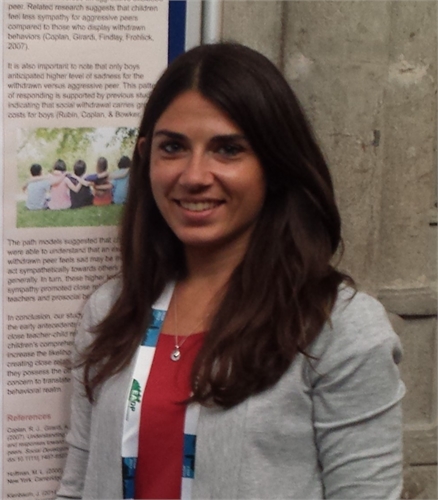
Stefania Sette is an Associate Professor in Developmental Psychology at the Department of Developmental and Social Psychology, Sapienza University of Rome, within the Faculty of Medicine and Psychology. Her office is located in room 313 of the faculty building. Her research focuses on socio-emotional functioning in children and adolescents, with specialized interests in social withdrawal motivations, loneliness, peer relationships, and classroom dynamics. Current investigations examine antecedents and consequences of social withdrawal across developmental stages, cross-cultural patterns of solitude, and pandemic-related impacts on youth mental health. Her publications demonstrate consistent focus on developmental psychopathology themes, with recent works (2023-2025) examining: longitudinal patterns of social withdrawal; cultural variations in solitude; COVID-19 impacts on adolescent functioning; mediators between social behaviors and internalizing problems; and person-centered analyses of motivation patterns. Methodologically, she employs latent profile analysis, cross-cultural validation, and longitudinal designs.
Imke Knafla is a Professor at the ZHAW School of Applied Psychology , Zürcher Hochschule für Angewandte Wissenschaften (ZHAW). Her work focuses on clinical psychology, resilience, and mental health in organizational and educational contexts. Current research areas: Workplace mental health, self-regulation, youth resilience, behavioral medicine, and counseling frameworks. Project leadership in Employee Assistance Programs (EAP) and healthcare psychotherapy initiatives. Collaborations with experts like Marcel Schär Gmelch and Carmen Keller on digital workplace challenges and psychotherapeutic interventions. Email: imke.knafla@zhaw.ch Recent publications examine resilience-building strategies, workplace psychological safety, and self-leadership frameworks, with key contributions to digital work environments and organizational mental health policies. Her work spans peer-reviewed journals, book chapters, and conference presentations across Europe.
Reka Samson is a Master Lecturer at the Department of German Language and Literature within the Faculty of Humanities and Social Sciences at Károli Gáspár Reformed University. She also serves as an E-learning developer at the ICT Research Center, combining her expertise in language teaching with digital education technologies. Her educational background includes MA degrees in German Studies and Romance Studies from Eötvös Loránd University and Kodolányi János College, obtained in 2005 and 2008 respectively. Dr. Samson's research focuses on the intersection of language education and digital technologies. Her primary areas of interest include: Digital competencies in language teaching Information and communication technologies in language classrooms Teaching methodology for German language instruction Language development and speech practice Dyslexia and foreign language learning Her recent publications demonstrate a consistent focus on innovative approaches to language education, particularly examining how digital tools can enhance German language teaching. The works show progression from theoretical frameworks to practical applications of technology in the language classroom, with increasing emphasis on personalized learning approaches. Her notable awards include: Innovative Educator Award from Károli ICT Research Center (2024) Digital best practices in higher education from German Embassy (2021) Dr. Samson actively contributes to the academic community through various organizational roles including coordinating the DLL project with the Goethe Institute since 2024, organizing the Denk Deutsch national German language competition since 2023, mentoring in the Education and Research Development Mentor Network, and serving as contact person for the Károli Junior Academy since 2022. She is a member of the Hungarian German Teachers Association (UDV) and the Society of Hungarian Germanists (GUG).
Gunn Pettersen is Professor of Mental Health Work at UiT The Arctic University of Norway , Department of Health and Care Sciences, and leads the research group Public Health and Rehabilitation . She also holds a temporary clinical position at the Regional Centre for Eating Disorders, Children and Adolescent Clinic, University Hospital of Northern Norway, directing the competence programme Body and Self-Esteem . Education and academic roles: Professor of Mental Health Work – Master’s Programme in Mental Health Work, UiT Course Leader – HEL-8040 Theory of Science, Research Ethics and Research Design PhD & Master’s supervisor Research interests: Prof Pettersen’s work centres on evidence-based treatment of eating disorders , especially Family-Based Treatment (FBT) for children and adolescents, Relative Energy Deficiency in Sport (RED-S) in elite female athletes, sleep disturbances and cognitive-behavioural insomnia therapy among chronic pain patients, and patient & public involvement (PPI) in health research. She further explores mobile-health (mHealth) interventions to promote physical activity in people with intellectual disability, and recovery processes following long-term substance-use disorders. Publication trends: Across 2020-2025 her output reflects three converging strands: (1) large-scale randomized controlled trials testing exercise- and dietary-based treatments for eating disorders; (2) prospective cohort studies mapping RED-S prevalence and mental-health trajectories in adolescent elite athletes; and (3) qualitative and mixed-methods studies examining patient experiences, implementation challenges, and stakeholder engagement in both clinical and community settings. Scientific honours & awards: None explicitly listed in the provided text. Grants & projects: Leader – “Serving anorexia nervosa among children and adolescents: Enhancing feasibility and acceptability of FBT” Member – Health project “Prevalence of low energy availability and its relation to health and performance among female football players” Member – Patient and public involvement in health research initiative MH vest L.12.334 grant recipient Laboratory, team & professional networks: Prof Pettersen heads the Public Health and Rehabilitation research group at UiT and collaborates closely with the Folkehelse og rehabilitering (FFRC) network and the Regional Centre for Eating Disorders at the University Hospital of Northern Norway, fostering multi-disciplinary teams spanning psychology, medicine, nutrition, and sports science.
Professor Christine Phillips AM is a general practitioner and health services researcher at the Australian National University's School of Medicine and Psychology. She leads the Social Foundations of Medicine group, teaching social sciences in medicine and directing the Master of Culture Health and Medicine program. Her translational research focuses on improving healthcare systems, quality, and equity, particularly for refugee and migrant populations. Qualifications include: MBBS BMedSc MA MPH DipEd FRACGP SFHEA MD Research interests span primary health care systems, refugee/migrant health, social health protection, and health equity. Her work examines how social determinants affect healthcare access and develops competency standards for health workers serving displaced populations, evidenced by WHO guideline development. Publication analysis reveals strong focus on: healthcare equity in marginalized groups; climate change health impacts; diagnostic challenges; and medical education reform. Recent work emphasizes telehealth, transgender healthcare, and disaster response. Scientific awards include: Member of the Order of Australia (2020) Distinguished Alumna, University of New England (2020) Multiple ANU Vice-Chancellor's teaching awards (2011-2015) JG Crawford Medal (1999) As Medical Director of Companion House Medical Service, she oversees refugee healthcare. She co-founded the Refugee Health Network of Australia and advises WHO, UNHCR, and government agencies. Current projects include: telehealth safety; extreme heat impacts on pregnancy; and remote First Nations health.
Ellie Drago-Severson is a Professor of Education Leadership and Director of the Ph.D. Program in Education Leadership at Teachers College, Columbia University. She holds academic affiliations with the Organizational & Leadership department and contributes to programs such as the Urban Education Leaders Program. Her research focuses on adult development within educational leadership, emphasizing professional and personal growth for educators, principals, and superintendents. Dr. Drago-Severson designs learning environments that foster leadership capacity and advocates for qualitative research methodologies. She earned a B.A. from Long Island University and both an Ed.M. and Ed.D. from Harvard University’s Graduate School of Education, followed by a postdoctoral fellowship at Harvard. Her work explores feedback mechanisms, social justice leadership, and systemic challenges in education. She has authored over a dozen books and numerous articles on topics like leadership development, adult learning, and organizational change. Dr. Drago-Severson’s publications highlight strategies for sustaining leaders through reflective practice and feedback systems. Her 2004 book Helping Teachers Learn won a national award. She also leads leadership institutes focused on developmental feedback and adult learning, emphasizing practical application in schools and systems. Her research trends center on bridging theory and practice, with a focus on equity, adaptive leadership, and the internal experiences of leaders facing systemic challenges. She advocates for holistic approaches to professional development that integrate personal growth with institutional change. Awards: 2004 National Staff Development Council 'Book of the Year' Award Grants/Advising: Her work is supported by grants focusing on leadership preparation and systemic educational equity. She advises doctoral students on adult development and leadership. She directs the Ph.D. program in Education Leadership, fostering future scholars committed to transformative educational practices. Her lab or team collaborations include initiatives like 'Story Circles' for transformative learning and cross-cultural principal development projects in Bermuda and Florida.
Gary J Natriello is the Ruth L. Gottesman Professor in Educational Research and Professor of Sociology and Education at Teachers College, Columbia University. He chairs the Department of Human Development and directs the Learning Analytics Program and the Data, Learning, and Society Program. His education includes an A.B. from Princeton University and an A.M. and Ph.D. from Stanford University. Natriello’s research focuses on the social organization of online learning, performance assessment, school organization, and education for at-risk youth. His work emphasizes digital innovation in education, learning analytics, and the intersection of technology with policy and equity. Recent publications highlight themes like adaptive learning systems, educational policy challenges, and the costs of implementing new standards. He has advised on critical issues such as New York’s school funding requirements, estimating over $3.5 billion needed for infrastructure and staff development. Natriello also leads initiatives like EdLab, exploring technology-driven educational solutions. His contributions bridge academic research with practical applications in K-12 and higher education. Education: A.B. Princeton University; A.M., Ph.D. Stanford University Research Interests: His work spans education technology, online learning systems, school organization, and policies affecting urban and at-risk students. Recent articles address learning analytics, digital innovation, and the societal impact of educational standards. Natriello’s interdisciplinary approach integrates sociology, cognitive science, and data analysis to address 21st-century educational challenges. His articles reflect a focus on leveraging technology to personalize learning and improve outcomes, while also critiquing systemic barriers to equitable access. Natriello’s leadership in programs like Data, Learning, and Society underscores his commitment to data-driven educational reform. He has no listed awards but is recognized for influential policy analysis and program development.
Paul Chen is an Associate Professor of Political Science at Western Washington University, specializing in U.S. Constitutional Law, federalism, and judicial politics. He teaches courses on the legal system, Supreme Court jurisprudence, and legal philosophy. His research integrates Dutch-Calvinist political thought into modern public policy, focusing on pluralism and constitutional federalism. A proponent of liberal education, he holds a BA in English, JD, MA in intercultural studies, and PhD in political science. He advises pre-law students and emphasizes interdisciplinary thinking. Fluent in Mandarin, he explores themes of 'everything being connected' in both scholarship and personal philosophy. Education: B.A. in English (1990) Juris Doctor (JD) M.A. in Intercultural Studies Ph.D. in Political Science Research Focus: Examines the interplay between law, courts, and society with a focus on federalism's role in rights frameworks. Current projects include analyzing Abraham Kuyper's sphere sovereignty theory and its application to modern governance challenges. His work often critiques exclusionary tendencies within pluralist systems. Advising & Mentoring: Serves as a pre-law advisor, emphasizing critical thinking over credential accumulation. Advocates for ethical education that distinguishes between competing goods rather than mere 'right vs wrong' binaries. Labs/Teams: No formal research lab mentioned, but collaborates frequently with scholars on federalism and legal philosophy topics.
Ursula S. Aldana is an Associate Professor in the Catholic Educational Leadership (CEL) Program at the University of San Francisco. Her research emphasizes equity and access in K-12 education for racially/ethnically and linguistically diverse students, with a focus on language policy, Catholic school innovations, and sociocultural competencies. She holds a PhD in Urban Schooling from UCLA, an MA in Elementary Education from Loyola Marymount University, and a BS in International Politics from Georgetown University. Research Interests: Dr. Aldana’s work intersects social justice, educational policy, and institutional reform. She investigates how Catholic schools can better serve marginalized communities and advocates for bilingual education policies supporting immigrant youth. Her scholarship bridges personal experiences—teaching in urban public schools and attending Catholic schools from elementary through graduate levels—with rigorous academic inquiry. Awards & Recognition: AERA Catholic Education SIG Dissertation Award (2013) Ford Foundation Dissertation Fellowship Honorable Mention (2011) Professional Background: Prior to USF, she contributed to Loyola Marymount University’s Center for Catholic Education and collaborated with UCLA’s Civil Rights Project on bilingual education and immigrant youth studies. Her work emphasizes translating research into actionable policies for equitable school environments. Labs & Affiliations: Engaged with interdisciplinary collaborations at USF and external partnerships like the Civil Rights Project, though specific lab names are not explicitly mentioned in the text.
Pamela Meredith serves as Professor and Discipline Lead of Occupational Therapy within the School of Health at the University of the Sunshine Coast (UniSC), Queensland, Australia. She maintains an honorary appointment as Associate Professor at The University of Queensland (UQ). With over 120 publications and an h-index of 28 (Scopus), Meredith demonstrates significant scholarly impact in occupational therapy research. Her leadership extends to directing the ConnectPlayLearn research partnership and contributing to multiple funded research initiatives focused on trauma-informed care and sensory approaches. BOccThy (1982–1986), University of Queensland BSc (Psychology) (1992–1995), University of Southern Queensland (Deans Commendation) BA (Hons) Psychology (1997–1998), University of Queensland PhD (2002–2006), University of Queensland (Deans Commendation) Meredith's research program investigates how childhood experiences shape lifelong physical and mental health outcomes, with particular emphasis on attachment theory and sensory processing patterns. Her work spans four interconnected domains: parenting and child trauma, persistent/chronic pain, mental illness with substance use, and palliative care with grief/loss. This research informs clinical reasoning and therapeutic processes across prevention, early intervention, and evidence-based practice. Her innovative Sense of Safety theoretical framework provides a trauma-informed approach to whole person care that bridges multiple disciplines. Analysis of Meredith's recent publications reveals a strengthening focus on implementation science and co-design methodologies to translate sensory and attachment-informed approaches into clinical practice. Her work increasingly addresses cultural safety, particularly through yarning methodologies with First Nations communities, while maintaining core investigations into sensory processing across lifespan contexts from infancy through dementia care. The interdisciplinary nature of her research is evident in collaborations spanning occupational therapy, psychology, nursing, and allied health fields. 2024 - UniSC School of Health Research Excellence Award 2021 - Fellow of Occupational Therapy Australia Research Academy (FOTARA) 2019 - CQUniversity Commendation for Research Higher Degree Supervision Multiple University of Queensland teaching and supervision awards (2009-2017) 2006 - UQ Dean's Commendation for Outstanding PhD Thesis Meredith has supervised 55 honours students, 19 PhD candidates, and 1 MPhil student to completion while currently advising 12 HDR students. Her research program attracts significant competitive funding including a Dementia Australia Research Foundation Grant ($50,000), Mamré Association Inc. funding ($77,000), and Physiotherapy Research Foundation Seeding Grant ($10,000). Current projects include 'Reaching Pawtential' (canine-assisted therapy for dementia), 'The road less travelled' (dementia-friendly travel), and 'Diagnosis of young children with FASD', demonstrating both clinical relevance and methodological diversity across implementation trials, co-design studies, and systematic reviews. Meredith leads the ConnectPlayLearn research concentration in partnership with Mamré, developing evidence-based training for therapists and parents. Her work with the International Occupational Therapy Attachment and Trauma Network fosters global collaboration on trauma-informed practice. Through the Occupational Therapy Australia Research Academy fellowship, she contributes to national research capacity building while maintaining active clinical connections that ensure her research remains grounded in real-world practice challenges across mental health, pain management, and developmental contexts.
Silke Fischer is a Senior Lecturer (Akademische Oberrätin) at the University of Stuttgart , Department of English Linguistics. She has held academic positions since 2002 and is currently employed part-time. Her research focuses on syntactic theory , control theory , Germanic languages , and distributed morphology . Doctoral thesis on Optimal Reflexivization (summa cum laude, University of Tübingen, 2004) Co-organizer of the Control Workshop 2016 at Humboldt-Universität zu Berlin Principal Investigator for DFG-funded projects on control theory and derived nominals Her recent publications and presentations emphasize implicit control, event control, and scope-based syntactic approaches. She teaches advanced courses in syntax, syntactic theory, and language variation at the University of Stuttgart. Scientific Awards: Summa Cum Laude Doctoral Dissertation (University of Tübingen, 2004) DFG Grant FI 1959/2-1: New Paths in Control Theory (2014–2017) Advising: Supervised PhD student Patrick Lindert and mentored postdoc Marcel Pitteroff. Her work extends to editorial roles and reviewing for journals like Natural Language & Linguistic Theory .
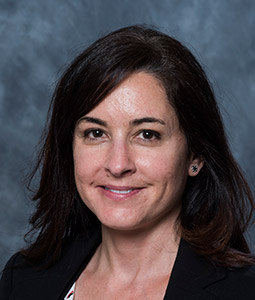
Lynn A. McFarland is an Associate Professor in the Department of Management at the Darla Moore School of Business, University of South Carolina. She holds a Ph.D. in Industrial/Organizational Psychology from Michigan State University and has held roles including Clinical Associate Professor and Visiting Associate Professor at USC, as well as founder/president of Human Capital Solutions, Inc. Her research focuses on workforce diversity, staffing strategies, applicant reactions, and impression management, with notable contributions to journals like Journal of Applied Psychology and Personnel Psychology . She serves on editorial boards for top journals and has received awards such as the Dean’s Fellow and Walter G. Klopfer Award. Education: Ph.D., Michigan State University (2000); M.A. (1998), B.A. (1995, Summa Cum Laude) from Manhattan College. Professional Service: Editor for Journal of Applied Psychology , National Center for State Courts Scientific Advisory Committee, and Society for Human Resource Management Foundation Research Coordinator. Research Trends: Her work bridges theory and practice in recruitment, diversity, and applicant behavior, emphasizing contextual factors like social media and organizational culture. McFarland advises doctoral students (e.g., Melanie Ward, Silvia Clark) and collaborates on grants related to leadership development and judicial excellence. Her teaching spans graduate and executive education in management and HR practices.